
A natural bird repellent is anything that deters birds using ingredients or cues derived from nature rather than synthetic chemicals. That includes scent-based deterrents like peppermint oil or garlic, taste and irritant-based sprays made with capsaicin (hot pepper extract), predator odor products, and habitat or behavior modifications that make a space less attractive to birds in the first place. Some of these actually work well. Others, despite sounding convincing, have very limited real-world effectiveness. Knowing which is which will save you a lot of wasted effort.
What Is a Natural Bird Repellent? Options, Use, Limits

Marcus Weatherby
24 Apr 2026
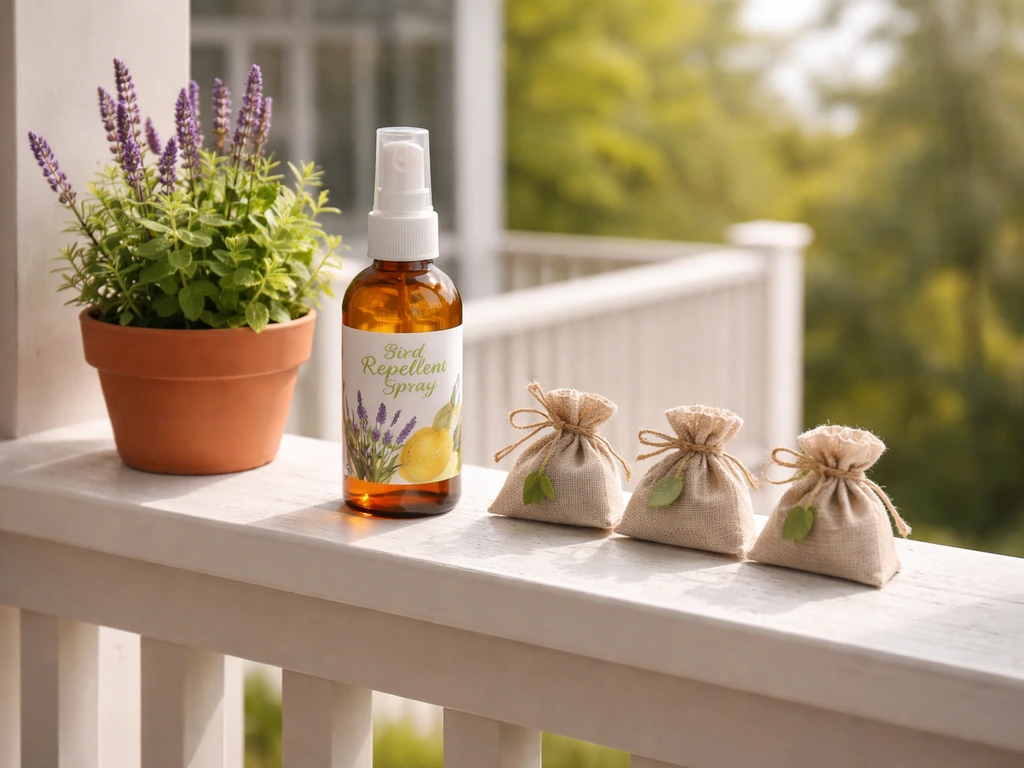
What 'natural' actually means in bird repellents
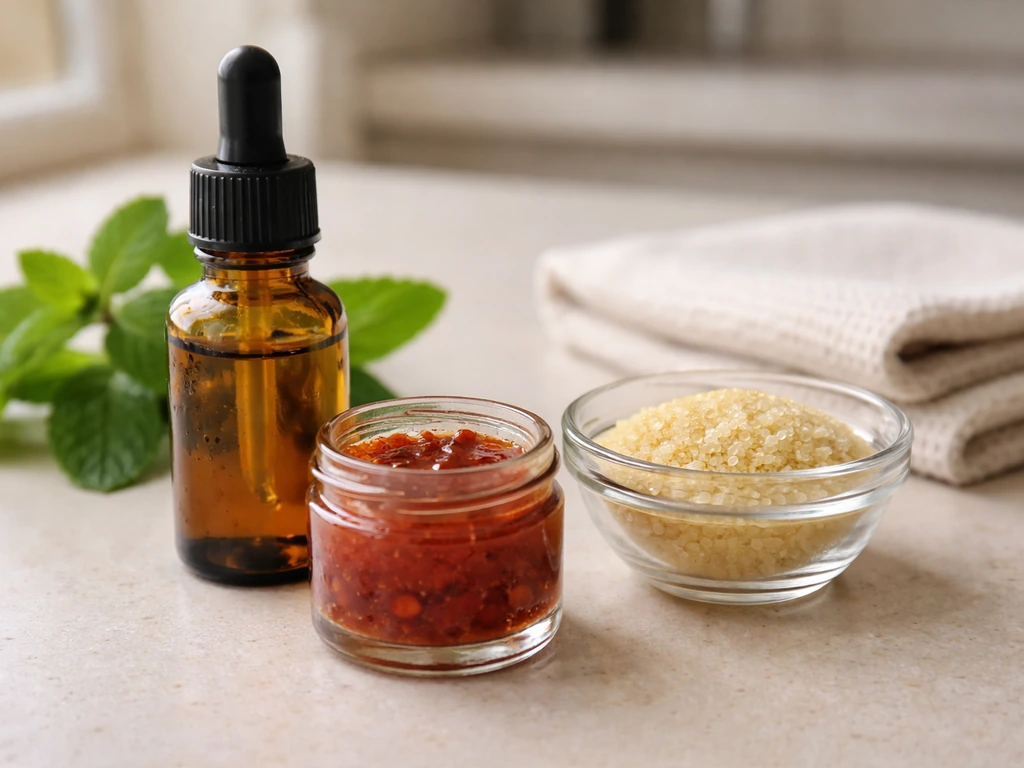
In bird control, 'natural' is used loosely. It generally describes repellents whose active ingredients come from plants, animals, or other biological sources rather than synthetic chemistry. But that word does not mean unregulated or automatically safe. Some of the most effective natural-origin deterrents, including capsaicin and methyl anthranilate, are EPA-registered pesticide products with specific label requirements, re-entry intervals, and application constraints. The USDA APHIS officially lists capsaicin, garlic oil, methyl anthranilate, oil of black pepper, and piperine as registered active ingredients in wildlife repellents. These are natural in origin, but they are still regulated tools.
On the informal end, you have DIY options: cotton balls soaked in peppermint oil, garlic sprays made from kitchen ingredients, predator urine products sold at garden centers. These are not EPA-registered as bird repellents and have not been evaluated for effectiveness or safety at scale. That does not make them useless, but it does mean you are working without a label telling you how much to use, how often to reapply, or whether what you are doing is actually going to help.
- Scent-based deterrents: essential oils (peppermint, eucalyptus, lemongrass), garlic extract, predator urine
- Taste and irritant-based repellents: capsaicin sprays, hot pepper gels, garlic-based liquid deterrents
- Methyl anthranilate (MA): a grape-derived compound that irritates birds' trigeminal nerve, widely used on crops and turf
- Habitat and behavior modification: removing food sources, trimming perch-friendly vegetation, eliminating standing water
How natural repellents work compared to other deterrent types
Natural repellents work by triggering a bird's senses in a way that makes a location feel uncomfortable or threatening. Capsaicin irritates mucous membranes on contact. Methyl anthranilate causes a burning sensation in the eyes and airways via the trigeminal nerve. Garlic has a sharp scent and taste that some birds find off-putting. Predator odors are meant to signal danger. What these methods share is that they rely on the bird choosing to avoid the area, rather than physically blocking access.
That distinction matters a lot. Physical barriers like netting, spikes, or wire systems work regardless of whether a bird finds them unpleasant. They exclude birds mechanically. Sensory deterrents like sonic devices or ultrasonic units work by creating acoustic discomfort. Visual deterrents like reflective tape or predator decoys work through perceived threat. Natural repellents sit in a category that depends heavily on concentration, freshness, and the specific bird species involved.
Here is the hard truth from the research: University of Nebraska-Lincoln Extension states plainly that 'scent repellents are not effective on pest bird species.' Birds like pigeons, starlings, and house sparrows have a very limited sense of smell compared to mammals, which means scent-based approaches you might find in DIY guides do almost nothing for the most common nuisance birds. Taste and contact irritants like capsaicin and MA have better track records because they work on touch and chemical receptors, not olfaction.
| Deterrent Type | Mechanism | Effectiveness vs. Pest Birds | Weather Dependence | Habituation Risk |
|---|---|---|---|---|
| Scent (essential oils, predator urine) | Olfactory avoidance | Low for most pest species | High (washes off quickly) | Moderate |
| Taste/irritant (capsaicin, MA) | Contact irritation, trigeminal response | Moderate to good | Moderate (reapplication needed) | Moderate |
| Physical barriers (netting, spikes) | Mechanical exclusion | High | None | None |
| Sonic/ultrasonic deterrents | Acoustic discomfort | Moderate, species-dependent | Low | Moderate to high |
| Visual deterrents (reflective tape, decoys) | Perceived predator/threat | Low to moderate | Low | High |
| Habitat modification | Removes attractants | High when consistent | None | None |
Where natural repellents make sense (and where they don't)
The location matters as much as the product. Natural repellents are best suited to open, accessible surfaces where you can apply them easily and reapply regularly. They tend to underperform in enclosed or hard-to-reach areas, and they are not a substitute for exclusion in high-pressure situations.
Patios and outdoor seating
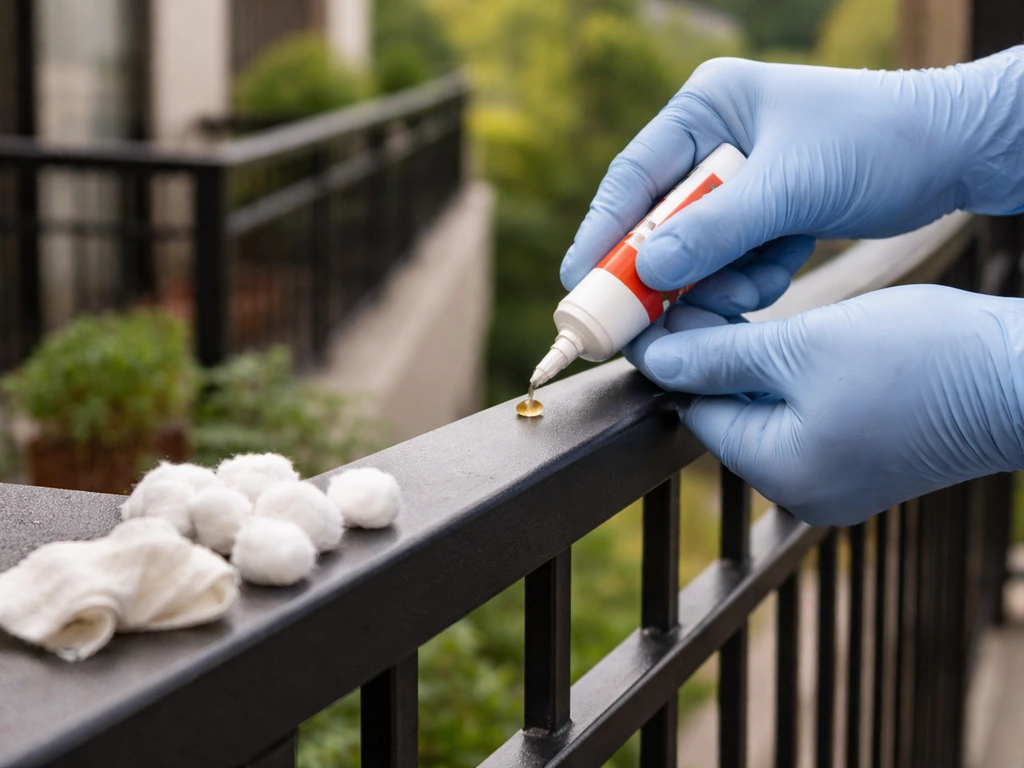
Capsaicin-based gels applied to railings, ledges, and furniture frames can discourage perching. Peppermint oil-soaked rags or cotton balls placed around the perimeter may add some deterrence for sparrows and similar small birds, though the evidence is weak for this approach alone. Combining a contact irritant with a visual deterrent like reflective tape tends to work better than either alone.
Windows
Windows are mostly a collision and reflection problem, not a roosting or feeding one. Natural repellents applied to window surfaces are rarely the right tool here. Reflective film, window decals, or external netting address the actual cause more directly.
Gardens and fruit crops
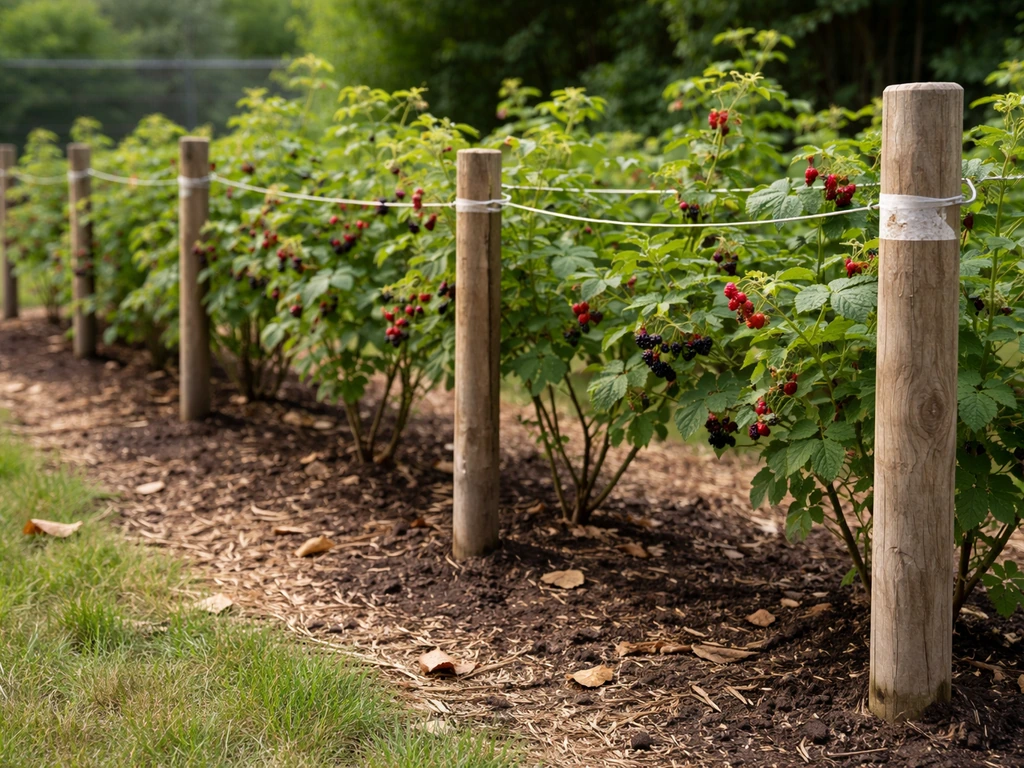
This is where natural repellents show the most promise. Methyl anthranilate is registered for use on small fruits in multiple states and has good field data behind it, with one UNL study describing it as an 'effective, biodegradable, nontoxic bird repellent.' Capsaicin sprays can also be applied to crop surfaces. OSU Extension specifically recommends applying deterrent sprays as fruit begins to ripen and reapplying after rain. Garlic-based sprays are sometimes used here too, though with more limited support. For high-value crops, netting remains the most reliable option.
Rooftops
Rooftops are tough for natural repellents because of UV exposure, rain, and wind. Gel-based capsaicin products applied to parapet edges or HVAC ledges can have some effect, but they require frequent reapplication and become messy in heat. Physical deterrents like spikes or wire systems tend to make more practical sense for roof situations.
Pools and water features
Methyl anthranilate is used as a turf and water-area deterrent, particularly for geese and waterfowl. UGA Cooperative Extension notes that methyl anthranilate (and concord grape extract) can be effective for keeping Canada geese away from golf courses and turf lawns when used exactly as specified on the product label Methyl anthranilate is used as a turf and water-area deterrent, particularly for geese and waterfowl.. It can be applied around pool perimeters or on lawns adjacent to ponds. Be cautious about applying any repellent directly into water. For persistent waterfowl problems, habitat modification (removing food, eliminating loafing areas) works best alongside chemical deterrents.
Solar panels
Natural repellents do not hold up well under solar panels. The shaded, dry environment birds seek under panels means scents and sprays dissipate quickly or fail to reach the target areas. Mesh exclusion installed around the panel perimeter is the standard solution here, not chemical deterrents of any kind.
Choosing the right approach for your bird and situation
The single most important factor is identifying what birds you are dealing with, because effectiveness varies dramatically by species. Pigeons, starlings, and house sparrows (the most common urban pest birds) are largely unaffected by scent-based products. Geese and waterfowl show better responses to methyl anthranilate. Smaller songbirds foraging in gardens can sometimes be deterred by capsaicin on seeds or fruit surfaces.
What is the bird doing? That matters too. A pigeon roosting on a ledge needs a different response than geese grazing on a lawn or starlings raiding a berry bush. Match the deterrent to the behavior, not just the location.
- Roosting or perching on surfaces: Use contact irritants (capsaicin gel) on the landing surface, or physical barriers if the pressure is high.
- Feeding on grass or turf (geese): Methyl anthranilate spray is your best natural option. Combine with habitat modification to reduce food appeal.
- Feeding on fruit crops or garden plants: MA or capsaicin-based sprays applied to the fruit surface as it ripens, with reapplication after rain.
- Nesting attempts: Move to exclusion (netting, wire) before eggs are laid, since legal protections apply to active nests for many species.
- General scavenging around patios or bins: Habitat modification first. Remove or secure food sources. Natural repellents alone will not override a reliable food reward.
How to apply natural bird repellents correctly
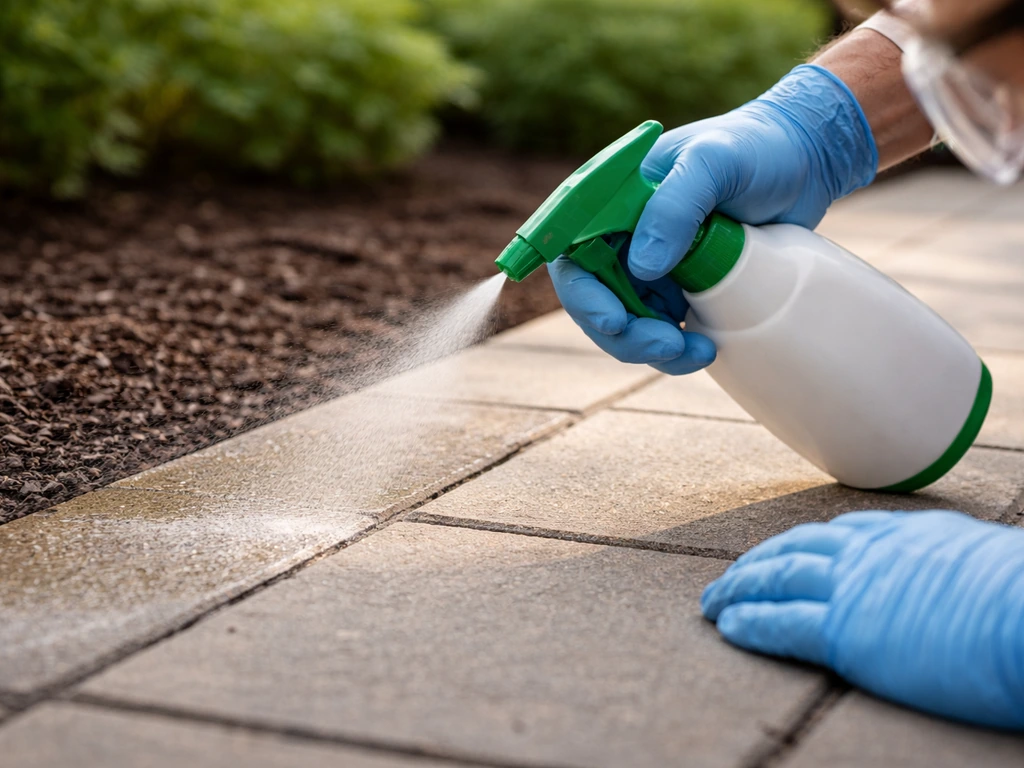
Timing and coverage are where most DIY attempts fall apart. A light misting of peppermint oil on one corner of a patio is not going to move a flock of starlings. Natural repellents need to be applied thoroughly and renewed consistently to maintain any deterrent effect.
Timing
Apply before the birds establish a routine in the area, not after they have already claimed it. Habituation makes deterrence harder once birds are comfortable. For fruit crops, OSU Extension recommends beginning applications as fruit starts to ripen, which is when bird pressure spikes. For year-round perching problems, start treatment in early spring before nesting season.
Coverage
Cover all surfaces where birds are landing or feeding, not just the obvious spots. If you treat a railing but leave a window ledge untreated three feet away, birds will simply shift. Methyl anthranilate products used on turf or crops should be applied uniformly across the affected area. Capsaicin gels should be applied in a consistent bead or coating on perch surfaces.
Reapplication intervals
This is non-negotiable. Rain, UV light, and temperature all degrade natural repellents faster than synthetic ones. Methyl anthranilate sprays typically need reapplication after each rain event. Capsaicin gels can last longer on sheltered surfaces but may need monthly or bi-monthly renewal outdoors. DIY essential oil applications may need refreshing every few days in outdoor conditions. Cornell Cooperative Extension notes that Avian Control (an MA product) has a re-entry interval of four hours and a pre-harvest interval of zero days, meaning it is safe to reapply right up to harvest.
Application checklist before you start
- Identify the target bird species so you choose a repellent that actually works on that species.
- Identify the behavior (roosting, feeding, nesting) and match the deterrent to it.
- Clean the application surface. Repellent gel on a dirty ledge will not adhere well.
- If using a registered product, read the full label and follow it. Note re-entry intervals and PPE requirements.
- Plan your reapplication schedule before you start, accounting for your local weather.
When birds come back: limitations, habituation, and what to do
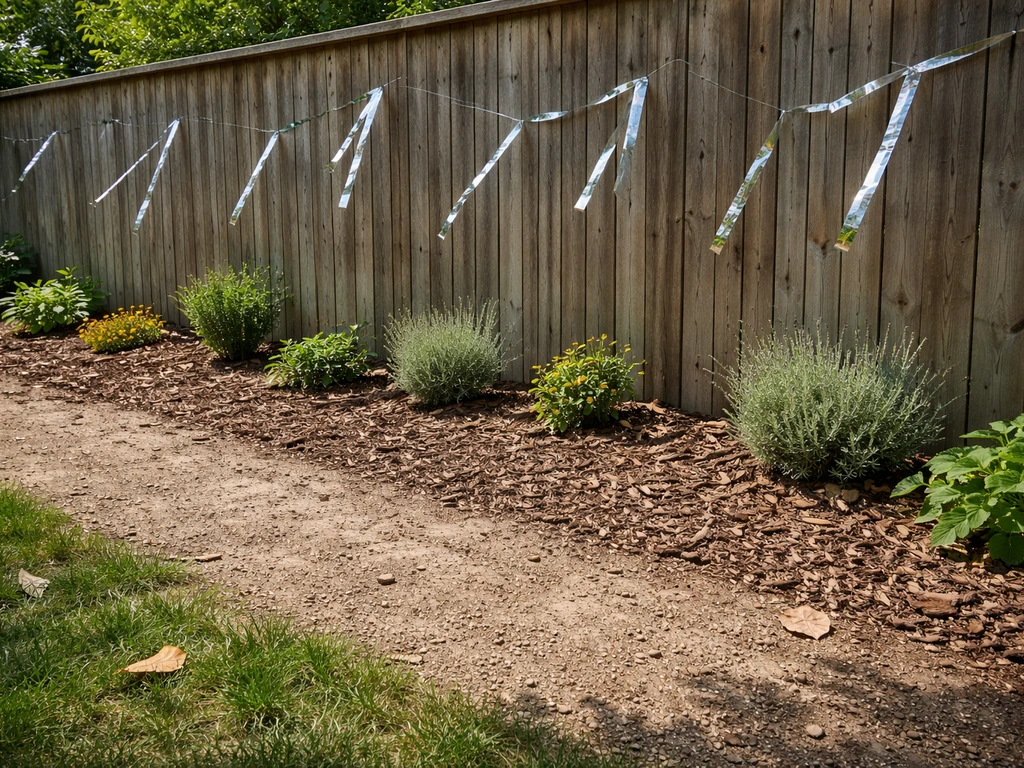
Birds returning is not a sign of failure. It is a predictable outcome that you need to plan for. OSU Extension notes explicitly that birds 'may habituate to visual deterrents after repeated exposure.' The same applies to scents and, to a lesser degree, contact irritants. If a bird visits the same area repeatedly and nothing actually harms it, it learns to ignore the deterrent.
The standard professional response is rotation and layering. Change up deterrents every few weeks rather than relying on one method indefinitely. Combine a taste repellent with a visual scare device, and rotate the position of visual deterrents regularly. UGA Cooperative Extension recommends shifting and adjusting around a site when repellents alone are not holding, which points to a combined and dynamic approach rather than a static one.
If natural repellents are not working after consistent, correctly timed application, it usually means one of three things: the deterrent is not effective for that species (check the species-scent issue for pigeons and starlings), the application is not thorough enough, or the food or shelter reward in that location is too strong for a repellent alone to override. In the last case, physical exclusion is the practical next step.
Combining natural repellents with other methods
Natural repellents work best as one layer in a broader integrated approach. University of Delaware Extension, for example, lists propane cannons, sonic devices, and other auditory deterrents alongside repellents as a recommended combined strategy, rather than recommending any single method. Reflective tape or predator decoys can complement contact repellents, though the tape needs to be deployed before birds settle, not after. Netting and spikes handle high-pressure areas where repellents cannot realistically keep up.
Safety, pets, beneficial birds, and what the law says
Natural does not mean harmless to everything. Capsaicin at high concentrations can irritate skin and eyes in humans and pets. Essential oils like peppermint and eucalyptus can be toxic to cats in particular if applied to surfaces they contact regularly. Any repellent applied outdoors has the potential to affect non-target wildlife, including beneficial birds you want around.
If you are using an EPA-registered product, the label will specify precautions for pets, people, and non-target species. The EPA notes that registration means the product has been evaluated for human safety and effectiveness when applied according to label instructions. If you are using a DIY approach, there is no label to guide you, which puts the burden of caution on you. Avoid applying any repellent near pollinator plants, bird feeders, or birdbaths. Apply early morning when birds are less active to reduce immediate contact risk.
On the legal side, several bird species in the US are protected under the Migratory Bird Treaty Act. You cannot destroy active nests or eggs of protected species, regardless of what deterrent you are using. That means if birds have already started nesting in a spot, your window for deterrence has closed. Act early in the season, before nesting begins, to stay on the right side of federal law. Check with your state wildlife agency if you are unsure about the species you are dealing with.
Protecting beneficial birds while deterring pest species
Most natural repellents are not species-selective. A capsaicin spray on a fruit tree may deter a starling but will also affect a native thrush. If you have beneficial birds visiting your garden, consider applying repellents only to specific surfaces (like a railing or a particular crop row) rather than broad-spectrum treatment across your entire yard. Netting over a berry patch can protect the fruit while leaving the rest of the garden open. The goal is targeted deterrence, not blanket coverage that makes your property inhospitable to everything.
Predator urine products are worth a specific note. The research on whether they work for birds is not encouraging. A field study in eastern Pennsylvania found no significant difference in bird foraging behavior between predator-odor-treated sites and untreated controls. While there is some evidence that waterfowl like ducks may respond to mammalian urine as a predator cue in nesting contexts, the broader claim that predator urine deters common pest birds does not hold up well under scrutiny.
Your next steps today
Start by identifying what you are actually dealing with: which species, what behavior (roosting, feeding, nesting), and which specific location. If you are still unsure about what is bird repellent and which type fits your situation, start by identifying the species, the behavior, and the exact location you are dealing with. That narrows your options immediately.
For most common pest birds like pigeons and starlings, skip scent-based products and go straight to a contact irritant like a capsaicin gel for perching surfaces, or methyl anthranilate for feeding areas and turf. If you are unsure what’s a good bird repellent for your setup, start with the species and behavior, then choose a contact irritant or MA based on where the birds are feeding or perching what's a good bird repellent.
If you are wondering, “is there a bird repellent spray,” the answer depends on the bird species and whether you choose a scent-based option or a contact irritant. If you are protecting a garden or fruit crop, MA spray applied as produce ripens and reapplied after rain is your most evidence-backed natural option.
Layer in a complementary method, whether that is reflective tape, a sonic deterrent, or habitat modification like removing standing water or food scraps. Plan your reapplication schedule now, before you start. And if bird pressure is high or the area is enclosed (like under solar panels), move to physical exclusion rather than expecting a repellent to hold the line by itself.
Natural repellents have a real place in bird control, but they work best as one part of a layered strategy rather than a standalone fix. Combined with the right physical setup and consistent maintenance, they can meaningfully reduce bird activity without the downsides of more aggressive chemical or lethal approaches.
FAQ
Are “natural” bird repellents safe for pets and kids if they’re made from essential oils or home ingredients?
Not automatically. Even plant-based ingredients can irritate skin and eyes, and some essential oils (especially around cats) can be toxic. If you use an EPA-registered natural-origin product, follow label precautions for pets, people, and re-entry time. For DIY, minimize contact risk by keeping treated areas out of reach and avoid letting pets lick treated surfaces, especially on ledges, railings, and indoor-adjacent areas.
Will peppermint, garlic, or predator urine work better if I spray more often?
More frequency does not guarantee better results, because some pest birds have limited smell and will not respond to scent cues. For contact or taste irritants like capsaicin or methyl anthranilate, timing and coverage matter more than “over-spraying.” If you are using a scent-based DIY approach and you are not seeing change after thorough, correctly timed application, switch methods rather than escalating the scent.
Do natural repellents replace netting or spikes?
Usually no, especially in high-pressure situations where birds can repeatedly access a favored landing or feeding spot. Sensory repellents rely on avoidance, while netting and exclusion physically block entry. A good rule is to use repellents to reduce light to moderate pressure on accessible surfaces, but plan for exclusion if birds are established, nesting, or concentrated in one entry point.
How do I know whether my birds are the kind that will ignore scent-based repellents?
Look at the species and your observed behavior. Common urban nuisance birds such as pigeons, starlings, and house sparrows often do poorly with scent-only products because they are not strongly guided by smell. If your birds keep returning to the same spot despite renewed scent application, treat it as a signal to move to a contact/taste irritant or a visual, mechanical, or exclusion solution.
Is it okay to apply natural repellents into or near water (pools, ponds, birdbaths)?
Be cautious. While some methyl anthranilate products are designed for turf and water-adjacent deterrence, applying any repellent directly into water or onto floating food sources increases the chance of harming non-target wildlife. For birdbaths and feeders, the safer approach is usually to remove or relocate attractants and use exclusion, then target-treatment only to appropriate dry surfaces per label guidance.
What’s the fastest way to improve effectiveness if birds keep roosting after I started?
Check three practical failure points: species match, coverage, and timing. Make sure you treated every landing and feeding surface within the birds’ flight path, not just the first obvious spot. Reapply on schedule, because rain, UV, and heat degrade natural repellents. Finally, if the location is rewarding (easy food or sheltered roost), add a second layer such as reflective tape, habitat cleanup, or physical exclusion.
Can natural repellents be used on fruit trees, and when should I start?
Yes, but timing is critical. For evidence-backed crop deterrence, start when fruit begins to ripen, then reapply after rain. Spot-treating only the ripening zones can reduce spillover onto surrounding plants and beneficial visitors, and it helps you avoid blanket treatment that makes the whole yard feel hostile.
Do natural repellents work under solar panels or in shaded, sheltered areas?
They are often unreliable under panels because conditions are dry, shaded, and birds can hide in the protected gap where sprays and scents dissipate before reaching the target areas. In those setups, mesh exclusion around the panel perimeter is typically the practical solution rather than relying on deterrent chemistry.
Will birds habituate to natural repellents after repeated exposure?
Yes. Birds can learn that a deterrent does not cause real harm, so repeated visits do not always mean the product is working. Plan rotation and layering, changing the deterrent type every few weeks (for example, alternating contact repellents with visual devices and adjusting placement) instead of leaving one approach in place indefinitely.
If I’m using an EPA-registered natural-origin repellent, do I still need gloves or special precautions?
Usually, yes. Labels for registered products include application precautions, and they may specify protective equipment, pet restrictions, and re-entry intervals. Even “natural-origin” does not mean zero risk, because the same active ingredient can irritate humans and pets at effective concentrations.
What legal issue should I watch for if birds are already nesting?
If you have protected species nesting, you cannot disturb active nests or eggs under federal law. That means deterrence should ideally start before nesting begins. If you see active nest activity, pause treatment and contact your state wildlife agency or a qualified bird-control professional to confirm the right non-destructive options.
Next Articles
How to Avoid Bird Attack Drone: Practical Safety Checklist
Practical, humane steps to reduce bird–drone collisions: preflight checks, deterrents, tactics, and legal guidance.
What Is Already Being Done to Prevent Bird Collisions
Learn what’s already used to prevent bird collisions, from airport safeguards to building glass and humane deterrents, p

Best Bird Strike Prevention: Practical Steps That Work
Step-by-step best bird strike prevention: remove attractants, use exclusion and deterrents correctly, and maintain resul