
The best bird scarer is the one matched to your specific bird species, the exact location causing the problem, and the behavior driving them there. There is no single universally best device. If you want the best bird scaring device, start by matching the solution to the bird species, the exact spot they target, and the behavior you’re trying to stop best bird scarer.
Best Bird Scarer: Choose the Most Effective Deterrent by Area

Marcus Weatherby
19 May 2026
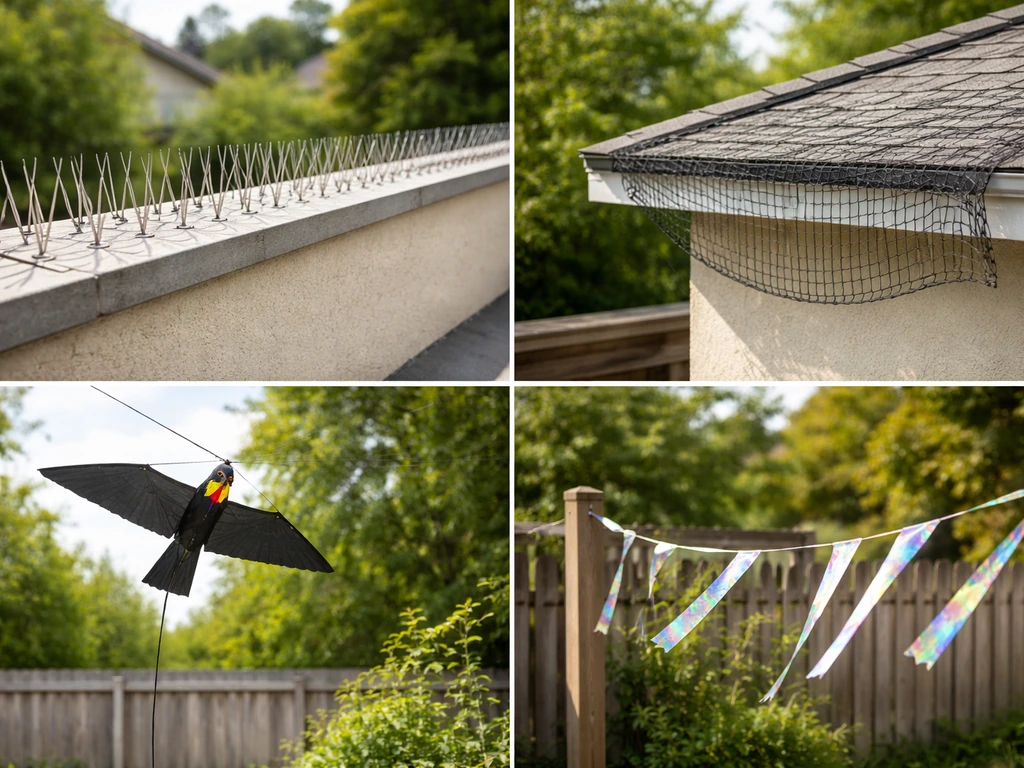
For most home and property situations, a physical barrier (spikes, netting, or wire) combined with a visual deterrent (predator decoy or reflective tape) gives the fastest, most reliable results. Sonic deterrents help in open areas, but ultrasonic devices have consistently poor evidence behind them. Chemical repellents like methyl anthranilate work well on lawns and turf where birds are foraging. The sections below will help you pick the right combination for your exact scenario.
What 'best' actually means for bird deterrence
When people search for the best bird scarer, they usually want one product that solves everything. The reality is that effectiveness is entirely context-dependent. A hawk kite that works brilliantly over an allotment does almost nothing on a roofline. Anti-perch spikes that clear pigeons off a ledge won't help if starlings are roosting in a tree above your patio. The 'best' rating belongs to the solution that fits three things: the species you're dealing with, the physical space where the problem occurs, and the behavior (roosting, foraging, nesting) driving the nuisance.
Keeping those three factors in mind also protects you legally. Most birds encountered in the US are protected under the Migratory Bird Treaty Act (MBTA), which means you cannot harm, capture, or kill them without a federal permit. UGA Cooperative Extension also emphasizes that native birds are federally protected under the Migratory Bird Treaty Act and recommends coordinated, appropriate wildlife-control approaches rather than ad-hoc harassment [Most birds encountered in the US are protected under the Migratory Bird Treaty Act (MBTA)](https://extension.
uga. edu/publications/detail. html? number=B1248&title=resolving-human-nuisance-wildlife-conflicts).
Deterrence and exclusion are legal. Anything that injures or kills protected birds is not, and improper netting alone can create compliance exposure if birds become entangled and drown. Starting with the right deterrent for the right situation keeps you effective and legal at the same time.
Identify the bird and the exact problem spot first
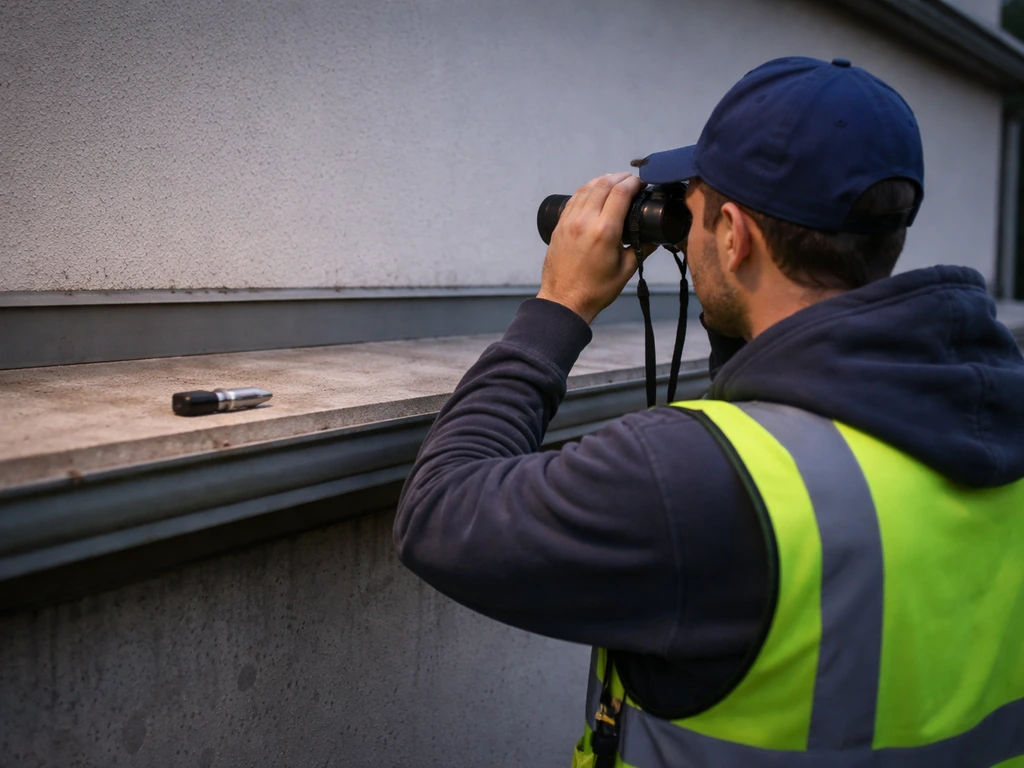
Before you buy anything, spend 10 minutes watching what is actually happening. Note the species (or at least the size), the time of day they show up, and exactly where they land or congregate. Pigeons perching on a ledge need a different fix than Canada geese walking across a lawn, or woodpeckers drilling into your siding. Getting this wrong means you'll spend money on something that does nothing.
Ask yourself these questions as you observe: Are the birds landing and roosting, or just passing through and feeding? Is the location a narrow ledge, a flat roof, open ground, or water? Are there food sources (spillage, standing water, fruit trees, pet food) attracting them? Removing the attractant is almost always the fastest win. UGA Cooperative Extension frames it well: preventing access to a food or shelter resource beats trying to scatter birds after they've already decided the spot is worth visiting.
- Small perching birds (sparrows, starlings, pigeons): focus on ledges, sills, gutters, and rooflines
- Waterfowl (geese, ducks): focus on lawns near water, pools, or ponds
- Woodpeckers: focus on siding, fascia boards, and wood trim
- Raptors or large corvids: focus on open flat surfaces and rooftops
- Mixed flocks: treat the primary food source first, then the roost site
The most effective bird scarer types and when each one works
There are four main categories of bird scarer: physical barriers, visual deterrents, sonic deterrents, and chemical repellents. Each has clear strengths and clear failure modes. Here is a direct rundown of all four.
Physical barriers (spikes, netting, wire)
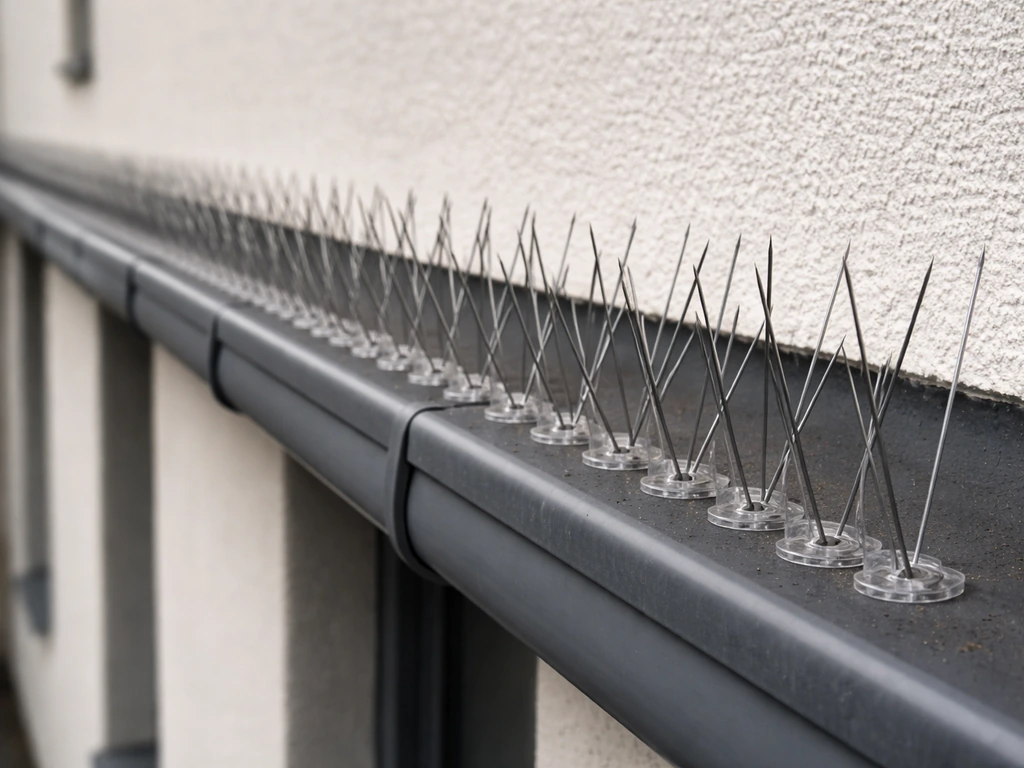
Physical exclusion is the most reliably effective long-term solution because it does not depend on the bird feeling scared. It just makes the spot unusable. Anti-perch spikes prevent birds from landing on ledges, beams, signs, and gutters by making the surface uncomfortable. USDA-APHIS notes that spike spacing and configuration matter: larger birds like gulls can grip or straddle narrow spikes designed for smaller species, so you need to match the spike width and pin height to the target bird. For broader surfaces, stainless steel or polycarbonate spikes installed in rows covering the full width of the ledge work best.
Netting is the most complete exclusion method and is ideal for sealing off roof voids, solar panel undersides, fruit trees, and building facades. Use UV-resistant polypropylene or knotted polyethylene netting with an appropriate mesh size for the target species. A critical installation point: netting must be tensioned correctly and have no gaps at the edges. Loose or sagging netting can trap birds, which creates both a welfare problem and a potential MBTA compliance issue. If you are not confident in a tight, gap-free installation, this is one area where hiring a professional makes a real difference.
Visual deterrents (decoys, kites, reflective tape)
Visual deterrents work by triggering the prey-avoidance instinct. Predator decoys (owls, hawks, herons near ponds) are the most common, and they can work well in the short term. The problem is habituation: birds quickly learn a statue does not move, and within days to weeks, many species treat it as a perch. To stay effective, decoys need to move (either physically or by repositioning them regularly).
A best bird scarer kite, flown on a pole at 10 to 20 feet, is far better than a static decoy because the shape moves unpredictably in the wind, mimicking a hunting raptor. Reflective tape, holographic bird tape, and old CDs create light scatter and work reasonably well in gardens and on patios when strung across the target zone. They lose effectiveness in still-air conditions or indoors.
Sonic and ultrasonic deterrents
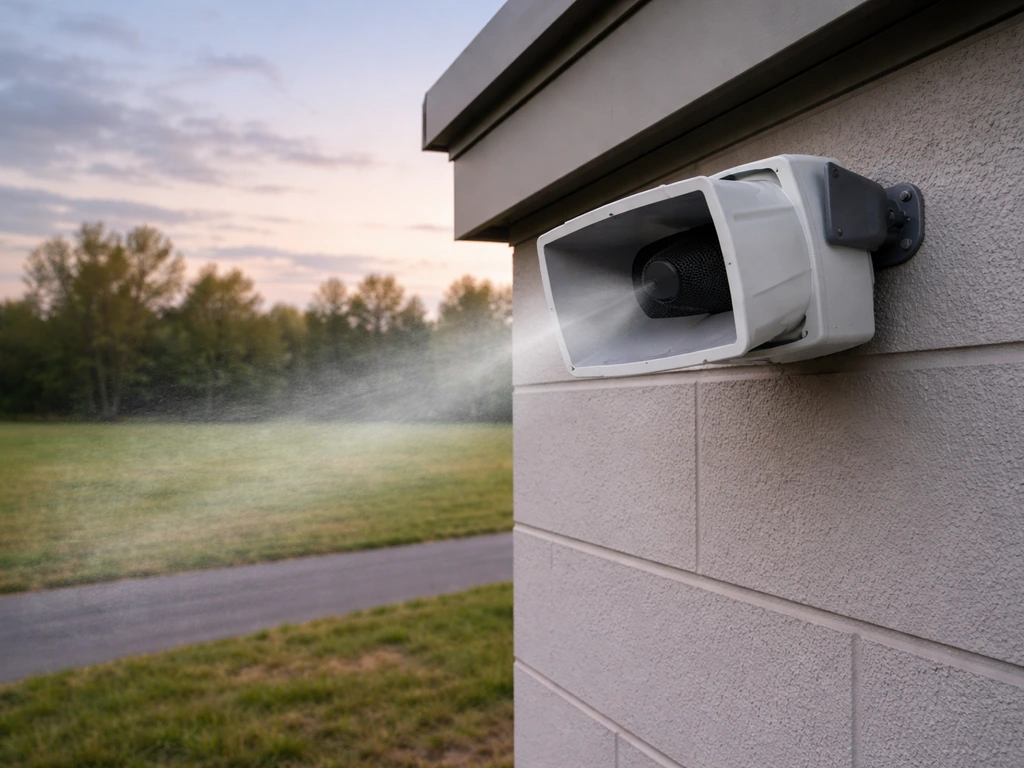
Sonic devices that broadcast distress calls or predator calls can be effective, especially in open or semi-open spaces like fields, parking areas, and commercial rooftops. The key is using species-specific distress calls at the right volume and rotating the call patterns so birds do not habituate. Propane cannons and pyrotechnic deterrents (used more in agricultural and airport settings) are the most powerful sonic options but are clearly unsuitable in residential areas.
Ultrasonic devices are a different matter. Despite heavy marketing, the evidence is consistently negative. A published study by Erickson et al. found that high-frequency sound devices lack efficacy in repelling birds, and National Academies Press research reviewing airport-relevant deterrents found that at least one tested ultrasonic unit showed no apparent effect on bird activity across multiple species. The reason is straightforward: birds do not hear most ultrasonic frequencies the same way rodents do, so the premise of the device is flawed. Save your money here unless a product has specific, documented field trial results for your target species.
Chemical repellents (methyl anthranilate)
The main EPA-registered chemical bird repellent category uses methyl anthranilate (MA) as the active ingredient. Products like EcoBird 14. 5 are liquid repellents applied to turf, grass, and surfaces where birds forage. MA works as a taste and irritant repellent: birds need to contact or ingest it to be deterred, so it is most effective on lawns and grassy areas where geese and other ground-feeding birds graze.
Nixalite markets EcoBird 14. 5 as an EPA-registered liquid repellent and describes it as a methyl anthranilate taste repellent for deterring birds that eat it.
It does not work on roosting birds sitting on a ledge who never touch the treated surface. MA-based products are regulated as pesticides under EPA processes and must be applied according to label directions, including precautions about not contaminating water bodies or food crops.
| Type | Best for | Fails when | Habituation risk |
|---|---|---|---|
| Spikes | Ledges, gutters, beams, signs | Flat wide surfaces, gaps in coverage | Very low |
| Netting | Roofs, solar panels, tree fruit, voids | Incorrectly tensioned or has gaps | None |
| Predator kite / decoys | Open gardens, fields, flat roofs | Static decoys, no movement, enclosed spaces | High if not moved |
| Reflective / holographic tape | Gardens, patios, windows | Calm days, low-light areas | Moderate |
| Sonic (distress/predator calls) | Open fields, commercial roofs, parking lots | Dense residential areas (noise), enclosed spaces | Moderate, rotate calls |
| Ultrasonic devices | Not reliably effective for birds | Most scenarios | N/A |
| Chemical (methyl anthranilate) | Lawns, turf, ground-foraging areas | Roosting birds, surfaces not contacted | Low if reapplied |
Placement and installation rules that actually make deterrents work
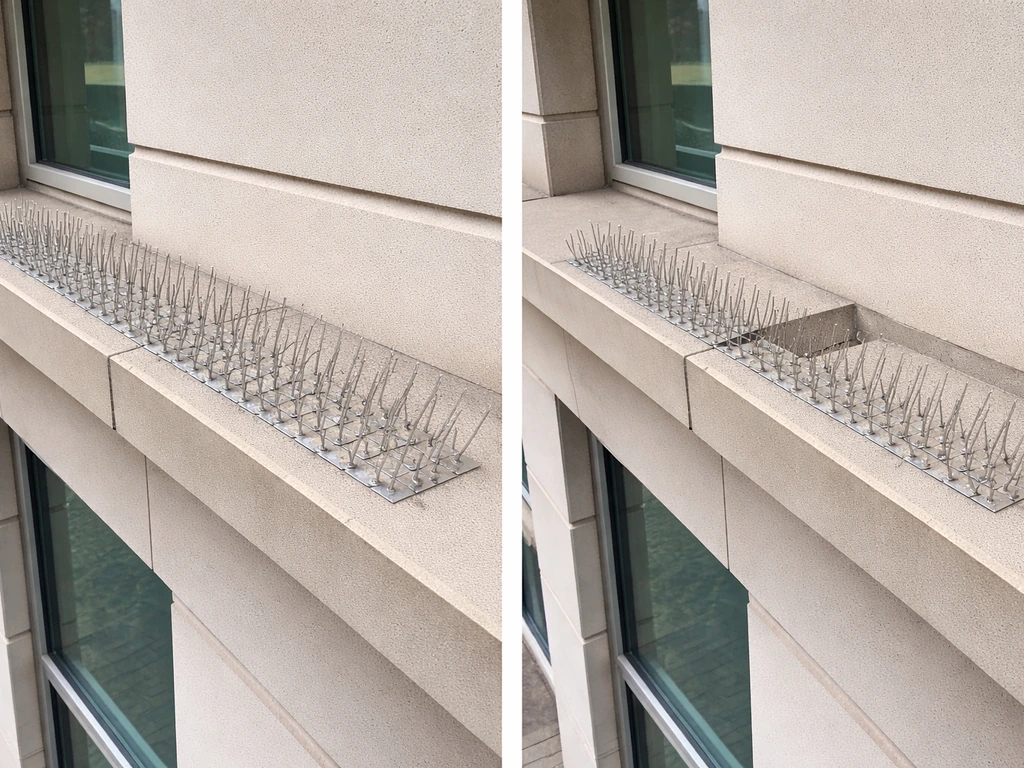
Even the right product fails if it is installed badly. These are the most common placement mistakes and how to avoid them.
- Cover the full landing zone. Spikes installed on only the front edge of a ledge leave the back third available, and pigeons will simply shift back. Fill the entire usable surface.
- Position visual deterrents at bird eye-level or above, not below. A ground-level owl decoy does not register as a threat to a bird 10 feet up.
- For kite-style scarers, the pole needs to be tall enough that the kite is visible from the target area and can move freely in the wind without obstruction from rooflines or trees.
- Sonic devices should face the main approach direction birds use, not point inward toward a building. Aim the speaker outward and angle it slightly downward over the problem area.
- Netting must be anchored at all edges with no slack. Use anchor pins in soil or fixing hooks on hard surfaces and check tension monthly.
- For chemical repellents on turf, apply before birds establish a routine visit, and reapply after rain. Waiting until birds are already using the area daily makes the repellent less effective as a deterrent.
- Do not install deterrents only where you see birds sitting. Watch the flight path and install deterrents along the approach route too.
Preventing habituation: rotation and multi-layer strategies
Birds are smart and adaptable. Given enough time, they learn that a motionless owl is harmless, that a sonic device fires at predictable intervals, or that reflective tape flutters safely. Habituation is one of the main reasons bird scarers stop working within weeks. The solution is combining multiple deterrent types and rotating them before habituation sets in.
A practical multi-layer approach for most properties pairs a passive physical barrier (spikes or netting where birds land) with an active visual or sonic deterrent in the surrounding zone. The physical barrier does not rely on bird psychology, so it stays effective regardless of habituation. The active deterrent layer adds pressure and can be rotated to stay fresh. For example: spikes on the gutterline combined with a kite scarer repositioned every few days and reflective tape across the patio cover three different sensory channels at once. If you want to use a bird scarer kite, follow the placement and repositioning steps so birds do not habituate bird scarer kite instructions.
- Move decoys and visual deterrents every 3 to 5 days so birds do not map their location
- Rotate sonic call sequences or change playback timing to prevent pattern recognition
- Use unpredictable motion (wind-driven kites or spinning reflectors) wherever possible rather than static versions of the same product
- Combine at least two deterrent types, ideally from different categories (physical plus visual, or physical plus chemical)
- Reapply chemical repellents on schedule rather than waiting until birds return
- Reassess the full setup every 2 to 3 weeks during peak bird pressure seasons
Safety, legal considerations, and when to call a professional
The Migratory Bird Treaty Act protects the vast majority of wild birds in the US, including songbirds, waterfowl, raptors, and most species you are likely dealing with. Deterrence and exclusion are legal. Trapping, handling, or killing protected birds without a federal depredation permit is not. Canada geese, for instance, are federally protected under the MBTA, and any management beyond hazing and non-lethal deterrence requires specific authorization. If you are applying for a depredation permit, USFWS will ask you to document what hazing, deterrents, and feeding-prevention steps you have already taken, so keeping a record of your deterrent efforts matters.
Netting installations near water need particular care. Wildlife Damage Management Extension guidance warns that improperly installed netting can trap birds who become entangled and drown, which can create MBTA compliance exposure even if harm was unintentional. Always use the correct mesh size, keep netting taut, and inspect it regularly. Near pools, ponds, or drainage areas, check for trapped birds after any storm.
Call a professional when: the infestation is large-scale or involves roof access and roof anchoring, you are dealing with a legally protected species in a commercial or aviation context, netting needs to cover a large or complex structure, previous DIY attempts have not worked after four to six weeks, or there is evidence of nesting (disturbing active nests of most species is also prohibited under the MBTA). A licensed wildlife management company can also help you apply for depredation permits if non-lethal methods have been exhausted.
Best bird scarer by scenario
Here are direct recommendations for the most common problem locations. Each one assumes you have already removed any obvious food or water attractants.
Patios and outdoor living areas
Reflective tape or holographic bird tape strung at 6 to 8 foot height around the perimeter is the easiest starting point. Add a predator kite on a telescoping pole if you have an overhead roof or pergola. For ledges and overhead beams, add spikes along the beam edges. Avoid sonic devices on a patio: the noise is as disruptive to you as to the birds. A best bird scarer for garden setups often translates well to patio spaces too, particularly wind-activated visual deterrents.
Windows
Birds strike windows because they see a reflection of sky or vegetation and do not recognize glass. Apply window collision tape or frosted film to break up the reflection from outside. For ledge-perching birds, install narrow anti-perch spikes along the sill. Reflective film on the outside surface of the glass is more effective than on the inside at deterring approach.
Pools
Geese and ducks are the main pool visitors. A heron decoy near the pool edge deters some waterfowl (herons are territorial), but move it regularly. More reliable is a motion-activated water jet sprinkler aimed at the pool perimeter, which startles birds on approach without chemicals near the water. For a pool with a surrounding deck, MA-based chemical repellent on surrounding lawn areas reduces the attraction of the grassy approach zone. Do not apply MA or any chemical repellent directly to pool water.
Gardens
Vegetable and fruit gardens need exclusion netting over the crop itself for reliable protection. A kite scarer on a tall pole in the center of the plot adds a secondary deterrent layer. Reflective tape on short stakes woven through the planting rows helps during the critical germination and fruiting periods. For a deeper look at garden-specific setups, the best bird scarer for garden topic covers these in more detail. For more on what to use, see the tin can bird scarer guide and placement tips for common garden setups.
Roofs
Flat roofs attract gulls and pigeons for roosting and nesting. If you are trying to deter pigeons specifically, start by focusing on roosting and nesting locations like flat roofs and parapet edges best bird scarer for pigeons. Spikes along parapet walls and ledge edges are the primary fix. For open flat areas, physical wire systems (stainless wire on springs tensioned across the roof plane) create an unstable landing surface.
Kite scarers mounted at roof height can add coverage over open areas. Nesting birds are a more complex issue: once eggs are present, nests of most species cannot legally be disturbed without a permit. The best bird scarer for roof scenarios almost always requires a physical barrier component to be effective long-term.
Solar panels
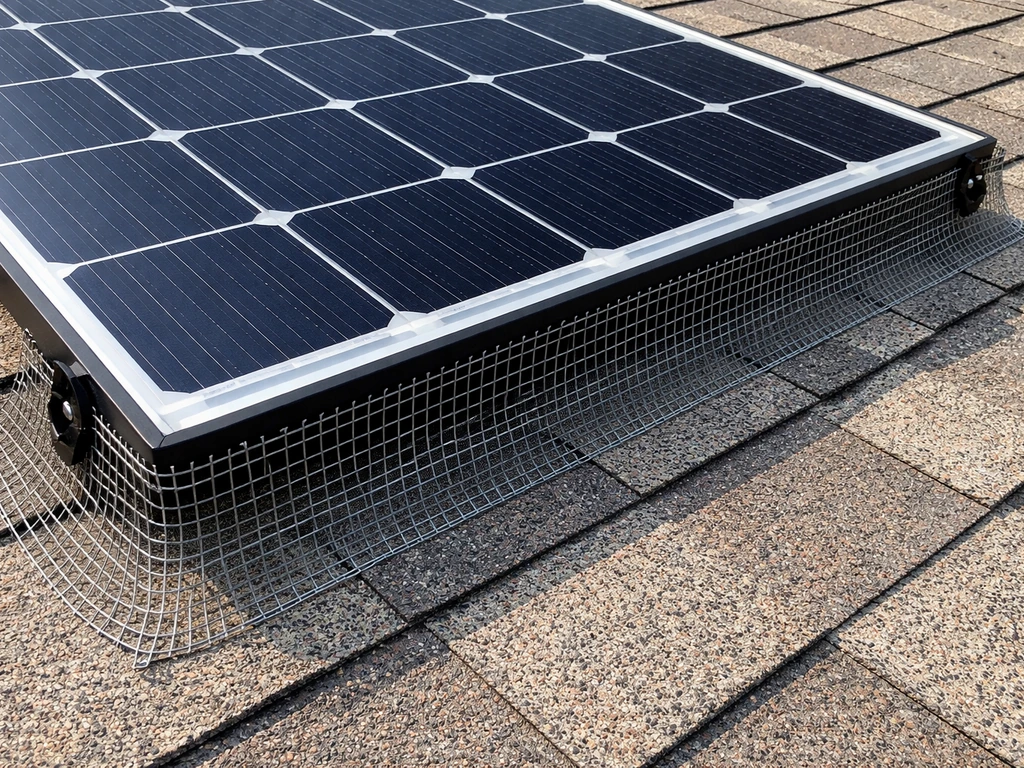
The gap between solar panels and the roof surface is prime nesting real estate for starlings and pigeons. The definitive fix is solar panel mesh (wire mesh skirt) installed around the panel perimeter, clipped to the panel frame and sealed to the roof surface. This blocks access to the void completely. Anti-perch spikes along the panel edges above the top rail deter birds from landing on the panels themselves. Do not use chemical repellents near solar panels: runoff can damage panel surfaces and wiring. This is one installation where professional fitting is genuinely worth the cost, since you are working at height on a fragile surface with electrical components.
Your practical next steps
Run through this checklist before you buy anything. It will save you from wasting money on a deterrent that is wrong for your situation.
- Watch the problem area for 10 minutes and identify the species, the exact landing or activity zone, and what is attracting them (food, water, shelter)
- Remove or reduce the attractant first: seal food sources, fix standing water, trim branches that give a direct flight path to the problem spot
- Match your primary deterrent to the surface: spikes or netting for ledges, voids, and fixed structures; chemical repellent for lawns and turf; visual/sonic deterrents for open spaces
- Skip ultrasonic devices unless you have seen specific, credible field evidence for your target species
- Add a second deterrent from a different category to create a multi-layer approach
- Plan to move or rotate active deterrents (decoys, kites, sonic sequences) every few days from day one
- Check netting installations monthly for tension, gaps, and trapped birds
- If you are dealing with protected species at scale, or if two to three rounds of deterrents have not worked, contact a licensed wildlife management professional
FAQ
Will a single bird scarer work for every bird type (pigeons, starlings, geese) on my property?
Usually no. Different species are driven by different behaviors, roosting versus foraging versus nesting. The practical approach is to cover the bird-specific landing or access points with exclusion (spikes or netting) and then add a rotating visual or sonic layer in the surrounding zone to reduce repeat visits.
What should I do first if birds keep coming back after I install spikes or tape?
Recheck placement and coverage before changing products. Common failure is leaving a landing gap (edges, corners, downspout tops, or adjacent ledges) or installing spikes that are too narrow or too low for the bird’s grip. Add a quick inspection from the bird’s approach angle, not just from ground level.
How do I tell if I have a roosting problem or just passing-through feeding?
Watch timing and where birds pause. Roosting birds return to the same elevated spot at dusk and stay longer, while passing birds appear mostly during peak feeding hours and move on. This distinction matters because methyl anthranilate works best when birds contact or graze treated surfaces, not when they only perch or roost.
Can I combine multiple deterrents at once, or will they conflict with each other?
You can combine them, and it is often more effective, but do it intentionally. Use a physical barrier where birds land or enter, then surround it with visual and, if appropriate, sonic pressure. Avoid combining chemical repellents with anything that increases ingestion risk (for example, feeding baits or leaving treated food-like residue where pets can reach).
Are ultrasonic bird scarers worth trying as a “set and forget” option?
Be cautious. Ultrasonic units often fail because birds do not perceive the advertised frequencies reliably, and performance can vary by species and environment. If you do try one, treat it as a short test, for example 2 to 3 weeks, and use it alongside exclusion or attractant removal so you have a real path to results.
How often do I need to reposition a bird kite or reflective tape to prevent habituation?
Reposition the kite regularly, and change the pattern so the movement is not predictable. Reflective tape should be restrung or adjusted when wind conditions become consistent and the flash pattern stops changing. A practical rule is to rotate every few days for kites and to re-walk the site weekly to ensure the visual effect still varies from the bird’s viewpoint.
What is the most common mistake with netting that causes legal and welfare issues?
Leaving gaps, loose edges, or sags that allow birds to enter and become trapped. Netting must be tensioned correctly with sealed perimeter edges, and it should be inspected after storms. Near water or drainage areas, check for entangled birds after heavy weather because entanglement can lead to drowning.
Do I need to worry about the Migratory Bird Treaty Act when I only use deterrents?
Yes, in the sense that anything involving injury or killing is prohibited without a permit. Exclusion and deterrence are generally acceptable, but you should avoid practices that can harm birds, including entangling netting and spike setups that injure the bird rather than preventing landing. If you suspect active nesting, pause and get professional guidance because disturbing active nests can be restricted.
If birds are attracted by standing water or pet food, what is the best non-product solution?
Remove the attractant first, because it is faster than trying to scatter birds repeatedly. For waterfowl near yards, reduce sources of standing water, clean up dropped feed, and manage spillage. Even small changes, like tightening trash lids or relocating pet bowls indoors at peak times, can reduce daily visits enough for deterrents to hold.
Can I apply methyl anthranilate (MA) on everything, including ledges and window areas?
No. MA is most effective on turf or surfaces where ground-feeding birds make contact or graze, because the birds need to touch or taste the treated area. Do not rely on MA for birds that only perch on ledges, roost overhead, or never land on the treated surface. Always follow label directions, especially around water features and food crops.
What should I do if birds are nesting, and I just want them gone quickly?
Do not disturb active nests without checking legal requirements, because many species are protected. The safer next step is to document the location and consult a licensed wildlife professional to determine permitted options, timing, and whether exclusion can be installed in a way that avoids harm to eggs or chicks.
How do I protect windows and stop birds from hitting glass without making the room feel dark?
Use collision prevention film or frosted options that reduce reflectivity from the outside view. Placement matters, outside-facing film is typically more effective than inside-only treatments. For ledges where perching triggers repeat hits, add anti-perch spikes along the sill so birds are less likely to line up for approach.
Are bird scarers safe to use around pools, decks, and nearby drainage?
Generally yes with the right approach, but avoid applying chemical repellents directly to pool water. For waterline visits, motion-activated water jets aimed at approach areas can work without chemicals near the pool. Always verify that any hardware does not spray into electrical components, and inspect the area for overspray after storms.
What’s the quickest way to decide whether I should hire a professional?
Hire help when you cannot reach or anchor the exclusion correctly (roof work, complex multi-surface structures), when prior DIY attempts have not improved results after about a month, or when you see nesting activity or suspect a protected species. Professionals also help with correct mesh sizing, safe tensioning, and documentation if a depredation permit is needed.