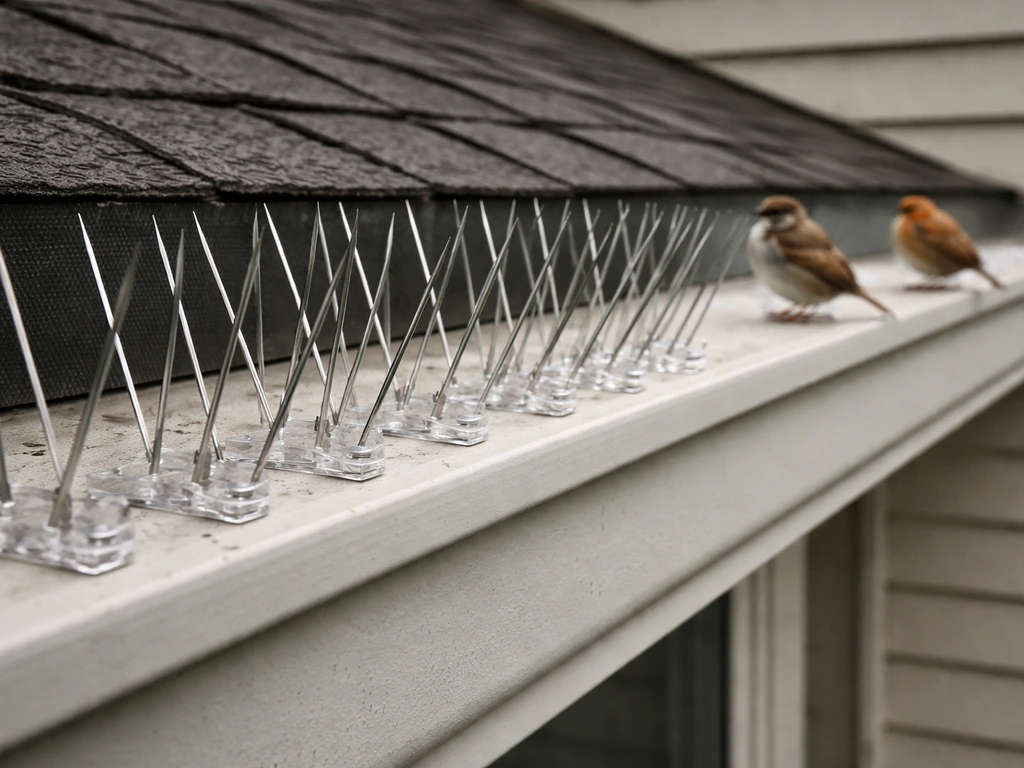
Do bird spikes actually work?
Yes, bird spikes work. When installed correctly on the right surfaces, they reliably stop birds from perching and roosting. They are one of the most widely used and consistently effective physical deterrents available, recommended by sources ranging from the USDA's Wildlife Services to commercial pest management companies. The catch is that 'installed correctly' does a lot of heavy lifting in that sentence. Poor placement, gaps in coverage, or the wrong product for the bird species you are dealing with will all cause them to underperform. Get those variables right, and spikes are a long-term, low-maintenance solution.
How bird spikes actually deter birds
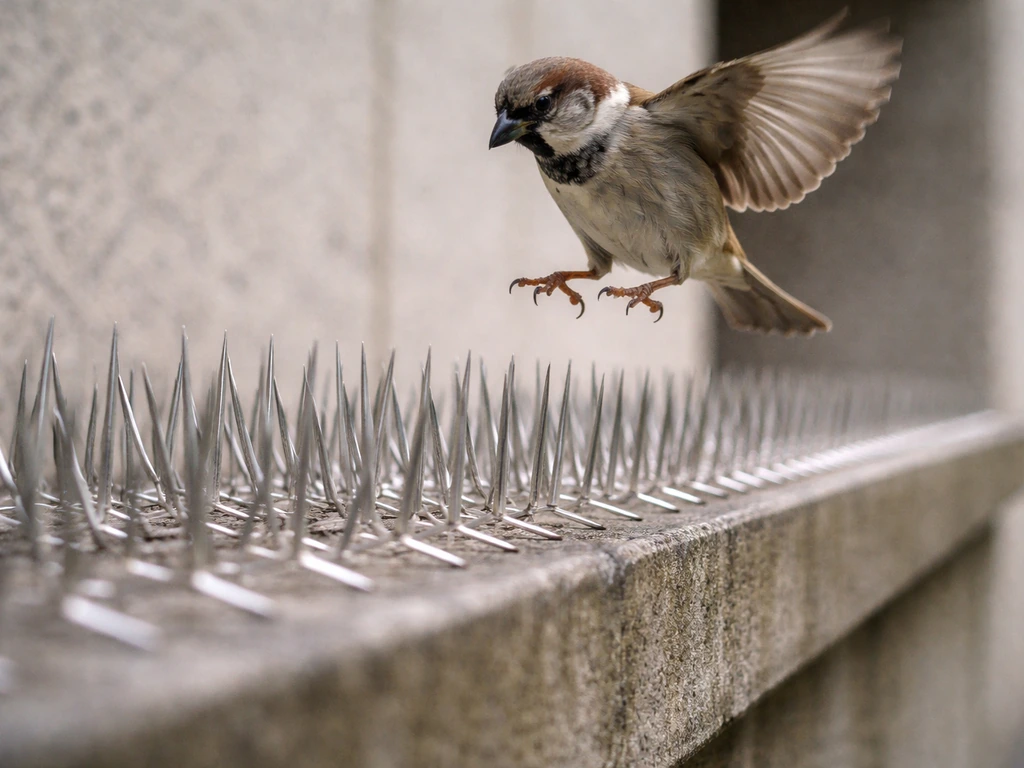
The mechanism is straightforward. Birds look for flat, stable surfaces to land and rest on. Spikes remove that stability. When a bird attempts to land on a spike-covered ledge, it makes contact with the points and cannot get a comfortable foothold. According to USDA-APHIS Wildlife Services technical documentation on bird dispersal, this is a pricking and contact-style deterrent: birds attempt to land, experience discomfort from the spikes, and move on. There is no harm, no trap, and no chemical involved. The spikes simply make the surface unusable for perching.
It is worth understanding that spikes do not scare birds away in the way a visual deterrent might. They physically prevent landing. That distinction matters because it means spikes keep working even after birds get used to them. A bird cannot habituate to a surface it literally cannot stand on.
What makes spikes effective (or not)
Several factors determine whether a spike installation actually does its job.
Bird species and size
Spike height and density need to match the bird you are dealing with. Engineering documentation from White Sands Missile Range makes this explicit: small spikes will not deter large birds from perching. A narrow, low-profile spike designed for sparrows will do almost nothing against a pigeon or gull. If you are targeting pigeons specifically, how well bird spikes work for pigeons depends heavily on choosing a product with the right height and point density for a heavier bird. Match the product specs to the bird size first.
Surface type and mounting location
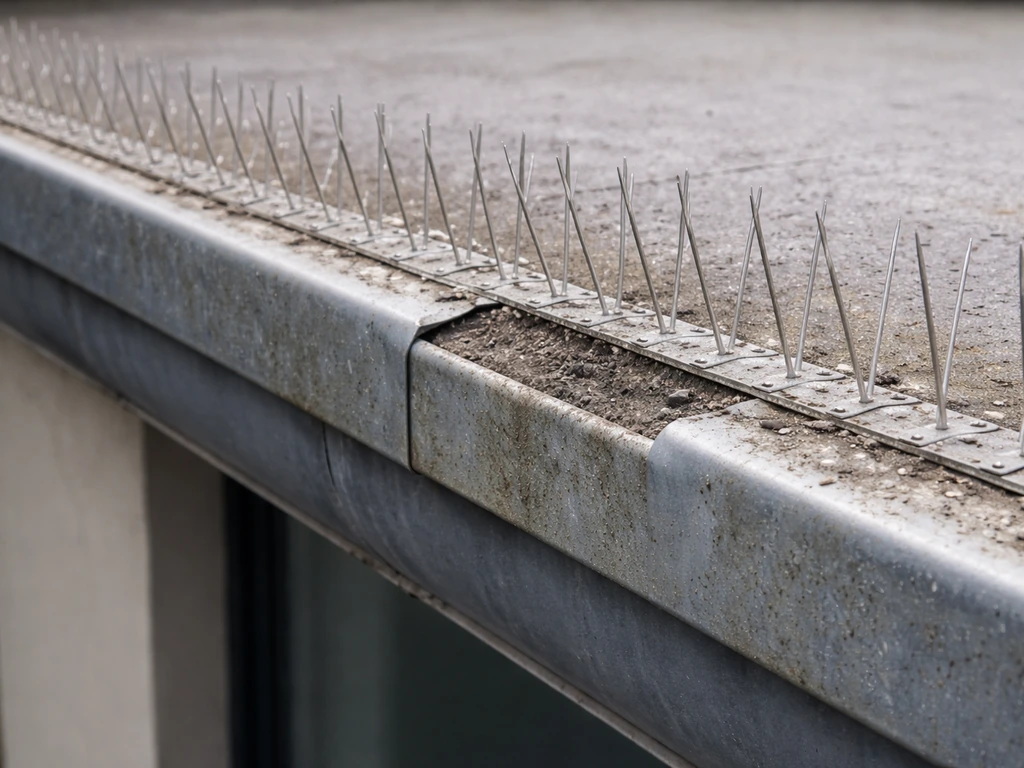
Spikes perform best on horizontal or near-horizontal surfaces where birds naturally want to land: ledges, rooflines, gutters, window sills, solar panel frames, and fence tops. They are less effective on surfaces where birds can approach from multiple angles or where the geometry gives birds a foothold around the spikes. Nixalite even makes a dedicated wall-mount spike product (their Model W) specifically for vertical surface applications, which illustrates how the surface type should dictate product choice.
Installation quality and coverage
This is where most DIY installations fall apart. Gaps in coverage are the number one failure mode. Bird-X's installation instructions specify that spike strips should extend at least half an inch past the exposed edges of the protected surface. Bird B Gone's guidance adds that spikes should be no farther than one inch from any adjacent walls. If you leave a toe-hold at the edge or a gap between strips, birds will find it. Point density also matters: Nixalite's stainless Model S, for example, provides 120 wire points per foot and a coverage width of 4 inches, which leaves very little room for a bird to squeeze in between points.
Weather and seasonal conditions
Weather affects installation more than ongoing performance. If you are using adhesive to mount spikes, Bird-X specifies a working temperature range of 32°F to 120°F and requires a dry, clean surface for proper bonding. Installing in cold, wet, or dirty conditions leads to adhesive failure, which means the strips eventually shift or detach, creating gaps. Once installed and cured, stainless steel spikes handle weather without issue since the material does not corrode or decay.
How to install bird spikes: a practical step-by-step
Nixalite's installation guidance makes a point that is easy to overlook: reviewing spacing charts and using measurement templates before you start prevents the most common errors. Here is a straightforward process for typical residential and light commercial installations.
- Measure every area you plan to cover, including any curves or bends. Bird-X's instructions note that flexible spike strips can follow curved surfaces, so measure along the actual surface length, not just a straight-line distance.
- Clean the surface thoroughly. Remove existing bird droppings, dirt, and debris. Adhesive will not bond to a contaminated surface, and dried droppings can actually give birds a landing bridge over lower-profile spikes.
- Choose your fastening method for the surface. Options include construction adhesive, screws (Bird-X specifies #12 flat Phillips-head screws for hard mounting), nails, or wire ties. Adhesive works well on smooth, clean surfaces in good weather. Screws are more reliable on wood, concrete, or metal where long-term hold matters.
- Start at one end and work in continuous runs. Butt strips end-to-end without leaving gaps between sections.
- At edges, make sure the last strip extends at least half an inch past the edge of the surface. This is the measurement Bird-X and Bird B Gone both call out specifically, and it is frequently skipped.
- On wide ledges (wider than 4 to 5 inches), install multiple rows of spikes side-by-side. A single row down the center of a wide ledge leaves room for birds to land on either side.
- Check for any nearby walls. Keep spike strips no more than one inch from adjacent vertical surfaces to eliminate the gap birds could use as a foothold.
- Inspect the installation after the first rain or temperature swing to confirm adhesive strips have held.
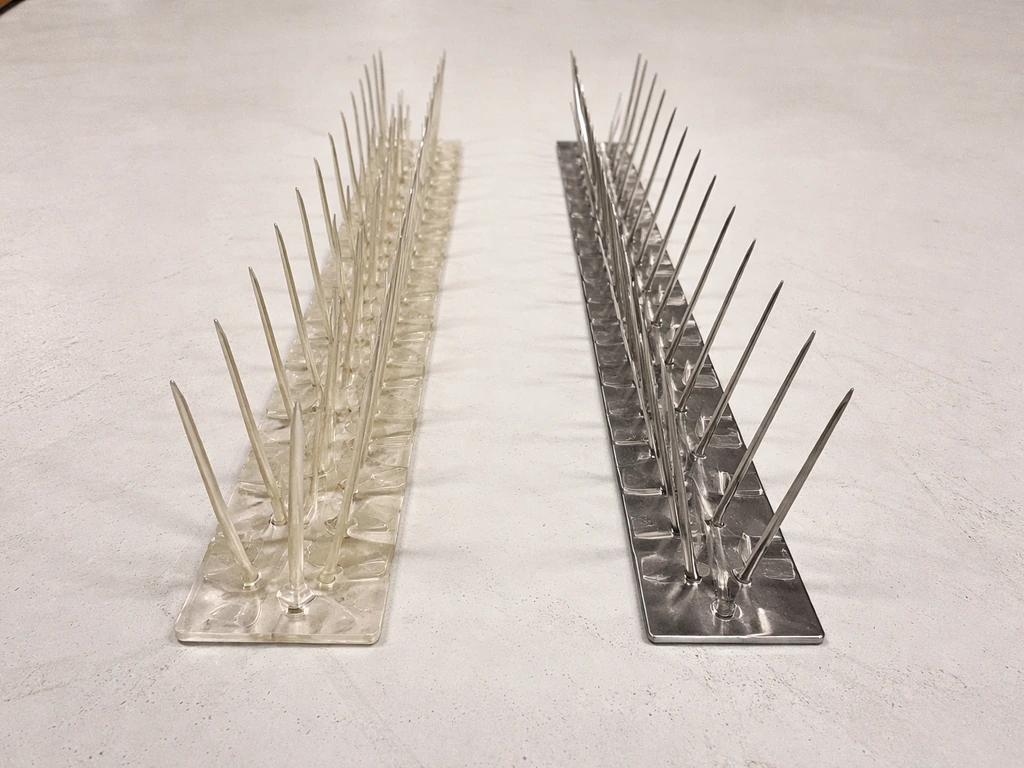
Both plastic (polycarbonate) and stainless steel spikes can work, but they are not interchangeable. Here is a direct comparison across the factors that matter most.
| Factor | Plastic (Polycarbonate) | Stainless Steel |
|---|
| Durability | Degrades over time in UV exposure, may become brittle | Long-lasting, does not corrode or decay |
| Effectiveness | Works well for smaller, lighter birds; may bend under heavier birds | Holds up against larger birds like pigeons and gulls |
| Cost | Lower upfront cost | Higher upfront cost |
| Appearance | Often clear/transparent, less visible | Metallic finish, more visible on light surfaces |
| Installation | Lighter and easier to handle; adhesive or ties typical | Adhesive, screws, nails, or wire ties; slightly heavier |
| Best use case | Budget installs for small birds in sheltered areas | High-traffic ledges, commercial installs, larger birds, exposed outdoor locations |
Bird-X sells both polycarbonate narrow-profile kits and stainless steel options, and the product distinction reflects real performance differences rather than just marketing. For anything exposed to direct sun, heavy weather, or large birds, stainless steel is the more reliable long-term choice. Plastic spikes in sheltered spots (like an interior warehouse ledge) can perform fine for years. The honest recommendation: if you are spending time and money on installation, spend a bit more on stainless steel for outdoor use. The UV degradation on plastic is not always obvious until the spikes are already compromised.
When spikes fail: common problems and fixes
If you have installed spikes and birds are still landing nearby, work through this checklist before assuming spikes do not work for your situation.
- Gaps in coverage: Walk the entire protected area and look for any breaks between strips, spaces at edges, or strips that have shifted. Even a two-inch gap is enough for a small bird. Fill every gap.
- Undersized spikes for the bird: If pigeons or larger birds are the problem, low-profile plastic spikes likely lack the height and rigidity to deter them. Upgrade to a taller, denser stainless product.
- Debris accumulation: Leaves, twigs, and nesting material build up between spikes over time and create a bridge that birds can stand on. Clean the spikes seasonally, especially in autumn.
- Birds moving to adjacent surfaces: Spikes only protect the exact surface they cover. If birds shift to a nearby unprotected ledge or overhang, you need to extend coverage to those surfaces too.
- Adhesive failure: If strips have lifted or shifted, the adhesive bond failed. Remove, clean the surface completely, and re-apply in appropriate temperature conditions or switch to mechanical fasteners.
- Wrong surface geometry: If birds are landing on a vertical or angled surface where spikes cannot mount properly, consider combining spikes with a secondary deterrent like netting or a wire system for that specific spot.
One thing worth checking: if the problem involves animals other than birds using the same area, spikes may or may not help depending on the animal. For example, whether bird spikes can deter raccoons is a separate question with a different answer than it is for birds, since raccoons interact with surfaces very differently. Similarly, if you are dealing with roosting bats rather than birds, whether bird spikes work for bats depends on the roosting behavior involved, which is worth understanding before installing. And for cat intrusion problems on fences or ledges, the question of whether bird spikes deter cats has its own considerations around cat weight and agility.
Safety, legality, and keeping it humane
Bird spikes are a humane deterrent when used correctly. The goal is prevention of landing, not harm to the bird. That said, there are a few important considerations to keep in mind before you install.
Legal considerations with migratory birds
In the United States, the Migratory Bird Treaty Act (MBTA), administered by the U.S. Fish and Wildlife Service, prohibits the 'take' of migratory birds, which includes actions that harm or kill them. Passive physical deterrents like spikes are generally considered legal because they prevent landing rather than harming birds. However, if an installation traps or injures a bird, that creates potential legal exposure under the MBTA. The practical takeaway: install spikes so they deter, not trap. Avoid configurations where a bird could become stuck between spike rows or wedged against a wall.
Physical safety during installation
The spikes themselves are sharp, and working at height on rooflines or gutters adds risk. Wear work gloves when handling spike strips. For any installation above ground level, use a stable ladder and follow basic ladder safety. On adhesive installations, work in temperatures within the product's specified range (32°F to 120°F for Bird-X adhesive) to avoid bonds that fail later and cause strips to fall.
Avoiding unintended harm
The Raptor Trust, which treats injured wild birds, notes that many bird injuries in outdoor environments come from human-installed fixtures that birds interact with unexpectedly. The principle that applies here: check your installation for any sharp protrusions that extend beyond the spike array, any loose wire ends, or any gaps where a small bird could wedge itself. Trim or cover any exposed wire ends on the base strips. Inspect the installation a few days after birds first encounter it to confirm they are deflecting away rather than getting stuck.
Used as intended, bird spikes are among the most straightforward, low-risk tools in bird control. The humane case for them is actually strong: a bird that cannot land on a ledge moves on immediately with no injury, no stress beyond a brief failed landing attempt, and no ongoing exposure to a hazard. That is a better outcome than many of the alternatives.