
Bird strikes are one of the most persistent safety risks in aviation, and the good news is that a structured, layered prevention program can dramatically cut your exposure. The key is treating bird control not as a single tactic but as an ongoing operational program: understand what attracts birds to your airfield, assess where and when the risk peaks, then deploy the right combination of habitat management, active deterrents, and physical exclusion. This guide walks you through that full workflow, from initial risk assessment all the way to monitoring and measuring results.
How to Prevent Bird Strikes on Aircraft: A Step-by-Step Guide

Marcus Weatherby
17 Apr 2026

Why bird strikes happen near airports
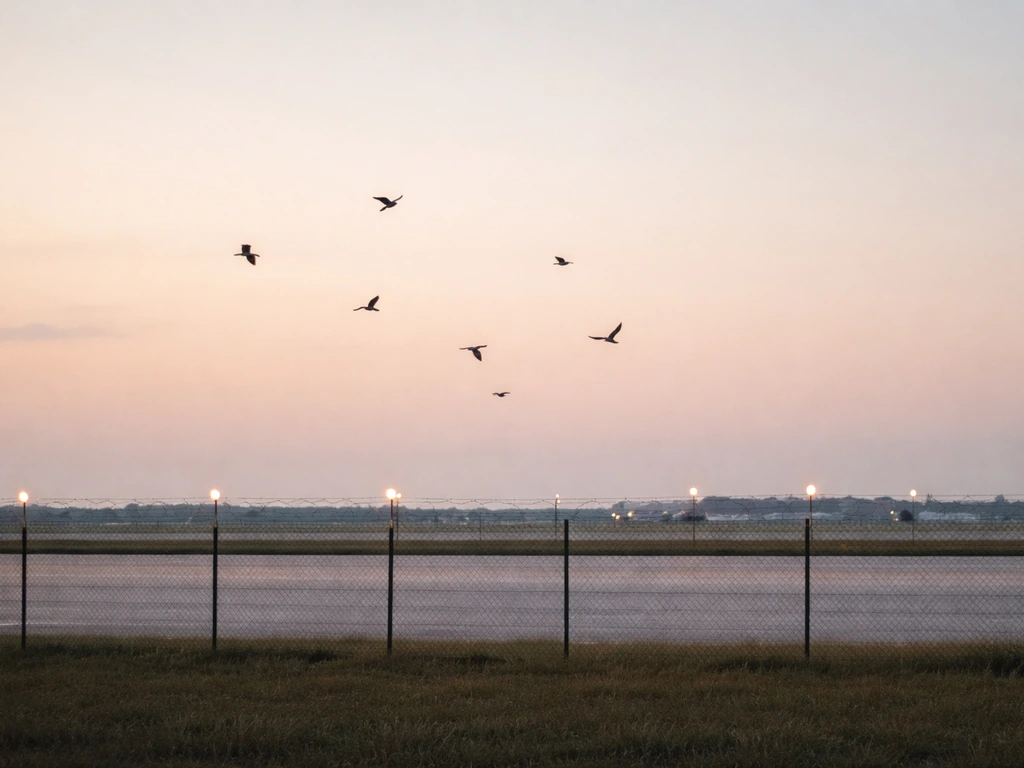
Most bird strikes are not random. They follow predictable patterns tied to bird behavior, airfield conditions, and the surrounding landscape. According to FAA data, about 61% of fixed-wing civil aircraft bird strikes occur during landing phases (descent, approach, and landing roll), while 36% happen during take-off run and climb. That concentration in the lowest phases of flight tells you where to focus your prevention effort: the approach corridors, runway thresholds, and taxiways where aircraft are closest to the ground.
What draws birds to those areas in the first place? The main drivers are food, water, shelter, and light. Airfields often provide all four without intending to. Short-mowed grass harbors insects and small rodents. Retention ponds and drainage ditches supply open water. Hangars and terminal buildings offer roosting and nesting sites. And nighttime apron lighting attracts insects, which in turn attract insectivorous birds. Nearby land uses compound the problem: wastewater treatment facilities, artificial wetlands, landfills, and agricultural fields can all funnel large numbers of birds toward runway environments.
Season matters too. Migration periods in spring and fall push large concentrations of birds through flight paths that may cross directly over your runways. Nesting season in late spring anchors territorial birds in fixed locations on or near the airfield. Understanding these drivers is the foundation for everything that follows.
How to assess your bird-strike risk and find the hot spots
Before you can fix a bird problem, you need to know what species you're dealing with, where they concentrate, and when. Start with your own strike history. Pull your internal incident reports and cross-reference them against the FAA's National Wildlife Strike Database, which is publicly accessible and fed by voluntary strike reports submitted under AC 150/5200-32C. This data will show you which species, phases of flight, and time periods are generating the most events at your airport and at comparable facilities.
Next, use the Avian Hazard Advisory System (AHAS), which the FAA references as a practical tool for estimating current bird activity. AHAS combines historical strike data, bird mass averages from the FAA database, and weather inputs to give you a real-time risk estimate by location. It's especially useful for pre-flight planning and for identifying recurring high-risk corridors.
On the ground, conduct structured wildlife surveys. Walk or drive the airfield at dawn and dusk (peak activity periods) and document species, flock sizes, and locations on a simple map. Do this across multiple seasons to capture both resident and migratory populations. Pay particular attention to areas near water features, food waste points, and vegetated buffers. This survey data, combined with your strike history and AHAS outputs, becomes the evidence base for a formal Wildlife Hazard Assessment, which is the required precursor to a full Wildlife Hazard Management Plan (WHMP) under the FAA's framework.
If your airport is certificated under 14 CFR Part 139, you already have compliance obligations around wildlife hazard management. Even if you don't, the FAA's assessment-and-plan structure is the most practical framework available. How airports prevent bird strikes follows exactly this risk-first logic, and it applies equally to smaller general aviation fields.
Layered prevention: managing habitat, food, and water
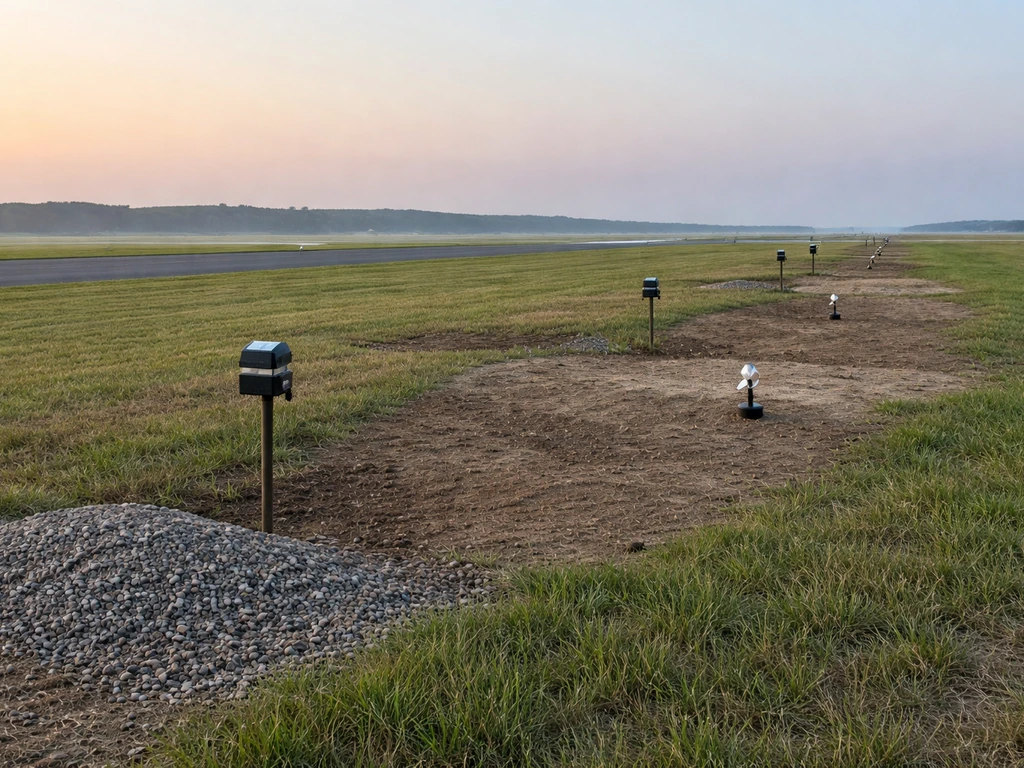
The most durable bird control comes from making the airfield less attractive in the first place. Active deterrents can disperse birds temporarily, but if the food and shelter are still there, the birds come back. Habitat management addresses the root cause.
Vegetation management
Grass height on airfield movement areas is one of the most powerful and underused tools available. Tall grass (8 to 14 inches) is less attractive to most bird species than short-mowed turf because it conceals predators and makes foraging harder. Many airports default to closely mown grass for visibility reasons, which ironically creates ideal feeding habitat for starlings, gulls, and Canada geese. Adjusting mowing schedules and target height within safety constraints can meaningfully reduce bird activity on runway shoulders and infield areas.
Avoid planting fruit-bearing or seed-bearing trees and shrubs anywhere near runways or taxiways. If existing plantings are attracting foraging birds, removal or replacement with non-fruiting species is worth the investment. Dense shrub lines that provide nesting cover close to movement areas should also be thinned or relocated.
Water and drainage
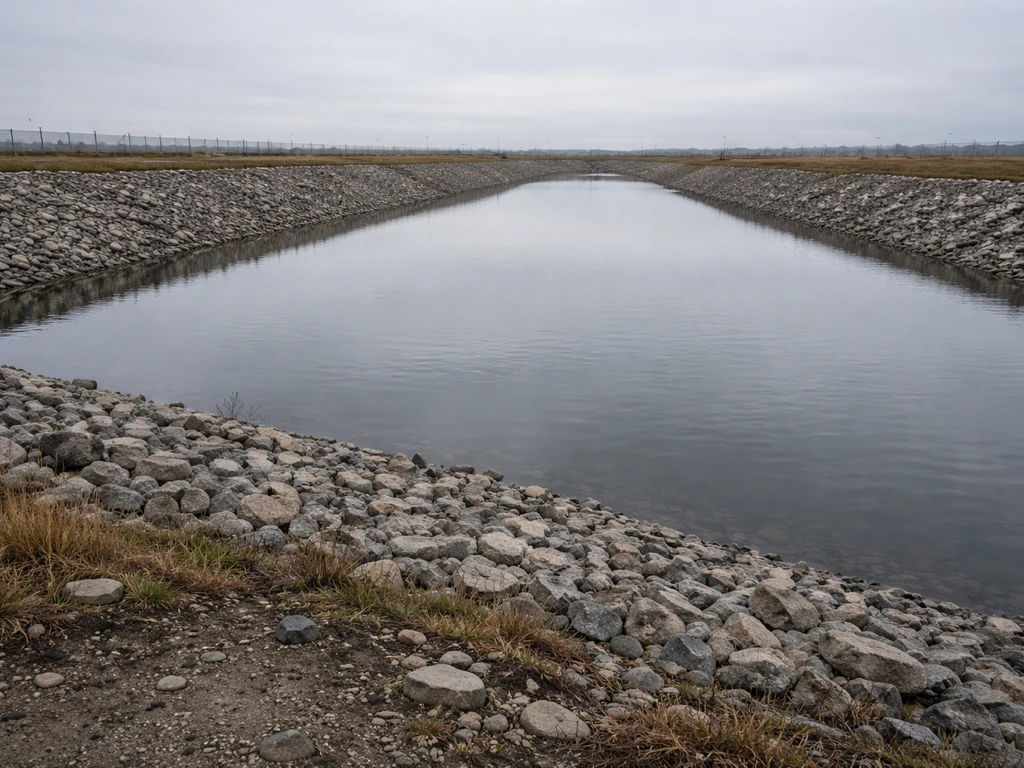
Open water is a major attractant for waterfowl, gulls, and shorebirds. Retention ponds required for stormwater management should be made as unattractive as possible: steep, riprap-lined banks discourage wading birds; balloons or wire grid systems over smaller ponds reduce landing opportunities; and eliminating emergent vegetation removes nesting cover. Standing water in low spots, ruts, and drainage channels should be addressed through grading and drainage improvements.
Food waste and off-airport attractants
Secure all food waste on the airfield: galley waste from aircraft, concession refuse, and anything in maintenance areas. Covered, bird-proof receptacles are non-negotiable. Beyond the fence line, the FAA's Advisory Circular AC 150/5200-33C addresses hazardous wildlife attractants near airports and provides guidance for avoiding, eliminating, or mitigating land-use attractants like wetland mitigation areas and artificial marshes. If you have a landfill within a few miles, AC 150/5200-34B covers that specific scenario. Engage your local planning authority if incompatible land uses are being proposed near the airport boundary.
Active bird deterrence options for airfields
Once you've reduced habitat attractiveness, active deterrents handle the birds that still show up. No single deterrent works indefinitely on its own. Birds habituate to repeated stimuli. The solution is a rotation of methods deployed strategically across your identified hot spots. The best bird strike prevention programs combine at least two or three active deterrent categories.
Auditory deterrents
Pyrotechnics (bird bangers, screamers, and shell crackers) fired from a pistol or launcher are the workhorse of airfield bird dispersal. They create a loud report and, with shell crackers, a moving noise source that mimics a predator approach. They work best when combined with species-specific distress calls broadcast from portable or fixed speaker systems. Distress call units are particularly effective because they trigger an instinctive flight response in the target species. Rotate call recordings and vary broadcast timing to slow habituation.
Ultrasonic devices are often marketed as a solution for airfields, but their effectiveness in open outdoor environments is limited. Sound dissipates quickly in open air, and birds simply move around the coverage zone. Save ultrasonic units for enclosed spaces like hangars and terminal buildings where sound can concentrate.
Visual deterrents
Predator effigies (coyote decoys, owl silhouettes, falcon kites) can be effective when moved regularly and combined with other methods. A stationary owl decoy left in the same spot for more than a day or two loses its deterrent value quickly. Falcon kites or RC predator aircraft that actually move are more persistent. Reflective tape, mylar balloons tethered near problem areas, and laser devices used during low-light conditions (morning and evening) round out the visual toolkit. Lasers in particular have shown good results for dispersing roosting birds at dawn, though their use near runways requires careful coordination to avoid any risk to pilots.
Trained raptors
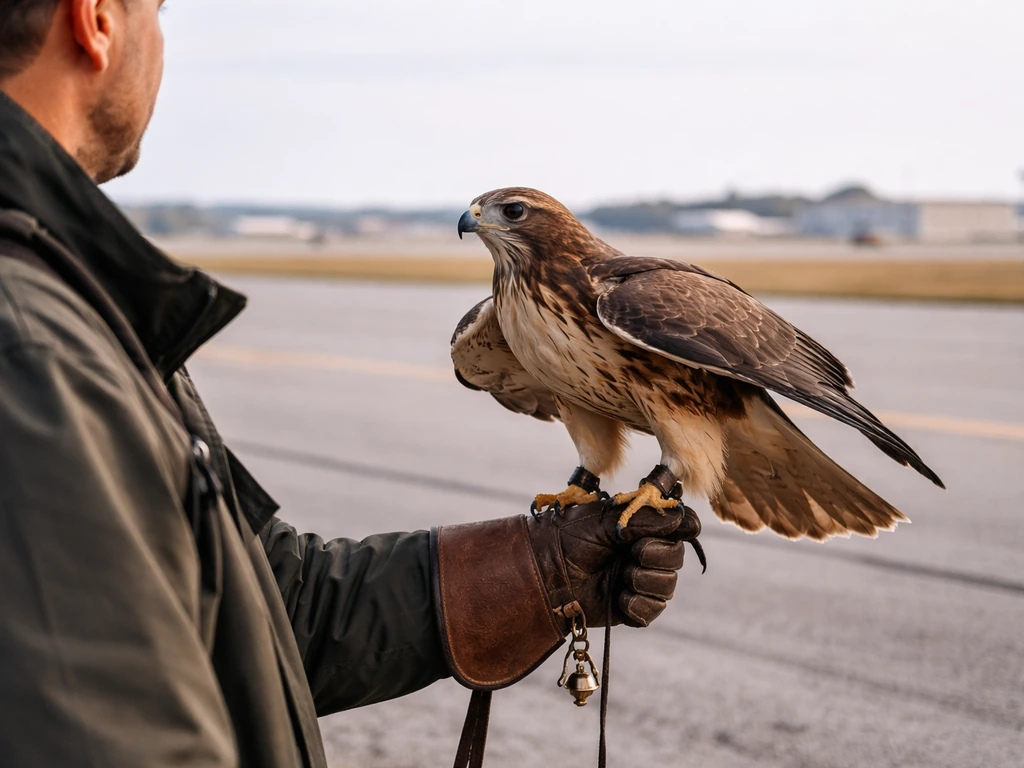
Falconry programs, where licensed falconers fly trained hawks or falcons over the airfield, are one of the most effective active deterrents available. Birds recognize a live predator as a genuine threat and will vacate an area reliably. Several major airports use falconry as a core component of their wildlife management programs. It requires a licensed professional and a commitment to regular deployments, but it delivers results that passive methods cannot match.
Lethal control
Lethal control (shooting, trapping, and egg oiling or destruction) is a legal and sometimes necessary part of an integrated program, but it requires the appropriate federal and state permits for protected species. USDA Wildlife Services (APHIS) can assist with permitted lethal control and is a standard partner for many airport wildlife programs. Lethal methods are most effective as a complement to habitat modification, not as a standalone solution.
Physical exclusion and barriers where they fit aviation needs
Physical barriers are a well-established part of how to prevent bird strikes in many contexts, and they do have a role in aviation, though their application is more targeted than in a typical building or garden setting.
Wire grid systems strung over retention ponds and drainage ponds are the most common airfield barrier application. A grid of stainless steel or monofilament lines spaced 1 to 2 feet apart prevents waterfowl from landing on the water surface. This is one of the few barrier methods that directly eliminates a landing zone rather than just making it uncomfortable.
Bird netting is appropriate for enclosed or semi-enclosed structures: hangars, fuel farm canopies, terminal building overhangs, and maintenance bays where pigeons and starlings roost. Netting excludes birds from these nesting and roosting sites permanently, eliminating the need for repeated active deterrence in those locations. Bird spikes serve the same purpose on ledges, beam edges, and signage structures within airport buildings.
What you cannot do on an active airfield is install any physical structure that could become a debris hazard or obstruct sight lines. Every barrier element near movement areas needs to be evaluated for FOD (foreign object debris) risk. Loose netting, unsecured reflective tape, and improperly anchored decoys can all create hazards that are worse than the bird problem they're solving. Any installation near runways or taxiways must be reviewed as part of your airfield safety management process.
Safety, compliance, and keeping operations running smoothly
Bird control at an active airfield operates in a constrained environment. Every tool, every deployment, and every installation has to be evaluated not just for bird control effectiveness but for its potential to create new hazards. This section covers the non-negotiables.
Coordinate with air traffic and ground operations
Any active deterrence activity on or near movement areas needs to be coordinated with the tower (at towered airports) and ground operations. Wildlife personnel working on runways or taxiways must operate under the same vehicle/personnel protocols as any other airfield worker: radio contact, light signals, and awareness of active traffic. Pyrotechnic activities should be reported to the tower so pilots are informed and not startled by unexpected reports. At some facilities, bird activity information feeds directly into traffic management coordination, with operations personnel adjusting runway assignments or departure times during high-risk bird activity periods.
Regulatory compliance
14 CFR Part 139 certificated airports are required to have a Wildlife Hazard Management Plan if a wildlife hazard assessment indicates the need for one (under § 139.337). That plan must include a training program conducted by a qualified wildlife damage management biologist. FAA Advisory Circular AC 150/5200-36B defines the qualifications for wildlife biologists who conduct assessments and develop training curricula. If you're at a non-certificated general aviation airport, you aren't legally bound by Part 139, but following the same framework is still the most defensible and effective approach.
For protected species (migratory birds covered by the Migratory Bird Treaty Act, raptors covered by the Bald and Golden Eagle Protection Act), lethal control requires federal depredation permits. Don't skip this step. Working through USDA APHIS Wildlife Services is the standard path for permitted control activities.
Strike reporting
Report every confirmed or suspected strike using the FAA's voluntary reporting mechanism. The data feeds the National Wildlife Strike Database and improves the accuracy of AHAS and other risk tools over time. More importantly, your own strike reports become the baseline data for evaluating whether your prevention program is working. Without consistent reporting, you can't measure progress.
When to bring in a professional
USDA APHIS explicitly recommends that airports employ professional biologists trained in wildlife hazard management given the complexity of the aviation environment. A qualified wildlife biologist brings species identification expertise, knowledge of effective control methods for specific birds, and the permits needed for lethal control. If your bird problem is persistent, involves protected species, or is producing frequent strikes, a professional assessment is the right next step, not a more aggressive DIY approach.
It's also worth noting that innovations in adjacent fields, like methods developed to prevent bird deaths from wind turbines, have produced radar-triggered deterrent systems and real-time monitoring tools that are increasingly being adapted for airport use. Radar-based bird detection systems (eBird radar, Merlin Radar) can alert wildlife personnel to incoming flocks before they reach the airfield perimeter, giving you a few critical minutes to respond.
Implementation checklist, what to measure, and next steps
A bird control program is only as good as its implementation and follow-through. Here's a practical checklist to get your program structured and a set of metrics to track whether it's working.
Implementation checklist
- Pull your strike history from internal records and cross-reference with the National Wildlife Strike Database to establish your baseline risk profile.
- Conduct structured wildlife surveys across all seasons to identify species, hot spots, and peak activity periods.
- Use AHAS to validate your local risk estimates and identify recurring high-risk corridors.
- Map attractants: water features, vegetation, food waste points, and off-airport land uses within 5 miles.
- Implement habitat modifications first (grass height, water feature treatment, food waste control, vegetation management) before layering active deterrents.
- Select active deterrents matched to your problem species: pyrotechnics and distress calls for most species, wire grids for waterfowl on ponds, falconry for persistent pressure.
- Install physical barriers (netting, spikes, wire grids) in enclosed structures and over water features where debris risk is negligible.
- Establish coordination protocols with the tower and ground operations for all airside wildlife activities.
- Secure required permits for any lethal control methods through USDA APHIS Wildlife Services.
- Develop or update your Wildlife Hazard Management Plan if required under 14 CFR Part 139.
- Train all airport operations personnel in wildlife hazard awareness and strike reporting procedures.
- Set up a consistent strike reporting workflow so every event gets logged with the FAA.
What to measure
| Metric | How to track it | Target direction |
|---|---|---|
| Number of confirmed bird strikes per 10,000 operations | FAA strike reports + internal records | Decrease year over year |
| Bird activity observations per patrol hour (at hot spots) | Wildlife patrol logs | Decrease at treated locations |
| Time to disperse birds from movement areas | Wildlife team response logs | Decrease as protocols mature |
| Species composition at hot spots | Seasonal survey records | Shift away from high-risk species |
| Habitat attractant score | Annual airfield inspection checklist | Decrease as modifications are made |
| Strike reporting compliance rate | Reports submitted vs. incidents logged | Approach 100% |
Next steps
If you're starting from scratch, the single most valuable first action is a structured wildlife survey combined with a review of your strike history. That data tells you what you're actually dealing with and prevents you from spending money on deterrents aimed at the wrong species or the wrong locations. What is already being done to prevent bird collisions gives useful context for where the industry baseline sits and what proven programs look like.
If you already have some controls in place but strikes are still occurring, the most common problem is insufficient habitat modification. Deterrents work better and last longer when the underlying attractants are reduced. Review your grass management, water feature treatment, and food waste protocols before adding more active deterrence layers.
For drone operators working at or near airfields, the bird risk dynamic is a bit different in terms of scale and response options. How to avoid a bird attack on a drone covers the specific tactics relevant to that scenario. The core principle is the same: understand the risk, reduce attractants where possible, and have an active response ready.
The FAA's Wildlife Hazard Management at Airports manual (2005, with subsequent updates) is the definitive reference document for this work. It covers assessment methodology, plan development, deterrent selection, and program evaluation in detail. If your airport doesn't have a copy, download it and put it in your operations library. Combined with regular patrol logs, honest strike reporting, and a willingness to adjust methods when habituation sets in, it gives you everything you need to build a program that actually moves the numbers.
FAQ
How do I choose deterrents if I do not know which bird species are causing strikes?
Start with a targeted wildlife survey and your strike history, then verify species on scene when possible. If you lack reliable species ID, prioritize controls that reduce broad attractants (mowing height adjustments, covering food waste, making water less usable). Reserve species-specific distress calls and predator methods for confirmed problem species, since mis-targeting can waste money and accelerate habituation.
What is the best way to measure whether bird strike prevention is actually working?
For most bird control actions, do not change multiple variables at once. Run one intervention in a defined zone for a few weeks, track strikes and near-misses, and log deterrent deployments by time and location. This lets you tell whether, for example, grass-height changes reduced foraging, or whether a deterrent rotation only temporarily displaced birds.
Can we use lasers or reflective devices close to runways to reduce roosting birds?
Yes, but it must be managed as an aviation safety and nuisance issue. Keep any deterrent equipment out of movement areas unless it is specifically approved, anchored, and reviewed for foreign object debris risk (including wind-blown tape, loose netting, and unsecured decoys). Also coordinate timing with traffic flow and notify the tower so pilots do not misinterpret activity during high-risk phases.
What should we do if birds seem to get used to deterrents quickly?
You should treat habituation as a predictable failure mode and manage it with rotation and timing variation. Rotate at least by deterrent category (pyrotechnic, distress call, visual, predator simulation), adjust broadcast schedules (dawn and dusk patterns often matter), and avoid leaving the same effigy in the same spot for more than a short window.
Are ultrasonic bird deterrents effective on open aprons and runways?
Do not assume ultrasonic devices will generalize across an airfield. In open outdoor areas, sound dissipates, so effectiveness is often limited to small, enclosed spaces. If you use ultrasonics, limit them to hangars or terminal interiors where sound can concentrate, and compare results against your strike data rather than marketing claims.
What is the most effective approach for bird risk around retention ponds and drainage ditches?
If you have retention ponds or drainage features, address landing and nesting separately. Use physical barriers like wire grid systems to prevent landing where feasible, and remove emergent vegetation or modify bank slopes to reduce wading and nesting. Fixing only one component, for example discouraging landing but leaving nesting cover, often leads to partial improvement and continuing strike risk.
Should we start with habitat modification or active deterrence?
Yes, and the safest order is usually habitat first, then deterrence, then barriers. If food, water, and shelter are still present, deterrents will be pushed harder and require more frequent deployments. By reducing attractants up front, you typically shorten the period and intensity of active deterrence needed, which also lowers safety risk from constant operations.
If we are not a Part 139 airport, do we still need a wildlife hazard management plan?
Even if your airport is not required to follow Part 139, you should still build the same documentation trail: a wildlife hazard assessment, an updated plan when conditions change, training records, patrol logs, and a clear chain of responsibility. This makes it easier to respond to incidents, coordinate with local planning, and justify changes to management and budgets.
What are the compliance steps before using lethal control methods?
For protected species, you generally cannot rely on informal or emergency-only lethal actions. Depredation permits, coordination steps, and the correct handling method matter. The usual path is to engage USDA Wildlife Services or an appropriately permitted contractor, and ensure your nonlethal measures and reporting are up to date so enforcement and compliance expectations are met.
How do we coordinate bird control work with tower, ground operations, and airfield safety rules?
Yes. Make sure anyone installing or deploying equipment can follow the same personnel protocols as other airfield workers, and confirm tower and ground coordination when you are operating on or near movement areas. Also document the deployment so, during an incident investigation, you can show what was used, where it was installed, and when it was active.
What information should we include internally when reporting suspected bird strikes to track trends?
Use the reporting tool for every confirmed or suspected strike, but also maintain an internal log that links the report to location, aircraft phase, time, and any available photo or witness notes. Your internal log helps you conduct trend analysis and zone-level evaluations even when the FAA database processing is delayed.
When is it worth hiring a qualified wildlife biologist instead of relying on an in-house team?
Professional help is especially justified when you see repeated strikes over multiple seasons, multiple species involved, protected species, or complex land-use attractants nearby. A trained biologist can also help you interpret AHAS output, refine survey timing, and ensure training and permits are correct, which is often where DIY efforts fail.
Next Article
Do Bird Window Stickers Work? Placement, Results, and Fixes
Do bird window stickers work? Learn practical placement, coverage, what affects results, and next steps if strikes conti