
The best bird deterrent for most gardens is physical exclusion netting, full stop. It is the only method that reliably stops birds from reaching fruit, seedbeds, and vulnerable plants regardless of species or season. Every other deterrent works as a complement or a substitute when netting is not practical. With that said, gardens vary enormously, and so do the birds causing damage, so the right answer for your specific setup may be a combination of methods. This guide walks you through exactly how to identify your problem, pick the right tools, set them up properly, and keep them working over time.
Best Bird Deterrent for Garden: Choose, Install, and Upgrade
Marcus Weatherby
20 Apr 2026
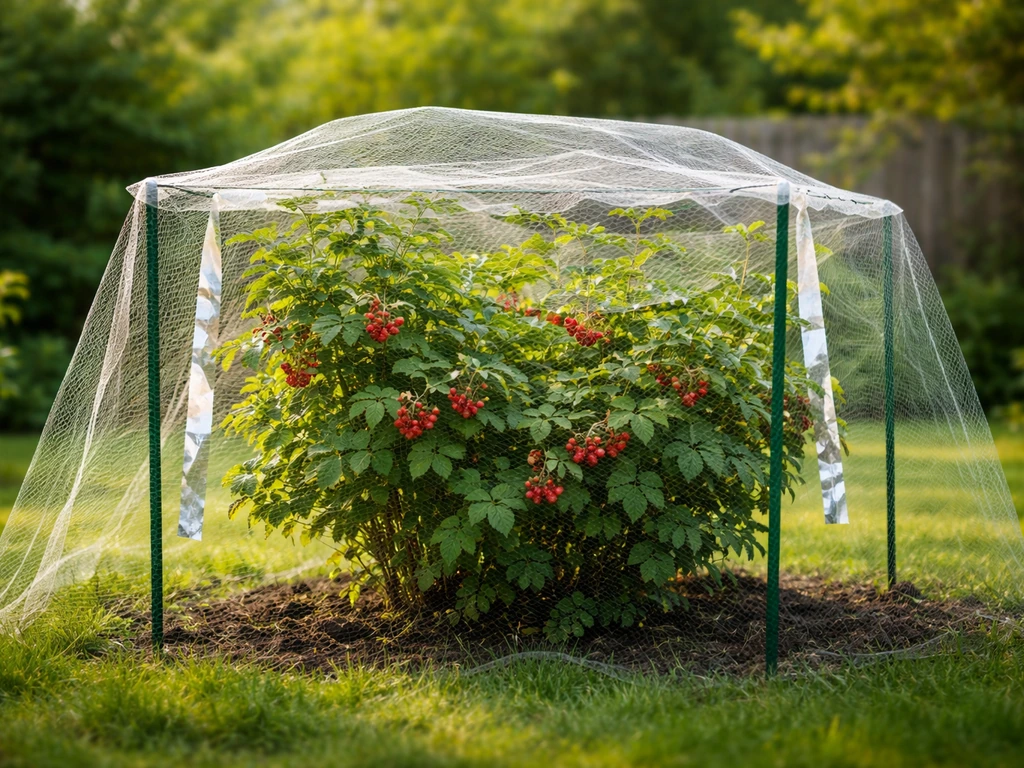
Figure out what's actually going on first
Before buying anything, spend a couple of mornings watching your garden. The damage pattern and timing tell you almost everything you need to know. If you're seeing fruit that is pecked, knocked to the ground, or partially eaten, birds are feeding on ripening crops. If seed is disappearing from newly sown beds, birds are foraging the surface. Flattened seedlings usually mean heavier ground feeders like pigeons. Disturbed compost is often corvids or starlings digging for grubs.
Species matter too. House sparrows tend to peck small holes in soft fruits like grapes and cherries. Blackbirds and thrushes go for berries and tend to strip a bush from the outside in. On blueberries, birds often start at the top of the bush and work down, pecking berries in rapid succession, which means damage can feel sudden and severe. Pigeons are the usual suspects for brassicas, peas, and newly sown lawns. Knowing who you're dealing with helps you choose a deterrent that actually matches their behavior.
Also note when birds show up. Early morning activity is most common. If birds are only arriving at one window of the day, a timed sonic deterrent or a temporary physical barrier may be enough. If birds are only arriving at one window of the day, a timed sonic deterrent or a temporary physical barrier may be enough, but for the best bird deterrent for windows in the long run you may need dedicated exclusion. If they are present all day, you need something more persistent.
A quick rundown of your deterrent options
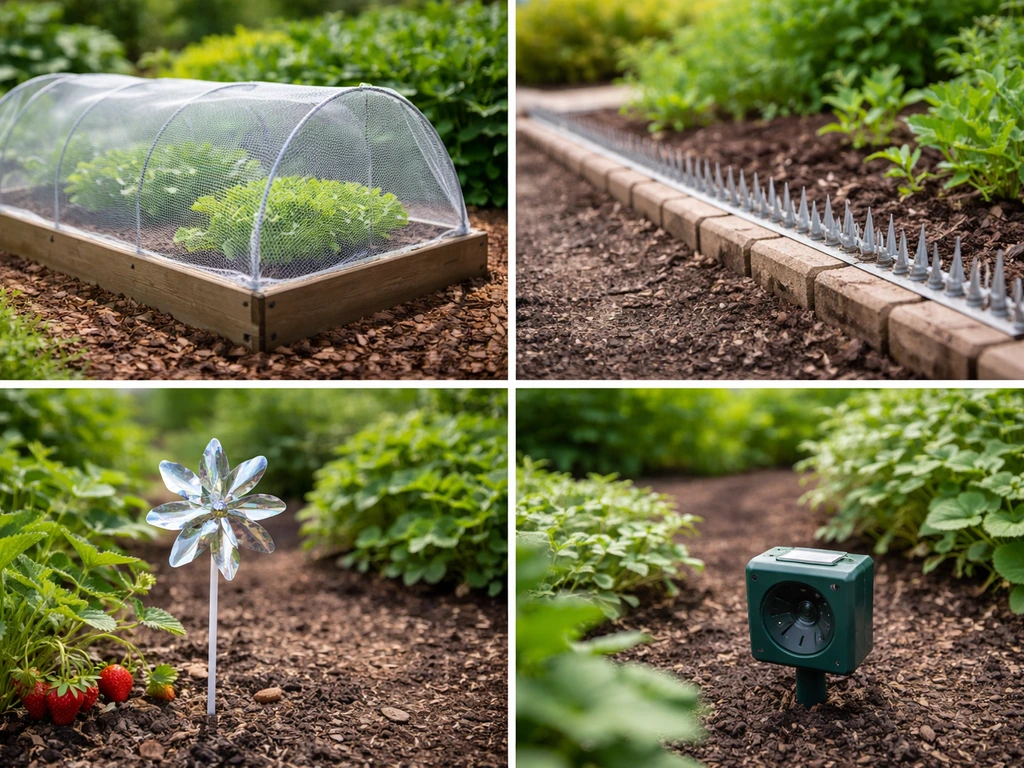
There are four main categories to know. Each has a different mechanism, cost range, and best-use scenario.
| Type | How it works | Best for | Limitations |
|---|---|---|---|
| Physical barriers | Netting, spikes, or wire frames that block access | Fruit crops, seedbeds, raised beds, individual plants | Requires correct installation; can trap birds if done wrong |
| Visual deterrents | Reflective tape, predator decoys, flash tape, scare owls | Open areas, berry bushes, surface-sown seed | Birds habituate quickly; must be moved regularly |
| Sensory / sonic | Ultrasonic emitters, distress call speakers, motion-activated sprinklers | Larger garden areas, patios, lawns | Effectiveness varies by species; ultrasonic has limited evidence |
| Chemical repellents | Taste or smell-based sprays applied to plants or soil | Lawns, seedbeds, ornamental plantings | Short residual life, must be reapplied, food-crop restrictions apply |
The right deterrent for each garden situation
Fruit trees and berry bushes
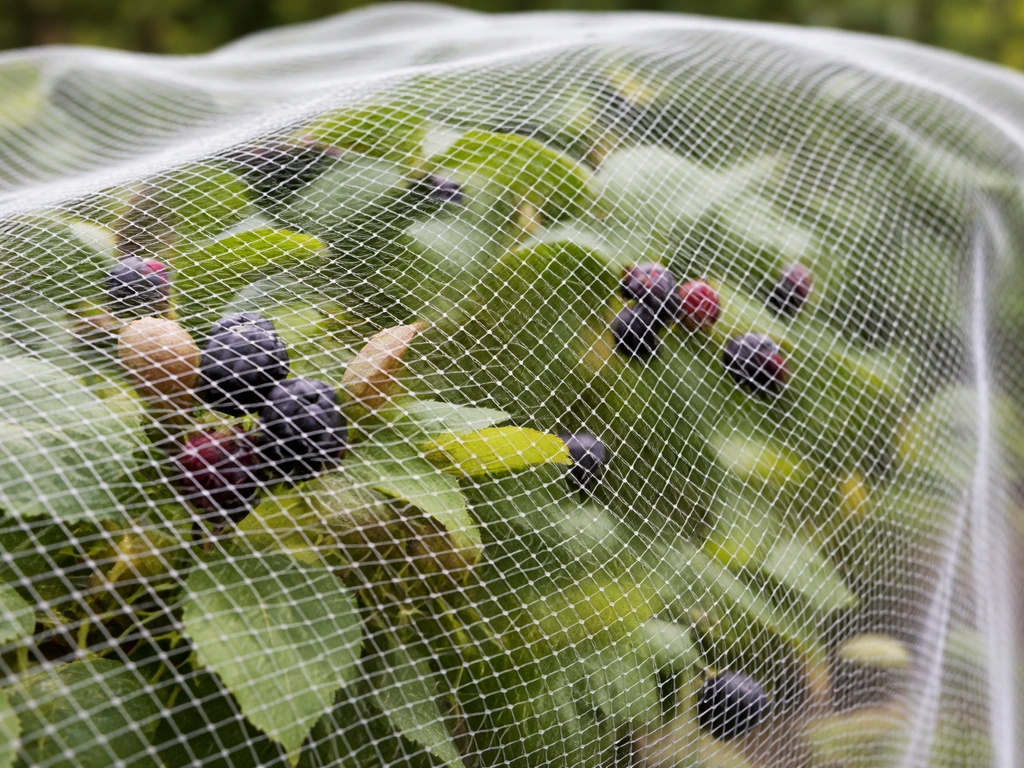
This is where netting earns its reputation. A fine-mesh garden netting (mesh no wider than 20mm) draped over a fruit cage frame or directly over individual bushes is the most reliable way to protect ripening fruit. For established fruit trees, purpose-built fruit cages with an internal support frame work best because loose draping can allow birds to push through or become entangled. For trees, the best bird deterrent usually comes down to reliable exclusion like properly fitted netting or a fruit cage. If you grow blueberries, strawberries, or currants, a full cage is worth the upfront cost because birds will return every day until the fruit is gone.
Vegetable plots and seedbeds
Pigeons are the number one threat to brassicas, peas, and broad beans. For these crops, build a simple tunnel or hoop frame with 20mm wire mesh or netting staked firmly at the base so birds cannot walk underneath. For newly sown seed, lay bird netting flat over the surface and remove it once seedlings are a few centimetres tall and less vulnerable. Fleece also works as a temporary dual-purpose cover (warmth plus bird exclusion) for germinating seed in early spring.
Lawns, flower beds, and ornamental areas
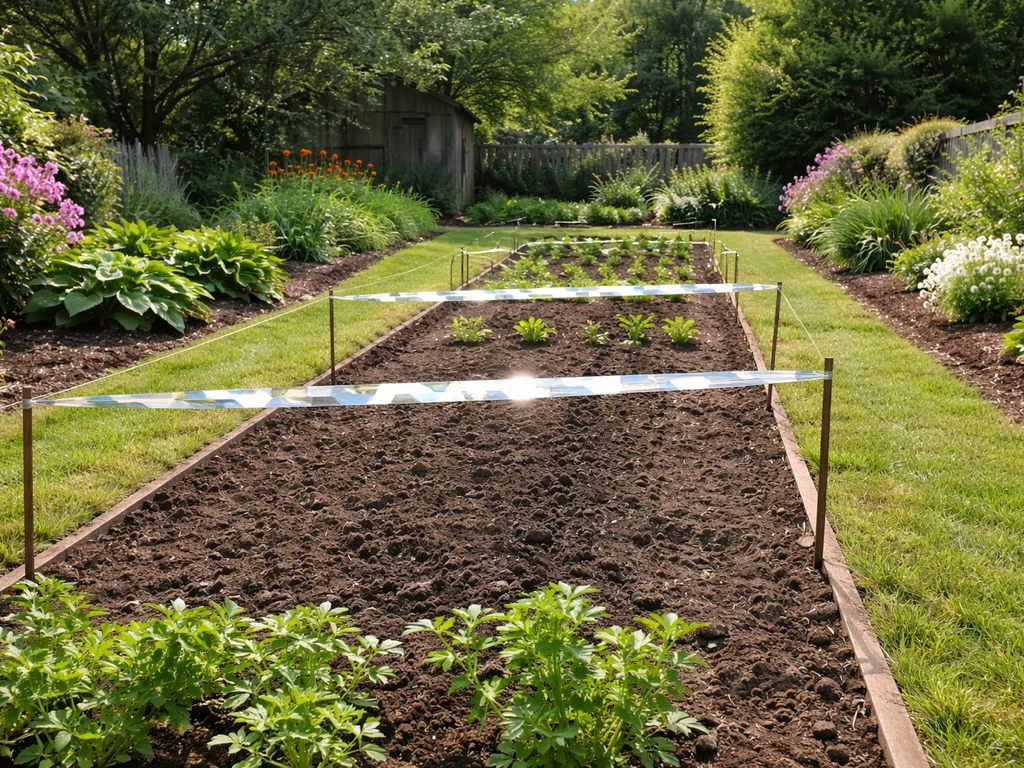
For these areas, netting is often impractical. This is where visual and sensory deterrents earn their place. Reflective flash tape strung at 50 to 60cm intervals across beds creates movement and light scatter that unsettles birds. Motion-activated sprinklers (often called scarecrow sprinklers) are particularly effective for open lawn areas and can cover a radius of around 10 metres depending on model. Predator decoys (plastic herons, owls) can deter some species initially but require regular repositioning.
Compost bins and raised beds
Corvids, especially magpies and crows, dig through open compost for invertebrates. The simplest fix is a fitted lid or a stretch of wire mesh pinned over the surface of the heap. For raised beds, a removable wooden frame covered with mesh or netting gives you easy access while keeping birds out between sessions.
Protecting specific crops like blueberries
Blueberries and other small soft fruits deserve a dedicated cage rather than loose netting, given how aggressively birds target them. For blueberries specifically, a full cage is usually the best bird deterrent because it prevents access to ripening berries every day until harvest. Make sure mesh reaches the ground on all sides and is pegged down. Birds will find any gap. If you grow blueberries alongside other fruit crops, it is worth reading up on targeted protection strategies for that specific plant.
How to install and deploy each type properly
Netting
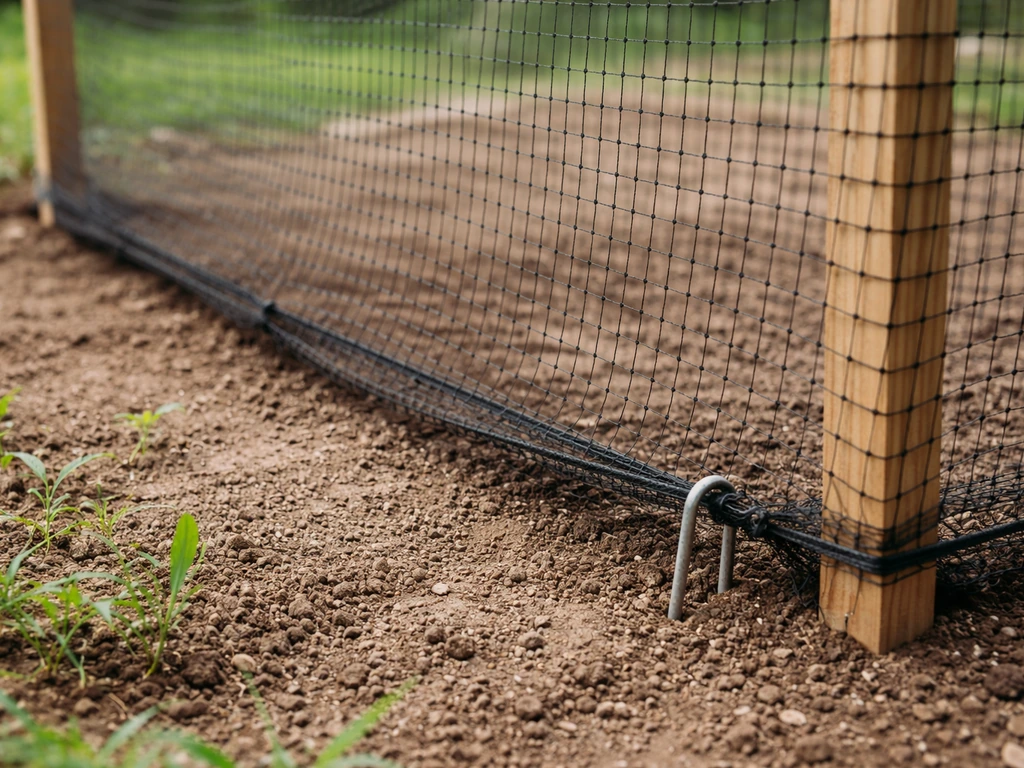
- Choose the right mesh: 20mm for most birds, down to 12mm for sparrows and smaller species targeting fine seed.
- Support it properly: use stakes, hoops, or a cage frame so the netting sits 15 to 20cm above the crop and birds cannot peck through it from the outside.
- Seal the base: peg the edges to the ground or weigh down with stones to eliminate ground-level entry points.
- Check for gaps after wind or rain: netting shifts. Do a quick perimeter check every few days during fruiting season.
- Remove carefully at harvest: check for any entangled birds before bundling up the net.
Reflective tape and visual deterrents
- String reflective tape taut between canes or posts at 50 to 60cm intervals so it vibrates in the breeze.
- Position it at bird feeding height, not above the canopy where they won't notice it.
- Combine with a predator decoy placed on a post nearby for a layered visual effect.
- Move the decoy every two to three days. Birds are smart and will test a stationary threat within a week.
Sonic and ultrasonic devices
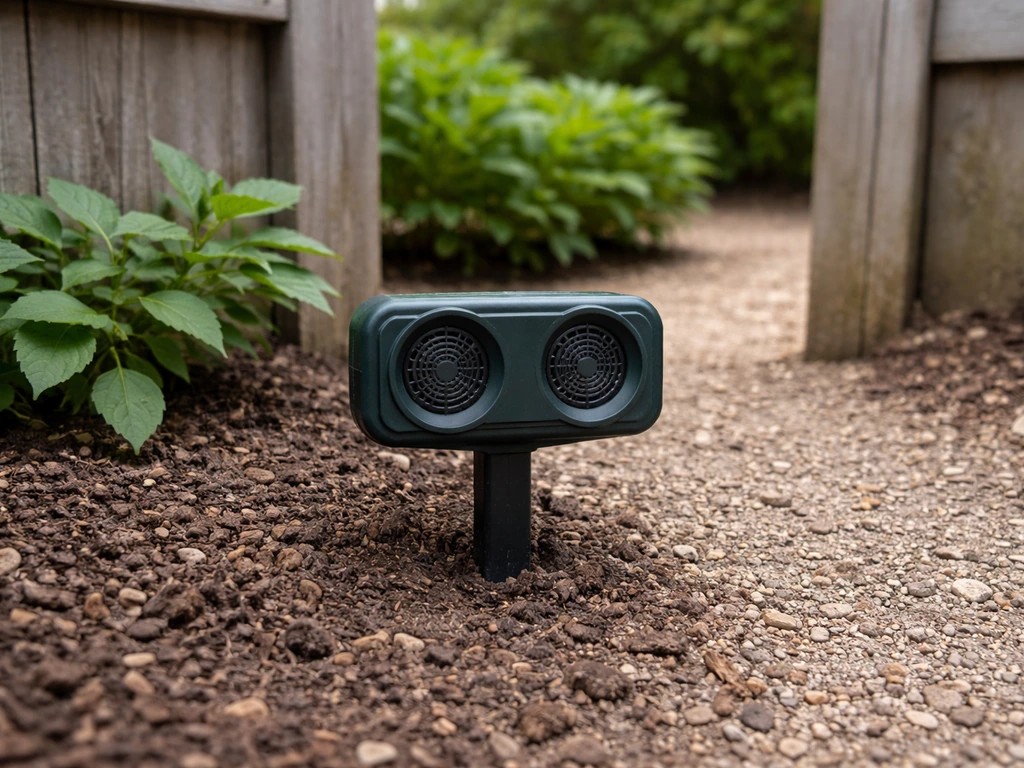
- Position speakers or emitters at or near bird entry points to the garden, not buried in the middle of planting where signal is blocked.
- For distress call units, set them to rotate through multiple call types rather than repeating one sound.
- Motion-activated sprinklers should be set with the sensitivity adjusted for bird-sized movement, not just large animals.
- Note that ultrasonic devices have limited scientific backing for garden bird species; treat them as a supplement rather than a primary solution.
Chemical repellents
- Use only products approved for the specific application (lawn, ornamental, or soil treatment). Many chemical repellents are not approved for use on edible crops.
- Apply in dry conditions and reapply after rain, typically every 7 to 14 days depending on the product.
- Keep pets and children away from treated areas until dry.
- Store securely and dispose of unused product responsibly.
What to do when birds stop caring about your deterrents
Habituation is the single biggest failure mode for non-physical deterrents. Birds are intelligent and will quickly learn that a static owl or a repeated sound poses no real threat. The fix is not to buy something new every time. It is to build a rotation strategy from the start.
- Rotate visual deterrents every two to three days by changing their position or type.
- Combine at least two different deterrent categories so birds face multiple simultaneous signals.
- If a sonic device plays only one call, switch to a unit that randomises call type and timing.
- After bad weather, inspect all physical deterrents for displaced netting, loosened stakes, or damaged frames, since a gap that appears post-storm will be found fast.
- For persistent species like pigeons and crows, escalate to physical exclusion if visual or sensory methods keep failing.
It also helps to remove whatever is attracting birds beyond the crop itself. Uncovered compost, standing water, and fallen fruit on the ground all give birds a reason to keep coming back into your garden. Cut off secondary food sources and deterrents become much more effective.
Safety, humane practice, and the law
In the UK, virtually all wild birds are protected under the Wildlife and Countryside Act 1981. In the US, migratory birds are protected under the Migratory Bird Treaty Act. This means you cannot trap, harm, or kill most garden bird species without a specific licence, even if they are causing damage. The NPT Council advises that wild birds are protected under the Wildlife and Countryside Act 1981 (as amended), including offences relating to killing, injuring, or taking wild birds cannot trap, harm, or kill most garden bird species without a specific licence. All the deterrents covered in this guide are legal because they deter rather than harm. But a few things are worth keeping front of mind.
- Netting must be installed correctly. Loose or improperly secured netting can entangle and injure birds, which may constitute an offence. Always use appropriate mesh sizes and inspect netting regularly.
- Sticky bird repellents (glue-based products) are generally not recommended for garden use because non-target species including bees and beneficial insects can become trapped.
- Chemical repellents labelled for ornamental use should never be applied to edible crops unless the label explicitly permits it.
- Sonic deterrents at high volumes close to boundaries can cause noise complaints from neighbours. Check local ordinances before installing.
- If children or pets use the garden, place chemical repellents and any spike or wire deterrents out of accessible areas, and always read the product safety data sheet before use.
The goal with garden bird deterrence is always exclusion and discouragement, not harm. The U.S. Invasive Species Info portal on bird control describes non-lethal management approaches focused on discouraging birds through exclusion and deterrence methods exclusion and discouragement, not harm. Practical physical barriers achieve this better than most alternatives and carry the lowest risk from a welfare and legal standpoint.
DIY is fine until it isn't: knowing when to call a professional
Most garden bird problems are completely manageable as DIY projects. Netting, visual deterrents, and basic sonic devices are all available at garden centres and online, and installation is straightforward for the typical home garden.
You should consider calling a professional bird control service when any of the following apply:
- You have a large-scale infestation affecting a commercial growing operation or multiple garden areas that would require extensive netting infrastructure.
- Birds are nesting in structures adjacent to the garden (rooflines, outbuildings) and returning from those roost points repeatedly. Nesting sites require specialist assessment and, in many cases, a licence to disturb.
- You have tried multiple deterrent methods consistently for a full growing season and damage continues at an unacceptable level.
- The species causing damage is a protected species where the normal deterrent toolkit may need supplementing with licenced options.
- You need an audit of your entire property's bird pressure, not just the garden, which would overlap with broader concerns about deterrents around the house or roof.
Professional services can install long-term physical exclusion systems, conduct species identification, and if necessary apply for wildlife management licences. The cost is higher, but for serious or large-scale problems it is usually faster and more reliable than cycling through DIY products.
Your next steps right now
Here is a clear action path based on the most common garden situations. Work through this in order and you will have a deterrent plan in place today.
- Identify which area is being targeted and which species you are dealing with. Spend one morning watching before buying anything.
- If the problem is ripening fruit or vulnerable seedbeds: buy fine-mesh garden netting (20mm or smaller) and either a cage frame kit or hoops and stakes. Install before fruit starts to ripen, not after the first damage appears.
- If the problem is lawns, flower beds, or open areas: start with reflective tape deployed at feeding height, combined with a motion-activated sprinkler if the area is large enough. Plan to rotate the tape position every two to three days.
- If birds are ignoring your current deterrents: combine at least two types, add movement to any static deterrent, and check for secondary food attractants like fallen fruit or uncovered compost.
- If the problem persists through a full season or involves nesting: consult a professional bird control service.
- Throughout: check netting and physical barriers after any wind or rain and repair gaps promptly.
The most common mistake is waiting until damage is severe before acting. Birds that find a reliable food source in your garden will return daily and tell others. Get a physical barrier in place before peak fruiting season and you will avoid most of the problem altogether. Everything else, reflective tape, sonic devices, and repellents, works best as a supporting layer on top of that foundation. Everything else, reflective tape, sonic devices, and repellents, works best as a supporting layer on top of that foundation, and the same exclusion-first thinking applies when you are looking for the best bird deterrent for cars. Everything else, reflective tape, sonic devices, and repellents, works best as a supporting layer on top of that foundation, while the best bird deterrent for house situations still comes down to solid exclusion.
FAQ
Is the “best bird deterrent for garden” always netting, even if I only have a small balcony or raised planters?
Netting is still usually the most reliable option, but scale matters. For planters and balconies, use small, rigid frames or a tight, pegged net “drape” around the plant, with mesh reaching the ground on all sides when birds can access from below. Avoid loose hanging netting on containers, because birds can push through the edge and pick at fruit.
How do I choose between a fruit cage, loose netting, and tunnel netting without guessing the species?
Use crop structure to decide first, species second. If the target is soft fruit in bushes, a full cage (with coverage to the base on all sides) is the safest bet. For brassicas and peas, tunnel or hoop mesh that seals the edges prevents walking underneath. For newly sown seed, flat surface netting is easier, then remove it once seedlings are established (a “keep birds out briefly” approach).
What mesh size should I look for, and does finer always mean better?
Go by the bird-sized openings you need to block, not by how “tight” it looks. The guide’s practical baseline is mesh no wider than 20mm for effective exclusion. If you use even finer mesh, check that airflow and light stay adequate, especially for cages on sunny days, because overly restrictive netting can raise plant stress.
How long will reflective tape or sonic deterrents work before birds learn to ignore them?
They often work initially, then fail when birds habituate to predictable patterns. Plan to rotate methods on a set schedule, not “set and forget.” A simple rule is to change the orientation, reposition items, or alter timing regularly, especially when damage stops and later resumes.
My motion-activated sprinkler stops when the birds return after watering, what should I adjust?
Confirm coverage radius and placement, birds usually adjust to the “safe path” around the sensor. Try moving the sprinkler closer to the vulnerable beds or raising it to adjust the spray angle, then ensure it has enough time between activations to disrupt repeated entries. Also, keep the surrounding ground clear so birds cannot approach from a dry pocket.
Are predator decoys worth it, or are they guaranteed to stop working?
Decoys can reduce visits briefly, but they commonly lose effect because birds recognize static cues. If you use them, relocate frequently and combine them with another layer (like netting on the crop or tape lines) so birds do not discover a consistent routine.
What’s the safest way to protect crops without trapping or harming birds?
Stick to exclusion and deterrence that prevent access or make the area unappealing. Avoid anything that injures, entangles, or blocks escape. If you install netting, ensure it is correctly tensioned and that there are no sagging sections where birds could get stuck.
Can I cover seedlings permanently with netting, or will it harm growth?
Permanent full coverage is usually unnecessary and can reduce airflow. The recommended approach is temporary surface coverage over newly sown beds, then removal once seedlings are a few centimetres tall. This balances protection with healthy establishment and prevents you from creating a long-term “habituation-free” routine you do not need.
How do I prevent birds from getting under netting at the edges?
Edge control is the difference between partial and reliable protection. Stake or peg the mesh firmly, run coverage to the ground on sides and ends, and seal any gaps where birds can walk underneath. For tunnels, ensure the frame rests on the soil surface without openings along the bottom corners.
What should I do about birds targeting my compost heap?
Use a fitted lid or stretch mesh over the surface. For raised beds or frequent access, a removable wooden frame covered with mesh helps you keep protection in place between sessions without leaving gaps. Also remove obvious invertebrate food sources if possible, like disturbed compost piles left uncovered.
Does removing fallen fruit and fixing standing water really make deterrents work better?
Yes, it directly improves effectiveness. Birds repeatedly return when there are secondary food and water sources nearby, so clearing fallen fruit, draining puddles, and covering compost reduces overall pressure. Once the “easy meal” is gone, exclusion and deterrents usually require less intensity to stay effective.
When should I switch to a professional bird control service instead of continuing DIY?
If you have widespread damage across multiple areas, ongoing visits that keep outsmarting your layers, or you cannot fully seal access points, a professional can install long-term physical systems and handle species identification. They can also advise on licensing requirements in your area when it applies, which reduces the risk of unintended legal issues.
Is it legal to use sonic deterrents or reflective tape if birds are protected in my country?
In general, deterrents that discourage rather than harm are the safer legal category. The key is to avoid actions that harm, trap, or kill birds and to follow any local rules about device noise and placement. If you are unsure about your specific location, verify local guidance before upgrading to more intensive methods.
What’s the best order of operations if I’m seeing damage but I’m unsure what’s causing it?
Start with crop observation (when and where damage appears) and then prioritize exclusion on the most vulnerable crops immediately. Add temporary covers for seedlings, put cages on soft fruit, and only then layer in deterrents like tape or sonic devices as support. This prevents the “birds find a reliable food source, then return daily” problem while you confirm species.
Next Articles
How to Avoid Bird Attack Drone: Practical Safety Checklist
Practical, humane steps to reduce bird–drone collisions: preflight checks, deterrents, tactics, and legal guidance.
What Is Already Being Done to Prevent Bird Collisions
Learn what’s already used to prevent bird collisions, from airport safeguards to building glass and humane deterrents, p
Best Bird Strike Prevention: Practical Steps That Work
Step-by-step best bird strike prevention: remove attractants, use exclusion and deterrents correctly, and maintain resul