The best bird trap for your situation depends on three things: the species you're dealing with, where the problem is happening, and whether you want to capture and relocate birds or simply block them from an area. If you're trying to figure out the best bird trap in the world for your situation, start by identifying the species and the attractant that brings birds to your property. Most people searching for a bird trap want something that actually stops the problem, not just a device that sits outside and does nothing. This guide walks through every practical option, how to pick the right one, and how to set it up so it works.
Best Bird Trap Guide: Choose, Install, and Prevent Returns

Marcus Weatherby
21 Apr 2026
What 'bird trap' actually means in bird control
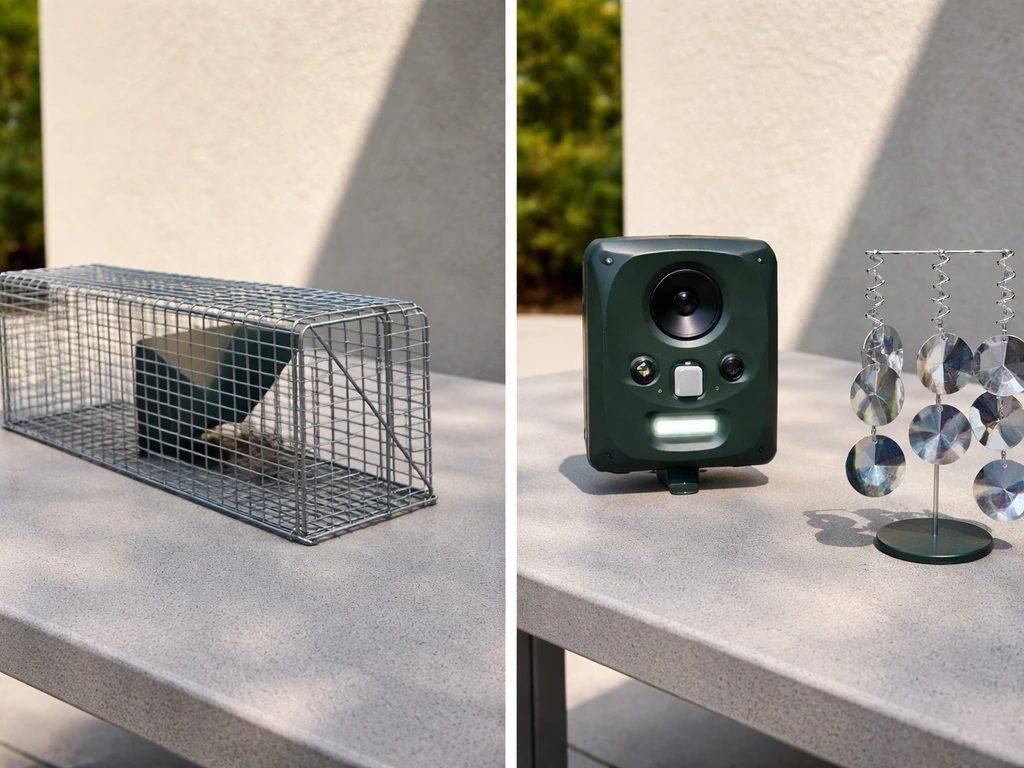
The word 'trap' gets used loosely, and that causes a lot of confusion when people are shopping for a solution. In real bird control work, there are two fundamentally different approaches that both get called traps: live-capture devices and exclusion/containment systems.
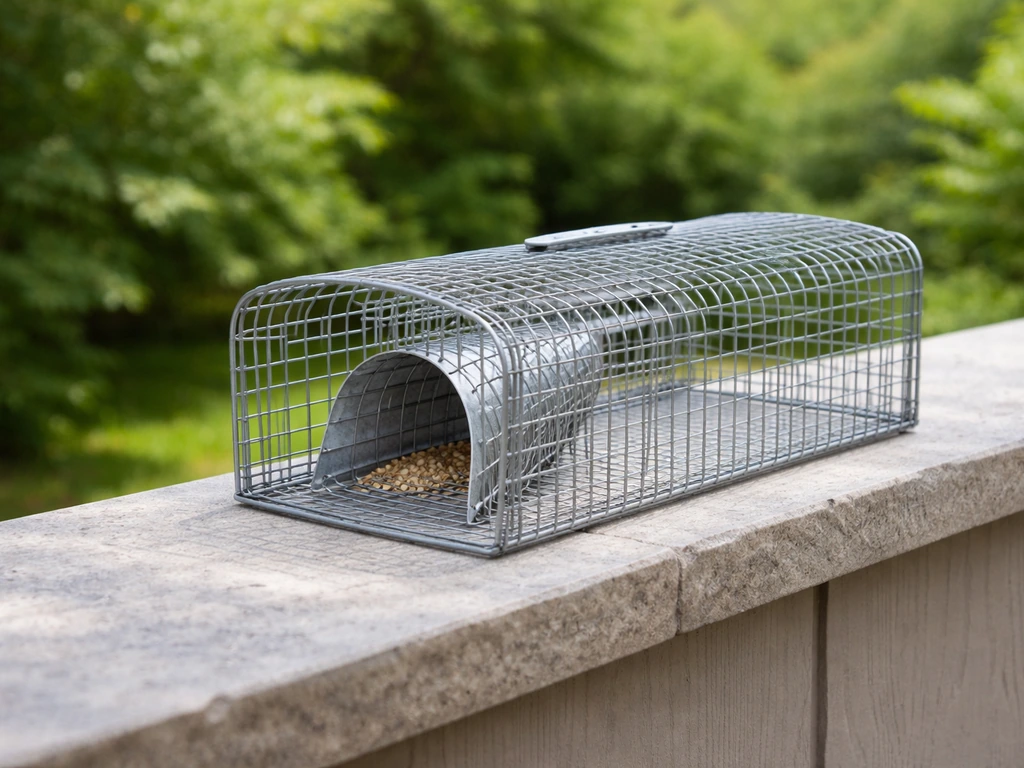
A live-capture trap is a physical cage or enclosure that lures birds inside using food and water, then holds them alive for relocation. The most common design uses one-way funnel doors, so birds can push inside but can't find their way back out. A typical pigeon trap, for example, uses exactly this mechanism: captured birds filter through a one-way door into a center section with bait and a water dish until you return to handle them. These are sometimes called cage traps or live-holding traps.
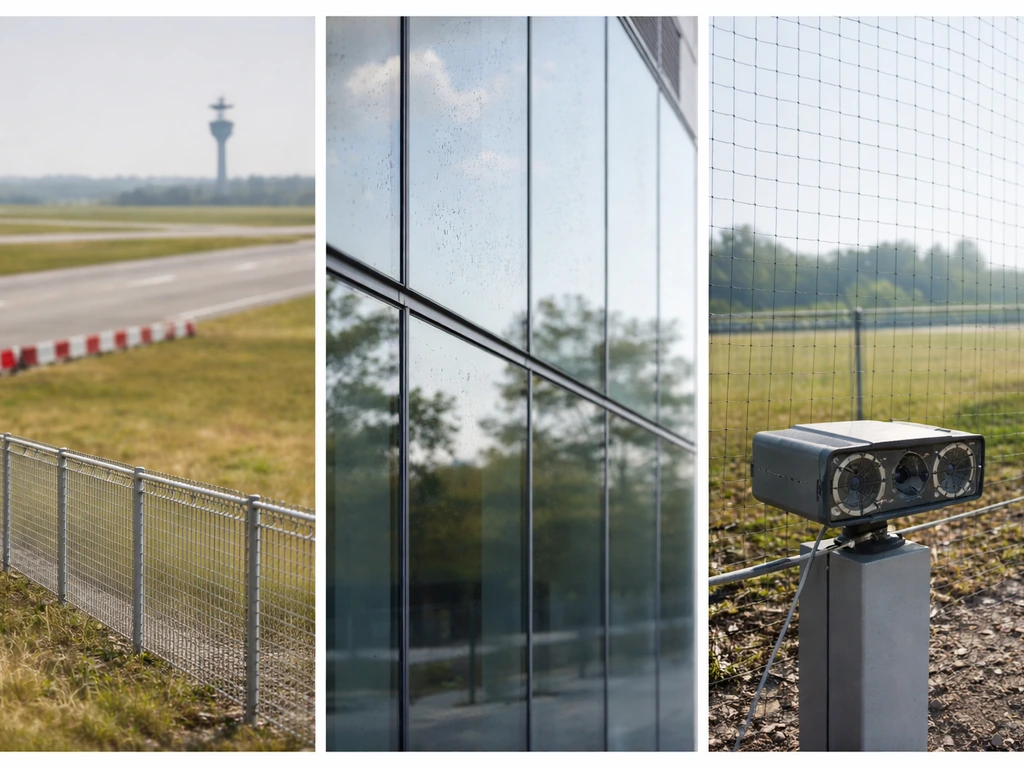
Exclusion and containment systems, on the other hand, use netting, barriers, or enclosed structures to physically prevent birds from reaching a space. The GSA describes netting as a system designed to eliminate the bird problem by exclusion, blocking access to recessed building areas like light wells or the undersides of eaves. This isn't a trap in the traditional sense, but it is a containment approach that permanently solves the access problem without capturing anything.
There's also a third category worth mentioning: trap-style deterrents. These include things like quick-kill traps (used primarily in pest control for smaller invasive birds) and enclosed spike or wire systems that block landing and roosting. Understanding which category fits your situation is the first decision you need to make before buying anything.
Identify your problem before you pick a trap
There's no single best bird trap because each situation is different. Penn State Extension puts it plainly: blank" rel="noopener noreferrer">there is no one best way to control birds because the nature of the species determines which methods to use. Before you choose a device, you need to answer a few basic questions.
First, identify the species. This matters more than most people realize. Pigeons, house sparrows, starlings, crows, and red-winged blackbirds are among the most common nuisance birds susceptible to trapping methods. Each behaves differently, gathers in different locations, and responds to different bait. Identifying the species also has major legal implications, which we'll cover in the safety section.
Second, figure out what's attracting them. Birds come to a location for food, water, or shelter. Rooftop cooling condensers are common watering sites for pigeons in warm months, and traps placed near these spots perform noticeably better. Garden beds, open garbage, bird feeders, and standing water all draw birds in. If you remove the attractant entirely, you may not need a trap at all.
Third, assess the scale of the problem. A single bird that wandered into a warehouse is a different job than a flock of 40 pigeons roosting on your roof every night. The more established the bird problem, the more involved your control methods need to be. A single live-capture cage might be enough for a small, localized issue. A large roost on a commercial building almost always needs a combination of trapping, exclusion, and deterrents.
Match the trap type to the species
| Bird Species | Trap Type That Works Best | Key Notes |
|---|---|---|
| Pigeons | Large live-capture cage trap (funnel door style) | Place near water sources; bait with grain or cracked corn |
| House Sparrows | Funnel trap or repeating sparrow trap | Highly effective; check daily and remove non-targets |
| Starlings | Large multi-chamber live trap | Susceptible to trapping; confirm species before proceeding |
| Crows | Large cage trap with decoy birds or calls | Susceptible but require more sophisticated lure setups |
| Swallows / Warblers / Most Songbirds | Not recommended (protected species) | Federal permit required; exclusion is the better approach |
| Gulls / Geese | Professional-grade large traps or exclusion | Federal permit required; consult a licensed operator |
What makes a bird trap actually good
When evaluating any live-capture trap, there are four things worth looking at closely: how humanely it holds birds, how effectively it captures target species, how well it avoids catching non-target animals, and how easy it is to operate and reset.
Humaneness and holding conditions
A good trap needs to hold birds safely without injuring them. Look for designs that include a built-in food and water station, because birds can deteriorate quickly without access to both. The U.S. Fish and Wildlife Service recommends releasing captured birds within 24 hours, and birds should not be held in transport carriers for more than 72 hours. A trap with adequate interior space, ventilation, and a water trough built in meets the basic humane standard. Nixalite's wire mesh live traps, for instance, include multiple one-way funnel doors, a top-mounted access door for easy removal, and food and water station features built into a multi-chamber design.
Non-target protection
One of the biggest problems with poorly designed cage traps is accidentally catching the wrong animal, whether that's a squirrel, a protected songbird, or someone's pet. Florida FWC regulations address this directly by specifying design characteristics like limited cage door dimensions (no wider than 20 inches, no taller than 28 inches) to reduce unintended captures and allow smaller non-target animals to escape. When shopping for a trap, check that the entry size matches your target species and isn't so large that it invites anything that wanders by.
Features to prioritize
- One-way funnel door entry that prevents escape without causing injury
- Multi-chamber design so multiple birds can be held separately if needed (FWS guidance says do not house more than one bird per carrier during transport)
- Top-mounted access door for safe, easy removal of captured birds
- Built-in food and water trough
- Durable galvanized or powder-coated wire mesh that holds up outdoors
- Collapsible or flat-pack design for transport and storage
- Entry size appropriate for target species to minimize non-target captures
Where to place traps for the most common scenarios
Placement is probably the single biggest factor in whether a trap works or does nothing. Birds are creatures of habit, and you need to put the trap where they already are, not where you think they should be.
Patios and outdoor living spaces
For patio bird problems, the most common culprits are pigeons and house sparrows. Place a live-capture cage trap at the edge of the patio where birds land most frequently, ideally near any food scraps, pet bowls, or potted plants they've been picking at. Bait with cracked corn or mixed birdseed. Choosing the best bait for bird traps depends on which nuisance species you're targeting and what they naturally feed on in your area. Keep the trap away from heavy foot traffic so birds feel safe approaching it. If the patio is covered, a heavy-duty bird netting system stretched across the opening is often a more permanent fix than repeated trapping.
Windows and building facades
Birds congregating at windows are usually either trying to roost on ledges or repeatedly striking the glass. For ledge roosters, a live-capture trap placed on the ledge itself works well as a temporary removal tool. After capture and relocation, install bird spikes or porcupine wire on the ledge surface to prevent return. University of Missouri Extension confirms that porcupine wire and bird spikes are effective permanent deterrents that stop pigeons from roosting on building surfaces.
Roofs
Roof trapping is most effective when traps are positioned along the ridge line or near rooftop HVAC units and cooling condensers, which serve as water sources for pigeons. MU Extension specifically recommends placing traps at pigeon watering sites, including near rooftop cooling condensers, especially during warm summer months when water is scarce. Secure the trap so it won't shift in wind. Check it daily, as regulations in some jurisdictions require at least once-daily monitoring of any deployed trap.
Solar panels
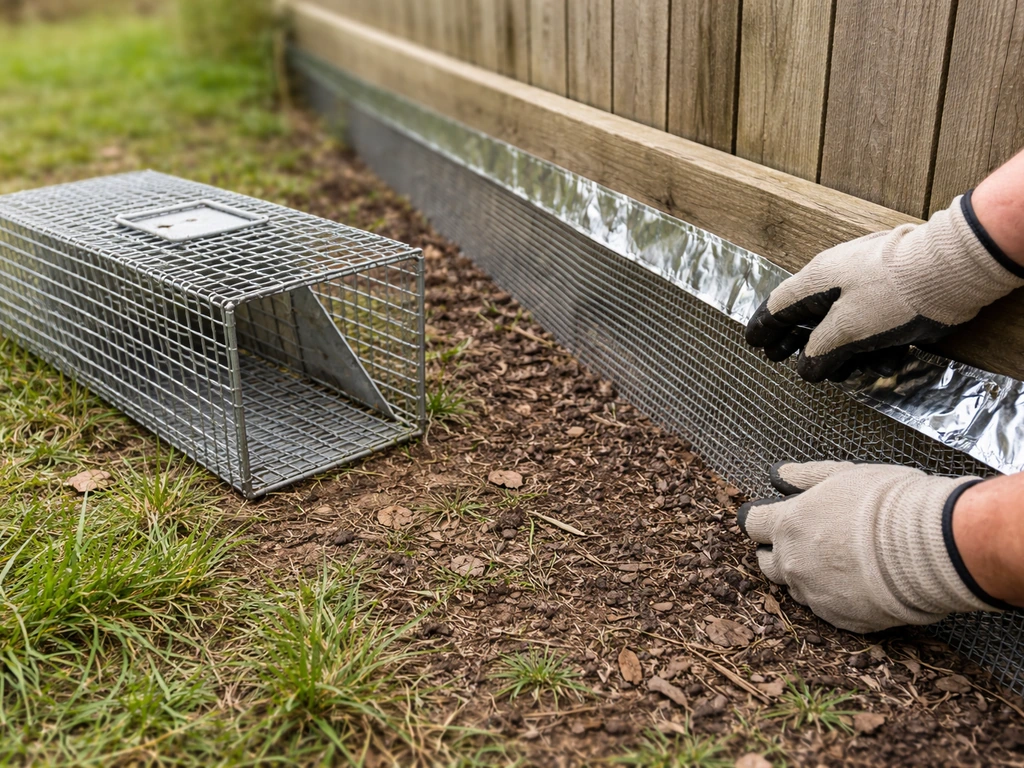
Birds roosting under solar panels are usually pigeons or starlings using the warm, sheltered space for nesting. A live-capture trap placed at the panel perimeter can help reduce the population, but the long-term solution is exclusion: installing a mesh barrier around the panel perimeter that physically seals off the gap beneath the panels. Trapping without exclusion here is a losing game since other birds will move in to fill the space.
Pools and gardens
Pool areas attract birds primarily for water. Place traps on the pool deck near the water's edge, but away from swimmers' paths. For gardens, birds are after seeds, berries, or insects in the soil. Funnel traps placed along garden row edges with grain bait work well for house sparrows. ATTRA's guidelines distinguish between using exclusion netting over rows (to physically block access to crops) and live trapping as a population reduction tool. For garden protection, exclusion netting stretched over beds is usually faster and more reliable than trapping alone.
Mistakes that make traps fail
Most trap failures come down to the same handful of mistakes. Knowing them upfront saves a lot of frustration.
- Wrong placement: Putting the trap where you want birds to be rather than where they already spend time. Watch the birds for a day before setting the trap, then put it exactly where they land, feed, or roost.
- Wrong or insufficient bait: Using the wrong food for the species, or not enough of it. Pigeons respond well to cracked corn and grain scattered both inside and leading up to the trap entrance. Refreshing bait every 1 to 2 days keeps it attractive.
- Placing the trap in high-traffic areas: Birds won't approach a trap if people or pets are walking near it constantly. Give the trap a buffer zone of at least several feet from active walkways.
- Not pre-baiting: Dropping an unfamiliar metal cage into a bird's territory and expecting immediate results rarely works. Spend 2 to 3 days placing food near the trap with the doors propped open so birds get comfortable feeding around it, then set it.
- Ignoring non-target species: If protected birds start using the bait site, you must modify or abandon that site immediately. MU Extension is direct about this: if protected birds are using all your bait sites, you need to change tactics.
- Not checking the trap daily: This is both a welfare issue and often a legal requirement. A Federal Register rule specifies checking traps at least once every day they are deployed. Birds left in traps for more than a day suffer and may die.
- Trapping without addressing attractants: If you catch and relocate 10 pigeons but don't remove the food source that drew them, 10 more will arrive within days.
Legal requirements and humane handling
This is where most DIY bird trappers get into trouble. If you mean who to hire instead of a DIY setup, that professional is commonly referred to as a nuisance wildlife control operator, which is an adjacent option to understand when figuring out what is a bird catcher called. The Migratory Bird Treaty Act (MBTA) protects the vast majority of wild birds in the United States, and capturing them without authorization is a federal offense. A Federal Migratory Bird Depredation Permit is required to capture or kill migratory birds, even when they're causing property damage or posing a health and safety risk. Permit applications must include a disposition plan explaining what you'll do with the captured birds.
There is an important exemption: certain non-native, unprotected species, specifically European starlings, house sparrows, and feral pigeons (rock doves), are not covered by the MBTA. These are the species most commonly targeted in urban and suburban trapping programs. However, you still need to confirm your local and state laws, since some states have additional protections or regulations beyond federal rules.
The NWCO training guidance for wildlife control operators emphasizes accurate species identification before selecting any control method. Mistaking a protected native sparrow species for a house sparrow, for instance, is a common error with real legal consequences. If you're not confident in your identification, contact your local extension office or a licensed wildlife control operator before proceeding.
Once you've captured a bird, FWS humane handling standards apply. Release captured birds within 24 hours when possible. Never house more than one bird in a single transport carrier. Ensure ventilation, shelter from extreme temperatures, and access to food and water during any holding period. Birds may be kept in transport carriers for up to 72 hours under these standards, but shorter is always better.
If your situation involves protected migratory species, aviation safety concerns, or a large established roost, contact a licensed nuisance wildlife control operator. Penn State Extension notes that county extension offices maintain lists of local wildlife control operators who can handle situations that require professional permits and equipment.
Maintenance, monitoring, and what comes after trapping
A bird trap is not a set-and-forget solution. It requires active management, and the real goal is making sure birds don't simply return after you've removed them.
Daily and weekly trap maintenance
- Check the trap at least once every day it is deployed, both for captured birds and for non-target animals that need to be released
- Refresh bait every 1 to 2 days, especially in hot weather when food degrades quickly
- Clean out droppings and debris from inside the trap every few days to prevent disease buildup and to keep the trap looking and smelling natural
- Inspect the wire mesh and door mechanisms for damage after each use
- Reposition the trap if you go 3 to 4 days without a capture, since bird movement patterns shift
Combine trapping with permanent prevention
Trapping reduces the local bird population, but exclusion and deterrents are what keep the problem from coming back. Once you've significantly reduced the number of problem birds in an area through live capture and relocation, follow up immediately with exclusion measures. Install bird spikes or porcupine wire on ledges and roof edges where birds were roosting. Use exclusion netting to seal off recessed areas, gaps under solar panels, or openings in eaves where birds were nesting. The GSA describes properly installed netting as a safe and unobtrusive exclusion system when used on buildings, and it's genuinely one of the most effective long-term solutions available.
Sensory deterrents, including sonic devices, visual scare tools, and reflective tape, can help in the immediate period after trapping when birds haven't yet re-established territory. They're not reliable as standalone solutions for established infestations, but combined with exclusion after a trapping program, they add an extra layer of discouragement. Choosing the right bait to draw birds into traps in the first place is also a subject worth diving into on its own, since bait selection varies significantly by species and season.
When to escalate to professional help
If you've run a trap for two weeks, used proper bait, checked it daily, and relocated multiple birds but the population doesn't seem to drop, the problem has likely grown beyond what a single cage trap can handle. If your OSRS bird snare is not working, double-check how you are setting it up and whether the birds are actually able to reach it OSRS bird snare not working.
A bird snare is typically designed to capture a nuisance bird, so it is important to understand how it works and what legal rules apply before using one what is a bird snare. Large roosts, protected species, aviation-adjacent locations, and commercial properties all typically need a licensed professional with access to permits, specialized equipment, and the ability to implement a coordinated trapping and exclusion program.
Trutech and similar wildlife services reinforce that the most effective bird control prioritizes deterrents, exclusion, and building modification rather than relying on trapping alone, and the more established the problem, the more a multi-method approach becomes necessary. For cat owners looking for the best cat collars to stop bird catching, the goal is similar: reduce opportunities for birds to be targeted by using deterrents and prevention deterrents, exclusion, and building modification.
For some setups, a coke can bird trap can be a tempting DIY idea, but safer, legal solutions usually work better when paired with deterrents and prevention.
FAQ
How do I know whether a live-capture “trap” or an exclusion system is the better first move?
Choose exclusion first when the birds are repeatedly returning to a specific access point (ledge, eave gaps, under panels, light wells). Choose live-capture first when you need to remove a current nesting or roosting presence before you can safely seal entry points. If you trap but leave the entry route open, you often end up with new birds moving in.
What bait should I use if I am not sure which nuisance bird I have?
Use a bait strategy that aligns with what is already on-site, not generic seed. For example, if you see birds drinking from a condenser or pecking at garden row grain, place the trap near that specific attractant and use bait consistent with that food source. If you cannot identify the species, avoid relying on bait alone and focus on placement plus exclusion.
How close should the trap be to people, pets, or doors to work effectively?
Place the trap where birds land or roost, but keep it away from constant human or pet traffic. Birds often approach only if they feel there is a predictable, calm route to the opening. A practical tip is to start with the edge of the birds’ routine area (landing zone, ledge base, watering site), then adjust slightly away if you never get captures after several checks.
Do I need to keep checking the trap every day, and what if I cannot?
Daily monitoring is commonly required for humane and compliance reasons, and it also reduces risk of non-target captures. If you cannot check daily, the safer approach is to pause trapping and switch to exclusion or deterrents that do not hold animals. If rules in your area are stricter, follow the local requirement even if it differs from general guidance.
What should I do if I catch a non-target animal (like a squirrel or protected bird)?
Stop the trap immediately and do not keep operating until you confirm your entry size and funnel design match your target species. If a protected species may be involved, contact a licensed nuisance wildlife control operator or your local wildlife authority for next steps, because relocation and handling may require special permissions.
Can I release birds on my property instead of relocating them far away?
Releasing nearby usually fails, because birds will often re-establish territory quickly in the same general area. Relocation rules vary by jurisdiction and species, but as a practical prevention step, the long-term fix is still exclusion and sealing so new birds cannot re-access the original roosting or nesting spots.
How long should I run a trapping program before deciding it is not working?
If after about two weeks you see no meaningful decline, the issue is often that placement does not match the birds’ routine, the attractant is pulling them elsewhere, or the underlying access point has not been sealed. At that point, shift to a multi-method plan (exclusion plus deterrents) and consider professional help, especially for large roosts or protected species.
Is a “trap-style deterrent” like spike or wire a substitute for trapping?
Often, it is a substitute for continued roosting, but it is not necessarily safe to install while birds are actively nesting or if you are unsure where they are accessing. In many real-world setups, the best workflow is capture or temporary removal first, then immediate installation of permanent barriers to prevent return.
What common setup mistakes cause traps to fail?
The biggest failures come from wrong placement (not aligned to the birds’ landing or watering habits), using bait that does not match what the birds are already targeting, and leaving other access routes open. Also check that the trap is secured so it does not shift in wind, and confirm the entry size is appropriate for the target species.
When do I need a professional, even if I planned to DIY?
Call a licensed nuisance wildlife control operator when you cannot confidently identify the species, when protected birds may be involved, when the birds are part of a large established roost, or when the site involves aviation-adjacent risk (such as near airports). Professionals also help ensure correct permitting and humane handling, which can be the difference between a compliant outcome and legal trouble.