You can buy methyl anthranilate bird repellent right now on Amazon, through pest control supply sites like DoMyOwn or Solutions Pest & Lawn, at some Tractor Supply and farm stores, and directly from specialty bird control vendors. The trick is knowing what to look for on the label so you don't end up with a knock-off or a product that isn't actually registered for bird control use.
Methyl Anthranilate Bird Repellent Where to Buy Guide

Marcus Weatherby
28 Apr 2026
What methyl anthranilate actually is (and how to verify the product)
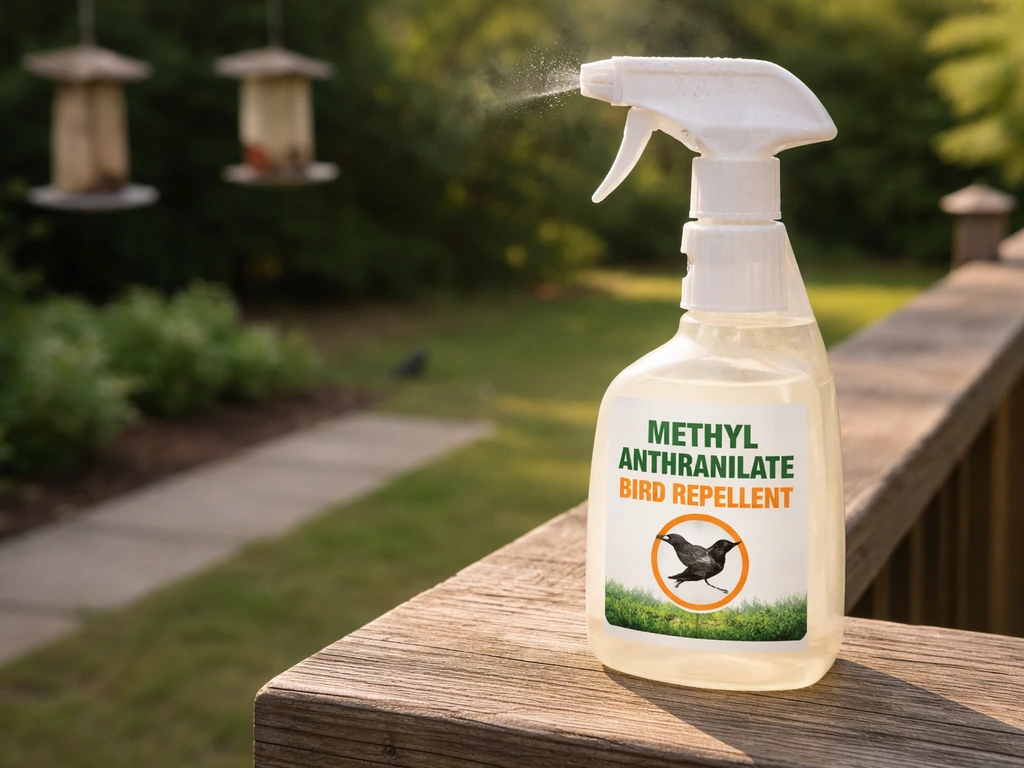
Methyl anthranilate (CAS number 134-20-3, molecular formula C8H9NO2) is a naturally occurring compound found in Concord grapes. It smells pleasant to humans but triggers a trigeminal irritation response in birds, essentially making the treated area feel hostile without harming the birds physically. The EPA classifies it as a biochemical pesticide and it has been registered since the early 1990s to repel species including Canada geese, ring-billed gulls, mallards, starlings, and brown-headed cowbirds.
The brand name most associated with early EPA registration is ReJeX-iT, and you'll still see that name or variations of it on products today. The EPA's PPLS label PDF for [ReJeX-iT AG-145](https://www3. epa. gov/pesticides/chem_search/ppls/058035-00013-19980924.
pdf) lists methyl anthranilate concentrations by measuring 1. 23 pounds/0. 31 pounds/0. 15 pounds per gallon/quart/pint of product and includes an EPA Reg.
No. But there are other branded products now too. What matters more than the brand is confirming the active ingredient on the label reads 'Methyl Anthranilate' and lists a percentage. If you are dealing with biting bird mites, the active ingredient and how it is applied make a big difference in whether it will repel them What matters more than the brand is confirming the active ingredient.
If you are using bird mite bug spray, check that the active ingredient and application method match the surface and environment where the mites are active biting bird mites. The original EPA-conditionally-registered formulations ranged from 14. 5% (for granular/agricultural use like ReJeX-iT AG-36) up to 100% (pure concentrate). Consumer-grade liquid sprays typically land in the 14–50% active ingredient range.
To verify you're getting the real thing: look for the EPA Registration Number on the label, the phrase 'Active Ingredient: Methyl Anthranilate' followed by a percentage, and a list of target bird species. If those three things aren't there, keep looking.
Where to buy today
Online retailers (fastest for most people)
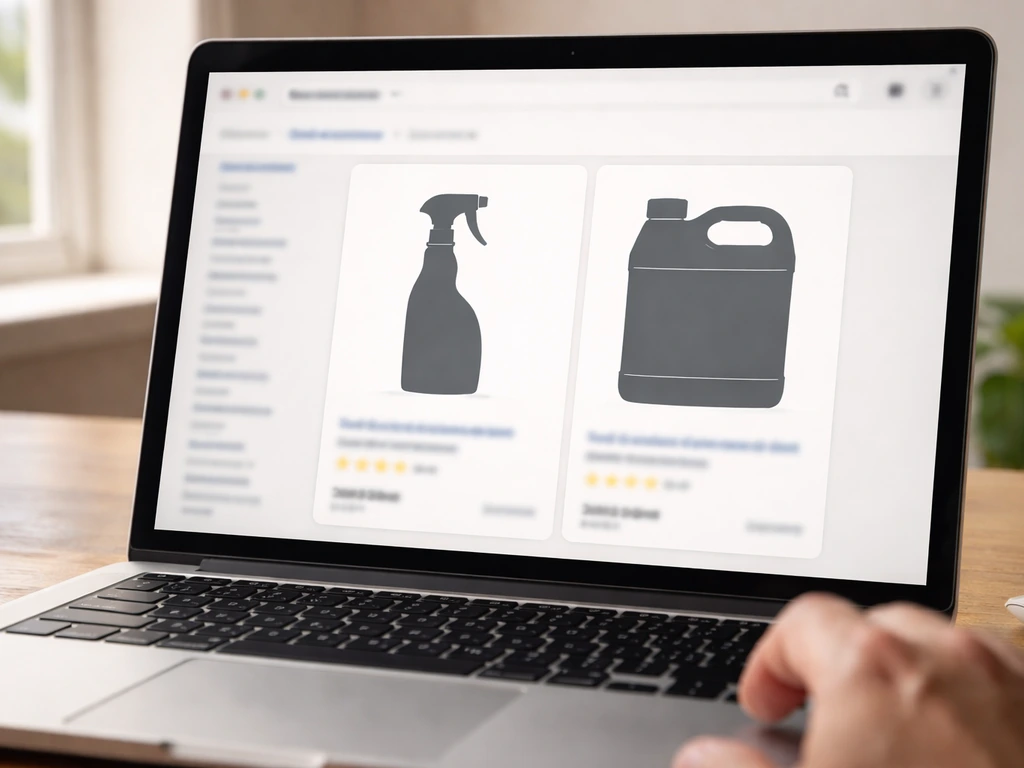
Amazon is the easiest starting point. Search 'methyl anthranilate bird repellent' and you'll find ready-to-use spray bottles and concentrates, often shipping Prime. A bird safe bug spray that lists methyl anthranilate as the active ingredient is typically what you want for compliant, targeted deterrence. Check the product listing's 'active ingredients' section or the uploaded label image before ordering. Pest control supply sites are often better for concentrates and commercial quantities.
- DoMyOwn.com: carries bird repellent sprays and concentrates with searchable active ingredient filters
- Solutions Pest & Lawn (solutionsstores.com): good for larger volume concentrate options
- Amazon: best for ready-to-use sprays and small quantities with fast shipping
- Bird-B-Gone and similar specialty bird control vendors: carry methyl anthranilate sprays alongside physical deterrents
- Arbico Organics: carries it as a biopesticide option
Local brick-and-mortar stores
Tractor Supply Co. and Rural King stock bird repellents seasonally, especially heading into spring. Call ahead and ask specifically for 'methyl anthranilate' because staff may not know the chemical name. Farm and garden centers in agricultural areas often carry it for crop protection. Home Depot and Lowe's carry some bird repellent products but methyl anthranilate specifically is hit or miss in their stores. Your best in-store bet remains farm supply or feed stores.
Pest control and aviation supply channels
If you're dealing with a commercial property, a golf course, or an area near an airport where bird strike risk is a concern, you'll want to go through a licensed pest control distributor or an aviation wildlife management supplier. Companies like Bird Control Group or wildlife management contractors often use or can source higher-concentration methyl anthranilate formulations. For aviation-adjacent applications especially, coordinating with a certified wildlife biologist or your airport's wildlife coordinator is the right call before buying or applying anything.
What to check before you buy
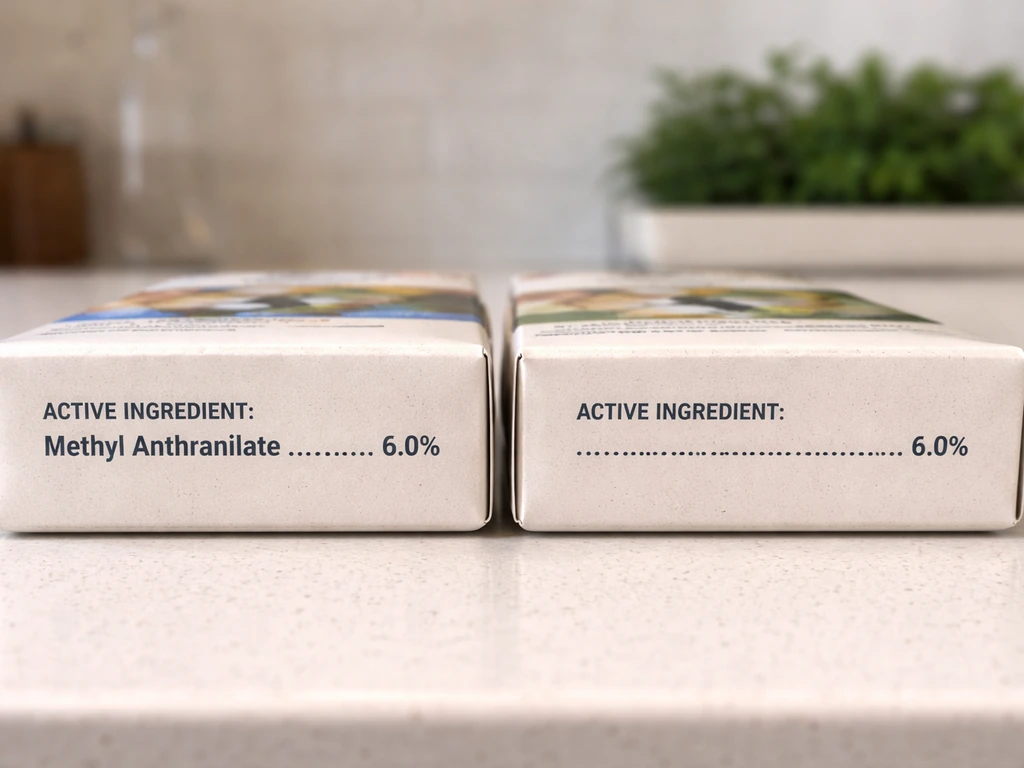
Not all bird repellents are the same, and even within methyl anthranilate products the formulation and concentration make a real difference for your specific situation. Here's what to verify before you add anything to your cart.
| Label Element | What to Look For | Why It Matters |
|---|---|---|
| Active Ingredient | Methyl Anthranilate (CAS 134-20-3) with % listed | Confirms you have the right compound at a meaningful concentration |
| EPA Registration Number | Format: XX-XXXXX or similar | Confirms it's a legally registered pesticide product in the US |
| Target Birds | Lists species like Canada geese, gulls, starlings, mallards | Ensures the product is labeled for your problem bird |
| Formulation Type | Ready-to-use spray, concentrate, granules, or fogger | Determines dilution needs and application method |
| Coverage Area | Square footage or linear feet per unit | Helps you estimate how much to buy |
| Use Site | Residential turf, commercial, agricultural, etc. | Using a product off-label is illegal and potentially ineffective |
For residential use (patios, decks, garden areas, roofs), a ready-to-use spray in the 14–20% range is usually fine and easy to apply without special equipment. For larger commercial properties or persistent flocking problems, a concentrate you mix yourself gives you better coverage per dollar. Granular formulations work well for turf and flat roof surfaces where liquid overspray is a concern.
How to use it effectively for common bird problem areas
Methyl anthranilate works by making a treated area uncomfortable for birds to land, walk, or feed on. It's most effective when applied before birds establish a strong roosting or feeding habit. If birds have been using an area for months, repellent alone may not be enough, but it's still a solid starting point.
Application by area
- Patios and decks: Spray directly on surfaces and surrounding vegetation; reapply after rain or every 2–4 weeks depending on UV exposure
- Turf and lawn areas (geese, gulls): Apply liquid to grass surfaces early morning before birds arrive; granular options can extend effectiveness on large turf
- Roofs and flat surfaces: Use a pump sprayer for even coverage; pay attention to ledges, parapets, and HVAC equipment areas where birds congregate
- Solar panels: Spray on surrounding roof surfaces where birds land to access panels; avoid direct spray onto panel glass as residue can affect performance
- Gardens and agricultural areas: Use granular formulations or perimeter spraying; reapplication after irrigation or rainfall is critical
Reapplication timing
Rain and UV exposure are the two biggest enemies of methyl anthranilate effectiveness. In rainy climates or wet seasons, plan on reapplying every 7–14 days. In dry, sunny conditions the compound volatilizes faster, so reapply every 2–3 weeks. Some products add UV stabilizers to extend longevity, which is worth looking for if you're treating an exposed roof or south-facing surface. Always check the product label for its specific reapplication guidance, since concentration affects this.
Safety and compliance basics
Methyl anthranilate has a favorable safety profile compared to conventional pesticides, which is partly why the EPA classified it as a reduced-risk biopesticide. That said, 'safer' doesn't mean 'skip the label.' Here's what actually matters.
Pets and wildlife
Methyl anthranilate is specifically a bird repellent and generally has low toxicity to mammals. Dogs and cats are typically not affected at use-site concentrations. However, keep pets off treated surfaces until the spray has dried, and don't apply it near areas where non-target wildlife like ducks or songbirds nest if that's a concern for you.
Kids and food areas
Keep children and people away from wet spray until it dries. For food-growing areas or vegetable gardens, check the label specifically for harvest pre-entry intervals. Not all formulations are labeled for use on edible crops, so this is not something to assume. If you're treating a restaurant patio or a food service area, look for a formulation explicitly approved for that use site.
PPE and handling
At a minimum, wear chemical-resistant gloves and eye protection when mixing or spraying concentrates. For ready-to-use sprays, the risk is lower but eye protection is still a good habit. Avoid spraying in windy conditions to prevent drift onto unintended surfaces, people, or into nearby bodies of water. Wash hands thoroughly after application.
Follow the label, always
In the US, the pesticide label is a legal document. Using a product on a site, for a species, or at a concentration not listed on the label is a federal violation. This is especially relevant if you're treating near water (some formulations have buffer requirements for aquatic areas) or on commercial property.
If birds don't move: troubleshooting and pairing with other deterrents
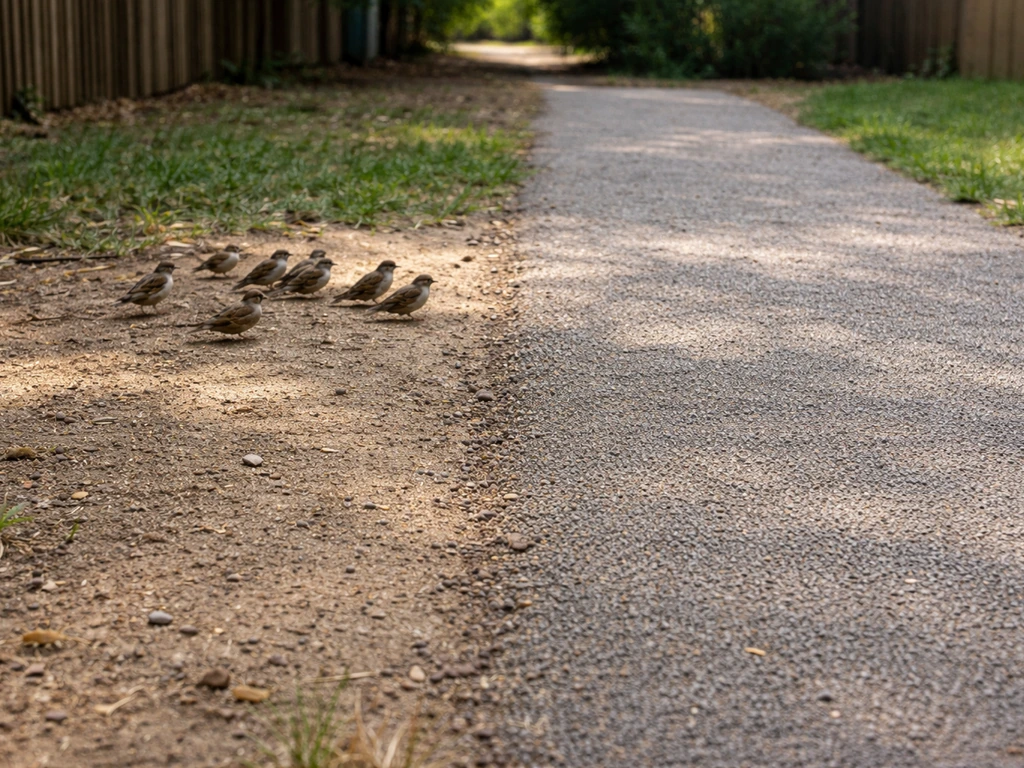
If you've applied methyl anthranilate correctly and birds are still hanging around after two or three reapplication cycles, it doesn't mean the product failed. It usually means one of a few things went wrong with the application, or the birds have a strong enough motivation to push through mild discomfort.
- Coverage gaps: Birds will find untreated patches quickly. Walk the full perimeter and treat every surface the birds are actually landing on, not just the most obvious spots.
- Timing: Apply before the birds arrive in the morning, not after they're already settled. Disrupting an established roost takes more than one treatment.
- Habituation: Some persistent birds, especially starlings and house sparrows, habituate to repellents over time. Rotating between sensory deterrent types helps.
- Wrong formulation: If you're using a very low-concentration product on a heavy-pressure site, step up to a concentrate or a higher percentage formulation.
- Food or nesting attraction: If birds are there because of a food source (open trash, spilled seed, standing water) or an active nest, no repellent will fully override that pull.
Methyl anthranilate works best as part of a layered approach. Pairing it with physical deterrents like bird spikes on ledges, netting over problem areas, or sonic/ultrasonic devices significantly improves results. Visual deterrents (reflective tape, predator decoys) can add another layer, though birds habituate to purely visual cues faster than to chemical or auditory ones. For large open areas with geese or gull pressure, combining turf spray with hazing or trained border collie programs is the professional standard.
DIY vs professional help: when to escalate
For most residential situations, a methyl anthranilate spray from Amazon or your local farm store is genuinely enough to solve the problem. You're capable of reading the label, applying it with a pump sprayer, and reapplying on schedule. That's DIY territory and it works.
Where professional help becomes worth it: large commercial properties with persistent flocking (hundreds of birds), situations involving protected migratory species where permits may be required before any intervention, areas near airports where wildlife management has specific regulatory requirements, or any scenario where birds have already caused structural damage and you need an integrated remediation plan. A certified wildlife management professional or a licensed pest control operator specializing in birds will have access to commercial-grade concentrations, application equipment (including foggers and misting systems), and the permits to do hazing or nest removal legally. If you are specifically targeting bird mites, use the best fogger for bird mites that is designed for the surface and environment where the mites are active foggers and misting systems.
One practical rule of thumb: if you've run two full reapplication cycles with a correctly applied product, added one physical deterrent, and still have the same bird pressure, it's time to call a professional for an assessment. The assessment itself is usually free or low cost, and it'll tell you whether you need a more aggressive integrated approach or just a different product.
FAQ
How can I confirm I’m actually buying methyl anthranilate bird repellent and not a generic product?
In stores and listings, look for “Active Ingredient: Methyl Anthranilate” plus an EPA Registration Number on the label. If the product only says “bird repellent” or “natural grape extract” without naming the active ingredient and percentage, it may not be the same product even if it claims similar results.
Should I buy a ready-to-use spray or a concentrate for the best results?
For most residential decks and patios, a ready-to-use spray is usually the simplest choice. Concentrates can be more cost-effective for large areas, but only if you can measure and mix exactly to the label. Mis-mixing is one of the most common reasons results are disappointing.
Can methyl anthranilate bird repellent be used around vegetable gardens or near edible crops?
Yes, but only if the label explicitly allows it for that use site. Some formulations are not intended for edible crop application, and using the wrong one can create compliance issues and residue concerns. Check for harvest pre-entry intervals (or similar wording) before treating near vegetables.
Is it safe to use around dogs and cats, and can they go on treated areas right away?
You typically should not. Even if mammal toxicity is low at use-site concentrations, the label can require keeping pets away until the sprayed surface is fully dry, and to avoid contamination of areas where animals eat or drink. If your product is a concentrate, treat it as higher-risk until mixed and fully applied.
What should I troubleshoot if birds keep returning after I reapply?
Reapply on the label schedule, but if the birds are still present after one to two cycles, first check application coverage, timing (apply before the birds fully establish the spot), and surface dryness. Also consider that birds may be reacting to other attractants like accessible food, open trash, or standing water.
Why does it work on one area but not on nearby spots?
If the birds are switching to a different landing spot, it may look like “failure” even when the chemical is working. Re-spot-treat the exact roost and landing targets (edges, ledges, walkways, and underside areas where birds choose to perch), then add a physical barrier where possible.
Can I use methyl anthranilate repellent in any way I want as long as it’s “bird safe”?
The product label controls legal use. Applying at a different concentration, using it on a species not listed, or applying it in an unapproved location can be a federal violation. If you are near water, verify the label’s buffer requirements before buying or spraying.
What’s the best way to avoid drift and accidental overspray?
Wind is a major problem. If you see mist or drift landing on unintended surfaces, you can lose coverage where you need it and contaminate nearby areas. Choose low-wind conditions and protect adjacent items, especially plants, sidewalks, and areas near water.
How do rain and sun affect how often I need to reapply?
For roof treatments, “longevity” depends heavily on whether the formulation includes UV stabilizers and how often it gets washed off. If you have strong sun and exposure, prioritize products that mention extended durability and follow reapplication timing for your climate, since concentration can change the interval.
If I’m dealing with bird mites, should I buy the same methyl anthranilate product as for birds?
For bird mites, the “where to buy” part is similar, but the “how to apply” part is often different. Many mite situations call for fogging or misting matched to the surface and environment, so buy a product and application setup that the label supports for that pest and location.
When should I skip DIY and go through a wildlife management professional instead of buying online?
If you are targeting high-risk areas like near airports, professional coordination is usually the safest route. Even when a product is available to consumers, those locations often involve wildlife management requirements and may require a certified wildlife biologist or licensed wildlife management contractor.
What’s a good decision point for calling a professional?
If you’ve done two full reapplication cycles exactly as directed, added at least one physical deterrent, and the bird pressure is unchanged, treat that as a signal to reassess the attractant source and consider an integrated plan. Professionals can also evaluate whether you need a different deterrent type for the specific species and behavior pattern.
Next Article
Bird Safe Bug Spray Guide: Choose, Read Labels, Apply Safely
How to choose, read, and apply bird safe bug spray without harming birds, plus safer alternatives and checklists