
Recorded predator and distress calls (also called alarm calls) are the most reliable bird repellent sound for most real-world situations. If you are trying to choose what’s a good bird repellent for your situation, start by comparing sound types and how well they match the birds in your area bird repellent sound. They work because they tap into birds' hardwired fear responses rather than just being unpleasant noise. Ultrasonic devices, despite their marketing, are largely ineffective outdoors for birds because birds hear in roughly the same frequency range as humans (about 1–5 kHz peak sensitivity), not in the ultrasonic range above 20 kHz. Sonic devices that play random, varied alarm sequences beat both ultrasonics and simple continuous noise almost every time, provided you set them up correctly and combine them with other deterrents.
Best Bird Repellent Sound Buyer and Setup Guide
How bird sound deterrents work (and why they stop working)
Birds process sound as a survival signal. When a bird hears the distress call of its own species or the cry of a predator it recognizes, it associates that location with danger and leaves or avoids returning. That's the core mechanism behind every effective sonic bird deterrent: it's not volume alone, it's biological relevance to the target species.
The problem is habituation. Birds are smart enough to figure out that a sound repeated on the same schedule, from the same direction, with no real consequence, isn't actually dangerous. A 2024 field study on acoustic repellents in pear orchards found that birds adapt most readily to uninterrupted, unchanging operation. Once a bird realizes the alarm call never leads to a real predator, it stops reacting. This is why cheap solar-powered units that loop the same five-second clip every minute tend to fail within a week or two.
To stay effective, sound deterrents need variation: randomized call sequences, irregular timing intervals, alternating call types, and ideally some rotation of physical speaker position. Think of it less like a fire alarm and more like a patrol that never follows the same route twice.
Best sound types for specific birds and situations
There's no single best recording for every bird problem. Species recognition matters: a crow distress call won't move a pigeon, and a seagull alarm won't affect starlings. Good commercial sonic systems include libraries of species-specific calls, and that species-matching is one of the most important things to check before you buy.
Patios and outdoor living spaces
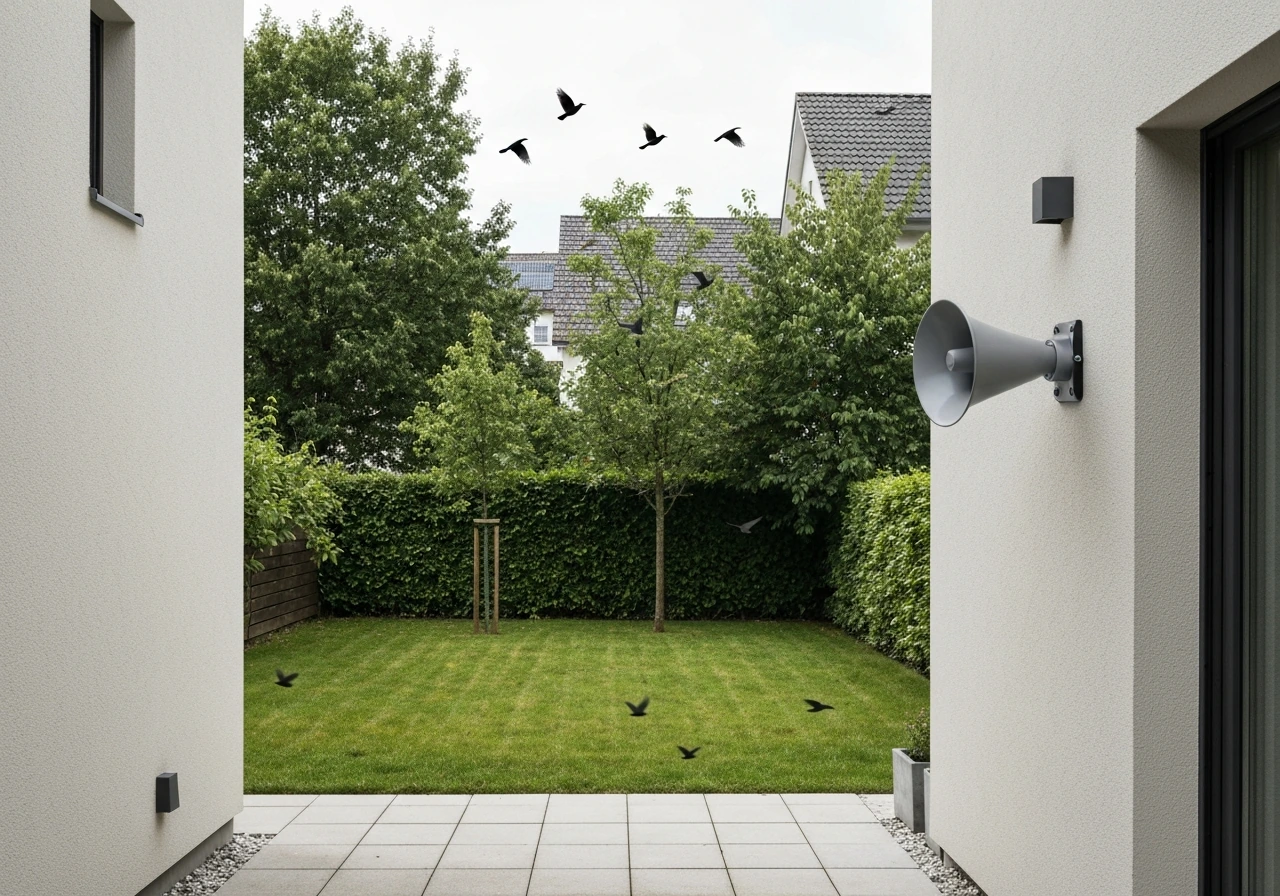
Starlings, sparrows, and pigeons are the usual offenders here. Predator calls (hawks, falcons) combined with species-specific distress calls work well in this relatively small, enclosed environment. Keep volume moderate because you're close to the listening area. A unit covering 1/4 to 1/2 acre is usually plenty, and you want it cycling through multiple call types on randomized intervals rather than a fixed repeat.
Roofs and ledges
Pigeons and seagulls are persistent roosters on elevated surfaces. These birds habituate faster than most because rooftop roosting is a high-value behavior for them (warmth, safety from ground predators). Falcon and hawk calls are your best starting point. For commercial rooftops, you'll often need multiple speakers to eliminate acoustic dead zones, which are the sheltered spots behind HVAC units or parapets where birds feel protected from the sound.
Pools and water features
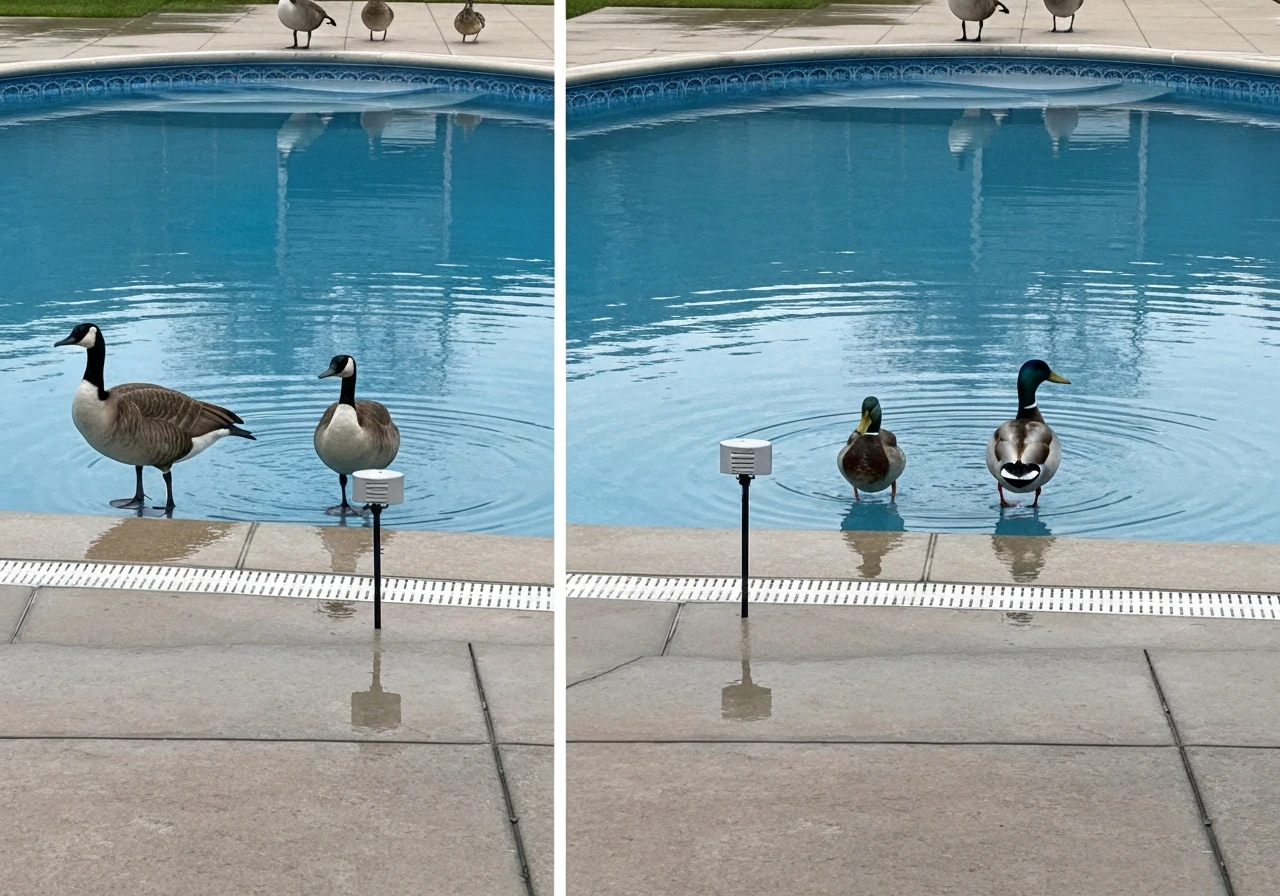
Canada geese and ducks are the main targets near water. Geese in particular are bold and hard to deter with sound alone. Goose distress calls combined with a coyote or predator call sequence give you the best odds. Pair it with a motion-activated trigger so the sound only fires when birds actually approach, which reduces habituation dramatically compared to a constantly running unit.
Gardens and orchards
Small songbirds (finches, sparrows, robins) are after fruit and seeds. Raptor calls work, but the coverage range matters a lot: a single speaker in a large garden leaves plenty of quiet corners where birds feed undisturbed. Budget for at least two units or one high-powered unit with multiple speaker outputs to get real coverage across a garden wider than about 100 feet.
Solar panels
Pigeons love the sheltered space under solar panels. Sound deterrents are less effective here because under-panel roosting is a protected microhabitat, and birds don't need to be in the open to exploit it. Use sound as an approach deterrent, aimed at the roof perimeter, but strongly consider physical exclusion (mesh or barrier clips around the panel edges) as your primary method.
Ultrasonic vs sonic vs alarm calls: picking what actually works
This comparison trips up a lot of buyers, so here it is clearly:
| Type | How it works | Effective for birds? | Best use case |
|---|---|---|---|
| Ultrasonic (>20 kHz) | Emits sound above human hearing range | No: birds' peak sensitivity is ~1–5 kHz, not ultrasonic | Rodents (some indoor use), not birds |
| Sonic with alarm/distress calls | Plays species-specific recorded calls | Yes: targets birds' biological fear response | Most outdoor bird problems with correct species match |
| Sonic with broadband noise | Continuous irritating sound (sirens, loud noise) | Temporarily: birds habituate quickly | Short-term flushing, not long-term deterrence |
| Sonic with predator calls | Hawk, falcon, coyote vocalizations | Yes: effective especially for open-area birds | Rooftops, fields, gardens, pools |
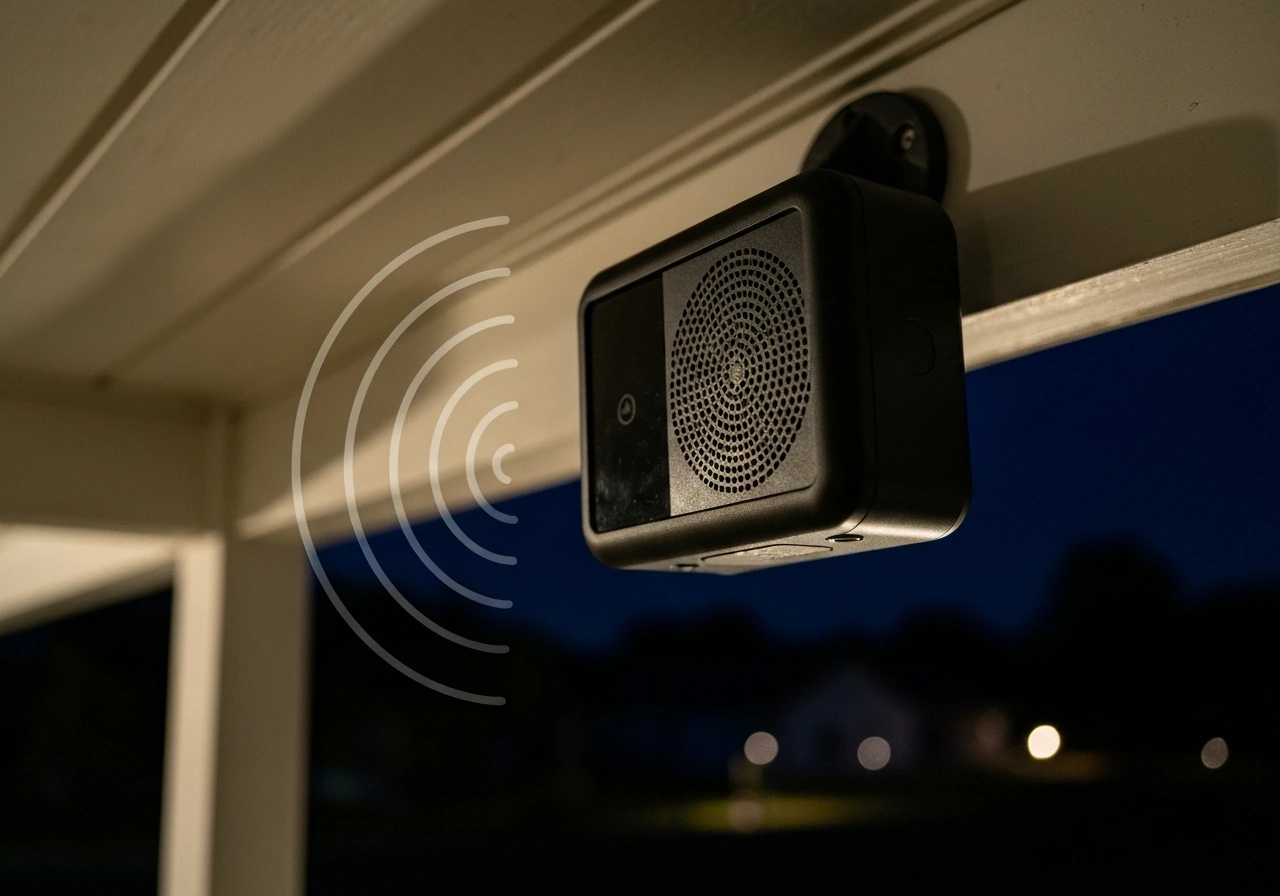
Ultrasonic products marketed specifically at birds are almost always a waste of money outdoors. Bird hearing peaks in roughly the 1–4 kHz range, very similar to humans. Research notes that even purpose-designed acoustic bird deterrents tend to operate closer to avian hearing limits (around 10–12 kHz) rather than in the true ultrasonic range above 20 kHz, because you need the bird to actually hear it. Most ultrasonic garden devices operate at 25 kHz or higher, which birds simply don't perceive well, particularly in open outdoor environments where sound scatters quickly.
Volume matters too. Outdoors, sound dissipates fast: every doubling of distance roughly quarters the sound pressure. A unit rated at 105 dB at 1 meter might drop to barely audible levels at 50 feet in a breeze. Check the effective coverage area in the product specs, not just the maximum dB rating, and choose a unit that realistically covers your actual problem zone with some margin.
Placement and setup: getting the most out of your speakers
Good placement makes a mediocre unit perform well. Poor placement wastes even a great unit. Here's how to set it up properly.
Height and aiming
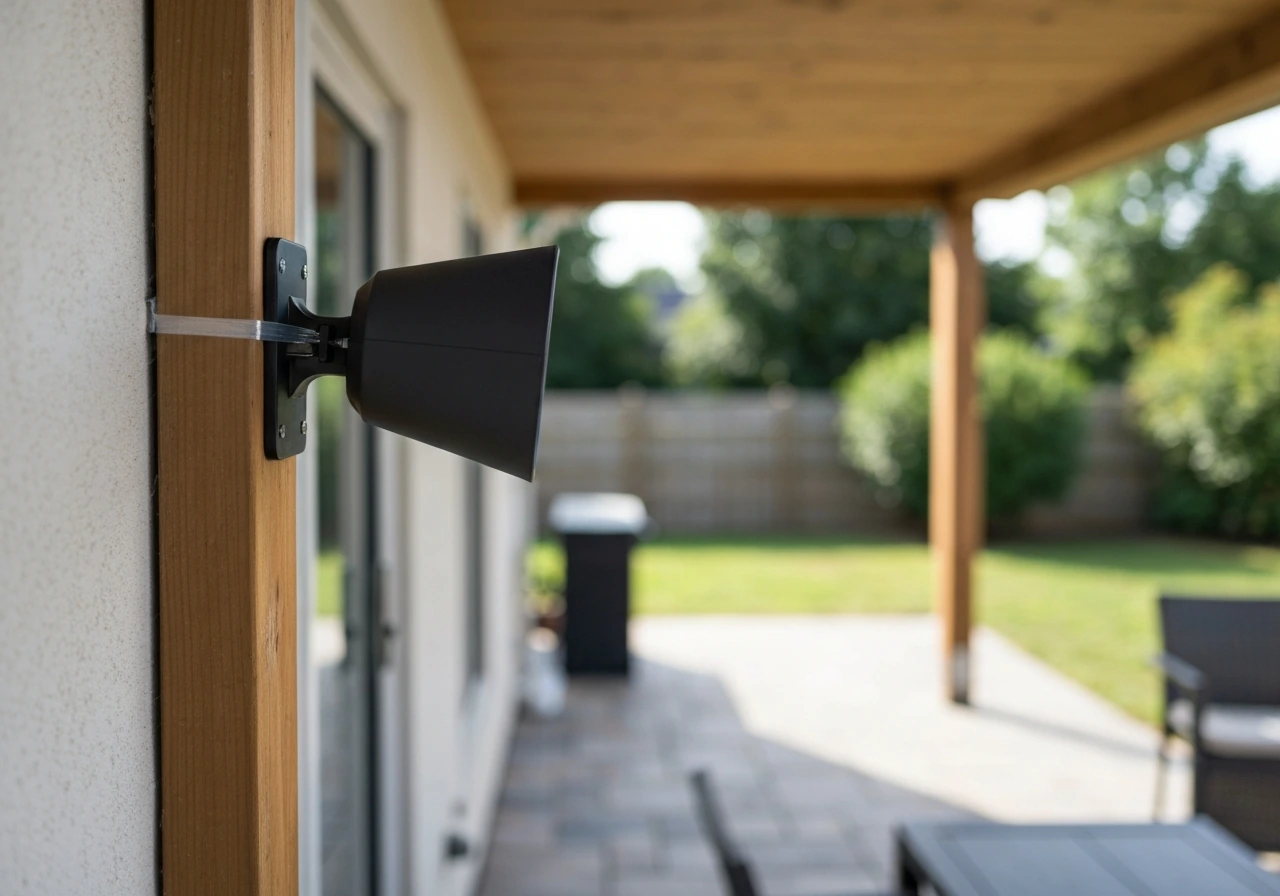
Mount speakers at the same height as the area you're protecting, or slightly above it. For a patio, that's roughly 8–10 feet up on a wall or post, aimed across the space. For a rooftop, mount at parapet height or on a low mast, angling speakers outward and down toward the landing zones. Sound should travel across the birds' approach path, not just broadcast in one direction. If you have a directional speaker, angle it about 15–20 degrees downward so the beam hits the ground-level area where birds actually land.
Coverage range and multiple speakers
Most residential sonic units cover 1/4 to 1 acre realistically. Commercial units can cover up to 6 acres with multiple speaker outputs. For a standard backyard or patio, one unit is usually enough. For rooftops wider than 60 feet or L-shaped spaces, plan for two units to eliminate dead zones. Overlap coverage by about 20% at the edges rather than trying to stretch one unit too far.
Weatherproofing and power
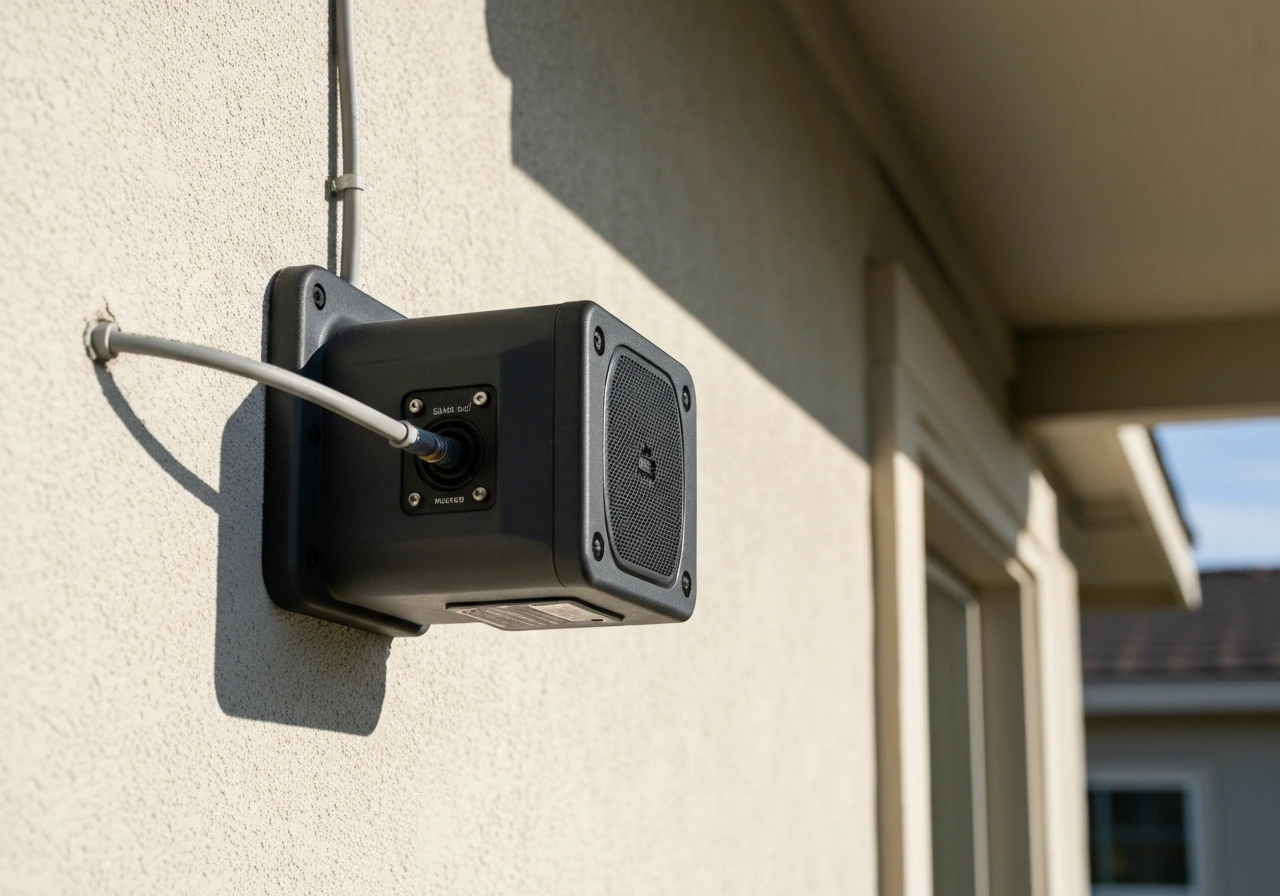
Any outdoor unit needs to be rated at least IP44 (splash-resistant) and ideally IP65 (dust-tight and jet-resistant) if it's in a fully exposed location. Check that speaker connectors and the main unit housing are sealed. For power, solar units are convenient but can underperform in shaded locations or extended cloudy periods, leading to gaps in operation that birds quickly learn to exploit. A wired AC connection with a weatherproof outdoor outlet is more reliable if you have the option. Battery-powered units are acceptable for remote locations but require consistent maintenance to stay functional.
Timing and programming to reduce habituation
Run the unit during peak bird activity hours: typically early morning (just after sunrise) and late afternoon. Running it 24 hours a day wastes power and accelerates habituation. The best commercial units let you program randomized intervals between call sequences (e.g., a burst every 8–18 minutes at random) and cycle through a library of different calls. If your unit only has a fixed loop, manually change the call type every few days to slow down adaptation. Moving the speaker position even a few feet every week or two also helps.
Sound works better when it's not working alone
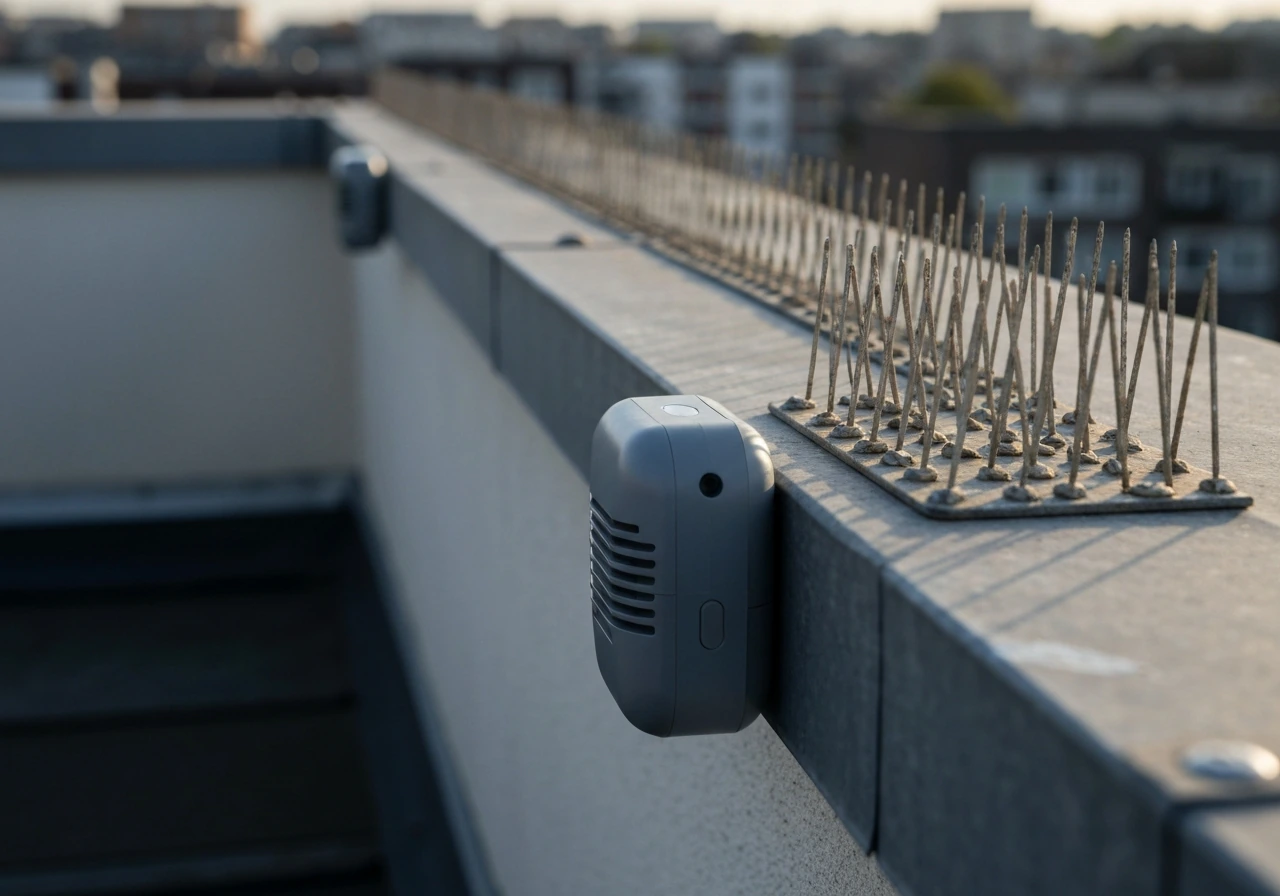
Sound deterrents are most effective as one layer in a multi-method approach. FCC exhibit materials for bird-deterrent products describe electronic sound playback units that use prerecorded birdcall “chips,” triggered each time the deterrent system is activated FCC filing / technical exhibit for BirdDeter. On their own, they rarely eliminate a serious bird problem permanently, especially for persistent roosters or birds with an established food source. The most durable results come from combining sound with physical and environmental controls.
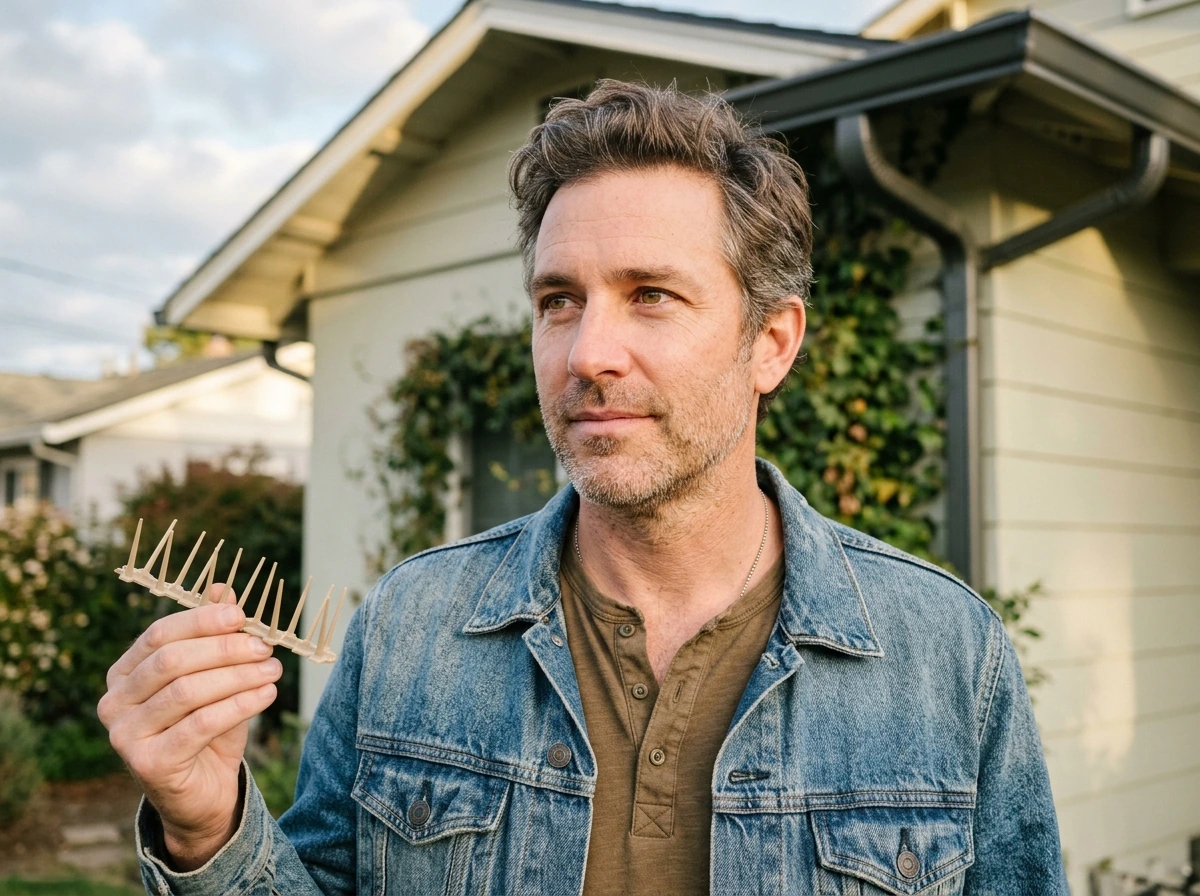
- Physical barriers: Spikes on ledges and rooflines prevent landing entirely regardless of how birds respond to sound. They're especially effective on pigeons and gulls on commercial buildings.
- Netting: For enclosed spaces like carports, loading docks, or under solar panels, bird netting is the most reliable exclusion method available. Sound won't keep birds out of a space they're already living inside.
- Visual deterrents: Reflective tape, predator decoys (especially those that move), and laser systems add another sensory layer. Like sound, visual deterrents need to be moved and varied to stay effective.
- Sanitation and food removal: If birds are coming to your property for food (spilled grain, exposed garbage, standing water, fruit trees), no deterrent will work reliably until you address the food source. Remove the attractant first, then deploy sound.
- Motion-activated triggers: Pairing sonic units with a PIR motion sensor means the sound only fires when birds approach, which is far more startling and far harder to habituate to than a continuously running system.
If you're researching other bird control approaches alongside sound, it's worth knowing that physical repellents like bird repellent spray and gel work well on specific surfaces, and natural deterrents can complement sound in garden settings. If you are comparing options, it can help to understand what is a natural bird repellent and how it fits into a layered deterrent plan. Sound fits best as a perimeter-level deterrent while physical methods handle the spots where birds are most persistent. If you're looking for what's a good bird repellent overall, start by pairing sonic alarm calls with targeted physical deterrents where birds persist most. If you're still asking what bird repellent options fit your yard, this also aligns with what is bird repellent and how people typically choose between sonic approaches.
Safety, neighbors, and local rules: what you need to know before you buy
Sonic bird deterrents are audible to humans and pets, which creates real considerations before you install one.
Effects on pets
Dogs and cats hear into higher frequencies than humans, so units operating in the 10–15 kHz range can be uncomfortable for them even if you can barely hear it. If you have outdoor pets, choose a unit with adjustable frequency ranges and test it while watching your animal's reaction. Most birds-only sonic units (alarm calls in the 1–5 kHz range) are no more distressing to pets than ambient outdoor noise.
Neighbor and noise ordinance issues
This is the part people skip until they get a complaint. Many municipalities have noise ordinances that cap outdoor sound levels at 50–65 dB(A) during daytime hours and lower at night, measured at the property line. A sonic bird unit running at 80–100 dB near a property boundary will likely violate these limits. Aim speakers away from neighboring properties, run units only during daytime activity hours, and keep the volume at the minimum that still covers your target area.
If you're in a residential area with close neighbors, check your local ordinances before purchasing a high-powered unit. Some jurisdictions also have specific rules about audio deterrents in commercial or industrial zones. A quick call to your local code enforcement office takes five minutes and can save you a citation.
Protected species
In the US, most songbirds are protected under the Migratory Bird Treaty Act. Sound deterrents are legal to use (you're not harming the birds), but make sure any method you add alongside sound (trapping, nest removal) complies with federal and state regulations. Pigeons, starlings, and house sparrows are not federally protected and have fewer restrictions, but local ordinances may still apply.
A quick buying checklist before you spend money
Run through this before you order anything:
- Identify the exact species you're dealing with. Buy a unit with species-specific calls for those birds.
- Measure your problem area. Match the unit's realistic coverage area to your actual space.
- Avoid anything marketed purely as 'ultrasonic for birds.' It won't work outdoors.
- Look for randomized call sequencing and programmable intervals, not a fixed loop.
- Check the IP weatherproofing rating. Minimum IP44 for sheltered spots, IP65 for exposed rooftop or poolside use.
- Decide on power supply. Wired AC is most reliable; solar works in full-sun locations only.
- Check your local noise ordinance maximum dB levels before choosing volume output.
- Plan your secondary deterrent. Sound alone rarely solves a serious bird problem permanently.
FAQ
How can I tell if the bird repellent sound I bought actually matches the birds in my yard?
Look for a species library that includes your target bird by common name, not just “bird distress.” If the unit lists recordings by species (for example, pigeon distress vs. crow alarm) you are more likely to get recognition. If your problem is mixed flocks, you may need multiple call types running, otherwise habituation happens faster when birds realize the calls do not match their own danger signals.
What if the birds seem to ignore the sound after a few days?
This usually indicates habituation from predictable timing, the same speaker direction, or sound not reaching the birds where they land. Fix it by randomizing intervals, alternating call types, and rotating speaker orientation every 1 to 2 weeks. Also check for sheltered “dead zones” behind structures (fences, HVAC units, under eaves), then add a second speaker or reposition so the sound travels across the approach path.
Should I run the unit only when birds are present, or continuously during the day?
If your unit has motion activation, using it to trigger only when birds approach typically reduces habituation and saves power. If you must run continuously, keep it limited to peak activity windows (early morning and late afternoon) and avoid fixed loops. For active sites like rooftops and roosting ledges, motion triggers plus rotating call sequences tends to work better than constant playback.
How loud does “loud enough” need to be with bird repellent sound?
Use the product’s effective coverage area, not the peak decibel rating. Outdoors, sound drops quickly with distance and wind, so if birds are 30 to 60 feet away, the perceived level may already be near the threshold of hearing. Start with the minimum setting that still scares birds within the target zone, and place speakers to keep the sound beam crossing the birds’ landing and approach lanes.
Do ultrasonic bird repellent sounds ever work if I point the device at the birds?
In most outdoor settings, pointing does not solve the core issue, birds generally do not perceive the ultrasonic range being marketed. You may get brief startling effects at close range, but recognition is usually weak and habituation happens. If you see no change within a short test period, switching to audible distress or predator alarm recordings is usually the more reliable route.
Where exactly should I place speakers for best results in an L-shaped yard or large garden?
Treat coverage like overlapping “lanes” rather than a single blob of sound. For L-shaped or wide spaces, use two units and aim each one across the approach path toward the feeding area. Overlap the edges by about 20% to avoid quiet pockets, and angle speakers outward and slightly downward so the beam hits the ground-level landing zone, not just nearby walls.
What wiring and weatherproofing details should I verify before installing outdoors?
Confirm the unit is rated for the actual exposure level (at least splash-resistant, ideally jet-resistant if it gets full weather). Check that the speaker connectors and housing are sealed, especially where cables enter the unit. If you use solar or battery power, test performance during shade and extended cloudy stretches, because gaps in operation let birds learn the sound is not a real threat.
Will bird repellent sound affect my pets, especially dogs?
Some units operate in higher frequency ranges that can bother dogs even when humans barely notice them. If your unit offers adjustable frequency or different modes, test it while watching your animal’s behavior at first. Units designed around typical bird alarm call ranges are usually less of a pet-disturbance issue, but individual sensitivity varies.
Could bird repellent sound violate local noise rules?
Yes, especially with high-powered devices or units that run near property lines at night or continuously. Noise ordinances often cap daytime sound at a set dB(A) at the boundary, with lower limits at night. If you have close neighbors, keep speakers aimed toward the target zone, reduce volume to the minimum effective level, and run only during daylight activity windows.
Is sound a complete solution for persistent birds like pigeons or starlings?
Often it is not permanent by itself, particularly for birds using protected roost spots or established food sources. For pigeons under solar panels or sheltered areas, sound may mainly work as an approach deterrent, while physical exclusion at the panel edges or on roost access points is typically necessary for durable results. Plan for layered controls, not just audible deterrence.
How often should I change the setup to prevent birds from adapting?
A practical cadence is to rotate call types every few days (if the unit does not randomize) and move speaker position a few feet every 1 to 2 weeks. Also review performance after weather changes, since rain, wind, and seasonal changes can alter how far sound carries and where dead zones form behind structures.

Learn what natural bird repellents are, which scents sprays and habitats work, how to apply safely, and their limits
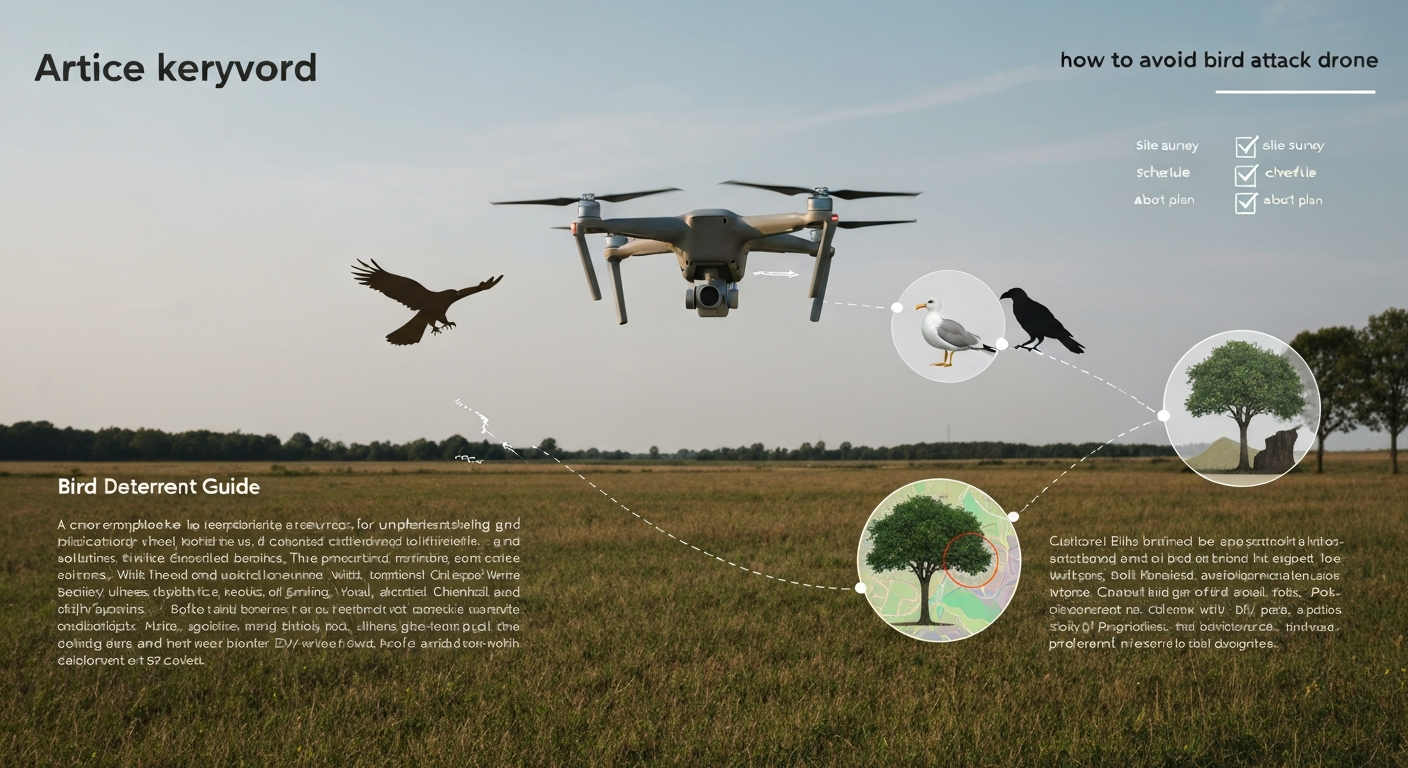
Practical, humane steps to reduce bird–drone collisions: preflight checks, deterrents, tactics, and legal guidance.
Learn what’s already used to prevent bird collisions, from airport safeguards to building glass and humane deterrents, p