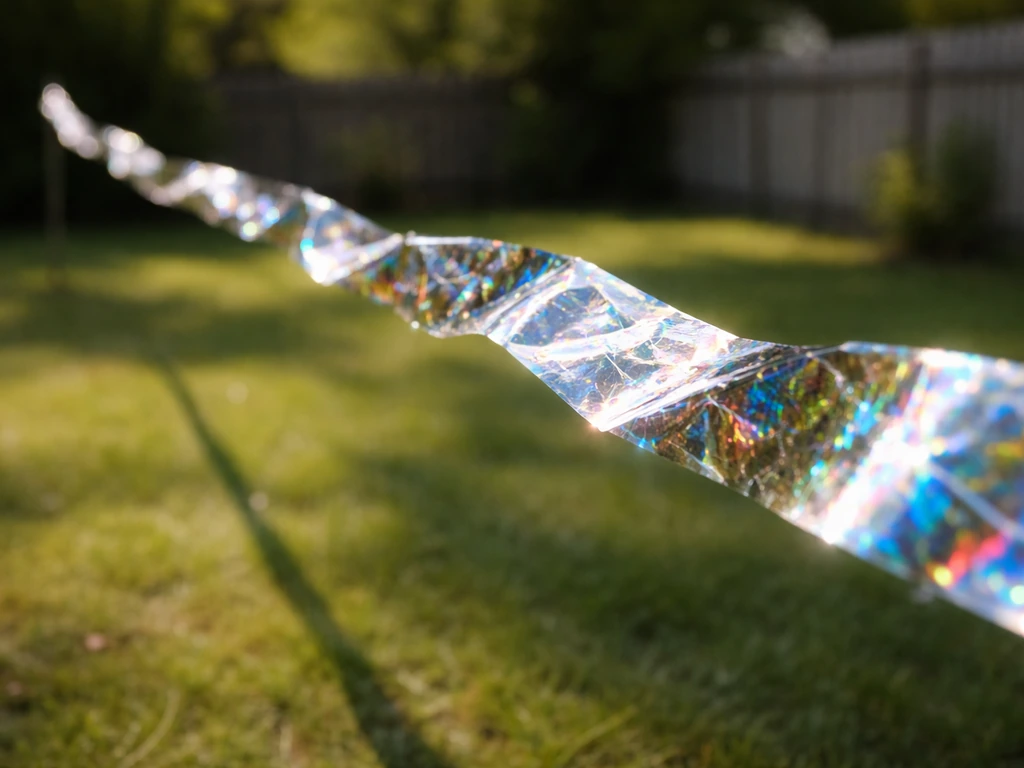
The best bird scare tape for most outdoor areas is a holographic or dual-sided reflective Mylar tape (silver on one side, red on the other) that's at least 1/2 inch wide, UV-resistant, and mounted so it can move freely in the breeze. Products like Bird-X Irri-Tape and Bird-B-Gone Flash Tape are solid, widely available choices that cover gardens, patios, fruit trees, pool edges, and balconies well. For window collisions specifically, ABC BirdTape is a different animal: it's a translucent adhesive tape applied directly to exterior glass in a tight grid pattern. Knowing which type you need, where to put it, and how to keep birds from ignoring it after a few weeks is what makes the difference between tape that works and tape that just blows around doing nothing.
Best Bird Scare Tape: How to Choose and Install It

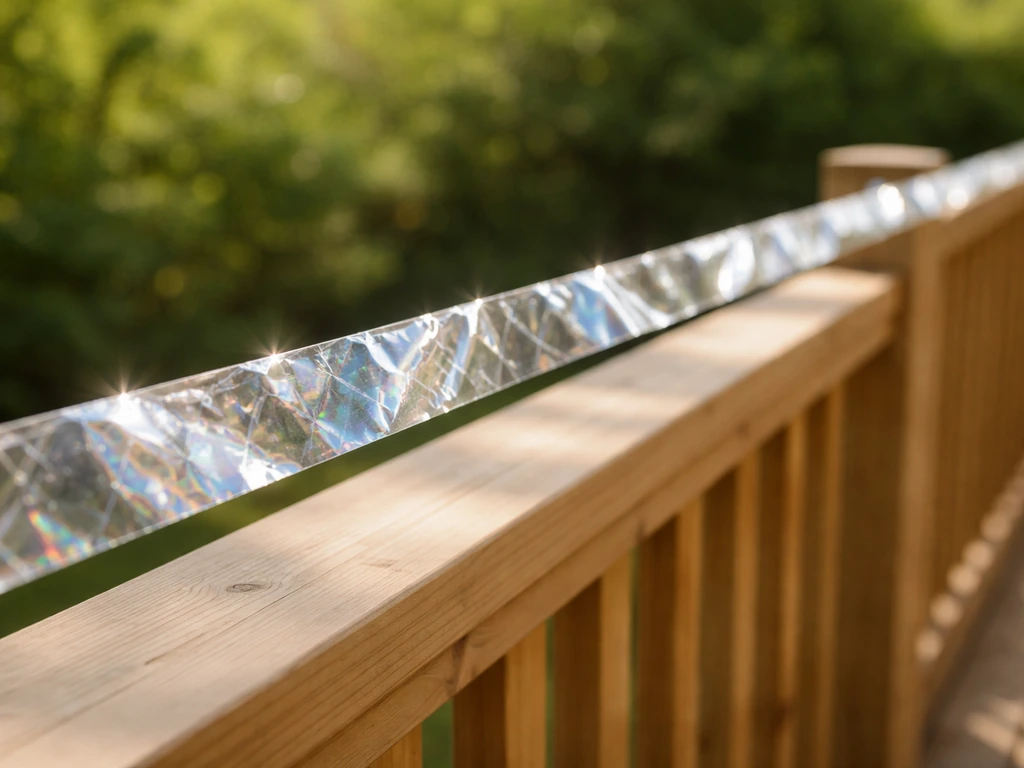
What bird scare tape is and how it deters birds
Bird scare tape is a thin, usually metallic ribbon or adhesive strip that deters birds through visual stimulation. There are two main types with different mechanisms. Reflective scare tape (Flash Tape, Irri-Tape, and similar products) works by catching light and creating unpredictable, flashing reflections that birds find threatening. When wind moves it, it also produces a crackling, rustling noise that adds an auditory component. USDA APHIS notes that reflective tape or flags can produce humming or roaring sounds in some setups, which may contribute to bird deterrence crackling, rustling noise. The combination of erratic light flashes and unfamiliar sound triggers the birds' instinct to avoid the area. The second type, collision-prevention tape like ABC BirdTape, is translucent and doesn't flash. Instead, it makes glass visible to birds by breaking up the reflection of sky and trees that fools them into flying full speed into a window.
Most scare tape on the market falls into the reflective category and is made from Mylar or similar metallic film. It's lightweight, inexpensive, and easy to deploy across wide areas quickly, which is why extension wildlife programs and vineyard managers have used it for decades. The key word in how it works is motion: tape hanging perfectly still in dead-calm air does almost nothing. Wind-driven movement is what activates it.
Which birds and problem areas it works for (and where it falls short)
Reflective scare tape works best on pest species that are relatively skittish and haven't already established a strong routine in the area. Common nuisance birds that respond well include pigeons in early stages of roosting, woodpeckers visiting siding or eaves, starlings and sparrows in gardens, and waterfowl loafing near ponds or pool edges. It's also effective in vineyards and crop settings where birds are moving through rather than nesting.
Where it tends to struggle: areas where birds are already deeply established and have learned there's no real threat, enclosed or sheltered spots with little wind (like a covered porch or enclosed balcony), and high-pressure roosting situations on rooftops or solar panels where birds return day after day with a strong incentive (warmth, nesting). In those cases, tape alone rarely cuts it. For window strike prevention, standard reflective tape is not the right product at all; that job calls for collision-prevention tape applied directly to the glass. For window collisions, you should use a collision-prevention tape designed for glass, such as ABC BirdTape collision-prevention tape like ABC BirdTape.
- Good fit: gardens, fruit trees, berry bushes, vines, open patios, pool surrounds, balcony railings, landscape edges
- Good fit: early-stage roosting on ledges, eaves, or fences where birds haven't fully committed
- Good fit: woodpecker deterrence on exterior siding and trim
- Poor fit: fully enclosed covered areas with no consistent airflow
- Poor fit: established colonies under solar panels or on rooftops (physical barriers needed)
- Poor fit: window collision prevention (use collision-specific tape like ABC BirdTape instead)
- Poor fit: airports or aviation-adjacent properties where regulations require a managed, documented dispersal program
How to choose the right tape for your setup

The right tape depends on your specific location, the bird species involved, and how exposed the area is. Here's what to look for when comparing options.
Reflective scare tape for outdoor areas
For gardens, patios, and open structures, choose a dual-sided holographic Mylar tape that is at least 1/2 inch wide (some products run up to 2 inches, which creates more visual disturbance and more noise). Look for UV-resistant or weatherproof labeling if it's going to be left outdoors year-round. Color matters slightly: silver/holographic reflects the broadest spectrum of light, while the red side on dual-color products adds a visual element that many birds associate with danger signals. Wider tape tends to produce more audible flapping in light breezes, which is an advantage.
Collision-prevention tape for windows
If your goal is stopping birds from hitting glass, you need a product specifically designed for that. ABC BirdTape is the most tested option in this category. It's translucent, so it doesn't block your view, and it lasts up to 4 years on an exterior surface. The critical spec here is the pattern: stripes or squares must be spaced no more than 2 inches apart horizontally and 2 inches apart vertically to be effective. Any wider and birds can still fly through the gaps. Other collision tapes exist, but that 2x2-inch rule is the benchmark for effectiveness.
Quick comparison
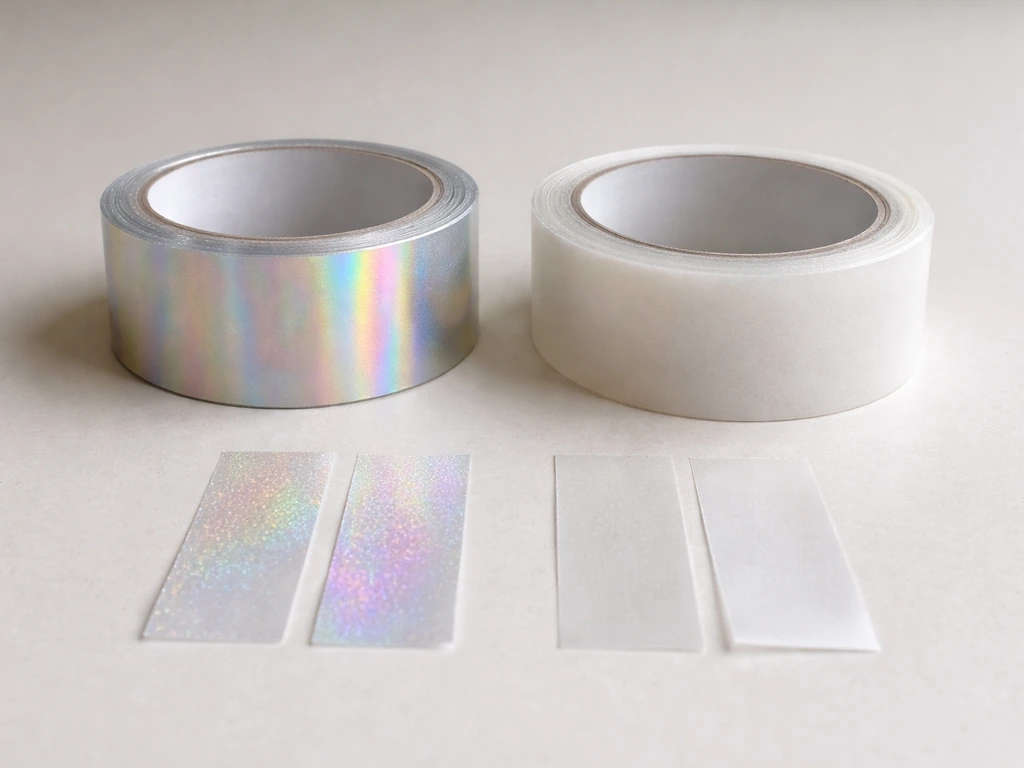
| Tape Type | Best Use | Material | Key Spec | Approx. Lifespan |
|---|---|---|---|---|
| Holographic Mylar (Flash Tape, Irri-Tape) | Gardens, patios, vineyards, open structures | Mylar film, dual-sided | At least 1/2 in. wide, UV-resistant | 1 season, rotate every 2-3 weeks |
| ABC BirdTape / collision tape | Window and glass strike prevention | Translucent vinyl adhesive | Max 2x2 in. spacing on exterior glass | Up to 4 years on exterior |
| Standard aluminum foil strips (DIY) | Low-cost, short-term deterrence | Household foil | Variable width, not UV-rated | Weeks, weather-dependent |
How to install bird scare tape correctly
Installation mistakes are the single biggest reason scare tape fails. The most common errors are hanging tape too high where birds land below it, using too few strips so coverage is sparse, and mounting it somewhere it can't move. Follow these steps for each setup.
For reflective scare tape in gardens and outdoor areas
- Identify the specific spots birds are using: feeding areas, landing perches, approach paths to trees or shrubs.
- Run strips at the height birds are actually approaching, not just at eye level for humans. For garden beds, that might be 12–18 inches above the plants. For patios or fences, at the height birds land.
- Secure one end of the tape to a stake, post, string line, or branch. Leave the other end free to flutter, or tie loosely between two anchor points with enough slack to allow movement.
- Space strips roughly every 2–3 feet across the protected area. Denser coverage works better than sparse placement.
- Make sure each strip has at least 12–18 inches of free-hanging length to catch light and move in a light breeze.
- Avoid running tape tightly between two points with no slack. Taut tape barely moves and loses most of its deterrent effect.
For collision-prevention tape on windows
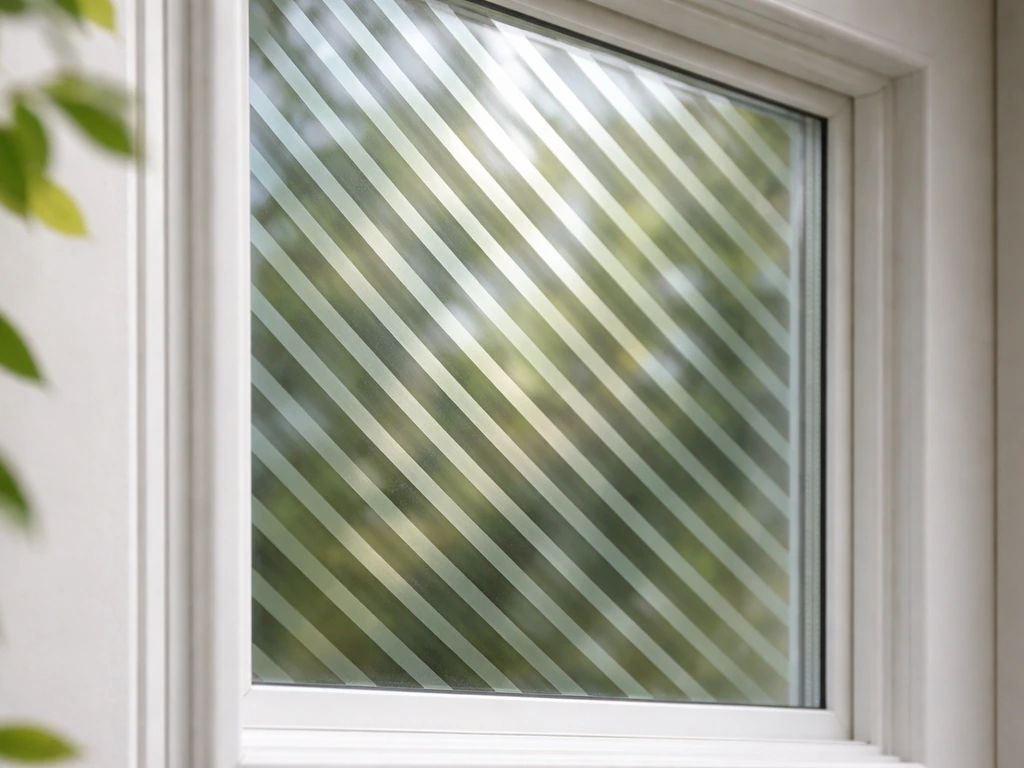
- Always apply to the outside surface of the glass. Interior application does not work because it doesn't interrupt the exterior reflection that confuses birds.
- Clean the glass thoroughly before applying. Dust or grease prevents proper adhesion.
- Apply strips or squares in a grid with no gap larger than 2 inches in any direction.
- Press firmly and smooth out air bubbles for a full bond.
- Check edges after the first rain to confirm adhesion is holding.
Placement tips for specific areas
- Fruit trees: Tie strips to branches throughout the canopy so they move independently. Concentrate coverage on the side birds approach from.
- Pool edges: String a line just above the water's edge and hang strips every 2–3 feet. Birds approaching for a drink or bath will encounter the flashing deterrent first.
- Balconies: Attach to railings or overhead lines. Combine with other deterrents if pigeons are already established.
- Eaves and siding (woodpeckers): Hang strips from the eave directly over the area being damaged, low enough to cover the damage zone.
- Solar panels: Tape has limited use here since birds roost underneath. Physical barriers are a better primary solution, with tape used as a supplementary deterrent along the panel edges.
How long it lasts and beating habituation
This is the part most guides skip. Reflective scare tape has a real effectiveness window, and ignoring it is why people conclude it doesn't work. Reflective tape does work, but its results depend on avoiding habituation and using it correctly for your specific setup does bird deterrent tape work. Transport Canada's airport bird control research found that habituation to reflective tape can occur relatively quickly because birds eventually learn the tape poses no real threat. Transport Canada's airport bird control evaluation also notes that reflecting tape can be susceptible to habituation as birds learn it poses no real threat Reflective tape has a real effectiveness window, and ignoring it is why people conclude it doesn't work.. Extension wildlife guidance backs this up and recommends moving frightening devices every 2 to 3 days in active problem areas.
In practice, you don't need to move tape every two days in a typical backyard, but you should change its configuration every 2 to 3 weeks. Move strips to different positions, add new strips to areas you haven't covered, change heights, or swap in a different deterrent for a week before returning to the tape. Rotation keeps birds uncertain. Tape that has been hanging in the same spot for two months in full sun is probably doing very little.
Weather also affects lifespan. UV exposure degrades Mylar over a single outdoor season, causing it to lose reflectivity. Check tape monthly and replace strips that look faded, torn, or that have lost their metallic finish. For collision-prevention tape like ABC BirdTape on windows, the story is different: it's rated for up to 4 years of exterior use because it's a durable adhesive vinyl, not a lightweight film.
When to combine tape with other bird control methods
Scare tape works best as part of a layered strategy rather than as a standalone solution, especially in persistent problem areas. Here's how to think about escalation and combination.
Tape alone is usually enough when
- Birds are visiting but not nesting or roosting (foraging in a garden, landing occasionally on a railing)
- The problem is seasonal or intermittent
- You're dealing with skittish species like woodpeckers making early visits to siding
- The area has good airflow to keep tape moving constantly
Combine tape with other methods when
For persistent pigeons or starlings on rooftops and ledges, physical deterrents like bird spikes or netting should be your primary solution, with tape added to extend the protected zone around the physical barriers. Sonic and ultrasonic devices pair well with tape in enclosed areas like patios where tape doesn't get enough wind to stay active. Visual deterrents such as predator decoys or reflective pinwheels can complement tape by introducing different types of visual stimulation that delay habituation. Chemical repellents applied to landing surfaces work well on ledges alongside tape that discourages initial approach.
For solar panels, tape is not a primary solution. Birds nest under panels because it's warm and sheltered, and a strip of tape at the edge won't override that nesting drive. Physical exclusion with panel mesh or clips is the right first move, with tape used as a perimeter supplement. For high-value commercial or agricultural situations, the waterfowl management guidance from extension programs suggests that visual deterrents like tape start losing effect with committed birds well before you've achieved full coverage, so plan to layer in sonic or active hazing if you're managing larger areas.
How different methods stack up
| Method | Best Strength | Main Limitation | Best Paired With |
|---|---|---|---|
| Reflective scare tape | Fast deployment, low cost, wide area coverage | Habituation, needs wind, degrades outdoors | Sonic devices, predator decoys, rotation schedule |
| Bird spikes | Permanent physical barrier on ledges and edges | Does not protect open areas or under panels | Tape for surrounding deterrent zone |
| Bird netting | Complete exclusion of large areas | Installation cost, less aesthetically clean | Tape at perimeter to deter approach |
| Sonic/ultrasonic devices | Covers enclosed areas without airflow | Ultrasonic range is disputed; sonic needs volume control | Tape in adjacent open areas |
| Predator decoys (owls, hawks) | Strong initial response | Rapid habituation if not moved regularly | Tape for movement, varied placement |
| Chemical repellents | Makes surfaces uncomfortable to land on | Requires reapplication, messy on some surfaces | Tape to reduce initial approach attempts |
Troubleshooting, safety, and compliance
When the tape isn't working: common fixes
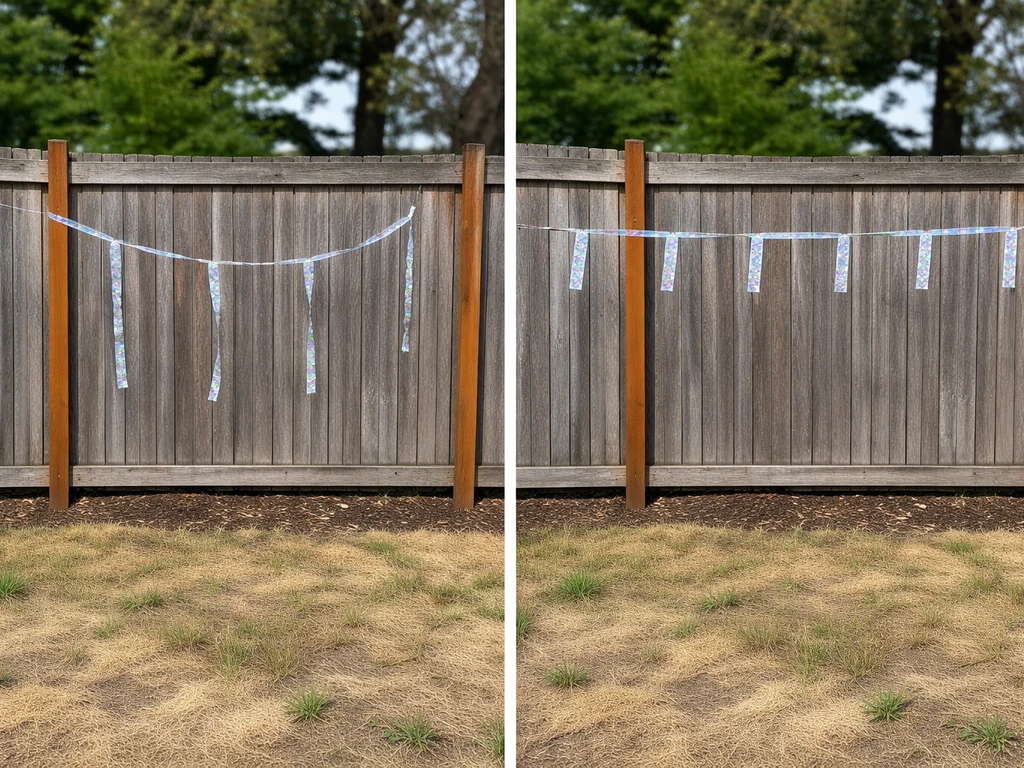
- Birds ignoring tape completely: It's probably been up too long in the same position. Move it or replace it and add a second type of deterrent.
- Tape not moving: Reposition to a more exposed location with better airflow, or use a longer free-hanging length.
- Coverage gaps: Add more strips. A few strips across a 20-foot garden bed won't do much. Dense, overlapping coverage is more effective.
- Birds landing below the tape: Lower your mounting height so tape is at or just above the birds' landing zone, not above their heads.
- Window strikes continuing despite tape on glass: Check that tape is on the exterior surface (not interior) and that the grid spacing is no wider than 2 inches in any direction.
- Birds returning after a few days of absence: This is normal. Rotate tape position and consider adding a sonic element to reinforce the deterrent.
Safety and legal considerations
Scare tape is a passive visual deterrent and does not harm birds, which keeps it on the right side of the Migratory Bird Treaty Act (MBTA). The MBTA, administered by the U.S. Fish and Wildlife Service, protects most native migratory bird species from harm or harassment. Visual deterrents like tape are widely accepted for residential and commercial use because they deter without injuring. That said, any escalation to active hazing programs (especially near airports or agricultural contexts) needs to be handled within a managed, documented framework that stays within MBTA guidelines.
On the installation side, keep tape secured so it can't become a tangle hazard for birds or small animals. Avoid low-hanging strips across pathways where wildlife or pets could become entangled. In commercial or food-production settings, check whether any local or state regulations apply to your specific bird management approach before installing a larger-scale deterrent system.
If you're just getting started and want to understand more about whether this kind of tape actually delivers results, the broader questions of whether bird scare tape works and how it compares to other visual deterrents are worth digging into before you buy. The mechanics of how reflective tape functions and the conditions that make it effective or ineffective are all factors that shape whether tape is the right first tool for your specific situation.
FAQ
Is best bird scare tape safe to leave up year-round, even during heavy sun and rain?
Yes in most cases, but UV is a major limiter. With reflective Mylar tape, inspect monthly and replace strips that look faded or lose their metallic shine. For collision-prevention tape on glass, use only a product rated for long exterior exposure, since the adhesive needs to handle temperature swings and moisture.
How much tape coverage do I actually need, and what does “too few strips” mean in practice?
Aim for continuous, overlapping coverage across the birds’ approach line, not just a few dangling strands. If birds can land or fly through open gaps, they learn quickly. A good rule of thumb is to spread strips so the birds never have an obvious “clear lane” toward the target area.
Should I hang reflective tape lower, higher, or at the same height as where birds land?
Match the height to the birds’ typical approach and landing zone. Tape that’s too high lets birds land below it and habituates faster. If you are targeting ledges or eaves, place strips to intersect the flight path and the landing height, not just the upper edge of the problem spot.
What should I do if there is no wind where I’m trying to install the tape?
If the tape cannot move, it loses its flash and sound effects. In low-wind zones like covered porches or enclosed balconies, use a combination approach (such as pairing with visual decoys, or using a different deterrent that does not rely on movement), or choose a location and mounting method that allows free swinging.
Do I need to move reflective tape every 2 to 3 days like some guides suggest?
In a typical backyard, not usually. The key is to avoid long-term habituation, so plan to change configuration every 2 to 3 weeks (reposition strips, swap heights, or add new strips where birds are approaching). If birds are very committed, shorter rotation periods may help, but constant daily disruption is usually unnecessary.
How do I know whether I bought the wrong product for my situation, reflective tape vs window collision-prevention tape?
Use reflective tape for open areas where you want birds to avoid landing or lingering, because it relies on motion and flashing reflections. For glass strikes, reflective tape is usually the wrong choice. If birds are hitting windows, you want translucent collision-prevention tape applied to the exterior glass in the specified tight grid pattern.
For window collision-prevention tape, what happens if the pattern spacing is wider than the recommended 2 by 2 inch rule?
Effectiveness drops because birds can still see and fly through the gaps between stripes or squares. If you’re spacing outside the recommended limits, expect inconsistent results and consider reapplying with correct pattern geometry rather than adding more tape randomly over the glass.
Can I apply reflective bird scare tape to interior windows instead of exterior glass?
Generally, the exterior-glass collision-prevention approach works best because birds see the outdoor reflection pattern. Interior placement is often less reliable and can still leave gaps in visibility. If your issue is window strikes, use the collision-prevention tape designed for exterior glass and follow the intended application method.
Will reflective tape stop birds that are nesting, not just passing through?
Tape alone typically struggles with established nesting behavior, especially on warm, sheltered surfaces like rooftops, solar panels, or protected ledges. For nesting, prioritize physical exclusion (netting, mesh, or spikes) and use tape only as supplemental perimeter deterrence.
How long does best bird scare tape last before I should replace it?
Reflective Mylar strips commonly degrade over an outdoor season due to UV, so expect reduced performance and replace faded or torn strips. Collision-prevention tape for windows is designed for longer exterior durability, but you still need periodic checks for peeling edges or pattern degradation.
What’s the biggest mistake that causes scare tape to fail?
Poor installation that prevents motion or leaves gaps in the birds’ approach path. Secure mounting so strips can move freely, use enough coverage to remove obvious landing corridors, and avoid placing tape where birds can bypass it while still feeling safe.
Is it acceptable to combine best bird scare tape with sonic or ultrasonic devices?
Yes, layering is often more effective than visual deterrents alone, especially in enclosed spaces where tape may not move enough. The practical tip is to stagger activation and coverage patterns so you are not relying on one device type to carry the entire job, and to verify the combined setup does not create repeated safe zones.
Will scare tape become tangled and create a hazard for pets or small animals?
It can if it’s mounted loosely or across paths at low height. Keep strips secured so they hang cleanly, avoid low-hanging runs across walkways, and route mounting so the tape cannot form loops or snags that could trap wildlife.
Does Bird Scare Tape Work? Effectiveness, Setup, and Next Steps
Find out if bird scare tape works, how to install it correctly, how long to test, and what to do if it fails.