
The most effective bird deterrent for trees, especially fruit trees, is physical exclusion netting. Nothing else comes close for stopping fruit-eating birds reliably. That said, netting is not always practical on large or mature trees, so a layered approach using visual deterrents, sound devices, and occasionally chemical repellents can fill the gap. The right pick depends on whether birds are eating your fruit, roosting in branches, or both.
Best Bird Deterrent for Trees: Fruit Tree Protection Guide
Marcus Weatherby
29 Apr 2026
Quick pick: best deterrents for fruit trees
If you want a short answer before diving deeper, here is what actually works for most backyard and small orchard situations:
- Fine-mesh exclusion netting (1.5 cm or smaller): best overall for preventing fruit loss on smaller trees and shrubs. Drape over the entire canopy or use a net tent frame.
- Individual fruit bags or paper/mesh bagging: best for low-volume fruit trees like apple or pear where you only need to protect a few dozen fruits per season.
- Reflective tape or holographic bird-scare ribbon: decent short-term deterrent for perching/roosting, especially when birds first arrive. Needs to be rotated often or birds will ignore it.
- Propane cannon or solar-powered sonic broadcaster: best for larger trees or small orchards where netting is not feasible. Needs a rotation schedule to stay effective.
- Bird repellent sprays (methyl anthranilate-based): useful as a supplement or where physical methods are hard to apply. Must be reapplied frequently, especially after rain.
For most homeowners with one to three fruit trees, netting plus a few strips of reflective tape is the starting point. Add a sonic device or repellent spray only if birds are persistent or the tree is too large to net properly.
How to choose based on bird type and damage pattern
Before buying anything, spend five minutes watching what is actually happening. The approach that works for a flock of starlings stripping ripe cherries is different from the one that handles pigeons roosting on oak branches overnight. If you are trying to find the best bird deterrent for house fruit, start by matching the method to the exact bird behavior you are seeing starlings stripping ripe cherries.
Fruit-eating birds
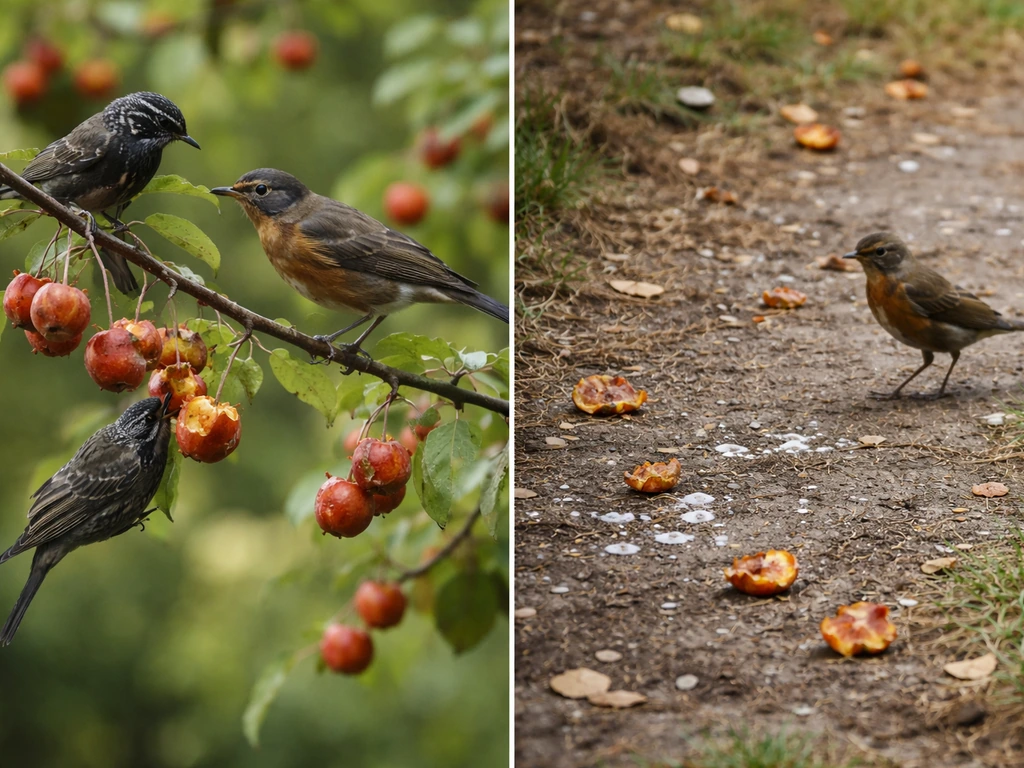
Robins, starlings, blackbirds, cedar waxwings, and various thrushes are the main culprits for fruit loss. They tend to arrive in groups, hit the tree fast when fruit is ripe, and move on. The damage shows up as pecked or hollowed-out fruit, often with multiple birds working the canopy at once. Exclusion netting is by far your best option here because it physically removes access. Sensory deterrents can reduce visits but rarely stop a motivated flock once the fruit is at peak ripeness.
Perching and roosting birds
Pigeons, crows, and grackles often roost in larger ornamental or shade trees rather than eating the fruit. The damage here is droppings on cars, patios, and garden beds below. For cars in particular, the best bird deterrent for cars is to remove what’s attracting them and use a targeted physical barrier where they land or roost. For roosting, spikes and physical deterrents on individual branches can work on smaller trees with limited roosting spots, and sonic or visual deterrents help disrupt the habit before it becomes entrenched. Once a roost is established, it takes more effort to break it.
A quick decision framework
| Damage pattern | Primary birds | Best deterrent approach |
|---|---|---|
| Fruit pecked or stripped at ripening | Starlings, robins, waxwings | Exclusion netting or fruit bags |
| Droppings under tree, no fruit damage | Pigeons, crows, grackles | Sonic device, visual scare, branch spikes |
| Both fruit loss and roosting | Mixed flocks | Netting plus sonic or visual deterrent |
| Bark or bud damage | Woodpeckers, finches | Trunk wraps, visual deterrents, hardware cloth |
Physical barriers for trees
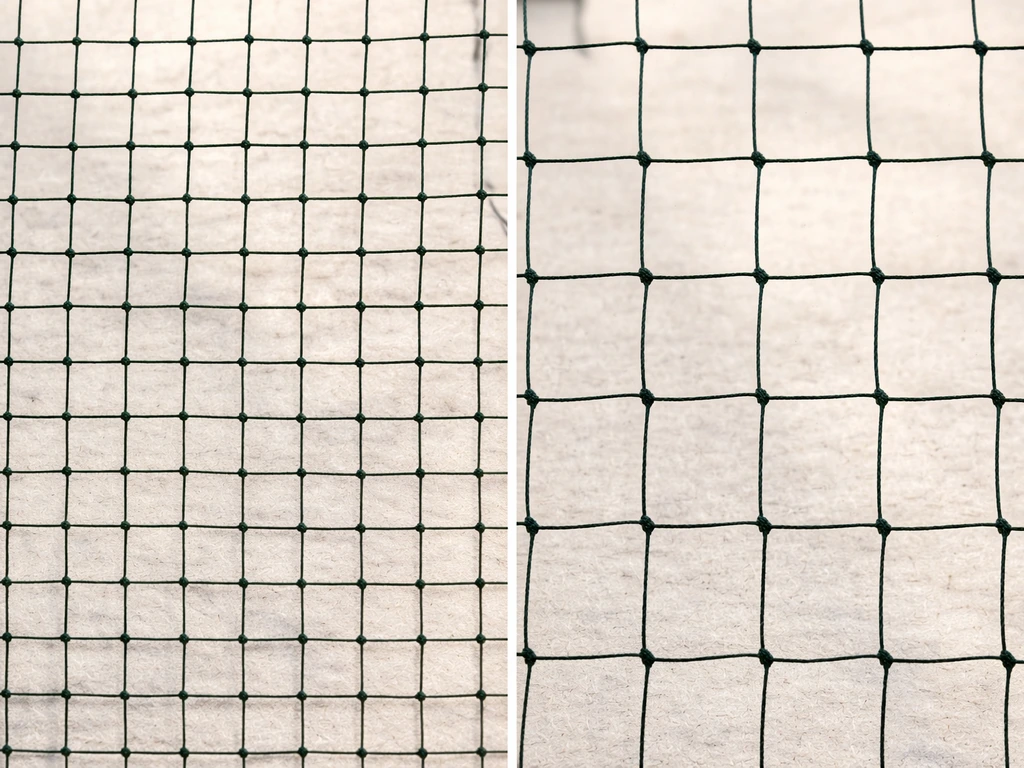
Physical exclusion is consistently rated as the highest-efficacy method in research on fruit crop protection. The reason is simple: it does not rely on scaring birds, so there is no habituation problem. The bird literally cannot reach the fruit.
Exclusion netting
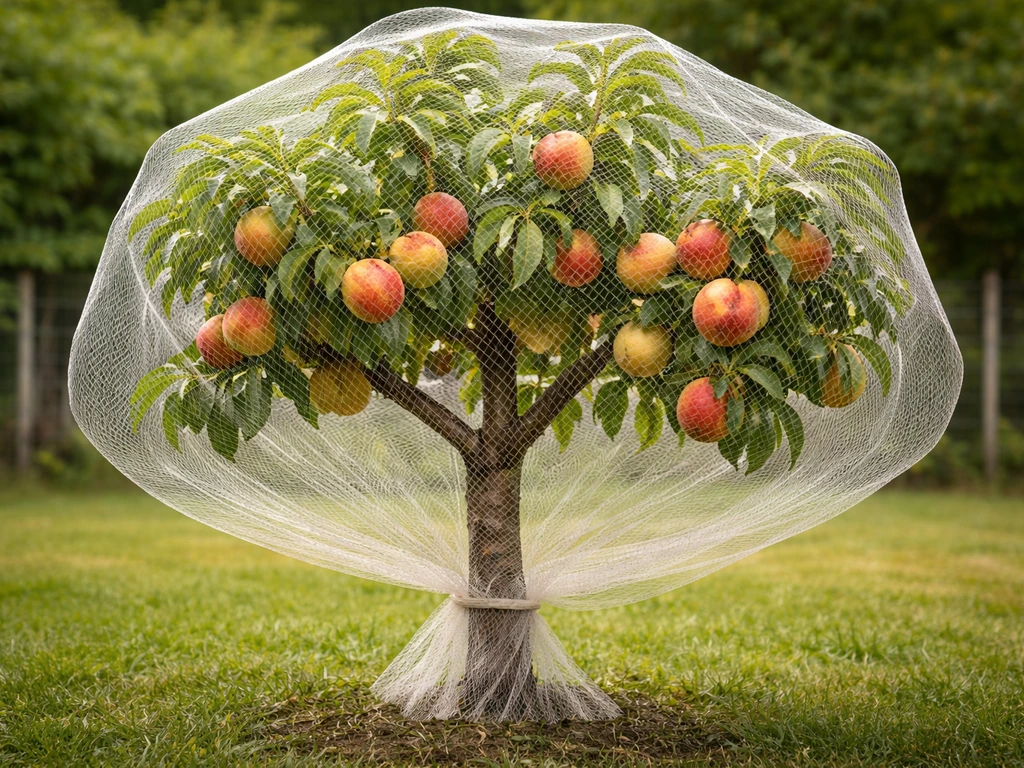
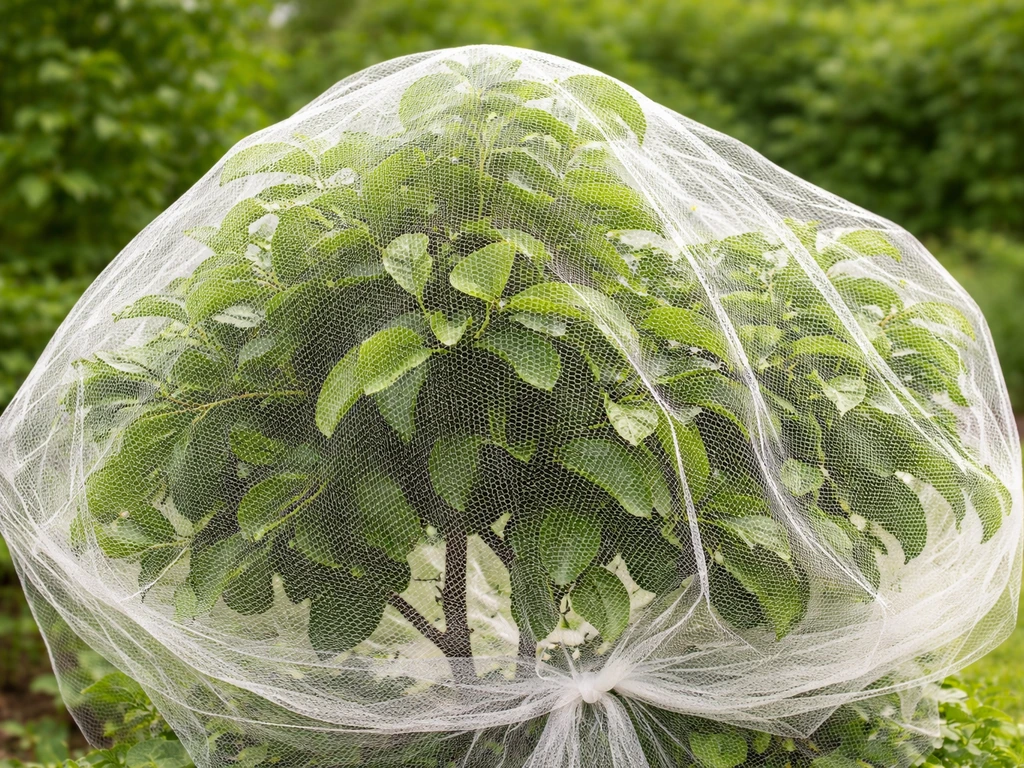
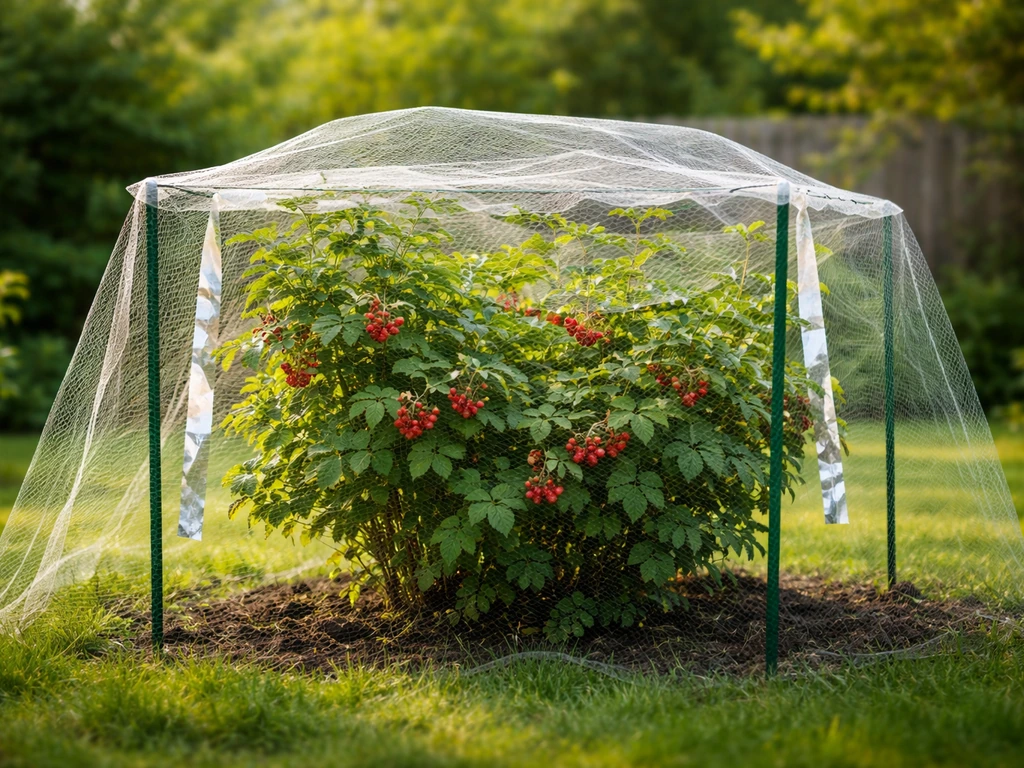
Use a mesh size of 1.5 cm (about 5/8 inch) or smaller. Larger mesh lets small birds through. Drape the netting over the full canopy before fruit starts to ripen, not after you notice damage. Tuck the bottom edges under or tie them to the trunk to prevent birds from crawling underneath. For trees under about 4 meters tall, a simple throw-over approach works. For larger trees, a PVC pipe or conduit frame that holds the net off the canopy makes application and removal much easier. Remove the net after harvest and store it somewhere dry or it will degrade quickly.
Individual fruit bagging
For apple, pear, peach, or similar trees where you grow a manageable number of fruits, bagging individual fruit clusters is highly effective and avoids the hassle of full-canopy netting. Use small paper bags, organza mesh bags, or commercial fruit protection bags. Slip the bag over the fruit when it is marble-sized, seal or tie it, and remove at harvest. This method also reduces insect damage as a bonus.
Trunk wraps and hardware cloth
For woodpecker damage on bark, wrap the target area with hardware cloth (1/4-inch mesh) or use a commercial tree wrap, leaving a few centimeters of air gap from the bark. This is a very targeted fix. It does not help with fruit loss but it does protect trunks and main limbs from drilling and stripping.
A note on spikes for trees
Bird spikes work well on flat ledges and narrow perches, which is why they are popular on buildings and rooftops. On tree branches, they are much harder to apply reliably, and birds simply land on adjacent branches. They can be useful on a few key roosting branches if you can identify the exact spots birds return to, but for most tree situations they are a low-priority option compared to netting or sonic devices.
Sensory deterrents: visual and sound options
Sensory deterrents are the most widely used and least expensive options, but they come with a real limitation: birds habituate to them, often within days to a few weeks. That does not make them useless, but it does mean you need a rotation strategy.
Visual deterrents
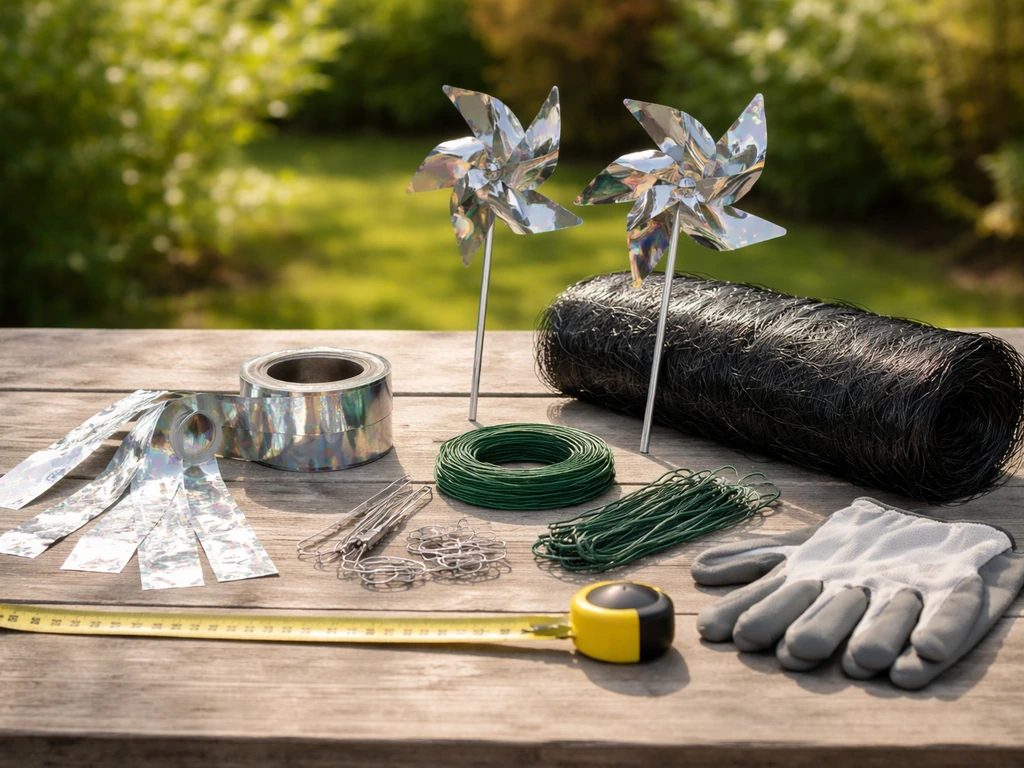
Reflective mylar tape, holographic flash tape, and reflective pinwheels create light movement and unpredictable reflections that initially startle birds. Hang strips of reflective tape from branches every 30 to 60 cm, making sure they can move freely in the breeze. Predator decoys like plastic owls or hawk silhouettes work on the same principle: initial fear followed by habituation. Move decoys to a new position every two to three days to slow down habituation. One research-cited example found reflective tape had essentially no effect in a blueberry trial by the time fruit was ripe and birds were motivated by food reward, so treat these as a first line of defense, not a complete solution.
Sonic and ultrasonic devices
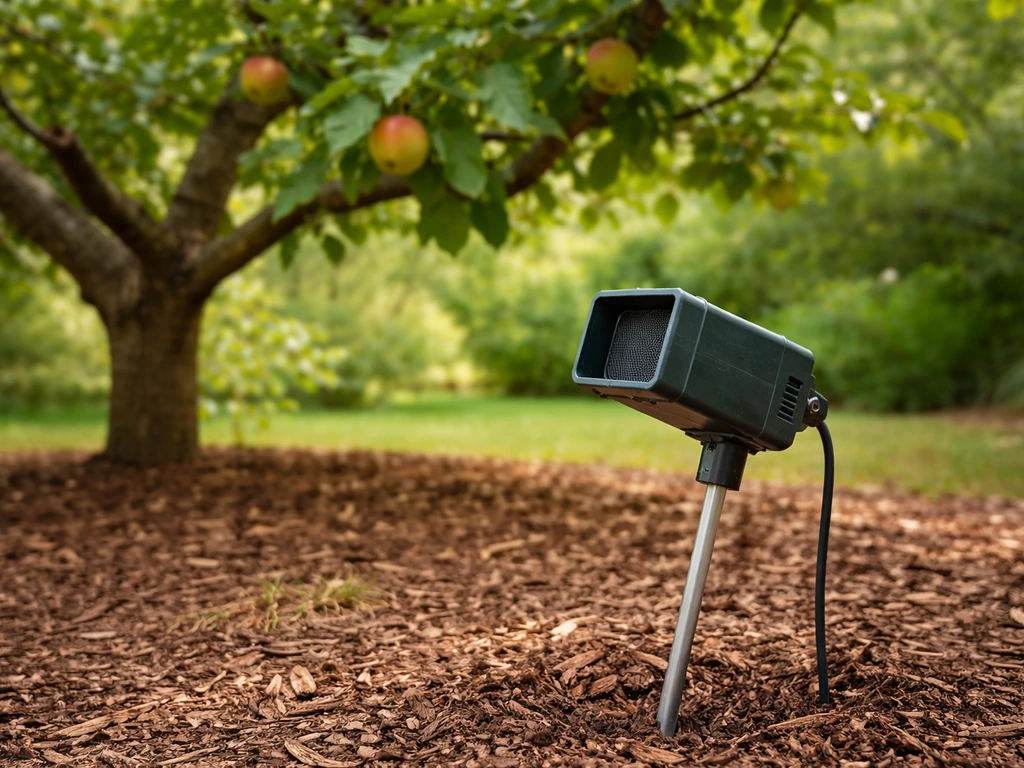
Sonic broadcasters use recorded distress calls or predator sounds (hawks, falcons) to make birds uncomfortable. They work best in open areas and need to be rotated in sound type and location regularly. A solar-powered unit with a built-in randomizer that cycles through multiple calls is more effective than a single looped track. Place the device so it covers the canopy area, not just the ground below.
Ultrasonic devices (above 20 kHz) are frequently marketed for trees and gardens, but most songbirds do not hear in the ultrasonic range effectively, so they have limited practical value for the species most likely to eat your fruit. USDA/NWRC research also reports that birds’ hearing is most sensitive around about 1 to 4 kHz and that no species has shown effective sensitivity to ultrasonic frequencies above 20 kHz ultrasonic devices (above 20 kHz).
Setup tips to reduce habituation
- Rotate visual and sonic deterrents to a new location every three to five days.
- Combine at least two types of sensory deterrent (e.g., reflective tape plus distress calls) rather than relying on one.
- Deploy sensory deterrents before the fruit starts to ripen, not after the first visit. Birds that have already been rewarded with food are much harder to deter.
- Turn off sonic devices at night if you have neighbors nearby, and check local noise ordinances if using propane cannons.
Chemical repellents: when they help and when they fall short
Bird repellent sprays are a real option, but they work better as part of a layered approach than as a standalone fix. The most widely available and least toxic active ingredient is methyl anthranilate (MA), a grape-derived compound that irritates birds' trigeminal nerves without harming them. It is registered for use on food crops in many regions and is labeled as humane. Other products use anthraquinone or polybutene (a sticky gel applied to branches), but check labels carefully for food crop use.
How to use repellent sprays
Apply methyl anthranilate sprays directly to ripening fruit and foliage. Reapplication is necessary every five to seven days in dry weather and after every significant rainfall, since the compound washes off. On heavily fruiting trees this can become expensive and time-consuming. The main practical limitation is coverage: large canopies are hard to spray thoroughly, and birds will find untreated fruit. MA sprays work best on smaller trees with moderate bird pressure, or as a supplement to netting on trees that are awkward to fully cover.
Limitations to keep in mind
- Wash-off after rain means frequent reapplication during wet seasons.
- Birds can habituate to repellent smells and tastes over time, especially if food pressure is high.
- Sticky gel repellents applied to branches can trap small birds, lizards, and beneficial insects if not used carefully. Avoid them on trees unless you use a physical excluder rod or post as the application surface.
- Always read the label for any repellent product before applying it to edible crops. Not all bird repellent products are food-safe.
Installation, timing, maintenance, and confirming it's working
Timing is everything
The single biggest mistake people make is waiting until they see damage before acting. Birds scout food sources before peak ripening. Install netting, hang visual deterrents, and run sonic devices two to three weeks before your fruit typically reaches ripeness. If you can catch birds early, before they have been rewarded by eating fruit from your tree, deterrents are far more effective.
Installation checklist
- Inspect the tree for existing bird activity and identify which species are causing the problem.
- Choose your primary method (netting for fruit trees, sonic plus visual for roosting trees).
- Install netting before fruit ripens, ensuring full canopy coverage with no gaps at the base.
- Hang reflective tape or install visual decoys at canopy height, not just at eye level from the ground.
- Place sonic broadcaster at canopy level and set it to a randomized cycle.
- Apply repellent spray to foliage and fruit if using as a supplement, and calendar reapplication dates.
Maintenance and rotation routine
Check netting weekly for holes, sagging sections, or gaps at the base where birds can enter. Reposition visual deterrents every three to five days. Reapply repellent sprays after rain. If using a sonic device, change the playback setting or move the unit to a different position each week. Log when you change things so you can track what is working.
How to tell if it's working
You do not need complicated monitoring. The simplest signs that your deterrent is effective: fewer birds landing in the canopy, shorter visit durations when birds do land, no new fruit damage, and less bird droppings directly under the tree. If you had a serious problem before and you are now seeing only occasional individual birds rather than flocks, that counts as success. If fruit loss continues at the same rate after a week of a new method, that method alone is not enough and you need to add or switch approaches.
When to bring in a professional
DIY methods handle the majority of home fruit tree situations. Consider calling a wildlife management professional if you are dealing with a protected species (check your local wildlife regulations before doing anything), a very large mature tree that cannot be netted safely, a persistent roosting colony that has been established for more than one season, or if you manage a commercial orchard where crop loss is significant. A professional can assess the full site, identify all species involved, and deploy methods like falconry-based dispersal or large-scale netting systems that are not practical for most homeowners.
A note on safety and legality
All deterrent methods described here are non-lethal and considered humane. In most countries, wild birds are protected under national or regional legislation, meaning trapping, injuring, or killing them without a permit is illegal. Sticky gels should only be used according to label instructions because improper use can trap birds. If you are unsure whether a specific species is protected in your area, check with your local wildlife agency before deploying any deterrent.
Your start-here plan
If you are dealing with fruit-eating birds on a small to mid-size tree, start with fine-mesh netting deployed two to three weeks before ripening. For blueberries specifically, netting timed before ripening is typically the best bird deterrent for blueberries. Add two to three strips of reflective tape as a secondary deterrent.
If the tree is too large to net, use a solar sonic broadcaster with distress call rotation, reflective tape, and a methyl anthranilate spray on the fruit, reapplied weekly. Monitor for a full week before deciding whether to change strategies. Keep rotating sensory deterrents regardless of how well they seem to be working initially.
For roosting problems rather than fruit loss, the same sonic and visual principles apply, and the approach is similar to what works for birds around patios, windows, or the rest of the house structure. For indoor views and hard-to-net areas, a common question is the best bird deterrent for windows, especially when birds keep landing or roosting nearby.
FAQ
When is the right time to net a tree, and how long should the net stay on?
Net before the fruit starts to ripen, ideally 2 to 3 weeks ahead, and leave it until harvest is complete. If you pull it off too early, birds can lock onto the first fruit you uncover and you will often lose the remainder of the season. Remove after harvest and store netting dry, because sunlight and trapped moisture quickly reduce mesh strength.
Is more netting always better, can I fully wrap the tree like a tent?
For birds that eat fruit, full canopy coverage is best, but over-tenting small trees can create gaps at the bottom as netting settles. Focus on sealing the lower edge with tucking or tying so birds cannot crawl under. For very large trees, a frame that holds netting off the branches helps prevent sagging and new access points.
What size birds can get through if the mesh is slightly larger than recommended?
Mesh larger than about 1.5 cm (5/8 inch) can allow smaller birds to reach fruit, especially when they can perch on internal branches or net sagging creates openings. If you already purchased netting and are unsure, inspect in the daylight from below and look for any visible “line of sight” gaps to fruit clusters.
How do I stop birds from getting under netting at the base or along the trunk?
The biggest weak point is the bottom edge. Tuck it under soil/mulch, tie it to the trunk, or secure it to stakes around the perimeter. If the trunk is irregular, use extra ties at bends and twists so there is no continuous path that birds can crawl along.
Will covering just the fruiting branches work, or do I need the whole canopy?
If birds are only targeting specific branches, targeted netting can reduce cost and effort, but fruit that ripens outside the covered area becomes a new “reward” and can still be lost. A practical compromise is covering the parts where fruit is highest and most exposed, then monitoring for a week to confirm birds are not shifting to uncovered areas.
Do I need bagging if I already use netting?
Bagging is optional, but it adds a second physical layer that can be worthwhile when you have small, high-value clusters you want to preserve. The main benefit is that it also reduces insect pressure, and it avoids the need to fully net very delicate or irregular fruiting areas.
What should I do if birds ignore reflective tape after a few days?
That usually indicates habituation or that the tape is not creating enough unpredictable motion or visibility. Rehang strips so they move freely in breeze, increase spacing consistency (not bunching), and change positions every 3 to 5 days. Also reassess timing, if fruit is already at peak ripeness the birds may simply wait out the scare.
How far and high should sonic devices be placed to protect the canopy?
Place the sonic unit so the sound coverage overlaps the canopy area, not just the ground beneath it. If you can see birds landing and starting to feed, the device is likely off-axis or too low, so move it to change the sound angle. Use rotation of call type and placement to reduce quick habituation.
Do ultrasonic bird repellents really work for fruit tree pests?
Most practical evidence and field experience suggest ultrasonic units often underperform for common fruit-eating songbirds because they may not hear well at those frequencies. If you try one, treat it as a supplement, not your primary method, and verify results by checking for reduced landings and new fruit damage over at least a week.
Is methyl anthranilate safe to use on edible fruit, and how often can I reapply?
Methyl anthranilate is used on food crops in many regions and is generally labeled for humane deterrence, but you must follow the product label for your specific formulation and local rules. Plan on reapplication every 5 to 7 days in dry weather, and after significant rainfall, because it washes off and coverage is the limiting factor.
Can repellent sprays replace netting if my tree is too big to cover?
They can help, but they rarely replace full exclusion if birds are highly motivated. Sprays only work where you coat fruit and foliage, and untreated clusters become targets. For very large trees, combine rotation of visual and sonic deterrents with targeted spraying on the ripening fruit areas you can reach effectively.
What is the best way to tell whether my deterrent is working early?
Look for changes in behavior, fewer birds landing in the canopy, shorter feeding attempts, and less droppings directly under feeding spots. Then check fruit integrity, no new pecked fruit for several days after switching methods is a strong sign you are breaking the pattern. If losses remain unchanged after about a week, the method alone is not enough.
How do I handle a persistent roosting colony that returns every night?
Roosting usually requires disrupting habits before they become fixed. Keep visual and sonic methods active continuously during the season, rotate locations or playback settings regularly, and focus on the exact roosting branches with targeted physical barriers when possible. Once birds have established a long-term roost, it typically takes longer and more consistent disruption.
What precautions should I take to stay humane and legal?
Use deterrents that prevent access rather than trapping, injuring, or killing. Many wild birds are protected by law, so confirm local regulations, especially if you are considering any method beyond exclusion, spikes, or repellent use. Also follow label directions for any gel or spray, because misuse can trap birds or create unintended harm.
When should I stop DIY efforts and call a wildlife professional?
Consider professional help if you have a protected species involved, a mature tree that cannot be netted safely, a roosting colony persisting across more than one season, or an orchard-scale problem with significant losses. A pro can identify the bird species, map roost and feeding patterns, and deploy larger exclusion systems that are hard to DIY.
Next Articles
Best Bird Deterrent for Garden: Choose, Install, and Upgrade
Compare top garden bird deterrents with setup steps, when they work, troubleshooting, and safe, humane guidance.
How to Avoid Bird Attack Drone: Practical Safety Checklist
Practical, humane steps to reduce bird–drone collisions: preflight checks, deterrents, tactics, and legal guidance.
What Is Already Being Done to Prevent Bird Collisions
Learn what’s already used to prevent bird collisions, from airport safeguards to building glass and humane deterrents, p