
The best bird repellent for your situation depends on one thing more than anything else: where the birds are and what they are doing there. A product that clears pigeons off a warehouse roof will do almost nothing for sparrows nesting under your solar panels, and a gel that works great on a window ledge won't protect your garden from starlings. This guide breaks down every major category of bird repellent device, gives you honest reviews of what works and what doesn't, and helps you match the right tool to your exact problem.
Best Bird Repellents: Device Reviews by Location

Marcus Weatherby
23 Mar 2026
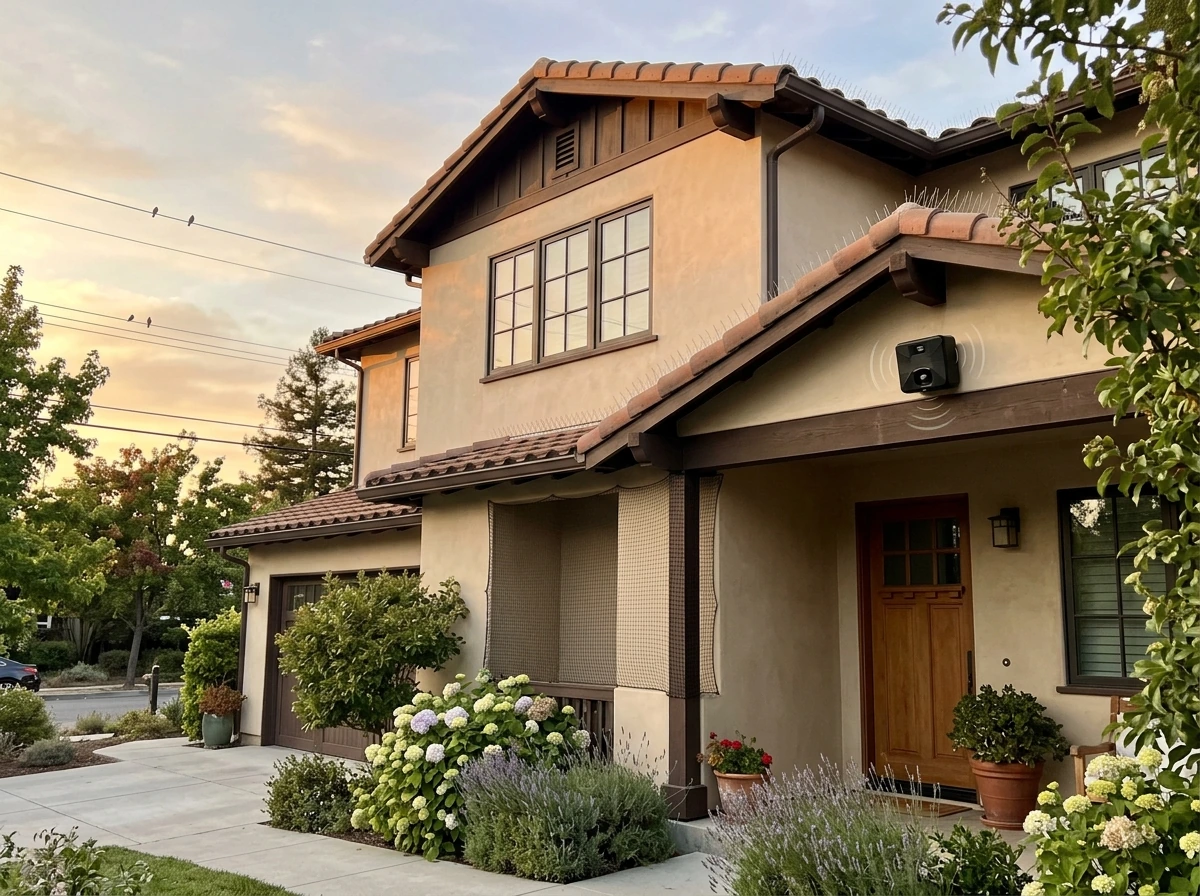
How to choose the best bird repellent for your situation
Before you buy anything, answer three questions: Which species are you dealing with? Where exactly are they landing, roosting, or nesting? And how permanent does your solution need to be? Your answers will immediately narrow the field from dozens of products down to a handful of realistic options.
Species matters more than most people realize. Pigeons, starlings, swallows, woodpeckers, and Canada geese all respond differently to the same deterrent. A spinning reflective disc that rattles a pigeon off your patio may be completely ignored by a determined nesting swallow. Mesh size for exclusion netting is literally specified by target species, with guidance from USDA APHIS recommending, for example, three-quarter-inch mesh for certain smaller species. If you don't know what bird you're dealing with, identify it first.
Location shapes the solution just as much. Open areas like lawns and ponds suit sensory deterrents with broad coverage. Ledges, beams, and roof peaks call for physical barriers like spikes or netting. Enclosed spaces such as attics or solar panel gaps need exclusion screens. Chemical and odor repellents work best in spots where birds land and taste or smell surfaces, like turf, garden beds, or treated seed.
Finally, think about how long you need this to last. A seasonal garden problem can be solved with a relatively inexpensive visual deterrent repositioned every few weeks. A commercial rooftop with a persistent roosting flock needs a durable, weather-rated physical barrier or a professionally installed hazing system. Mixing deterrent types almost always outperforms any single method, so keep that in mind as you read through the categories below.
Top bird repellent devices: sonic and ultrasonic
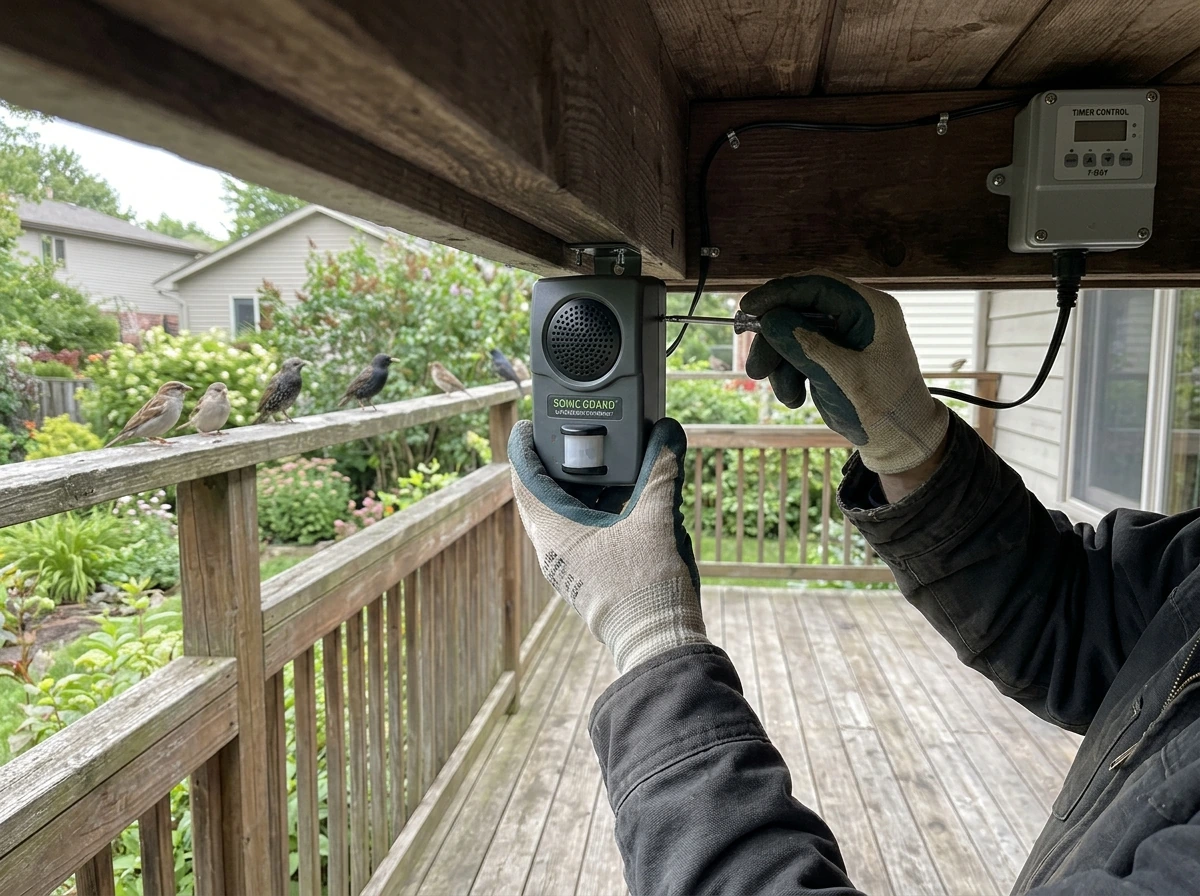
Sonic deterrents broadcast distress calls, predator sounds, or loud noises that birds associate with danger. Units range from simple speakers you set on a timer to sophisticated systems that cycle through dozens of species-specific calls. Placed correctly and set to the right species, they can be genuinely effective at dispersing birds from open areas like fields, parking lots, and large rooftops.
Ultrasonic devices are a different story. They emit frequencies above human hearing that are marketed as disturbing to birds. The honest reality is that the research does not support this. A widely cited commercial test of an ultrasonic bird repeller found no significant effect on bird activity across multiple native species. Airport wildlife management reviews have reached the same conclusion, noting that ultrasonic units showed no apparent effect in controlled studies. If you see an ultrasonic-only device being sold as a complete bird repellent solution, treat that claim with skepticism.
Sonic units, by contrast, do have documented effectiveness, especially for open agricultural and commercial settings. The key limitations are that they lose effectiveness over time as birds habituate to repeated sounds, they need to be rotated or randomized to stay effective, and they are inappropriate for residential areas where neighbors will hear them. Most quality units let you program sound rotation and set quiet hours.
| Feature | Sonic Deterrents | Ultrasonic Deterrents |
|---|---|---|
| Proven effectiveness | Yes, for open areas with correct species sounds | No significant evidence; studies show little to no effect |
| Best locations | Fields, large rooftops, parking lots, golf courses | Not reliably effective in any location |
| Coverage range | 1 to 6 acres depending on unit and terrain | Marketed as up to 5,000 sq ft; effectiveness unconfirmed |
| Habituation risk | High without sound rotation | N/A |
| Noise impact on humans | Significant; not suitable near homes or offices | None audible to humans |
| Typical cost range | $50 to $500+ | $20 to $150 |
| Weather tolerance | Varies; look for IP65-rated outdoor units | Varies |
Bottom line on sonic/ultrasonic: buy a quality sonic unit for large open spaces and skip ultrasonic-only products entirely. If you want a device that won't bother neighbors and still need sound-based deterrence, a sonic unit with a directional speaker and programmable timer is your best bet.
Top bird repellent devices: visual deterrents
Visual deterrents work by startling birds, mimicking predators, or creating disorienting light patterns that make a landing spot feel unsafe. They are among the easiest deterrents to install and the most accessible for DIY use. The tradeoff is that birds can and do habituate to static visual threats, so movement and unpredictability are critical features to look for.
Reflective and light-based deterrents
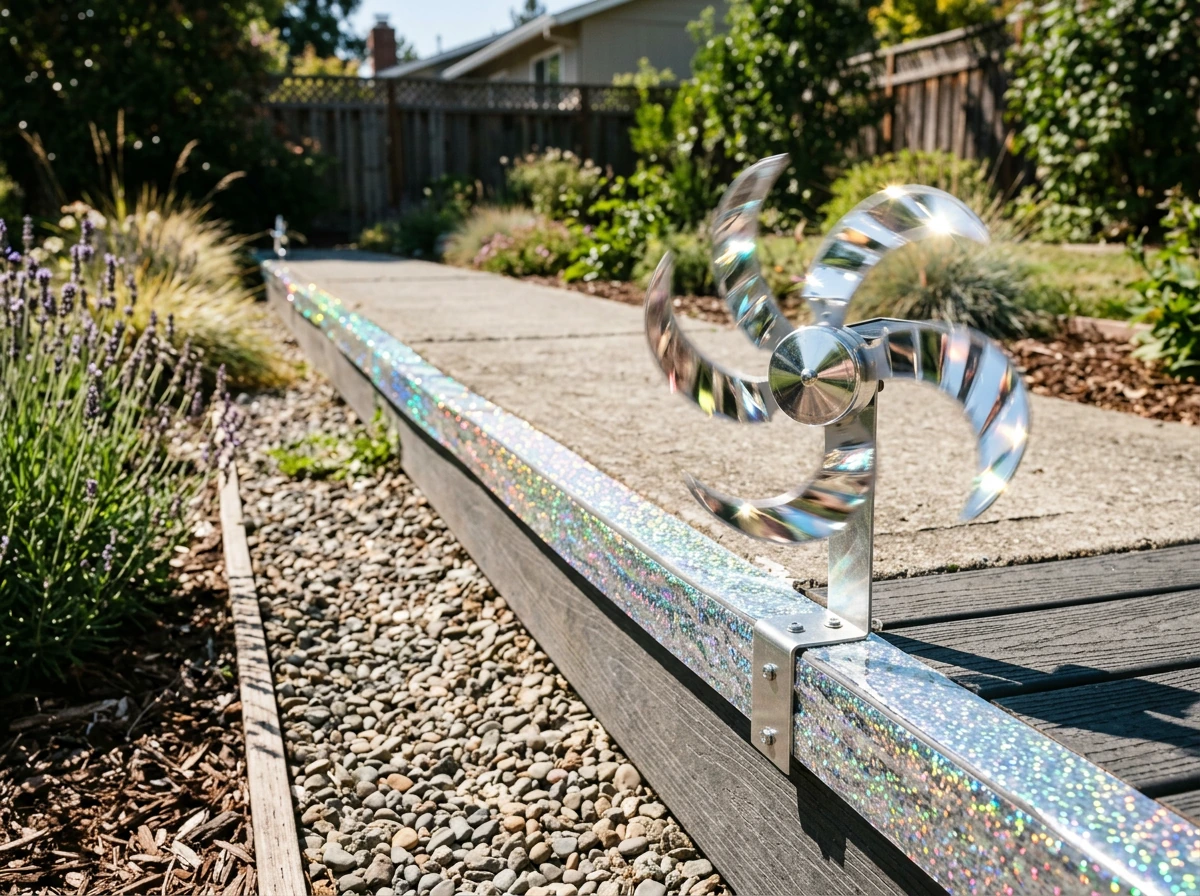
Reflective tape, spinning rods, and optical rotating devices like the Eagle Eye system work by bouncing chaotic, unpredictable light in multiple directions. The Eagle Eye, for example, is documented to cover an effective radius of up to 20 feet in direct sunlight. That's a relatively small footprint, so you'd need multiple units for a larger area like a boat dock or pool deck. These work best in sunny, open spots and lose effectiveness in shade or cloudy climates.
Reflective foil tape is inexpensive and works reasonably well when first installed. It loses effectiveness quickly if left in one position, so plan to reposition it every one to two weeks. It's a good temporary fix for gardens and window wells, but not a long-term standalone solution.
Scare devices and decoys
Predator decoys like owl statues, hawk kites, and coyote silhouettes can push birds away initially, but stationary decoys lose their effectiveness within days to a couple of weeks as birds realize the threat isn't real. If you use a decoy, move it every few days and combine it with a sonic deterrent or reflective element to sustain the effect. Kite-style hawk decoys that move in the breeze outperform static owls significantly.
Laser deterrents
Laser bird deterrents are a newer and more expensive category used primarily in commercial agriculture, warehouses, and aviation-adjacent areas. They project a moving green laser beam that birds instinctively flee from. Automated laser systems can cover large open areas and are effective at dawn and dusk when laser visibility is highest. They are not appropriate for use near airports or flight paths without proper coordination, and manual handheld lasers require a person to operate them. For most residential users, automated lasers are overkill and cost-prohibitive, but they are worth knowing about for commercial and agricultural scenarios.
Top bird repellent devices: physical barriers
Physical barriers are the most reliable long-term bird repellent strategy available. Unlike sensory deterrents that birds can eventually ignore, a correctly installed spike strip or exclusion net physically prevents landing, roosting, or nesting. The upfront installation effort is higher, but maintenance is minimal and effectiveness doesn't degrade with habituation.
Bird spikes
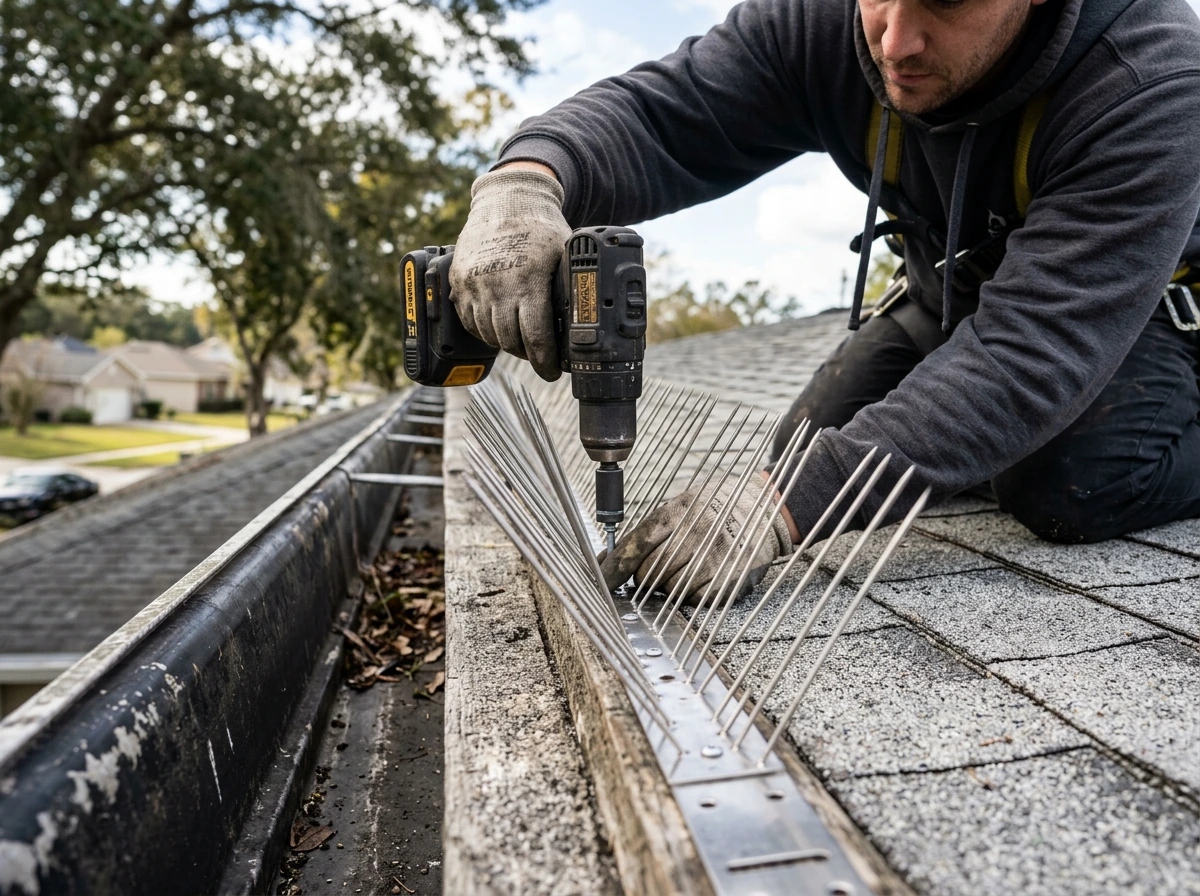
Spike strips are the go-to solution for ledges, beams, parapets, signs, and anywhere birds perch in a linear pattern. Stainless steel spikes outperform plastic ones in durability and UV resistance. They do not injure birds; they simply make the surface uncomfortable to land on. The key installation detail is spacing: following manufacturer guidance exactly matters. Nixalite, one of the most established manufacturers in this space, explicitly warns against stretching the spacing between spike rows beyond their recommendations, as gaps give birds a foothold.
Spikes work best for pigeons and larger birds. Smaller birds like sparrows and starlings can sometimes land between standard spike rows, so look for narrower-pin options designed for small species if that's your problem.
Exclusion netting
Netting is the most versatile physical barrier and the best choice for larger areas, irregular shapes, and situations where birds are actively trying to access a space rather than just perch on a surface. It's essential for solar panel gaps, fruit trees, garden beds, eaves, and loading dock areas. As mentioned earlier, mesh size must match your target species. USDA APHIS guidance is explicit: use the appropriate mesh size so birds cannot enter, while also accounting for their ability to fit through gaps.
High-quality bird netting like HDPE (high-density polyethylene) black mesh, such as Nixalite's K-Net HT, holds up to outdoor conditions far better than cheaper polyethylene netting. Black mesh is also less visible against most backgrounds, which matters aesthetically on residential properties. Expect quality netting to last 10 or more years with proper installation.
Screens and wire systems
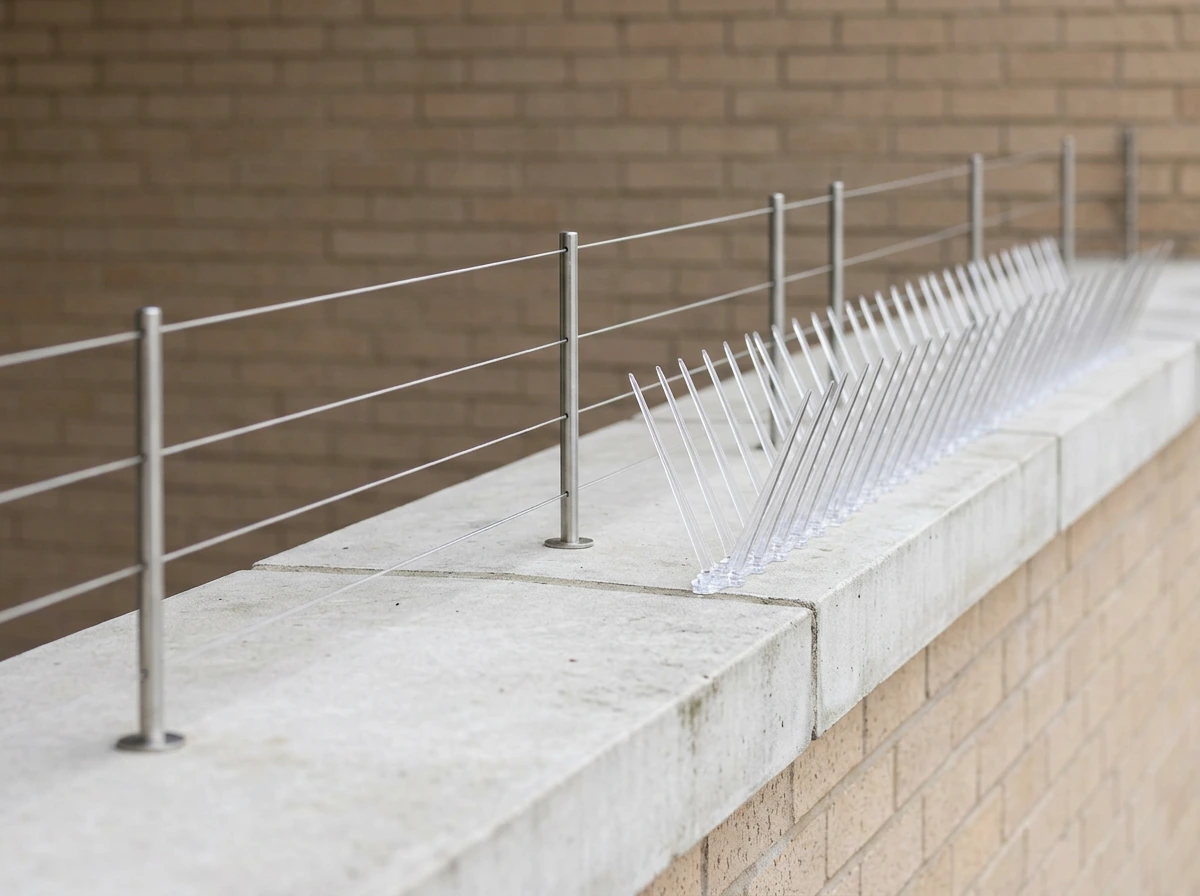
Stainless steel wire systems (parallel wires strung at set heights above a ledge) and coiled wire deterrents sit between spikes and netting in cost and application. They're popular on commercial buildings and historic structures where aesthetics matter. For solar panel exclusion specifically, purpose-built screen kits that clip directly to panel frames are now widely available and are the cleanest solution for that application.
Top bird repellent devices: chemical and odor repellents
Chemical bird repellents fall into two main types: taste repellents applied to surfaces or seed, and vapor/fog-based repellents that create an irritating atmosphere birds avoid. Both categories are dominated by a handful of active ingredients you'll see across dozens of product names.
Methyl anthranilate (MA)
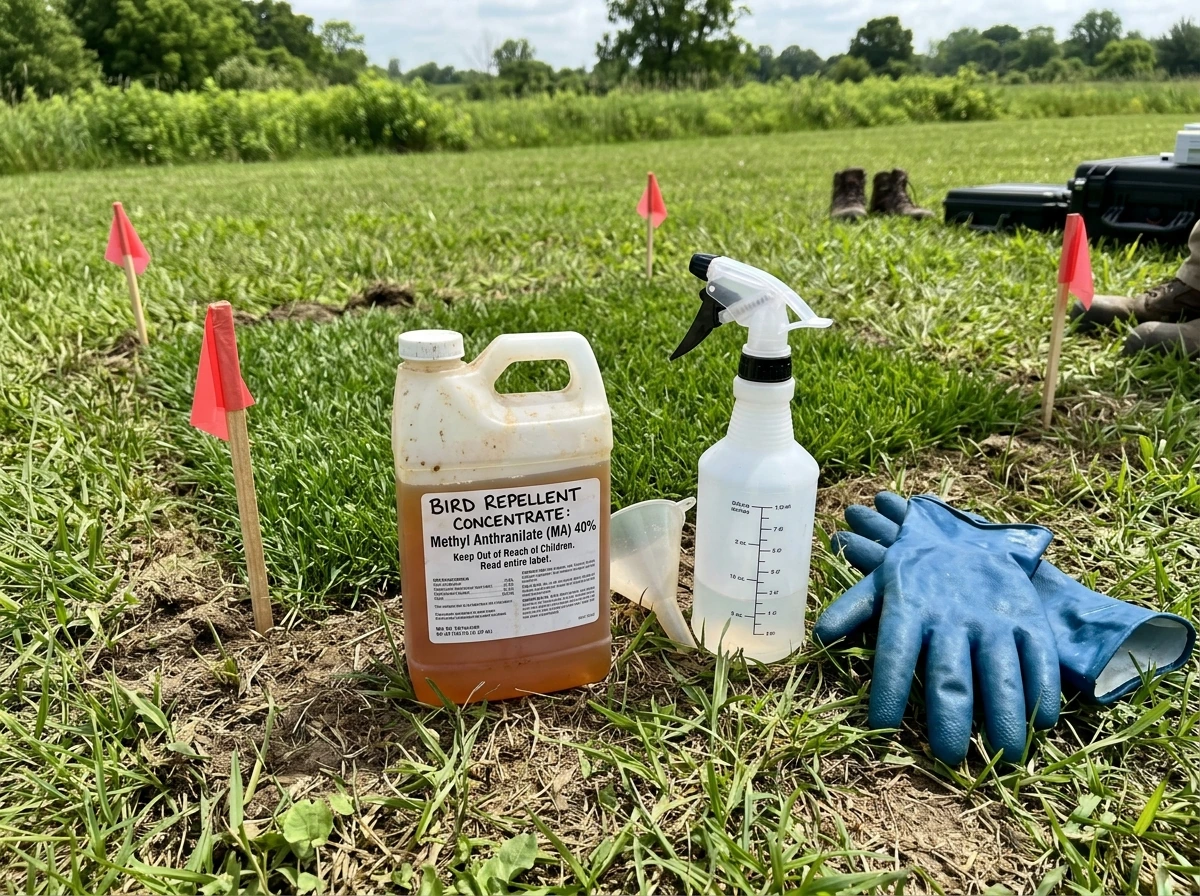
Methyl anthranilate is the most common active ingredient in EPA-registered liquid bird repellents and bird gels. It's a grape-derived compound that irritates birds' trigeminal nerves without harming them. You'll find it in turf sprays used to deter geese from lawns, in fog/hazer formulations for open commercial spaces, and in some gel products for ledges. Products like Avian Control and EcoBird 4.0 are built around MA. It's generally considered safe for humans and non-target animals when used as directed, and it breaks down quickly in the environment.
MA-based sprays work well on lawns and turf where geese graze, and as a component in hazer systems for warehouses or large covered areas. They require reapplication after rain and don't provide a permanent fix on their own, but they're a useful addition to a multi-method strategy.
Anthraquinone
Anthraquinone is registered by the EPA specifically for use as an avian repellent on commercial and industrial grounds and on treated seed. It works as a feeding deterrent: birds that eat treated seed or contact treated surfaces experience a mild but aversive digestive response and learn to avoid the area. It's commonly used in agricultural contexts for protecting newly seeded fields and commercial turfgrass. If you're looking at bird repellent grass seed products specifically, anthraquinone-treated seed is the category to explore. best bird repellent grass seed
Safe use and compliance
This is non-negotiable: only use bird repellent products that carry an EPA registration number on their label. The EPA requires registered products to clearly state their active ingredients, application rates, safety precautions, and first aid information. Products that omit this information or make vague ingredient claims are potentially illegal household pesticide products and should be avoided. Read the label, follow dilution and reapplication instructions, and keep chemical repellents away from water sources and food gardens unless the product is specifically labeled for those uses.
Bird repellent reviews: comparing effectiveness, coverage, and durability
Here's how the major categories stack up when you put them side by side across the factors that matter most for choosing what to buy.
| Deterrent Type | Best For | Coverage/Range | Effectiveness | Habituation Risk | Durability | DIY Friendly |
|---|---|---|---|---|---|---|
| Sonic devices | Large open areas, fields, parking lots | 1 to 6 acres | Good with rotation | High without variation | 3 to 5 years | Moderate |
| Ultrasonic devices | No reliably effective use case | Marketed 5,000 sq ft | Not supported by evidence | N/A | Varies | Yes |
| Reflective/optical devices | Patios, boat docks, gardens, open rooftops | Up to 20 ft radius per unit (direct sun) | Moderate, short-term | High without repositioning | 1 to 3 seasons | Yes |
| Predator decoys | Gardens, small yards | Visual range of bird | Low unless moved frequently | Very high | 2 to 5 years (material) | Yes |
| Laser deterrents | Commercial, agriculture, warehouses | Up to several acres | High at dawn/dusk | Low (automated systems) | 5+ years | No (commercial) |
| Bird spikes (stainless steel) | Ledges, beams, parapets, signs | Linear, per strip length | Very high when correctly spaced | None | 10+ years | Yes |
| Exclusion netting (HDPE) | Solar panels, eaves, gardens, docks | Custom to installation area | Very high when properly installed | None | 10+ years | Moderate |
| Wire/coil systems | Commercial ledges, historic buildings | Linear, per run length | High | None | 10+ years | Moderate |
| MA spray/gel | Turf, ledges, hazer systems | Spot or area treatment | Good as part of multi-method | Low (sensory) | Until rain/reapplication | Yes |
| Anthraquinone (treated seed/turf) | Agricultural, seeded areas, commercial grounds | Area of application | Good for feeding deterrence | Low | Per application | Yes |
If you had to pick a single category with the best overall track record for permanent results, physical barriers win They don't require birds to be scared or deterred; they simply block access. For areas where physical installation isn't practical, a combination of a species-appropriate sonic deterrent and a visual element (like a moving hawk kite or reflective tape repositioned regularly) gives you the best sensory deterrence available. Chemical repellents work best as a complement to either approach, not as a standalone fix.
Installation tips, maintenance, and safety
Installing physical barriers correctly
Clean the surface before installing any spike strip, netting anchor, or wire system. Bird droppings contain uric acid that will degrade adhesives and accelerate corrosion on mounting hardware. For spike strips, use the manufacturer's specified adhesive, screws, or cable ties, and never space rows further apart than recommended. For netting, make sure every edge is secured with no gaps larger than the mesh size, including the bottom edge where it meets a wall or structure. A net with a loose edge is almost as useless as no net at all.
For solar panel exclusion, use clip-on screen systems designed for your panel brand when possible. These avoid drilling into frames and are easier to remove for panel maintenance. Verify the mesh is small enough to exclude the target species and check it twice a year for sagging or damage.
Maintaining sensory deterrents
Sonic units need their speaker output checked monthly; debris, spider webs, and weather can muffle them significantly. Rotate the sound library or species calls every two to four weeks to reduce habituation. Reflective devices should be repositioned at least every two weeks and replaced if the reflective coating becomes dull. Visual decoys need to move, ideally daily or every other day.
Chemical repellent safety routines
Always check the label for reapplication intervals, especially after rain. Store products in their original containers with labels intact. Keep MA-based products away from open water, as even low concentrations can affect aquatic invertebrates. Wear gloves and eye protection when mixing or applying liquid concentrates. Never apply a chemical repellent to surfaces where food is prepared or near beehives, as MA can be irritating to bees at high concentrations.
Commercial and aviation considerations
For commercial properties, especially those near airports or in regulated wildlife management zones, the bar for choosing deterrents is higher. Research reviewed under airport wildlife hazard management programs consistently shows that no single technology is reliably effective across all species and all conditions, and the evidence against ultrasonic units in aviation contexts is particularly clear. Airport and near-airport bird management should follow a coordinated wildlife hazard management plan, often required by the FAA, and should rely on documented, evidence-based methods: habitat modification, exclusion, pyrotechnics, and trained wildlife staff, not consumer-grade sonic or visual gadgets. If you're managing a commercial property with significant bird pressure, consulting a USDA Wildlife Services professional or certified wildlife control operator is a worthwhile step before committing to any specific device investment.
Next steps: troubleshooting birds that keep coming back
If birds are returning despite your deterrents, the problem is almost always one of three things: the deterrent isn't covering the right spot, there's a food or shelter source you haven't eliminated, or the birds have habituated and you haven't changed anything in response.
Start by doing a fresh assessment. Walk the area at dawn or dusk when birds are most active and watch exactly where they land first, where they nest, and what they're eating or drinking nearby. You'll often spot the real entry point or attractant you missed the first time.
- Remove food and water sources first. Bird feeders, standing water, uncovered garbage, and accessible compost are the biggest reasons birds return despite deterrents. No deterrent will outcompete a reliable food source.
- Seal entry points before adding more deterrents. Check eaves, vents, soffits, and gaps around pipes and wiring. If birds are nesting inside a structure, exclusion from the exterior is the only reliable fix.
- Reposition what you have before buying something new. Move sonic speakers, reflective tape, and decoys to different positions and check whether coverage gaps exist at the actual problem spots.
- Layer your methods. If you're using only one type of deterrent, add a second. A spike strip combined with a sonic unit and periodic MA spray application will consistently outperform any single method.
- Increase deterrent intensity during the first two weeks of a new installation. Birds test deterrents repeatedly right after installation. Be present, respond quickly to any attempt to land, and reinforce the message that the area is no longer safe.
- If a specific bird species is the problem, research its specific behavioral triggers. Some birds respond strongly to distress calls; others are more visually oriented. Matching the deterrent category to the species' primary sense is much more effective than a generic approach.
- For persistent commercial or high-damage situations, contact USDA Wildlife Services. They can assess the situation, identify species accurately, and recommend or deploy methods that go beyond what consumer products can achieve.
One last thing worth saying clearly: durable bird exclusion almost always comes down to physical barriers combined with eliminating what's attracting birds in the first place. USDA APHIS guidance on bird dispersal consistently emphasizes that excluding birds from roosting, landing, nesting, and food access points, via properly designed barriers, is the foundation of any effective long-term solution. Deterrents buy you time. Barriers and habitat modification solve the problem.
FAQ
Can I combine different bird repellents to make them work better, and if so, what combinations are most effective?
Yes, but only if you address the entry and landing points. If birds can still access the surface through gaps, edges, or nearby alternative perches, the “best bird repellents” will only cause temporary disruption. In practice, use a barrier (net, spikes, or screen) sized to the target species, and secure all perimeter edges, including the bottom and corners where birds test weak spots.
Do reflective tapes, owl decoys, or similar visual repellents work long-term if I install them once and leave them?
Generally, no. Many birds learn quickly that the threat is not consistent, and static visual items lose impact in days to a couple of weeks. If you use reflective tape or predator decoys, plan a rotation schedule (for example, move every 1 to 2 weeks for tape, every few days for decoys) and pair visuals with either a barrier or a sonic unit set to rotate calls and run only during active hours.
What is the reality check on ultrasonic bird repellents for patios and gardens?
Ultrasonic-only devices should not be your primary plan. Even when marketed as bird-specific, controlled testing and aviation-adjacent hazard reviews have not shown meaningful reductions in bird activity. If you want sound-based deterrence, choose a sonic unit with species-appropriate sounds, programmable timing, and at least basic directional control to limit neighbor impact.
Birds keep coming back, what are the most common reasons and the fastest way to troubleshoot?
If you are seeing birds return, the first thing to verify is coverage timing and placement, then the attractant. Walk the site at dawn and dusk and look for the first landing point, not where birds roost later. Also check for food and water sources nearby (uncovered trash, spilled seed, birdbath water, accessible pet food), because a repellent that only targets landing will fail if the area remains rewarding.
How do I prevent birds from habituating to a sonic repellent, and will it annoy neighbors?
For sonic repellents, habituation is real, so “set it and forget it” usually underperforms. Most quality units need sound rotation (often every 2 to 4 weeks) and quiet hours to avoid neighbor complaints. Also consider obstacles, because buildings, trees, and walls can block sound, making directional placement as important as the device itself.
Are laser bird deterrents safe and appropriate for residential use, especially near streets or overhead flight paths?
No, you should not. Laser deterrents and sonic systems are not one-size-fits-all, and laser use near flight paths requires proper coordination. For residential use, automated lasers are typically overkill, and any laser approach should be handled carefully for safety and compliance. For most home situations, physical exclusion (netting or spikes) is safer and more reliable.
How do I choose the right exclusion method if I am not sure which bird species is causing the problem?
Don’t start installing until you identify the species and confirm the exact access point. Mesh size, spike pin spacing, and barrier height all change based on whether birds are nesting, perching, or trying to enter narrow gaps. If you are unsure about species, take photos and observations first, because choosing the wrong mesh or spike spacing can leave a route for smaller birds.
How often do chemical bird repellents need to be reapplied, and what label cautions are most important?
Yes, and the label matters for timing. Many chemical repellents require reapplication after rain and may be ineffective on surfaces that remain inaccessible to treated areas. For MA-based products, keep them away from open water and food-prep surfaces unless the label specifically allows the use. For any chemical product, read the label for rates, reapplication intervals, and any restrictions that apply to gardens or nearby pollinators.
What is the biggest mistake people make when installing bird netting?
Netting is only “better” when it is actually sealed. The most common failure is a loose edge or a gap at corners or the bottom where birds can fit through or land before getting blocked. Ensure every attachment point is tight, and confirm the mesh size is appropriate for the smallest target birds, not only the larger birds you see most often.
What components are worth paying for to get longer-lasting bird exclusion results?
Typically, stainless steel spikes and properly installed netting are long-term solutions, but the durability depends on materials and installation quality. For spike strips, avoid stretching spacing beyond manufacturer instructions, because gaps defeat the purpose. For netting, HDPE black mesh can last for years, but it still requires edge security and periodic checks for sagging or damage.
How can I tell whether a bird repellent is legitimate and safe to use?
If the product label lacks an EPA registration number, treat it as a red flag. EPA-registered products must list active ingredients, application instructions, safety precautions, and first-aid information. Avoid vague ingredient claims or unlabeled products because they may be illegal or unsafe for the intended use, especially outdoors around people, pets, and wildlife.
What habitat changes make bird repellents work better, and which ones are most impactful?
In many settings, the best “repellent” is the removal of what birds are targeting. That includes clearing roosting materials, trimming back branches that create access lines, and fixing water sources like leaks. Combine these habitat changes with exclusion when practical, because deterrents without access control usually turn into repeated maintenance.
What should I do differently if this is a commercial property or near an airport?
For commercial sites near airports or regulated zones, consumer-style deterrents often do not meet the safety and compliance bar. Use a coordinated wildlife hazard management plan and rely on evidence-based methods like exclusion and habitat modification, and only use hazing tools under appropriate professional oversight. If you are in a regulated area, consulting a USDA Wildlife Services professional or a certified wildlife control operator before buying devices can prevent wasted spend.
Next Articles
How to Avoid Bird Attack Drone: Practical Safety Checklist
Practical, humane steps to reduce bird–drone collisions: preflight checks, deterrents, tactics, and legal guidance.
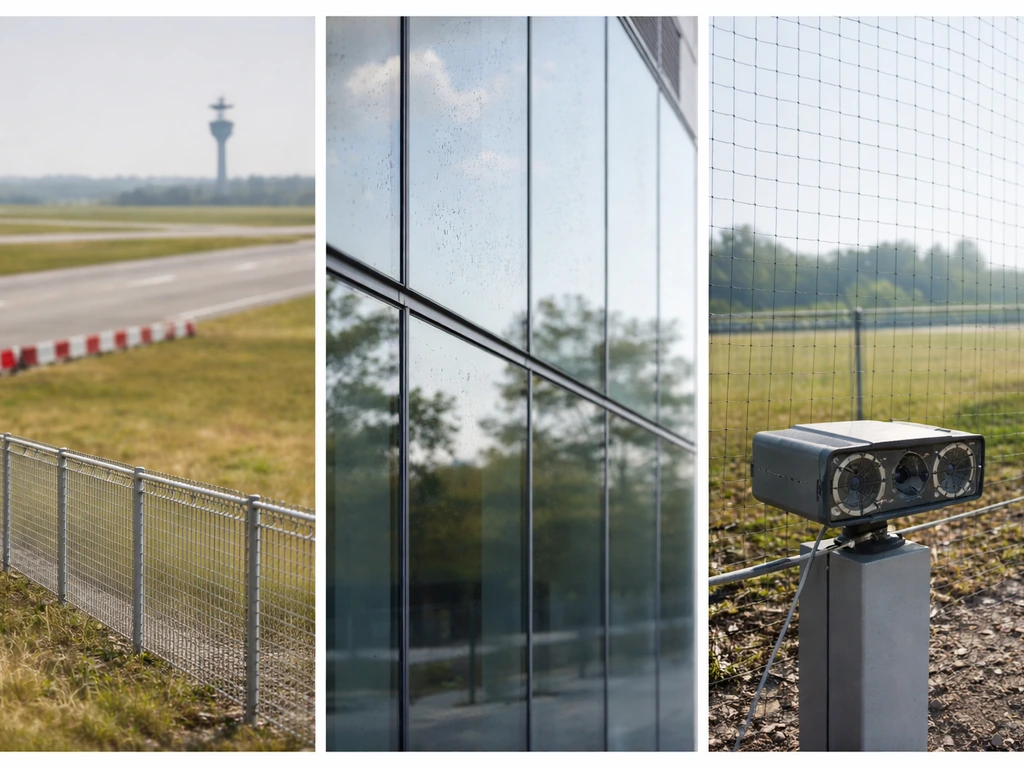
What Is Already Being Done to Prevent Bird Collisions
Learn what’s already used to prevent bird collisions, from airport safeguards to building glass and humane deterrents, p
Best Bird Strike Prevention: Practical Steps That Work
Step-by-step best bird strike prevention: remove attractants, use exclusion and deterrents correctly, and maintain resul