The best black bird repellent depends on two things: which black bird you're actually dealing with, and what they're doing on your property. Crows roosting in a grove of trees need a completely different approach than grackles probing your lawn for grubs, or starlings nesting in your eaves. Get those two facts right first, and the rest of the decision becomes straightforward. Skip that step and you'll likely waste money on something that doesn't fit the situation.
Best Black Bird Repellent: What Works by Bird Type and Site

Marcus Weatherby
23 Mar 2026
How to identify the black bird and why it's there
The three most common 'black birds' people are trying to deter are American crows, common grackles, and European starlings. They look similar from a distance but behave differently, which matters a lot for choosing your approach.
| Bird | Size | Key visual cue | Typical behavior | Primary reason on your property |
|---|---|---|---|---|
| American Crow | Large (17–21 in) | All-black, heavy bill, rounded tail | Travels in flocks, very vocal, highly intelligent | Roosting in trees, scavenging garbage or food waste |
| Common Grackle | Medium (11–13 in) | Iridescent purple-black, long keel-shaped tail | Forages on the ground, roosts in trees/power lines | Feeding on lawn insects, grains, or garbage |
| European Starling | Small (8–9 in) | Short tail, speckled in winter, yellow bill in spring | Dense flocks, nests in cavities, noisy | Nesting in vents/eaves, feeding on fruit or seed |
Once you know the species, figure out what they're doing. Watch the birds morning and evening. If large numbers arrive at dusk and leave at dawn, that's a communal roost. American crows in particular can form roosts in the thousands, sometimes tens of thousands, in a single grove. If birds are pecking at the ground during the day, that's a feeding visit. If you find a large, bulky stick nest being built in your trees, that's active nesting behavior from crows. Starlings will go in and out of a small hole in your fascia or soffit repeatedly if they're nesting inside.
The 'why' also matters. Crows and grackles are opportunistic omnivores: they'll eat insects, seeds, fruit, carrion, and garbage. If you have an open trash area, an uncovered compost pile, or a bird feeder attracting smaller birds, that's likely the draw. Remove the food source first. USDA wildlife management guidance is direct about this: excluding access to food, loafing, and nesting areas is central to successful outcomes. No repellent works as well as making the site less attractive in the first place.
Best bird deterrent types for black birds (quick ranking)
Here's a practical ranking based on effectiveness for black birds specifically. Physical exclusion tops the list because it works regardless of how habituated the birds are. Sensory deterrents can be useful but require more management. Chemical repellents are situational. Ultrasonic devices are last because they don't work, period.
- Physical exclusion (netting, spikes, screening): Most reliable, long-term, works on roosting and nesting
- Motion-activated deterrents (sprinklers, predator decoys with movement): Good for feeding areas and gardens
- Visual/reflective deterrents (flash tape, reflective discs): Useful as a short-term supplement, not a standalone fix
- Sound deterrents (distress calls, predator calls, propane cannons): Effective temporarily, requires rotation and persistence
- Chemical/taste repellents (methyl anthranilate, anthraquinone): Works well for lawns, turf, and open feeding areas
- Ultrasonic devices: Not effective; skip these entirely
Physical exclusion barriers: spikes, netting, and screening
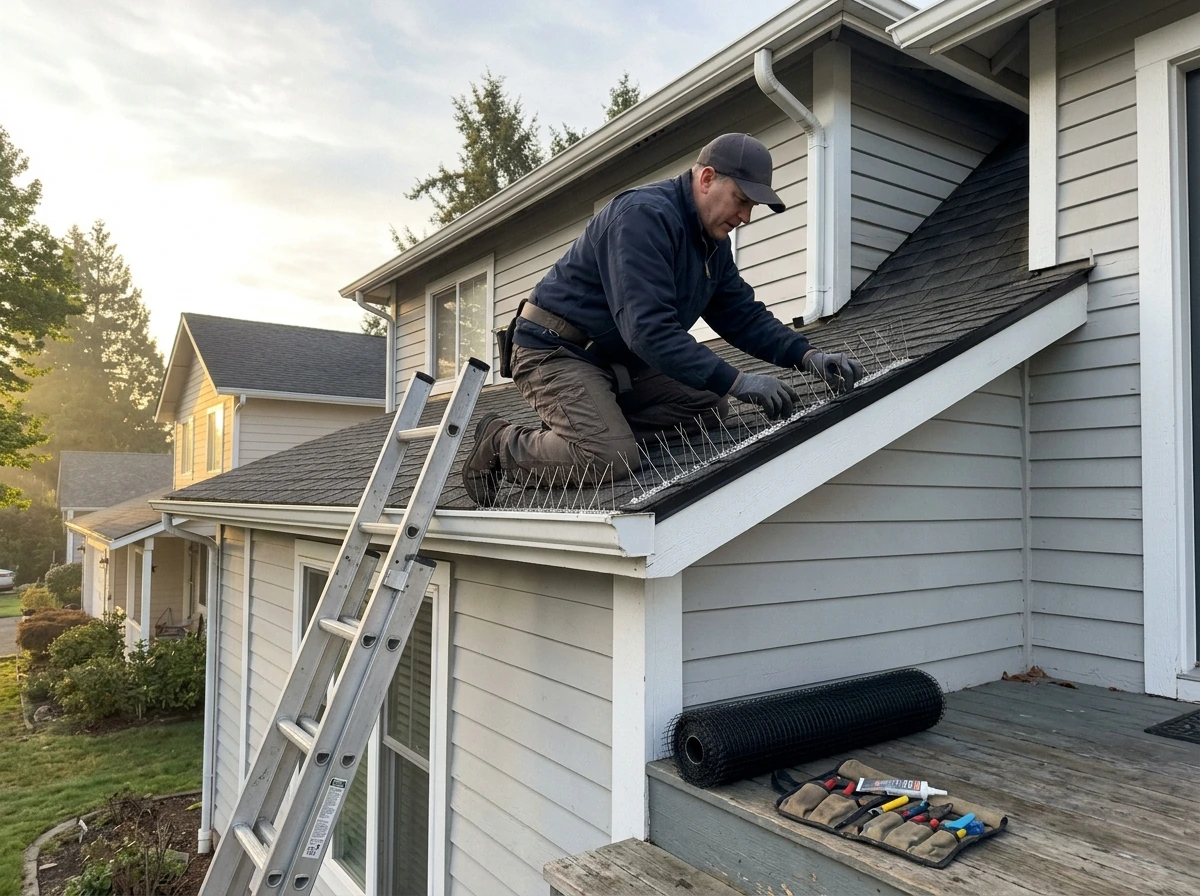
If birds are roosting on ledges, beams, signs, rooflines, or gutters, stainless steel bird spikes are your most durable fix. They work by eliminating the flat landing surface birds need. The key detail most people miss: there can be no gaps in coverage. A single gap in a spike strip is all a crow needs to land right there and stay. Nixalite's installation guidance is explicit about this: no gaps are allowed in spike coverage, and spikes must be installed on clean, dry surfaces. Cover every inch of the roosting surface, including any areas directly above the main problem zone.
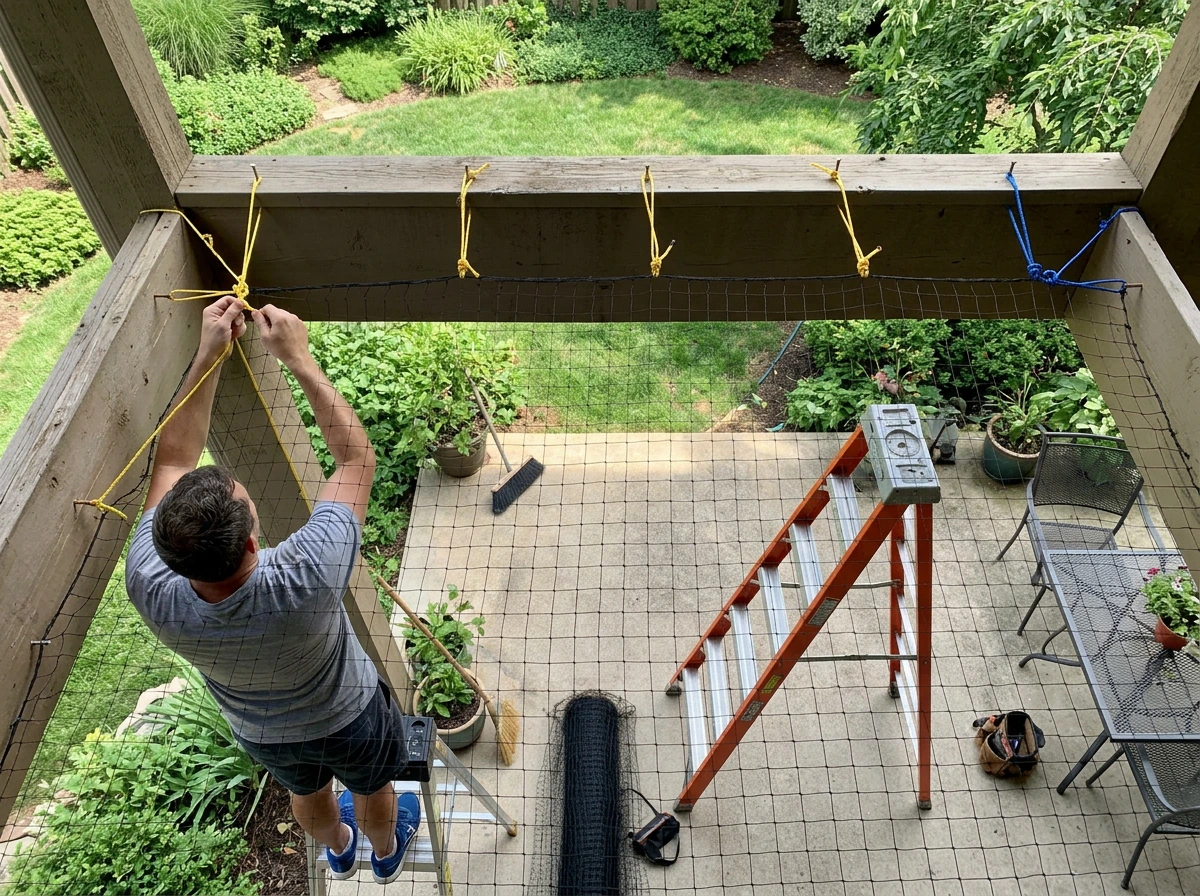
For larger exclusion jobs, like keeping birds out of a covered patio, under solar panels, away from fruit trees, or out of a building's eaves, heavy-duty netting is the right tool. Mesh size matters. Bird Barrier's guidance recommends 1-1/8 inch mesh for starlings, blackbirds, and larger bird species. For smaller birds you'd go tighter, but for the black birds covered here, 1-1/8 inch is the standard recommendation. Bird-X also sells structural netting with 1/2-inch openings for situations where you need a tighter barrier.
The most common netting failure is gaps: holes, wrinkles, excessive sag, or cable sections that bow away from the building. Nixalite's installation planning notes are clear that any gap or opening gives birds a bypass route. Bird Barrier's StealthNet instructions address this directly: if a cable section bows away from the building and creates a gap larger than the mesh size, tighten the turnbuckle to close it. Check your installation after the first week of wind or rain.
For vents, soffits, and wall openings where starlings or grackles are nesting, hardware cloth screening (galvanized, 1/4 inch or 1/2 inch mesh) is the right tool. Seal the opening completely after confirming no birds or eggs are inside. More on legal considerations is covered below.
Sensory deterrents: visual, sound, and motion options
Visual and reflective deterrents
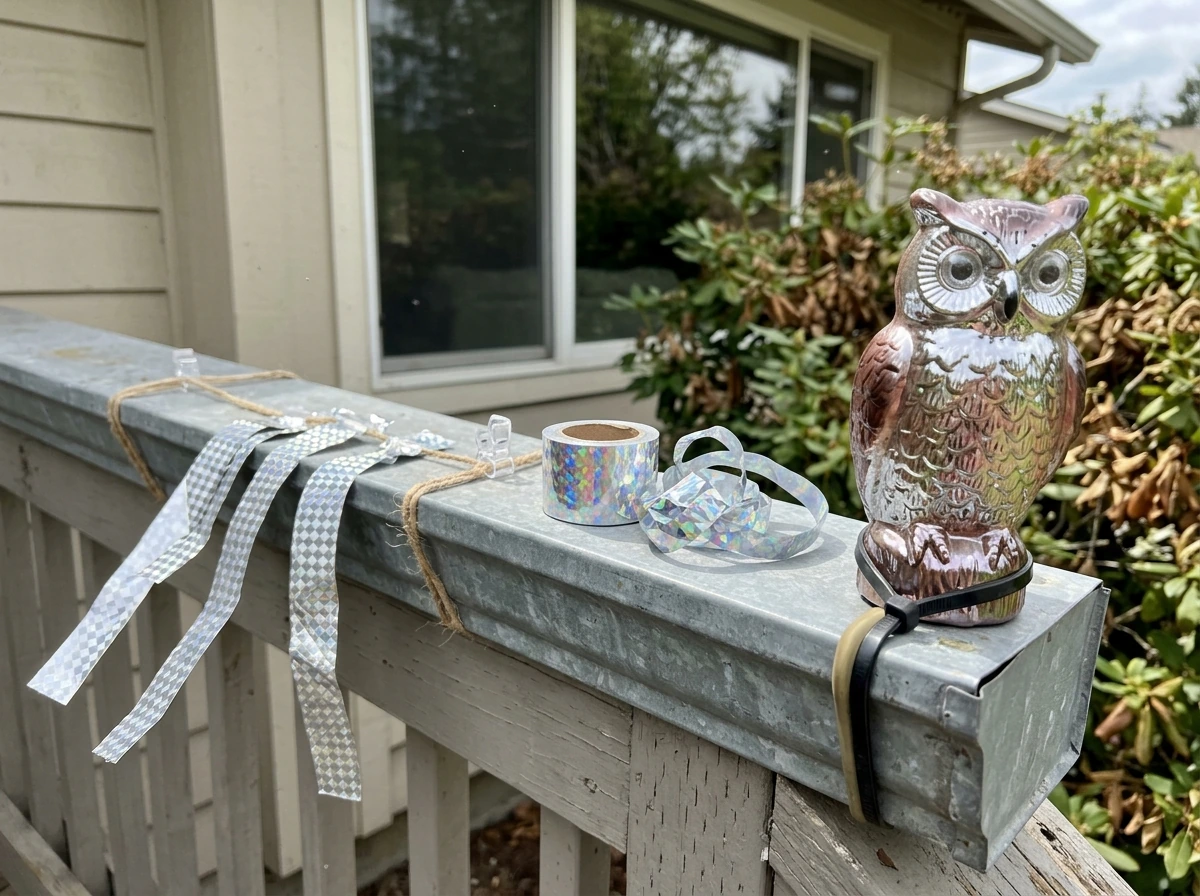
Reflective flash tape, holographic scare tape (like Irritape), and shiny predator decoys work by startling birds with unexpected light and movement. They're inexpensive and easy to deploy, which makes them popular, but they work best when combined with other methods and when moved regularly. Birds, especially crows, are smart and habituate quickly to stationary objects. If the tape is hanging in the same spot after a week, it often loses its effect. Use these as a short-term deterrent while you install something more permanent, or rotate their positions every few days.
Sound deterrents
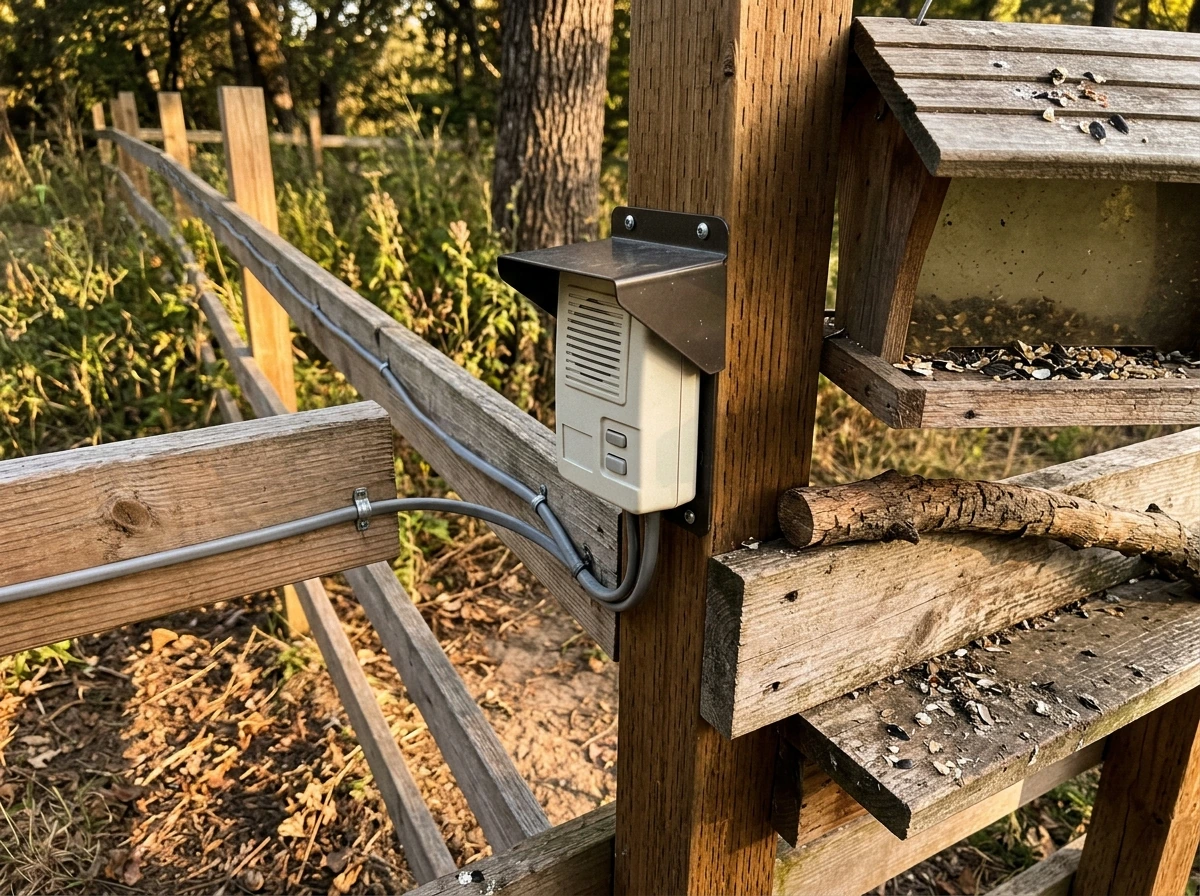
Distress calls and predator calls (hawk calls, distress vocalizations of the target species) can be effective at dispersing roosting or feeding flocks, particularly for crows and grackles. USDA APHIS classifies these as disturbance/dispersal tools rather than exclusion. They work by triggering an alarm response. The catch is the same as with visual deterrents: birds learn fast. You need to vary the timing, volume, and call types, and combine them with other pressure to maintain effectiveness. Propane cannons are used in agricultural settings but are impractical in most residential zones.
Ultrasonic devices: save your money
Ultrasonic repellers are marketed heavily online, but USDA APHIS is unambiguous: ultrasonic devices will not scare birds. Birds simply do not respond to frequencies outside the range they can hear, and there is no peer-reviewed evidence that sustained ultrasonic exposure deters them. Skip these entirely, regardless of what the product packaging claims.
Motion-activated deterrents
Motion-activated sprinklers (like the Scarecrow sprinkler) work surprisingly well for feeding birds in gardens, lawns, and near pools. The sudden burst of water is a genuine startle response, and because it's triggered by movement rather than being always-on, birds habituate to it more slowly than to static visual deterrents. These are particularly good for grackles probing lawn areas or crows visiting a garden. The downside is coverage area: one unit covers roughly a 1,200-square-foot zone, so larger areas need multiple units.
Chemical and taste-based repellents: safety and when they actually work
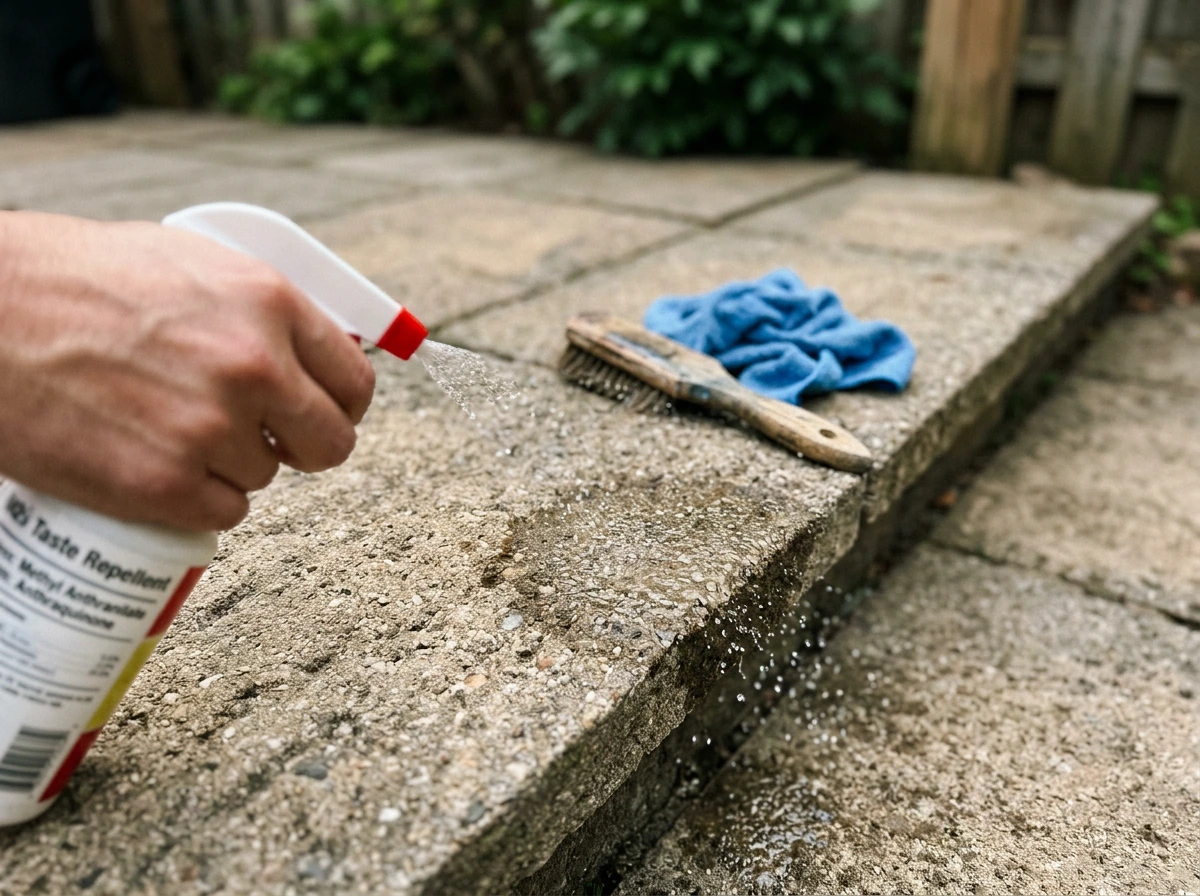
The two main active ingredients in bird taste repellents are methyl anthranilate (MA) and anthraquinone. Both are registered with the EPA as bird repellents. Methyl anthranilate is derived from grape flavoring and irritates birds' trigeminal nerve systems, creating a physical aversion response. Products like Bird-X Bird Stop liquid and EcoBird 4.0 use MA as their active ingredient. Anthraquinone is used more in agricultural contexts, particularly for treating seeds and grain to prevent bird feeding.
These repellents work best on open, accessible surfaces where birds are feeding: turf, lawns, gardens, golf courses, grain areas, and around ponds. They're not a good fit for roosting problems because birds aren't touching or eating the surface where they land. You apply them to the area birds are feeding in, and the aversive effect teaches them to avoid the treated zone. Reapplication is needed after heavy rain.
On the safety side, MA-based products are generally considered low-risk to humans and non-target wildlife when used as labeled. Anthraquinone carries more specific use restrictions, particularly around treated rice and water bodies, so always read the EPA-registered label before applying. Follow label instructions on buffer zones, application rates, and reapplication intervals. These are regulated pesticides and label compliance isn't optional.
How to choose the best option for your specific location
The right tool changes significantly based on where birds are causing the problem. Here's a direct breakdown by location:
| Location | Bird behavior | Best primary approach | Useful supplement |
|---|---|---|---|
| Patio/deck | Roosting on beams, railings, overhead structures | Stainless steel spikes on ledges, netting overhead | Flash tape short-term |
| Roof/gutters | Roosting, loafing, nesting under eaves | Spikes on ridge lines and gutters, screening vents | Motion-activated deterrent |
| Garden/lawn | Feeding on insects, seeds, or planted areas | Methyl anthranilate spray, motion-activated sprinkler | Flash tape or scare decoys |
| Solar panels | Nesting or roosting underneath panels | Perimeter exclusion mesh installed around panel edges | Spikes on mounting rails |
| Pool area | Feeding, bathing, or loafing near water | Motion-activated sprinkler, netting over pool if severe | Reflective deterrents |
| Windows | Collision or perching on ledges | Spikes on ledges, window films for collision zones | Flash tape |
| Trees/roost site | Large communal roosting flocks | Audio distress/predator calls, habitat modification | Pyrotechnics (with permits if needed) |
| Vents/soffits | Nesting inside openings | Hardware cloth screening after nest removal | None needed if sealed correctly |
If you're dealing with multiple locations at once, prioritize exclusion first at the nesting or primary roosting site. Displacing birds from one area without addressing the main roost just moves the problem a few feet. Work from the core outward.
One note on decision sequencing: remove attractants before deploying any deterrent. Secure garbage cans with locking lids, cover compost, eliminate standing water where possible, and stop any outdoor feeding that may be drawing birds in. No repellent approach will fully compensate for an ongoing food source.
Installation tips, troubleshooting, and when to call a pro
Installation basics that actually matter
For spikes: clean the surface with a brush and let it dry completely before applying adhesive or mounting hardware. Cover every inch of the target ledge or beam, including spots that seem too narrow to matter. Birds will find the one uncovered foot. Check for gaps or loose sections after the first rain or temperature swing.
For netting: plan your anchor points before you buy. The net needs to be pulled taut with no sag and no wrinkles, because both create gaps. Use turnbuckles on cable systems to maintain tension over time. If you can pass your fist through any section of the installed net, that section needs to be tightened or re-anchored. After installation, do a slow walk-around looking specifically for places where the net meets walls, beams, or frames, since those junction points are where gaps usually appear.
For taste repellents: apply in the early morning when birds haven't yet arrived for their feeding visit. Reapply after any rain over a quarter inch. Coverage needs to be even across the entire treated area, not just the spots where you've seen the most activity.
What to do when birds are still getting through
If birds are still accessing an area after installation, the answer is almost always a gap in your coverage. Walk the perimeter of your exclusion setup and look specifically for the gap, not just for 'something wrong.' For spikes, check if any strip has shifted or if a ledge surface was missed entirely. For netting, find where the net is sagging or where a junction point has separated. Repair it completely, not partially.
For sensory deterrents, habituation is the main failure mode. If you've been running the same distress call sequence from the same speaker at the same time every day, birds have already learned it's not a real threat. Vary the timing, add a different call type, combine it with a visual change (like moving a predator decoy), and if possible, add a physical pressure element like a motion-activated sprinkler in the same zone.
Legal considerations before you act
American crows, common grackles, and European starlings are all covered under the Migratory Bird Treaty Act. This means you cannot legally disturb an active nest with eggs or young birds in it without a federal permit. If you find an active nest, the right move is to wait until the nesting cycle is complete, then install exclusion to prevent future nesting. The U.S. Fish and Wildlife Service provides guidance on what activities require permits. Starlings and common grackles have fewer protections than native species, but when in doubt, check before you act.
When to stop DIYing and call a professional
Some situations genuinely need a professional. Large communal roosts involving thousands of birds, properties near airports (where wildlife hazard management is governed by FAA and USDA APHIS requirements and often requires a certified wildlife biologist), commercial properties with ongoing liability concerns, or any situation involving large-scale netting installation on a multi-story structure are all cases where professional bird control makes sense. USDA APHIS is direct about airport contexts in particular: wildlife hazard management near aviation is complex, involves regulatory requirements, and should involve trained professionals. A professional bird control company can also help you navigate permit requirements and design an integrated approach that combines exclusion, habitat modification, and deterrents in a way that holds up over time.
Your next steps, in order
- Identify the species and what they're doing (roosting, nesting, or feeding) by observing morning and evening behavior
- Remove any food attractants: secure trash, cover compost, stop outdoor feeding
- Choose your primary approach based on location (exclusion for roosting/nesting, taste repellent or motion deterrent for feeding)
- Install with zero gaps: cover every inch of the target surface, check netting tension, prep surfaces before applying spikes
- Add a sensory deterrent as a secondary layer, especially during the first two weeks while birds are still testing the area
- Check your installation after the first week of weather and repair any gaps immediately
- If birds are still present after two weeks of correct installation, look for the gap before concluding the method doesn't work
- Call a professional if the infestation is large-scale, involves active nesting you can't legally address, or is near an aviation facility
The short version: physical exclusion is the most reliable approach for roosting and nesting problems, best bird repellent grass seed (like the best bird nest repellent spray) work well for feeding areas, and sensory deterrents are most useful as short-term supplements to the above. best bird repellent grass seed Install correctly, eliminate food sources, and check your work after the first week. That combination handles the vast majority of black bird problems without needing anything more complicated. For feeding areas, the best bird repellents often include taste repellents like MA- or anthraquinone-based products applied to the surfaces birds are targeting. If you want the best bird repellent spray for feeding areas, choose an EPA-registered taste or chemical repellent and apply it evenly to the spots birds are targeting.
FAQ
Can the best black bird repellent be a liquid spray I apply to my lawn or garden?
Yes, but only in specific situations. If the birds are feeding on open turf or a garden plot, a taste repellent can reduce pecking. If the problem is roosting on rooflines, eaves, gutters, or beams, taste repellents usually won’t work because birds aren’t eating the treated surface.
What’s the most common installation mistake when using bird spikes for crows?
For spikes, use clean, dry installation conditions and check for solid contact along the entire ledge length. After that, do a “wind seam” inspection, look at each end cap and each junction where spikes meet brackets, because those are the most common ways a single landing gap forms.
What should I do if birds return right after installing the best black bird repellent?
In most cases, the birds are still using a bypass route. Recheck for coverage gaps, especially at edges, corners, and above the primary landing zone, then confirm there aren’t any newly added perches (like nearby trimmed branches or sign posts) that give them an alternate spot.
How often do I need to move scare tape or decoys for it to keep working?
Rotate methods based on how birds habituate. Change the timing, reposition visual deterrents, and vary the call schedule if you use distress sounds. If you only “set and forget” one approach, crows and starlings often learn quickly, so the goal is short-term pressure while exclusion stays the long-term fix.
Can I install hardware cloth while birds are still using the nest area?
If you see birds nesting in a soffit or fascia, do not start screening until the area is confirmed empty of eggs and active nesting. Then seal openings completely, because even a small unsealed gap at the frame or vent edge can defeat the barrier.
Is 1-1/8 inch netting always enough for starlings and crows, or should I change the mesh?
Mesh size depends on the species and the entry behavior. For starlings and the larger black bird types discussed, 1-1/8 inch mesh is a common standard, but you should also verify the local birds’ size and the exact entry points, because gaps at seams and wrinkles can matter more than the nominal mesh.
Why do MA-based bird taste repellents seem to stop working after a while?
Yes, and it’s a frequent reason taste repellents fail. If birds can choose untreated spots nearby, they’ll shift feeding rather than stop. Treat the entire accessible feeding area evenly, and remove or secure the food attractant (seed, fallen fruit, uncovered compost) so the treated area is truly the least attractive option.
How do I create a simple maintenance schedule after installing netting or spikes?
Budget for maintenance checks after weather. After the first week, then after any wind event or heavy rain, re-walk the perimeter and look for sagging net sections, loosened fasteners, and spike strip movement. A small deformation can create a functional landing gap.
Are ultrasonic repellers ever worth trying for black birds?
Ultrasonic units are the exception you should avoid, and the “sound” products that mimic calls are the better category. Even then, disturbance tools require variation, so set expectations that you will still need exclusion or habitat changes for a durable outcome.
Will distress calls relocate the problem to a neighbor’s yard instead of solving it?
If you’re using deterrent calls, keep expectations realistic: they disperse temporarily, not permanently. Vary call types and timing, avoid always-on broadcasting, and stop immediately if you’re simply displacing birds to another part of your property without fixing the attractant or primary roost.
What’s the safest way to handle a nest in my eaves if I’m trying to use the best black bird repellent?
There can be legal and practical consequences. Many black bird species fall under federal protections during active nesting, so if you discover an active nest you generally need to wait until the cycle ends before installing exclusion. When in doubt, consult official guidance for your situation, especially for eaves, vents, and enclosed structures.
When is it actually worth paying for a professional bird control service?
In large roosts, airport-adjacent properties, or multi-story structures where anchoring and coverage become complex, professional help often saves time and reduces rework. The key is integrated planning, a complete exclusion design, and a compliance-aware approach when permits or wildlife hazard rules apply.
How do I position a motion-activated sprinkler so it works for grackles in a lawn?
If you plan to use sprinklers, confirm the motion sensor coverage reaches the birds’ approach paths, not just the center of the lawn. Also place them where overspray won’t damage landscaping or create slippery walkways, because inconsistent activation reduces deterrent pressure and leads to habituation.
Next Article
Best Bird Repellent Spray: How to Choose and Use It
Choose the best bird repellent spray for patios, windows and pools with label tips, safe use, and realistic results.