
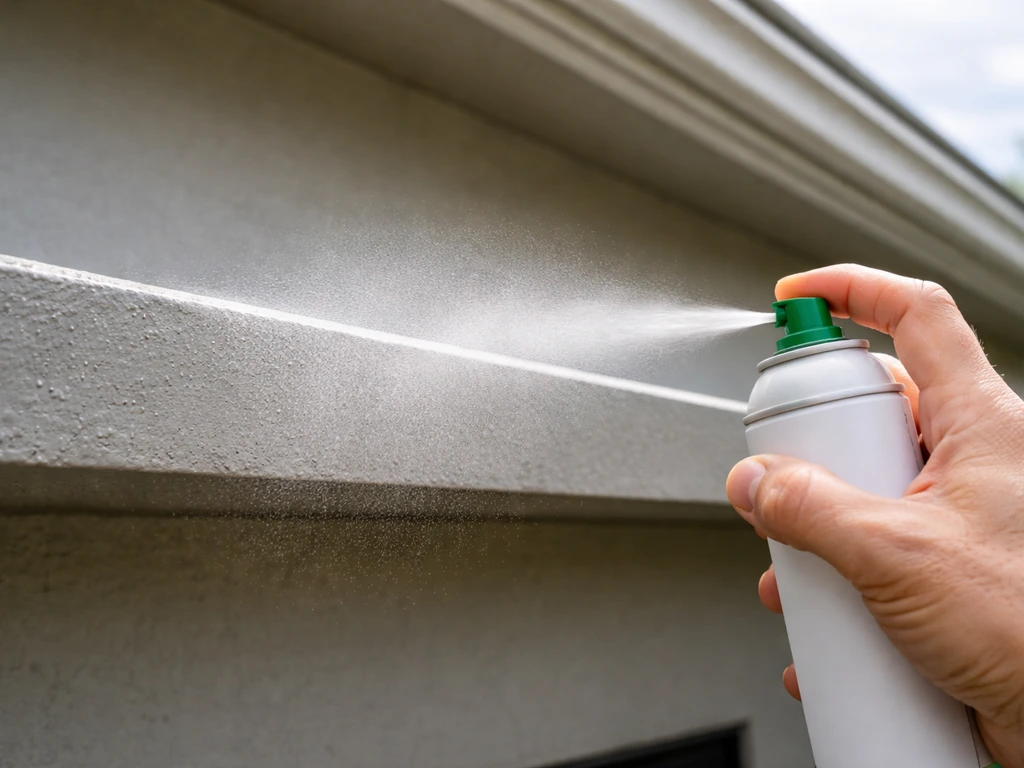
Bird repellent spray can work, but it works best in specific situations and rarely solves the problem on its own. The most common active ingredient, methyl anthranilate (MA), irritates birds' trigeminal nerve and makes treated areas unpleasant to land on or feed in. It's a real, EPA-registered deterrent with genuine science behind it. But it breaks down in UV sunlight within about 64 hours, needs reapplication after rain, and birds of different species respond to it differently. If you apply it correctly and keep up with it, spray is a useful tool, especially for open areas like lawns, gardens, or flat rooftops. For ledges, window sills, solar panels, or any spot where birds are already entrenched, you'll almost certainly need to combine it with a physical barrier or switch strategies entirely.
Does Bird Repellent Spray Work? Plus Tape Results

Spray vs. other deterrents: the quick comparison
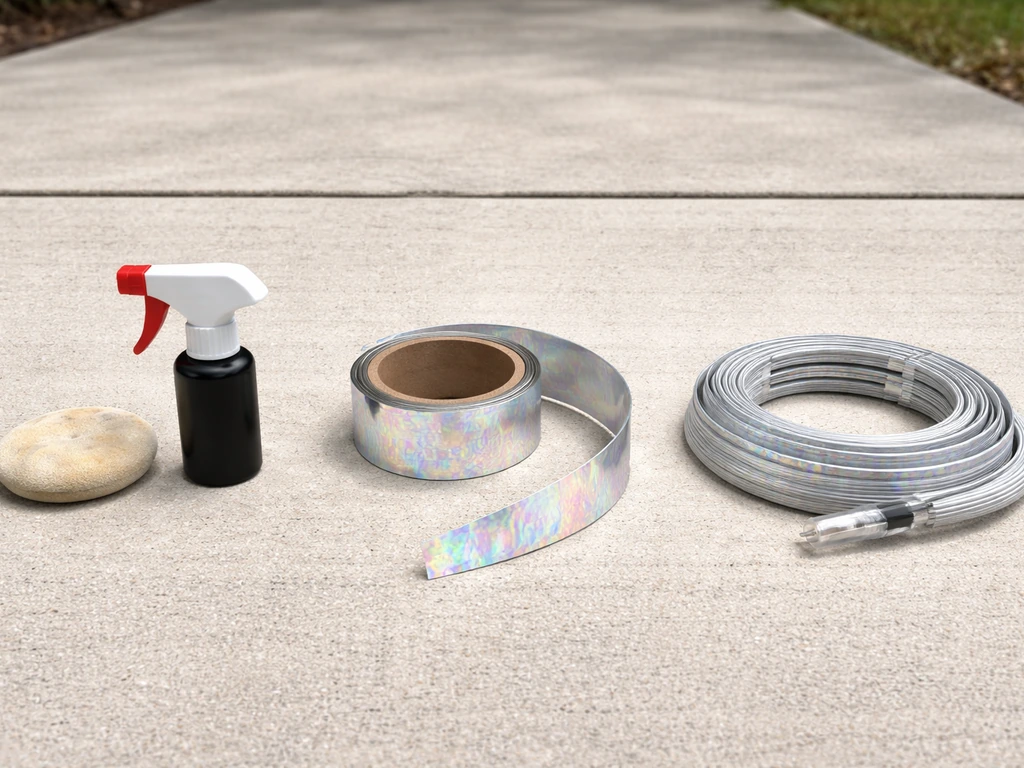
Before going deep on spray, it helps to see where it fits against the other options you're probably considering.
| Deterrent Type | Best Use Case | Main Weakness | Maintenance Level |
|---|---|---|---|
| Chemical spray (MA, anthraquinone) | Open feeding areas, lawns, flat roofs | Degrades in UV/rain within 2-3 days, species-dependent | High (frequent reapplication) |
| Reflective/holographic tape | Gardens, balconies, boat docks | Birds habituate quickly, wind-dependent | Low to medium |
| Electric shock tape/strips | Ledges, parapets, beams | Requires proper installation, surface prep | Low once installed |
| Physical spikes | Ledges, signs, gutters | Doesn't work on flat surfaces or large birds nesting | Very low |
| Netting | Rooftops, solar panels, courtyards | Installation cost, must be fully sealed | Very low |
| Sonic/ultrasonic devices | Open outdoor areas | Limited evidence, can disturb neighbors | Low |
| Optical/visual gel | Ledges, HVAC units | Requires periodic replacement | Medium |
Spray is one of the most accessible options, but it sits at the high-maintenance end of the spectrum. Physical barriers like spikes and netting tend to outperform it over time for structural roosting problems.
How bird repellent spray works (and why it sometimes fails)
Methyl anthranilate is a grape-derived compound that irritates a sensory receptor in birds, producing a strong avoidance response. It's the most widely used chemical bird deterrent on the market and is recognized by Oregon State University Extension as the most popular chemical option for controlling bird feeding activity. Anthraquinone is another registered active ingredient, primarily used for commercial and industrial applications, though EPA label updates from May 2022 removed approval for residential turf use, so homeowners can't legally use many anthraquinone products on their lawns.
The core problem with spray is persistence. Research on MA confirms it degrades under UV sunlight and can dissipate within 64 hours of application.1096-9063(199608)47:4<355::AID-PS429>3.0.CO;2-3) That means a sunny week can wipe out your coverage in less than three days, and rain wipes it out even faster. If you're not reapplying constantly, there's a good chance the treated area simply doesn't smell or feel repellent to birds anymore.
Species also matter more than most people expect. A study comparing feral pigeons and house sparrows found that their responses to methyl anthranilate differed significantly by dose and concentration. What works on sparrows might barely affect pigeons, and gulls may respond differently still. This is one reason the same product gets glowing reviews from one user and complaints of zero effect from another.
Habituation is the other big failure mode. OSU Extension explicitly warns that animals can habituate to many deterrents over time. If birds are highly motivated to use a spot, because it's a reliable food source or a sheltered roost, they'll push through the discomfort and eventually ignore the repellent entirely. Spray is most effective when birds haven't fully committed to a location, not when they've been roosting there for weeks.
There are scenarios where spray genuinely delivers. Aerosol fogging with MA has been tested at airport flight lines to disperse birds from open areas. Formulations have also been trialed to repel gulls and mallards from water. In those open, wide-area contexts where the deterrent can be reapplied and birds have other options nearby, spray can meaningfully reduce presence. For a homeowner trying to keep starlings off a specific ledge, the odds are lower.
Does bird repellent tape work? What the evidence actually says
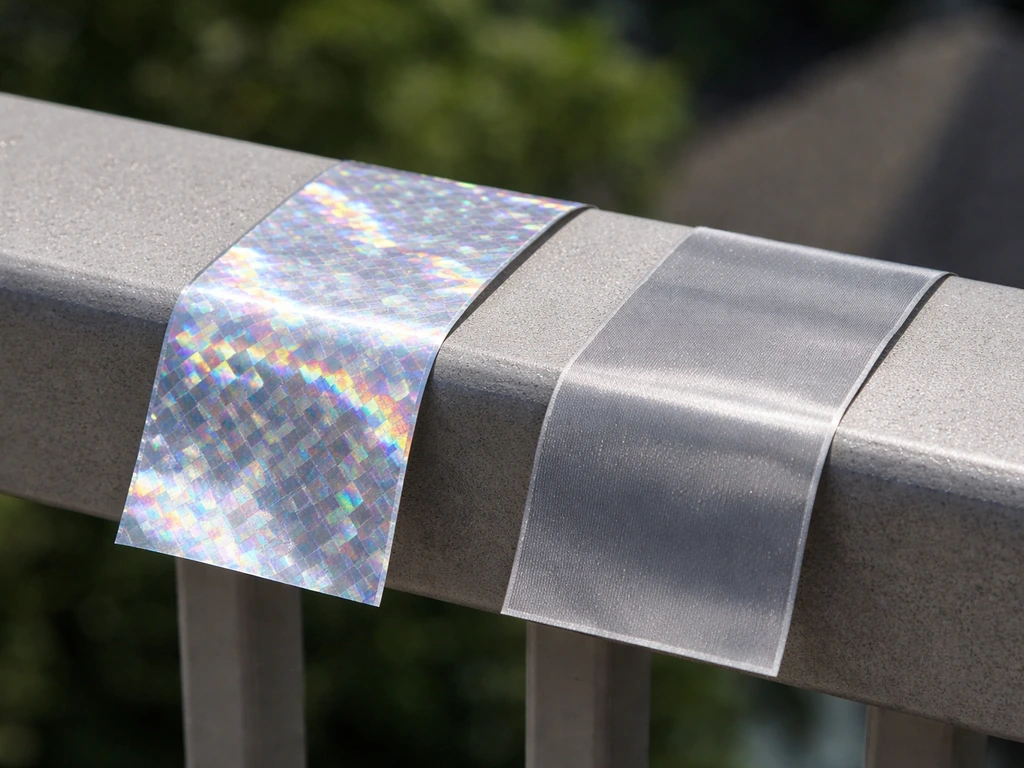
Bird repellent tape comes in two very different forms, and they work through completely different mechanisms. Knowing which one you're buying matters a lot.
Reflective (holographic) tape
Reflective bird tape, like the Scare Away Bird Tape sold by Nixalite (50 feet long, 2 inches wide, adhesive-backed), works by creating flashing light and movement that startles and disorients birds. It's inexpensive and easy to deploy in gardens, on boat docks, or along balcony railings. The problem is that birds figure it out relatively quickly. If the tape doesn't move in the breeze, it stops working almost immediately. If it does move, birds usually habituate within a few days to a few weeks, especially smart species like crows, pigeons, and mynas. Reflective tape is best treated as a temporary or supplementary tool, not a long-term fix.
Electric shock tape (shock strips)
Electric shock tape is a completely different category. It's an adhesive-backed strip system that delivers a mild electric pulse when a bird lands and completes the circuit. Nixalite's ShockTape system, for example, requires surface preparation, proper adhesive bonding, and careful installation according to specific guidelines. Research on electric shock strips found no habituation in tested conditions, which puts it in a different effectiveness class than sensory deterrents. The trade-off is installation complexity: the adhesive must bond properly to the surface, the strips need to be continuous and correctly spaced, and any gaps in coverage give birds an easy workaround. Done right, it's one of the more durable tape-based solutions for ledges and parapets.
Tape limitations to keep in mind
- Reflective tape requires wind or movement to be effective; in still conditions it does almost nothing
- Both tape types need clean, dry surfaces for adhesive backing to hold long-term
- Reflective tape has little to no effect on birds that have already settled and are nesting
- Shock tape requires correct spacing and full coverage; gaps allow birds to land between strips
- Neither type is suitable for large flat roosting areas where birds don't have to touch the strip to roost comfortably around it
Choosing the right deterrent for your specific bird problem
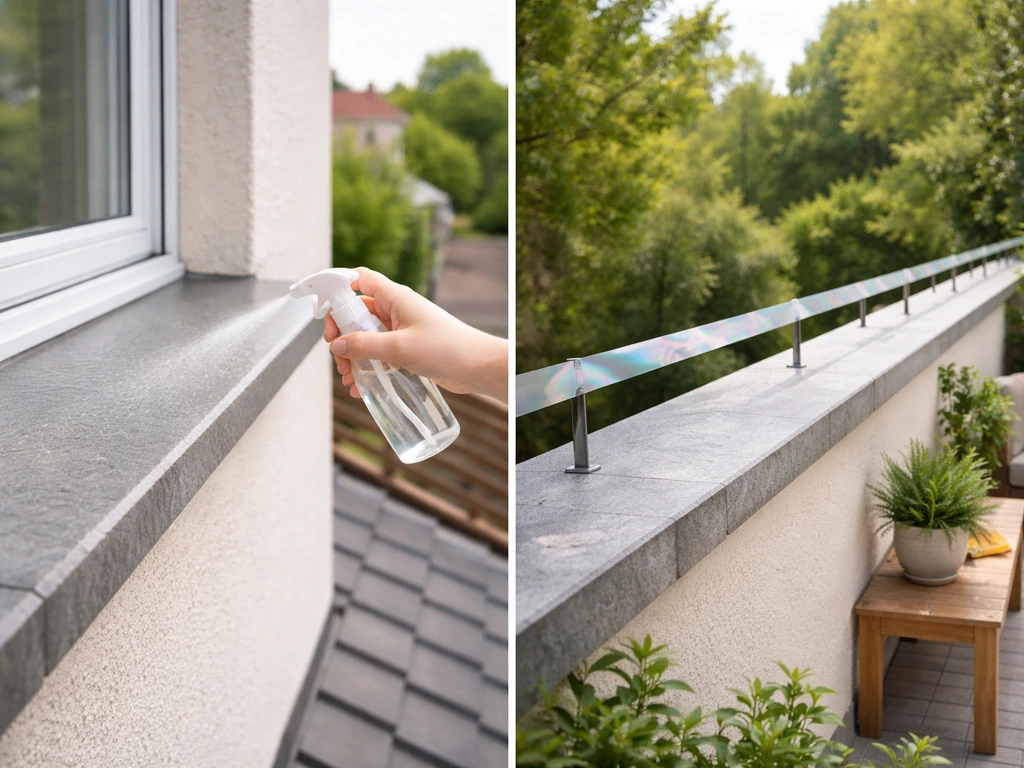
The right tool depends on where the birds are, what species you're dealing with, and how established the problem is. Here's how to think through the most common situations.
Patios and outdoor dining areas
Spray is a reasonable starting point for patios, especially if birds are primarily dropping in to feed rather than roost. MA sprays applied to surrounding garden beds or grass can reduce the attractiveness of the area. Combine this with visual deterrents like reflective tape on nearby fences or overhangs. If birds are landing directly on furniture or rails, shock tape on those surfaces is more targeted. For full coverage, netting over an open patio is the most reliable solution.
Windows
Birds hitting windows is usually a collision problem, not a roosting one. Reflective tape strips placed vertically on the outside of the glass at 4-inch intervals are a commonly recommended approach. Window-specific visual deterrents, decals, or frosted film work by breaking up the reflected sky image that confuses birds. Spray has almost no value here since birds aren't trying to land on glass to feed or roost.
Roofs and ledges
Flat rooftops attract pigeons and gulls because they mimic natural cliff ledges. Spray can be applied to flat roof membranes but will need very frequent reapplication given UV exposure. For established roosting problems, physical spikes on parapet edges and ledges, or shock tape along the same surfaces, will outperform spray significantly. If birds are nesting in roof cavities or under solar panels, neither spray nor tape reaches those areas, and you need physical exclusion.
Solar panels
Birds nesting under solar panels is a growing problem and one where spray is essentially useless. The birds aren't deterred by smell when they're under a panel in a sheltered cavity. The standard solution is mesh or clip systems that seal the gap between the panel edge and the roof surface. This is a physical exclusion job, and it's worth doing right because re-entry and re-nesting after a poor seal is common.
Gardens and pools
Spray is well-suited to garden and orchard contexts, which is exactly the use case it was developed for. MA sprays applied to fruit crops and surrounding vegetation can reduce bird feeding losses. For pools, MA formulations have been specifically trialed to deter gulls and mallards from water surfaces. Reapplication after rain is non-negotiable in these settings.
How to apply bird repellent spray for the best results
If you're going to use spray, do it properly. Half-measures here waste money and give you a false sense of having addressed the problem. If you want a DIY alternative, focus on how to make bird repellent spray safely and effectively for your specific birds and surface.
- Read the entire label before opening the bottle. EPA-registered repellents like MA products carry specific application rates, target surfaces, and restricted use sites. OSU Extension is clear: do not deviate from the uses and methods prescribed by the label.
- Identify the exact areas birds are landing, feeding, or roosting. Spray only where birds actually are, not a general broadcast over a wide area.
- Apply in dry conditions and avoid windy days that will carry the spray off-target. Morning applications before peak bird activity can improve contact.
- Plan for reapplication every 2 to 3 days in full sun, or after any rain event. If you can't maintain that schedule, spray is not your best option.
- Cover the full area without gaps. Birds will simply shift to untreated spots within the same zone if you apply sparsely.
- Combine with at least one other deterrent type for significantly better results. Spray paired with reflective tape, spikes, or netting is more effective than spray alone.
Safety, legal, and practical considerations
Pets and family
OSU Extension is direct on this: the pesticide user is responsible for ensuring that family members, pets, and wildlife are not exposed to chemical repellents. Keep people and pets out of treated areas until sprays have fully dried, and check the label for any extended re-entry periods. Some formulations have specific restrictions around treated surfaces. MA is generally considered low-toxicity, but proper precautions still apply.
Food and water areas
Be careful applying spray near vegetable gardens you're actively harvesting, pet water bowls, bird baths, ponds, or any surface where food or water could contact the repellent. Check the label for approved application sites. Not all MA formulations are cleared for direct food crop contact, and anthraquinone products now have explicit restrictions on residential turf as of 2022.
Environmental impact
MA is derived from grapes and is generally considered environmentally benign at label rates, but the EPA registration process exists for a reason. Follow label rates. Overuse doesn't improve effectiveness and adds unnecessary chemical load to the environment. Dispose of empty containers according to label directions.
Commercial and aviation contexts
If you're managing a commercial property or working near an airport, bird control becomes a more serious regulatory and safety matter. The FAA has Advisory Circular AC 150/5200-33 covering hazardous wildlife attractants near airports, and ACRP Synthesis 23 is the industry-reviewed reference document for bird deterrent and repellent techniques at airports. At the airport level, USDA APHIS Wildlife Services coordinates with Qualified Airport Wildlife Biologists (QAWBs) to manage wildlife hazards. USDA has also run coordinated multi-airport trials of anthraquinone-based products like Flight Control Max to assess real operational effectiveness. If you're in this space, a registered QAWB or professional wildlife manager is the right starting point, not a consumer spray product.
When spray isn't working: troubleshooting and knowing when to switch
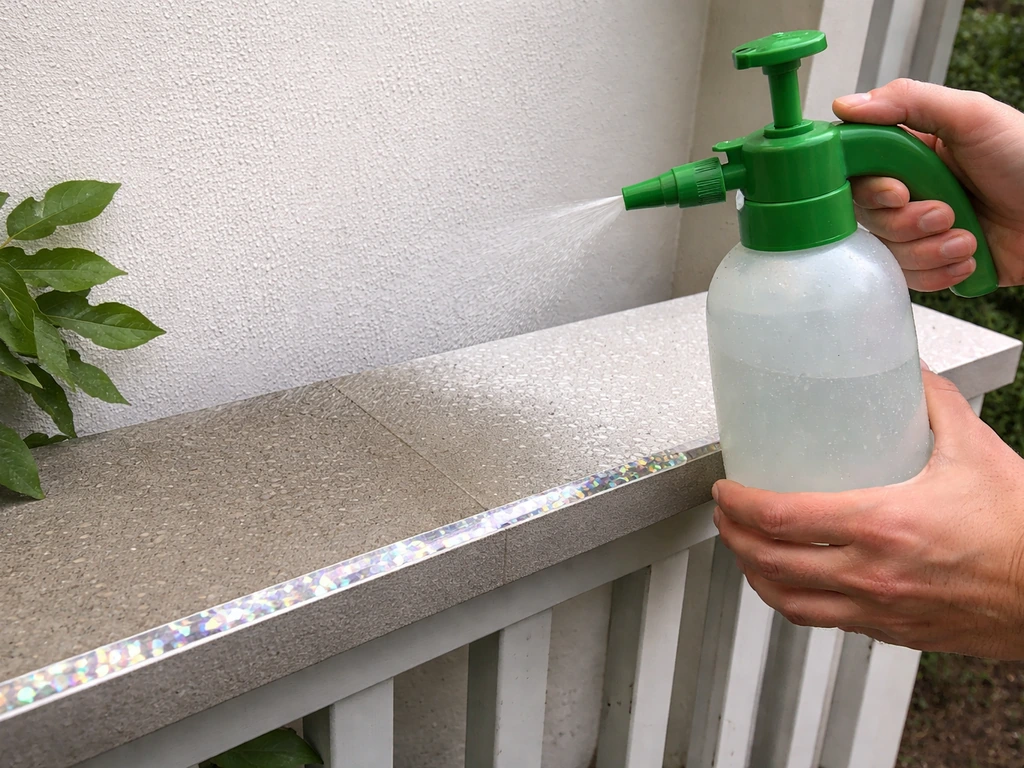
Give spray a fair trial: consistent reapplication for two to three weeks, covering the full problem area, combined with at least one other deterrent. If birds are still present and active in the same spots after that, it's time to reassess.
Signs you should switch strategies
- Birds return to the treated area within hours of application, suggesting the species isn't sensitive to MA at that concentration
- The problem is roosting or nesting inside a structure or under solar panels, where spray can't reach
- The surface is vertical or overhead, making spray coverage impractical
- You're dealing with a large flock of pigeons, starlings, or gulls that have been using the site for months or years
- Reapplication every 2 to 3 days is not realistic for your schedule or budget
- The treated area is near food, water, or pets and the label restricts use there
What to try next
For ledges and structural surfaces, move to physical spikes or shock tape, which don't require reapplication and don't rely on birds being chemically sensitive. For enclosed or semi-enclosed spaces, netting is almost always the definitive solution. OSU Extension reinforces that deterrence often needs to be paired with other methods, and many deterrent products haven't been tested rigorously enough to establish standalone effectiveness.
If you're also evaluating gel-based options, bird repellent gels and optical gels like Bird Barrier work through different mechanisms than spray and may suit ledge applications better. Bird repellent gels typically target birds differently than spray, so they can be a better fit for ledges and other structural spots where you want longer-lasting deterrence. Optical gels such as Bird Barrier are designed to deter birds on ledges by combining a targeted visual effect with a protective gel layer. Bird repellent gel is typically applied in small, controlled amounts on ledges or other spots where birds land, and it needs correct placement for the best deterrent effect bird repellent gels. Bird repellent gels can be a better fit than spray in some ledge and structural situations because they use a different mechanism than methyl anthranilate bird repellent gels and optical gels like Bird Barrier. Those are worth comparing directly if spray isn't delivering results on structural surfaces.
When to call a professional
Call a professional bird control specialist if you're dealing with a large established colony, a protected bird species (where harassment methods have legal limits), a commercial property with liability concerns, or a situation where DIY methods have already failed twice. A professional can assess the species, roosting behavior, and structural factors that determine which solution will actually hold long-term. For aviation and large commercial contexts, this isn't optional: it's the standard of care.
FAQ
Does bird repellent spray work right away, or does it take time to start working?
Most people see results within the first few days if the birds are just starting to test the area. However, if the birds are already committed to a roost or nesting spot, they may keep landing while they investigate, then only leave after the repellent has been freshly applied and the area is consistently covered.
How often do I need to reapply bird repellent spray for it to work?
Plan on reapplication much more frequently than the label’s maximum interval if you have sun exposure or rain. In practice, UV can break down methyl anthranilate quickly, and rainfall can remove or dilute coverage, so skipping even one reapplication window is a common reason people think the spray “doesn’t work.”
What’s the biggest reason bird repellent spray seems ineffective?
Incomplete coverage. Birds land on edges, ledges, and narrow “landing zones” that may not be evenly sprayed. If there are untreated footholds nearby, birds can switch to those and the rest of the treated area will not matter.
Will bird repellent spray stop all bird species, like pigeons, sparrows, and gulls?
No. Species respond differently to the same active ingredient and concentration, and birds can also differ by dose sensitivity. If you do not know the species, start with a product that matches the target birds on the label and use it only where you can cover the full landing and feeding area.
Can birds get used to bird repellent spray over time?
Yes. Even when spray initially works, habituation can happen, especially when birds have a reliable food or safe roost. If you see continued activity in the exact same spot week after week after consistent reapplication, you should switch strategies rather than keep spraying.
Is bird repellent spray safe for pets and children once applied?
Safety depends on the specific product label, but you should treat repellent spray as a chemical application until it is fully dry and any label re-entry guidance is met. Keep pets away from treated surfaces, especially where pets might lick their paws or drink from nearby bowls or birdbaths.
Can I use bird repellent spray on my vegetable garden if I’m harvesting regularly?
Only if the label explicitly allows it for the specific crop and application method you’re using. Many formulations have restrictions around food-contact areas, so the safest approach is to avoid spraying where harvestable plants or edible surfaces could be directly contaminated.
Does bird repellent spray work on windows and glass, or is it only for outdoor surfaces?
For windows, spray is usually not a good choice. Birds are often confused by reflections rather than trying to feed, so vertical placement of window-specific visual deterrents is typically more effective than chemical repellents.
What about nests already built, will spray remove nesting birds?
Spray may deter feeding or roosting, but it generally does not reliably remove nesting that is already underway. Also, in many locations, harassment restrictions may apply to protected species, so if nesting is active, consider professional guidance before using exclusion or deterrence methods.
Does bird repellent spray work if the birds are under solar panels or in roof cavities?
Usually not. If birds are in sheltered cavities, the spray cannot reach the area they use, so the deterrent mechanism cannot engage. Physical exclusion (mesh or sealing the gaps) is the practical solution in those cases.
How should I test whether the spray is working before I give up?
Run a controlled trial for about two to three weeks with consistent reapplication, and cover the full problem zone including the edges birds use for landing. If birds remain in the same spots with the same frequency after that, it is a strong sign you need a barrier-based approach.
Is bird repellent tape always less effective than spray?
Not always. Reflective tape is often temporary because birds habituate, but electric shock tape can provide longer-term deterrence on certain ledges when installed with proper surface prep and continuous, correct spacing. The “best” choice depends on where birds land and whether the tape moves or stays electrically continuous.