
Bird tape works, but only in specific situations and only when you set it up correctly. The reflective, flashing kind (think holographic mylar ribbon) can genuinely deter birds from small, bounded areas like ledges, patios, and window edges when there is enough sunlight and wind to keep it moving. The window-collision kind (like ABC BirdTape) works differently and has solid backing from bird-safety research. But either way, tape alone rarely solves a serious bird problem, and it fails more often than not when installed carelessly or left untouched for weeks.
Does Bird Tape Work? What to Expect and How to Use It

Marcus Weatherby
23 May 2026
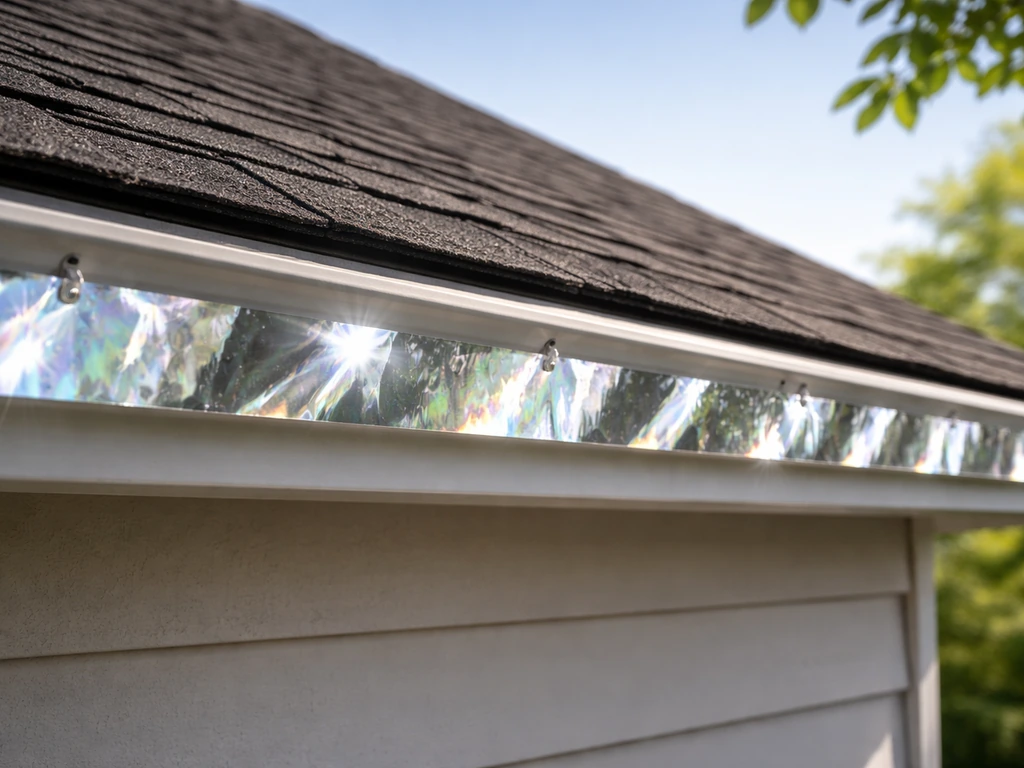
What people mean when they say 'bird tape'
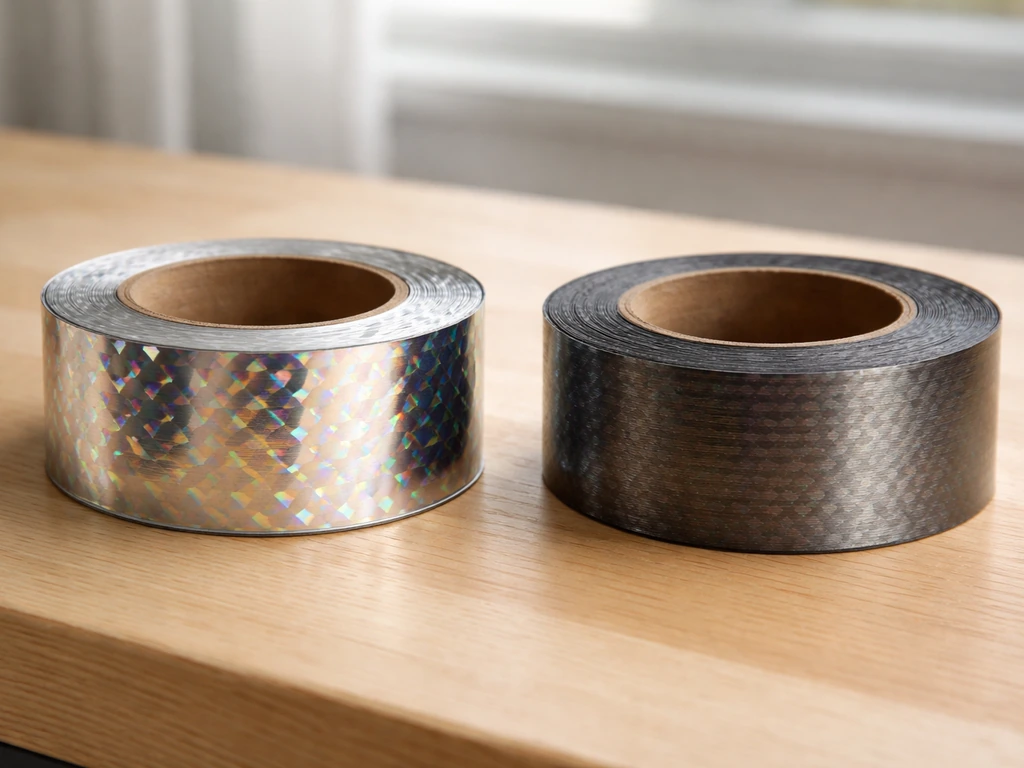
The term gets used for at least two very different products, and mixing them up leads to buying the wrong thing.
- Reflective scare tape (also called flash tape, foil tape, mylar tape, holographic ribbon, or irri-tape): This is the shiny, ribbon-like material you hang outdoors. It creates flashes of light and flutters in the wind. Bird-X markets their version under at least seven different names, so you have almost certainly seen it even if you didn't recognize the label.
- Window bird tape (ABC BirdTape): This is a vinyl material you adhere directly to glass in a grid or strip pattern. It is designed to prevent bird-window collisions by making the glass visible to approaching birds, not to scare birds away from an outdoor area.
Most people searching 'does bird tape work' are thinking about the hanging reflective ribbon kind. If you are trying to figure out whether the hanging reflective ribbon kind is the right choice, this guide explains how it works and when it tends to fail does bird tape work. This guide covers both, but focuses on the outdoor scare tape since that is what most homeowners and facility managers reach for first. If you are specifically dealing with birds flying into windows, the ABC BirdTape approach is a different tool for a different problem and deserves its own setup process.
How bird tape is supposed to work
Reflective scare tape exploits the fact that birds are instinctively cautious around unpredictable visual signals. To understand how bird scare tape works in practice, it helps to know how birds interpret the flashes and movement and why that behavior can change over time. When sunlight hits the holographic or mylar surface, it produces sharp, irregular flashes. When the wind moves it, the motion adds another layer of unpredictability. Birds associate sudden, erratic movement and flashing light with potential danger, so they tend to avoid the area at least initially.
The key phrase there is 'at least initially.' The tape is not causing actual harm, and birds are smart enough to figure that out over time. There is no predator, no noise, no real threat attached to those flashes. That is why habituation is the core weakness of this product class, and it is worth understanding before you deploy it.
Window bird tape works on a completely different principle. It creates a visible pattern on glass so birds do not perceive it as open fly-through space. Research on UV-reflective window films supports this approach: marking glass in a way birds can detect genuinely reduces collision rates. The effectiveness here is more about coverage and pattern spacing than about startling the bird.
Does it actually work? Effectiveness by location
The honest answer is that effectiveness varies a lot depending on where you use it, how long you need it to last, and which species you are dealing with. Here is a realistic breakdown.
Where reflective tape tends to work well
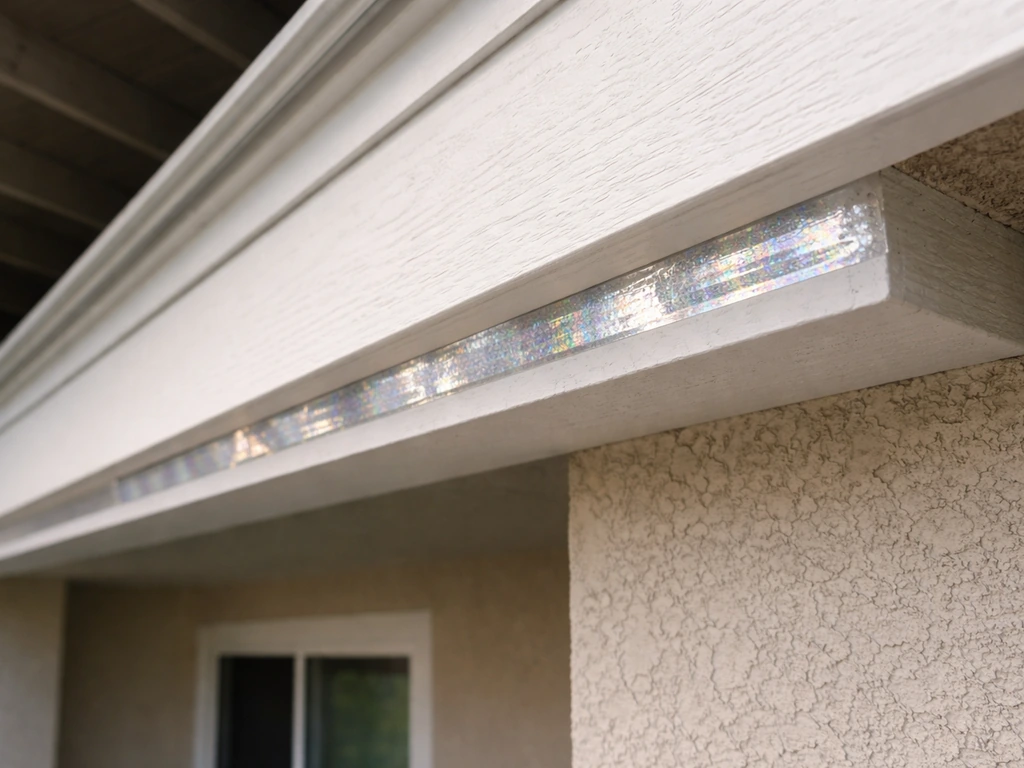
- Small ledges and eaves where birds roost or land: The bounded space means the tape can block most approach angles.
- Patio edges and pergola crossbeams: Good sun exposure and airflow keep the tape moving and flashing.
- Around solar panel perimeters: Strung at the right height, tape can discourage birds from perching on panel frames.
- Pool surrounds and dock edges: Open sky gives consistent light exposure, and birds have fewer alternative landing spots nearby.
- Garden rows and fruit trees: Classic agricultural use with reasonable short-term results, especially during harvest season.
- Window frames (as a supplemental treatment alongside window film): Adds motion near glass where birds hover or approach.
Where it usually underperforms
- Large open rooftops with heavy gull or pigeon traffic: Too many access routes for tape lines to cover, and these species habituate quickly.
- Shaded or low-wind areas: If the tape cannot flash or flutter, it is just a strip of plastic.
- High-pressure sites where birds have nested for years: Established nesting birds are far more motivated than casual visitors.
- Any area where birds can access from above or behind the tape line: If you only string one line across the front, birds will simply fly around it.
- Long-term, unattended setups: Expect a few weeks of deterrence before birds start ignoring it.
Why bird tape fails
Poor results with bird tape almost always trace back to one or more of these problems.
- Habituation: This is the big one. Birds learn quickly that flashing ribbon does not actually signal danger. Research from UC ANR confirms this can happen fairly rapidly, especially with resident birds that have motivation to stay in the area. If you leave the same tape in the same position for more than a few weeks, expect diminishing returns.
- Insufficient coverage: If birds can reach their target from any direction where there is no tape, the tape is not doing its job. A single strip across one side of a roof gap is not coverage.
- Not enough movement or light: Tape strung so tightly it cannot flutter, or installed in a shaded courtyard where sunlight barely reaches, will not produce the flashes and motion that drive the deterrent effect.
- Mounting that lets the tape go slack or tangle: Tape that has wound around itself or drooped onto a surface is just sitting there.
- Wrong product for the problem: Using hanging scare ribbon on a window-collision problem, or using window tape in an outdoor roosting situation, will not work regardless of installation quality.
How to set up bird tape correctly
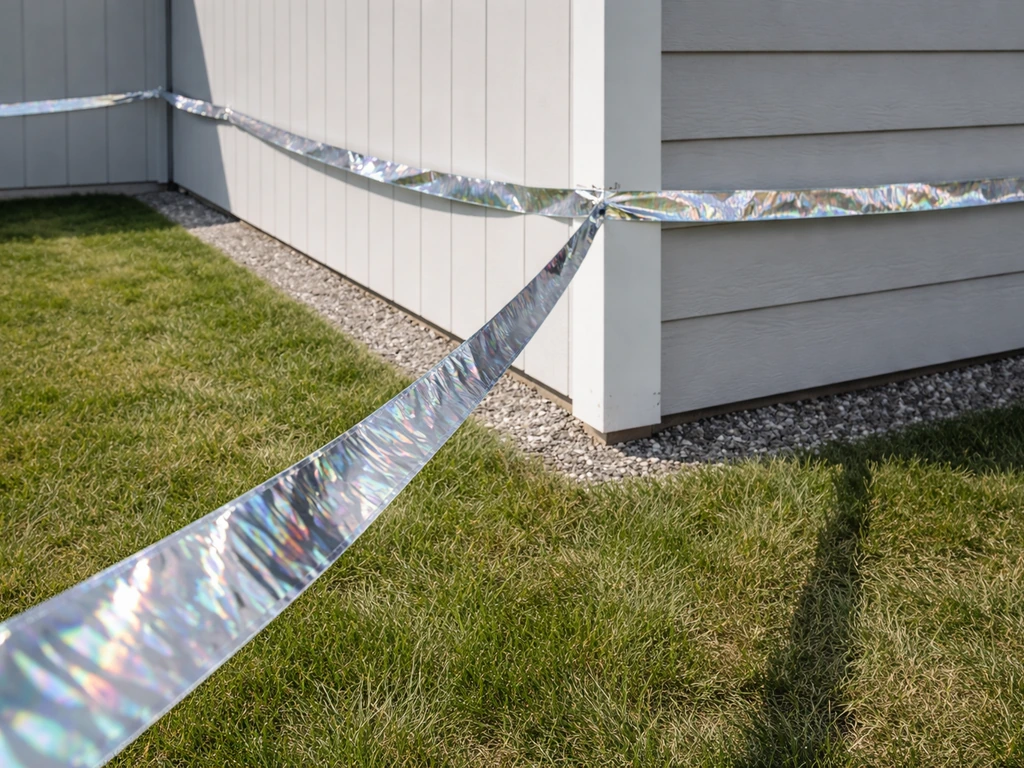
Getting this right is not complicated, but the details matter. Follow these steps and you will give the tape its best chance of working.
For outdoor reflective scare tape
- Identify all approach paths, not just the most obvious one. Walk around the area and note every angle a bird could use to land or roost. You need to address them all.
- Gather your materials: reflective/holographic scare ribbon (1 to 2 inch width works well), heavy-duty staples, zip ties, or outdoor-rated string for anchoring, scissors, and a measuring tape.
- Hang strips at 12 to 18 inch intervals across the problem zone. Tighter spacing means fewer gaps for birds to slip through.
- Leave 6 to 12 inches of free-hanging length on each strip so the tape can move freely in even light wind. Do not pull it taut.
- Mount at a height where birds would naturally approach or land, typically 6 to 8 inches above the surface you are protecting.
- Position strips so they face the main sun exposure for your location. Maximum sunlight on the reflective surface equals maximum flash.
- Check back after one week and reposition or add strips if birds are finding gaps or routing around the tape.
- Rotate or replace tape every 3 to 4 weeks to disrupt habituation. Moving it even a foot or changing the hanging length resets some of the novelty effect.
- Give it 2 to 4 weeks before making a final judgment on effectiveness for your site.
For window bird tape (ABC BirdTape)
- Clean the window first with water. ABC's own installation instructions are clear on this step: surface contamination reduces adhesion.
- Follow the recommended pattern spacing from the installation guide. The standard approach uses a grid of squares or long horizontal strips spaced no more than 2 inches apart vertically. Wider gaps leave space that looks like a fly-through opening to a bird.
- Apply strips consistently across the entire pane, not just the corners or the section where you have seen collisions. Birds can hit any part of the glass.
- Press firmly along the entire length of each strip to ensure full adhesion and avoid lifting edges.
- Inspect quarterly for peeling, especially after temperature extremes, and replace any sections that have lifted.
When tape is not enough
If tape alone is not solving the problem, that is not unusual. Bird management research consistently recommends layered strategies over single-product solutions. For woodpecker building-damage management, the USDA Forest Service also lists multiple possible solutions, including reflective and holographic ribbon, emphasizing that visual products are one tool among many blank" rel="noopener noreferrer">layered strategies over single-product solutions. If you want the best bird scare tape results, treat tape as part of a wider plan rather than a one-time fix layered strategies. Here are the options worth considering, roughly in order of escalation.
| Method | Best For | Limitation |
|---|---|---|
| Bird spikes | Ledges, beams, roofline edges | Does not address open surfaces or flight paths |
| Bird netting | Larger enclosed areas, solar panels, fruit trees | Requires proper tensioning and anchoring to be effective |
| Visual motion products (predator kites, spinning reflectors) | Patios, open yards, docks | Also subject to habituation over time |
| Sonic/ultrasonic deterrents | Larger spaces where visual deterrents underperform | Ultrasonic effectiveness is debated; sonic works better outdoors |
| Chemical/gel repellents | Specific surfaces where birds land repeatedly | Variable efficacy; welfare and cleanup concerns with gel products |
| Habitat modification | Any long-term bird pressure site | Takes more work but addresses root cause |
For residential sites like patios, rooflines, and pools, combining reflective tape with physical spikes on landing surfaces and a rotating visual deterrent (like a predator kite) covers the problem from multiple angles and makes habituation much slower.
For commercial sites or anywhere with persistent heavy bird pressure, professional bird control is usually the right call. A professional can assess nesting status (some species and their nests are federally protected), recommend exclusion structures, and set up a maintenance schedule. Gel repellents are worth mentioning here because they seem like an easy fix, but peer-reviewed research on feral pigeons specifically found incomplete efficacy and raised welfare concerns, so they are not a reliable primary strategy for urban pigeon management.
Safety, compliance, and a few things to watch out for
Bird tape is low-risk compared to many deterrent products, but there are a few real considerations depending on where you are deploying it.
Near aviation operations
If you are near an airport, reflective tape is not a substitute for a proper wildlife hazard management program. The FAA requires airports to manage bird-strike risk systematically, and Transport Canada's evaluations of airport bird control methods make clear that visual deterrents are one small tool within a coordinated program, not a standalone fix. Ad-hoc tape deployment near active runways is not going to satisfy aviation safety requirements and could create debris hazards if strips come loose. Work with the airport's wildlife management team rather than deploying independently.
Near solar panels
Reflective tape can be used around solar panel perimeters, but make sure any anchoring method does not puncture panel surfaces or void manufacturer warranties. Loose tape that gets pulled under panels by wind can be difficult to remove and may trap birds or debris. Keep strips short enough that they cannot reach the panel surface and check them seasonally.
Around pools
Tape near pools is generally safe, but use UV-stabilized materials rated for outdoor use so strips do not degrade quickly and shed microplastic fragments into the water. Anchor all strips securely so they cannot blow into the pool or clog filtration.
Debris and entanglement
Loose or improperly anchored tape can become entangled with birds, especially smaller songbirds. Always secure both ends of each strip firmly. Inspect regularly and remove any tape that has come partially free before it becomes a hazard. In heavily vegetated areas where birds nest nearby, inspect more frequently during nesting season.
Protected species
Visual deterrents like scare tape are a legal, nonchemical option for most common bird species, which is part of why they are popular. But if the birds causing your problem are a protected species (certain woodpeckers, migratory songbirds, raptors), make sure any deterrent approach you use does not disturb active nests. The USDA APHIS nonchemical deterrent framework is clear that method selection needs to account for which species you are managing. When in doubt, check with your state wildlife agency before taking any action beyond passive deterrents.
FAQ
How long does bird tape need to work before it’s considered effective?
Expect the strongest results in the first few days after installation, because birds often habituate. If you still see the same behavior after about 1 to 2 weeks, it usually means coverage is inadequate, the tape is not moving or flashing enough, or the birds are already accustomed to it.
Why does bird tape stop working even when it was installed correctly?
Habituation is the main reason. Birds learn that the flashes are not followed by a real threat, so you typically need changes over time, such as adding physical barriers, rotating a visual deterrent, or moving the tape location to keep the signal unpredictable.
What’s the biggest mistake people make when using the reflective hanging ribbon kind?
Letting the tape hang loosely so it does not move consistently. If the ribbon is mostly still, the flashing becomes predictable, and birds are more likely to ignore it, especially in sheltered areas with low wind.
Does bird tape work for birds that are nesting nearby?
Often not well. Nesting can override avoidance behavior, and you also have to avoid disturbing active nests. If you suspect nesting, switch to an exclusion or professional assessment approach rather than relying on tape alone.
Will bird tape work on just one ledge or does it need to cover the whole area?
It works best when it blocks a specific landing or approach path. If birds can access the same area from other angles, you usually need to extend coverage or combine tape with barriers on the most attractive landing surfaces.
How do I know whether I’m buying the wrong “bird tape”?
Look for the intended application. If it is marketed for window collisions, it should be a patterned, glass-oriented product, not the hanging reflective ribbon. If it is the outdoor scare tape, it should be designed to be exposed to sunlight and wind so it moves and flashes.
Can I use bird tape indoors near windows or in a sheltered balcony?
Yes, but only if the tape receives enough light and has an airflow or wind exposure to keep it moving (for the reflective ribbon type). In sheltered, low-sun, or draft-free spots, effectiveness drops because the flashes and motion become inconsistent.
Does reflective bird tape work at night or in winter?
Not reliably. The reflective ribbon effect depends on daylight to create sharp flashes, and many locations have weaker wind in winter. If you need year-round control, plan for a layered approach or a different tool designed for your conditions.
Is bird tape safe for birds and pets?
It is generally nonlethal when installed properly, but entanglement can occur if strips come loose. Use secure anchoring on both ends, inspect frequently, and remove any tape that has partially detached, especially around areas where small birds forage.
What if the tape keeps blowing off or getting damaged?
That’s a sign your anchoring method or strip length is wrong for the wind conditions. Shorten strips, reinforce attachment points, and avoid placements where the ribbon can rub against sharp edges or get pulled loose by gusts.
Can bird tape help with window collisions without using a window film?
For collisions, the window-collision type approach is usually more appropriate because it changes how glass is perceived. Hanging ribbon may not provide consistent coverage on the full visual path birds take, so collisions can persist even if birds briefly avoid the ribbon.
Is it okay to use bird tape near pools or solar panels?
Use it, but treat installation as the limiting factor. For pools, choose outdoor UV-stabilized materials and ensure strips cannot blow into the water or interfere with filtration. For solar panels, avoid puncturing surfaces, check warranty requirements, and keep strips positioned so they cannot reach panel surfaces or snag under them.
When should I stop DIY bird tape and call a professional?
If pressure is heavy, birds are nesting, tape has been correctly installed and maintained for 2 to 4 weeks without improvement, or the area is near an airport. Professionals can assess species and nesting status and may recommend exclusion structures or a maintenance plan that prevents recurrence.
Are there legal limits on using deterrents if the birds are protected?
Yes. If the birds are protected species, you may be restricted from actions that disturb active nests or certain habitats. If you are unsure what species is involved, confirm with your state or local wildlife agency before making changes beyond passive, non-intrusive deterrents.