
For most roofs, physical deterrents like anti-roosting spikes or tensioned wire systems are the best bird scarers because they physically prevent birds from landing rather than just annoying them into leaving. Sensory options like reflective tape and ultrasonic devices can help, but birds habituate to them faster, especially persistent roosters like pigeons and starlings. The right choice depends on your roof type, which bird species you're dealing with, and whether they're roosting or actively nesting.
Best Bird Scarer for Roof: Choose, Install, and Maintain

Marcus Weatherby
2 Jul 2026
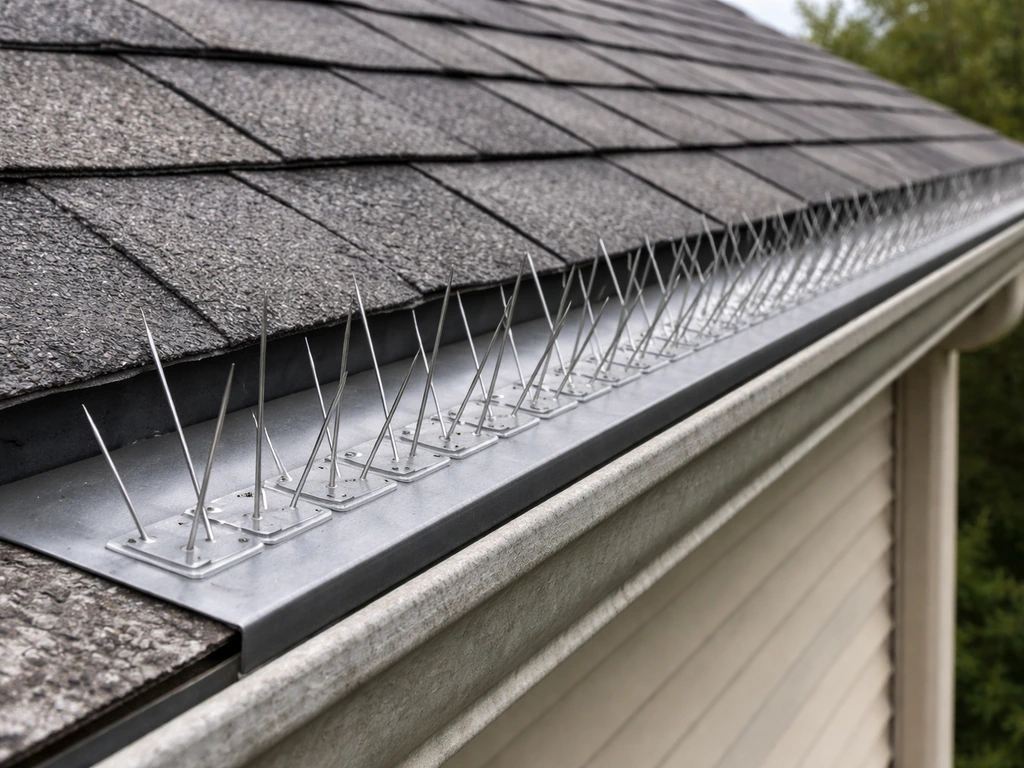
Figure out exactly what's happening on your roof first
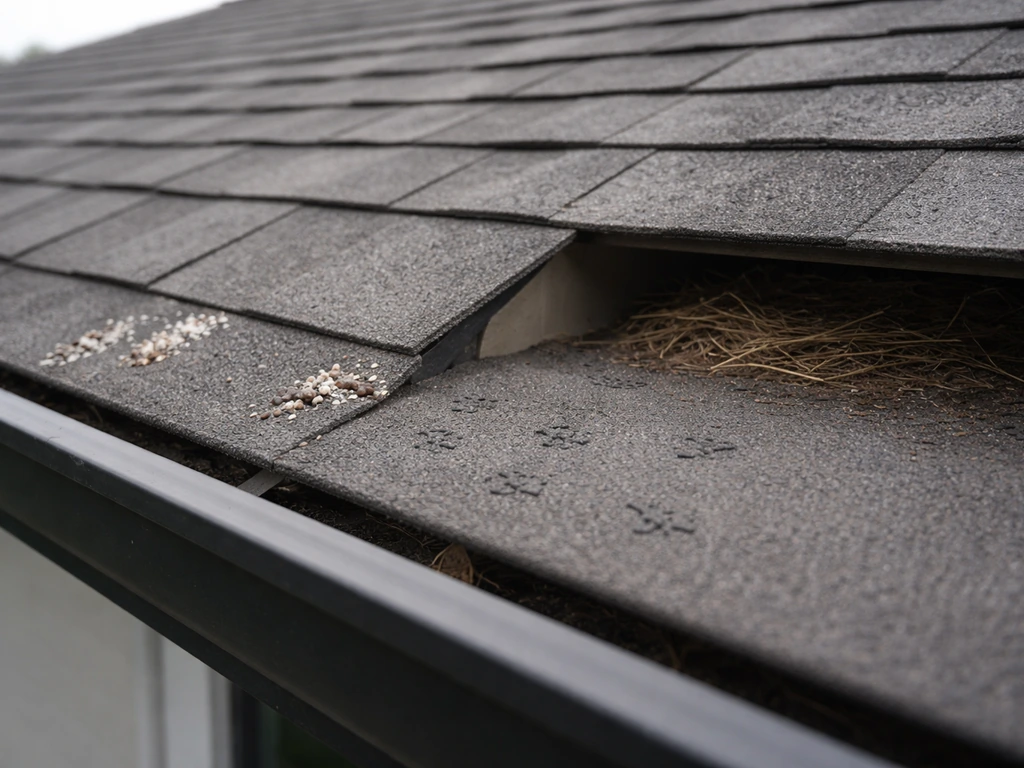
Before you buy anything, spend a few minutes identifying the problem. Are birds roosting on your roof at night or during the day, or are they actively nesting? Roosting is easier to solve. Nesting is more complicated, especially if eggs or chicks are already present, because under the Migratory Bird Treaty Act in the US, most active bird nests are legally protected and cannot be removed or disturbed without a federal permit. In the UK, similar protections apply under the Wildlife and Countryside Act.
Next, identify the species. Pigeons are large and heavy, so they need wide ledges and flat surfaces. Starlings and house sparrows are smaller and will squeeze into gaps under roof tiles, eaves, and soffits. Starlings in particular are aggressive about finding nest sites around buildings and can cause serious damage, including fire hazards from nesting materials and blocked gutters. Knowing your bird narrows down which deterrent will actually work.
Also look at where exactly the birds are gathering. Ridge lines, flat roof sections, parapet walls, gutters, chimney stacks, HVAC units, and solar panel edges are all common hotspots. Each location may need a different approach, so map out every problem area before deciding on a solution.
Physical deterrents: the most reliable way to keep birds off your roof
Physical exclusion works because it removes the option for birds to land or nest. There's no habituation issue the way there is with noise or visual deterrents. These are the methods professional bird controllers rely on most heavily.
Anti-roosting spikes
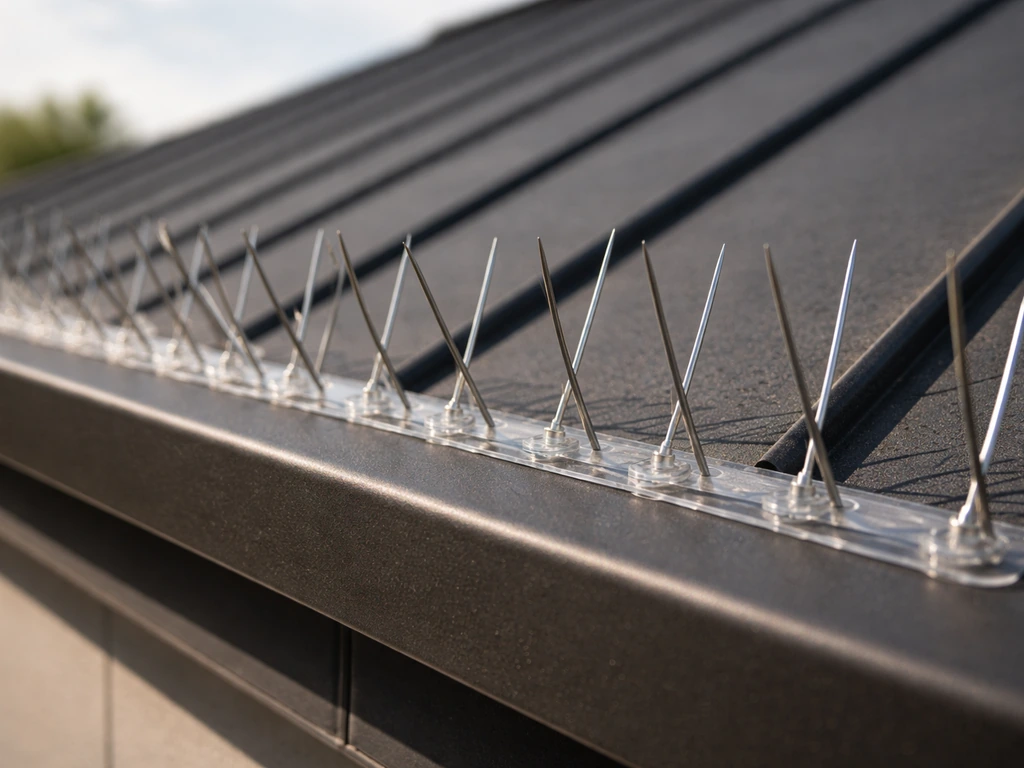
Spikes are the most widely used physical deterrent and for good reason. They're durable, weather-resistant, and effective on ridge tiles, parapet walls, chimney ledges, and gutters. Stainless steel spikes outlast plastic versions significantly and hold up to UV and frost. For pigeons, you need spikes with a wider spread (around 12 inches or 30 cm). For smaller birds like starlings, a narrower configuration is more effective. Attach them using adhesive, screws, or tie-wire depending on your surface.
Tensioned wire and post systems
Wire deterrent systems use stainless steel wire strung between small posts at around 2 to 4 inches above the landing surface. When a bird tries to land, it can't get a grip and moves on. These systems are less visually intrusive than spikes and work well on flat ledges, parapet walls, and along the edges of flat roofs. They're a good option where aesthetics matter, such as on heritage buildings or visible roof lines.
Bird netting
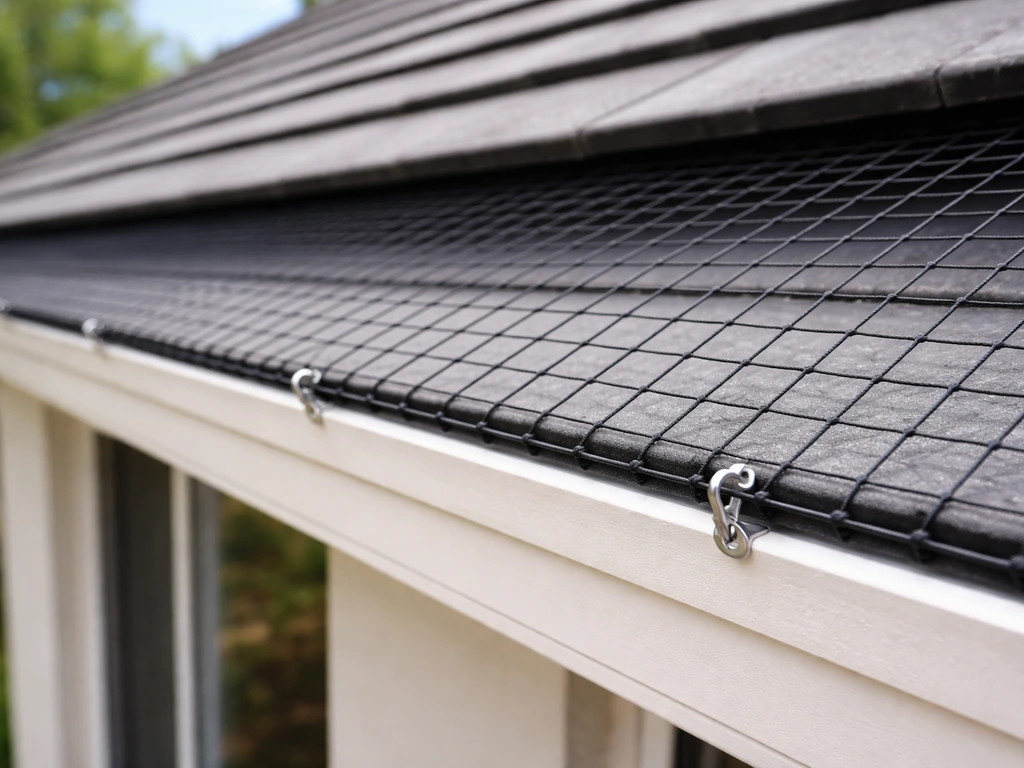
Netting is the most complete physical barrier you can use and is the go-to method when birds are accessing roof spaces, eaves, or larger flat roof areas. Heavy-duty UV-stabilised polyethylene netting with a 50mm mesh works for pigeons; use 28mm or smaller for starlings and sparrows. Netting can be installed over entire roof sections or as proofing over eave gaps. It needs to be taut and properly fixed with no sagging sections where birds can get trapped, which is both cruel and creates a mess.
Slope barriers and ledge covers
These are angled plastic or metal covers that fit onto flat ledges and make them impossible to stand on. They're used on window ledges more often than roofs, but they work well on flat parapet coping stones and wide chimney caps where spikes aren't practical.
Sensory deterrents: where they help and where they fall short
Sensory deterrents can be a useful part of your approach, particularly during early-stage activity before birds have fully established roosting habits. On their own, they're rarely enough for a serious infestation, but combined with physical barriers, they can reinforce the message to stay away.
Visual deterrents
Reflective tape, spinning pinwheels, and predator decoys (fake owls, hawk silhouettes) all work on the principle of startling or intimidating birds. On rooftops, reflective tape and holographic flash tape strung along ridge lines can be effective for a few weeks. The problem is that pigeons, starlings, and sparrows are intelligent and will quickly figure out that the plastic owl hasn't moved in a week. Decoys need to be repositioned every couple of days to stay credible. Kite-style hawk deterrents that move in the wind tend to last longer than static decoys, which is why they're popular for larger open areas. Kite-style hawk deterrents are often considered among the best bird scarers kite options for open areas because they move naturally in the wind. For roof-specific use, they work best on flat roofs with decent wind exposure.
Sonic and ultrasonic devices
Sonic deterrents broadcast distress calls or predator sounds and can disrupt roosting behaviour. They're most effective when birds are just starting to use a spot. For rooftop use, weatherproof units are essential, and coverage range matters because a single speaker may only cover 30 to 60 feet effectively. Ultrasonic devices claim to repel birds with high-frequency sound, but the evidence for effectiveness against birds is weak. Birds' hearing doesn't extend much into the ultrasonic range the way some pest species' does, so don't rely on ultrasonic as a primary solution. If you're looking at sensory options in more depth, the broader range of bird scaring devices covers these comparisons in more detail. If you want the best bird scaring device for your situation, compare how sonic, ultrasonic, and other options perform alongside physical barriers broader range of bird scaring devices.
Chemical and taste repellents: a supporting tool, not a silver bullet
Chemical repellents for roofs come in two main types: contact-based sticky gels and taste/odour repellents. Sticky gels like polybutene create an uncomfortable surface for birds to land on. They work reasonably well on narrow ledges but attract dirt and debris quickly, can trap small birds inhumanely, and need regular reapplication. They're best used in moderate-temperature climates because they run in heat and solidify in cold. Taste repellents like methyl anthranilate are more commonly used for crops and open grass areas than for rooftops.
Odour-based repellents are rarely practical on roofs because wind disperses them almost immediately. Chemical options are worth considering as a temporary measure or in combination with physical barriers on small, specific areas like chimney caps or pipe runs, but they shouldn't be your primary strategy for a full roof.
Always check the product label for safety around pets, children, and non-target wildlife before applying any chemical repellent to an outdoor surface.
Matching the right deterrent to your roof and bird species
There's no single best bird scarer for every roof. Here's a practical decision table to help you match the solution to your situation.
| Scenario | Best Primary Deterrent | Useful Supplement |
|---|---|---|
| Pigeons roosting on ridge tiles or chimney | Stainless steel anti-roosting spikes | Reflective tape along ridge |
| Starlings or sparrows entering under eaves or roof tiles | Heavy-duty netting (28mm or smaller mesh) | Silicone sealant for small gaps |
| Birds on flat roof or parapet wall | Tensioned wire system or spikes | Sonic deterrent during establishment phase |
| Large flat commercial roof with pigeons | Perimeter netting or wire + spikes at landing points | Predator kite if open area |
| Birds roosting on solar panel edges | Panel-specific netting and clip systems | Spikes on exposed frame edges |
| Light early-stage activity on any roof | Visual deterrents (reflective tape, hawk kite) | Reposition frequently to maintain effect |
If you're dealing with pigeons specifically, the same principles apply but scale up in terms of spike spread and netting mesh size. For a deeper look at pigeon-specific solutions, that scenario has its own considerations worth reviewing. And if your problem isn't limited to the roof but extends to gardens and patios, the approaches overlap enough that it's worth looking at what works best for garden bird scarers alongside your roof solution. If you're also trying to protect patios and beds, you can apply the same reasoning to find the best bird scarer for garden areas best bird scarers for garden.
How to install roof bird deterrents safely
Working on a roof carries real fall risk. If your roof pitch is anything above a shallow lean-to and you're not confident working at height, hire someone. That said, for accessible flat roofs, low-slope extensions, or work done from a ladder at the eaves, here's what to keep in mind. If you want clear bird scarer kite instructions, make sure you match the setup to your roof type and the birds you're trying to stop bird deterrents.
Spike installation
Clean the surface thoroughly before fixing. Grit, moss, and debris prevent adhesives from bonding properly. Use a roofing-grade adhesive or silicone for tiles and stone, and stainless steel screws for wooden fascias and barge boards. Place spike strips end to end with no gaps. Even a 2-inch gap is enough for a small bird to squeeze in and roost. On ridge tiles, run spikes along the full length of the ridge, not just the high-traffic sections.
Netting installation
Anchor points need to be fixed into masonry or solid timber, not just into render or mortar. Use stainless steel fixings that won't corrode. Keep netting taut with no slack sections. The bottom edge of any netting used for eave proofing must be sealed flush against the surface so there's no gap for birds to push through. Check the net periodically for damage, as UV degradation and wind stress can create small holes.
General safety on the roof
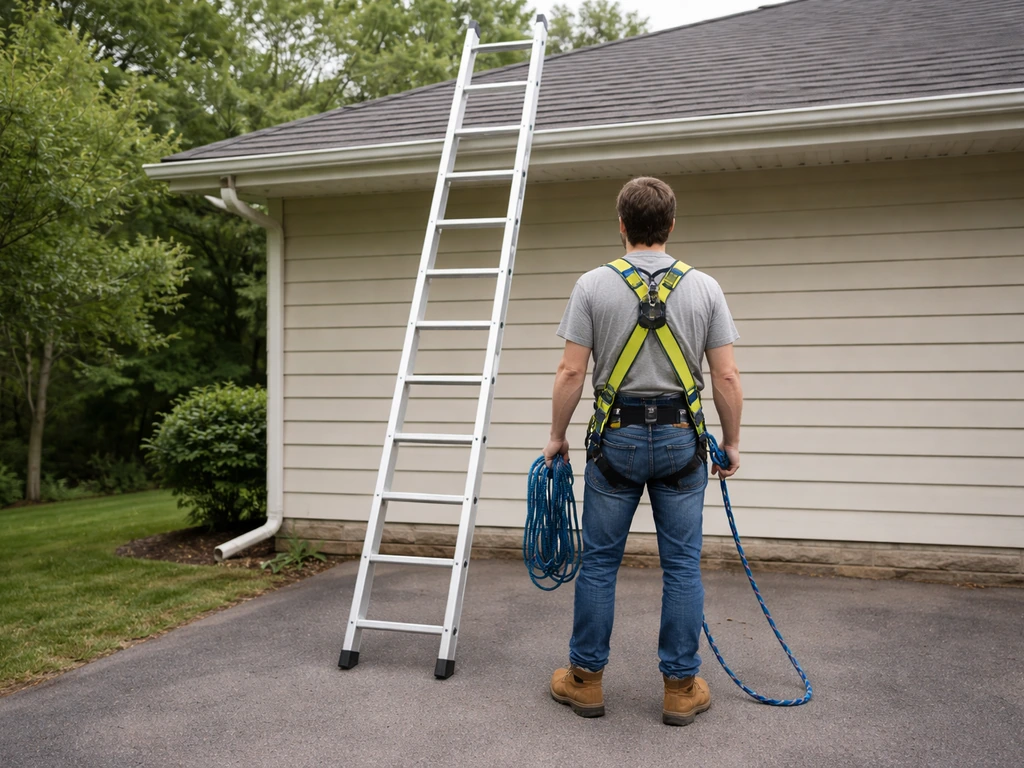
- Use a properly footed ladder that extends at least 3 rungs above the roof edge
- Never work alone on a roof: have someone at the base of the ladder
- Wear non-slip footwear with good ankle support
- Avoid working in wet, icy, or high-wind conditions
- Use a roof ladder or crawl board to distribute your weight on pitched roofs
- Consider a harness and anchor point for any roof where you need to move around significantly
When to call a professional bird controller
Call a professional if the roof is steep or high, if birds have an active nest with eggs or chicks (because legal protections mean you may need expert advice on timing and permits), if the infestation is large scale across a commercial building, or if previous DIY attempts haven't worked. Professional bird control companies have access to specialist equipment, licensed pest controllers, and commercial-grade materials that aren't available retail. The cost is worth it compared to repeated failed DIY attempts.
Keeping birds away for the long term
Even the best installation loses effectiveness if it's not maintained. Physical barriers like spikes and netting are relatively low-maintenance, but they still need periodic inspection. After storms, check that fixings haven't worked loose and that debris hasn't built up against netting in a way that creates new landing spots.
For sensory deterrents, rotation is essential. If you're using visual deterrents like decoys or flash tape, move them every few days. Replace faded reflective tape every few months because UV degrades the reflective coating. If you're using a sonic device, change the call patterns regularly if the device allows it.
Remove anything that attracts birds to the area in the first place. Bird feeders near the roofline, uncovered bins, and open compost heaps all draw birds closer to your building. If you want an extra way to discourage roosting, a tin can bird scarer can also help by making the area feel less safe for birds Bird feeders. Pigeons and starlings in particular are strongly associated with human food sources, so reducing food availability cuts the motivation to roost nearby.
Block secondary entry points even after installing your main deterrent. Gaps under broken roof tiles, deteriorated soffits, and open pipe runs are all entry points for sparrows and starlings looking for nesting sites. Sealing these with silicone, metal mesh, or purpose-made bird block foam is a one-time job that pays off every breeding season.
Finally, inspect your roof at the start of each spring before nesting season begins. That's when birds are scouting for sites, and it's the best time to reinforce any areas where your deterrents have degraded. Early action is always easier and cheaper than dealing with an established roost.
FAQ
What should I do if I discover an active nest under my roof before installing a bird scarer?
If birds are actively sitting on eggs or chicks, do not remove them or disturb the nest. Instead, focus on stopping new access points (blocking gaps and sealing openings away from the nest area) and wait until fledging. In many regions you also need a permit to handle active nests, so timing the work to after the nesting season often prevents legal and welfare problems.
Why do birds come back after I install roof spikes, and how can I prevent repeat roosting?
For visible spikes, the biggest mistake is leaving even small gaps between spike strips or between spikes and edges, because birds can squeeze through and still roost. Use continuous coverage along the ridge or ledge length, and verify you have no “break lines” where adhesives lose grip or where a strip stops short.
How do I choose the right spike spacing or barrier size for pigeons vs starlings on my specific roof surface?
Most “roof-proofing” products fail because they were sized for the wrong landing surface. Before installing, measure the exact ledge width, ridge profile, and the spacing where birds are landing. For pigeons, you generally need wider spacing coverage (larger spread) than for starlings, which can exploit narrower footholds and squeeze into small gaps.
Are wire deterrent systems effective on all roof types, and what installation details make or break them?
Wire systems work best when birds have a clear, consistent landing surface and the wire height is correct for how they approach. If the wire is too low or too loose, birds can partially grip or access through slack zones. Make sure the wire is tensioned and aligned, and check corners and ends because birds often find entry routes at terminations.
What are the biggest risks or mistakes when using netting on roofs?
Avoid netting where it can sag or trap birds. Ensure the net is UV-stabilized, taut, and fixed so there are no slack pockets near gutters, eaves, or transitions around vents and chimneys. Also seal the bottom edge flush against the surface so birds cannot push under and reach sheltered gaps.
What material should I choose for the best long-term durability on a roof (stainless vs plastic), especially in cold or sunny climates?
Stainless steel generally holds up better than coated or plastic options in UV exposure and freeze thaw cycles. If your area has frequent frost or strong sun, choose corrosion-resistant fixings and materials, and recheck after the first winter because early loosening can happen before the system fully beds in.
Can ultrasonic or sonic bird scarers replace spikes or netting, and where do they actually work best?
Sonic devices should not be treated as a standalone solution for established roosting. If you use them, pick weatherproof units with coverage matched to the area, and place them so the sound path is not blocked by walls or roof structures. If birds keep returning, the fastest path to improvement is adding physical exclusion at the landing points.
How long do visual decoys like fake owls or hawk silhouettes last on roofs, and how often should I reposition them?
Decoys usually fail once birds realize the “threat” does not adapt. Even when decoys are effective, they tend to work best as a short-term reinforcement while you install exclusion measures. If you do use them, change placement often and rotate predator styles, since birds can habituate to a fixed pattern.
Where do chemical repellents fit into a roof bird control plan, and when are they a waste of money?
Chemical repellents are typically best used as a temporary support on small, specific hotspots, not as a full-roof fix. Wind disperses many odor products quickly, and sticky gels can become messy and require frequent reapplication, especially after rain. If you try chemicals, treat them as “gap-fillers” while primary physical barriers are installed.
What surface prep steps most commonly cause adhesive or silicone spike failures on roofs?
Before any adhesive-based installation, remove moss, grit, and loose dirt and dry the surface. Adhesives often fail on dusty or chalky tiles and on surfaces contaminated by algae growth. Also confirm the product is compatible with your roofing material (tile, stone, timber, metal) so you do not create a bond that peels later.
If I block the roofline, how do birds still access the building, and what secondary entry points should I check?
Even after installing roof deterrents, birds may enter through “backup” routes like under-soffit gaps, broken eave sections, vent openings, and open pipe runs. After the main work, inspect the perimeter for any sheltered cavity that remains accessible. Sealing secondary entry points often prevents birds from simply switching to a nearby nesting spot.
When should I stop DIY and hire a bird control professional, and what problems do they usually find?
If DIY isn’t working, the cause is often either missed landing points (not fully mapping hotspots) or incorrect barrier geometry (wrong wire height, wrong spike configuration, or net slack). A professional can also evaluate bird species and confirm whether exclusion should be timed after nesting, plus determine if there are structural gaps that need sealing beyond deterrents.