
For most homeowners dealing with pigeons on ledges, railings, or gutters, plastic bird spikes are a perfectly solid choice and will save you money. For rooflines, coastal locations, commercial buildings, high-wind areas, or anywhere you need a solution to last a decade or more without maintenance, stainless steel spikes are worth the extra cost. Both materials work the same way physically, the difference is how long they hold up under punishment from the environment.
Bird Spikes Plastic vs Metal: Which Works Better Today

Marcus Weatherby
12 Jun 2026
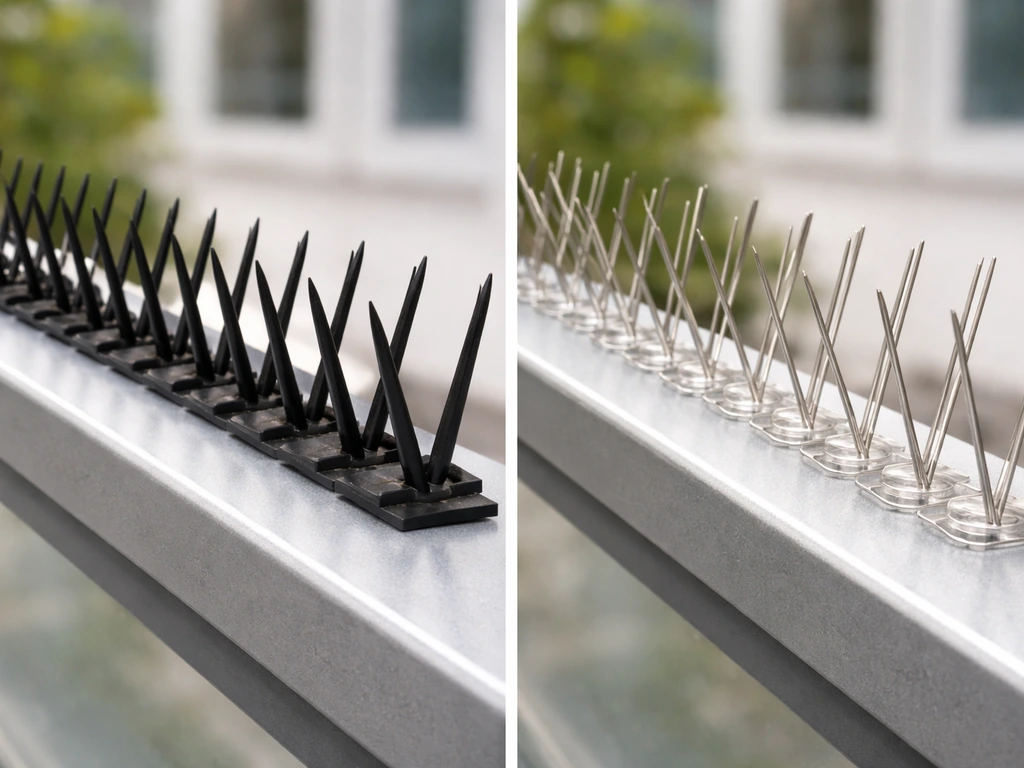
Plastic vs metal bird spikes: the quick decision
Plastic spikes (typically UV-stabilized polycarbonate) are lighter, cheaper, easier to cut to length, and flexible enough to bend around curved surfaces like pipes or arched railings. Brands like Bird B Gone back their polycarbonate spikes with a 5-year warranty against UV breakdown, and manufacturers like Bird-X describe their UV-treated plastic spikes as resisting salt, moisture, and sun. That is genuinely good performance for a budget product.
Stainless steel spikes, like the Bird-X Stainless SPIKES made with ST302 surgical-grade steel, are described as resisting 'virtually all weather and harsh environments.' Most stainless spike systems still use a polycarbonate base with UV inhibitors, so you get the corrosion resistance of steel combined with a weather-rated base. They cost more upfront but can outlast plastic by a wide margin, especially in tough outdoor conditions.
| Feature | Plastic (Polycarbonate) | Stainless Steel |
|---|---|---|
| Material | UV-stabilized polycarbonate | ST302 or 316 stainless steel needles, polycarbonate base |
| Typical lifespan | 5–10 years (moderate conditions) | 10–20+ years (marine-grade 316 can exceed 15–20 years) |
| Coastal/salt resistance | Moderate | High (316 grade) / Moderate (304 grade) |
| UV resistance | Good (UV stabilized) | Good (UV-inhibited base) |
| Flexibility | High (bends around curves) | Lower (rigid) |
| Ease of cutting | Easy with scissors or snips | Requires tin snips or angle grinder |
| Cost | Lower | Higher |
| Best for | Residential, sheltered areas, budget installs | Commercial, coastal, roofs, long-term/permanent installs |
How well do they actually work, and on which birds
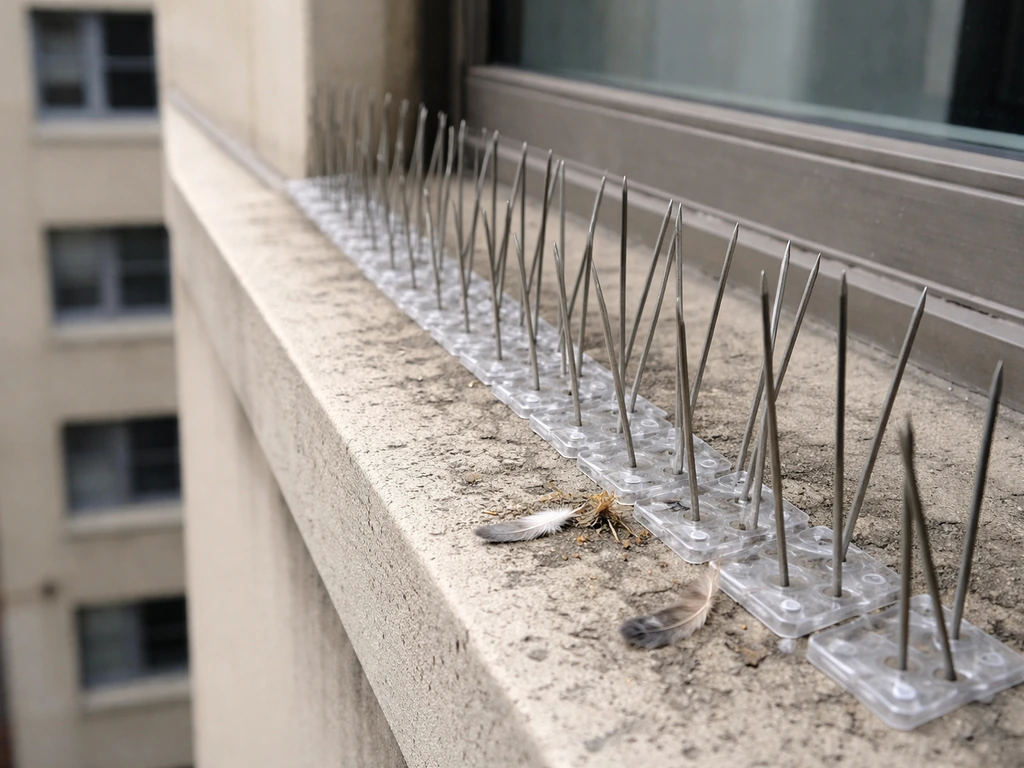
Bird spikes work by denying birds a flat surface to land on. These are the sharp, protruding strips placed on ledges, railings, gutters, or roof edges to stop birds from landing bird spikes on a building. They do not injure birds, they just make perching uncomfortable enough that birds move on. Both plastic and metal spikes use this same mechanism, so neither material is inherently more effective than the other when the spikes are new and properly installed. What separates them is how well they hold up over time, which is where material matters.
Spike height and width determine which birds you can deter. Most standard spikes (plastic or steel) come in around 5 inches long, which handles pigeons well. Longer options, around 7 inches, are available in stainless steel for larger birds like gulls. Bird Barrier's Dura-Spike system, for example, tops out at 4.5 inches (11.5 cm) in height and is designed primarily for pigeons and larger birds. Small birds like sparrows and starlings can squeeze between standard spikes, so if small birds are your problem, you need a narrower-gap spike profile regardless of material.
Placement matters as much as material. On ledges, spikes need to cover the full usable landing width. Bird Barrier’s Dura-Spike installation guidance specifies [recommended spike widths such as Narrow 2. 5 in, Wide 5 in, and Xtra-Wide 8 in](https://birdbarrier.
com/dura-spike-installation/), along with the spacing and coverage logic for ledges. Bird Barrier's installation guidance shows that a 12-inch ledge needs two rows of their 5-inch wide strips. On railings, a single row centered on the flat top surface usually works for pigeons. Gutters and roof edges are trickier because birds can land just outside the spiked zone, so coverage needs to extend to the outer lip. For a DIY walkthrough on how to install bird spikes on gutters, focus on extending coverage to the outer lip so birds cannot land just outside the spiked zone.
Bird Barrel notes that stainless steel spikes work best under medium or light bird pressure, meaning if you have a severe roosting problem with dozens of birds, spikes alone may not be enough regardless of material.
Coverage width guide by location
| Location | Recommended spike width | Rows needed |
|---|---|---|
| Narrow ledge (up to 6 in / 15 cm) | Narrow (2.5 in) | 1 row |
| Medium ledge (6–12 in / 15–30 cm) | Wide (5 in) | 1–2 rows |
| Wide ledge or parapet (12+ in / 30+ cm) | Xtra-Wide (8 in) or multiple rows | 2+ rows |
| Railing top | Narrow (2.5–3 in) | 1 row centered |
| Gutter/roof edge | Wide (5 in) | 1 row flush with outer lip |
How long they last outside: UV, heat, cold, corrosion, and cracking
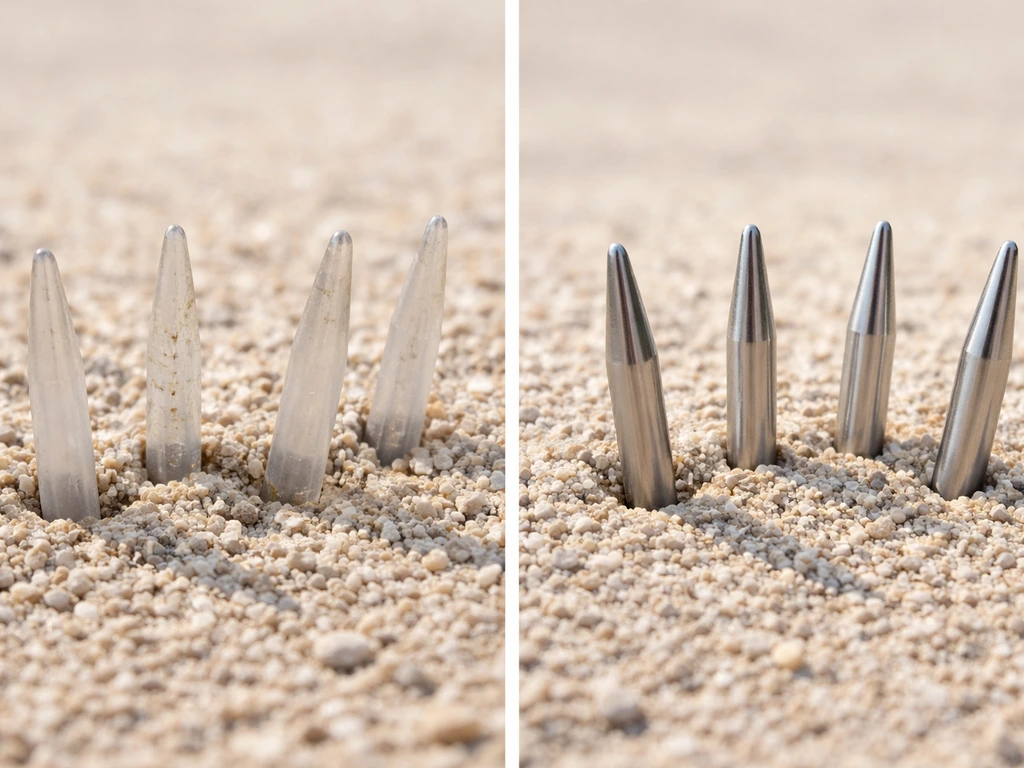
This is where the plastic vs metal debate really plays out. A U.S. Army avian protection plan for White Sands Missile Range specifically flagged that small plastic spikes can break easily and reduce effectiveness over time. That is an honest, real-world failure mode for plastic, especially in high-UV or extreme-temperature environments where polycarbonate can become brittle over years.
Good quality plastic spikes use UV-stabilized polycarbonate, which significantly slows degradation. But 'UV-stabilized' is not the same as UV-proof. In very hot, sunny climates or on south-facing rooflines that bake all day, plastic will eventually crack and break. Cheaper plastic spikes without UV treatment can fail within a couple of years. Spending a bit more on name-brand UV-stabilized polycarbonate products and expecting a realistic 5–8 year lifespan in moderate conditions is reasonable.
Stainless steel spikes handle heat, cold, and UV far better because the needles do not crack or become brittle. The weak point for steel is corrosion, specifically in coastal or high-salt environments. Standard 304 stainless can show visible corrosion within months near the ocean and may need replacement within a few years. If you are near the coast, marine-grade 316 stainless is the correct choice. Properly installed 316 stainless systems are claimed to maintain effectiveness for 15–20 years or more in coastal conditions. That longevity completely changes the cost-per-year calculation.
Installing spikes: what is actually different between plastic and metal
The installation process is very similar for both materials. You clean the surface, apply adhesive to the base, press the strip into place, and optionally screw or tie the base down for extra security. The main practical differences come down to cutting and surface compatibility.
Plastic strips cut easily with scissors or basic tin snips to fit corners and odd lengths. Steel strips need tin snips at minimum and can require an angle grinder for thicker bases. If you are doing a long DIY run on a straightforward residential ledge or railing, plastic is noticeably faster to work with. Steel requires a bit more patience when trimming to fit.
For adhesive installation, Bird-X's adhesive is rated for around 20 feet per tube and bonds to a wide range of surfaces. Bird-X also claims that one tube of its dedicated spike adhesive secures about 20 feet of spikes and is weatherproof on a wide range of materials one tube secures around 20 feet of spikes. The Defender installation guide recommends an 8mm bead of adhesive along the base, with extra silicone for uneven surfaces. Screw-mounting requires drilling pilot holes first. Bird Barrier's installation guide notes a base hole diameter of 0.156 inches for screw mounting, so check your product's spec before drilling. For gutters and curved surfaces, the flexibility of plastic bases is a genuine advantage over rigid steel bases.
DIY vs hiring a pro
Both plastic and metal spikes are DIY-friendly on accessible surfaces like window ledges, balcony railings, and fence tops. If you are installing bird spikes for the top of a fence, make sure the strip coverage matches the full usable landing area so birds cannot find a flat perch. If the surface requires working at height on a roof or accessing difficult guttering, hiring a professional installer makes sense regardless of which material you choose. A pro will also be better placed to identify gaps in coverage and spots where birds are entering behind the spike line, which is one of the most common reasons spikes fail.
Safety and doing this the right way
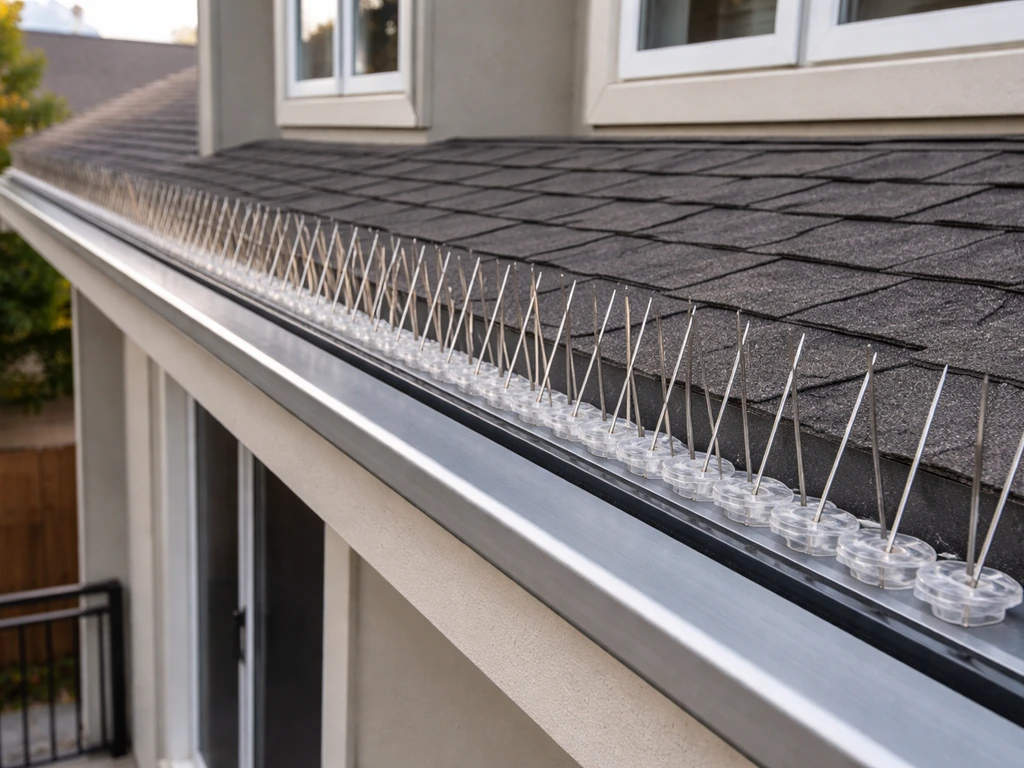
Bird spikes are a humane deterrent when installed correctly. They do not injure birds, they simply prevent landing. The risk to bird welfare comes from gaps in coverage where a bird can land partially and become trapped or entangled in the spike array. Defender's installation guidelines are explicit: do not leave any gap bigger than 2.5 cm anywhere in the installation. No gap at outer edges or corners. A guide from birdspikes.biz specifies that gaps between spike tips should be no more than 3 cm to prevent perching.
Gaps are also a functional problem, not just a welfare one. A guide from Owl Pest Control makes the point clearly: if there is a hole or cavity near the spikes, pigeons will push past the deterrent to access it. Spikes protect landing surfaces, they do not seal cavities. Before installing spikes anywhere, check for gaps, cracks, or openings behind the spike line and seal them. This step is skipped constantly and is probably the single biggest reason people find their spikes are not working.
From a personal safety standpoint, stainless steel spikes with exposed needle ends are sharper than plastic and require gloves during installation and handling. Plastic spikes are blunter and less hazardous to handle. Neither material should be placed where people are likely to brush against them, such as at hand height on a railing someone regularly grabs. In those cases, alternative deterrents like bird gel or optical deterrents may be more appropriate.
Cost, long-term value, and what to do when birds come back
Plastic spikes typically cost 30–60% less than comparable stainless steel options. For a small residential job (a single ledge or railing run), that price difference is not dramatic in absolute terms. For a large commercial installation covering hundreds of linear feet of parapet or roofline, it adds up significantly. The right way to think about cost is cost-per-year, not cost upfront.
If plastic spikes in a moderate climate last 7 years and stainless lasts 15 years, and the stainless costs 50% more, the stainless option is better value. If you are in a mild, sheltered environment and plan to repaint or renovate in five years anyway, plastic is the smarter spend. Run the numbers for your specific situation rather than defaulting to one answer.
If birds return after installation, the troubleshooting checklist is the same regardless of material. If birds return after installation, the troubleshooting checklist is the same regardless of material, including whether the bird spikes not working issue is actually caused by gaps or debris. If your bird spikes are no longer working, you can fix the problem by rechecking placement gaps and clearing debris from the spike line how to fix bird spikes. Work through these in order before assuming the product failed:
- Check for gaps: any gap over 2.5 cm is enough for a pigeon to land. Add strips to close gaps and pay special attention to corners and strip ends.
- Check coverage width: if the ledge is wider than your spike strips, birds will land in the uncovered zone. Add a second row.
- Check spike height: if you are targeting larger birds, you may need 7-inch stainless spikes rather than standard 5-inch.
- Check for cavities behind the spikes: seal any openings birds could be trying to access.
- Check for physical damage: cracked plastic bases, bent or missing needles, or strips that have lifted off the surface. Bird-X explicitly recommends replacing damaged strips immediately.
- Consider adding a complementary deterrent: if bird pressure is heavy, spikes work best paired with a sonic or visual deterrent rather than used alone.
Maintenance for both materials is minimal when installed correctly. A quick inspection once or twice a year to check for lifted bases, broken plastic, or debris packed into the spike array is usually enough. Debris (leaves, dirt, nesting material) filling in between spikes effectively converts your spike surface back into a flat landing platform, so clear it out when you see it.
Which to choose for your specific situation
Here is how to think about the decision based on where the spikes are going and what you are dealing with.
Residential use: ledges, railings, gutters, patios, fences
Plastic spikes are the right call for most residential jobs. Yes, you can install bird spikes on fence tops, but the best type and placement depend on which birds are trying to perch there bird spikes on my fence. They are easy to cut and fit, easy to handle on a ladder, flex around curved surfaces like pipes and arched pergola edges, and cost less. UV-stabilized polycarbonate from a reputable brand with a 5-year warranty is a solid product.
For fence top installs and balcony railings, plastic also handles the flexibility requirements better. For gutters specifically, the flexible plastic base makes installation on curved gutter lips much more practical than rigid steel. For gutters specifically, use the flexible plastic base to keep the spikes snug along the curved gutter lip, which makes proper installation easier how to install bird spikes on gutters.
Commercial buildings and high-exposure structures
Stainless steel is the professional standard for commercial buildings, warehouses, rooflines, and parapets. The durability justifies the cost when you are covering large areas and cannot afford to redo the job in five years. For flat or slightly curved surfaces like parapets and wide ledges, rigid stainless steel bases are not a practical obstacle. Hire a professional installer for commercial-scale work, both for coverage accuracy and because working at height on commercial structures is not a DIY job.
Coastal, high-wind, and high-corrosion environments
If you are within a few miles of the ocean or in a high-humidity, high-salt environment, use 316 marine-grade stainless steel specifically, not 304. Standard 304 stainless can corrode visibly within months near saltwater. The cost premium for 316 is worthwhile for the 15-plus year lifespan. Plastic is not a great choice for high-wind locations either, because repeated stress and vibration accelerates cracking in polycarbonate over time.
Aviation and sensitive/protected structures
The U.S. Army's avian protection guidance flagged plastic spikes as a durability concern for high-stakes environments. For aviation contexts, critical infrastructure, or protected structures where spike failure creates a real secondary risk (broken plastic pieces becoming debris, for example), stainless steel is the clear choice. These are not DIY projects. Work with a wildlife management professional or certified installer who understands site-specific requirements and can document the installation.
When spikes should not be your only tool
USDA APHIS wildlife damage management guidance points out that birds adapt based on behavioral factors and that no single deterrent method works unconditionally. If you have a severe roosting problem with a large established flock, spikes alone may not be enough. Pairing spikes with a sonic deterrent or visual scare device increases effectiveness significantly. Spikes work best on light to medium bird pressure, as Bird Barrier itself notes. For heavy pressure, treat spikes as part of a layered approach rather than a standalone fix.
FAQ
If plastic and metal spikes work the same when new, how do I choose in practice?
Both work the same way when installed correctly, so the real question is longevity for your conditions. If your site gets intense sun, wide temperature swings, or strong wind vibration, plan on replacing plastic sooner, while stainless is more likely to stay effective longer without repairs.
What should I check first if birds come back after installing spikes? (Does it mean the product is bad?)
After installation, treat debris and gaps as the first suspects. Even small accumulations of leaves or nesting material can create a flat perch surface between spikes, making both plastic and stainless look like they “failed” even when the product is intact.
Can I use the same bird spikes for pigeons and small birds like sparrows?
Yes, but the spike type has to match the bird size and gap tolerances. If sparrows or starlings are involved, prioritize narrower-gap profiles and verify that the overall spike coverage leaves no usable landing line along the edge, not just that spikes are present.
Are small gaps at the ends or corners really a problem, or only big gaps in the middle?
Your goal is uninterrupted denial of landing surfaces, so you should not rely on “close enough” spacing at corners or where the surface changes. If you see a gap larger than a few centimeters, birds can sometimes perch partially and gain access, even if the center runs look perfect.
What if there are openings or a cavity behind the spike line, will spikes still work?
Spikes only cover landing surfaces, not holes or hidden access behind them. Check for cracks, gaps in fascia or soffits, loose trim, and any cavities near the spike line, then seal those openings before adding or after you add spikes.
How do I know if the placement coverage is wrong rather than the spike material?
For roof edges, gutters, and any long runs where birds can land on either side of the line, you need coverage that extends to the outer lip and accounts for overhang geometry. If birds consistently land just outside the spiked zone, repositioning or widening the covered area usually fixes it more than switching materials.
Can I install plastic spikes on curved surfaces and still expect long-term performance?
Yes, but only when the installation keeps the spikes secured and the base bond intact. Flexing around curved surfaces works better with systems designed for curved coverage, while rigid steel can create lift points if forced to follow a shape it was not meant for.
If stainless steel is supposed to last longer, does installation technique still affect results?
Stainless steel systems often use a polycarbonate base, so installation quality still matters. If the base lifts or adhesive fails, birds can bypass through the created separation, so follow the adhesive bead guidance and ensure the surface is clean and dry before mounting.
Are stainless steel spikes safe for areas where residents touch or walk near the railing?
Take note of sharpness and access routes. If people brush past the railing at hand height, exposed needle tips can be a safety issue, so consider relocating the spikes, choosing a different deterrent style, or using a cover approach designed for pedestrian areas.
What maintenance schedule should I follow to keep either plastic or metal spikes effective?
Clear and seasonal inspections matter more than deep maintenance. Plan on checking once or twice per year for lifted bases, cracking in plastic, corrosion in metal near coastal areas, and debris packed between tips.
What should I do if I have a severe roosting problem with many birds?
It depends on the bird pressure and whether the property has additional attractants. If you have an established flock that roosts frequently, spikes alone may not hold them away, so you may need a layered approach (visual or sonic deterrents) alongside sealing and housekeeping.
How close to the ocean do I have to be to justify 316 stainless instead of 304?
Use marine-grade 316 stainless if you are near salt air, salt spray, or frequent high humidity with salt exposure. If you install standard 304 near the ocean, you may see visible corrosion within months and need replacement sooner, which changes the cost-per-year calculation.