
Bird spikes on a building are strips of blunt-ended pins (made from stainless steel, polycarbonate, or PVC) fixed to ledges, parapets, gutters, fences, and other surfaces where birds like to roost or land. They don't injure birds. Instead, they remove the stable, flat footing that pigeons, starlings, gulls, and similar species need to settle comfortably, so the birds move on and find somewhere else to perch.
What Are Bird Spikes on a Building: Uses, Types, Installation

Marcus Weatherby
26 Jul 2026
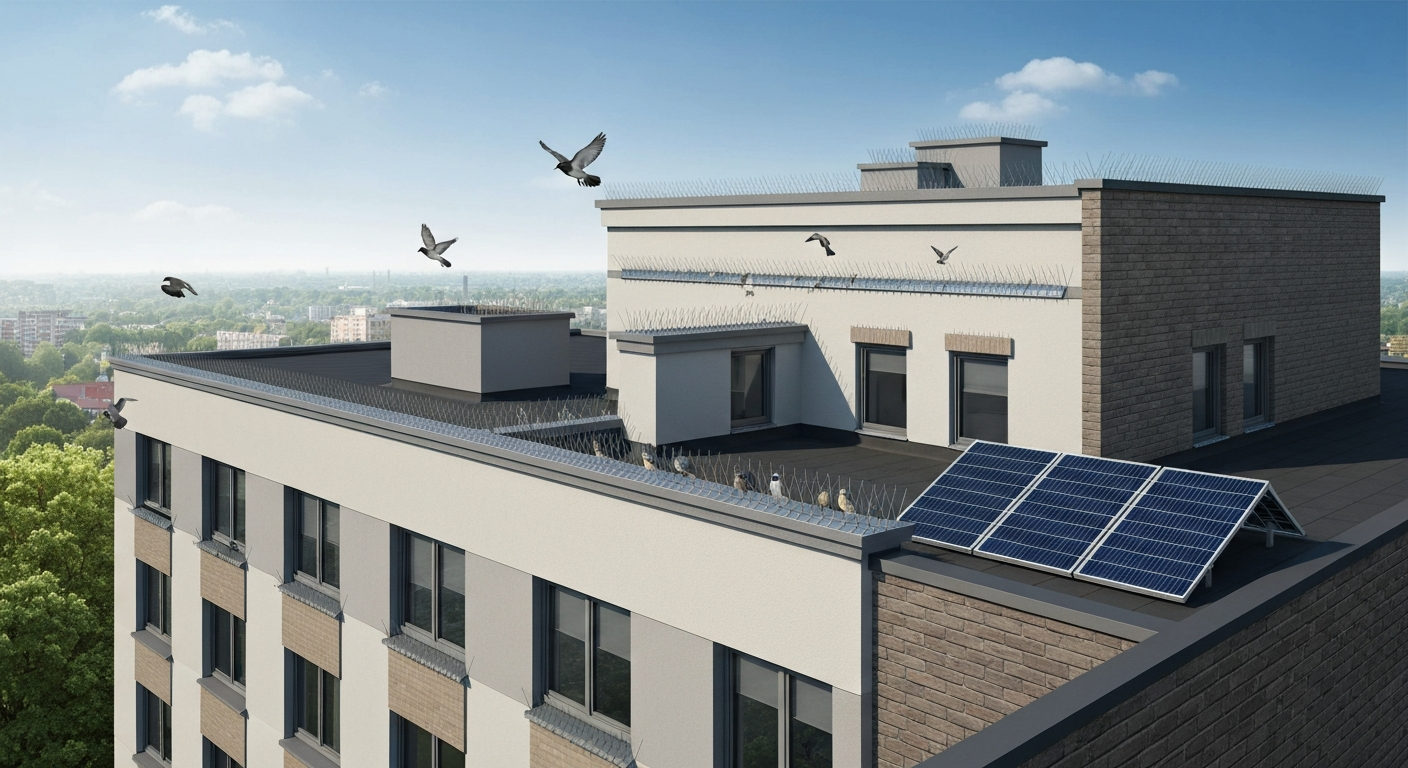
How bird spikes actually stop birds
When a bird tries to land on a spike-protected surface, it either gets an uncomfortable light contact from the pin tips or simply can't find a stable spot to grip. The spikes don't stab or trap the bird; they make the surface impractical to use. The bird gives up and leaves.
Spike design is matched to the target species. Narrow, densely-spaced pins (around 25 to 35 mm tall) are used for small perching birds like starlings and sparrows. Medium pins (around 50 mm) handle pigeons. Taller, heavier prongs (75 mm or more) are needed for larger birds like gulls. Using the wrong size for the species is one of the most common reasons spikes stop working, so species identification matters before you buy.
Coverage continuity is just as important as pin height. Manufacturers consistently recommend overlapping strip sections and capping the ends of ledges. If you leave a gap even 10 to 15 cm wide, a pigeon will find it and use it as a landing point. Full, unbroken coverage along the entire run is what makes a spike installation effective.
Plastic vs metal: which spike material should you use
The two main material options are polycarbonate or PVC (plastic) spikes and stainless steel spikes. Each has a real-world case where it makes more sense. Here's a straight comparison:
| Feature | Plastic (Polycarbonate / PVC) | Stainless Steel (302, 304, 316 grade) |
|---|---|---|
| Durability | UV stabilized but can become brittle in extreme sun and cold over time | Highly resistant to UV, heat, cold, and corrosion; typically lasts decades |
| Lifespan | Shorter; manufacturer claims vary by climate | 10-year+ warranties common; multi-decade service life reported |
| Weight | Very light; easier to handle and position | Heavier; more robust feel on installation |
| Appearance | Less visible; often clear or beige; blends with masonry and light surfaces | More visible silver/chrome finish; clean and professional on commercial buildings |
| Cost | Lower upfront cost | Higher upfront cost, better long-term value |
| Best for | Low-traffic residential ledges, fences, areas with moderate sun | Rooftops, commercial buildings, coastal properties, high-UV or salt-air environments |
| Adhesive compatibility | Bonds well with standard silicone construction adhesive | Bonds well; also accepts screws and rivets through mounting holes |
My recommendation: if you're protecting a residential fence top or a shaded patio ledge and cost is a concern, UV-stabilized polycarbonate spikes are a reasonable choice. For anything on an exposed rooftop, a commercial facade, or a coastal property, stainless steel is worth the extra spend. The all-stainless designs (steel pins on a steel base rather than a plastic base) are the most durable option where UV degradation of the base strip is a concern.
Recognizing spike types and choosing the right product
Strip lengths are typically around 36 inches (0.9 m) per section. Pin heights range from roughly 25 mm up to 75 mm or more. Look at the product datasheet and check three things: pin height, pin spacing (density), and base width. A narrow base strip (around 50 mm wide) is suited for thin ledges. A wider base covers wider surfaces and can also protect the area behind the pins.
Before buying, identify the main bird species causing problems and measure the ledge or surface width. Then match the pin height to the species (using the size guide above) and confirm the base width fits the surface. Some products come in multiple base widths and can be joined side-by-side on very wide ledges. Don't rely on a single product for every spot on a building: a parapet ledge and a gutter need different approaches, and the pin height for pigeons won't deter a determined gull.
Where bird spikes can and should be installed
Spikes work on any surface where birds habitually land and roost. Some locations are straightforward. Others require extra thought around fixing method, access, and whether the surface can tolerate mechanical fasteners.
Ledges and parapets
Flat or gently sloping ledges on building facades, window sills, and parapet tops are the most common installation site. Adhesive (silicone construction adhesive) is the standard fixing method on masonry, brick, concrete, and painted surfaces. Make sure the surface is clean and dry before bonding. Mechanical screws or rivets through the base strip's pre-drilled holes are used on stone or concrete where adhesive alone may not be reliable long-term.
Roofs
Flat roofs and ridgelines are high-priority roosting spots. On a flat roof, spikes are typically fixed along the parapet coping. On a pitched roof, the ridge is the main target. Use mechanical fasteners where possible here, because adhesive alone can fail when exposed to years of thermal expansion, freeze-thaw cycling, and heavy rain.
Gutters
Gutters and eaves are a common roosting spot for pigeons and starlings. Spikes on gutters need to be positioned carefully to avoid blocking water flow. Narrow-base strips placed along the outer gutter lip (facing upward) are the most effective approach without restricting drainage. Clip-on mounting systems are useful here because they avoid drilling holes through the gutter that could create leaks. For step-by-step instructions and the best practices specific to gutter installations, see our guide on how to install bird spikes on gutters.
Fences
Fence tops are one of the most common DIY spike installations. The fixing approach depends on fence material: adhesive works on concrete, masonry, and composite panels; screws or cable ties work on timber; clips work on metal railings. Whether you can legally install spikes on a fence that borders a neighbor's property is worth checking before you start. For practical guidance and local considerations, see can I put bird spikes on my fence.
Balconies
Balcony railings and ledges are particularly frustrating because birds return close to living areas. Spikes are typically fixed to the top rail and any flat ledge behind or around it. For step-by-step guidance and safety tips, see how to install bird spikes on balcony. If the balcony faces a neighbor's property, check local bylaws or your lease terms first.
Solar panels
Under-panel roosting is a common problem. For solar arrays, the industry best practice is to use clamp-on mesh or spike guard systems that attach to the panel frame without drilling into the module or racking. Drilling into frames or using aggressive adhesives risks voiding your panel and racking warranty. Spikes are best placed on the external edges of the array perimeter rather than on the module surfaces themselves.
Vents and pipes
Circular pipes, vent cowls, and sign brackets can all be treated with purpose-made spike collars or by wrapping spike strips around the base. These are fiddly to install neatly but effective when done with continuous coverage.
How well do spikes perform: residential, commercial, and aviation
Residential
For homeowners dealing with pigeons on window sills, fence tops, or roofline ledges, spikes are one of the most reliable long-term options available. Physical exclusion methods (spikes, netting) consistently outperform sensory deterrents like sonic devices or visual scare products in head-to-head comparisons, because birds can habituate to sounds and visual stimuli but can't habituate to a physical barrier. A well-installed spike run on a ledge can last years with minimal maintenance.
Commercial
Property managers and facility teams use stainless steel spikes extensively on signage, building facades, air handling units, and loading dock rooflines. Commercial installations typically use mechanical fasteners for reliability and may combine spikes with bird netting on larger recessed areas. Stainless steel is strongly preferred here for lifespan and appearance. Many commercial products carry 10-year manufacturer warranties. Combined systems (spikes on ledges, netting on recessed bays) give the most complete coverage on complex building facades.
Aviation
At airports, bird strikes are a safety issue, not just a maintenance one. Airports operating under 14 CFR Part 139 (in the U.S.) are required to have wildlife hazard management plans (WHMPs) and must act immediately when wildlife hazards are identified. The FAA and Airport Cooperative Research Program (ACRP) guidance treats physical exclusion (including spikes and netting in specific contexts) as part of a broader integrated strategy alongside habitat modification and other non-lethal methods. See Wildlife Regulations, Guidance, and Resources, Federal Aviation Administration (FAA) for advisory circulars and airport guidance on wildlife hazard management plans, qualified wildlife biologists, and habitat‑management and physical exclusion measures blank" rel="noopener noreferrer">Wildlife Regulations, Guidance, and Resources — Federal Aviation Administration (FAA). See Habitat Management to Deter Wildlife at Airports, ACRP Synthesis 52 (National Academies/TRB) for guidance that treats physical exclusion and habitat modification as complementary measures within airport wildlife hazard management programs Habitat Management to Deter Wildlife at Airports — ACRP Synthesis 52 (National Academies/TRB). Spikes alone are not sufficient at an airport and must be deployed as part of an evidence-based WHMP developed with a qualified wildlife biologist.
Legal, safety, and ethical considerations
Wildlife law
In the U.S., the Migratory Bird Treaty Act (MBTA) protects most native bird species. Non-lethal deterrents like blunt-ended spikes are generally legal and permissible. What you cannot do without a depredation permit is disturb, remove, or destroy active nests or eggs of protected species. This means timing matters: if pigeons have already nested on a ledge, you may need to wait until the nest is vacated before cleaning the surface and installing spikes.
In the UK, the Wildlife and Countryside Act 1981 similarly protects wild birds, nests, and eggs. UK pest control guidance (including RSPCA and BPCA recommendations) strongly supports blunt-ended spikes as a humane deterrent, but installation should be timed outside the breeding season where possible, and any action that traps, injures, or destroys an active nest is unlicensed and illegal.
Building codes and fence rules
For residential fence installations, most local jurisdictions don't specifically regulate bird spikes, but there can be restrictions on what you attach to a shared boundary fence. If the fence belongs to your neighbor, you generally need their permission. Some homeowner associations (HOAs) also restrict what can be affixed to exterior surfaces, so check your local rules before buying product.
Working at height
Rooftop and upper-facade installations involve real fall risk. OSHA standards (29 CFR 1926.500 to .502) require fall protection for unprotected edges and sides at 6 feet or higher in construction contexts. That means guardrails, safety nets, or a personal fall arrest system. For a homeowner cleaning a first-floor ledge from a step ladder, the risk is lower but still worth assessing. If you're not confident working at the required height safely, hire a professional installer.
Electrical safety around solar panels
Working near energized PV arrays carries electrical hazard. OSHA and NFPA 70E electrical safety practices require identifying all energized sources (utility, PV, battery, generator) before working near them. If you're installing spikes around the perimeter of a rooftop solar array, follow lockout/tagout (LOTO) procedures under OSHA 29 CFR 1910.147, or have the array isolated by a qualified electrician before you start. Don't skip this step.
Tools, adhesives, and fasteners: what to have ready before you start
The right preparation makes installation faster and the result more durable. What you'll need varies by surface and spike type, but the list below covers the common scenarios.
Core tools for any installation
- Tape measure and pencil or chalk line for marking out coverage runs
- Wire brush, stiff broom, or scraper to clean debris and old droppings from the surface
- Surface cleaning spray or diluted disinfectant (bird droppings can carry pathogens; wear gloves and a dust mask)
- Tin snips or a hacksaw to cut spike strips to length
- Caulking gun if using tube adhesive
Adhesive installations (masonry, brick, concrete, painted surfaces, wood)
- Neutral-cure silicone construction adhesive or polyurethane adhesive (check spike manufacturer recommendations; some products specify approved adhesives)
- Degreaser or isopropyl alcohol for wiping the bonding surface
- Masking tape to hold strips in position while adhesive cures
- Gloves and eye protection
Mechanical fastener installations (concrete, stone, metal, tile)
- Stainless steel screws or rivets matched to the spike strip's pre-drilled holes
- Masonry drill bit and hammer drill if fixing into concrete or brick
- Rivet gun if using pop rivets
- Screwdriver or impact driver
Clip-on and clamp systems (gutters, railings, solar panel frames)
- Manufacturer-specific mounting clips or clamps (confirm compatibility with your gutter or frame profile before ordering)
- Stainless steel cable ties as supplementary anchors on round surfaces
- Pliers for tightening ties or bending clips
Safety equipment (especially for elevated work)
- Sturdy, stable ladder rated for your weight plus tools
- Non-slip footwear
- Personal fall arrest harness and anchor point for roof work above 6 feet
- Thick gloves (spike pins are blunt, but cut steel edges on trimmed strips are sharp)
- Dust mask and safety glasses when cleaning old droppings
Once spikes are installed, periodic inspection every 6 to 12 months is worthwhile. Check that adhesive hasn't lifted at the edges, that pin rows are intact and haven't been crushed (for example by roof maintenance traffic), and that no debris has accumulated at the base of the strips to create a new flat roosting surface. If sections have been damaged or have lifted, prompt repair keeps the whole installation effective. For step-by-step guidance on repairing and securing loose or damaged strips, see how to fix bird spikes. If you're finding that spikes installed correctly are still not deterring birds, it's worth reviewing whether you have continuous coverage with no gaps, whether the pin height matches the target species, and whether birds are using a nearby unprotected surface as an alternative. If you want more troubleshooting steps, see our guide on bird spikes not working for common causes and fixes.
FAQ
What are bird spikes on a building and what is their purpose?
Bird spikes (also called pigeon or anti‑roosting spikes) are strips with rows of blunt-ended pins made from stainless steel or UV-stabilized polymer mounted on a base. They deny birds a stable landing or roosting area so birds move elsewhere without being injured when installed and maintained correctly.
How do bird spikes work and what species are they best for?
Spikes remove stable footing: when a bird tries to land it encounters uneven, uncomfortable contact and will leave. Spike height and pin density are matched to species: short/dense spikes for small songbirds/starlings, mid-height for pigeons, taller/heavier prongs for larger birds like gulls.
What materials are bird spikes made from and how do they compare (plastic vs metal)?
Common builds: stainless steel pins with either a polymer (PVC/polycarbonate) or metal base, or complete stainless assemblies. Stainless steel resists UV, heat and corrosion and lasts longest (often multi‑decade with warranty). Polymer-base products are lighter and cheaper but can become brittle under strong sun/heat and typically have shorter claimed lifespans; choose UV-stabilized polymer for sunny locations.
Where on buildings can bird spikes be installed effectively?
Typical locations: window and roof ledges, parapets, signs, fascia, pipes, vents, balustrades, fences and the outer edges of canopies. Spike use on solar panel frames, gutters and some historic fabric requires special methods to avoid damage or warranty issues—do not place spikes on module surfaces.
Can I put spikes on a fence or the top of a fence?
Yes—spikes are commonly installed on fence tops and flat railings to prevent perching. Use narrow base spikes sized to the fence width or vendor-supplied fence-mount spike strips. Ensure mounting is secure and legal locally; avoid sharp, protruding installations that could injure people or pets and check municipal ordinances.
Are bird spikes legal and are there safety or wildlife protection rules to follow?
Non‑lethal deterrents like blunt-ended spikes are generally legal, but many jurisdictions protect birds, nests and eggs (e.g., MBTA, Wildlife and Countryside Act). Do not remove or destroy active nests or eggs without authorization; avoid installations that could injure birds or trap chicks. In aviation settings follow FAA/airport wildlife hazard guidance and coordinate with a wildlife biologist or airport authority.
Next Articles
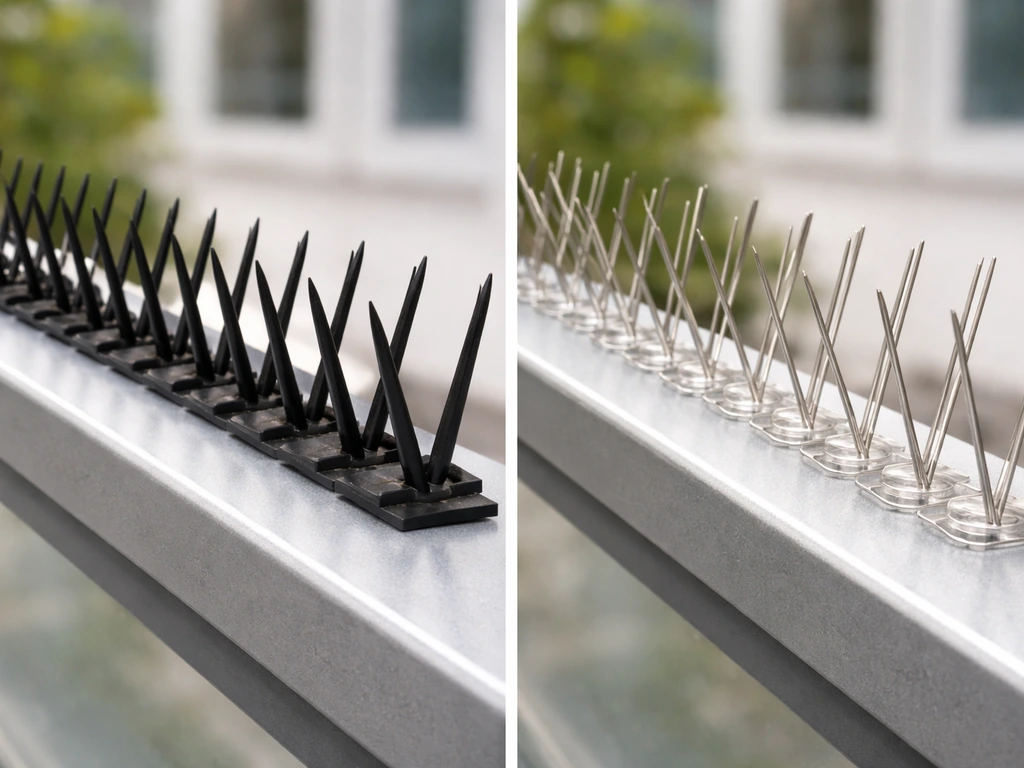
Bird Spikes Plastic vs Metal: Which Works Better Today
Compare plastic vs metal bird spikes for perching and roosting. See durability, installation, safety, and best-scenario
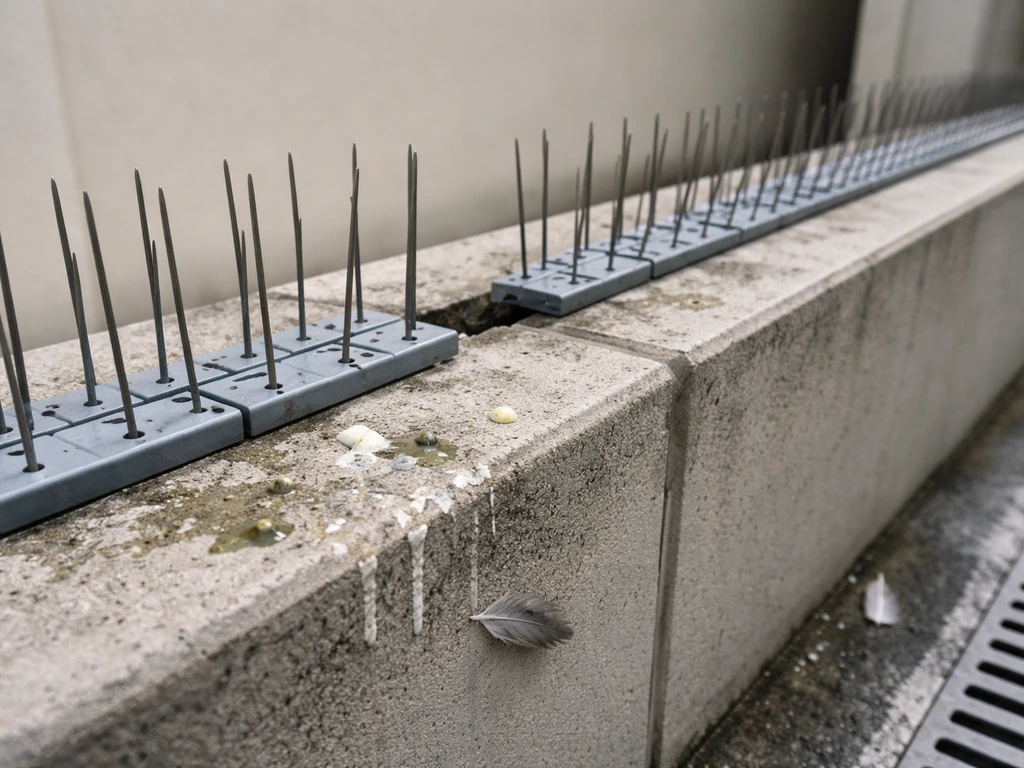
Bird spikes not working: Troubleshooting and fixes
Fix bird spikes not working: diagnose gaps, mounting, spacing, coverage, and add legal humane alternatives fast.
How to Avoid Bird Attack Drone: Practical Safety Checklist
Practical, humane steps to reduce bird–drone collisions: preflight checks, deterrents, tactics, and legal guidance.