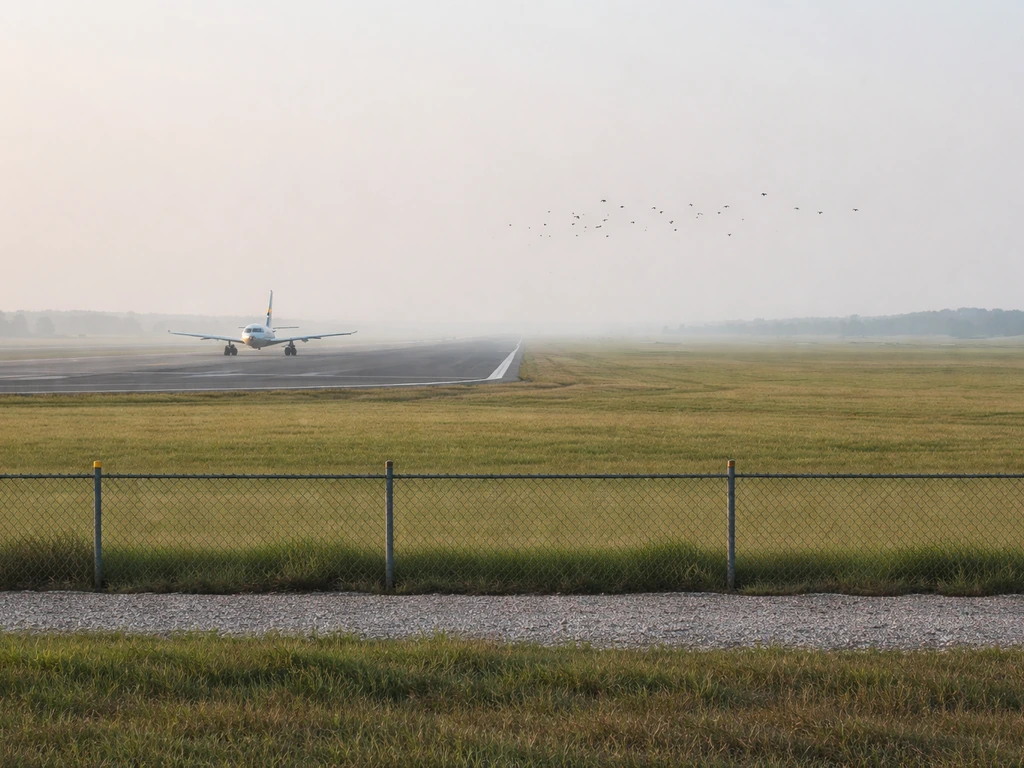
The best bird strike prevention combines removing what attracts birds in the first place with physical exclusion barriers, then layering in deterrents to keep persistent birds away. No single product does the job on its own. To prevent bird strikes, use an integrated management approach rather than relying on one method how to prevent bird strikes. The FAA, USDA-APHIS, and every serious wildlife hazard management program say the same thing: integrated management, meaning multiple methods working together, is what actually works long-term.
Best Bird Strike Prevention: Practical Steps That Work

Marcus Weatherby
20 May 2026
Understanding bird strikes and what attracts birds
A bird strike happens when a bird collides with a moving aircraft, a building, a window, or any structure in a flight path. At airports, this prevention work is specifically designed to reduce bird strikes by discouraging birds from entering flight paths prevent bird strikes. In aviation, the consequences can be severe: engine ingestion, airframe damage, or worse. Near homes and facilities, the harm falls on the birds themselves, with glass windows being one of the leading causes of bird deaths worldwide. Either way, the physics are the same: birds don't perceive certain surfaces or spaces as hazards, so they fly straight into them.
Three bird groups account for about 75% of reported aviation strikes in the U.S.: waterfowl at 31%, gulls at 26%, and raptors at 18%. That matters because each group is drawn to different attractants. Waterfowl want open water and wetlands. Gulls follow food waste and landfills. Raptors come where prey animals are plentiful, like open grassy fields full of rodents. About 54% of bird strikes happen between July and October, driven by fledging activity and fall migration. If you have a known bird problem, those months are when you need your prevention systems fully in place, not when you start thinking about it.
Common attractants you can actually control include standing water, exposed food waste, dense low ground cover that shelters small animals, berry-producing vegetation, open dumpsters, flat reflective roofing that mimics water, and poorly managed grass. Near airfields, FAA guidance in AC 150/5200-33C specifically addresses land uses near airports that pull hazardous wildlife into flight paths. The same principles apply to any facility where bird collisions are a risk.
Best prevention strategy: remove attractants and block access
Start here before spending money on deterrents. If you skip this step, you're fighting birds that have a genuine reason to be there, and no deterrent holds up against a motivated flock indefinitely. Habitat manipulation, which the FAA calls "habitat deterrence," means making the environment around your building, airfield, or facility simply less appealing to hazardous wildlife.
Walk the site and audit every attractant. Cover or drain standing water where possible. Use trash containers with locking lids. Cut grass to the right height: short turf (under 6-8 inches) is less attractive to many ground-feeding species, while excessively long grass shelters rodents that bring raptors.
Remove berry bushes and fruiting trees near high-risk zones. Cover compost piles. Fix leaking pipes or HVAC condensation drains. If you're near an airfield or helipad, FAA guidelines recommend maintaining separation distances between wildlife attractants and aircraft movement areas, and those distance thresholds are specific to the type of attractant.
FAA AC 150/5200-33B also provides separation-distance recommendations between hazardous wildlife attractants and aircraft movement and parking or loading areas when attractants could draw hazardous wildlife into flight patterns separation distances between wildlife attractants and aircraft movement areas.
Once the obvious attractants are gone, the goal shifts to blocking physical access to the spots birds most want to use: ledges, rooftops, open water features, loading docks, and building recesses. That's where exclusion hardware comes in.
Physical exclusion options by location
Physical exclusion is the most reliable long-term method available. It works by simply removing the option to land or roost. USDA-APHIS lists netting, wire mesh, overhead wire systems, and anti-perching devices as the core exclusion toolkit for wildlife damage management. Here's how they break down by location.
Roofs and ledges
Bird spikes are the go-to for ledges, parapets, signage, and HVAC units. They don't harm birds but make landing uncomfortable enough that most birds move on. Use stainless steel spikes for durability; plastic versions degrade faster outdoors. For flat roofs where large flocks roost, bird wire systems (tensioned stainless steel wire on posts) are more low-profile and work well for pigeons and gulls. Install them every 4-6 inches across the landing surface.
Windows and glass surfaces
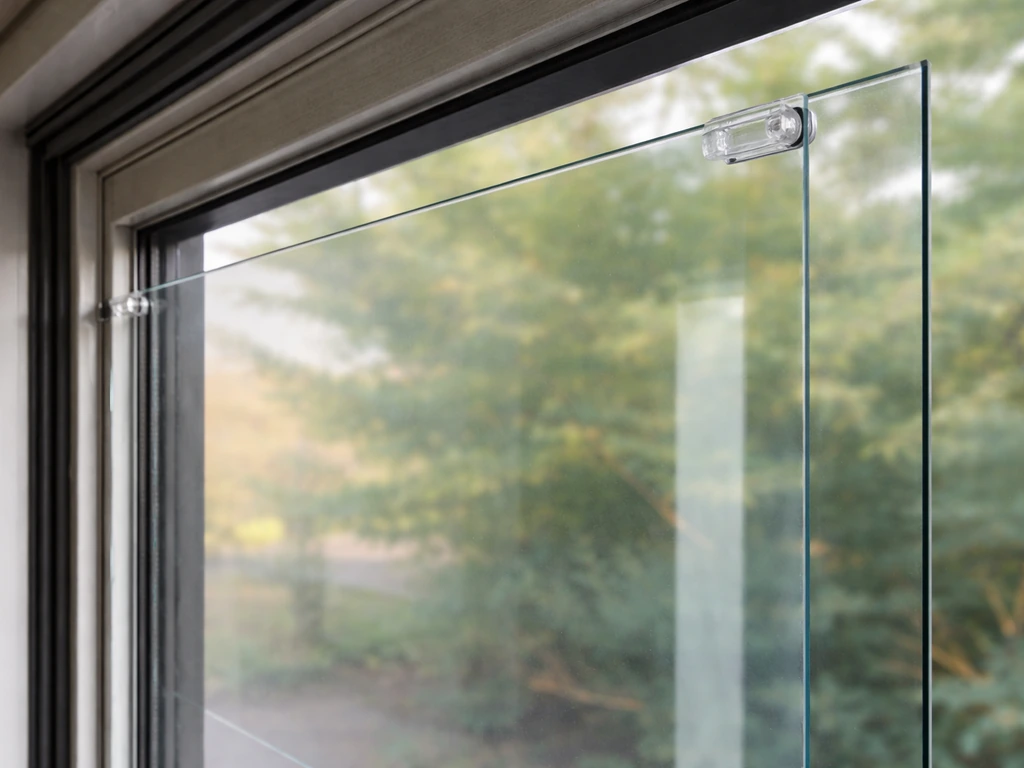
Collision-prevention window film or external netting mounted a few inches from the glass surface are the most effective solutions. The netting acts as a buffer zone: birds hit the net, not the glass, and bounce away unharmed. UV-reflective window treatments work well too, because birds can see the UV spectrum and perceive the treated glass as a solid obstacle. Spacing external screens or netting 2-3 inches from the glass surface matters; the gap is what makes it effective.
Patios, gardens, and pools
Overhead netting stretched across open areas, particularly around ponds, pools, and garden beds, physically blocks waterfowl and other birds from landing. For smaller areas, mesh netting staked around garden beds protects crops. Pool covers eliminate the open water signal that draws waterfowl. For patios and outdoor dining areas near commercial facilities, overhead wire grid systems create an invisible-to-humans lattice that birds avoid.
Airfield perimeters and large open areas
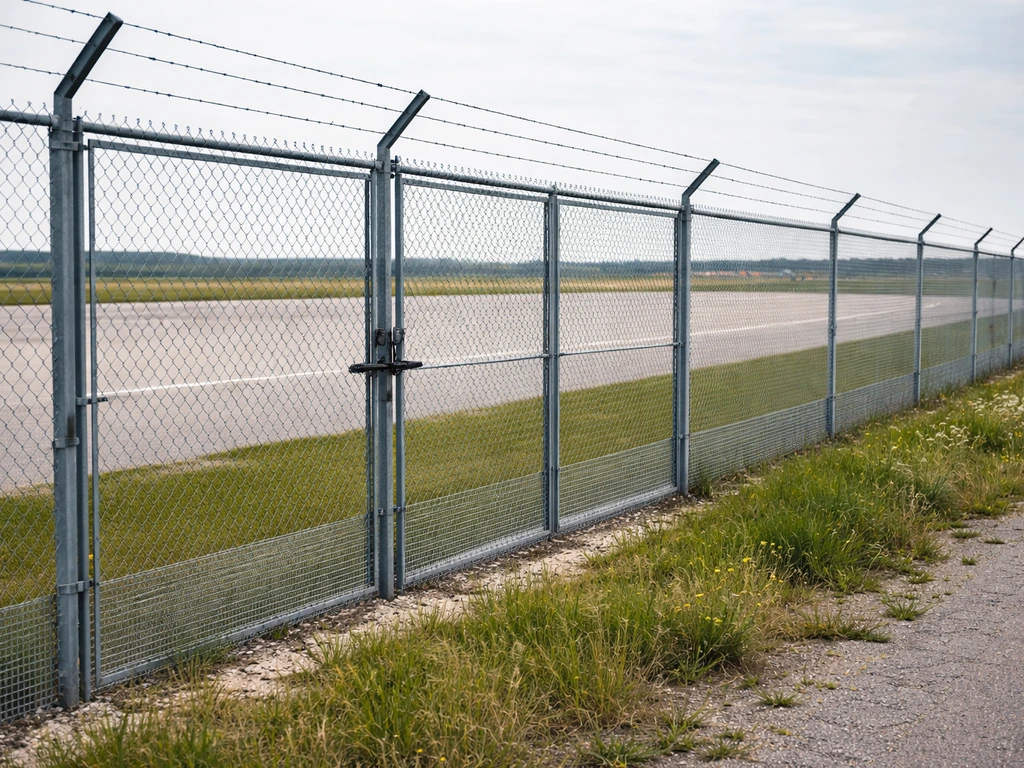
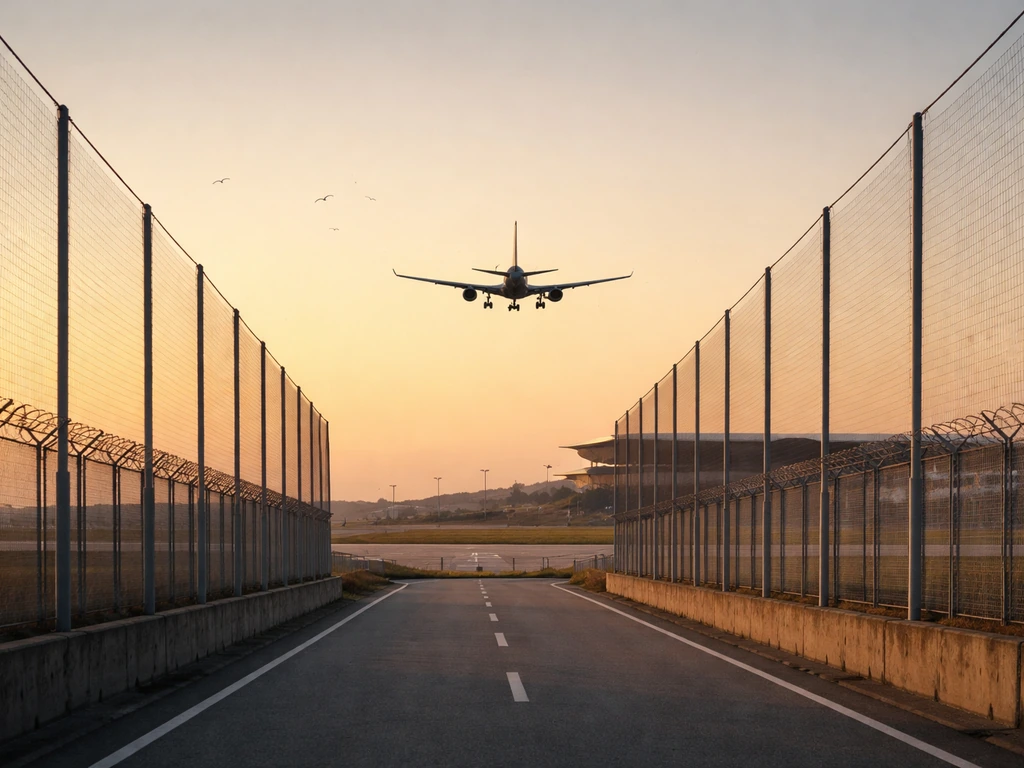
Perimeter wildlife exclusion fencing is a core component of airport wildlife hazard management plans, and the FAA has issued over $400 million in Airport Improvement Program grants for projects including upgraded perimeter fencing alongside other management tools. For general aviation airports and helipads, the National Academies guidebook recommends fencing as a foundational step before layering in active deterrents.
| Location | Best Physical Exclusion Method | Notes |
|---|---|---|
| Ledges / parapets | Stainless steel bird spikes | Cover the full landing surface; gaps defeat the purpose |
| Flat rooftops | Tensioned wire systems or netting | Wire is lower profile; netting for heavy-use areas |
| Windows / glass | External netting or UV film | Net must have a 2-3 inch gap from the glass |
| Pools / ponds | Pool covers or overhead netting | Eliminates open water signal for waterfowl |
| Patios / courtyards | Overhead wire grid | Works well for pigeons and gulls |
| Airfield perimeters | Wildlife exclusion fencing | Follow FAA AC 150/5200-33C specifications |
Sensory and behavioral deterrents: what works and how to avoid habituation
Deterrents change bird behavior without blocking access. They're useful as a layer on top of exclusion, but almost never effective on their own over the long term. The critical problem with deterrents is habituation: birds figure out pretty quickly that the spinning owl or the flashing light poses no real threat, and they start ignoring it. Rotating methods and combining multiple deterrent types is the only way to slow that process down.
Visual deterrents
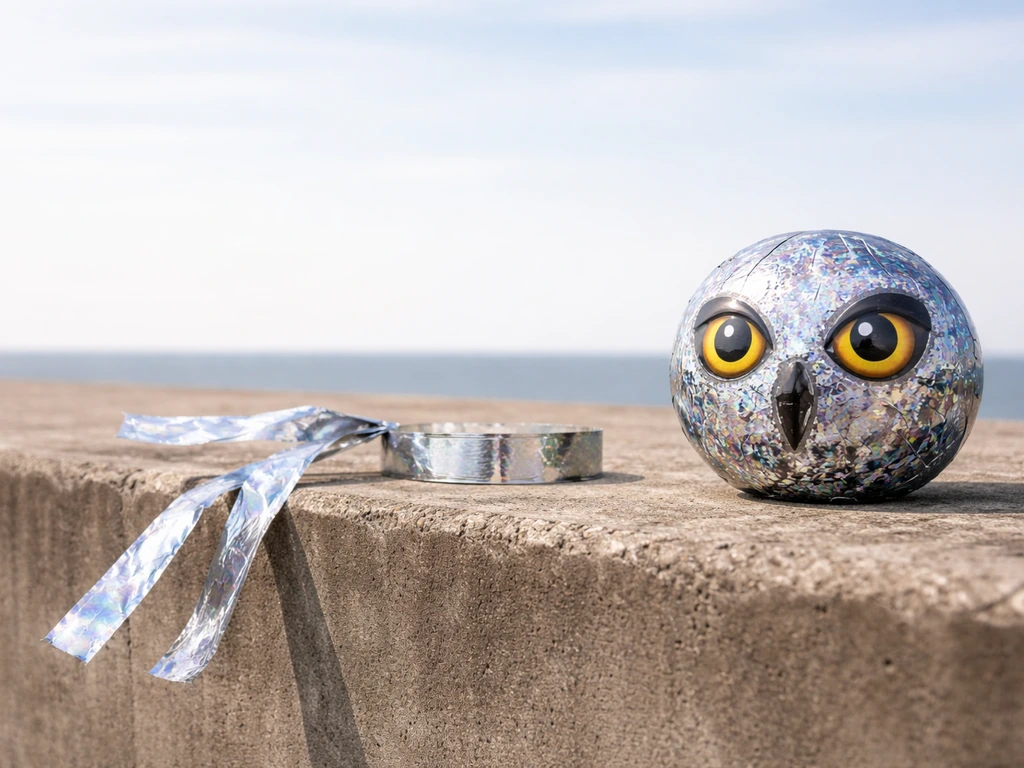
Reflective tape, Mylar ribbon, predator decoys, and scare balloons with eye patterns all work short-term. The National Academies' guidebook for aviation airports explicitly notes these show only short-term effectiveness and are not appropriate as standalone long-term solutions. Move them regularly, at least every few days, and combine them with other methods. Predator kite systems (hawk-shaped kites on poles) tend to hold effectiveness slightly longer than static decoys because they move naturally.
Sound deterrents
Bioacoustic systems that broadcast species-specific distress calls or predator calls are more effective than generic noise makers. Propane cannons work well for open fields and airfield perimeters but are obviously unsuitable near residential areas. Pyrotechnic launchers (like pistol-launched bangers and screamer rounds) are used at airports and larger facilities, with FAA Airport Improvement Program grants specifically funding pyrotechnic equipment for wildlife hazing. Whatever sound system you use, vary the timing and frequency to slow habituation.
Ultrasonic devices
Skip them. The FAA's wildlife hazard management manual is direct on this point: ultrasonic devices have not proven to be effective bird repellents. Birds don't hear in the same ultrasonic range as rodents, and the devices marketed for bird control simply don't perform. Spending money here is spending money on something that won't work.
Lighting
Reducing unnecessary lighting near sensitive areas at night lowers the attraction for insects, which brings fewer insect-eating birds. For window strikes, turning off interior lights during migration season (July through November, especially) dramatically reduces collisions because illuminated buildings disorient nocturnal migrants. During migration season between July and November, AOPA notes that avoiding known risk areas and prioritizing prevention during these months can dramatically reduce collisions. Some facilities use motion-activated lighting rather than constant illumination for this reason.
Laser deterrents and falconry
Handheld laser devices can be effective for hazing birds from fields and water bodies, but near any airfield or flight path, laser use has serious restrictions. The FAA requires notice and coordination for outdoor laser operations under AC 70-1B, and pointing a laser into airspace where aircraft operate carries real legal risk. Don't use lasers near airfields without going through the proper FAA notification process first. Falconry programs, where trained raptors actively patrol and displace pest birds, are used at major airports and large facilities. They work well but require certified professionals and are a significant operational commitment.
Chemical repellents: where they fit and what you need to know
Chemical repellents are a legitimate tool in specific situations but not a general solution. Transport Canada's wildlife management guidance is clear that chemical repellents may be effective in specific applications, but broad reliance on them is not supported. The main categories are taste aversives, contact repellents, and methyl anthranilate (a grape-derived irritant that affects birds' mucous membranes and works well on turf and open water areas like golf courses and parks).
Methyl anthranilate is EPA-registered for bird repellent use in the U.S. and is generally considered safe for the environment when applied correctly. It's sprayed on grass, turf, or water surfaces to deter waterfowl and other foraging birds. It needs reapplication after rain. Polybutene gel repellents create a sticky surface on ledges and window sills that birds find uncomfortable to land on. They can trap small birds if applied too thickly, so follow manufacturer guidelines carefully, and be aware they attract dust and debris over time.
Before applying any chemical repellent, check your local and state regulations. Migratory birds in the U.S. are protected under the Migratory Bird Treaty Act, which governs what you can and cannot do to them, and chemical approaches that harm or trap birds can put you in violation. Always verify EPA registration status for any product and follow the label as a legal requirement, not a suggestion. Near aviation facilities, coordinate with airport operations and any relevant regulatory authority before applying chemicals, since runoff and airspace proximity add complexity.
What to do right now if birds are already showing up
If you have an active bird problem today, here's the fastest effective sequence you can deploy without waiting for a full assessment. This isn't a permanent solution, but it interrupts the pattern while you put longer-term measures in place.
- Remove or cover every food and water source you can access immediately: secure trash, cover standing water, pick up fallen fruit or bird seed.
- Put up reflective tape or Mylar ribbon in the areas birds are actively using. Move it every 48-72 hours to delay habituation.
- If birds are hitting windows, apply a temporary UV-pattern window cling or soap the outside of the glass in a grid pattern spaced 2 inches apart. This breaks up the reflection enough to signal an obstacle to approaching birds.
- Use noise deterrents during peak activity times (early morning and late afternoon). A bioacoustic distress call app or device tuned to the species present works better than random noise.
- Block off the most-used roost spots with temporary netting or foil barriers while you source permanent hardware.
- Log what species you're seeing, how many, and at what times. This data helps you choose the right long-term strategy and is required input for any formal wildlife hazard management plan.
If you're near an airfield or helipad, report any unusual bird activity to airport operations immediately. Many airports have wildlife coordinators or staff trained under 14 CFR 139.337, the federal regulation requiring wildlife hazard management programs at certain airports, and they need to know what species and volumes are moving through the area.
Maintenance, monitoring, and when to call in a professional
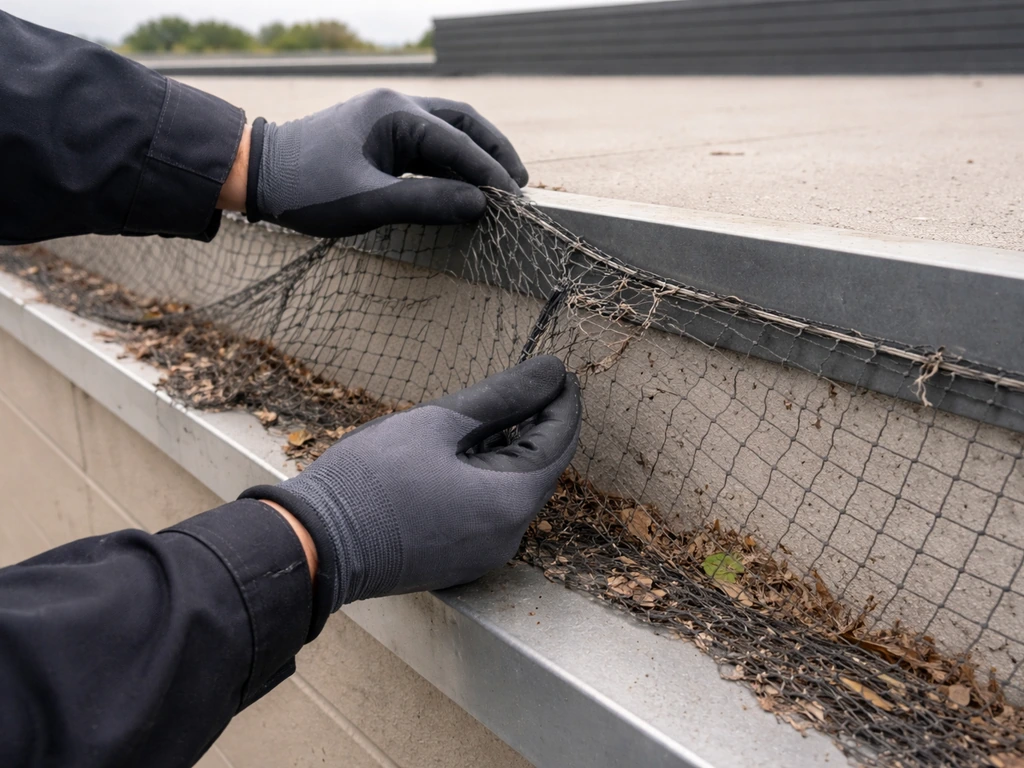
Bird prevention systems degrade. Spikes get clogged with debris. Netting develops tears. Deterrents lose effectiveness as birds habituate. A system that works in June may be failing by September, right when migration pressure peaks. Regular monitoring is the only way to catch this before it becomes a crisis.
Build a simple maintenance schedule. Walk the site monthly at minimum, quarterly if the problem is low-severity. Look for physical damage to netting and spikes, check that wire tensioning is still correct, replace worn or faded visual deterrents, and rotate the position of any movable items. Keep a log of bird activity: species, numbers, locations, and behaviors. Over a season or two, this data shows you which methods are holding and which need to change.
Major airports use avian radar systems to track bird movement in near real time, feeding that data into active hazing decisions. That level of technology isn't practical for most facilities, but the principle matters: monitoring and adaptive management, adjusting your approach based on what's actually happening, is what separates programs that work from programs that fail.
Call a professional when the problem persists despite your interventions, when you're dealing with a protected species that requires a permit or specific expertise, or when the site is adjacent to an airfield and you need a formal wildlife hazard assessment or management plan. Under FAA regulations, wildlife hazard management plans at certificated airports must be developed with input from a qualified wildlife damage management biologist. USDA-APHIS Wildlife Services provides exactly this kind of scientific and operational support, and they partner directly with FAA and airport operators. If you're a general aviation airport operator, the National Academies guidebook for general aviation airports is a practical starting point before engaging formal consultants.
- Inspect all physical barriers (spikes, netting, wire) monthly for damage, debris, or gaps
- Rotate and reposition visual deterrents every 2-4 weeks to limit habituation
- Reapply chemical repellents after significant rainfall or per product label schedule
- Log bird activity (species, numbers, location, time) at least weekly during July-October
- Review and update your deterrent mix at the start of each migration season
- Remove attractants on an ongoing basis: water, food, and shelter sources don't stay managed on their own
- Coordinate with airport operations if your site is near flight paths before adding any deterrent systems
Bird strike prevention isn't a one-time project. The sites that manage it successfully treat it the same way they treat fire safety: standard procedures, regular checks, and trained people responsible for keeping it current. Start with attractant removal and physical exclusion, add deterrents as a rotating layer, keep records, and adjust based on what you observe.
This integrated approach also helps prevent bird deaths from wind turbines by removing attractants and limiting access to high-risk areas Start with attractant removal and physical exclusion, add deterrents as a rotating layer. Integrated management is also what is already being done to prevent bird collisions by combining multiple methods over time.
If you want a comprehensive approach, follow this process to prevent bird strikes on aircraft by removing attractants and using physical barriers plus layered deterrents how to prevent bird strikes on aircraft. That approach works. Airports prevent bird strikes by removing what attracts birds and using physical exclusion plus layered deterrents so birds cannot safely land or roost near aircraft. Relying on a single product or set-it-and-forget-it device does not.
FAQ
Should I buy deterrents first, or start with removing attractants?
If you remove attractants first, birds will often stop using the site, which makes exclusion and deterrents more effective and reduces how much equipment you need. The practical rule is to complete the habitat and waste, standing water, and vegetation audit before ordering spikes, netting, or films, because those materials only block access after you have reduced why birds are coming.
Can I rely on scare devices instead of installing exclusion hardware?
No, even the best deterrent layer should not replace physical exclusion for high-risk perching and roosting spots. Birds can habituate quickly to moving or visual scare devices, so exclusion hardware (spikes, mesh, netting, window netting, or screens) is what prevents landings and roosting long-term.
Which prevention method should I choose for windows versus rooftops versus open water?
Start by matching the prevention to the strike type. For window strikes, the most reliable choices are window films or external netting/screens with a small air gap from the glass, because the buffer reduces the chance of impact with the pane. For ledges and parapets, bird spikes are usually the correct geometry. For open water, use pool or pond covers or overhead netting, since the “landing signal” is the water surface itself.
When should I intensify bird strike prevention efforts during the year?
Timing matters. July through October tends to drive higher activity due to fledging and migration, so inspect and reapply your strategy before that window. If your system degrades through summer storms, heat, and debris, it can fail right when risk peaks, so plan maintenance checks early.
How do I know whether my prevention plan is actually working?
Move from reactive to measurable. Track at minimum species, approximate counts, and where birds land or loaf, then correlate those observations with what you installed. If birds persist on one surface, that usually signals a physical access gap, damaged netting, or an attractant you missed nearby.
What’s a common mistake that causes prevention systems to fail even after installation?
Yes, because some fixes can fail if birds find alternate roost points. For example, if you spike only one edge of a roof, birds may shift to nearby ledges or sign faces. Do a site-wide walk and treat every “preferred landing” surface in the same season, not just the most visible problem area.
How often should I inspect or repair bird exclusion systems?
For spikes and netting, you need to maintain coverage lines without gaps, and keep tension correct so netting does not sag into a landing-friendly position. Also expect weather wear, debris buildup, and UV degradation over time, so build in inspections and replacement triggers rather than assuming the system is permanent.
Why does the spacing matter for external window netting or screens?
External netting or screens for glass should be installed with the correct spacing from the window, because the buffer zone is what keeps birds from hitting the pane directly. If it is mounted flush or too close, the protection can be reduced, and you may still see collisions.
Do ultrasonic bird repellent devices work?
Avoid relying on ultrasonic units marketed for birds. Birds do not respond reliably to ultrasound the way rodents do, so these devices usually fail to produce durable deterrence and can waste budget that would be better spent on exclusion or habitat management.
Is it safe to use handheld lasers to haze birds away from an airfield?
Yes, but only within a tightly controlled legal and safety process. Laser hazing near any flight path can create serious regulatory and safety risk, so use only with proper notice and coordination requirements and never aim into areas where aircraft operate.
Are chemical repellents a good long-term strategy?
Chemical repellents can be effective in narrow, label-specific use cases, but they are not a universal solution. Taste aversives and contact repellents must be applied correctly to the target surfaces, and methyl anthranilate typically requires reapplication after rain. Also confirm local rules and federal protections for migratory birds before choosing any product.
What’s the fastest practical sequence if I have birds causing trouble right now?
Deterrents can sometimes be used to interrupt an active problem while you install longer-term solutions, but treat them as temporary. A common approach is to deploy exclusion and attractant removal immediately, then add deterrents as a short-term bridge, with the plan to remove or rotate them once birds stop exploiting the area.
When should I escalate to a professional instead of adjusting my DIY setup?
If birds keep returning after you have removed attractants and installed appropriate exclusion, you likely have either a damaged system, a missed attractant upstream (such as nearby standing water or food waste), or an alternate landing route. In that case, collect a short behavior log and call in a qualified wildlife damage management professional for a site-specific assessment, especially near airports.
How do lighting changes affect bird strike risk, especially at night?
Reduced lighting can help indirectly by lowering insects, which decreases insect-eating birds. For window strikes, turning off interior lights during peak migration periods can reduce disorientation effects for nocturnal migrants, and motion-activated lighting can limit constant illumination when birds are active.
Next Article
How to Prevent Bird Strikes: Practical Steps and Prevention Plan
Learn how to prevent bird strikes with layered steps, deterrent setup, maintenance, and when to hire pros.