
Bird strikes can't be eliminated entirely, but you can reduce them dramatically with the right layered approach. The core strategy is the same whether you're managing a property near an airport or trying to stop birds from hitting your windows: remove what attracts birds to the area, use physical barriers to block access, and add behavioral deterrents to push birds away from the spots that matter most. Do all three and you'll see a real difference. Skip one and the other two lose effectiveness fast.
How to Prevent Bird Strikes: Practical Steps and Prevention Plan

Marcus Weatherby
7 May 2026
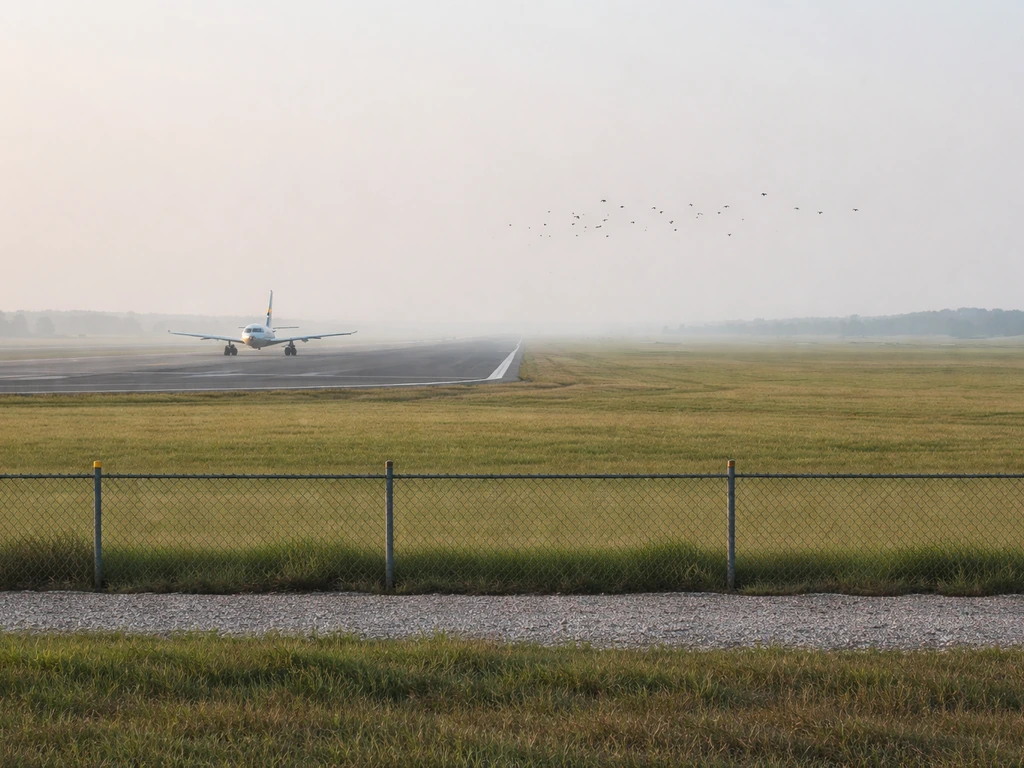
Why bird strikes happen and whether they can be avoided
Birds don't intentionally fly into aircraft or glass. They're reacting to their environment: chasing food, fleeing predators, following flight paths, or simply navigating between roosting and feeding areas. The problem is that runways, glass facades, and open rooftops sit right in the middle of those routes.
In aviation, the FAA has found that blank" rel="noopener noreferrer">about 61% of bird strikes with fixed-wing civil aircraft happen during landing phases (descent, approach, and landing roll), and another 36% during take-off and initial climb. That leaves only about 3% happening en-route at altitude. This tells you where the real risk is concentrated: low and slow, near the ground, exactly where birds are most active.
For buildings, the mechanism is different but the prevention logic is the same. Birds see reflected sky or vegetation in glass and fly straight into it. They roost on ledges and rooftops because those spots offer food, shelter, and water nearby. Fixing the problem means changing what the site offers and what it looks like to an approaching bird.
Can you avoid bird strikes entirely? No. But you can get to a point where strikes are rare rather than routine, and that's the realistic goal for any prevention program.
Spot the risk: where strikes are most likely
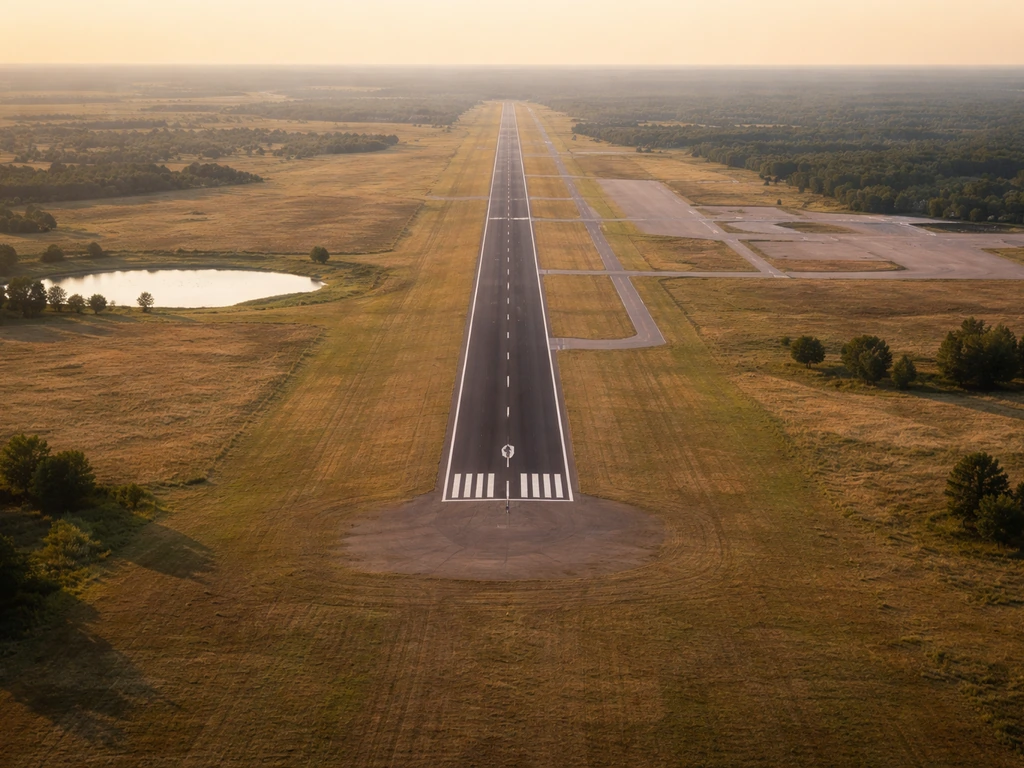
The first step in any prevention effort is figuring out exactly where your exposure is highest. Aviation and buildings have very different risk profiles, and the solutions don't fully overlap.
Aviation environments
Airports and heliports face concentrated risk in approach and departure corridors. FAA guidance under Advisory Circular 150/5200-33C recommends keeping hazardous wildlife attractants at least 10,000 feet from runways at airports serving turbine-powered aircraft, and 5,000 feet for airports serving piston-powered aircraft. The guidance also extends to a 5-mile range covering approach, departure, and circling airspace. If you manage land near an airport, these distances are the benchmark to work from.
The FAA flags specific land uses as incompatible near airports, including putrescible-waste disposal operations, wastewater treatment facilities, artificial marshes, and wetland mitigation that creates waterfowl habitat. If any of these exist on or near your site, that's where you start.
Buildings and structures
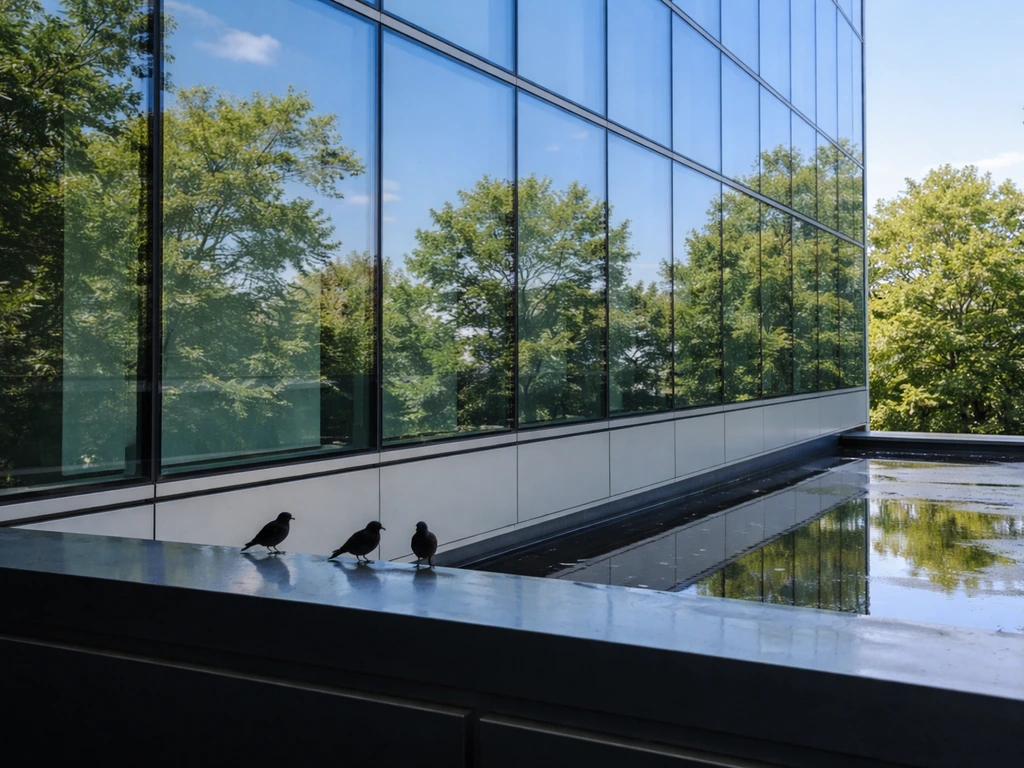
For residential and commercial properties, high-risk zones are large glass surfaces (especially those reflecting sky or trees), flat rooftops with standing water, open ledges at height, solar panel arrays, patios near bird feeders, and any area with food waste or water features. Walk the perimeter of your building and note every ledge, window run, and open eave. Those are your problem spots.
Make the site unattractive: remove food, water, nesting, and roosting cues
Habitat modification is the foundation of any bird prevention program. The National Academies' guidebook for general aviation airports describes habitat modification alongside physical barriers as the two foundations of wildlife hazard management. The same principle applies to a commercial warehouse or a residential patio: if the site offers food, water, and cover, birds will keep coming back no matter what deterrents you add.
The FAA's own guidance frames it plainly: animals are attracted to areas providing their basic living needs. Control the habitat, and you reduce the attraction before you even need a physical deterrent.
Here's what to address first:
- Remove or relocate bird feeders, especially near windows, runways, or high-traffic areas
- Eliminate standing water: fix drainage on flat roofs, empty water features not in use, and fill low spots that collect rainwater
- Secure all food waste and garbage in sealed containers; open dumpsters are a major bird attractant
- Clear vegetation that provides nesting cover close to buildings or runways
- Block access to eaves, roof gaps, and cavities where birds can nest
- Cut back overhanging tree branches that give birds a staging platform near glass or landing zones
- Keep grass on airport perimeters tall enough (8 to 14 inches is a common target) to discourage ground-feeding species without creating cover for rodents that in turn attract raptors
This step is the one most people skip in a hurry to install deterrents. Don't. Deterrents applied over an attractant-rich site lose effectiveness quickly because the reward for birds to push through them is too high.
Physical exclusion and barriers
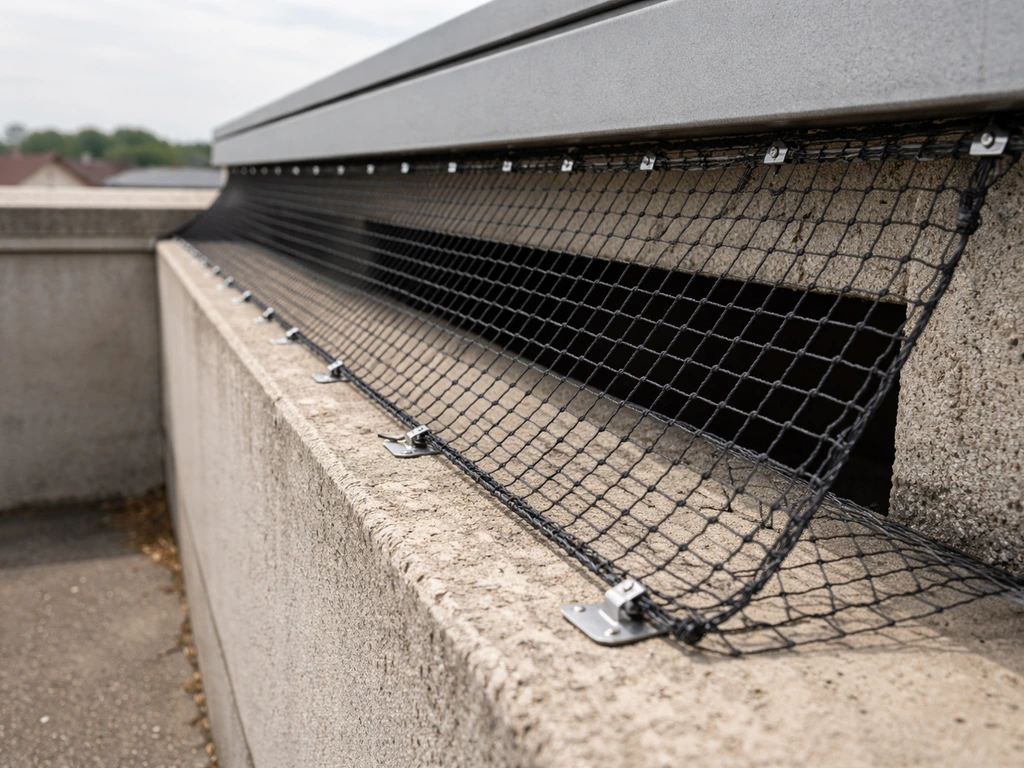
Physical exclusion is the most reliable long-term solution because it doesn't depend on birds being startled or conditioned. You're simply blocking access. For aviation sites, this means fencing, wire grids, and netting over water features. For buildings, it means netting, spikes, wire systems, and window films or screens.
Netting
Netting is one of the most effective exclusion tools available, but installation matters enormously. USDA APHIS guidance specifies that 3/4-inch mesh netting will keep most pest bird species out of protected areas. Larger mesh may let smaller birds through; smaller mesh adds cost without much additional benefit for common pest species.
The critical warning from USDA APHIS: improperly installed netting can create new problems. Loose or sagging sections become ideal nesting platforms. Gaps can trap birds, leading to bird deaths and increased damage as birds try to escape. Always tension netting properly, check edges and attachment points regularly, and inspect for any gaps after storms or seasonal movement.
Spikes and wire systems
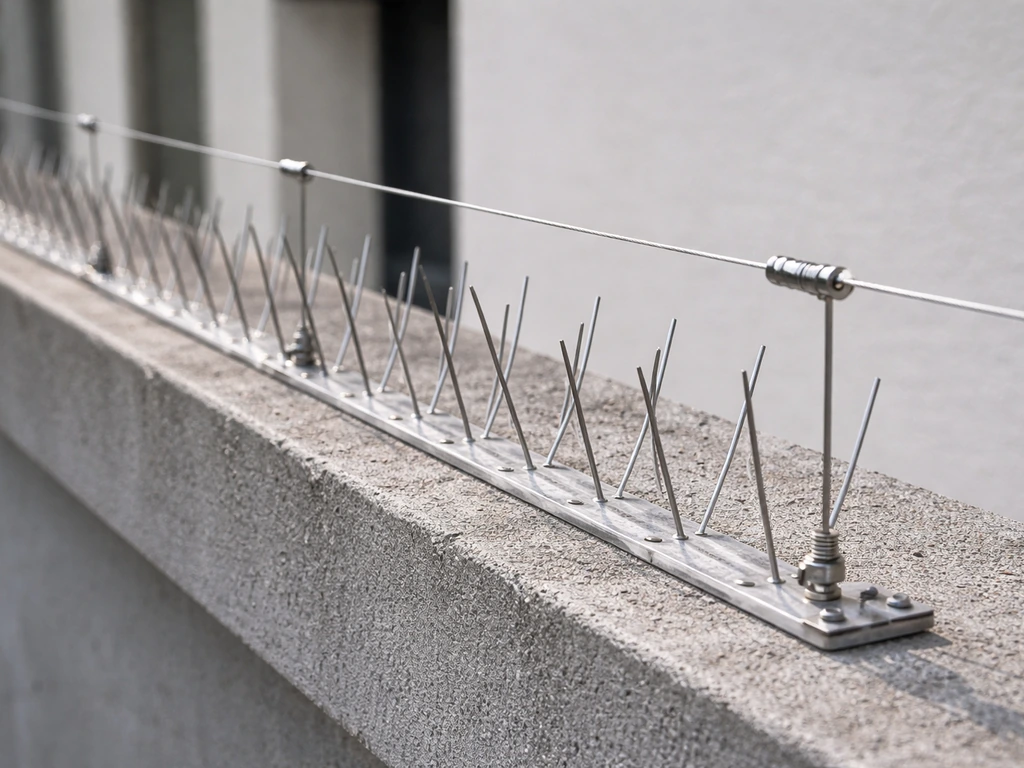
Bird spikes work well on flat ledges, beams, parapets, and signage where pigeons and larger birds roost. They don't harm birds, they just make landing uncomfortable. Install them flush with the surface and cover the full width of the ledge, leaving no narrow strip at the back where a determined bird can still squeeze in.
Wire and monofilament grid systems are a good option for larger open areas, including ponds and flat rooftops. USDA APHIS notes that a 10-foot spacing between lines can be effective for birds with approximately 2-foot wingspans (like gulls or geese). For smaller birds, tighten the grid proportionally. Random or parallel patterns both work; the goal is to interrupt the flight path into the space.
Window treatments for buildings
For glass strikes on buildings, the physical answer is breaking up the reflection or transparency that fools birds. Options include UV-patterned window film (visible to birds but largely invisible to humans), external screens, closely spaced vertical or horizontal tape strips on the outside of glass (spacing of 2 inches vertically or 4 inches horizontally is a common guideline), and fritted or etched glass on new construction.
Deterrents that change bird behavior
Behavioral deterrents work by making a site feel threatening or uncomfortable to birds. They're most effective when combined with habitat modification and physical barriers, and least effective when used alone on a site that still offers strong food or shelter rewards.
Visual deterrents
Visual deterrents include predator decoys (owl or hawk silhouettes), reflective tape or holographic devices, and large predator eye patterns. The main challenge is habituation: birds learn quickly that a static owl on a roof isn't actually dangerous. To slow habituation, move decoys regularly (every few days), combine them with other deterrent types, and choose models that have moving parts or that reflect light unpredictably.
For aviation environments, laser deterrents have gained traction at some airports, particularly for dispersing flocks on runways at dawn and dusk. These require trained operators and careful protocol to avoid safety issues.
Sonic and ultrasonic deterrents
Sonic deterrents broadcast recorded predator calls or distress calls of the target bird species. These can be effective for dispersing flocks from open areas like airfields, parking lots, and rooftops. The key is using species-specific distress calls, rotating the call sequences regularly, and not running the system 24/7 (birds habituate to continuous noise quickly).
Ultrasonic devices are a different story. Research from the McGill University Office for Science and Society describes the evidence for ultrasonic pest repellers as extremely weak, with no proven effective results that these devices work as advertised. Birds don't rely on ultrasonic hearing the way bats or rodents do, so don't waste money on ultrasonic emitters alone. Stick to audible sonic deterrents if you're going the sound route.
Repellents and safety and compliance considerations
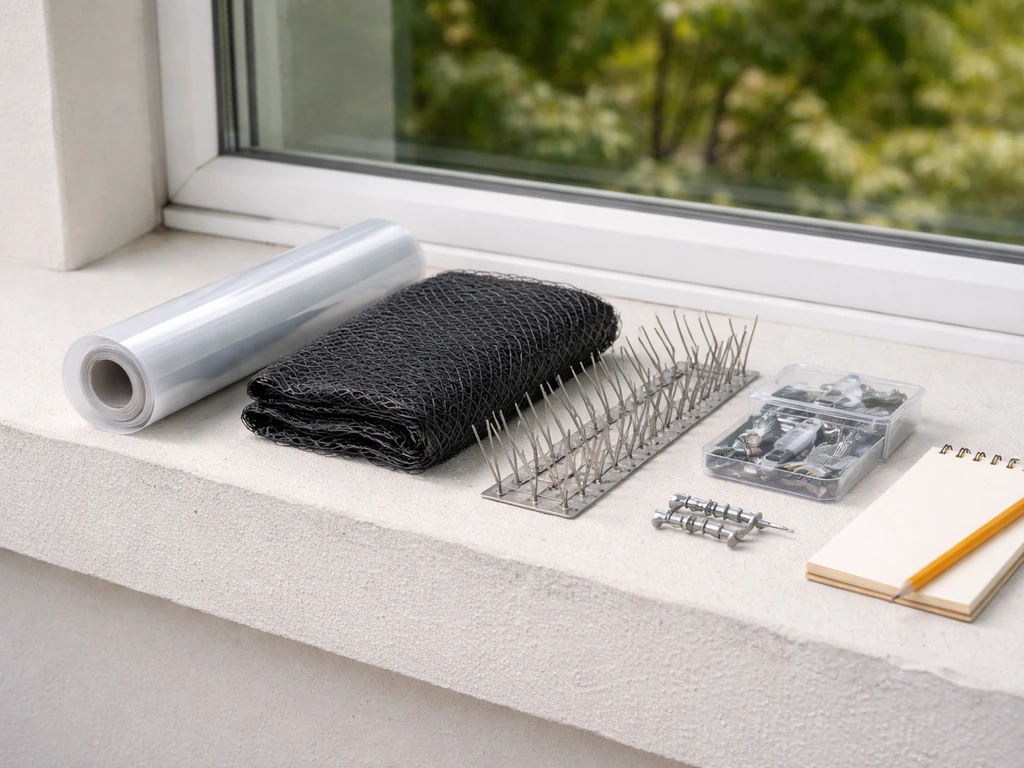
Chemical bird repellents fall into two main categories: tactile repellents (gel or liquid applied to surfaces that birds find uncomfortable to stand on) and food-based aversive conditioners (chemical compounds that cause mild distress when ingested, conditioning birds to avoid the treated area).
Tactile gel repellents can be applied to ledges, beams, and railings. They work best on smaller birds and in dry conditions, but can become messy in heat or collect debris, requiring reapplication every few months. They are generally safe for birds and non-toxic to humans, but avoid applying them where birds are known to nest, as a trapped bird can't escape.
For food-aversive products, check local and federal regulations before applying anything near a water source or in an area with protected species. In the US, some repellents registered under the EPA for bird control have restrictions on where and how they can be applied. Always read the product label and follow it exactly.
On compliance more broadly: if you're working near an airport, FAA Advisory Circular 150/5200-33C is the relevant guidance document. While it's framed as voluntary, it's used as an acceptable means of compliance for Part 139 certificated airports and is recommended for all others receiving federal grant assistance. Even if you're a private landowner near an airport, being aware of these guidance zones matters because attractants on nearby private land can still increase strike risk in approach corridors.
For residential and commercial contexts, check local ordinances before installing certain types of wire systems, netting, or devices that produce noise. Some jurisdictions have noise ordinances that limit sonic deterrent use to daytime hours, and some bird species (especially migratory birds) have additional federal protections under the Migratory Bird Treaty Act that affect what you can and can't do.
Your step-by-step prevention plan
Here's how to put this all together into a practical sequence you can start today: If you are focused on the airport side of prevention, you can use these same steps to understand how do airports prevent bird strikes in approach and departure corridors practical sequence you can start today.
- Do a site walk: identify every location where birds land, roost, nest, or feed on your property. Note what's attracting them (water, food waste, shelter, open ledges).
- Remove attractants first: eliminate standing water, secure waste, clear nesting cover, and take down bird feeders near problem areas.
- Install physical exclusion where it matters most: netting over any open area birds are accessing, spikes or wire on ledges, and window film or external screens on glass surfaces with strike history.
- Add behavioral deterrents as a second layer: use species-specific sonic distress calls on a timer and rotate visual deterrents like predator decoys regularly to slow habituation.
- Consider tactile repellents on remaining problem ledges where netting or spikes aren't practical.
- Check compliance: confirm your chosen methods are legal for your location, species, and proximity to any airfield.
- Set a maintenance schedule: inspect netting and spike installations monthly, reapply gel repellents every 3 to 6 months, and rotate or reposition deterrents every few weeks.
- Document everything: keep a simple log of bird activity, what you installed, and what changed. This helps you identify what's working and supports any professional assessment later.
When to call a professional
DIY measures work well for low-to-moderate bird pressure on straightforward sites. Call in a professional bird control company when: the infestation involves large flocks or multiple species, birds are accessing hard-to-reach structural areas (high glass facades, large roof expanses, complex HVAC equipment), or your initial efforts have had no clear effect after 4 to 6 weeks.
For aviation environments specifically, a formal wildlife hazard assessment conducted by a qualified wildlife biologist is recommended (and required by the FAA for Part 139 airports that have experienced certain wildlife strike thresholds). These assessments evaluate the full site, species present, seasonal patterns, and produce a formal Wildlife Hazard Management Plan with specific action steps.
If you're dealing with a site near an airport or heliport, it's also worth reaching out to the airport's wildlife management coordinator. They often have resources and can flag if your land use is creating a documented increase in strike reports in their area. Prevention at the airport level and prevention on neighboring land genuinely reinforce each other.
| Method | Best for | Effectiveness | Maintenance needed | DIY-friendly |
|---|---|---|---|---|
| Habitat modification | All sites | High (foundational) | Ongoing | Yes |
| Netting (3/4" mesh) | Enclosed areas, rooftops, ponds | Very high | Monthly inspections | Yes, with care |
| Bird spikes | Ledges, beams, parapets | High for large birds | Every 6-12 months | Yes |
| Wire/monofilament grids | Open water, flat roofs, airfields | High for large birds | Seasonal checks | Moderate |
| Window film/screens | Glass facades, residential windows | High for glass strikes | Low | Yes |
| Sonic distress calls | Open areas, airfields, rooftops | Moderate (rotate calls) | Regular rotation | Yes |
| Ultrasonic devices | Any | Not supported by evidence | N/A | N/A |
| Visual deterrents | Supplementary use | Moderate (move regularly) | Every few days | Yes |
| Tactile gel repellents | Ledges, railings | Moderate for small birds | Every 3-6 months | Yes |
The sites that manage bird strikes most successfully don't rely on one single product or method. They layer habitat control, physical exclusion, and behavioral deterrents together, then stay on top of maintenance so the system doesn't quietly stop working. Start with the attractant removal, add physical barriers at your highest-risk spots, and build from there. This is especially important if you're dealing with drones, since bird attacks can escalate quickly when a drone is moving through airspace avoid bird attack with drones. For turbines, the same approach applies: remove nearby food and roosting cues, and use proven turbine-focused deterrence and siting practices to reduce bird collisions. Many airports and property managers already use habitat modification, physical barriers, and behavioral deterrents to reduce bird collisions what is already being done. That's the honest path to meaningful, lasting results. The best bird strike prevention approach combines habitat control, exclusion barriers, and behavior-based deterrents, then keeps them maintained over time.
FAQ
How do I figure out whether my problem is “airport risk” or “building risk”?
Start by mapping where birds are actually behaving. If incidents cluster during morning and evening approaches or departures, prioritize corridor management and wildlife attractant controls on and near your land. If strikes or near-misses are clustered around windows, ledges, or rooftops, treat it as a building-glass and roosting-route issue first (reflection control, exclusion on ledges, and stopping standing water).
What should I do if I cannot remove all attractants like trees, shrubs, or nearby water?
You can’t always eliminate the source, so switch to stronger exclusion at the “landing and roost” points you control. Combine tighter habitat modification (reduce accessible food and reduce open standing water) with physical barriers over the exact surfaces birds use, like ledges, roof edges, and pond access points. Deterrents alone usually fail when food or cover remains easy to reach.
Why do deterrents stop working after a few weeks?
Most failures come from habituation (birds learn nothing harmful happens) or from using deterrents without first removing the reward (food, shelter, water). Move or rotate visual decoys every few days, and always pair behavior tools with habitat modification and real access blocking (netting, screens, spikes, or grid systems) so the bird cannot “solve” the deterrent.
Is netting safe, and how do I avoid making the situation worse?
Netting is effective when it is tensioned correctly and fully covers access points. Avoid loose or sagging sections that can become nesting platforms, and eliminate gaps at edges and attachment points. After storms, seasonal building movement, or HVAC maintenance, do a specific gap inspection, because even small openings can trap birds.
What spacing and mesh size should I use, and how do I choose if I’m not sure of the bird species?
Use mesh size small enough to stop the smallest likely pest species, and tighten grid spacing when targeting smaller birds. If you cannot confidently identify species, start with the conservative design (smaller mesh and tighter grid) for the surfaces that birds most repeatedly land on, since partial protection is worse than none.
Can I use spikes on any surface, like sloped roofs or textured ledges?
Spikes work best on flat or clearly defined ledges where you can install flush coverage across the full landing area. On sloped or irregular surfaces, birds can find alternative footholds or back gaps, so you may need wire grid systems, monofilament lines, or netting instead. The goal is zero continuous “runway” for landing.
What’s the best way to reduce bird-glass collisions beyond generic window film?
Use exterior treatments that actually break up the approach path, since birds often fly toward reflections first. Options include UV-patterned films on the outside, external screens, or closely spaced vertical or horizontal tape strips mounted externally. For new builds or major renovations, fritted or etched glass can reduce long-term exposure without ongoing retrofits.
Do sonic deterrents work for all birds, and when should I avoid them?
Sonic deterrents are most effective when the calls are species-specific and you rotate sequences to reduce habituation, and they should not run continuously 24/7. Avoid using them where you may violate local noise rules, or if nearby protected species and seasons increase compliance constraints. If birds remain present after a short trial, switch quickly to habitat and exclusion measures.
Are ultrasonic pest repellers worth trying?
In most cases, they are not a reliable standalone solution. If you are trying to prevent strikes rather than manage a minor nuisance, prioritize proven methods from habitat control and physical exclusion. If you do test ultrasonic devices, treat it as an optional add-on and measure results against baseline strike or bird activity counts.
How often should I inspect and maintain the prevention system?
Plan for ongoing checks, not a one-time installation. Inspect after storms, high winds, seasonal temperature changes, and any roof or façade work. For exclusion systems, specifically check for sagging, torn netting, loosened anchors, clogged or damaged sensors, and newly formed gaps where birds can re-enter.
When should I stop DIY efforts and hire a professional?
Escalate when you see large flocks or multiple species, when birds are using hard-to-reach structures (high glass, large roof expanses, complex HVAC areas), or when there is no measurable improvement after about 4 to 6 weeks. Professionals can also verify whether your design choices match the birds’ actual landing locations and flight paths.
What aviation-specific documentation should an airport or operator expect?
For Part 139 airports meeting applicable thresholds, you should expect a formal wildlife hazard assessment and a Wildlife Hazard Management Plan that spells out species, seasons, action steps, and monitoring. Even outside regulatory requirements, a biologist-led assessment helps target the highest-impact attractants and sites instead of guessing.
How can I coordinate with the nearby airport without getting stuck in blame?
Ask for input from the airport wildlife management coordinator and share what you can document (bird sightings by location, times, and surfaces, plus your planned mitigation timeline). The airport can often tell you whether your land use is influencing approach or departure risk, so you can align your habitat control and exclusion work with the airport’s hazard patterns.
If I use drones on my property, does bird prevention change?
Yes. Drone activity can amplify risk because birds may react strongly when something moves through airspace. If you fly drones in areas where birds already congregate, first stabilize your prevention measures (reduce attractants and block key landing roost sites), then set operational practices that minimize repeated flights through high-bird corridors.