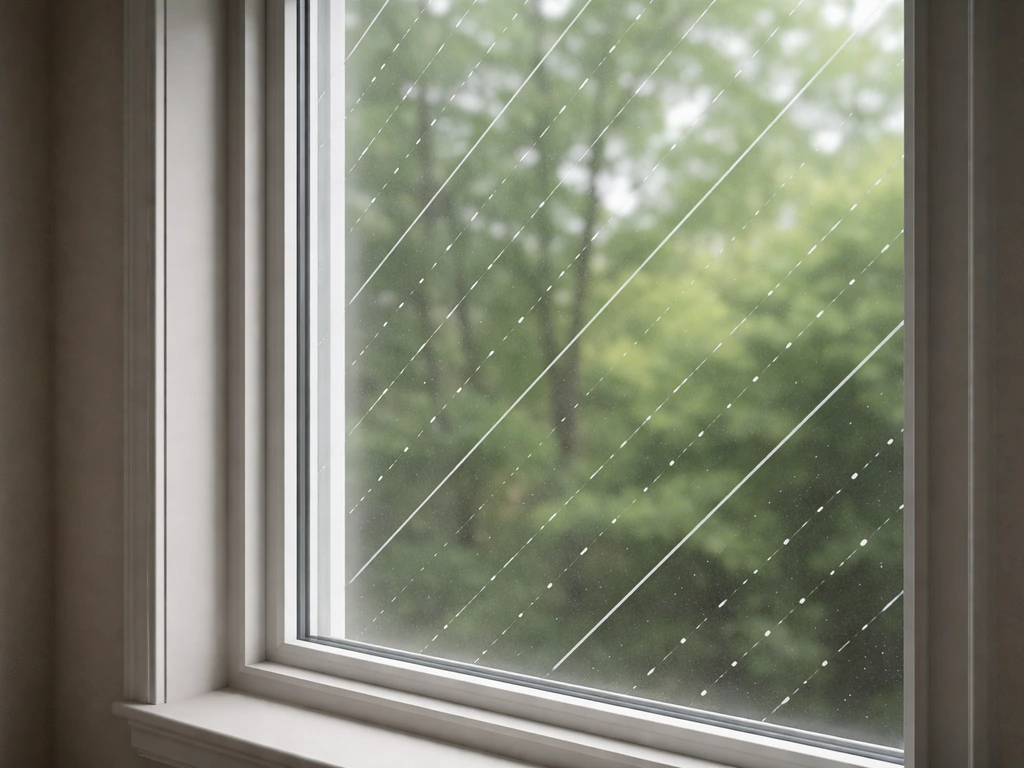
The best window film to prevent bird strikes is an exterior-applied, dot-patterned bird-safety film that follows the 2-inch-by-2-inch spacing rule. Products like Avery Dennison SkyWay Bird Film and Feather Friendly window film are purpose-built for this, approved by the American Bird Conservancy, and backed by real-world deployments on everything from single-family homes to large commercial facades. If you pick the right film and apply it to the outside of the glass, you will see a meaningful drop in strikes. If you put it on the inside, it likely won't work nearly as well. That one detail trips up a lot of people, so it's worth understanding why before you buy anything.
Best Window Film to Prevent Bird Strikes: How to Choose

Marcus Weatherby
22 Apr 2026
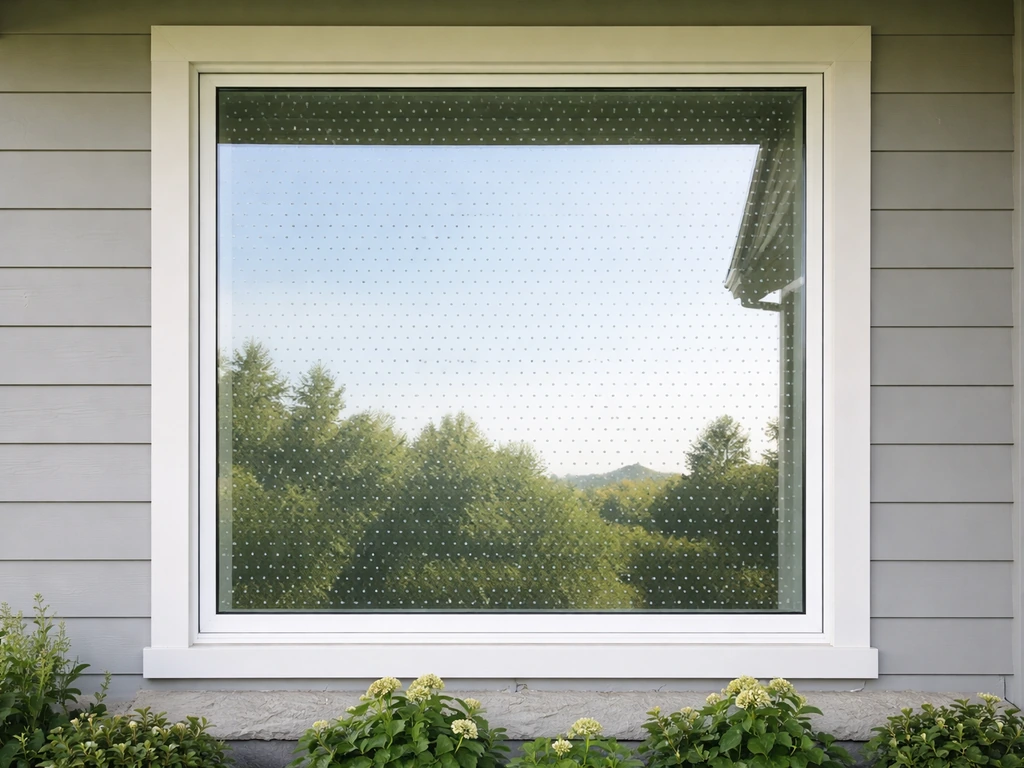
Why birds hit glass and how film changes that
Birds don't see glass as a solid barrier. What they see is either a mirror reflecting trees and sky, or a transparent pane that appears to lead straight through to the habitat on the other side. Either way, the glass is effectively invisible to them. Interior plants near windows, greenery close to the building, and glass corners that create wrap-around reflections all make the problem worse. The fix is to make the glass surface visible as a physical object, not to rely on birds somehow learning to avoid it.
Window film works by interrupting that reflection and creating visual markers on the glass surface that birds can detect at a distance. The key word is exterior. Research and field guidance from the U.S. Fish and Wildlife Service both confirm that these films need to go on the outside of the glass. Interior application doesn't interrupt the exterior light reflection the way it needs to, so birds still see the mirrored habitat and fly straight in. The FWS explicitly describes anti-bird strike film as an blank" rel="noopener noreferrer">exterior retrofit technique that discourages collisions while minimally affecting the view from inside. Learn the best bird-window strike prevention approach by choosing and installing the right exterior anti-bird strike film pattern anti-bird strike film as an exterior retrofit technique.
Some films also use UV-reflective elements, since birds can see ultraviolet wavelengths that humans cannot. The idea is that the pattern appears strongly to birds even if it's subtle to human eyes. In practice, however, the most reliable guidance from the American Bird Conservancy treats the visual barrier function (pattern spacing and opacity visible to humans) as the primary standard, rather than relying on UV effects alone. UV can be a useful supplement, but it's not a substitute for a properly spaced, adequately opaque pattern.
Picking the right film: what the specs actually mean
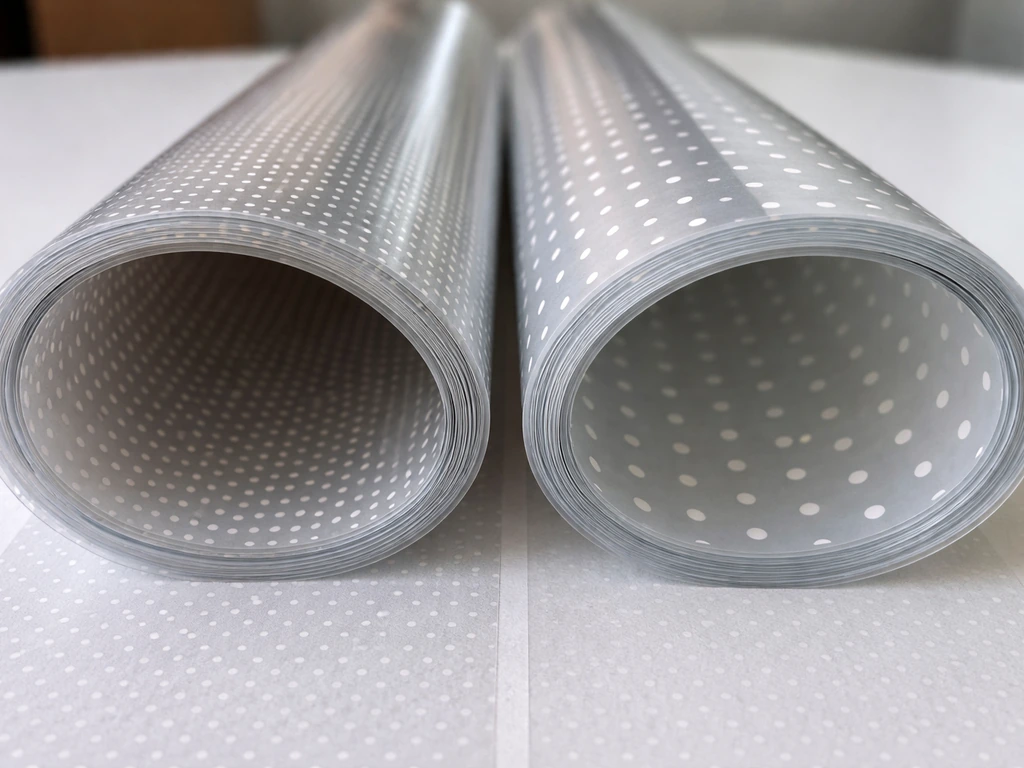
Pattern spacing and density
This is the single most important factor. The FWS standard, mirrored in Canadian Standard A460:19 and the American Bird Conservancy's model code, is that visual markers should be spaced no more than 2 inches apart horizontally and 2 inches apart vertically. This is often called the 2-by-2 rule. Individual dot-pattern elements should be at least 1/4 inch in diameter. Feather Friendly's standard dot film ranges from about 2 to 4 inches between dots depending on the specific product, so check the spec sheet carefully. Closer spacing (2 inches) is safer and more effective than 4-inch spacing, especially on high-risk windows.
The pattern must function as a visual barrier, meaning birds approaching the glass from a distance should perceive the treated surface as something solid rather than open space. Gaps larger than 2 inches give birds a false read that there's room to fly through.
Visible light transmission and solar performance
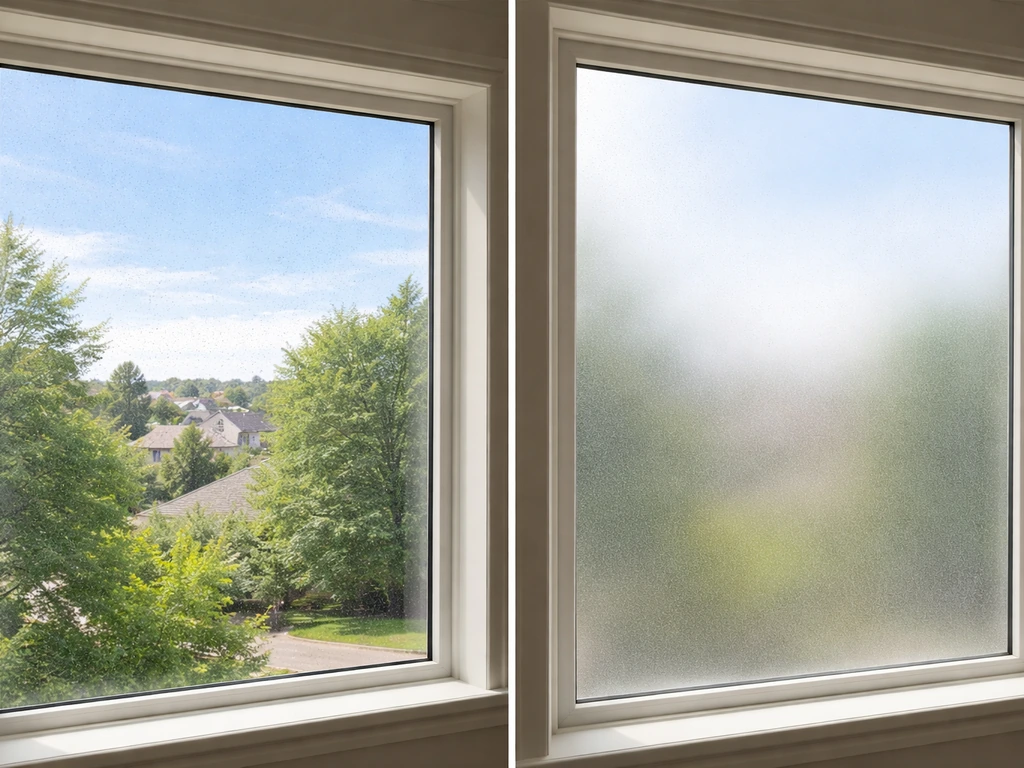
Avery Dennison's SkyWay Bird Film transmits 89 to 92 percent of visible light depending on glass configuration, so the view from inside stays essentially clear. It blocks 98 percent of UV and has a Solar Heat Gain Coefficient (G-value) of 0.82 to 0.89, meaning it rejects about 21 to 22 percent of total solar energy. That's a modest solar control benefit. If you need significant solar heat reduction, a dedicated solar-control film would do more, but you'd be trading off the bird-safety pattern. For most homes and commercial applications, the SkyWay's thermal performance is adequate and shouldn't noticeably darken your space.
Film type: bird-specific vs. decorative
Standard decorative window films (frosted, etched, tinted) are not the same as bird-safety films. A decorative film might cover the whole pane and create its own reflection, or it might have pattern gaps wider than 2 inches. Unless the product explicitly complies with the 2-by-2 spacing rule and is rated for exterior application, don't assume it protects birds. Stick to products designed specifically for bird-strike prevention.
Best film options by situation
| Situation | Recommended Film Approach | Key Spec to Check | Notes |
|---|---|---|---|
| Residential home (1-2 problem windows) | Feather Friendly DIY dot film or Feather Friendly residential roll | 2-inch dot spacing version; exterior application | Good DIY option; roll format makes trimming easy around frames |
| Residential home (many windows) | Feather Friendly or SkyWay applied by a window film installer | 2×2 spacing, exterior-rated adhesive | Professional install saves time and avoids edge-sealing issues on multiple panes |
| Commercial building facade | Avery Dennison SkyWay Bird Film (professionally installed) | VLT 89–92%, UV Block 98%, ABC-approved | Scales well; warranty terms available; used on large commercial deployments |
| High-risk or flight-critical site (near migration routes, airports, conservation zones) | SkyWay or comparable ABC-compliant film plus supplemental measures (netting, lighting protocols) | Full ABC prescriptive compliance; consult local code | Film alone may not meet regulatory requirements; pair with other deterrents |
For most homeowners with one or two problem windows, Feather Friendly's DIY dot film is the most practical starting point. It's available in rolls, cuts to size, and uses a straightforward application process. For full building facades or commercial properties, Avery Dennison SkyWay is the go-to professional-grade product. It's explicitly ABC-approved, carries measurable optical specs, and has documented deployments across thousands of square feet of glazing. Near airports or other aviation-sensitive areas, window film on building glass is still relevant, but the FAA's wildlife-strike mitigation guidance is broader than just film, so coordinate with facility management and check whether local bird-safe building ordinances or codes apply.
How to install bird-safe window film correctly
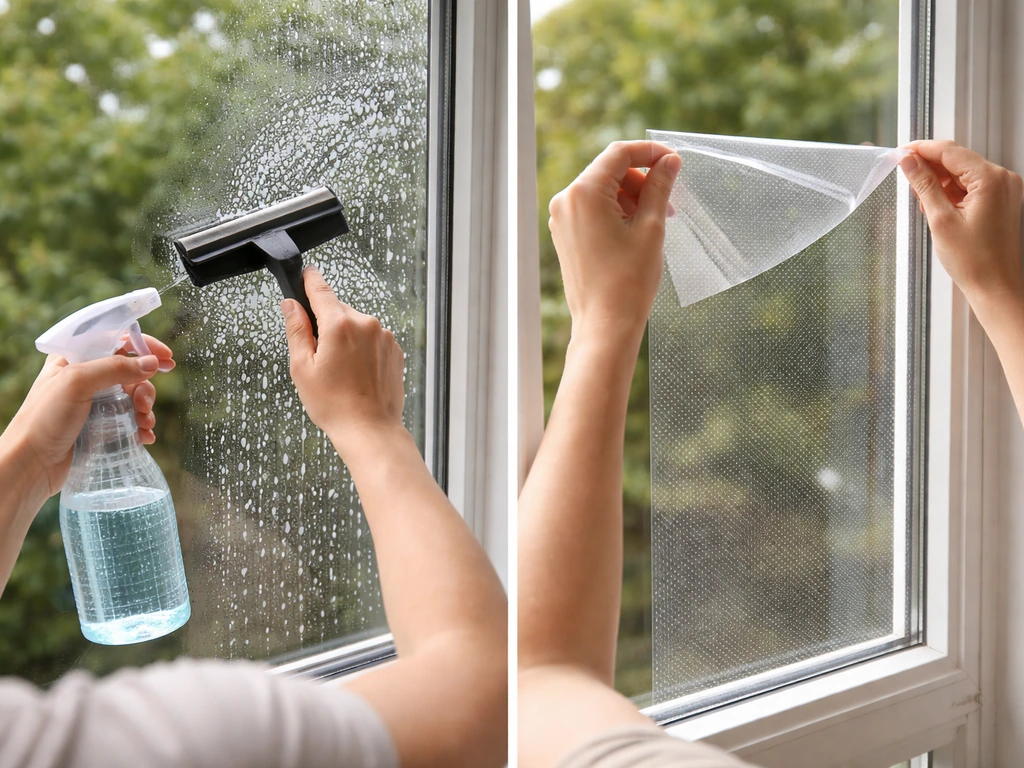
Surface preparation
Clean the exterior glass thoroughly before applying anything. Use a squeegee and glass cleaner to remove dirt, grime, and any residue from previous treatments. Even small particles trapped under the film will cause bubbles and can lead to early peeling at the edges. On older windows, check for paint or caulk at the edges and trim back any loose material. The goal is a clean, flat surface with no debris.
Cutting and alignment
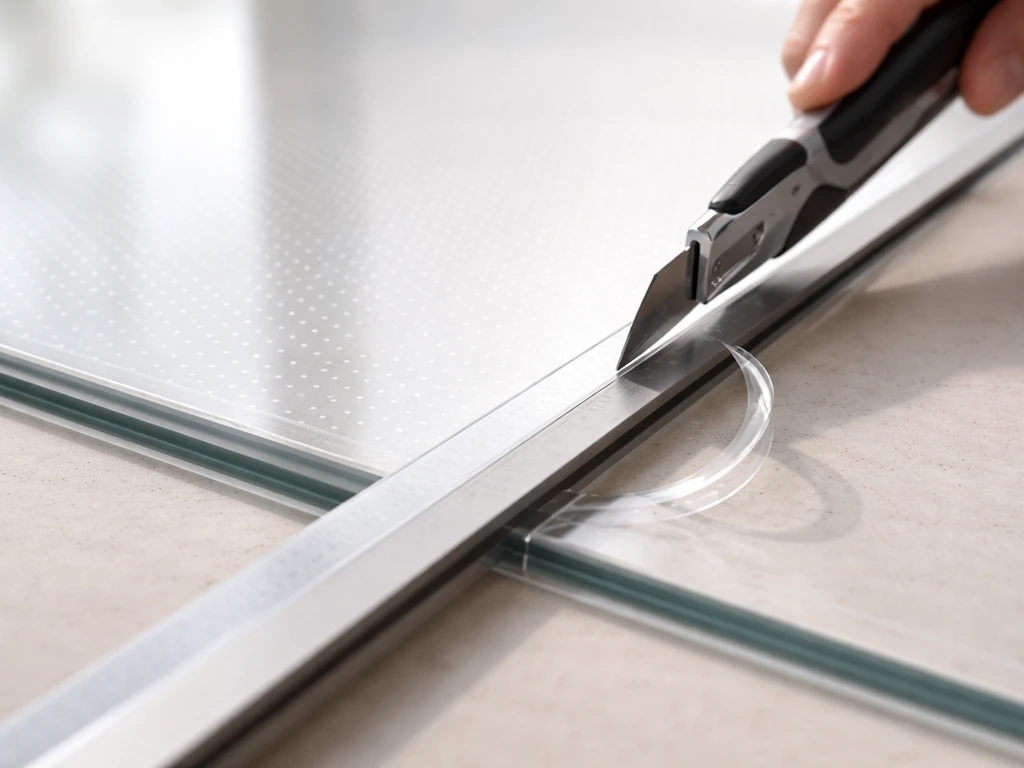
Cut the film slightly larger than the glass pane, then trim to fit with a sharp utility knife and straight edge. Dot-pattern films need to be aligned so the dot grid sits parallel to the window frame, which both looks cleaner and ensures consistent spacing across the whole pane. If you're covering multiple adjacent panes, align the dot rows to match across panels. A misaligned seam creates a gap that's wider than 2 inches and reduces effectiveness at that spot.
Application and bubble removal
Most exterior bird-safety films use a pressure-sensitive adhesive. Wet the glass lightly with a soapy water solution (a few drops of dish soap per spray bottle works), apply the film, and use a squeegee to push out water and air from the center outward. Work slowly. Small bubbles near the edges usually work out within a few days of sun exposure. Larger bubbles mean the film needs to be lifted and reapplied in that section.
Edge sealing and frames
Exterior-applied film is exposed to wind, rain, and UV, so edge sealing matters. Trim the film flush to the glass edge or just inside the frame rebate, and press the edges down firmly with a squeegee. On aluminum or vinyl frames, some installers apply a thin bead of clear silicone at the film edge to prevent wind lift. Avoid leaving any raised edge, especially at the bottom of the pane where water can work underneath. Around tricky areas like dividers or grilles, cut the film in sections rather than trying to force it over raised elements.
Permanence expectations
Exterior film doesn't last as long as interior film because it takes direct weathering. Avery Dennison provides warranty terms for exterior architectural film including SkyWay, so check the specific warranty duration when you buy. As a general rule, plan to inspect exterior-applied bird film annually and look for edge lifting, discoloration, or loss of adhesion. Replacing a film that's peeling is not a major job, but catching it early avoids having a window that looked treated but is no longer effective.
How to tell if it's working (and what to do if strikes continue)
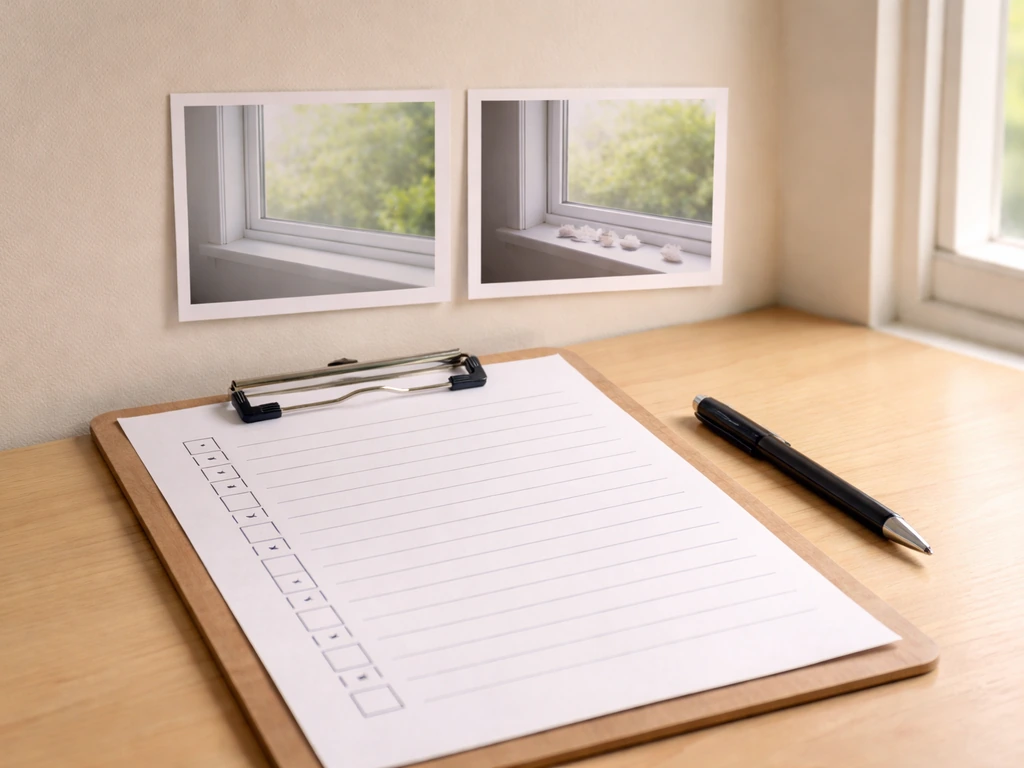
The simplest way to measure effectiveness is to count strikes before and after. Keep a log for two to four weeks before installation noting any dead or stunned birds, feathers, or impact smudges on the glass. After installation, track the same windows over the same period. A well-applied film with correct 2-inch spacing should produce a clear reduction. Peer-reviewed mitigation research confirms that bird-window collision risk does change meaningfully with proper treatment, though it rarely drops to absolute zero.
If strikes continue after installation, work through this checklist before assuming the film failed:
- Confirm the film is on the exterior, not interior side.
- Check that dot spacing is actually 2 inches or less across the entire pane, including near edges and corners.
- Look for sections where the film has lifted or peeled, which reopens the glass.
- Assess whether a nearby feeder, birdbath, or dense planting is pushing birds toward the window at close range and high speed.
- Check if the window has a strong reflection at specific times of day (morning or afternoon sun angles can create intense mirror effects that overwhelm the film pattern).
- Evaluate whether interior lighting at night is attracting birds toward the glass after dark.
If strikes persist after addressing those points, the film needs to be supplemented with additional deterrents. Physical barriers like exterior netting installed a few inches in front of the glass are highly effective because they prevent birds from reaching the glass entirely, regardless of what the glass looks like. Sonic or visual deterrents mounted nearby can also reduce the approach rate of birds to a high-risk window. The broader topic of pairing film with other bird control solutions is worth exploring separately, especially for windows where reflections are severe or where bird activity is very high. The broader steps in this guide, including installing the right exterior film and choosing the correct spacing, are the main ways to prevent bird strikes on windows.
Visibility, solar gain, codes, and a few things people overlook
Interior visibility
A properly installed bird-safety dot film is nearly invisible from inside. Products like SkyWay transmit over 89 percent of visible light, so rooms don't feel darker. The dot pattern, while clearly visible on the exterior glass surface, reads as barely noticeable from an interior viewpoint at normal viewing distances. This is one reason exterior application works: the pattern is prominent to a bird approaching from outside without significantly changing the inside experience.
Solar and energy effects
Bird-safety films are not designed to be solar control films, and their heat-rejection performance reflects that. SkyWay rejects about 21 to 22 percent of total solar energy, which is a modest reduction. If you're also dealing with summer overheating, a combined approach (bird film on the exterior plus interior blinds or shading on the worst-exposed windows) works better than expecting the film to carry both jobs. Avoid putting a heavily tinted interior film behind the bird film, as that changes the exterior reflectivity in ways that can affect both bird perception and your views.
Local codes and bird-friendly building requirements
An increasing number of cities have adopted bird-friendly building standards, and some are mandatory for new construction or major renovations. The American Bird Conservancy's model code sets prescriptive criteria including marker spacing, minimum dimensions, opacity, and surface reflectivity thresholds. If you're in a jurisdiction with such requirements, the film you choose must meet those criteria, not just be labeled 'bird-safe.' Always check the product spec sheet against local code language, particularly for commercial projects. If you're unsure, contact your local planning department or check whether your city has adopted the ABC model code language.
Pets and neighboring wildlife
Exterior film changes the way the outside of your building looks, and sometimes that matters for other reasons. A window that previously acted as a strong mirror may have provided a reflective barrier that deterred some wildlife from approaching that part of the building. With the mirror effect reduced, cats or other animals may move closer. This is generally a positive outcome for birds, but worth noting if you have ground feeders or other wildlife habitat around your windows. The film itself poses no chemical risk to birds, pets, or other wildlife once applied and cured.
Decals vs. film: a quick note
Individual window decals and clings are a related but separate product category. In addition to film, it’s worth checking whether do bird window stickers work for your window size and spacing needs. If you are considering decals instead of film, focus on the best window decals to prevent bird strikes by matching the same spacing and applying them on the exterior side. They can work if spaced correctly per the 2-inch rule across the full pane, but covering an entire large window with correctly spaced individual decals is time-consuming and easy to get wrong. Roll film covers the whole surface with a consistent, pre-spaced pattern, which makes compliance much more straightforward. For a window larger than about 2 square feet, roll film is almost always the better choice in terms of both effectiveness and installation time.
FAQ
Can I use bird-safety window film on the inside instead of the outside?
Yes, but only if the product is specifically labeled for exterior bird-strike mitigation and maintains the 2-by-2 spacing across the entire pane. If the film has to be installed inside because exterior access is impossible (for example, high-rise maintenance), effectiveness drops because the exterior reflection is not interrupted.
What happens if the dot pattern has a seam or a small section with wider spacing?
If you have a gap wider than 2 inches, birds can get a false “safe path” through that area. Check seams where two pieces meet, around frames, and across muntins or dividers, then make sure the dot grid continues through the transition without any wider-than-2-inch hole or misaligned strip.
Will decorative or frosted window film prevent bird strikes if it blurs the view?
No. Frosted, decorative, privacy, or standard solar film can be ineffective if it creates large transparent gaps, or if its exterior reflectivity still makes the window look like open habitat. Use only films that list bird-marker spacing (or explicitly comply with the 2-by-2 rule) and are rated for exterior application.
Can I combine bird-safety film with a tinted or solar-control film on the inside?
They are usually different approaches. Bird-safety dot film is designed to create visual markers without heavily tinting the glass, while solar control films prioritize heat rejection. If you stack a dark interior tint behind bird film, you may change how the exterior glass reflects, and the birds may not see the markers as intended.
How can I tell whether bubbles under the exterior film will go away or need redoing?
Larger bubbles usually mean adhesion or wetting issues. Small edge bubbles often clear after sun and heat, but if you see bubbles that grow, stay large after a few days, or appear under the dot pattern, lift that section and reapply with better surface cleaning and flatter pressure with the squeegee.
Is 2-by-2 spacing enough, or should I try to use even smaller gaps for high-risk windows?
It depends on how close the birds are to the glass. Birds approaching at fast or low angles, and windows near vegetation or nesting sites, benefit from the tighter end of spacing (2 inches). If you have persistent strikes, do not “average out” by assuming partial compliance is enough, instead correct the spacing everywhere the birds hit.
Does bird-safety window film work on curved windows or panes with unusual trim?
Be careful with curved glass, unusual shapes, and raised hardware. Dot-pattern products work best on flat panes. For curved or irregular surfaces, ask the installer to verify that the pattern spacing does not stretch or thin during application and that edges can be sealed to prevent lifting from wind and water.
How should I determine what size to cut the film for a multi-pane or framed window?
Measure the actual pane you see from the outside, not the rough frame opening. Overhangs and overlaps can create uneven adhesion and allow water to creep under. Cut film slightly larger than the glass pane, then trim flush or within the rebate, so the full treated area covers the area birds approach.
How often should I inspect and replace exterior bird-safety window film?
Plan on at least an annual inspection in climates with freeze-thaw cycles or heavy sun exposure. Look for edge lifting, cloudy discoloration, peeling, and any loss of pattern continuity. If edges lift or the film separates, birds may be able to see through untreated micro-gaps.
If I add exterior netting, do I still need the dot film?
Yes, especially with exterior netting that sits a few inches in front of the glass. But the net still should be installed correctly, with secure anchors and no slack, because birds can attempt to probe through sagging sections. Film is often used as the first step, netting as a higher-confidence add-on when strikes continue.
What’s the best way to evaluate whether the film is actually preventing strikes?
Treat it as a relative improvement and run a consistent comparison. Record strikes using the same windows, similar times of day, and similar weather conditions when possible. If strikes decline but do not stop, focus on the highest-hit panes, especially corners, wrap-around reflections, and any areas with seams or poor edge adhesion.
Will bird-safety window film meet local building code requirements in cities with bird-friendly standards?
Yes, but the film must meet the same exterior marker requirements, and it should be validated against the specific jurisdiction’s code language for spacing and visibility thresholds. If you are in an area with mandatory bird-friendly standards, use the product spec sheet to confirm compliance rather than relying on general “bird-safe” marketing.
Are bird window decals or clings a good substitute for film on big windows?
Yes for certain products, but it must be an exterior-rated bird film and the pattern spacing must remain correct after curing. Do not rely on decals or clings for large windows unless they can be applied uniformly with the same spacing across the full pane, because uneven placement creates gaps that birds can exploit.
Next Article
How to Prevent Bird Strikes on Windows: Best Fixes
Stop bird strikes on windows with the right visual markers, films, screens or netting, plus safe placement and deterrent