
Fake owl decoys work, but only if you use them correctly and combine them with other methods. A static plastic owl sitting in one spot for weeks will be ignored within days. Move it regularly, add motion, pair it with sound or physical barriers, and you have a genuinely useful tool against pigeons, starlings, sparrows, and even larger birds like herons. Used alone and left in place, it is mostly decoration.
Best Owl Bird Deterrent: How to Choose and Use It

Marcus Weatherby
17 Jun 2026
What owl deterrents actually are and when they work
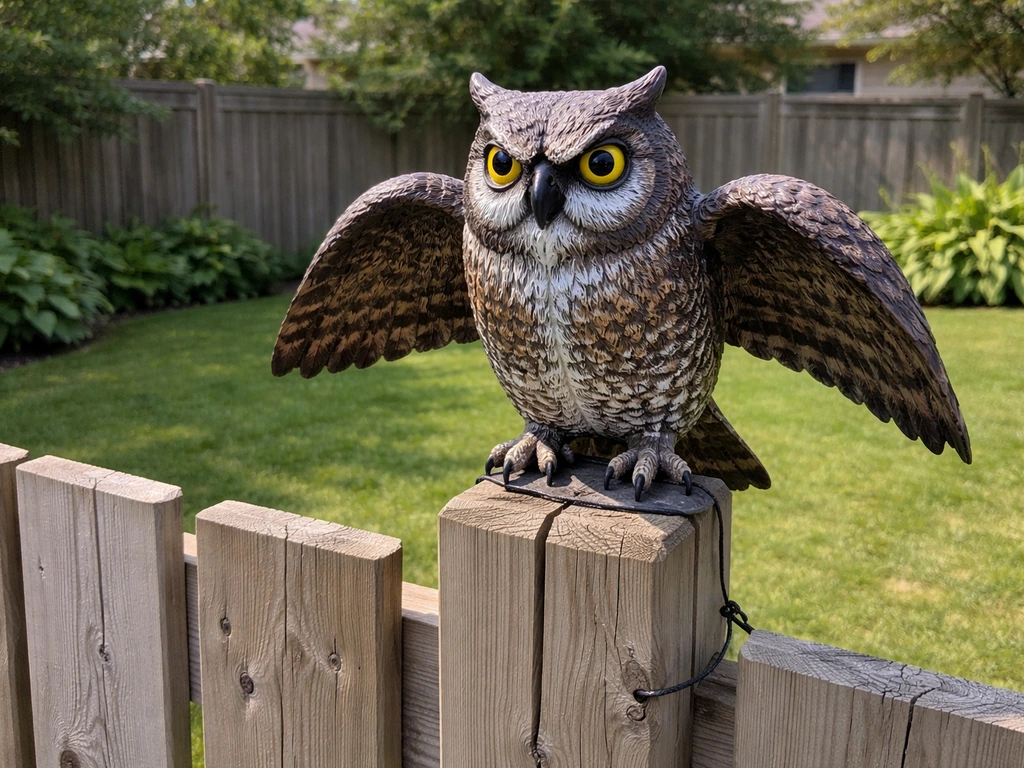
Owl-based bird deterrents are visual scare devices designed to exploit a bird's natural fear of predators. Birds rely heavily on vision to detect threats, so a realistic owl shape, especially one that moves, can trigger an avoidance response. Products range from basic molded plastic decoys to animated units with rotating heads and reflective eyes, to flat silhouette cutouts mounted on windows or fences.
They work best in open, well-lit spaces where birds can see the decoy clearly from a distance before they commit to landing. Gardens, patios, flat rooftops, ponds, and open lawn areas are good fits. They are much less effective in dense vegetation, enclosed spaces, or areas where birds have already established a strong nesting habit. The honest answer is that owl deterrents give you a head start, not a permanent solution on their own.
Know your bird and your problem before you buy anything
The first step is figuring out exactly which bird species you are dealing with and what they are actually doing. This matters because owl decoys do not affect all species equally, and the behavior driving the problem changes what you need.
- Roosting birds (pigeons, starlings, sparrows settling on ledges, roofs, or solar panels) respond reasonably well to visual deterrents combined with physical barriers like spikes or netting.
- Feeding birds (herons at ponds, crows in gardens, gulls near bins) tend to habituate faster and need a rotating toolkit that keeps changing.
- Nesting birds are the hardest case. Once eggs are laid, legal protections for most species kick in and removal becomes complicated. Prevention before nesting starts is critical.
- Large wading birds like herons and egrets are particularly persistent and official guidance from the U.S. Fish and Wildlife Service specifically recommends using a combination of harassment techniques rather than any single method.
Spend a day or two watching when birds arrive, where they land first, and what they are after. That observation will tell you exactly where to place your deterrents and whether you also need to eliminate attractants like open water, food scraps, or sheltered ledges.
The main types of owl deterrents and how to choose between them
There are four main categories, and they are not equally effective. Here is a practical breakdown so you can match the product to your actual situation.
Static decoys
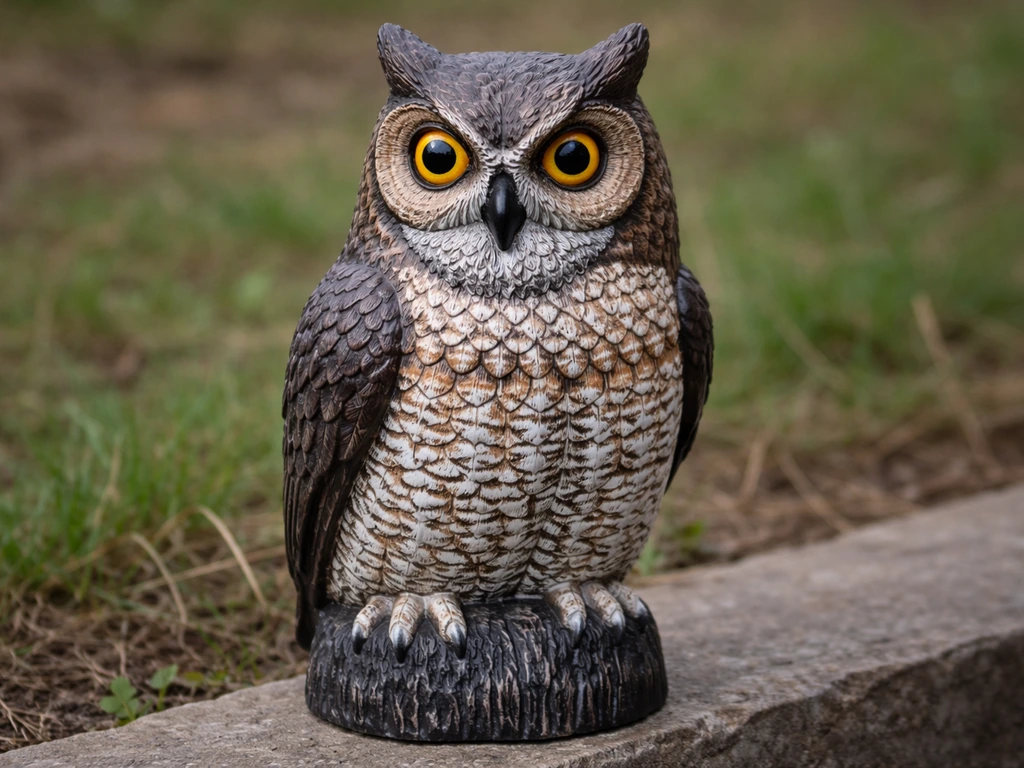
These are molded plastic or resin owl figures, typically 12 to 18 inches tall, with painted or glass eyes. They are cheap, widely available, and easy to place. The catch is that birds figure out they are fake within a few days if the decoy never moves. Static decoys work best as a short-term deterrent when birds are just beginning to scout a location. If you already have an established bird problem, a static decoy alone will not solve it.
Rotating and animated decoys
Rotating-head owl decoys, like the 18-inch models sold by Eartheasy and Dalen Products, have a head that moves in the wind or on a pivot mechanism. Bird-X's Prowler Owl is a well-known example in this category. The movement is the key feature because it mimics the way a real owl scans for prey. Wind-powered rotation is free and low-maintenance, but on calm days the head stops moving, which reduces effectiveness. Some battery-powered units rotate continuously regardless of wind. For areas with frequent calm weather, motorized rotation is worth the extra cost.
Predator silhouettes
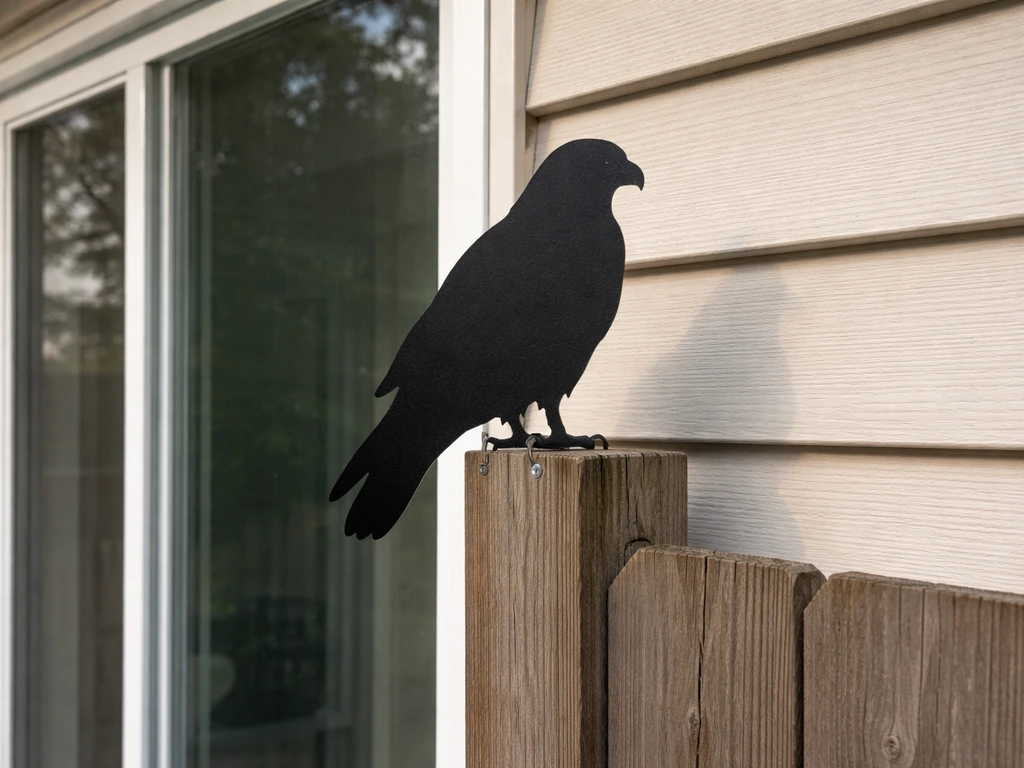
Flat owl or hawk silhouettes are designed to be mounted on windows, fences, or poles. They are particularly useful for window strike prevention, where birds collide with glass because they cannot see it. Silhouettes are inexpensive and easy to install, but they offer less deterrence for roosting or feeding problems than a three-dimensional decoy does. Think of them as a targeted tool for a specific hazard rather than a general-purpose deterrent.
How to choose
| Type | Best for | Key limitation | Rough cost |
|---|---|---|---|
| Static decoy | New bird scouts, short-term deterrence | Rapid habituation if not moved | $10–$30 |
| Rotating-head decoy | Gardens, patios, rooftops, ponds | Wind-dependent unless motorized | $25–$60 |
| Animated/motorized decoy | Persistent birds, calm-weather sites | Needs batteries or power | $40–$100+ |
| Predator silhouette | Window strike prevention, fences | Limited range of effect | $5–$20 |
How to install and place owl deterrents properly
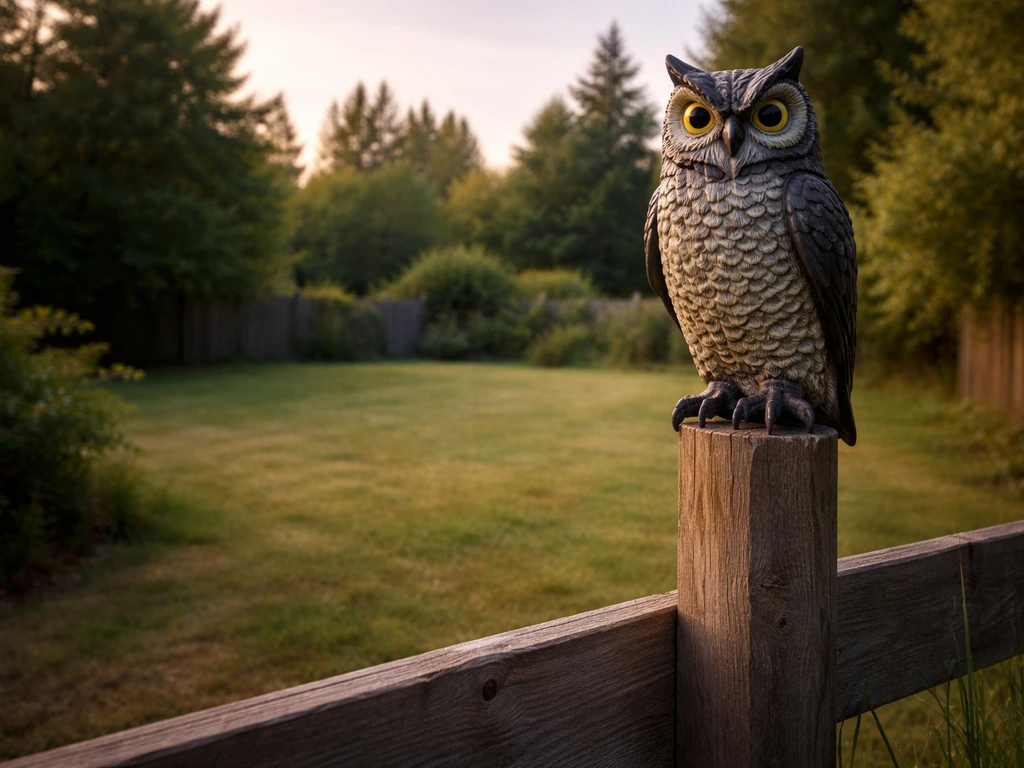
Placement is where most people go wrong. A decoy stuffed in a corner or hidden by a shrub does nothing. Birds need to see it clearly before they decide to land, so the goal is maximum visibility from the approach directions birds use.
- Height: Mount the decoy at or above the level of the area you want to protect. For a garden bed, a post at 4 to 5 feet works well. For a rooftop or ledge, position it at the highest point so approaching birds see it first.
- Distance: Cover roughly 100 square feet per decoy as a starting guideline. Larger open areas need multiple units spaced apart to avoid leaving unguarded landing zones.
- Rotation: Move the decoy to a new location every 3 to 5 days. Bird-X's own instructions for the Prowler Owl explicitly state that relocation is necessary to prevent birds from acclimating. Set a calendar reminder if you need to.
- Orientation: Face the decoy toward the primary flight path birds use when approaching. If birds come from multiple directions, rotate the decoy's facing angle when you move it.
- Weatherproofing: Most plastic decoys handle rain fine, but check that any mounting hardware is rust-resistant. If the decoy has a rotating mechanism, keep the pivot point clear of debris and apply a light silicone lubricant seasonally.
- Visibility: Do not let plants or structures block the line of sight. Trim vegetation around the mount point and check that the decoy is still visible as plants grow through spring and summer.
When birds stop being scared (and what to do about it)
Habituation is the single biggest problem with owl decoys, and it happens faster than most people expect. Research on frightening devices in wildlife damage management consistently identifies acclimation as the core failure mode for visual scare tactics. Once a bird figures out that the owl has never moved from the same spot and has never caused any harm, it stops triggering a fear response.
If birds are landing near or even on your decoy, they have fully habituated. People often compare setups and results in threads like best bird deterrent reddit, especially when birds habituate quickly near the decoy. Do not just move the decoy once and hope for the best. You need to change multiple variables at the same time: move the location, change the height, add a motion element if you were using a static model, and introduce a second type of deterrent alongside it.
The USDA APHIS Wildlife Services technical guidance on bird dispersal is clear that altering techniques is necessary to keep birds perceiving genuine risk. In persistent cases where nonlethal scare tactics have been exhausted, they note that permitted supplemental controls may be needed. For most residential situations, though, combining deterrent types (covered in the next section) will get results before you need to consider escalation. For a simple starting point, look for the best bird nest deterrent for your bird and setup, and treat it as a layered system rather than a single fix.
Pairing owl decoys with other bird control methods
An owl decoy on its own is a single-tool approach, and single-tool approaches rarely hold up against persistent birds. For a quick overview, the best bird deterrents typically combine visual scare tactics with other layers such as sound, barriers, and habitat changes. The U.S. Fish and Wildlife Service guidance on deterring herons and egrets explicitly recommends an integrated suite of techniques. The same principle applies to any stubborn bird problem.
Physical barriers
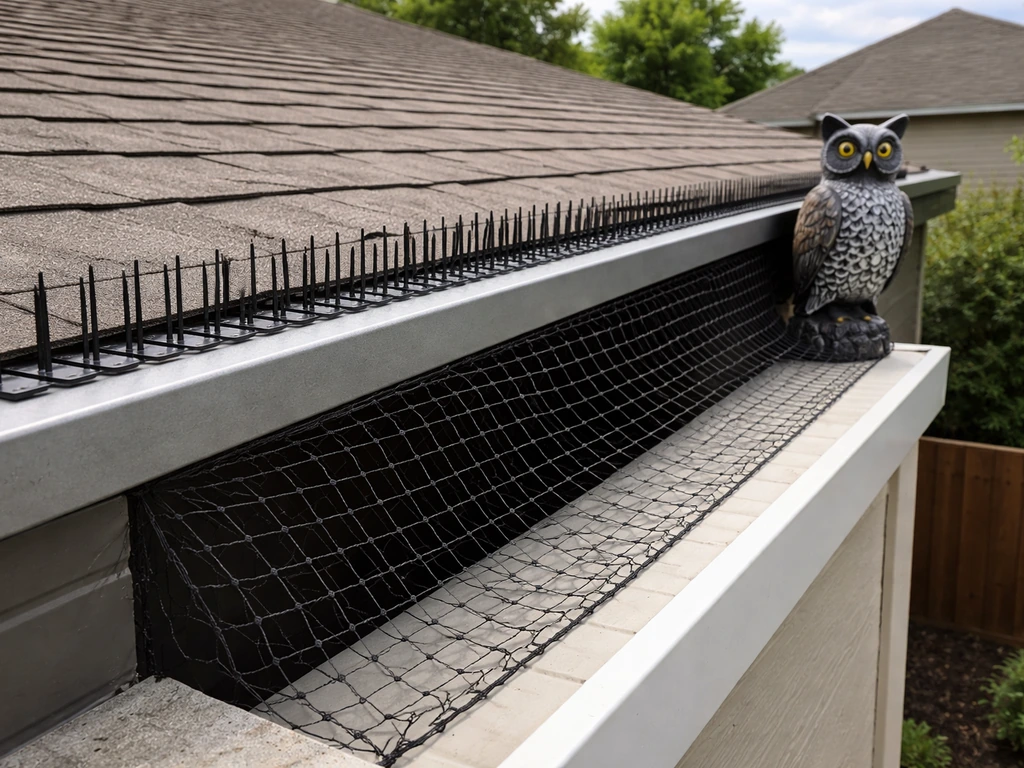
Bird spikes on ledges, gutters, and railings physically prevent landing and are highly effective for roost-specific problems. Bird netting over garden beds, solar panels, or roof areas blocks access entirely. These work even after birds have stopped responding to visual deterrents, which makes them a strong backup or primary layer when the owl decoy is the secondary deterrent.
Sonic deterrents
Devices that broadcast recorded predator calls or distress calls add an auditory threat dimension that visual decoys lack. Used together, a bird sees the owl shape and hears what sounds like danger, which is a much stronger combined signal than either alone. One important note: ultrasonic devices, despite their marketing, are not effective for birds. Birds do not hear in the ultrasonic range, and the scientific literature on frightening devices confirms that ultrasonic units have no reliable repellent effect on birds. A literature review in the UNL/NWRC repository concludes that blank" rel="noopener noreferrer">ultrasonic frightening devices are ineffective for repelling birds and mammals, while some other frightening-device types can offer some protection. Stick to audible sonic units with species-specific calls.
Reflective and visual add-ons
Reflective tape, holographic ribbon, and predator eye balloons are inexpensive additions that create unpredictable light flashes. Birds find sudden light reflection startling. Hang reflective tape near the decoy so the combination of movement, reflection, and the owl shape creates a more convincing threat zone. These are especially effective in sunny, open areas.
Repellents
Gel and liquid bird repellents applied to ledges and surfaces make perching uncomfortable. They do not harm birds but create a tactile disincentive that complements visual deterrents well. They are particularly useful on window sills, parapets, and structural ledges where spikes are not practical.
Safety, compliance, and scenario-specific guidance
Residential use
Owl decoys are safe around children and pets. There are no chemical hazards and no mechanical trapping involved. Position them high enough that a toddler or dog cannot knock them over, both to keep the product working and to avoid creating a loose projectile hazard in wind. Check your local HOA rules if you live in a managed community, since some have restrictions on items mounted on exterior structures.
Commercial properties
For commercial sites including warehouses, loading docks, food processing facilities, and retail exteriors, owl decoys are a reasonable first-line deterrent but rarely sufficient alone. Commercial bird pressure is typically higher and more persistent. If you want the best bird deterrent in Australia, focus on species-specific setup and combine owl decoys with barriers and sonic deterrents for stronger results best bird deterrent australia. Pair decoys with physical barriers and consider a professional bird management assessment if you have a food-safety, liability, or regulatory compliance angle to the problem.
Aviation and airfield environments
Near airports and airfields, bird strike risk management is a regulated and specialized discipline. Owl decoys can be part of a wildlife hazard management toolkit, but aviation environments require a formal wildlife hazard assessment under FAA Advisory Circular 150/5200-33. Some agricultural experts are even trying to develop bird deterrents that go beyond simple owl decoys. Standard consumer owl decoys are not a compliant or sufficient stand-alone solution in these contexts. Site operators should work with a certified wildlife biologist or a USDA Wildlife Services specialist.
Protected species considerations
Most common pest birds such as pigeons, starlings, and house sparrows are not protected under the Migratory Bird Treaty Act in the United States, so harassment and deterrence are unrestricted. However, many other species are protected, and interfering with active nests, eggs, or chicks of protected species is illegal regardless of the method used. If you are unsure whether the birds on your property are protected, check with your state wildlife agency before taking action beyond passive deterrence.
Your action plan: pick a product today and measure results
Here is a straightforward decision framework you can act on right now. If you are searching for the best bird deterrent in the UK, start by matching an owl decoy style to the specific bird and how quickly they are habituating best bird deterrent uk.
- Identify the bird species and behavior (roosting, feeding, or nesting) and note the exact locations where they are landing.
- Choose your starting decoy: if birds are just beginning to appear, a rotating-head decoy (18-inch, wind-powered) is a cost-effective first move. If birds are already established and persistent, skip straight to an animated or motorized model and plan to add a second deterrent type immediately.
- Install the decoy at the highest visible point facing the primary approach direction, and set a 3-to-5-day relocation schedule in your calendar.
- Add at least one complementary layer from day one: reflective tape around the decoy zone, an audible sonic deterrent, or bird spikes on the nearest landing ledge.
- Track results for two weeks. Note whether bird presence decreases, stays the same, or shifts to a new area. If it shifts, move the decoy to follow them.
- If birds are still landing near the decoy after two weeks and relocation has not helped, escalate: add physical barriers (spikes or netting) to the specific landing spots, switch from a visual to an audible primary deterrent, and remove any food or water attractants in the zone.
- If the problem persists after a full integrated approach over 30 days, contact a licensed pest management professional or your local USDA Wildlife Services office for a site assessment.
When you are shopping, look for these features on any owl deterrent product: a rotating or articulated head, UV-resistant materials if it will be outdoors year-round, a stable mounting base or included stake, and realistic detailing on the face and feathers. Avoid products with no mounting hardware or that are made of thin, lightweight plastic that will blow over in moderate wind. If you are ready to buy, start by comparing well-reviewed owl deterrent products from reputable garden and pest-control retailers, then verify shipping and return options for your area bird deterrents.
Owl deterrents are a practical, affordable, and chemical-free starting point for most bird problems. The readers who get the most from them treat them as one layer in a broader control strategy rather than a set-and-forget fix. Move the decoy, add reinforcing deterrents, and stay consistent for the first few weeks, and you will see results that hold up.
FAQ
How often should I move my owl decoy to prevent birds from habituating?
Don’t rely on a single relocation. After you first deploy it, change at least one variable every few days (move position along the approach path, adjust height, and swap in a different deterrent type like reflective tape or an audible unit). If birds land near it, switch to a fresh placement within 24 to 48 hours instead of waiting a week.
Where should I place the owl decoy if birds are landing on my roof edge or in a corner?
Place it where birds have to make the decision before landing, not where they already chose to land. Use your observation to identify the first landing spot and mount the deterrent so it is visible from that approach direction. For corners, set the decoy slightly outward from the corner and keep the face oriented toward the birds’ arrival path.
Can I use an owl decoy for window strikes if birds aren’t actually landing on the ledge?
Yes, but silhouettes are the better fit when the main problem is collisions rather than roosting. If you use a 3D owl, pair it with window-safe visual blocking (like decals, film, or rigid mesh in the worst areas). Focus on lines of sight toward the glass, because birds often see reflections and never register the threat until too late.
What should I do if birds move in quickly but do not land, they just circle and watch?
That usually means partial deterrence. Add an auditory layer at the same time you adjust the decoy, and increase unpredictability with reflective tape or a second motion device. Also verify that the decoy is not hidden by shrubs or angled so birds see the back or side, because visibility from a distance is crucial.
Do rotating-head or battery owl decoys work better than static ones in calm weather?
Usually, yes. If your area often has low wind, wind-powered rotation may stop frequently, which speeds up habituation. For calm regions or sheltered yards, choose a unit that rotates with a motor, then still vary height and location every few days to avoid “same spot” learning.
Are ultrasonic bird deterrents actually useless, and what alternatives should I use instead?
For birds, ultrasonic units do not have reliable repellent effects because birds do not respond consistently in that frequency range. Use audible sonic deterrents with species-specific calls, and keep volume and timing practical for your space (for example, activate during the periods birds feed or roost).
How do I know whether the birds are protected species before I take stronger action?
Start by identifying the species visually, then check your state wildlife agency rules for that species. If you see nesting activity, assume the species may be protected and avoid actions that disrupt active nests, eggs, or chicks. In uncertain cases, use passive deterrence only (visual, barriers, exclusion) until you confirm legal options.
Will owl decoys work in dense trees or near fences with heavy vegetation?
They often underperform in dense vegetation because birds cannot see the decoy clearly from far enough away. In those settings, prioritize physical exclusion (netting, spikes on the exact ledge, or netting over access points) and use owl deterrents only in clear approach corridors where birds have an unobstructed line of sight.
Are owl decoys safe for pets and children if they’re outdoors?
They are generally safe since they are not toxic and do not trap animals, but stability matters. Mount the decoy on a secure base or stake, place it at a height that prevents easy knocking, and avoid setups where wind can tip it into paths where children or pets play.
What’s the fastest way to troubleshoot if I don’t see results after the first week?
Check three things in order: visibility (is the owl clearly seen from the birds’ approach?), movement (does it actually rotate or change with wind or your adjustments?), and attractants (remove food scraps, limit standing water, and block ledges or sheltered roost spots). If birds are already habituating, add a second deterrent type immediately rather than just moving the same static decoy.
Next Articles
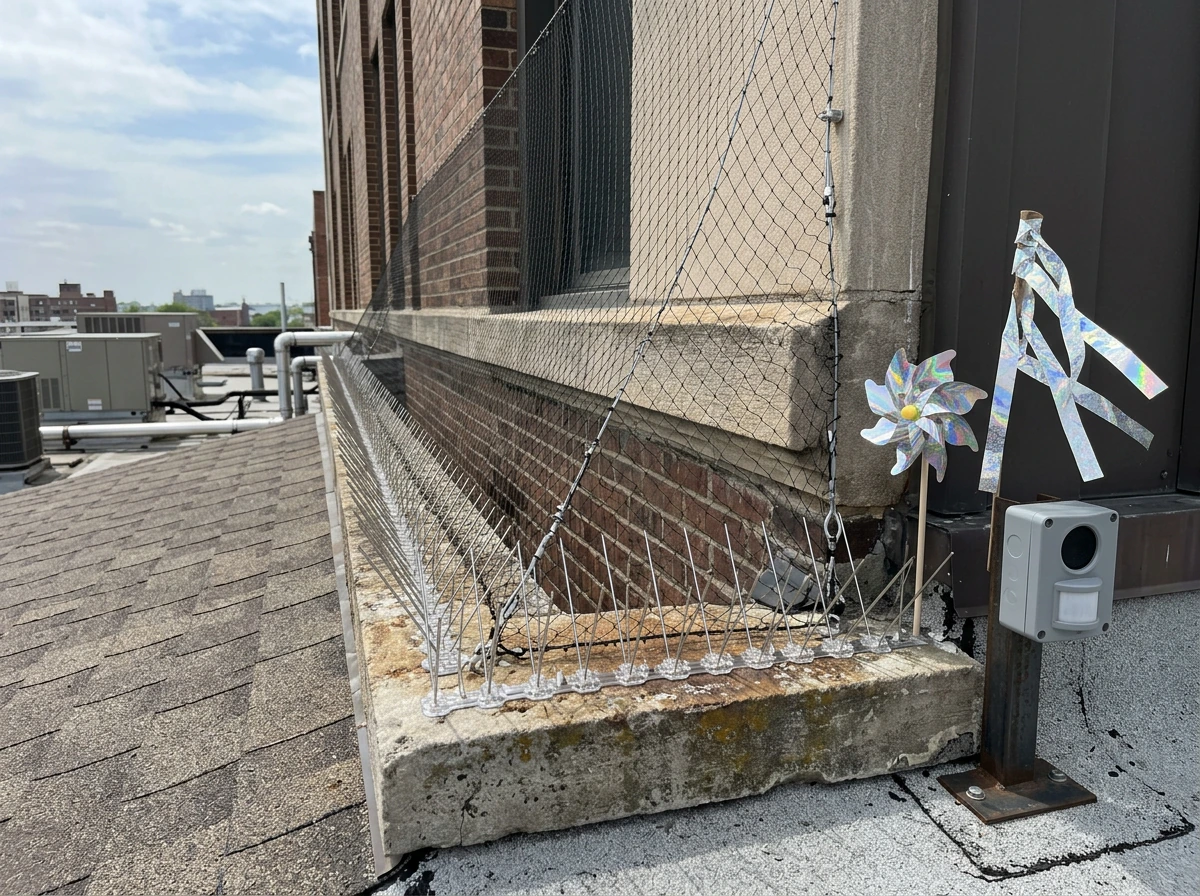
Best Bird Deterrents: Find the Right Device for Your Situation
Hands-on guide to the best bird deterrents by scenario, comparing device types for landing, roosting, and nesting safely
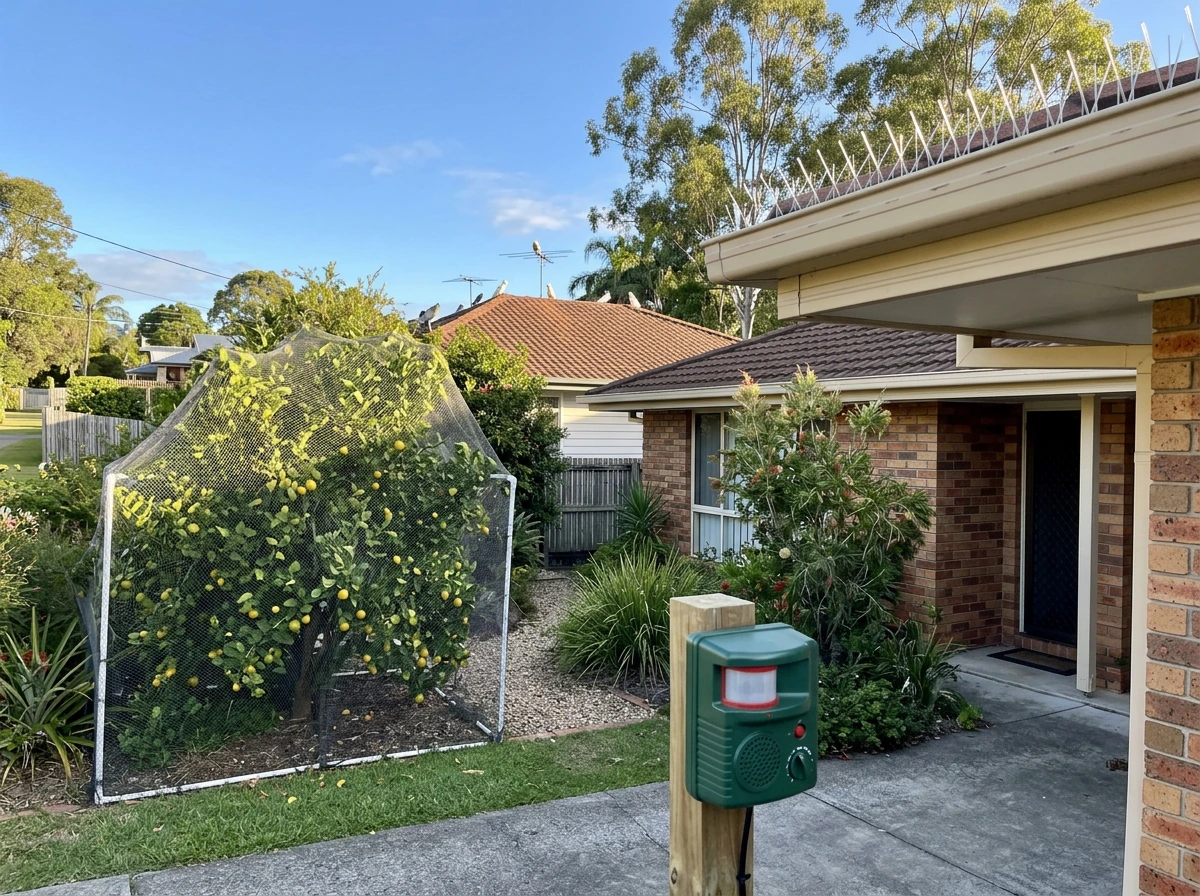
Best Bird Deterrent Australia: Choose What Works Fast
Fast guide to the best bird deterrent in Australia. Pick barriers, sensory or chemical options by bird and site, with se
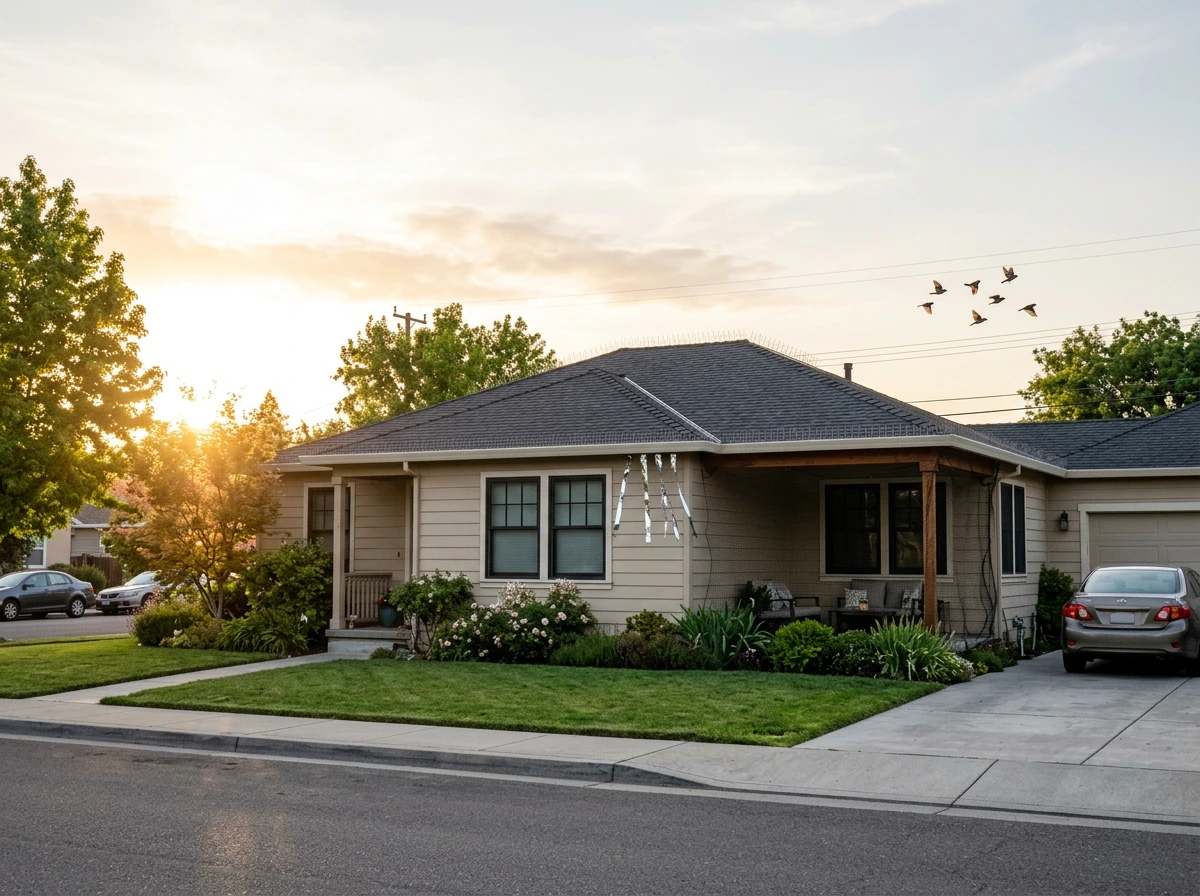
Best Bird Deterrent Reddit: What Works by Location
Best bird deterrent Reddit advice by location: spikes, nets, sensory, and safe chemicals with setup and troubleshooting