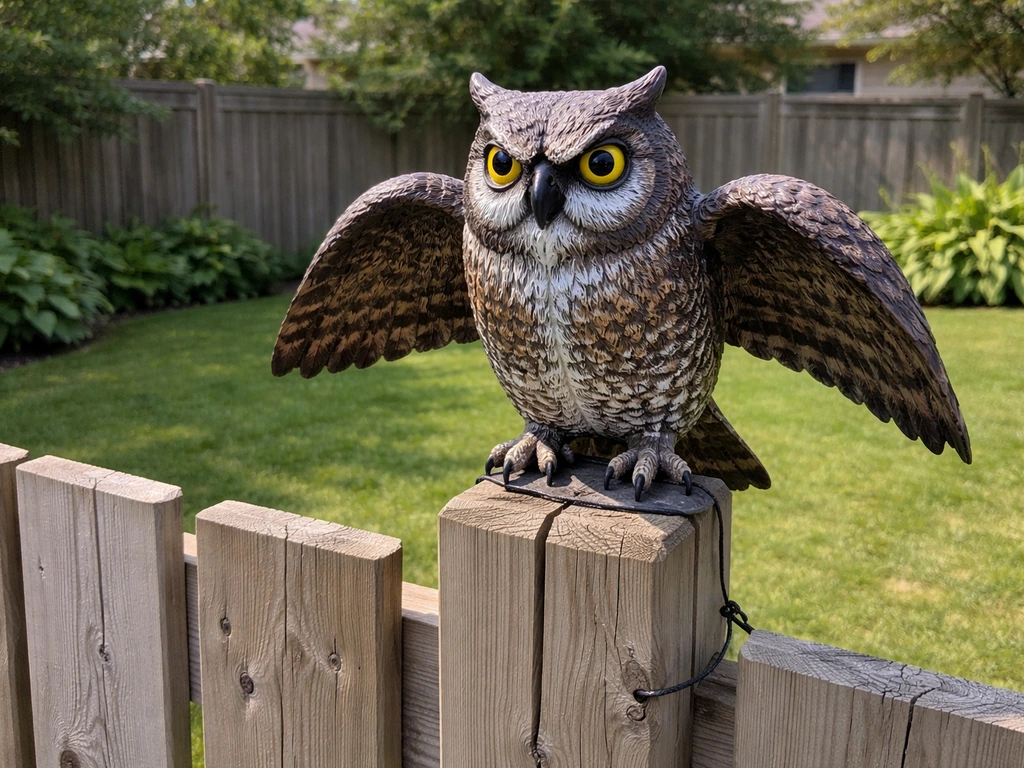
You can buy bird deterrents from home improvement stores like Home Depot, Lowe's, Bunnings, and B&Q for basic DIY products, from Amazon and other online marketplaces for a wide mid-range selection, and from specialist suppliers like Bird-B-Gone, Bird-X, and Nixalite for professional-grade equipment. The right channel depends on the product type you need, how serious the bird problem is, and whether you are doing the job yourself or hiring a contractor.
Where to Buy Bird Deterrents: Best Sources & What to Choose

Marcus Weatherby
22 Jul 2026
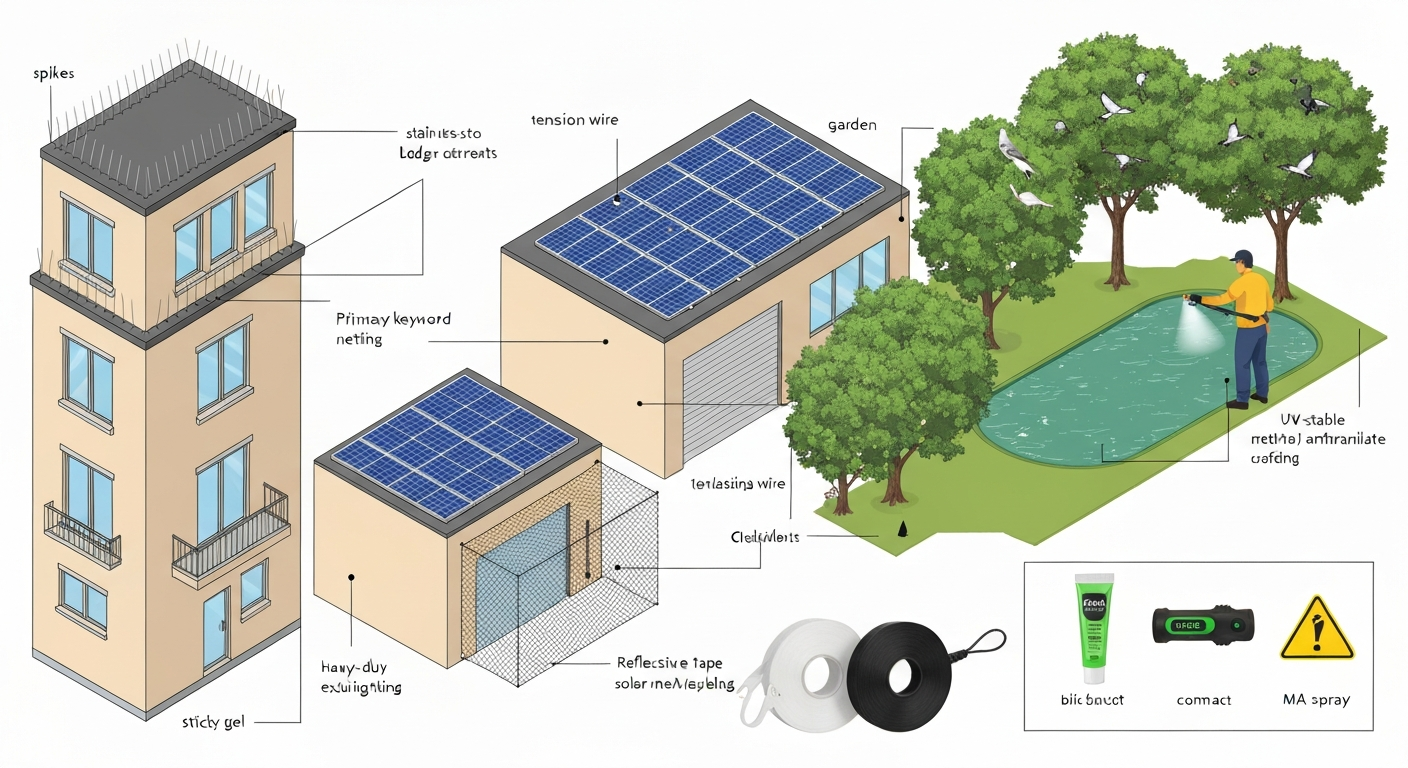
What bird deterrents are and how they work
A bird deterrent is any device, material, or substance that discourages birds from landing, roosting, nesting, or feeding in a specific location. Deterrents do not have to harm birds to be effective. They work through one of three mechanisms: physical exclusion (making a surface inaccessible), sensory interference (frightening or disorientating birds through sight, sound, or smell), or chemical repellency (making a surface or food source unpleasant or irritating to birds). Most successful programs combine more than one method, because birds habituate quickly to any single, static deterrent.
The effectiveness of a deterrent depends heavily on the bird species involved, the site layout, and how consistently the product is maintained or repositioned. University extension services, including UC IPM and Penn State, consistently recommend physical exclusion as the first-line, long-term solution for buildings and small farms, with sensory and chemical methods used as supplements rather than standalone fixes.
Physical barriers: spikes, netting, wire, and mesh
Physical barriers are the most reliable product category because they remove the option to land rather than simply attempting to scare birds away. The main types are ledge spikes, exclusion netting, tensioned wire systems, and structural mesh. Each suits different surfaces and infestation levels.
Ledge spikes
Ledge spikes are rows of stainless steel or polycarbonate pins mounted on a base strip and glued or screwed to parapets, window ledges, beams, and roof edges. They work well against larger species like pigeons, gulls, and starlings. Be aware that very small birds can sometimes nest between spikes or ignore them entirely, and poorly installed spikes can actually trap birds or debris. Nixalite and Bird-B-Gone are two long-established manufacturers with detailed installation guides and multi-year limited warranties. You can buy their products directly from their websites or through professional bird-control installers. For lighter DIY use, home improvement stores and Amazon carry polycarbonate spike strips at lower price points, though the materials are generally less durable than stainless steel.
Exclusion netting
Exclusion netting is the most effective solution for covering large areas such as loading bays, roof voids, fruit crops, and entire building facades. UV-stable netting in the right mesh size for the target species will substantially reduce bird access when properly tensioned and anchored. The key caution from extension literature is that loose or poorly fitted netting can trap birds, so installation needs care. For agriculture, NCAT guidance describes netting as the most reliable deterrent for fruit crops. Heavy-duty knotted polyethylene netting for commercial buildings is best sourced from specialist suppliers like Bird-B-Gone, Bird-X, or Nixalite, all of which sell directly online and through trade networks. Lighter garden netting for fruit cages is widely available at garden centers, agricultural co-ops, and hardware stores.
Tensioned wire and electric track systems
Tensioned multi-strand wire systems create an unstable landing surface on ledges and parapets without being visually intrusive, making them popular for heritage buildings. Electric track systems deliver a mild conditioned-aversion shock and are used on ledges, signs, and solar panels where spikes are not appropriate. Both are specialist-grade products sold primarily through bird-control trade suppliers and installed by professional contractors.
Where to buy physical barriers
| Product | DIY/Consumer Channels | Professional/Specialist Channels | Approximate Price Range |
|---|---|---|---|
| Polycarbonate ledge spikes | Home Depot, Lowe's, Bunnings, Amazon, B&Q | Bird-B-Gone, Nixalite, local pest-control suppliers | $5–$20 per linear ft (DIY); higher for pro-grade |
| Stainless steel ledge spikes | Amazon (limited) | Bird-B-Gone, Nixalite, pest-control distributors | $10–$30+ per linear ft |
| Garden/crop netting | Garden centers, Bunnings, Home Depot, Amazon | Agricultural co-ops, NCAT-recommended suppliers | $0.10–$0.50 per sq ft |
| Heavy-duty building netting | Limited DIY availability | Bird-X, Bird-B-Gone, Nixalite, specialist installers | Varies by project size |
| Tensioned wire systems | Not typically available DIY | Bird-B-Gone, Nixalite, professional installers | Project-based pricing |
| Electric track systems | Not typically available DIY | Bird-X, Bird-B-Gone, specialist suppliers | Project-based pricing |
Sensory deterrents: visual, sonic, ultrasonic, lasers, and decoys
Sensory deterrents try to exploit birds' instincts by mimicking threats or creating uncomfortable environments. They are easier to install than physical barriers but carry a significant caveat: birds habituate to static, predictable stimuli relatively quickly. This means sensory deterrents work best as part of a combined program, repositioned or varied regularly.
Visual deterrents
Reflective tape, flash tape, holographic bird diverters, and predator decoys (owl and hawk figures) are the most widely available consumer products. They are inexpensive and stocked at virtually every garden center, hardware store, and online marketplace. They can provide short-term relief, particularly in gardens and around fruit crops, but must be moved regularly to remain effective. Static owl decoys used without repositioning typically stop working within days to weeks.
Sonic and ultrasonic devices
Sonic devices broadcast predator calls or distress calls at audible frequencies, while ultrasonic devices use frequencies above human hearing. Research on ultrasonic devices is consistently mixed: many peer-reviewed tests find short-term displacement at best and rapid habituation in most scenarios. Sonic devices using genuine species-specific distress calls can be more effective but create noise nuisance in residential areas. Both types are widely sold on Amazon and in garden centers, and specialist versions are available from Bird-X and Bird-B-Gone. If you buy an ultrasonic unit, set realistic expectations and combine it with at least one physical barrier.
Laser deterrents
Green and red laser systems have shown high short-term avoidance rates, exceeding 80% in some waterbird and gull trials. They are most effective at dusk, dawn, or in low-light conditions, and lose effectiveness in full daylight. Habituation remains a concern over longer periods. Critically, handheld and automated laser systems carry human-eye-safety and aviation-safety obligations. Never point lasers toward aircraft approach paths, and check local regulations before deploying near any airfield. Professional laser systems for airports and industrial sites are sourced through specialist bird-control or aviation-safety suppliers and deployed under a safety management framework, not sold as consumer products.
Predator birds and falconry
Trained raptors used in falconry programs are among the most effective active dispersal tools at airports and large commercial sites, according to peer-reviewed aerodrome management literature. This is a professional service, not a purchasable product. Falconry operators are licensed and typically contracted on an ongoing basis for sites like airports, landfills, and large food-production facilities.
Where to buy sensory deterrents
- Reflective tape, flash tape, and owl decoys: garden centers, hardware stores (Home Depot, Bunnings, Screwfix), Amazon, Walmart, Argos
- Consumer sonic/ultrasonic devices: Amazon, garden centers, pet stores, mass-market retailers
- Professional sonic systems (Broadcast units with programmable calls): Bird-X, Bird-B-Gone, specialist pest-control distributors
- Professional laser systems: specialist bird-control or airport-safety suppliers only
- Falconry dispersal services: licensed raptor operators, not a retail product
Chemical repellents, sticky gels, and coatings
Chemical bird deterrents fall into two broad groups: surface-applied repellents (gels and coatings that make surfaces unpleasant to land on) and spray or aerosolized repellents (applied to crops, turf, or water).
Sticky gels and tacky coatings
Polybutene-based sticky gels create an uncomfortable tacky surface that deters landing. They are effective for ledges and narrow surfaces but become less useful in dusty or dirty environments where they quickly accumulate debris. They can also trap small birds or insects if over-applied, so follow label instructions carefully. Bird-B-Gone, Nixalite, and Bird-X sell these directly online, and they are also available through pest-control trade distributors.
Methyl anthranilate spray repellents
Methyl anthranilate (MA) is a grape-flavored food-grade compound that irritates birds' trigeminal receptors. It has peer-reviewed and university-extension support as a repellent for fruit crops and water bodies. See Efficacy of methyl anthranilate as a bird repellent (UNL/Vertebrate Pest Conf. proceedings) for peer-reviewed trial results and extension-type evaluations supporting MA use on fruit and water. It is biodegradable, but it photodegrades and requires repeat applications. Slow-release formulations extend efficacy. In the US, registered MA products are available from agricultural chemical suppliers, pest-control distributors, and directly from manufacturers. Always verify that the product is EPA-registered for your intended use site and follow label directions, as the label is legally binding.
Regulated chemical avicides
Products containing 4-aminopyridine (sold under the brand name Avitrol) are Restricted Use Pesticides in the US, available only to certified pesticide applicators. They are not available over the counter. In Australia, agricultural and veterinary chemical products must be registered with the APVMA, and state agencies control permits for lethal or more invasive methods. In the UK, any lethal bird-control method requires a licence from Natural England or the relevant devolved authority. If you think you need a regulated chemical product, contact a licensed pest-control professional rather than attempting to source it yourself.
Checking registration before you buy
In the US, use the blank" rel="noopener noreferrer">EPA's Pesticide Product and Label System (PPLS) to confirm that any chemical bird repellent is registered for your specific site and use case before purchasing. In Australia, check the APVMA registered products database. For a concise comparison of top options and suppliers specific to Australia, see our guide to the best bird deterrent Australia. In the UK, the Health and Safety Executive maintains the pesticide register. Buying an unregistered or mislabeled product and using it incorrectly can result in legal liability beyond just product ineffectiveness.
Matching deterrents to patios, windows, balconies, and pools
For patios and balconies where pigeons or gulls roost on railings and ledges, stainless steel or polycarbonate spikes on the railing cap are the most practical long-term fix. They are sold in easy-to-install strip lengths at hardware stores and online. Tensioned wire systems are a more discreet alternative if you are concerned about appearance. For bird droppings on patio furniture and outdoor dining areas, reflective deterrents (flash tape, mirror balls) offer some short-term relief and are inexpensive from garden centers, but expect to reposition them frequently.
For windows, birds strike glass because they see the reflection of sky and vegetation. Anti-collision window films, external tape patterns, and UV-reflective decals address this differently than roosting deterrents. These products are available on Amazon and from specialist window-film retailers. Standard predator decals stuck to the inside of glass are largely ineffective unless the coverage is dense (one marker per 2x2 foot area or tighter on the exterior surface).
For pools and ponds, birds are attracted by the water and fish. Physical netting over the pool or pond surface is the most reliable solution and is available from pool supply stores and garden centers. Floating predator decoys (alligator heads, heron decoys) work briefly but require frequent repositioning. For larger ornamental ponds, methyl anthranilate formulations registered for aquatic or open-water use provide a supplementary chemical deterrent when combined with physical measures.
Roofs, gutters, soffits, and solar panels
Roofs and gutters accumulate debris from bird droppings and nesting material, which causes blockages and structural damage over time. The primary solutions are physical: gutter guards, mesh, and spike strips on ridge tiles and roof edges. These are available at roofing suppliers and large hardware stores. For soffits and eaves, mesh or foam backer infill blocks nesting cavities and is best installed outside nesting season to avoid disturbing active nests (more on that below).
Solar panels have become a common problem area because the gap underneath is ideal nesting space for pigeons. The standard solution is solar panel mesh or perimeter skirting that runs around the panel perimeter at roof level. Bird-B-Gone and Bird-X both sell solar panel bird deterrent kits. Some solar installers now offer this as a retrofit service. Professional installation is worth considering here because roof work carries fall risks, and the mesh must be fastened in a way that does not void the panel warranty.
For ridge tiles, roof peaks, and chimney stacks where gulls or pigeons roost, ledge spikes and tensioned wire systems are the main products. Get stainless steel versions for outdoor roofing applications, as plastic degrades faster under UV exposure. A pest-control contractor can specify the right product for your roof profile and install it safely.
Gardens, orchards, and agricultural fields
For home gardens and small fruit plots, netting over individual plants or fruit cages is the most effective tool. Garden-grade UV-stabilized netting is sold at every garden center and online retailer. Choose a mesh size appropriate to the bird species you are dealing with: finer mesh for smaller birds like sparrows, coarser mesh (19mm or larger) for pigeons. Always ensure the netting is taut and well-secured at ground level to prevent birds getting underneath and becoming trapped.
For orchards and larger-scale fruit crops, NCAT extension guidance identifies properly tensioned UV-stable exclusion netting as the most reliable deterrent for protecting yields. This is a significant material and labor investment but delivers consistent results compared to audio or visual scare devices. Agricultural experts are trying to develop a bird deterrent to improve crop protection and reduce reliance on temporary scare devices. Agricultural netting at this scale is sold through agricultural merchants, farm co-ops, and specialist horticultural suppliers. Compare warranty periods and UV-stability ratings between suppliers before purchasing, because cheaper netting degrades quickly under direct sun.
For grain fields and large open agricultural areas where netting is impractical, a combination of propane gas cannons, bird-scaring kites, and distress-call broadcast units is commonly used. Propane cannons are available from agricultural equipment dealers and some online agricultural retailers. Extension literature and Transport Canada airport research both note that propane cannons and similar auditory devices lose effectiveness quickly through habituation unless they are moved regularly and used at unpredictable intervals. Methyl anthranilate sprays registered for crop use provide a complementary chemical deterrent worth discussing with an agricultural chemical supplier or extension agent.
Nesting prevention, commercial buildings, aviation sites, and protected-species situations
Preventing nesting before it starts
Proofing work to block potential nest sites is most effectively done outside the nesting season, typically late autumn to late winter in the northern hemisphere. For guidance on choosing the best bird nest deterrent for specific sites and species, see our roundup of top-rated nest-prevention solutions. Once birds are actively nesting, legal protections in most countries restrict what you can do without a licence. In the UK, all wild birds and their active nests are protected under the Wildlife and Countryside Act 1981: removing or disturbing an active nest without a Natural England licence (or equivalent devolved-authority licence) is a criminal offence. In Australia, native birds are federally protected and state agencies control what management actions are permitted. In the US, migratory birds are protected under the Migratory Bird Treaty Act, which limits lethal control and nest disturbance for covered species.
The practical implication is straightforward: inspect buildings in late summer or autumn, identify where birds are gaining access or establishing roost sites, and install mesh, foam filler, or other exclusion materials before the next nesting season begins. Products for this are available at hardware stores. If you discover an active nest mid-season, the safest route is to contact a licensed wildlife handler or pest-control company rather than attempting removal yourself.
Commercial buildings and large-scale installations
For commercial properties, warehouses, food-production facilities, and large retail environments, professional bird-control contractors are the normal route. They specify heavy-duty netting, electric track, tensioned wire, and sometimes sonic systems, and they typically offer service contracts that include maintenance and inspection. Specialist suppliers like Bird-B-Gone, Bird-X, and Nixalite operate trade and installer programs, supplying products to contractors who then sell installation as part of a package. If you are a property manager, request quotes from two or three licensed pest-control companies and ask them to specify the products they use and why.
Aviation and industrial safety-critical sites
Bird strike is a serious aviation safety hazard. In the US, FAA Advisory Circulars (AC 150/5200-33A and AC 150/5200-38) require certificated airports to prepare Wildlife Hazard Management Plans and restrict land uses that attract birds near runways. ICAO, Transport Canada, the UK CAA, and Australia's CASA all publish equivalent guidance requiring integrated habitat management, monitoring, and approved active deterrents rather than relying on any single passive device.
Effective airport bird-management programs typically combine habitat modification, trained falconry operators, pyrotechnics, and (at some sites) automated laser systems. Laser systems used at airports must be deployed under a safety management framework with elevation cut-offs and safety officer oversight, given the eye-safety and airspace implications. These are not consumer products: procurement goes through aviation-safety and specialist bird-control suppliers with relevant certifications. Falconry services are contracted from licensed raptor operators. Pyrotechnic devices (shell crackers, bird bombs) used for bird dispersal are typically sold through agricultural or pest-control trade channels under applicable regulations, not in consumer retail.
If you manage a site near an airport or airfield, coordinate with the airport wildlife manager and check local authority restrictions before deploying any bird deterrent. Lasers, drones, and some acoustic devices are restricted in controlled airspace regardless of your bird-control intent.
Buying channels by region
The channels available to you depend on where you are. Here is a practical breakdown by region. For UK-specific suppliers and recommendations on the best bird deterrent UK, consult a regional buying guide focused on UK retailers and regulations.
| Region | Consumer/DIY Retailers | Specialist/Professional Suppliers | Agricultural Suppliers |
|---|---|---|---|
| United States | Home Depot, Lowe's, Walmart, Amazon | Bird-B-Gone, Bird-X, Nixalite (direct online), pest-control distributors | Farm co-ops, Tractor Supply, agricultural chemical dealers |
| United Kingdom | Screwfix, B&Q, Argos, Amazon UK | Bird-B-Gone UK, Nixalite UK, pest-control trade suppliers | Agricultural merchants, farm supply stores |
| Australia | Bunnings, Mitre 10, Amazon AU | Local pest-control suppliers, Bird-B-Gone AU distributors | Rural supplies (Elders, Landmark), agricultural merchants |
| Canada | Home Hardware, Canadian Tire, Amazon CA | Bird-B-Gone, Nixalite (US border shipping), pest-control distributors | Farm supply stores, co-ops |
For region-specific brand recommendations, community forums like Reddit carry useful first-hand experience. Threads on r/homeimprovement and r/pestcontrol frequently include real-world feedback on products available locally, including which DIY brands hold up and which are not worth the money. Extension service websites for your region (UC IPM in California, Penn State Extension in the US Northeast, state-based extension services across Australia) also carry product-category recommendations grounded in independent research rather than manufacturer claims.
DIY or hire a professional?
The decision comes down to scale, safety, and legal complexity. Basic ledge spikes on a ground-floor ledge, netting over a fruit cage, or reflective tape in a garden are all reasonable DIY jobs that need only basic tools and are well within most people's capabilities. Installation guides from Bird-B-Gone and Nixalite are detailed and freely available online.
Hire a professional when the work involves roof access, commercial building heights, or surfaces where a fall is a serious risk. Also use a professional for heavy-duty netting on large structures, electric track systems, and any situation involving active nests of legally protected species. A licensed pest-control contractor will carry appropriate insurance, know the local legal requirements, and typically provide a warranty on workmanship. For any chemical application beyond simple consumer-grade sprays, a licensed pesticide applicator is required in most jurisdictions.
How to compare products before you buy
Whatever you are buying, these are the criteria worth checking before committing. For a curated comparison of top options, see our guide to the best bird deterrents.
- Species match: confirm the product is designed for the bird species causing your problem. Spikes effective for pigeons may be useless against sparrows.
- Material durability: for outdoor use, look for UV-stabilized plastics or marine-grade stainless steel. Check warranty periods and compare between brands.
- Coverage and sizing: measure your ledge, panel perimeter, or crop area before ordering to calculate how much product you need.
- Registration and legality: for chemical repellents, verify EPA (US), APVMA (AU), or HSE (UK) registration for your specific use site before purchase.
- Installation requirements: check whether the product requires professional installation or can be safely done by a non-specialist.
- Reviews from independent sources: community forums, extension service evaluations, and consumer reviews on retail sites are more reliable than manufacturer claims alone.
- Return and warranty policy: specialist suppliers like Nixalite publish warranty terms on their product pages; consumer-grade products from big-box stores often carry shorter or no warranties.
A practical buying checklist
Use this before you spend any money.
- Identify the bird species involved and the specific problem behavior (roosting, nesting, crop damage, aircraft hazard).
- Check whether any active nests are present. If yes, check local legal protections before proceeding.
- Choose the primary deterrent category appropriate to your site (physical exclusion first, supplemented by sensory or chemical).
- Measure the area and calculate quantities needed.
- Confirm that any chemical product is registered for your use site in your country.
- Decide DIY or professional based on height, scale, and legal complexity.
- Source products from at least two channels to compare material specifications and price.
- Plan for maintenance: schedule re-inspection, adhesive reapplication, or product repositioning at intervals.
FAQ
What is a bird deterrent and what types are available?
A bird deterrent is any product or method designed to prevent birds from roosting, nesting, feeding, or causing damage in a specific location. Main types: physical exclusion (netting, mesh, spikes, wire, electric-track), sensory/behavioural (visual decoys, reflective tape, predator silhouettes, lasers), auditory (pyrotechnics, propane cannons, recorded distress/repellent sounds), electronic (sonic/ultrasonic devices), chemical repellents (methyl anthranilate sprays, taste/odor repellents) and operational measures (falconry, trained dogs, habitat modification). Each has strengths and limits; integrated approaches are usually most effective.
Where can I buy bird deterrents online and locally?
Online marketplaces: Amazon, eBay, and regional marketplace sites. Major home-improvement retailers: US — Home Depot, Lowe’s, Walmart; UK — Screwfix, Argos; Australia — Bunnings, Mitre 10. Specialist manufacturers and professional suppliers: Bird‑X, Bird‑B‑Gone, Nixalite (full catalogs, pro-grade spikes, nets, electric systems, lasers). Agricultural suppliers and co-ops sell crop netting and repellents. Aviation/industrial operators should source certified providers and airport‑approved systems via specialist integrators and aviation suppliers. Local pest-control firms and garden centers also stock common DIY items and can advise on professional installation.
How do I choose the right deterrent for a specific location (patio, roof, solar panels, garden, pool, windows, crops, airport)?
Match device to site, species, and constraints: - Patios, balconies, window sills: ledge spikes, angled wire, screening, sticky-trap-free deterrents. - Roofs/ledges/building facades: stainless steel spikes, wire barriers, exclusion mesh, or electric-track for persistent roosting. - Solar panels: specialized mesh/under-panel netting, raised skirts to prevent access and shading-safe fixes. - Pools/waterfeatures: floating netting, perimeter bird-deterrent landscaping, visual decoys or lasers at night. - Gardens/fruit trees: exclusion netting (UV-stable, properly tensioned) or methyl anthranilate sprays for short-term. - Agricultural fields: large-scale exclusion (row covers/netting), scare tactics integrated into IPM; choose materials rated for UV/weather. - Airports/airfields: only approved integrated wildlife-hazard measures (falconry, pyrotechnics, lasers used per regulations and trained staff). Consider aesthetics, non-target risks, access for maintenance, and local wildlife protections.
Are electronic sonic and ultrasonic devices effective?
Evidence shows mixed results. Many studies and extension services report short-term displacement at best and rapid habituation if devices are used alone. Sonic devices can work intermittently for some species in limited contexts when varied, mobile, and combined with other methods. Ultrasonic devices lack robust peer-reviewed support in many field conditions. Use them as part of an integrated strategy, not as sole long-term solutions.
How effective are visual deterrents (decoys, reflective tape, lasers)?
Visuals can be effective short term. Reflective tape and predator decoys often work initially but birds habituate if objects are static. Lasers (green) have produced high short-term effectiveness against waterbirds and gulls in trials (>80% avoidance in many tests) but effectiveness drops with habituation, daylight/visibility limits, and there are eye-safety and aviation restrictions. Rotate, move, or combine visual methods with exclusion or active harassment to maintain efficacy.
What chemical repellents are legal and practical?
Food‑grade methyl anthranilate (MA) formulations have peer-reviewed support for some crops and water applications; they are biodegradable but need repeat applications and can photodegrade. Avicides such as 4‑aminopyridine are federally regulated in the U.S., often Restricted Use Pesticides, and carry label restrictions on sites, species and applicators. Always check national and local pesticide registries (EPA PPLS in the U.S., APVMA in Australia, relevant authorities in the UK) and follow the product label (the law). Obtain necessary permits for restricted products and avoid non-target impacts.
Next Article
Best Owl Bird Deterrent: How to Choose and Use It
Choose and deploy the best owl bird deterrent for your property, with limits, placement tips, and troubleshooting.