
For birds hitting windows due to reflections, the most effective deterrent is exterior bird tape or window film applied in a tight grid with no more than 2 inches between strips. For birds perching or roosting on window ledges and sills, physical barriers like spikes or tensioned wire systems are your best bet. The right choice depends on what the birds are actually doing at your window, so start by figuring that out before buying anything.
Best Bird Deterrent for Windows: What to Buy and How

Marcus Weatherby
3 May 2026
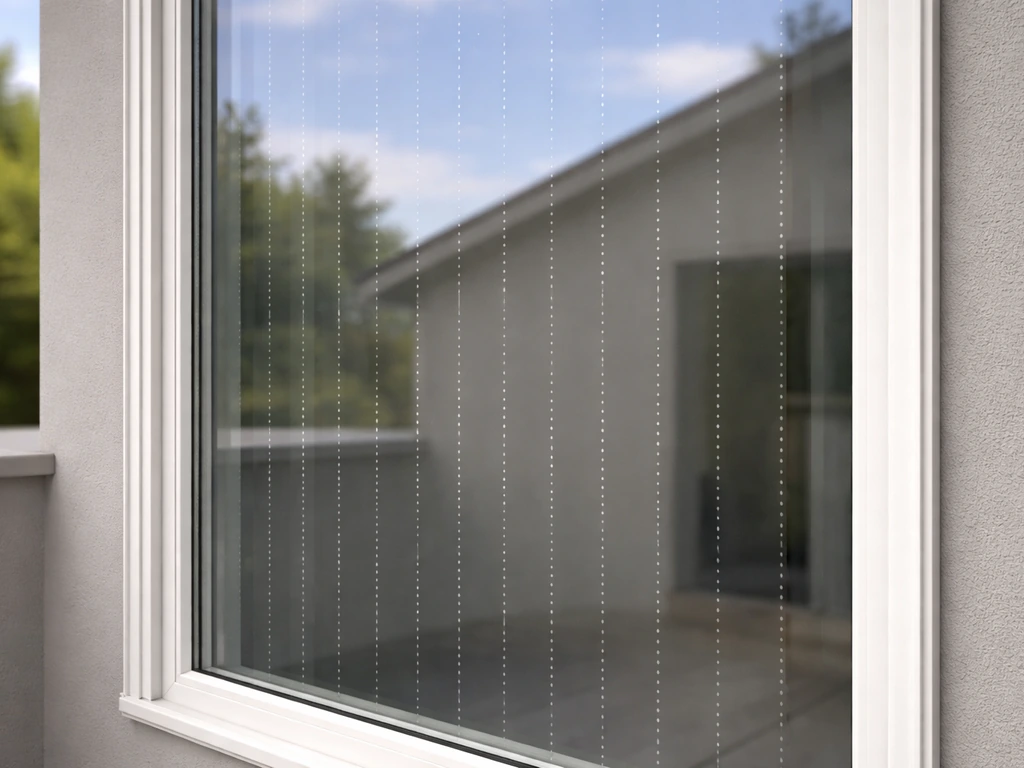
Why birds are targeting your window in the first place
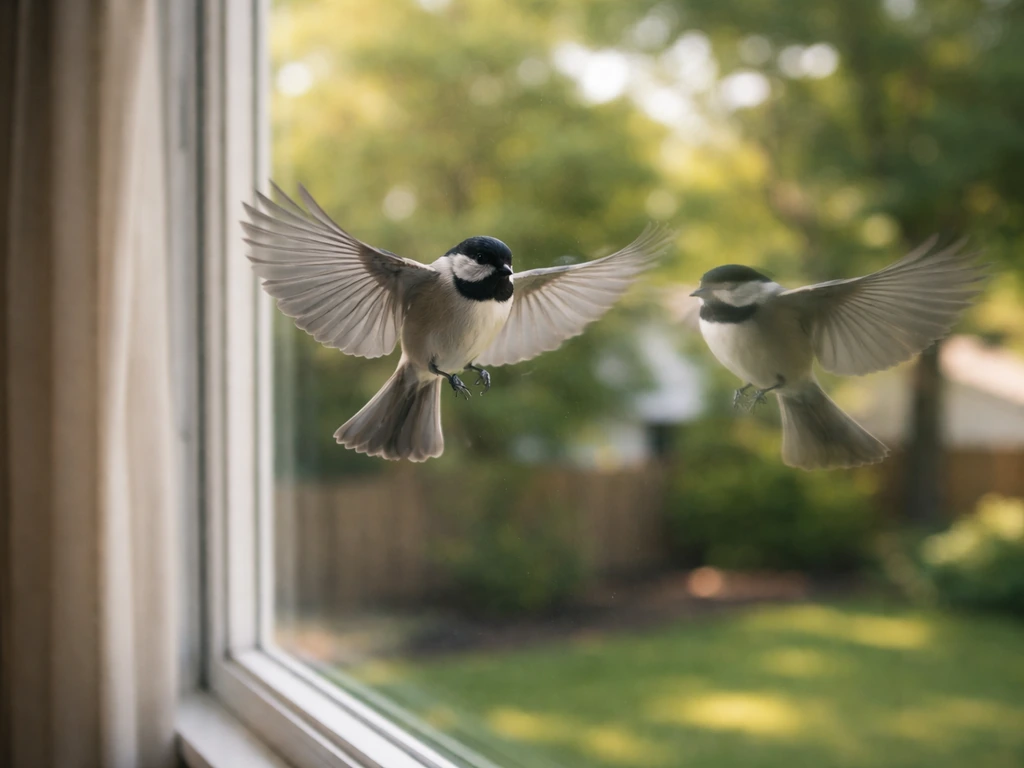
There are really three distinct problems that all get lumped under 'birds at my window,' and they need different fixes. Getting this diagnosis right saves you money and frustration.
The most common issue is collision: birds repeatedly fly toward or strike the glass because they see a reflection of open sky, trees, or landscape and interpret it as a clear flight path. This is especially bad on bright, sunny days and on windows surrounded by vegetation. The bird isn't attacking you or your window. It's confused by what it sees in the glass.
The second problem is perching or roosting. Birds land on window ledges, sills, or nearby architectural features because those spots offer shelter, elevation, or a convenient lookout. This tends to happen with larger species like pigeons, starlings, or sparrows. The mess they leave behind is usually what drives people to act.
The third, less common issue is territorial aggression: a bird (often a robin, cardinal, or mockingbird) sees its own reflection and attacks the glass repeatedly, trying to drive away what it thinks is a rival. This one is seasonal, tied to breeding, and usually stops on its own in a few weeks. The fix is the same as for collisions, but knowing it's temporary helps.
One quick way to figure out which problem you have: if the bird flies away and comes back at speed, it's collision or aggression. If it just sits there, it's a perching or roosting problem. Ground-floor windows in wooded areas tend to have collision issues. Upper-story ledges and recessed windows tend to attract perching birds.
Best deterrent by scenario: quick shortlist
Here's a fast breakdown so you can jump straight to the right section if you already know your problem.
| Scenario | Best deterrent type | Key detail |
|---|---|---|
| Birds hitting glass (reflection) | Exterior bird tape or window film | Applied outside, strips no more than 2 inches apart |
| Birds perching on ledges/sills | Spikes or tensioned wire system | Must cover full ledge width with no gaps |
| Birds roosting in recessed windows | Mesh/netting or angled spike strips | Block access to the recess entirely |
| Territorial aggression at glass | Same as reflection fix (exterior film/tape) | Temporary problem; break up the reflection |
| Mixed perching + collision issue | Combine exterior film with ledge spikes | Address each problem with its own solution |
Physical barriers: spikes, wire, and netting for ledges and sills
Physical deterrents are the most reliable option for perching and roosting because they don't rely on a bird learning or being scared. For ledges and sills on trees, the best approach is usually a physical barrier or habitat management tailored to where the birds are landing and roosting best bird deterrent for trees. They simply make landing physically uncomfortable or impossible.
Spike strips
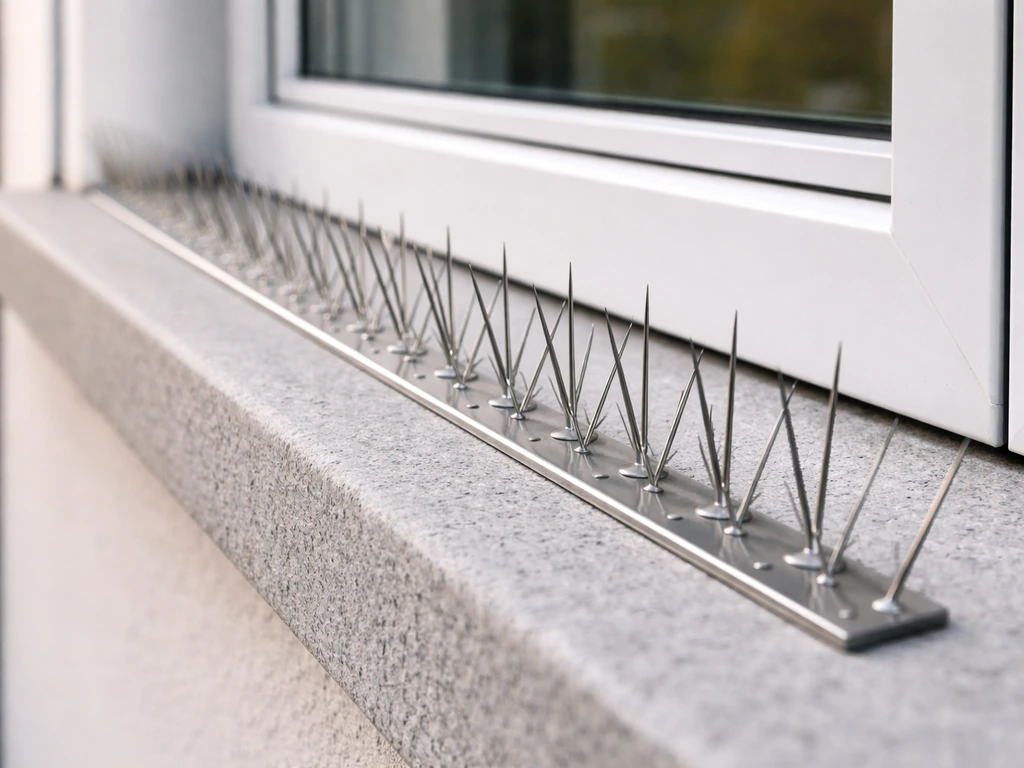
Spike strips are the standard solution for window ledges and sills. They're available in plastic or stainless steel, with plastic being adequate for small birds and stainless steel holding up better against larger, heavier species. When installing them, don't cut corners on fasteners. Manufacturer guidance for products like Dura-Spike recommends nine screws per 3-foot section, not just one per hole. Loose spikes shift over time, leaving gaps birds will exploit. Cover the full ledge width with no breaks. A 2-inch gap is enough for a sparrow to squeeze through and set up shop.
Tensioned wire (birdwire) systems
Birdwire systems use stainless steel posts and tensioned wires stretched across a ledge at varying heights, typically alternating between around 3.5 inches and 5 inches. When a bird tries to land, the unstable, springy wires make footing impossible and the bird moves on. These systems are less visible than spikes and look better on architectural features. They're particularly effective for larger birds on wider ledges. The key to good installation is consistent wire tension and staggered post heights so there's no stable spot anywhere on the surface.
Mesh and netting
For recessed windows or window wells where birds are actually getting inside a sheltered space to roost, mesh or netting is often the cleanest solution. Attach it to the outer frame of the recess so birds can't get in at all. Use UV-resistant polypropylene netting with a mesh size appropriate for the species (19mm for pigeons, tighter for sparrows and starlings). Make sure the netting is taut and sealed at every edge. A saggy net with a loose corner becomes a trap rather than a deterrent.
Visual deterrents that actually work on windows
This is where most people go wrong. They buy a hawk decal, stick it in the middle of the window, and wonder why birds still hit the glass two feet away. A single decal does almost nothing. What actually works is breaking up the entire reflective surface so birds can't read the window as open space.
The outside-only rule
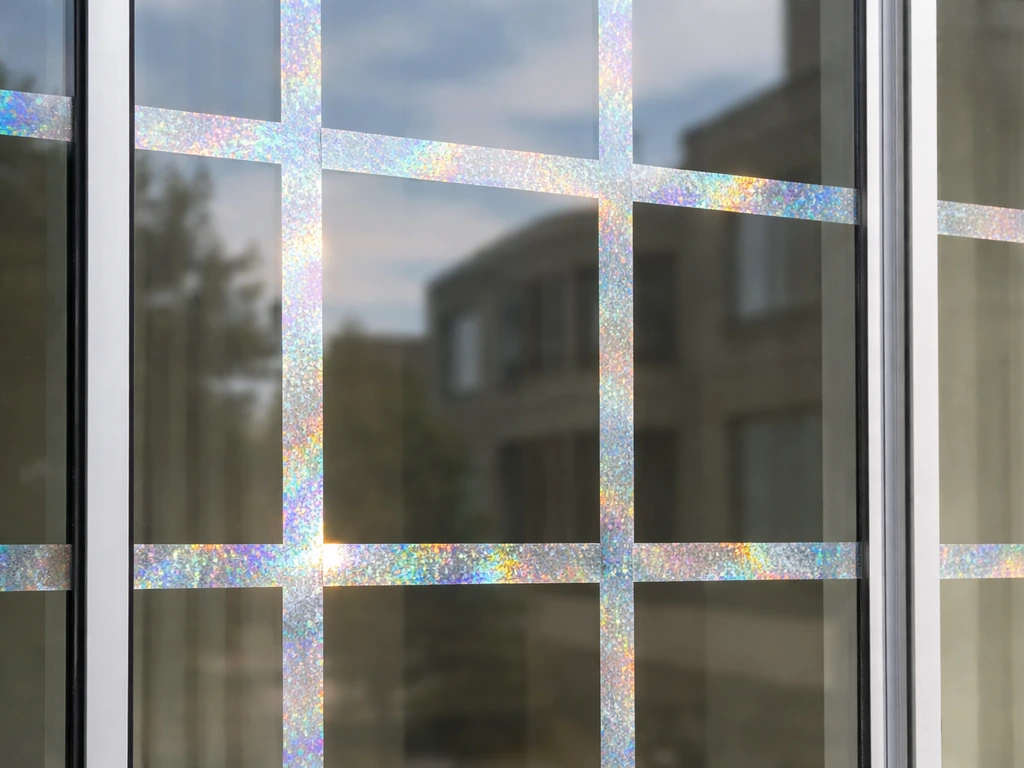
Any visual deterrent meant to prevent collisions must go on the exterior of the glass. Patterns applied inside are often invisible to birds approaching from outside because the outside reflection masks the interior. This is one of the most common reasons DIY window deterrents fail. If your tape, decals, or film are on the inside, move them outside.
Reflective tape and bird tape
Holographic or reflective tape strips applied vertically or horizontally across the window exterior are one of the most cost-effective options. Products like ABC BirdTape are designed specifically for this. The critical measurement: strips or squares must be spaced no more than 2 inches apart across the entire window. Systems like CollidEscape, which use a dotted or striped film applied to the outside, report around 85% collision reduction when correctly spaced. If you're DIYing with tape, think grid, not spot treatment.
Window films
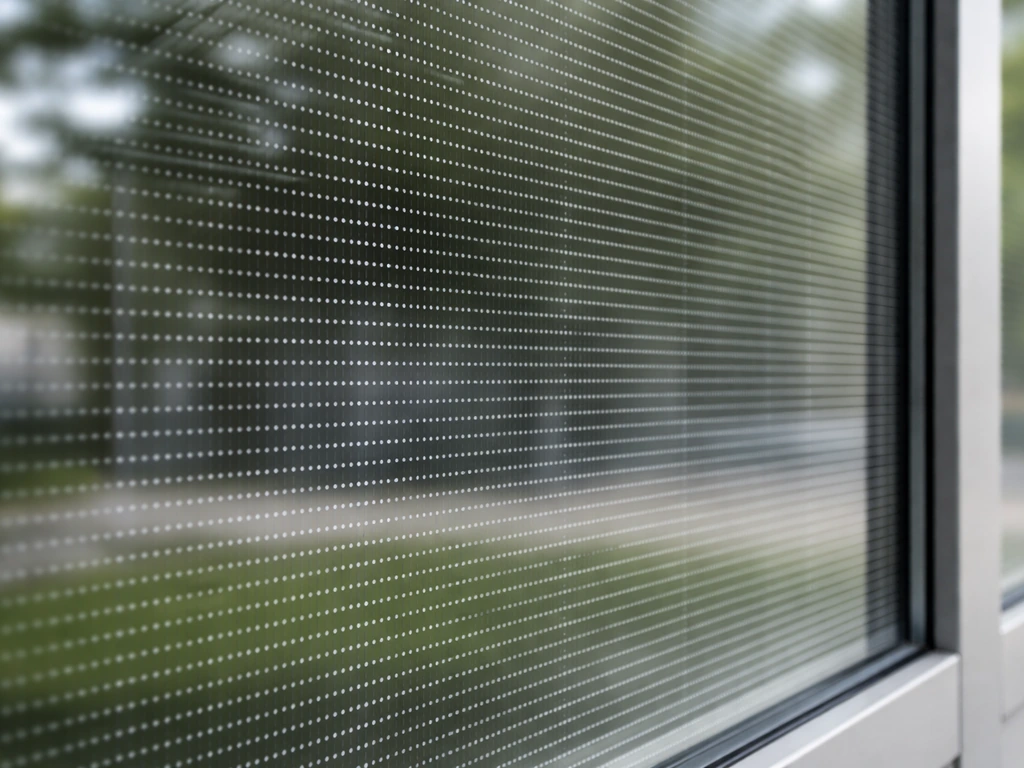
Patterned window films (with dots, lines, or UV patterns) that go on the exterior are highly effective and look cleaner than tape strips. Look for films with a pattern density that meets the 2-inch spacing rule. Some films use patterns only visible in ultraviolet light, which birds can see but humans largely can't, making them a nearly invisible option from indoors. These cost more than tape but last longer and look better on larger windows.
Decals: what they can and can't do
Standard hawk silhouette decals sold at hardware stores are largely ineffective when used alone. Birds don't avoid them reliably, and a single decal only covers a tiny fraction of the glass. That said, decals can work if you use enough of them to create a grid. Place them every 2 inches across the window, applied on the outside, and they'll function the same way as tape strips. One or two scattered decals are essentially decoration.
Other exterior options
For a quick, low-cost test, even basic cling film (cellophane) applied to the outside of a window can reduce reflections enough to cut collisions, since it changes the surface's reflective quality. String, cord, or paracord hung vertically in front of the window at 2-inch intervals also works. These aren't glamorous, but they're cheap and fast to deploy on problem windows while you source a better long-term product.
Sonic and ultrasonic deterrents: honest take on what they do at windows
Sonic and ultrasonic devices are heavily marketed for bird control, and the reality is more complicated than the packaging suggests. Here's what the evidence actually shows.
Ultrasonic devices
Multiple studies have found that ultrasonic devices lack efficacy for repelling birds. Birds simply don't respond reliably to frequencies outside their primary hearing range in the way the marketing implies. For window areas specifically, ultrasonic units are unlikely to prevent collisions (which are a visual problem, not an acoustic one) and won't reliably deter perching birds either. Spend your money elsewhere unless you're testing it as a supplemental measure and have low expectations.
Audible sonic deterrents
Devices that play distress calls or predator sounds can have some short-term effect on perching birds, particularly in quieter residential settings. The catch is habituation: birds learn quickly that the sounds don't represent real danger and stop responding, often within days to weeks. If you use a sonic device, vary the sounds and timing to slow down that habituation. These work better as part of a layered approach rather than a standalone solution. Placement matters too: position the speaker so the sound reaches the birds at the window, not behind a wall or pointed in the wrong direction.
One more practical point: audible sonic deterrents in a residential window context affect your neighbors and household as well. A device running distress calls near a bedroom window at 5am is going to create a different kind of problem.
Chemical repellents near windows: options and safety
Chemical repellents have a limited but legitimate role in window bird control, mainly as a complement to physical or visual solutions rather than a replacement.
Gel repellents
Capsaicin-based gel repellents (like PiGNX, which uses capsaicin in a mineral oil base) work by creating an unpleasant contact experience when birds land on treated surfaces. A peer-reviewed study available via PubMed Central evaluates gel repellents on feral pigeons, supporting their effectiveness under specific conditions. Applied to ledges or sills, they can deter perching without the visual bulk of spikes. The downside is they're messy, can attract dirt, degrade in UV exposure, and need reapplication every few months. Keep them away from window glass itself since the oil base can stain or streak. Apply only to concrete, metal, or painted masonry ledges, not to painted wood or surfaces where oil staining is a problem.
Safety considerations
Any repellent product near windows means it's potentially near people, pets, and children. A few important rules: always follow the EPA-registered product label exactly, never use more than directed, and keep gels away from surfaces where hands might touch (like accessible window sills). The U.S. EPA also emphasizes reading and following the pesticide product label and using EPA-registered repellents as the basis for safe and effective use always follow the EPA-registered product label exactly. Capsaicin is irritating but not toxic in the concentrations used in bird repellents. Bird repellent gels are not appropriate near bird feeders, bird baths, or anywhere birds might ingest them rather than just make contact. Read the SDS (safety data sheet) for any product you use and store it appropriately.
Sticky bird gels (non-capsaicin)
Polybutene-based sticky gels (often called bird repellent gel or bird-proof gel) create a tacky surface birds dislike landing on. These are commonly used on ledges and sills. The same surface and mess caveats apply. Avoid any product marketed as a glue trap rather than a repellent gel: those can trap birds and are not a humane option.
Installation checklist, troubleshooting, and when to get professional help
Installation checklist
- Identify the problem first: collision, perching/roosting, or territorial aggression.
- For collision problems, choose an exterior-applied tape, film, or decal and confirm the product is rated for outside use.
- Apply visual deterrents on the outside of the glass only, covering the full window with a pattern spaced no more than 2 inches between elements.
- For ledge perching, measure the sill width and order spike strips or wire systems that cover the full surface with no gaps.
- Install spike strips with the manufacturer-recommended number of fasteners (typically nine per 3-foot section) for lasting adhesion.
- For recessed windows or window wells, use mesh or netting sealed at all edges with no gaps larger than the target bird species.
- If using a gel repellent, apply only to ledge surfaces, not to glass, and reapply per label instructions (typically every 3 to 6 months).
- If using a sonic deterrent, position the speaker facing the problem area and vary sound playback to reduce habituation.
Troubleshooting when birds keep coming back
- Visual deterrent not working: check if it's applied on the inside rather than the outside, and confirm spacing is 2 inches or less across the full window.
- Spikes not deterring birds: look for gaps, loose sections, or areas where the spike strips have shifted or come unglued. Refasten and close gaps.
- Birds moved from one ledge to an adjacent one: they've just relocated. Extend spike or wire coverage to the new spot.
- Territorial aggression continuing past 4 to 6 weeks: apply exterior deterrent to the specific window being attacked. Consider temporarily hanging outdoor fabric or burlap over that section.
- Netting not working: check for any opening larger than the bird's body, including at corners and along fastening points.
- Gel degraded quickly: reapply more frequently in high UV or high-heat environments, or switch to a physical deterrent for a more permanent fix.
When to call a professional
Most window bird problems are solvable with the DIY options above. But there are situations where professional bird control makes more sense: large multi-story buildings where working at height is dangerous, protected species you can't legally disturb without a permit, severe infestations where birds have established nesting inside structural cavities near windows, or cases where a combination of approaches still isn't working after several weeks. A professional pest control or bird management specialist can assess the full situation, including factors like building design that create ongoing attraction, and deploy commercial-grade barriers that aren't practical for a single homeowner to install.
Window bird problems are frustrating, but they're fixable when you match the solution to the specific behavior. Start with the least invasive approach that addresses the root issue, add layers only if needed, and don't waste time on ultrasonic gadgets or sparse decals. If you're also dealing with birds targeting garden plants, roof areas, or parked cars nearby, many of the same deterrent principles apply, though the specific products and placements differ for each location. For blueberries specifically, choose the bird deterrent that matches how the birds are getting in and landing near the plants best bird deterrent for blueberries. The best bird deterrent for cars depends on the same principles: remove the birds' incentive to land or nest and make the surface uncomfortable or visually unclear parked cars nearby. If birds are also pestering your garden, you may need the best bird deterrent for the specific garden area, not just the windows birds targeting garden plants.
FAQ
What is the single best bird deterrent for windows if I’m not sure whether the birds are colliding or perching?
Choose an exterior, pattern-based window film or exterior bird tape applied as a tight grid (no more than 2 inches between strips). This directly addresses collision behavior and also helps reduce repeated approach attempts, while you observe the bird for a few days to confirm whether additional ledge barriers are needed.
Can I just put bird deterrent tape or film in the middle of the window instead of covering the whole surface?
Usually no. Birds will use any uncovered reflective “open space,” so spot treatment often fails. Cover the entire reflective area across the window so there are no gaps wider than the 2-inch spacing rule.
How long does it take to see results after installing a window deterrent?
With collision issues, many people notice reduced impacts within 1 to 3 days once the reflective pattern is correctly installed. Perching and roosting can take longer (about 1 to 2 weeks) if birds have already selected a ledge or nearby lookout spot, so plan on maintaining the barrier until the habit breaks.
Do hawk decals ever work, and if so, how many do I need?
Decals can work only when used densely enough to function like a grid, not a single “scare” image. If you use decals, place them on the exterior every 2 inches across the glass area, and avoid relying on one or two isolated decals.
Where should I place the deterrent if I have curtains, blinds, or sheer fabric?
Deterrents intended for collision must be on the exterior side of the glass, not behind curtains. If blinds or curtains are open during daylight, you may still get reflection paths, so keep reflective surfaces managed (or ensure your exterior film/tape fully covers the pane).
What should I do if birds keep hitting even after I install tape or film outside?
Check for three common failure points: incorrect side (inside-mounted instead of exterior), spacing gaps larger than 2 inches, and partial coverage where another pane or adjacent sidelight still reflects open sky. Also look for nearby light sources (like porch lights at night) that can create new reflections after installation.
Are ultrasonic devices ever worth buying for window bird problems?
If the goal is preventing collisions or ledge roosting, ultrasonic units are generally a poor primary choice. If you test one, treat it as supplemental at best, expect no reliable results, and avoid spending money before you install a proper exterior visual pattern or a physical ledge barrier.
Is sonic deterrence safe for household and neighbors, and will it disturb other people?
Sonic devices can affect neighbors and other rooms, especially if they trigger distress calls early or if the speaker is placed poorly. If you try sound as a supplement, use it sparingly, avoid nighttime/early-morning operation when possible, and position it so sound reaches the birds rather than being directed into a wall or toward bedrooms.
For window ledges and sills, which barrier is better, spikes or birdwire?
Spikes are typically more straightforward for narrow ledges and small to medium birds if installed tightly with the manufacturer’s fastener spacing. Birdwire is often better for wider ledges and when you want a less visible look, but it requires consistent wire tension and staggered post heights to prevent any stable landing spot.
Can I use capsaicin or sticky gel repellents instead of spikes or window film?
They can deter perching when applied correctly on ledges or appropriate masonry surfaces, but they do not solve collisions caused by reflective glass. In practice, use gels as a complement to physical barriers or exterior visual solutions, and avoid applying gel near glass where oil can streak or where people might touch accessible sills.
Do I need to worry about protected birds or legal issues before installing deterrents?
In many regions you can prevent access and stop damage, but actively disturbing nests or certain protected species may require permits. If you suspect active nesting near your windows or inside recesses, pause and get professional guidance before making major changes to avoid legal and safety problems.
What’s the best approach if birds are getting into a window well or recessed area?
Use exterior-mounted netting or mesh attached to the outer frame of the recess so birds cannot enter at all. Ensure the netting is taut and sealed at every edge, and choose an appropriate mesh size for the likely species because a loose or sagging corner becomes a trap.
How do I prevent birds from learning a routine if the problem is seasonal aggression from a reflection?
Since aggression tied to breeding often fades within weeks, focus on stopping the reflection pattern immediately using exterior visual breaks. A dense grid (tape or pattern film) prevents the “rival” reflection cycle, and you can reassess later rather than relying on short-term sounds.
When is it time to call a professional instead of DIY?
Consider professional help for multi-story buildings, difficult-to-reach ledges, repeated nesting in structural cavities near windows, or situations where impacts continue after you verify correct exterior placement and 2-inch spacing for at least a couple of weeks. Professionals can deploy commercial-grade barriers and assess building design factors that keep attracting birds.
Next Articles

Best Bird Deterrent for Trees: Fruit Tree Protection Guide
Get the best bird deterrent for trees with a shortlist plus how to stop fruit eating, perching, and roosting safely.
Best Bird Deterrent for Garden: Choose, Install, and Upgrade
Compare top garden bird deterrents with setup steps, when they work, troubleshooting, and safe, humane guidance.
How to Avoid Bird Attack Drone: Practical Safety Checklist
Practical, humane steps to reduce bird–drone collisions: preflight checks, deterrents, tactics, and legal guidance.