
The most effective things that repel and eliminate bird mites are removing the bird nest (the source), treating the surrounding area with a pyrethroid or diatomaceous earth, and sealing every entry point birds use to reach your roof, walls, or eaves. No spray alone will solve an infestation if the nest stays in place. Once the birds are gone and the nest is removed, the mites have no host to return to, and a residual miticide or desiccant dust clears the stragglers. That combination, source removal plus environmental treatment plus exclusion, is what the research consistently points to as necessary for lasting results.
What Repels Bird Mites: Practical Prevention, Removal Tips

Marcus Weatherby
30 Jul 2026
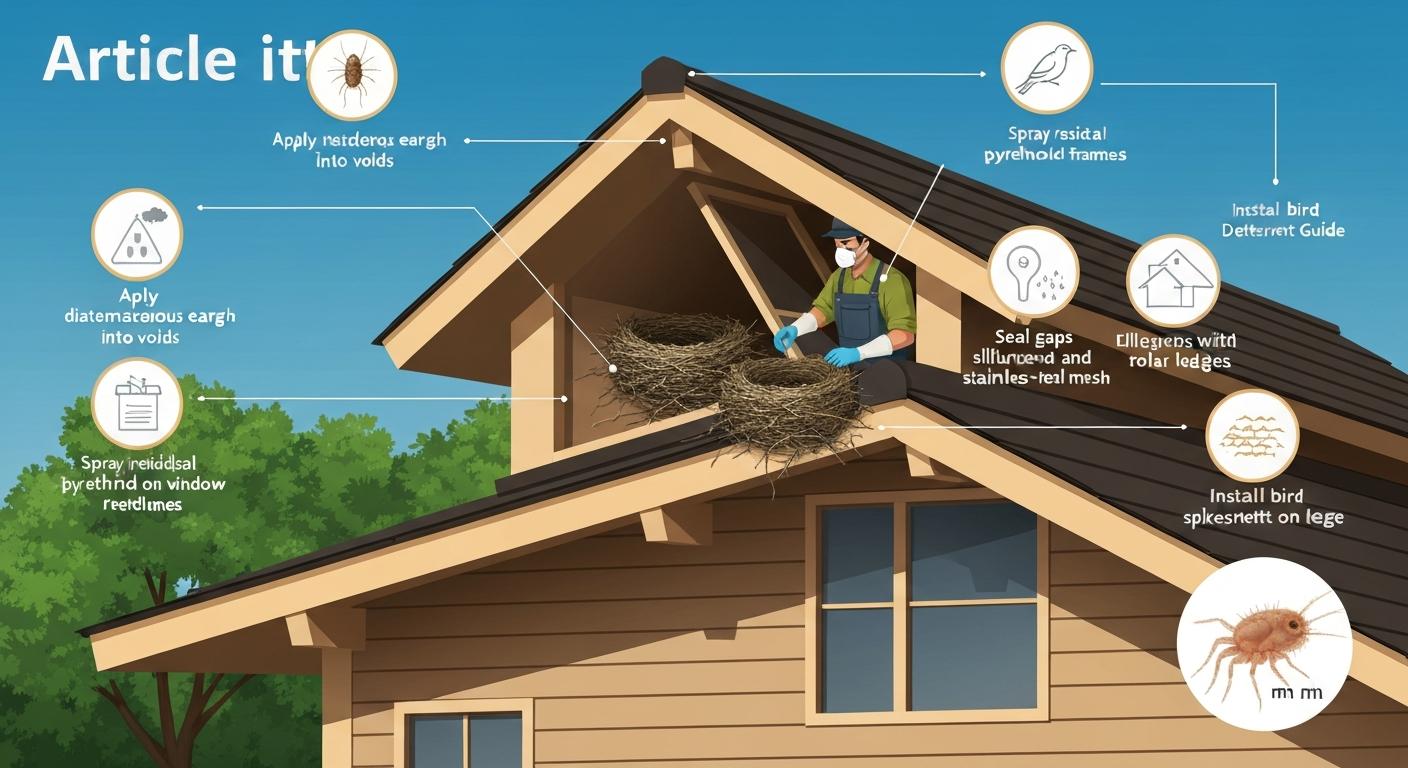
What are bird mites, and why do they end up biting you?
Two species cause the vast majority of bird-mite complaints in homes and commercial buildings: Dermanyssus gallinae (the poultry red mite) and Ornithonyssus sylviarum (the northern fowl mite). A third, Ornithonyssus bursa, is common in warmer climates. They are tiny, typically under 1 mm, and nearly translucent until they feed, at which point they turn red or dark.
Dermanyssus gallinae is the trickier of the two because it spends most of its time off the bird, hiding in cracks, nest material, and wall cavities, coming out at night to feed. It can survive off-host for weeks to months depending on temperature and humidity. Ornithonyssus spp. tend to live directly on the bird and deposit eggs on or near the host, but they too can survive off-host for several weeks under favorable conditions.
Mites bite humans when the primary bird host is gone (fledglings leave, a nest is abandoned) and they are desperate for a blood meal. The bites cause itchy red papules or urticarial (hive-like) welts, a condition sometimes called gamasoidosis or avian mite dermatitis. It is self-limiting in most cases, meaning the bites stop once the mite population collapses, but the itching can be severe and diagnosing the cause is notoriously difficult without finding and identifying the mites themselves.
How bird mites get into your home
The pathway is almost always a nest. Sparrows, starlings, pigeons, swallows, and other birds that nest in or on buildings bring mites with them. The nest concentrates mite populations because it provides warmth, humidity, and a ready food source. When fledglings leave or a nest is dislodged, thousands of mites that were living in the nest material start looking for a new host and follow any available route into the building.
- Roof voids and eaves: birds nesting under tiles or in fascia gaps allow mites to drop into wall cavities
- Air conditioning units and ventilation grilles: a common point where mites travel from a rooftop nest into living spaces
- Window frames and sills: mites crawl through hairline gaps, especially around older timber frames
- Chimneys: swallows and starlings frequently nest here; mites can descend through flue linings
- Solar panels: the gap between the panel and roof surface is an ideal nesting site, and mites migrate inward through nearby penetrations
Once inside, mites spread by crawling across floors, walls, and bedding. They tend to concentrate in dark, undisturbed spots such as baseboards, under furniture, and inside electrical sockets close to the nest entry point. They do not jump or fly, which makes tracing the infestation back to its source relatively straightforward once you know what to look for.
Signs you have a bird mite infestation
The most common sign is bites, but bites alone are not diagnostic because many insects cause similar welts. A few other indicators help confirm bird mites specifically.
- Tiny moving specks on white surfaces (windowsills, bath surrounds, light-colored walls) that are visible to the naked eye or with a magnifying glass
- Bites that appear in clusters, often on arms, neck, and ankles, and are intensely itchy, typically worse at night
- A nearby bird nest: if you can identify a nest on or in your building and bites started after birds fledged, bird mites are the most likely culprit
- Mites confirmed on sticky traps: placing a strip of double-sided tape near suspected entry points overnight can capture mites for identification
- Red or dark specks on white bedding after sleeping, especially if a nest is directly above the bedroom
Outdoors, look for concentrations of mites on window ledges, roof overhangs, and any surface near a nest. Indoors, check along baseboards and in the corners of rooms closest to the suspected entry point. The infestation is usually localized in the first week or two; once mites spread through the whole house, the source has typically been active for some time.
What to do the moment you spot mites or get bitten
Containment first. If you can identify the room or area where mites are entering, close it off from the rest of the house by sealing the gap under the door with a rolled towel or tape while you arrange proper treatment. This limits how far the population spreads.
For the bites themselves, published clinical guidance describes symptomatic treatment with over-the-counter topical corticosteroid cream to reduce inflammation and an oral antihistamine to relieve the itch. Wash affected skin thoroughly with soap and water first. The bites do not transmit disease in most residential contexts, and the reaction resolves once mite exposure stops.
As a short-term repellent on skin, DEET-based insect repellents are the most evidence-supported option for deterring mites from biting while you work on the environmental problem. Apply to exposed skin before entering an infested space. Wearing close-fitting, light-colored clothing (to spot mites easily) and tucking trousers into socks also reduces the chance of mites reaching skin.
Strip and bag the bedding from any room where bites occurred. Wash everything at 60°C (140°F) or higher and dry on a hot cycle. This step alone removes a significant proportion of the mites that have reached your living space.
Evidence-based repellents and topical options
On the skin, DEET (N,N-diethyl-meta-toluamide) remains the best-supported option for repelling mites during an active infestation. It does not kill mites but makes treated skin less attractive. Concentrations of 20-30% are generally considered adequate. Picaridin is a useful alternative for those who prefer to avoid DEET, particularly on children's skin.
Essential oils including tea tree and eucalyptus have shown acaricidal activity against Dermanyssus in laboratory bioassays, but these results have not been replicated in standardized household use conditions. The in-vitro concentrations needed often exceed what is safe or practical to apply to skin or soft furnishings. Treat these as a supplementary option rather than a primary one.
When it comes to bug sprays that are also safe to use around birds (for households with pet birds or in situations where treated birds need protection from further infestation), the formulation and labeled uses matter significantly. See bird mites bug spray for product recommendations and safety information relevant to households with birds. Products described as bird-safe bug sprays vary widely, and it is worth checking labels carefully for specific claims about mite activity and safety for the bird species involved. See our guide to bird safe bug spray for examples of formulations, labeling notes, and tips on choosing products that are effective against mites while safe to use around pet or wild birds.
Topical repellents buy you time and reduce bites during the cleanup process. They do not eliminate the infestation. Environmental treatment is always the primary tool.
Methyl anthranilate: what it actually does (and what it does not)
Methyl anthranilate is a naturally occurring compound (found in grapes and used as a food flavoring) that is registered with the EPA as a biochemical bird repellent. It triggers a trigeminal nerve response in birds, essentially irritating their mucous membranes, which causes them to avoid treated areas. It is used on turf, ornamentals, water features, and structures to deter pest bird species from landing and roosting.
The important distinction for this article is that methyl anthranilate repels birds, not mites. Removing or deterring birds reduces the host population that supports bird mites, so using it as part of a broader bird exclusion program can indirectly reduce mite pressure over time. But there is no peer-reviewed evidence that methyl anthranilate repels or kills Dermanyssus gallinae or Ornithonyssus spp. directly, and EPA product labels for methyl anthranilate products do not claim acaricidal activity.
Typical formulations include ready-to-use sprays, concentrates for hose-end or backpack applicators, and fogger formulations for enclosed spaces. Common registered products include REJEX-IT and similar branded liquids. These are available through agricultural suppliers, large hardware retailers, and pest control distributors. If you are looking for where to buy methyl anthranilate bird repellent, agricultural co-ops and online pest control suppliers are the most reliable sources outside of professional distribution channels.
Use it as part of your bird deterrence program on eaves, ledges, rooftops, and around solar panels to discourage birds from returning after nest removal. Do not rely on it as a mite treatment.
Chemical control: miticides and acaricides
Pyrethroids (permethrin, deltamethrin, cypermethrin) are the most widely available insecticides with documented acaricidal activity against bird mites in laboratory studies. See the study 'Comparative in vitro evaluation of contact activity of fluralaner, spinosad, phoxim, propoxur, permethrin and deltamethrin against the northern fowl mite' (PMC5541702) for laboratory evidence of pyrethroid acaricidal activity and discussion of treatment failures and resistance Comparative in vitro evaluation of contact activity of fluralaner, spinosad, phoxim, propoxur, permethrin and deltamethrin against the northern fowl mite found contact acaricidal activity for permethrin and other pyrethroids but noted variable field efficacy and documented resistance.. They work by disrupting nerve function in insects and arachnids on contact. For environmental application, residual permethrin sprays applied to baseboards, wall cavities near nest entry points, window frames, and other harboring sites are a practical first-line chemical option.
The limitation is real: multiple field trials and university studies have documented pyrethroid resistance in Dermanyssus gallinae and Ornithonyssus populations, and treatment failures with permethrin are not unusual. If a pyrethroid spray does not produce a clear reduction in mite activity within 7-10 days of thorough application, rotating to a different chemical class (such as a spinosyn-based or organophosphate-class product where licensed for residential use) is advisable.
Diatomaceous earth (DE) and amorphous silica dusts work by a physical, not chemical, mechanism: they abrade and desiccate the mite's cuticle, causing death by dehydration. Research has shown efficacy against Dermanyssus in poultry settings, and DE has advantages for use in wall voids and other areas where liquid sprays are impractical. Use food-grade or pest-control-grade amorphous DE, not industrial crystalline silica products. The National Pesticide Information Center (NPIC, Oregon State University) notes that food‑grade diatomaceous earth is used for pest control but cautions about inhalation risks and that some products may contain crystalline silica, recommending respiratory protection when applying dusts Diatomaceous Earth Fact Sheet — NPIC (Oregon State University). Always wear an N95 or P100 respirator and eye protection when applying any silica dust. NIOSH identifies crystalline silica in some DE products as a respiratory hazard.
| Product type | Mode of action | Residual activity | Resistance risk | Key safety note |
|---|---|---|---|---|
| Permethrin spray | Contact neurotoxin | 2-4 weeks on porous surfaces | Documented in field populations | Keep away from cats; toxic to aquatic invertebrates |
| Deltamethrin dust/spray | Contact neurotoxin | Up to 6 weeks in dry conditions | Cross-resistance with permethrin possible | Same precautions as permethrin |
| Diatomaceous earth dust | Physical desiccant | Persistent until disturbed or wet | None (physical mechanism) | Wear N95 respirator during application |
| Spinosad-based products | Nicotinic acetylcholine agonist | 1-2 weeks | Lower resistance risk than pyrethroids | Check label for residential indoor use approval |
| Essential oil sprays (tea tree/eucalyptus) | Contact toxicity (in vitro) | Short (hours to 1-2 days) | Not assessed | Skin irritant at effective concentrations; not standardized |
For dosage and coverage: most residual pyrethroid sprays recommend 1 liter of diluted product per 15-20 square meters for surface application. Apply to harboring sites and potential travel routes rather than broad floor areas. Follow the label exactly, as it is both a legal and a safety document.
Fogging and thermal treatments
Fogging delivers a pesticide or acaricide as a fine aerosol that penetrates into cracks, wall voids, and other areas that a surface spray cannot easily reach. Cold foggers (ULV foggers) produce very small droplets (under 50 microns) that remain airborne briefly, making them better suited to enclosed spaces like roof voids and attic spaces. Thermal foggers produce a denser visible plume and can penetrate deeper into cavities, but they require more careful ventilation management.
The best fogger for bird mites in a residential context is typically a ULV cold fogger loaded with a residual pyrethroid or spinosyn solution. For larger enclosed spaces (roof voids, commercial buildings), a thermal fogger with a professional-grade acaricide gives better penetration. Portable ULV units handling 1-2 liters of solution will cover approximately 100-200 square meters of enclosed space depending on ceiling height.
PPE is non-negotiable during fogging: a chemical-resistant half-face respirator with organic vapor/P100 combination cartridges, chemical-resistant gloves, eye protection, and a disposable coverall or clothes you will immediately wash at 60°C afterward. Vacate all people and pets from the treated area for the period specified on the product label (minimum 2-4 hours for most registered fogger solutions, often longer). Ventilate thoroughly before re-entry.
Fogging alone is not sufficient if the nest is still present. The fog treats the mites that are currently active but does not address eggs in nest material or mites harboring deep in structural cavities. Always combine fogging with nest removal and surface treatment.
Non-chemical exclusion and physical barriers
This is the most important long-term investment you can make. Every method in this article works better and lasts longer when birds cannot re-establish nests on your property. Physical exclusion stops the cycle at its source.
Nest removal
Before removing any nest, check local wildlife protection laws. In many countries, active nests containing eggs or chicks cannot be legally disturbed. Once a nest is confirmed empty and the season has ended, remove all nest material using thick gloves and a disposable dust mask at minimum (an N95 is better). Bag the material immediately in heavy-duty plastic bags, seal tightly, and dispose of it in an outdoor bin. Do not shake or blow the material out, as this disperses mites and their allergens.
Treat the cavity or surface where the nest sat with a residual pyrethroid spray or DE dust before sealing. Allow the treatment to dry or settle, then seal the void.
Sealing and proofing
Bird-proofing materials for gaps and cavities include: exterior-grade silicone sealant for hairline gaps up to around 10 mm, expanding polyurethane foam for larger voids (cover with a rigid material to prevent birds pecking through it), and stainless steel mesh or hardware cloth (minimum 19-gauge, 12 mm aperture or smaller) for ventilation openings and soffits. Galvanized mesh is cheaper but corrodes faster in exposed conditions.
Spikes, netting, and bird wire
Stainless steel or UV-stabilized polycarbonate bird spikes prevent landing and nesting on ledges, beams, gutters, and parapet walls. They work best on flat or narrow horizontal surfaces. For areas where spikes are impractical (large open surfaces, facades, roof structures), bird netting made from UV-stabilized polyethylene or nylon in 19 mm or 50 mm mesh (depending on target species) provides a physical exclusion barrier. Properly tensioned and anchored netting can last 10 years or more. Bird wire (tensioned steel wire on stand-off fixings) is a lower-profile option for listed buildings or commercial facades where aesthetics matter.
Location-specific prevention and exclusion
Patios and decking
Check for nests under decking boards and in pergola joints. Remove nests at end of season, treat with a residual spray, and fit spikes or wire to beam tops. For roofed patios, 50 mm bird netting across the opening below the roof structure is a practical solution if birds repeatedly nest there.
Windows
Seal any gaps around window frames with exterior silicone. Fit fine stainless steel mesh over weep holes in window frames. If birds are nesting on external windowsills, install a spike strip along the sill ledge. Mites entering through window frames can be treated with a thin bead of DE dust or residual spray along the interior frame before sealing.
Roofs and roof voids
The primary roof entry points are damaged or displaced ridge tiles, open soffit ends, and gaps where cables or pipes penetrate the fascia. After nest removal and treatment of the void, seal these with appropriate mesh and mortar or sealant. On tiled roofs, rigid bird comb (a plastic or foam strip that fills the gap under ridge tiles) prevents entry while maintaining ventilation. Have a roofer inspect every penetration.
Gardens and bird feeders
Bird feeders attract birds and concentrate feces, which can carry mite populations. Place feeders at least 3 meters from the building and on a freestanding post rather than mounted on the wall. Clean feeders weekly with a 1:10 bleach-water solution and allow to dry fully. If you find mite-carrying wild birds, reducing feeder attractiveness near the building for the season is the simplest step.
Pools and water features
Birds bathing in pools or ponds near the building increase the chance of mites dropping onto nearby surfaces. Methyl anthranilate sprayed around pool edges or on nearby turf creates an aversive zone for birds without contaminating the water at label rates. Complement this with spikes or wire on surrounding fencing and walls where birds typically perch.
Solar panels
The void beneath solar panels is one of the most common nesting sites for urban birds, particularly pigeons and sparrows. Solar panel bird mesh (purpose-made UV-stabilized mesh with a fixing clip system that attaches to the panel frame without voiding the warranty) is the standard solution. Always confirm with your panel manufacturer that the fixings are compatible, and work with a roofer or solar installer rather than attempting this from an unsecured roof. A mite infestation associated with a solar panel nest can be severe because the void is large, enclosed, and difficult to treat once established.
Sensory deterrents: what the evidence actually shows
Visual deterrents (reflective tape, predator decoys, hawk kites, flash tape) can temporarily displace birds from a specific spot, particularly if the birds have not yet established a strong nesting attachment to the location. Their effectiveness drops sharply within days to a few weeks as birds habituate. They are most useful as an early deterrent when birds first begin investigating an area, not as a primary control method once nesting has started.
Sonic and ultrasonic devices emit distress calls, predator sounds, or high-frequency tones intended to deter birds. The evidence base for ultrasonic devices specifically is weak. Birds respond better to low-frequency sounds, and ultrasonic frequencies above 20 kHz are simply not within their effective hearing range. Sonic devices playing actual bird distress or alarm calls have more biological relevance but are still subject to habituation, and they can disturb neighbors and cause stress in pets. Reserve sonic deterrents for temporary situations (construction sites, harvests) rather than permanent residential use.
Neither visual nor sonic deterrents address the mite problem directly. Even if you successfully deter nesting birds using these methods, existing mite populations in the structure need chemical or physical treatment to be eliminated.
Cleaning, laundering, and decontamination
Thorough cleaning is how you break the mite life cycle indoors. Mites move through carpet fibers, along baseboards, and into soft furnishings. A systematic approach over 2-3 weeks (the approximate off-host survival period for Ornithonyssus under warm, dry indoor conditions) is usually sufficient to clear the building if the source nest has been removed.
- Vacuum all floors, carpets, baseboards, and upholstered furniture daily for the first week, then every 2-3 days. Use a vacuum with a HEPA filter. Immediately seal and dispose of the vacuum bag or empty the canister into a sealed plastic bag after each use.
- Launder all bedding, curtains, and soft furnishings at 60°C (140°F) minimum. Tumble dry on a hot setting. Items that cannot be washed can be placed in a sealed plastic bag and left in a hot, sunny area (car boot in summer) for 24-48 hours.
- Steam clean carpets and upholstered furniture if available. High heat (above 55-60°C) kills mites on contact.
- Wipe down hard surfaces, windowsills, and baseboards with a dilute disinfectant solution. Pay particular attention to areas near the nest entry point.
- Treat wall cavities, baseboards, and any identified harboring points with DE dust or a residual acaricide spray as described in the chemical control section.
- Continue daily vacuuming for at least 2 full weeks after the last mite sighting. A single remaining mite population can re-establish if cleaning stops prematurely.
For outdoor decontamination around nest sites, wet the surface before disturbing it (reduces dust and mite dispersal), remove nest material as described above, then apply a residual spray to the surrounding area. Leave the treated area undisturbed for the label-specified period before resealing.
Safety, legal, and environmental considerations
Pyrethroids, including permethrin, are highly toxic to cats. Do not apply permethrin-based sprays to any surface a cat can access, and keep cats out of treated rooms for at least 72 hours or until the surface is fully dry. Permethrin is also extremely toxic to aquatic invertebrates; do not spray near ponds, water features, or drainage channels. Always read the product label before application.
For children and indoor use, choose products with a residential indoor use approval on the label. Store all pesticides in their original containers, out of reach of children, and in a cool, locked location. Ventilate treated rooms before allowing children or pets back in.
Regarding pollinators, avoid applying any insecticidal spray to flowering plants or near active bee colonies. Apply surface treatments at dusk when foraging bees are less active if outdoor treatment is necessary near garden areas.
On the legal side, most countries protect active wild bird nests under wildlife law. In the UK, the Wildlife and Countryside Act makes it an offense to intentionally disturb an active nest. In the US, migratory birds are covered under the Migratory Bird Treaty Act. Check local rules before removing any nest, and if in doubt, wait until the nest is confirmed inactive. For commercial properties, particularly those in aviation zones or with Heritage/Listed Building status, physical exclusion works must comply with planning permissions and aviation authority guidelines. Installing netting or proofing systems on commercial buildings may require documented method statements and contractor certification.
Buying the right products: a quick comparison guide
Before spending money, be clear on which part of the problem you are addressing: source control (bird deterrence), environmental treatment (killing mites in the structure), personal protection (reducing bites during the process), or long-term exclusion (preventing re-infestation). Most infestations need products from at least three of those four categories.
| Category | What to look for | Approximate cost range | Where to buy |
|---|---|---|---|
| Residual pyrethroid spray | Indoor residential approval on label; 0.5% permethrin or equivalent; 1L covers approx. 15-20 m² | $15-40 per liter RTU | Hardware stores, pest control suppliers, online |
| Diatomaceous earth dust | Food-grade or pest-control grade amorphous silica; avoid crystalline silica products | $10-25 per kg | Garden centers, hardware stores, online |
| ULV cold fogger (device) | Adjustable droplet size; 1-2L tank minimum; chemical-resistant fittings | $80-250 (consumer grade) | Online pest control retailers |
| Bird spikes | Stainless steel pins; UV-stabilized base; coverage: 0.5m per unit; test for correct width for ledge | $1-4 per 0.5m strip | Hardware stores, bird control specialists |
| Bird netting | UV-stabilized polyethylene; 19mm or 50mm mesh (match to species); knotted rather than extruded for durability | $0.50-2.00 per m² | Agricultural suppliers, bird control specialists |
| Solar panel bird mesh | Purpose-made clip system; 40-gauge stainless steel wire; fits panel frame without voiding warranty | $100-300 for average 4kW system | Solar accessory suppliers, bird control specialists |
| Methyl anthranilate spray | EPA-registered; labeled for structural or turf use; note: repels birds only, not mites directly | $20-60 per liter RTU | Agricultural co-ops, online pest suppliers |
| Personal repellent (DEET) | 20-30% DEET concentration; spray or lotion; water-resistant formula | $8-15 per 100ml | Pharmacies, hardware stores, outdoor retailers |
When evaluating any spray or fogger product, check: the active ingredient and concentration, the specific pests listed on the label (the label must name mites or acarines for a legal claim to work against them), residual action period, indoor residential approval, and any restrictions around children, pets, or food preparation areas.
Installation tips and common mistakes
Measuring and fitting exclusion systems
For bird spikes, measure the ledge width before ordering. Spikes come in narrow (40-80mm), medium (100-150mm), and wide (200mm+) configurations. A gap on either side of the spike row gives birds a landing spot; full coverage edge-to-edge is the goal. For netting, always add 10-15% to your measured area for overlaps and fixing allowances. Use stainless steel hooks and tensioning wire, not cable ties, for long-term installation.
Common mistakes to avoid
- Treating without removing the nest: any chemical treatment applied while the nest is in place will fail within days as mites repopulate from the nest material
- Using a pyrethroid spray and stopping after one application: a single treatment does not address eggs in harboring sites; a follow-up application 7-10 days later is typically needed to catch newly hatched mites
- Applying DE in damp areas: diatomaceous earth loses efficacy when wet; it is appropriate for wall voids, dry baseboards, and roof spaces, not bathrooms or kitchens
- Installing spikes with gaps between sections: a gap as small as 50mm is enough for a sparrow to land and work its way around a spike row; join sections tightly
- Ignoring the roof while treating the rooms below: the mite source is almost always above; treating only the living space buys limited time
- Skipping PPE during nest removal: a heavily infested nest can release hundreds of mites when disturbed; gloves, mask, and eye protection are the minimum
DIY versus professional pest control
A straightforward infestation, one confirmed nest on an accessible eave, no spread beyond one or two rooms, and a property with standard construction, is generally manageable as a DIY project if you are willing to work methodically over 2-3 weeks. The key requirements are being able to safely access the nest site, correctly identify the pest, and apply treatment according to the label.
Call a professional pest controller if: the infestation has spread to multiple rooms or floors; the nest is in a roof void, chimney, or other confined space you cannot safely access; you have applied two rounds of treatment and mite activity continues; you have a commercial property with occupancy or aviation compliance requirements; or the property has pets (especially cats) or residents (children, pregnant women, people with respiratory conditions) that complicate safe pesticide use.
A reputable pest controller will identify the species, locate all nest sites, remove nests, apply a professional-grade acaricide (often in a class not available over the counter), provide a written treatment report, and return for a follow-up inspection. Typical residential treatments cost $150-400 for a straightforward job; multi-nest or commercial properties cost more. Red flags include contractors who quote without an inspection, do not ask about pets or children, or cannot produce a product label and safety data sheet for what they are applying.
Impartial buying checklist
Use this checklist before purchasing any product for a bird mite infestation.
- Sprays and miticides: check the label lists mites or acarines as target pests; confirm indoor residential approval; note residual action period; verify safety for pets in household; compare active ingredient class to any previous treatments to manage resistance risk
- Foggers (devices): confirm chemical-resistant fittings compatible with chosen acaricide; verify tank volume covers your target space (1L per 100-150 m³ enclosed space as a rough guide); check droplet size specification (under 50 microns for ULV cold fogger)
- Bird exclusion (spikes, netting, mesh): match spike width to ledge; confirm netting mesh size to target species; verify UV-stabilization rating; check fixing system is compatible with substrate (tiles, concrete, UPVC)
- Bird repellents (methyl anthranilate, visual, sonic): confirm product is EPA-registered or locally approved; verify labeled use matches your application site; understand these repel birds, not mites
- Personal repellents: confirm active ingredient concentration is appropriate; check suitability for age group if using on children
Step-by-step action plan for an active infestation
- Day 1: Confirm the pest. Capture mites on tape, photograph them against a white surface, and compare to reference images of Dermanyssus gallinae and Ornithonyssus spp. If uncertain, submit a sample to a local university extension service or pest controller for identification.
- Day 1-2: Locate the nest. Inspect eaves, roof voids, ventilation grilles, and any area near where bites are occurring. Trace the mite entry point.
- Day 2-3: Remove the nest (if legally permissible and the nest is inactive). Wear gloves, N95 mask, eye protection. Bag and seal all nest material. Apply a residual pyrethroid spray or DE dust to the cleared cavity.
- Day 3: Begin indoor cleaning. Vacuum all rooms, with priority on the room(s) closest to the entry point. Launder all bedding and soft furnishings at 60°C or higher.
- Day 3-4: Apply residual acaricide to indoor harboring sites: baseboards, wall cavities near entry points, under furniture in affected rooms. Consider fogging a sealed roof void if accessible.
- Day 7-10: Follow-up acaricide application to catch newly hatched mites from any eggs that survived the first treatment. Continue daily vacuuming and weekly laundering.
- Day 14: Reassess mite activity using sticky traps. If still active, escalate to professional treatment or switch to a different acaricide class.
- Week 3-4: Once mite activity has ceased, install physical exclusion to prevent birds re-establishing: spikes, netting, mesh sealing of entry points.
- Week 4+: Monitor with sticky traps at former entry points for one full season. Install bird deterrents (methyl anthranilate spray, wire, spikes) on ledges and roof structures as a preventive measure.
Maintenance and seasonal prevention checklist
Bird mite infestations are seasonal and almost always recur if the same nesting sites remain available. An annual maintenance schedule dramatically reduces the risk.
| Season | Task |
|---|---|
| Late winter (before nesting season) | Inspect eaves, roof voids, ventilation grilles, and solar panel edges for new nest beginnings; repair any exclusion materials that have deteriorated; re-apply methyl anthranilate or other bird deterrents to known roost sites |
| Spring | Monitor sticky traps near former entry points; check that all sealed gaps remain intact; ensure feeder placements are away from the building |
| Post-nesting (late summer / early autumn) | Remove any inactive nests; treat vacated sites with residual spray or DE dust; seal the void before next season; assess whether exclusion upgrades are needed |
| Autumn | Final inspection of roof perimeter; touch up spike and netting fixings; re-seal any weathered sealant joints; confirm no nest material remains in roof voids |
| Year-round | Clean bird feeders weekly; maintain a 3-meter exclusion zone between feeders and the building; inspect solar panel mesh annually for gaps |
Useful diagrams and images to reference
If you are assembling a treatment plan or working with a contractor, the following visuals are genuinely useful to have on hand or create for your specific property.
- Nest removal and cavity treatment diagram: shows the sequence of glove-on removal, bagging, spray application, drying time, and sealing, with labeling of PPE at each stage
- Building entry point map: a simple overhead sketch of your property marking every identified gap, vent, and nest site with treatment type assigned to each
- Fogger coverage map: a floor plan with the fogger placement point, coverage radius, and closed-door boundaries marked, to confirm the treated volume before fogging
- Spike and netting installation cross-section: illustrates correct ledge coverage, fixing intervals, and how to close the gap at corners and pipe penetrations
- PPE quick-reference card: images of N95 mask, nitrile gloves, eye protection, and disposable coverall with labeling for nest removal vs. spray application vs. fogging scenarios
- Life cycle chart: a simple timeline showing Dermanyssus and Ornithonyssus life stages (egg, larva, protonymph, deutonymph, adult) with days-at-temperature data, which helps explain why a second treatment at day 7-10 is necessary to catch hatching eggs
FAQ
Quick answer — what repels bird mites?
The fastest way to stop bird‑mite bites is to remove or treat the bird source (nests or infested birds) and clean/treat surrounding areas. Physical exclusion (seal gaps, remove nests), mechanical removal (vacuuming, laundering), and targeted environmental acaricides or desiccant dusts are the practical measures that reduce mites. Many household “repellents” (ultrasonic devices, visual scare tactics, methyl anthranilate bird repellents) repel birds but are not proven to repel or kill bird mites; essential oils have lab activity but inconsistent real‑world results. In short: remove the birds/nests and decontaminate the environment first; use acaricides or desiccants as needed, and call a professional if infestation persists.
What are bird mites (which species matter)?
“Bird mites” commonly refers to small parasitic mites associated with birds — primarily Dermanyssus gallinae (poultry/red mite) and Ornithonyssus species (e.g., northern fowl mite). Dermanyssus typically feeds at night and lives off the bird in nests and crevices; Ornithonyssus often lives on the host. Both can bite humans transiently and persist in buildings when bird hosts are present or recently removed.
How do bird mites spread into homes and buildings?
Typical spread routes: nesting birds on eaves, gutters, attics, porches, balconies, solar panels or HVAC units with nests; infested poultry or pigeons; transfer on nest material or equipment; migration from nearby bird nesting sites. Mites move into cracks, wall voids and furnishings and can survive off‑host for weeks (Ornithonyssus) to months (Dermanyssus) under favorable conditions.
What signs indicate a bird‑mite presence?
Common signs: sudden onset of itchy, red papules on people near windows/attics/patios; small fast‑moving pinhead‑sized mites on bedding, furniture or near bird nests; live or abandoned bird nests in or on the building; small dark spots (fecal spots) or mobile specks on walls/ceilings. Because mites are tiny and fast, finding the bird nest/source is often the most reliable clue.
Immediate steps if you suspect bird‑mite bites or sighting indoors
1) Temporarily avoid the affected room and isolate clothing/bedding. 2) Thoroughly vacuum bedding, mattresses, carpets, upholstered furniture and seams; dispose vacuum bag or empty canister outdoors. 3) Wash clothing, bedding and curtains in hot water (≥60°C/140°F) and dry on high heat for ≥30 minutes. 4) Inspect and remove nearby bird nests safely or call wildlife control. 5) Use topical symptomatic care for bites: oral antihistamines and topical steroid cream per label or physician advice. 6) If infestation persists or nests cannot be removed safely, contact professional pest control.
Immediate repellents or first‑aid for bites — what works?
For bites: oral antihistamines (for itching) and topical low‑potency corticosteroids or calamine lotion as directed by a clinician. For short‑term personal protection: tight‑weave clothing, sealed seams, and topical insect repellents intended for biting arthropods (DEET/icaridin) may reduce bites on exposed skin but do not eliminate environmental mites. These repellents do not remove source nests or eradicate mites in rooms.
Next Articles
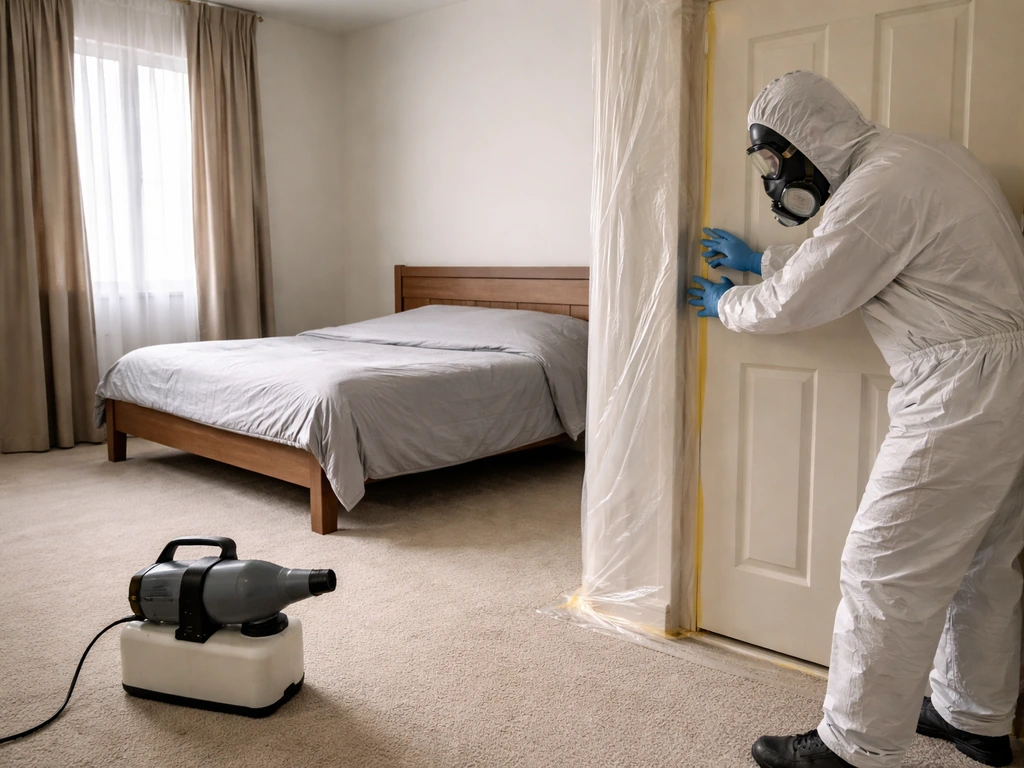
Best Fogger for Bird Mites: Pick, Use, and Stop Reinfestations
Choose the best fogger for bird mites, apply safely, avoid missed voids, and stop reinfestations with bird-proofing.
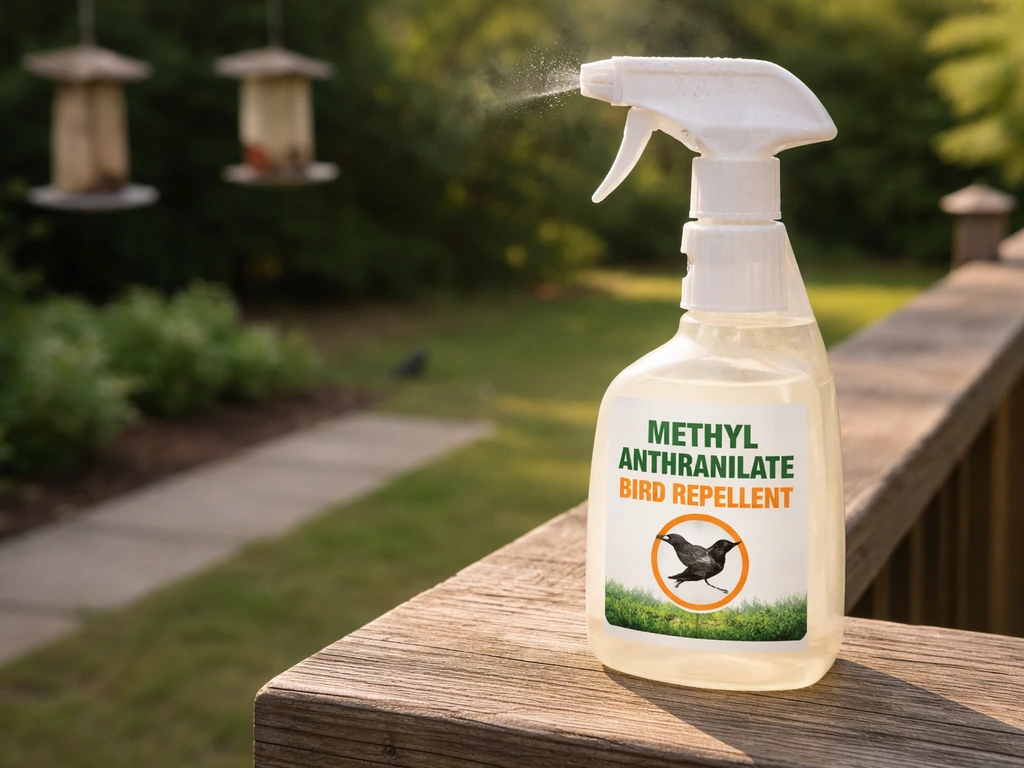
Methyl Anthranilate Bird Repellent Where to Buy Guide
Where to buy methyl anthranilate bird repellent, how to verify labels, apply safely, and troubleshoot for results.
Bird Safe Bug Spray Guide: Choose, Read Labels, Apply Safely
How to choose, read, and apply bird safe bug spray without harming birds, plus safer alternatives and checklists