
The best bird scaring device for most people is a combination of a physical barrier (spikes or netting) paired with a rotating visual or sonic deterrent. Physical barriers stop birds from landing or nesting in a specific spot permanently. Sensory deterrents like sound units or predator decoys buy you time and widen the protected area, but they need to be rotated to stay effective. No single device works everywhere, and ultrasonic units specifically are not worth buying, as multiple independent research reviews confirm birds simply cannot hear those frequencies.
Best Bird Scaring Device: How to Choose and Install

Marcus Weatherby
10 Jul 2026
How bird scaring devices actually work
There is a meaningful difference between scaring birds and controlling them. Deterrence means making a location unattractive enough that birds choose somewhere else. Control, in the legal and wildlife management sense, means actively removing or lethal management of birds, which in the U.S. is heavily regulated under the Migratory Bird Treaty Act (MBTA). Almost every native bird species, including their nests and eggs, is protected under that law. Destroying an active nest with eggs or dependent chicks without a federal depredation permit is illegal. That means scaring devices are not just the humane option, they are usually the only legal one.
Bird scaring devices work by triggering one of three avoidance responses: perceived physical threat (spikes make landing painful or impossible), perceived predator threat (hawk kites, owl decoys, and predator call units suggest danger), or sensory discomfort (loud distress calls or bright reflective surfaces create an unpleasant environment). The catch is that birds are smart. They habituate quickly to static threats. A plastic owl bolted to the same corner for three weeks stops working. That habituation dynamic is why rotation and combination matter more than which single device you pick.
Choosing the right device for your bird and location
The species you are dealing with and the physical space you need to protect should drive every purchasing decision. Pigeons, European starlings, and house sparrows are the three most common nuisance species in residential and commercial settings. For pigeons specifically, many people start by comparing sonic distress call units and visual deterrents to find the best fit for their setup Pigeons, European starlings, and house sparrows. Importantly, those three are not protected under the MBTA in the same way most migratory songbirds are, which gives you more flexibility in how aggressively you deter them. That said, humane nonlethal methods are still the standard approach.
Think about your location as much as the bird. A narrow roof ledge needs spikes. A large garden needs a combination of a sonic unit and visual deterrents that move. If you want a quick pick, the best bird scarer for a garden is usually a combination of a physical barrier with a moving sonic or visual deterrent A large garden needs a combination. A pool or pond needs a different setup than a solar panel array. Matching the device to the physical space is what separates a setup that works from one that gets ignored within a week.
| Location | Problem Bird(s) | Best Primary Device | Recommended Supplement |
|---|---|---|---|
| Roof ledges / gutters | Pigeons, starlings | Bird spikes or bird wire | Reflective tape or predator decoy |
| Garden / open yard | Crows, pigeons, sparrows | Sonic/distress call unit | Hawk kite or spinner deterrent |
| Patio / balcony | Pigeons, sparrows | Bird spikes + netting edges | Predator decoy (moved regularly) |
| Solar panels | Pigeons | Mesh skirting (exclusion netting) | Spikes on panel edges |
| Pool or pond | Herons, geese | Motion-activated sprinkler or laser | Hawk kite on nearby post |
| Windows | Woodpeckers, small birds | Reflective window tape / film | Physical barrier tape strips |
| Large open fields / gardens | Mixed flocks | Propane cannon / sonic unit | Rotating visual deterrents |
The main device types and what they actually do
Physical barriers: spikes, netting, and wire
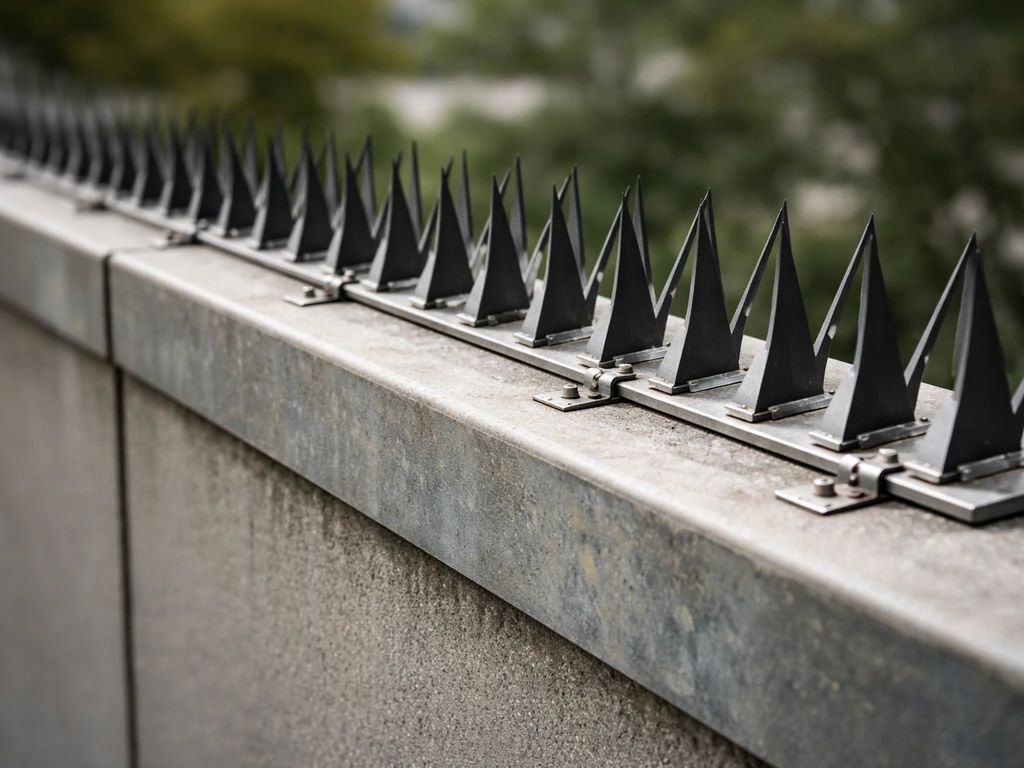
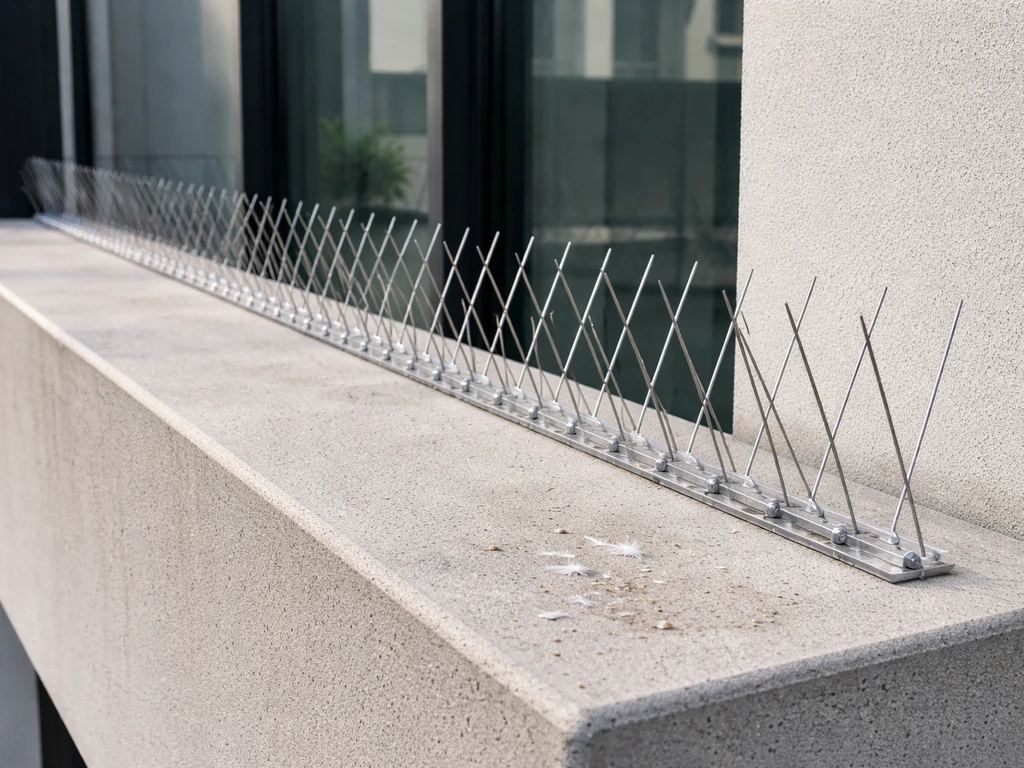
Physical barriers are the most reliable long-term option because they do not depend on a bird's fear response. Bird spikes work by making a ledge too uncomfortable to land on, not by injuring the bird. They are widely recommended as one of the most humane deterrence methods available. Install them on every usable ledge, parapet, beam, or pipe run where birds are landing.
If you are specifically looking for the best bird scarer for roof coverage, start with spikes or netting on every ledge and add a rotating sonic or visual unit to keep birds from habituating. Leave no gaps, because pigeons and starlings will find the six-inch gap you missed. For netting, a 10- or 12-gauge mesh with 1-inch openings is enough to exclude most bird species from enclosed areas like barn eaves, roof voids, or under solar panels.
Post-and-wire or bird coil systems work well on wider ledges or structural beams where spikes would look intrusive. They make landing unstable without hurting the bird. Electric shock strips are another option for high-pressure perching spots. Research on cowbirds and rock pigeons found no habituation to electric shock strips, which makes them one of the few physical deterrents that does not lose effectiveness over time.
Visual deterrents: decoys, kites, and reflective devices
Visual deterrents work best when they move. Static owl decoys lose their effectiveness within days to weeks. A hawk kite mounted on a 10-to-15-foot pole and allowed to fly freely in the wind is far more convincing because it mimics real predator flight. Reflective tape, holographic scare tape, and spinning reflective pinwheels create unpredictable flashes of light that birds associate with danger. These work well in gardens, on fences, and along roof lines. The key is to keep moving them every few days so birds do not map them as fixed, harmless objects.
For specific problem areas like ponds where herons are an issue, or gardens where crows are raiding crops, hawk kite systems on flexible fiberglass poles are a proven approach. The best bird scarer kites are designed to mimic a peregrine falcon or red-tailed hawk silhouette and can cover a radius of roughly 30 to 50 feet of air space when mounted high enough.
Sonic and distress call units
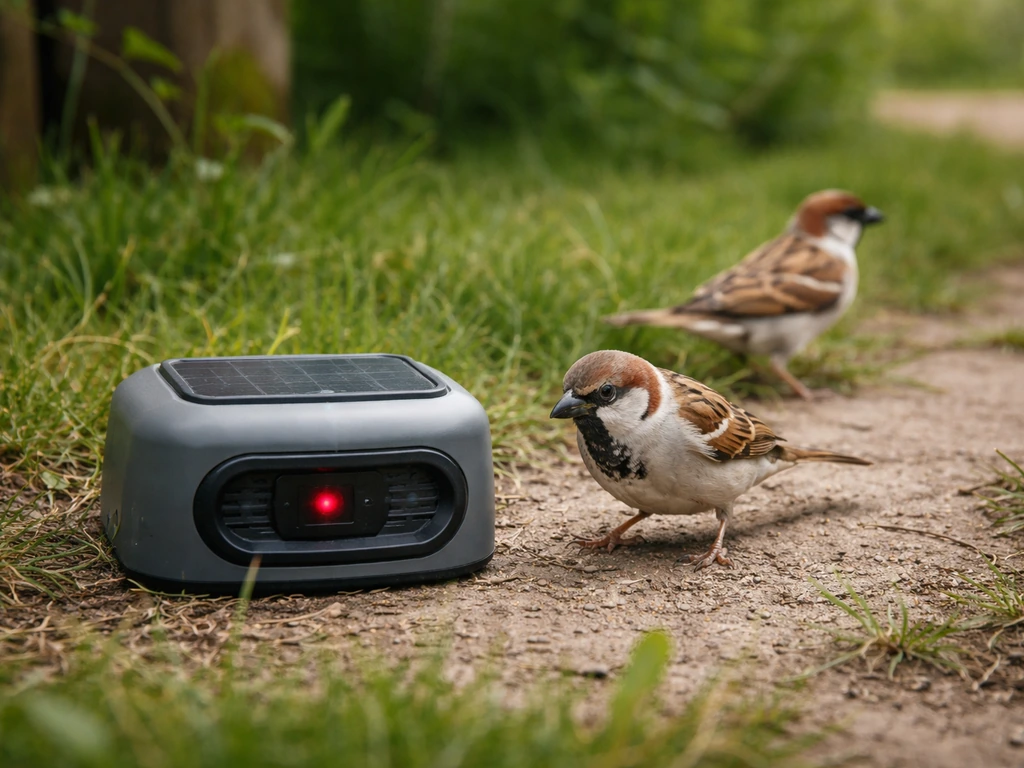
Sonic deterrents broadcast species-specific distress calls, predator calls, or alarm sounds at audible frequencies. These genuinely do work, particularly for starlings and blackbirds. USDA APHIS Wildlife Services uses nightly sonic harassment as part of operational management at roost sites. The important qualifier is that you have to vary the sounds regularly. Natural Resources Wales notes that sonic devices lead to habituation unless the sounds are rotated. Good commercial units include multiple call types and allow you to program random or timed playback. Set them on a timer so they are not running 24 hours a day, which speeds up habituation and annoys your neighbors.
Ultrasonic devices: skip them
Ultrasonic devices are everywhere in shops and online, and they do not work for birds. If you are considering a tin can bird scarer style gadget, skip it and focus on methods that birds can actually perceive ultrasonic units. This is not a matter of opinion. A USDA/APHIS/ADC research study found ultrasonic devices completely ineffective for pigeons over a 20-day treatment period. The British Trust for Ornithology, Transport Canada's airport bird control evaluation, UC eScholarship research, and Natural Resources Wales all reach the same conclusion: birds cannot hear ultrasonic frequencies. Their hearing range simply does not extend into the ultrasonic band. Save your money.
Motion-activated deterrents
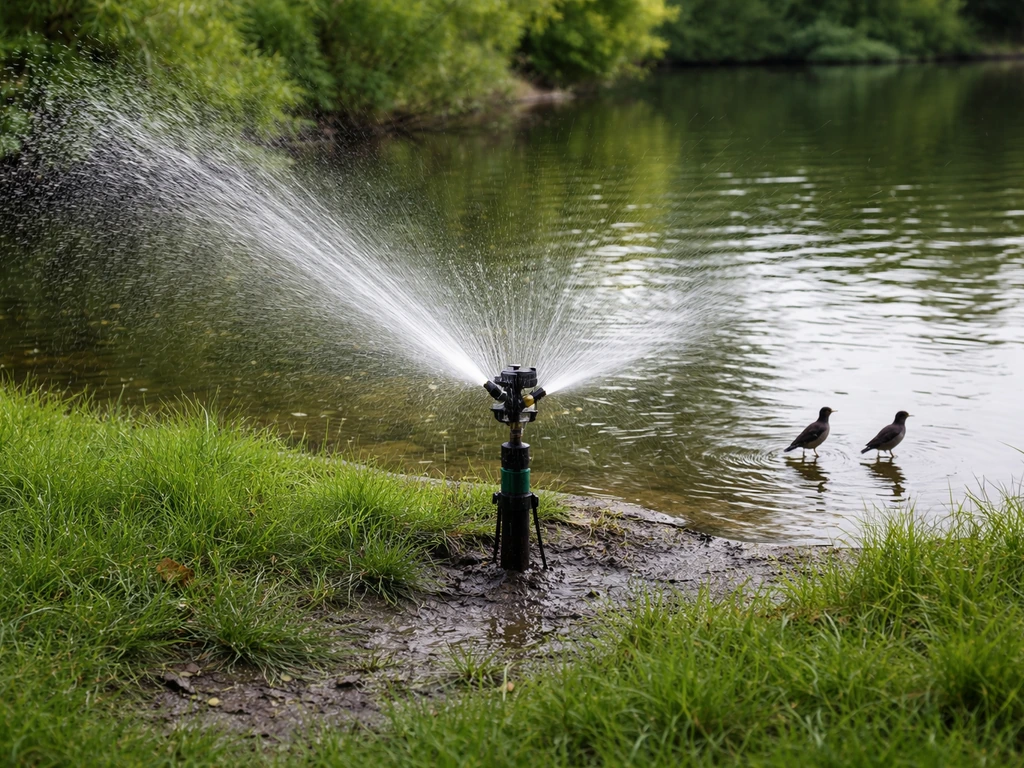
Motion-activated sprinklers are genuinely effective for ground-feeding birds and wading birds like herons at ponds. They respond to movement with a burst of water, which startles birds consistently. Because the trigger is motion-based rather than a static stimulus, birds do not habituate as quickly. Motion-activated laser deterrents are used commercially (APHIS cites laser harassment as a roost-dispersal tool for starlings), but consumer-grade laser units vary widely in quality. For most residential setups, a motion-activated sprinkler is more practical than a laser device.
How to set everything up properly
Placement and coverage
For spikes and physical barriers, coverage must be complete. A single 6-inch gap in a spike run on a ledge is enough for a pigeon to claim the spot. Install spikes on every horizontal surface birds are using, including the tops of signs, pipes, and air conditioning units. For netting exclusion under solar panels, the mesh needs to wrap fully around the panel perimeter and be secured flush to the roof so birds cannot push underneath.
For sonic units, mount them at height, ideally 6 to 10 feet off the ground, and point the speaker toward the area you want to protect. Most units cover 30 to 100 feet depending on output wattage. For large gardens or open areas, you may need more than one unit or a unit with multiple directional speakers. Do not point speakers directly at neighboring homes or into areas where people spend time outdoors, especially with high-decibel models.
Power options and weatherproofing
Mains-powered sonic and motion-activated units are the most reliable for permanent installations. Solar-powered units work well in open gardens and require no wiring, but check the battery backup capacity before buying so the unit keeps running through a run of cloudy days. All outdoor units should be rated IP44 or higher for weather resistance. Spikes and netting require no power but do need UV-resistant materials if you are in a sunny climate, as cheaper plastic spikes become brittle and break within a season.
Timing and rotation schedule
Run sonic units on a programmed schedule rather than continuously. A cycle of 15 to 20 minutes on and 20 to 30 minutes off, timed to peak bird activity periods (early morning and late afternoon), tends to be more effective than constant broadcast. Move visual deterrents (decoys, reflective tape, hawk kites) to a new position every 3 to 5 days. Move visual deterrents (decoys, reflective tape, hawk kites, best bird scarer kite) to a new position every 3 to 5 days. If you have multiple visual deterrents, stagger when you move each one so there is always something new in the birds' field of view.
What to expect and when to combine methods
Most birds will begin avoiding a newly deterred area within 2 to 5 days if the setup is convincing. Pigeons that have been roosting in a spot for months are harder to shift and may take 2 to 3 weeks. If you see no change after two weeks, the device is not appropriate for the location or the bird, or it has been placed incorrectly.
The most effective long-term approach always combines a passive physical barrier with at least one rotating sensory or visual deterrent. Physical barriers protect the highest-value spots permanently. Sensory deterrents discourage birds from settling in the broader area. Without the physical barrier, determined birds will find the gaps. Without the sensory deterrent, birds may learn to avoid spikes on one ledge but simply move to the next ledge over.
Also address any food and water attractants. Humane World for Animals notes that reducing pigeon food sources gradually over several weeks, and keeping the area clean of spilled grain or food waste, is one of the most effective ways to reduce flock pressure. No device will fully compensate for an area that actively draws birds in with food, water, or safe nesting sites.
Monitoring whether it is working
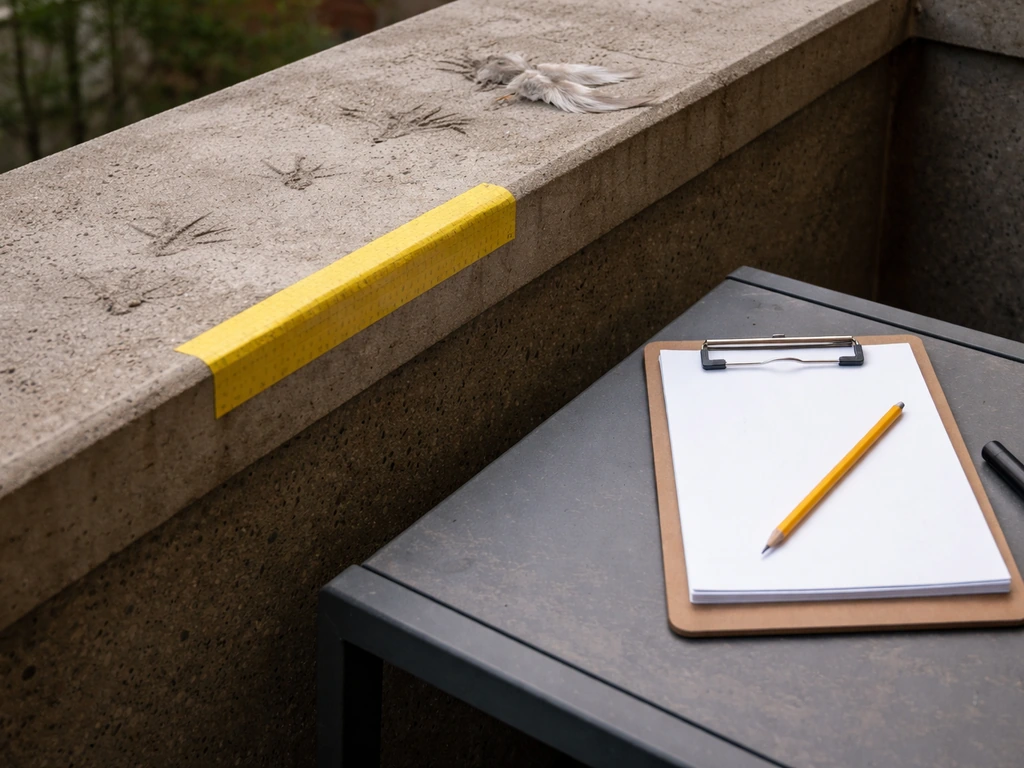
Check the problem area at the same time each day for the first two weeks. Note whether birds are landing in the deterred zone, landing adjacent to it, or leaving the area entirely. If birds are landing right next to your deterrent but not in it, widen your coverage. If they are landing in the deterred zone despite the device, rotate the deterrent type or reposition it. Keeping a simple log of bird activity over the first 14 days tells you quickly whether your setup is working or needs adjustment.
Safety, legality, and staying on the right side of wildlife law
In the U.S., the Migratory Bird Treaty Act protects almost all native bird species, including their nests and eggs. If you find an active nest with eggs or chicks in a spot you want to deter, you cannot remove it without a federal depredation permit. The legal pathway is to wait until the nest is no longer active (chicks have fledged and left), then install deterrents to prevent future nesting. U.S. Fish and Wildlife Service guidance is clear that blank" rel="noopener noreferrer">even harassment methods that cause injury or death to migratory birds constitute illegal "take" under the MBTA. That means any deterrent device must be genuinely nonlethal in practice, not just in design.
Sonic devices raise legitimate concerns for neighbors and pets. High-decibel units (above 100 dB) can cause hearing discomfort for people and animals at close range. Mount them away from property boundaries, point them inward toward your own space, and check local noise ordinances before running them at night. If you are near an airport or airfield, check with the facility before deploying any device, as bird management near aviation infrastructure has its own regulatory framework and what you install on your adjacent property can interact with their managed airspace.
Three species (rock pigeon, European starling, and house sparrow) are not native to North America and are not protected under the MBTA in the same way native species are. Cornell University's IPM program notes this distinction and it does give you more legal flexibility in how aggressively you deter them. But nonlethal, humane methods remain the standard recommendation for residential and commercial use.
Your next steps: what to buy and how to start
Start by identifying exactly which birds are causing the problem and exactly where they are landing, roosting, or nesting. Walk the perimeter and photograph every ledge, beam, or flat surface in use. That survey tells you how much spike coverage or netting you need and where to mount your sonic or visual deterrents.
- Buy UV-stabilized stainless steel or polycarbonate spikes for any ledge, beam, gutter, or pipe where birds are perching. Measure the run length and buy 10% extra to avoid gaps.
- For gardens or open areas, add a sonic distress-call unit with programmable sound rotation. Set it on a timer for morning and late afternoon cycles.
- Add at least one moving visual deterrent (a hawk kite on a tall pole or rotating reflective spinners) and commit to moving it every 3 to 5 days.
- Remove any food, water, or nesting material attractants in the area at the same time you install devices.
- Check for active nests before installing anything. If a nest is active, wait until it is vacated, then install.
- Monitor bird activity daily for two weeks and adjust placement or swap deterrent types if birds are not responding within 10 to 14 days.
Skip ultrasonic devices entirely and do not rely on a single static decoy as your only deterrent. The combination of a physical barrier plus a rotating sensory deterrent plus removing food attractants is what consistently works, and it works without putting you on the wrong side of wildlife protection law.
FAQ
What is the “best bird scaring device” if I need results fast but don’t want to install spikes or netting right away?
Use a dual approach, motion-based disruption plus immediate coverage of landing spots you can access. For example, install spikes or temporary netting only on the highest-value ledges, then add a motion-activated sprinkler or a rotating sonic or visual unit to discourage birds from settling while the full physical barrier plan is underway. If you add sound, run it on a schedule (not 24/7) to reduce habituation and neighbor complaints.
How do I know where birds are getting in, and that I am covering every landing gap?
Do a “touchpoint walk” at bird height, check every horizontal surface within their flight path, and look for fresh droppings, feather bits, and scuff marks on ledges. Birds will exploit tiny footholds, check sign tops, pipe seams, cable trays, and the edges of HVAC units. If birds land adjacent to your deterrent, add coverage on the adjacent ledges rather than only moving the device.
Can I use spikes on my roof shingles or will that damage the surface?
Spikes are usually intended for gutters, parapets, and flat ledges, not to be mounted in a way that cracks shingles or blocks water flow. If your “ledge” is actually sloped roofing, netting or a properly installed guard system is often safer. Also confirm the spikes are UV-stable (cheap plastics turn brittle in full sun), otherwise you can end up with broken pieces that leave new gaps.
Do moving visual deterrents like reflective tape and kites really need to be moved every few days?
Yes, if they remain in the same position long enough, birds start treating them as non-threatening background clutter. Move them every 3 to 5 days, and if you use multiple items, stagger the moves so at least one deterrent changes position while others stay active. Also avoid placing reflective materials only at one edge, birds often learn “safe corners” if the coverage is uneven.
What is a safe mounting height and coverage area for sonic devices?
Mount the unit about 6 to 10 feet high and aim the speaker so the sound field covers the birds’ landing zone, not directly at neighboring yards or patios. Coverage varies by output, terrain, and wall reflections, so if birds are still landing inside the area, add a second direction-focused unit or reposition the first one instead of simply increasing volume.
How do I rotate sounds for sonic deterrents so birds do not habituate?
Pick multiple distress or alarm call types (and, if your unit supports it, randomize playback), then rotate the program so the sound mix changes over time. Avoid running one fixed call continuously. Use a timer tied to peak activity (often early morning and late afternoon), and keep sessions short, constant broadcast both increases habituation risk and neighbor/pet annoyance.
Are ultrasonic bird repellents ever worth trying for pigeons or starlings?
In general, skip them. Birds do not perceive ultrasonic bands the way the marketing implies, so they typically fail even when everything else is set up. If you want a “technology” option, choose sonic devices that play audible calls or a physical approach that removes landing access, those are the methods that reliably map to bird behavior.
Will electric shock strips work long-term, and are they humane?
They can remain effective for some species because birds do not habituate as quickly as with many visual or sound-only methods, but proper installation matters to avoid unsafe contact or gaps. Use them on high-perching points where birds repeatedly commit to landing, and treat them as part of a broader plan so you also remove attractants and block other ledges that provide alternate roosting spots.
What about pets and kids, are sonic devices dangerous?
High-output sound can cause discomfort for animals and people, especially at close range. Keep units away from property boundaries, point inward toward your own targeted area, and avoid nighttime use if you are in a dense neighborhood. If you have pets that are sensitive to noise, consider physical barriers or motion sprinklers first.
Is it legal to remove an active nest if birds keep returning to the same spot?
Usually no. Under the Migratory Bird Treaty Act in the U.S., removing eggs or chicks or destroying an active nest is generally illegal without a federal depredation permit. The practical alternative is to wait until the nest is inactive, then install deterrents to prevent re-nesting. If you discover an active nest and you are unsure, consult local wildlife authorities before changing anything.
How long should I wait before concluding my setup is failing?
Most birds start avoiding a convincing deterrent within 2 to 5 days, but established roosters or long-term roosters can take 2 to 3 weeks. If you see no meaningful change after about two weeks, reassess bird species identification, mounting placement, and coverage gaps, then switch deterrent type or add a physical barrier to eliminate landing options.
What if birds simply shift to a nearby ledge after I install a deterrent?
That usually means the protected area was not comprehensive. Add physical barriers to adjacent landing surfaces, or widen the sonic and visual coverage so birds cannot “solve” the problem by moving one ledge over. Also reduce attractants (food waste, accessible water, and nesting materials), because deterrence does not fully compensate for a location that remains inviting.
How do I handle ponds, pools, and water features where herons or other wading birds show up?
For ground-feeding and wading birds, motion-activated sprinklers can be more practical than sound or static visuals because the trigger is movement-based and startles consistently. Position the sprinkler so the water spray reaches the approach zone, and ensure it covers the places the birds actually stand, not only the center of the pond.
Next Articles
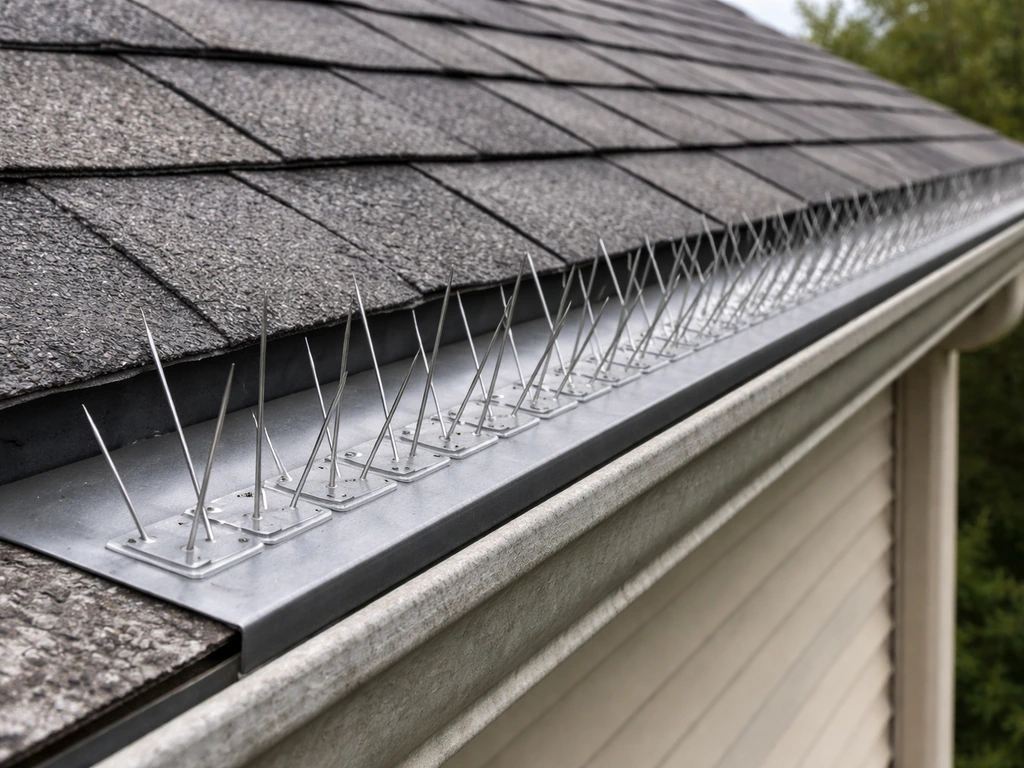
Best Bird Scarer for Roof: Choose, Install, and Maintain
Find the best roof bird scarer by diagnosing roosting vs nesting, choosing exclusion or sensory options, and installing
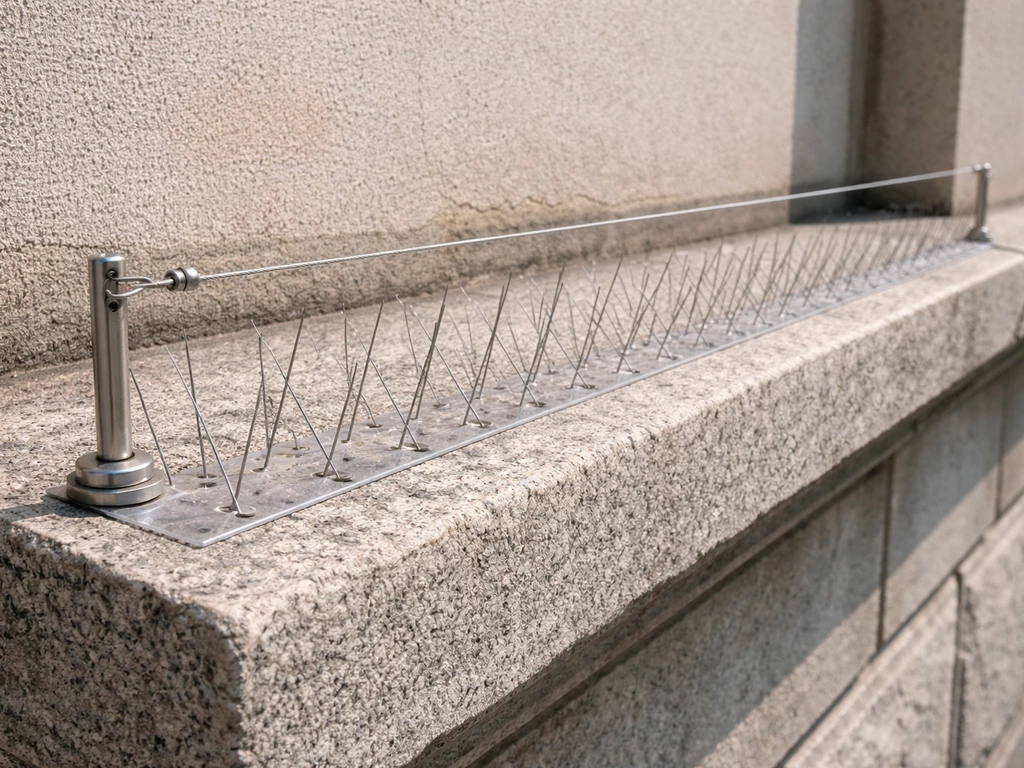
Best Bird Scarer for Pigeons: Choose and Install the Right Fix
Pick the best bird scarer for pigeons by area and mechanism, with step-by-step placement, safety, and troubleshooting.
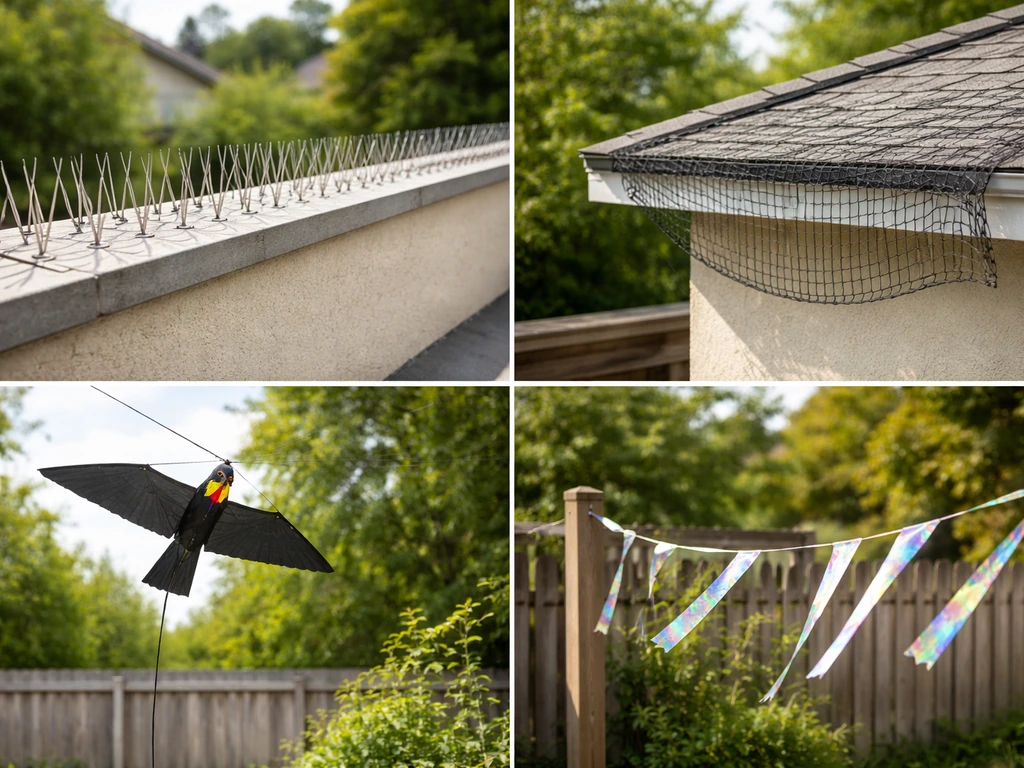
Best Bird Scarer: Choose the Most Effective Deterrent by Area
Decision guide to pick the best bird scarer by area, species, and setup for fast, layered deterrent results.