
The best sonic bird repeller for most residential setups is the Bird-X BroadBand PRO, because it combines both sonic (3–5 kHz) and ultrasonic (15–25 kHz) output across four speakers, which means it covers more ground and targets birds through frequencies they actually respond to. But whether it's the right pick for your specific patio, rooftop, garden, or commercial property depends on a few things you need to check before you buy anything. This guide walks through all of it: how these devices work, what they can't do, how to compare models, and exactly how to set one up and test whether it's working.
Best Sonic Bird Repeller: Reviews, Setup, and Limits Guide

Marcus Weatherby
5 Apr 2026
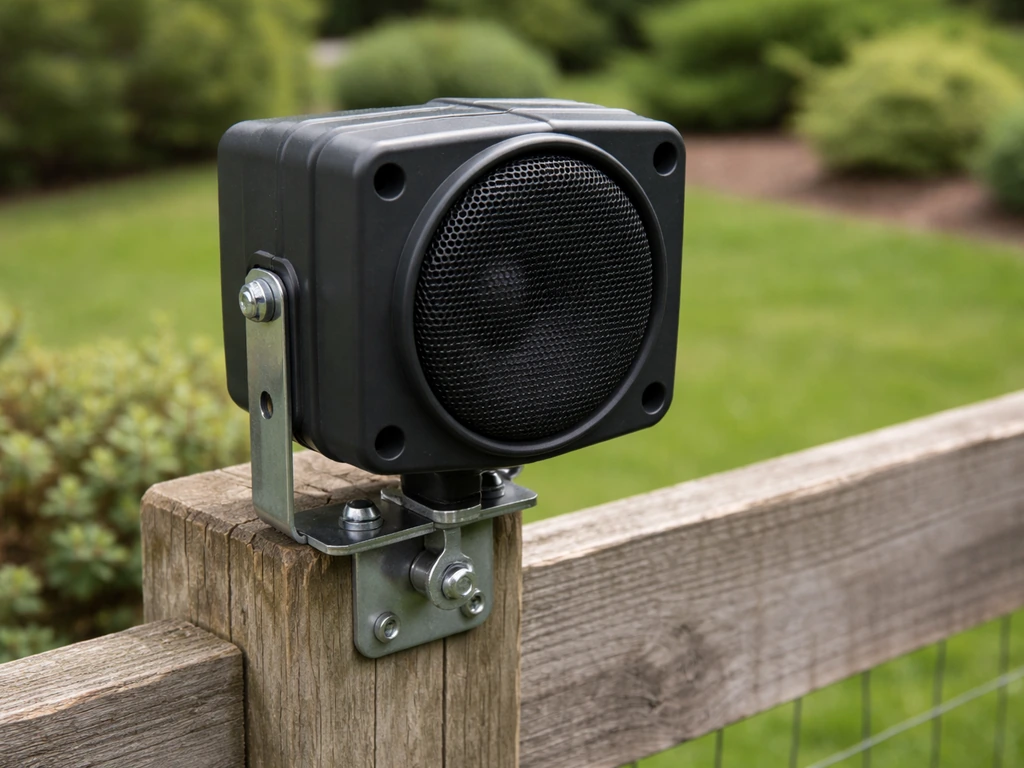
What sonic and ultrasonic bird repellers actually do (and don't)
Sonic bird repellers broadcast sounds in frequency ranges that birds find alarming or irritating. True sonic devices operate in the audible range (roughly 1–5 kHz), playing back distress calls, predator sounds, or general alarm signals. Ultrasonic devices go above 20 kHz, which is above human hearing. Many products combine both, which is generally better than either alone.
Here's the part manufacturers don't always advertise clearly: not all bird species respond the same way to the same frequencies. Airport research has documented cases where gulls showed no reaction to ultrasound at all, and combined sonic-ultrasonic devices had no measurable effect on certain species. If you've got a specific bird problem (starlings, pigeons, Canada geese, crows), you need to blank" rel="noopener noreferrer">match the device to what that species actually hears and reacts to.
Ultrasonic output also doesn't travel far outdoors. USDA APHIS notes that the effectiveness of frightening devices is often dependent on conditions and that the effect is typically short-lived, including discussion of ultrasonic sounds as one category blank" rel="noopener noreferrer">frightening devices often work only for a short time and depend on conditions. High frequencies dissipate quickly in open air, get blocked by walls, fences, and foliage, and lose effectiveness as distance increases. A device rated for 3,600 sq. ft. under ideal indoor or semi-enclosed conditions may cover significantly less in a garden full of shrubs or on a rooftop with HVAC units in the way. Sonic (audible) output travels better, but birds adapt to repetitive sounds over time, a process called habituation, which is probably the biggest real-world problem with these devices.
So what can they do well? They work best as a complement to other deterrents, as a first-line tool in areas with light to moderate bird pressure, and as a way to make a space feel generally unwelcoming before birds establish roosting habits. Think of them as a persistent annoyance, not a barrier.
If you're still deciding between sonic and ultrasonic approaches, it's worth reading up on whether sonic bird repellers actually work in real-world conditions before committing to a purchase.
How to pick the right unit for your space
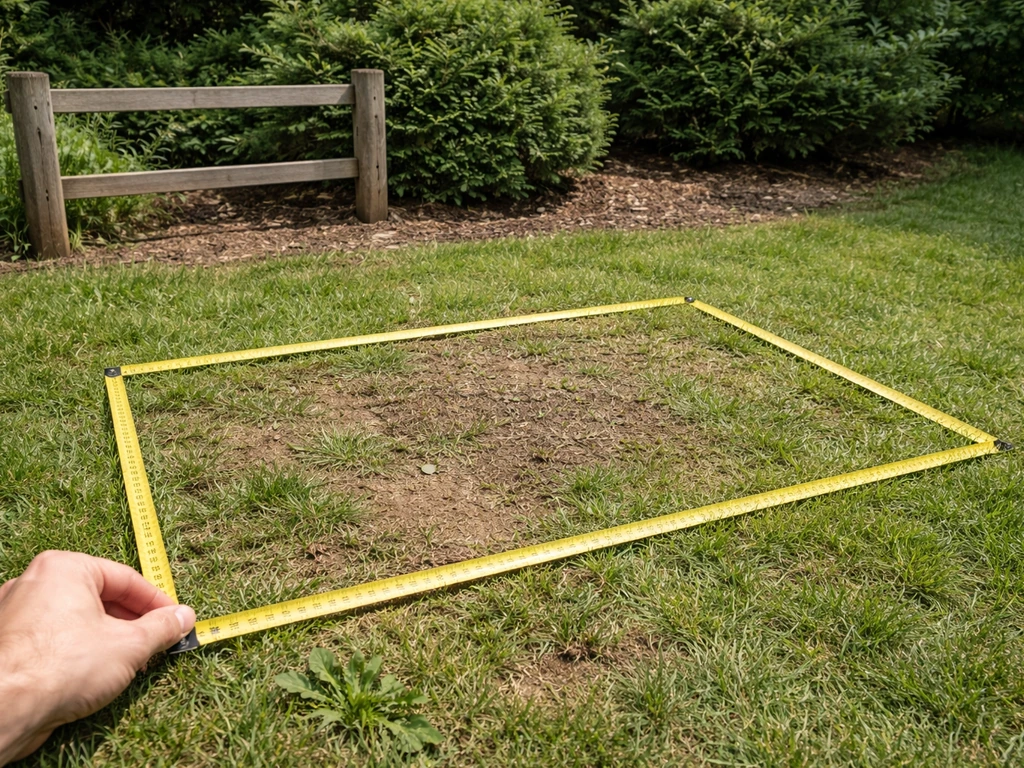
Before you look at a single product listing, answer these four questions about your site:
- What's the square footage you need to cover? Measure it realistically, accounting for obstacles like walls, fences, or heavy vegetation that will block the sound cone.
- What bird species are you dealing with? Pigeons, starlings, and sparrows respond differently than geese or crows. Check the product's target species list.
- Is there a power source available, or do you need solar or battery power? Hardwired units are generally more reliable; solar units are convenient but weather-dependent.
- Are there people, pets, or noise-sensitive neighbors nearby? This affects which frequency range and sound pressure level is appropriate.
Coverage area is the number most people misread. The Bird-X Ultrason X, for example, advertises up to 3,600 sq. ft. per speaker at 95–102 dB (ultrasonic, 15–25 kHz). That's a reasonable spec for a semi-enclosed space like a warehouse loading dock or a covered parking structure. For a wide-open rooftop or a large backyard, that number shrinks considerably in practice because there's nothing to reflect or contain the sound.
For large outdoor areas, you almost always need a multi-speaker system. The BroadBand PRO's four-speaker configuration puts out 105–110 dB at 1 meter in the sonic range and 95–102 dB in the ultrasonic range per speaker. That's meaningfully louder and broader than a single-speaker unit, and the sonic component actually travels and affects birds in ways the ultrasonic signal alone may not.
Power source matters more than most buyers realize. Solar-powered units are appealing for rooftops or gardens without nearby outlets, but a cloudy week can reduce output significantly. If you're dealing with a serious bird problem, don't leave your deterrent dependent on sunshine. Hardwired or plug-in units are simply more consistent.
How the leading models compare
Here's how the two main Bird-X sonic/ultrasonic systems stack up against each other, plus a general solar unit for reference:
| Feature | Bird-X Ultrason X | Bird-X BroadBand PRO (4-speaker) | Solar Ultrasonic Unit (generic) |
|---|---|---|---|
| Frequency range | Ultrasonic: 15–25 kHz | Sonic: 3–5 kHz + Ultrasonic: 15–25 kHz | Ultrasonic: 15–25 kHz (typical) |
| Sound pressure (per speaker) | 95–102 dB | Sonic: 105–110 dB / Ultrasonic: 95–102 dB | 80–90 dB (typical) |
| Coverage area | Up to 3,600 sq. ft. | Up to 6,000+ sq. ft. (multi-speaker) | Up to 5,000 sq. ft. (claimed) |
| Number of speakers | 1 (expandable) | 4 | 1 |
| Power source | AC plug-in | AC plug-in | Solar + battery |
| Best use case | Enclosed/semi-enclosed spaces | Large open outdoor areas, commercial | Remote gardens, small yards |
| Sonic (audible) output | No | Yes | No |
| Weather resistance | Yes | Yes | Yes |
The BroadBand PRO wins for most serious outdoor applications because it produces both sonic and ultrasonic output, hits higher decibel levels in the audible range, and covers more ground with its four-speaker layout. The Ultrason X is a solid pick for semi-enclosed spaces where ultrasonic reflection is more useful. Generic solar units are fine for low-pressure situations in small gardens, but don't expect the same consistency or species coverage.
If you're drawn to ultrasonic-only products and want a deeper comparison of what's available in that category, the best ultrasonic bird deterrents are reviewed separately with a focus on frequency performance and real coverage claims.
Installation walkthrough and placement for real coverage
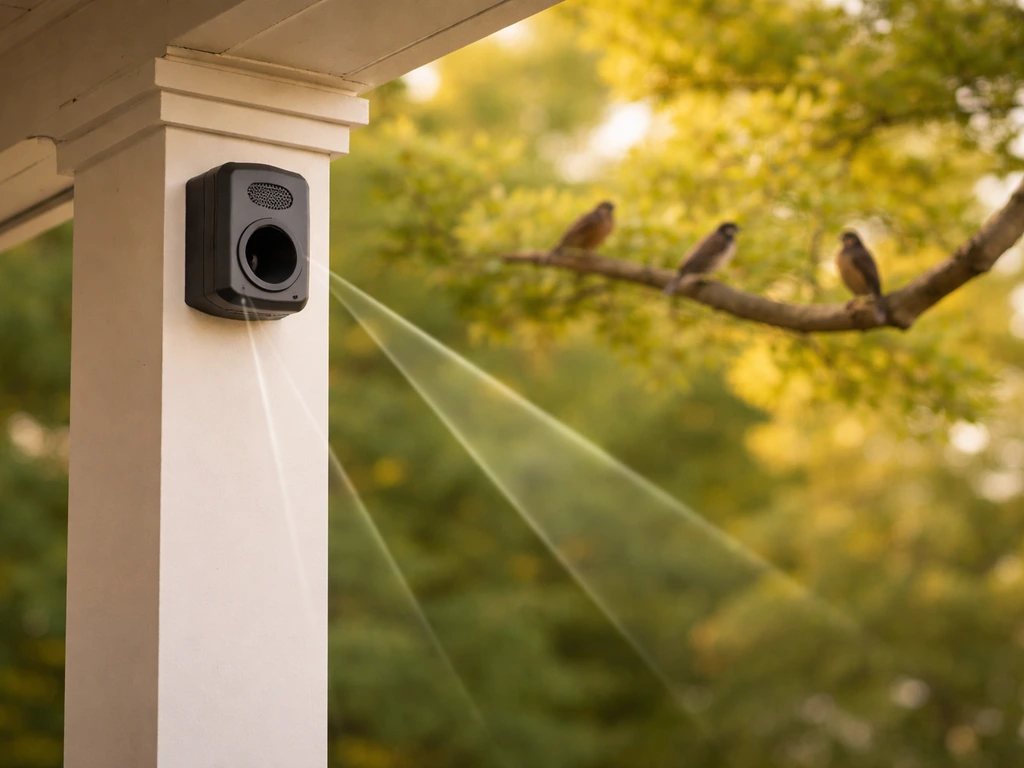
The most common installation mistake is placing the device too low or too far from the problem zone. Here's a practical step-by-step approach that works across most residential and commercial setups.
- Identify where birds are landing, roosting, or feeding. This is your primary target zone, not just the general area.
- Mount speakers 8–12 feet high and aim them toward the open space where birds approach, not directly at a wall. You want the sound cone to meet birds before they land.
- For multi-speaker units, space speakers at the corners of the target area so their coverage zones overlap slightly in the center. This eliminates dead spots.
- Keep speakers clear of obstructions: dense vegetation, HVAC units, and walls all block high-frequency output significantly.
- Run a power cable along a wall or fence to a weatherproof outdoor outlet, or use a covered extension cord rated for outdoor use. Avoid running cables through high-traffic zones.
- Set the unit to cycle through multiple sounds (distress calls, predator sounds, alarm calls) if it has that option. Random variation slows habituation.
- For patios and decks, a single speaker unit mounted at eave height often covers the space well. For rooftops and large gardens, plan for one speaker per 2,000–3,500 sq. ft. of open area.
If you're working with a solar-powered model and want more detail on setup and programming, checking the solar powered ultrasonic animal and bird repeller manual before installation can save you a lot of trial and error with settings.
For rooftop solar panel installations specifically, placement is trickier because you're working around the panels themselves. Mount speakers at the outer edges of the panel array and angle them inward. Don't place speakers under panels where sound reflection is unpredictable and maintenance access is limited.
Safety, legal considerations, and effects on pets and people
Sonic bird repellers that operate in the audible range (distress calls, predator sounds) can be heard by people and pets. At 105–110 dB at one meter, the BroadBand PRO's sonic output is genuinely loud, roughly equivalent to a chainsaw at close range. Don't mount it where people or pets spend extended time nearby, and be aware of local noise ordinances before running it continuously, especially at night.
Ultrasonic output (above 20 kHz) is inaudible to humans but is audible to dogs and cats, which hear up to roughly 65–79 kHz. Running an ultrasonic unit in a yard where your dog spends time can cause real stress to the animal. Keep this in mind when choosing placement or frequency settings.
For aviation-adjacent environments, the picture is more nuanced. Research into airport bird control has consistently found that ultrasonic devices show limited effectiveness on the bird species most common at airports (gulls, starlings, geese), and in some documented cases had no measurable effect at all. If you're managing birds near a runway or airfield perimeter, sonic deterrents should be part of an integrated program, not the primary tool, and you'll want to coordinate with airport wildlife management authorities for compliance with local and federal aviation regulations.
For commercial and storefront installations, check local ordinances on continuous audible noise before running sonic units during business hours. Many municipalities have noise level limits measured at the property line, and a 105 dB device can push past those thresholds quickly depending on how close your property boundary is to the speaker.
How to measure results fast and troubleshoot habituation
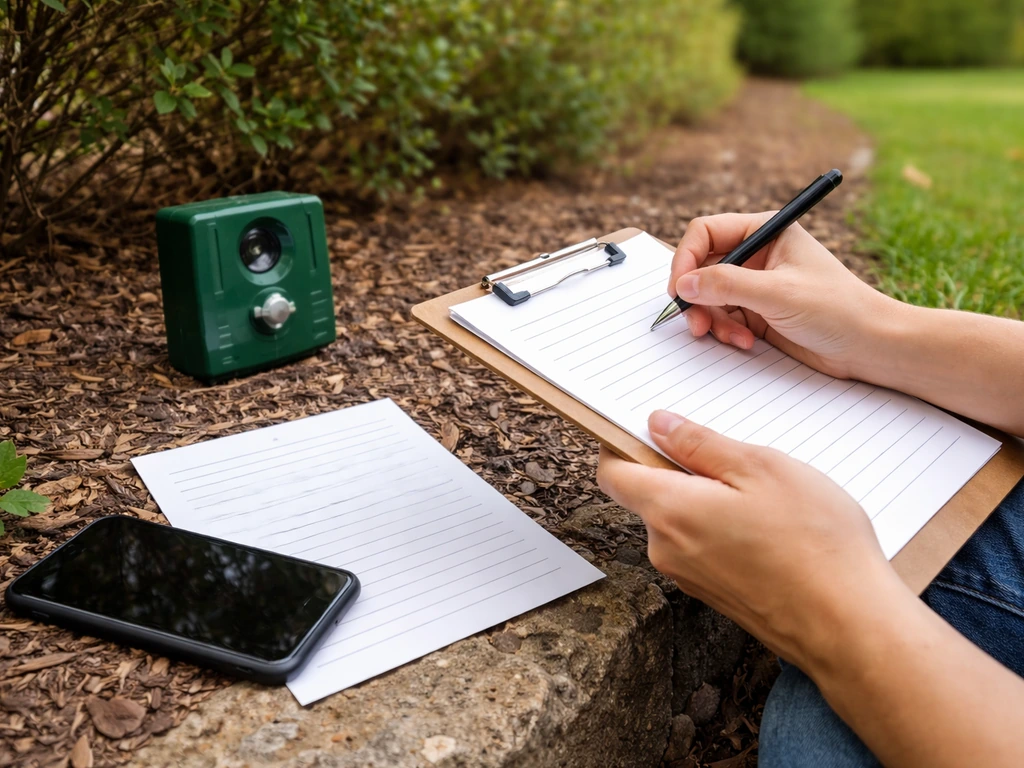
Give a new sonic repeller 7–10 days before drawing conclusions. Bird activity typically drops noticeably in the first three to five days if the device is working and properly positioned. If you see no change after ten days, the issue is usually one of three things: wrong placement, wrong frequency for the target species, or the birds in your area are already habituated to that sound type.
Here's a quick diagnostic checklist:
- Check that speakers are aimed toward the approach path, not at a wall or the ground.
- Verify the unit is cycling through multiple sounds and not stuck on one repeating tone. Monotone repetition is the fastest path to habituation.
- Confirm the power source is consistent. Solar units underperforming on cloudy days will allow birds to re-establish comfort in that space quickly.
- Test coverage by walking the perimeter with the unit running. You should hear clear, distinct output at the farthest edge of the target area.
- Try rotating which sounds play by changing settings. Many units let you select predator calls, distress signals, or alarm calls separately.
- If you're targeting a species like pigeons or crows, confirm those species are listed in the product's target range.
Habituation is real and inevitable with any repeated stimulus. The fix is variation: vary the sounds, vary the timing, and ideally pair the sonic device with a physical deterrent or visual element so birds are receiving multiple, unpredictable cues. A flock that hears the same alarm call every hour will ignore it within two to three weeks.
One note on ultrasonic-only devices: there's ongoing debate about their effectiveness outdoors, and some research points to significant limitations. If you want a clear-eyed look at the evidence, the piece on whether ultrasonic bird repellers work covers what the studies actually show without the marketing spin.
When sonic alone isn't enough: combining methods that actually work together
Sonic repellers work best as one layer of a multi-method approach. If birds are returning despite proper installation and varied sound settings, it's time to add physical or visual deterrents to the mix.
Physical barriers: netting and spikes
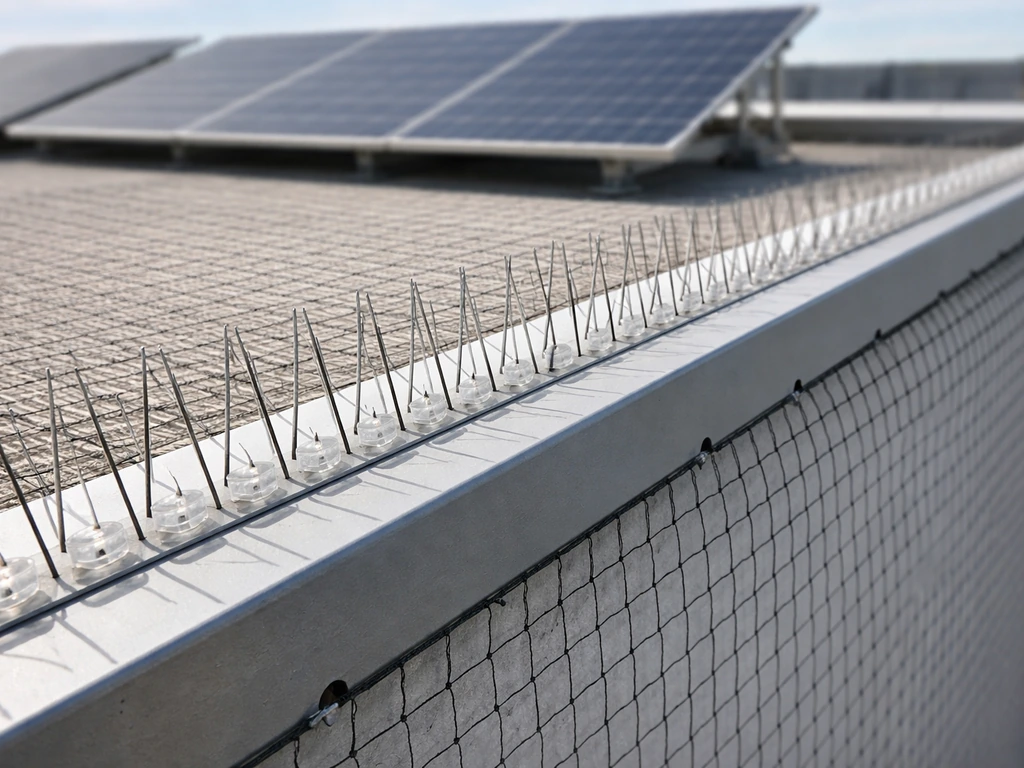
For rooftop ledges, solar panels, and window sills where birds are physically landing and roosting, spikes and netting are the most reliable long-term fix. They don't rely on animal behavior, they simply remove the landing surface. Combine these with a sonic device and you're hitting birds on two fronts: removing comfortable perches and making the space acoustically unwelcoming at the same time.
Visual deterrents
Reflective tape, predator decoys, and reflective discs add a visual disruption layer that pairs well with sonic output. Birds use multiple senses to evaluate safety, so layering audio and visual signals raises the perceived threat level. That said, visual deterrents have their own habituation problem, and whether reflective bird deterrents work long-term depends heavily on how they're deployed and moved around. Similarly, if you're considering a predator decoy like an owl or hawk figure, bird decoys need to be repositioned regularly to stay effective. If you want a shortlist of top-performing reflective options to pair with your sonic setup, the guide to the best reflective bird deterrents covers what to look for.
Chemical repellents
Taste and tactile repellent gels (applied to ledges and perch surfaces) are effective for persistent roosting situations where physical removal isn't practical. They're best used on specific landing zones in combination with sonic coverage of the broader area. Apply gels to ledges, beams, and sill edges where birds concentrate, and let the sonic device handle the open space around them.
The bottom line on combining methods: if you're dealing with light seasonal bird activity on a patio or small garden, a good sonic repeller installed correctly is often enough. If you're managing a commercial property, a rooftop with established roosting colonies, or an area near food sources, you'll get much better results, and keep them, by treating the sonic device as one tool in a layered system rather than a standalone solution.
FAQ
How high should I mount the best sonic bird repeller, and how do I avoid dead zones?
Mount the unit so the speaker faces the birds’ approach path and roosting area, typically around the same height as the birds’ likely landing point (not at ground level). If you only hear noise from the device but see no behavior change, it usually means the sound path is blocked or the device is aimed past the problem zone, so rotate and reposition rather than increasing loudness.
What’s the best way to test whether the repeller is actually reaching the birds’ area?
Do a short baseline check by recording bird counts or activity for a day, then run the device at the same times for 3 to 5 days. If possible, walk the perimeter holding your phone and note where the audible component is strongest, then compare that with where birds are landing. For ultrasonic models, use the audible component if available, because ultrasonic-only output is harder to confirm without specialized testing gear.
Should I run the repeller continuously or use it in intervals?
If your device has scheduling options, shorter bursts or staggered timing often reduce habituation and may help with noise complaints. Continuous operation can also raise the chance of pets or people being exposed at close range, so start with daytime intervals that match peak bird activity and only extend if needed.
Can I use the sonic repeller around my pets, especially cats and small dogs?
Ultrasonic output is inaudible to humans but can be stressful to cats and some dogs. Keep pets away from the device’s direct range during testing, and if your model can switch frequencies, avoid the highest ultrasonic settings in pet-heavy areas.
Will these devices work on birds that are already nesting or roosting heavily?
Often they help reduce new arrivals, but established roosting colonies can be harder to shift quickly. For active nests, use extra caution with legal protections, and treat the sonic unit as part of a larger plan (for example, removing landing surfaces like ledges with spikes or netting once birds are no longer using the area).
What if I see birds return after the first few days, is the device failing?
Not necessarily. Some birds test deterrents repeatedly and may appear to “ignore” early changes, especially in mixed flocks. Reassess after 7 to 10 days; if there is no improvement, the most common causes are placement that doesn’t aim the sound toward the landing zone, habituation to a repeated pattern, or targeting the wrong frequency profile for local species.
Can I use an ultrasonic-only unit if my area is windy or open with lots of air movement?
Wind and open-air conditions can reduce effective transmission of high frequencies, so results tend to be less reliable outdoors. If you have strong open exposure (wide yard, rooftop edge with airflow), favor a system with both audible and ultrasonic components and place speakers to minimize obstruction from fences, shrubs, and buildings.
How do I choose between a multi-speaker system and a single-speaker model?
Multi-speaker setups are usually better when birds can arrive from multiple directions, like backyards with open sightlines or commercial façades with different approach routes. If only one corner has activity, a single-speaker unit might suffice, but for rooftops and irregular perches, multi-speaker coverage is more forgiving and reduces dead zones.
Do sonic repellers help for birds that keep pecking or landing at a specific ledge or window sill?
They can reduce activity in open air, but when birds are repeatedly selecting one landing surface, sonic noise alone may not stop the behavior. The more reliable approach is to combine the device with a perch-removal method (spikes, netting, or targeted tactile gels) on the exact surfaces birds are using.
What decibel rating matters most for buying, peak output or coverage claims?
Peak loudness (dB at a stated distance) helps indicate potential effectiveness, but coverage claims can be misleading without noting environmental conditions. Prioritize both loudness and speaker layout, then temper expectations for open gardens and rooftops where reflections are limited and sound disperses quickly.
Are there legal or compliance issues I should consider before using sonic bird deterrents?
Yes, especially for continuous audible operation. Check local noise rules (often measured at the property line), and if you’re near an airfield or any aviation perimeter, sonic and ultrasonic deterrents can require coordination with wildlife management authorities to meet aviation and federal compliance expectations.
How can I reduce habituation faster if birds keep returning?
Use variety in sound type and timing (different modes, scheduled bursts, or alternating patterns if your model supports it). Also pair the sonic layer with an unpredictable visual or physical deterrent and reposition visual items or decoys regularly, because consistent cues degrade quickly for established flocks.
Is there a safe way to adjust frequency settings for different species (starlings, pigeons, geese, crows)?
If your device offers presets or frequency bands, match the setting to the species you’re targeting and avoid assuming “one frequency fits all.” If local birds are still present after the first week, try the next relevant mode rather than only turning up the volume, since the wrong frequency is one of the most common reasons for no measurable effect.
Next Articles
Best Ultrasonic Bird Deterrent: UK Guide and Picks
UK guide to the best ultrasonic bird deterrent: choose, position, and manage limits for patios, roofs, gardens, and sola
What Is Already Being Done to Prevent Bird Collisions
Learn what’s already used to prevent bird collisions, from airport safeguards to building glass and humane deterrents, p
Best Bird Strike Prevention: Practical Steps That Work
Step-by-step best bird strike prevention: remove attractants, use exclusion and deterrents correctly, and maintain resul