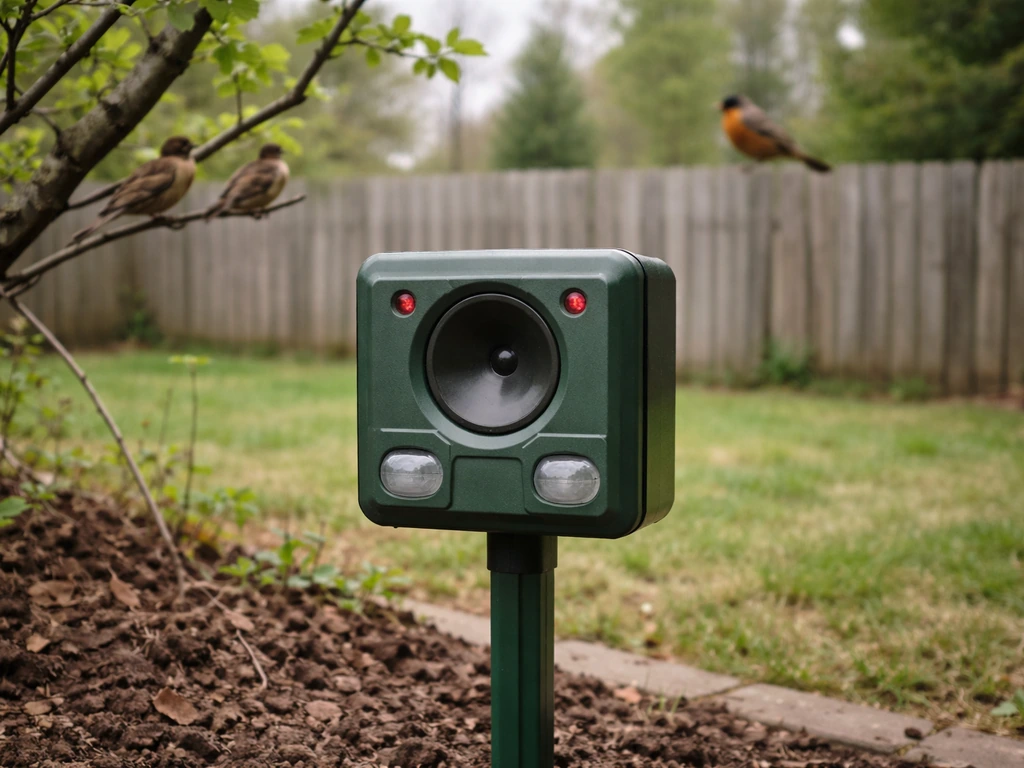
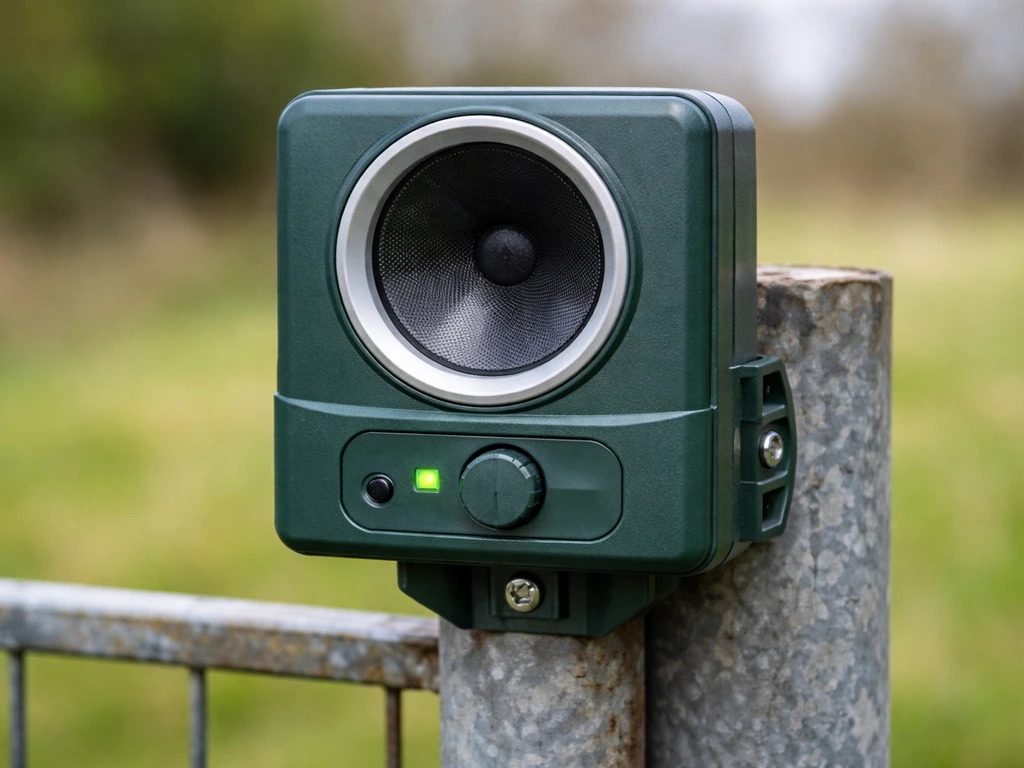
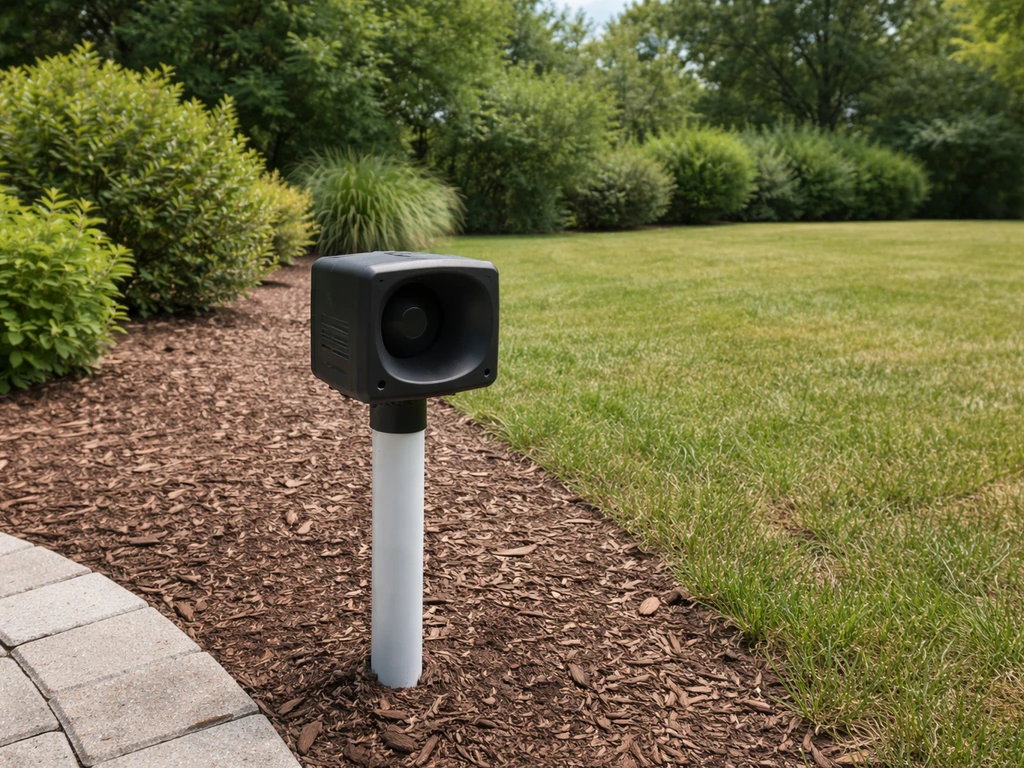
How ultrasonic bird repellers are supposed to work
The idea behind ultrasonic bird repellers is straightforward: emit high-frequency sound waves above roughly 20,000 Hz (the upper threshold of human hearing) to irritate or disorient birds without disturbing people nearby. Manufacturers claim the sound mimics predator calls or creates discomfort that encourages birds to leave an area.
The problem is that birds don't actually hear ultrasonic frequencies well. Most bird species have a hearing range that peaks well below 20,000 Hz. Research consistently shows that pigeons, sparrows, starlings, and other common pest birds are largely unaffected by ultrasonic sound. They simply don't register it as a threat, which is why they show no fright response in controlled studies. The premise the whole product category is built on doesn't hold up for most target species.
It's also worth knowing that ultrasonic devices in the US are not regulated the same way pesticide products are, which means manufacturers aren't required to prove efficacy before selling them. That's a big part of why the market is flooded with devices that don't deliver on their claims.
When they might help vs. when they almost always fail
There are narrow situations where an ultrasonic device might provide some benefit, mostly as part of a layered deterrent system rather than as a standalone fix.
Situations where they can help (at least a little)
- Small, enclosed or semi-enclosed spaces like sheds, garages, or loading docks where sound can't dissipate quickly
- When birds are early-stage visitors and haven't established a strong roosting habit yet
- As one component of a multi-method approach alongside physical barriers and visual deterrents
- Targeting species like bats (which are highly sensitive to ultrasound) rather than birds
Situations where they almost always fail
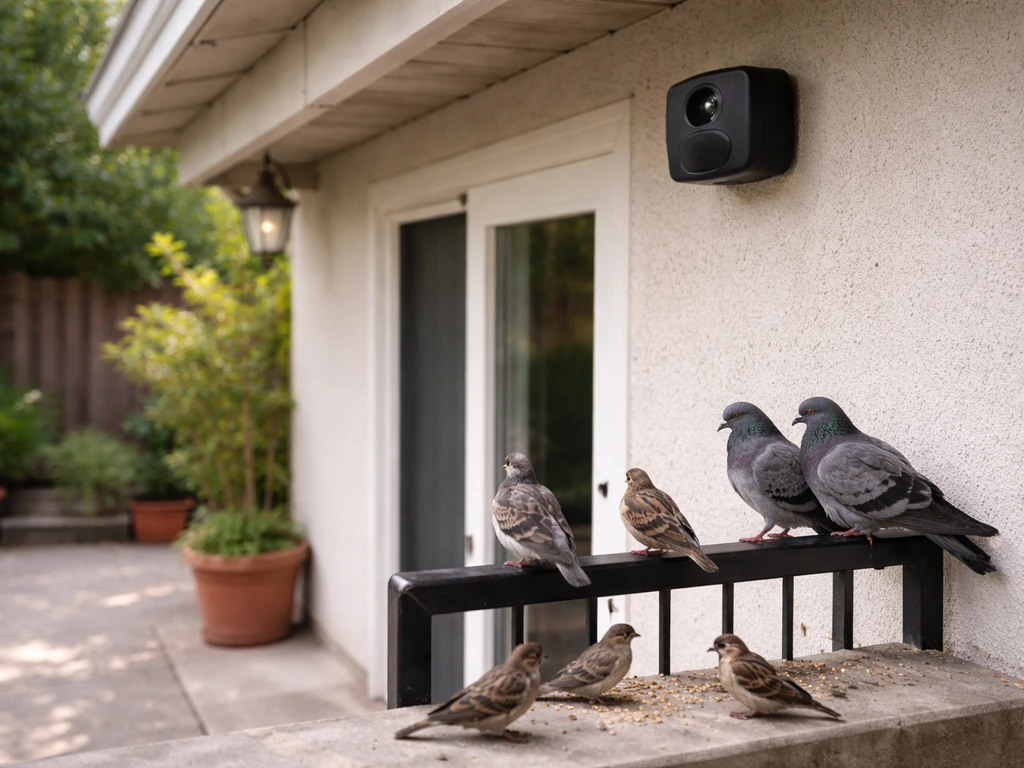
- Open outdoor spaces like patios, rooftops, gardens, and pool areas — sound disperses too fast
- Established roosting or nesting sites — birds are highly motivated to stay and habituate quickly
- Large commercial facilities or airports — scale and species variety make ultrasound impractical
- Any situation involving pigeons, starlings, house sparrows, or seagulls — these species show virtually no response
- Anywhere you're relying on the device alone without any physical or visual deterrent support
Real-world factors that change results
Even if you decide to try an ultrasonic device, several variables will determine whether you see any effect at all.
Bird species
Species sensitivity to sound varies significantly. Pigeons and starlings are notoriously unfazed by ultrasound. Some songbirds may show short-term avoidance, but that effect fades fast. Before investing in any repeller, identify exactly which birds you're dealing with. Species recognition changes your entire strategy.
Distance and line of sight
Most ultrasonic devices have a rated coverage range of 25 to 50 feet under ideal conditions. In practice, obstacles like walls, fences, dense shrubs, or furniture cut that range dramatically. Ultrasonic sound doesn't bend around corners, so birds roosting on the far side of an obstacle from the speaker are essentially unaffected. You need direct line of sight between the device and the target area.
Mounting height and direction
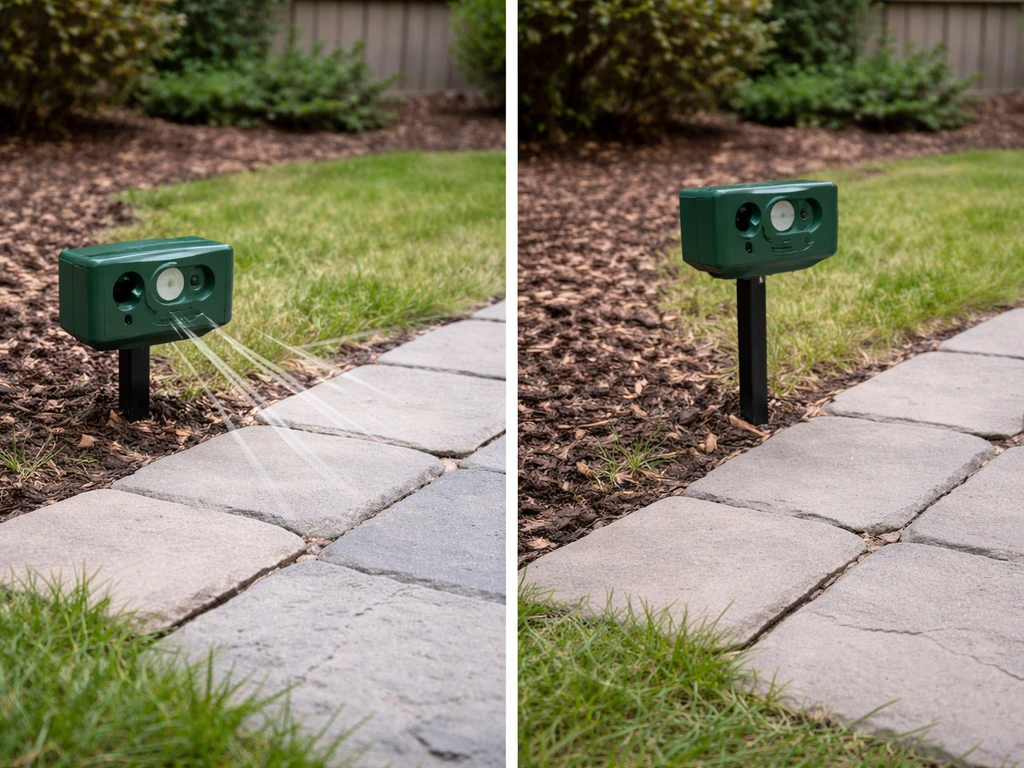
Where you mount the device matters. Mounting too low means the sound disperses into the ground rather than across the target zone. Most manufacturers recommend mounting at or slightly above the height where birds are congregating, with the speaker aimed directly at the problem area. A device aimed at the wrong angle is essentially useless.
Habituation
This is the biggest practical problem with all sound-based deterrents. Even when birds initially avoid an ultrasonic device, they typically habituate within days to weeks. Once they learn the sound poses no real threat, they ignore it entirely. Rotating frequencies or using motion-activated triggers can slow habituation, but not stop it.
Ambient noise levels
In noisy outdoor environments, road traffic, wind, and mechanical equipment all compete with the device's output. Even if the frequencies were in a range birds could detect, background noise reduces the effective range of the device significantly.
Installation and setup tips if you're going to try one
If you've decided to try an ultrasonic unit, either as a standalone experiment or as part of a larger system, these steps give you the best chance of seeing any result at all.
- Map the problem area first. Note exactly where birds are landing, roosting, or feeding. The device needs to cover that specific zone, not just the general area.
- Choose a model with a documented coverage area that matches your space. Most residential units cover 25 to 40 feet. For anything larger, you'll need multiple units.
- Mount at the right height. Position the speaker at the same level as the roosting or perching zone, or slightly above, with the emitter aimed directly at the congregation spot.
- Ensure line of sight. Ultrasonic sound won't pass through walls, fences, or dense vegetation. If your target area has obstacles, reposition the device or add a second unit.
- Use motion activation if available. Motion-activated bursts are less predictable than constant emissions, which slows the habituation process somewhat.
- Check and consult the manual for your specific unit. If you're using a solar-powered model, the solar powered ultrasonic animal and bird repeller manual for your device will have model-specific guidance on frequency settings and detection angles.
- Test and observe for two weeks. Check the target area daily. If you see no reduction in bird activity after 14 days, the device is not working for your situation. Don't keep waiting — move to a different approach.
- Rotate or reposition the unit every 7 to 10 days to reduce habituation if you are seeing some initial effect.
Safety, legality, and neighbor considerations
Ultrasonic devices are marketed as safe for people and pets, but that's not the full picture. Dogs and cats can hear frequencies up to 65,000 Hz and 79,000 Hz respectively, well into the ultrasonic range. A device running outdoors near a backyard where pets spend time may cause stress or discomfort for animals even if you can't hear anything yourself. If you have outdoor pets, choose devices with adjustable frequency ranges and keep the emitter directed away from areas where your animals spend time.
On the legal side, ultrasonic bird repellers are not regulated as pesticides in the US, so there are no federal efficacy or safety approval requirements for selling them. The US EPA notes that products claiming to control pests through electromagnetic or electrical means are generally treated as pesticide devices rather than pesticide products when they are not sold with a pesticidal substance not regulated as pesticides in the US. That's good in the sense that you don't need a permit to buy or use one, but it also means there's no regulatory backstop on product claims. In the UK and some European jurisdictions, environmental noise regulations may apply if a device is running continuously outdoors, especially in residential areas.
Neighbor nuisance is a real concern too, even if the primary frequencies are above human hearing. Some devices emit audible components as part of a mixed-frequency output, and those can be irritating to nearby residents. If you're in a densely populated area or managing a commercial property, check local noise ordinances before running any outdoor sound device continuously. Facilities near sensitive environments like wildlife reserves or bird sanctuaries should avoid ultrasonic devices entirely to prevent unintended disturbance to non-target wildlife.
Ultrasonic vs. sonic vs. other deterrent types: a quick comparison
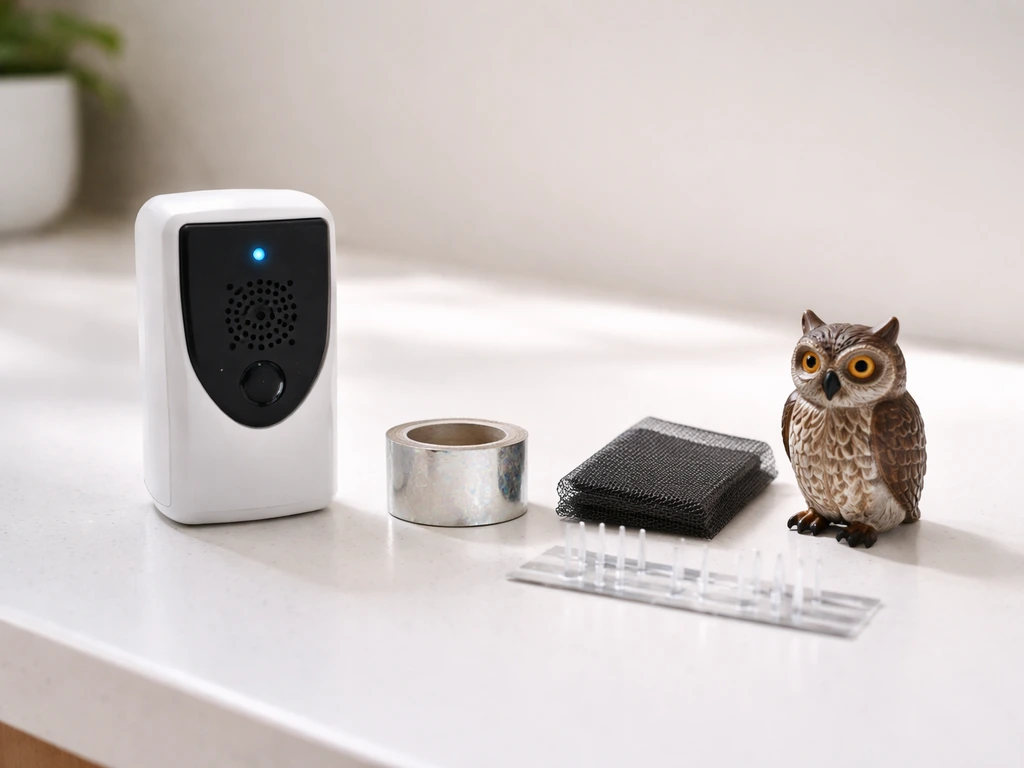
Before you commit to any deterrent, it helps to see how ultrasonic devices compare to the alternatives across the factors that actually matter.
| Method | Effectiveness | Habituation Risk | Best For | Key Limitation |
|---|
| Ultrasonic repeller | Low (limited evidence) | High | Enclosed spaces, multi-method use | Birds can't hear ultrasound well |
| Sonic repeller (audible) | Moderate | Moderate to high | Open areas, large perimeter zones | Noise impact on people and neighbors |
| Physical spikes | High | None | Ledges, rooftops, window sills | Doesn't prevent birds nearby |
| Netting/exclusion | Very high | None | Solar panels, eaves, gardens | Installation cost and complexity |
| Reflective/visual deterrents | Low to moderate | High | Gardens, patios, short-term use | Birds habituate quickly outdoors |
| Chemical/taste repellents | Moderate | Low | Flat surfaces, rails, ledges | Needs reapplication, weather-dependent |
For most outdoor bird problems, physical exclusion methods like netting and spikes consistently outperform sound-based approaches because birds simply can't habituate to a physical barrier they can't land on.
Better alternatives and how to choose the right one for your situation
If you've tested an ultrasonic device for two weeks without seeing improvement, or if you want to skip straight to methods with a stronger track record, here's how to think through your options based on your specific situation.
For patios, decks, and outdoor seating areas
Visual deterrents like reflective tape, scare owls, or predator decoys can give short-term relief in these spaces, though bird decoys need to be moved regularly to stay effective. For a more durable fix, consider physical deterrents along perch points and combine them with a sonic unit that targets audible predator calls. If you're exploring sonic options, the guide on do sonic bird repellers work walks through how audible deterrents compare to ultrasonic ones in practice.
For rooftops and commercial facilities
At scale, physical exclusion is almost always the most reliable path. Bird netting prevents access to flat roofs, HVAC units, and roof edges where birds roost. Spikes work well along parapets and ledges. If you want to add a sonic layer to cover larger open areas, look at the options reviewed in the best sonic bird repeller roundup, which covers units designed for wider coverage zones.
For gardens and pools
Reflective deterrents can help in gardens where you don't want to install physical hardware, but their effectiveness fades fast. For a longer-lasting result, look at options covered in the best reflective bird deterrent guide to find products that hold up to weather and movement. Around pools, netting stretched over the water surface or along fencing is more reliable than any sound-based method.
For solar panels
Birds nesting under solar panels is one of the most common complaints I see, and it's also one of the clearest cases where ultrasonic devices simply don't work. The gap under panels is a sheltered, highly attractive nesting site. The only real fix is physical exclusion: mesh or clip systems that seal the perimeter of the panel array. No sound deterrent is going to override that level of nesting motivation.
When to call a professional
If birds are nesting (especially protected species), if you're managing an airport-adjacent or sensitive ecological area, or if DIY approaches haven't worked after a full season, a licensed pest management professional with bird control experience is worth the cost. They can assess species-specific behavior and install exclusion systems that hold up long-term.
Your practical decision path from here
Here's a simple framework to cut through the noise and decide what to do today.
- Identify the bird species. Look up their hearing range and behavior. If you're dealing with pigeons, starlings, or sparrows, skip ultrasonic entirely.
- Assess the space. Enclosed or semi-enclosed? Ultrasonic might have a small role. Open outdoor space? Move on to physical or sonic options.
- Check for an established roost or nest. If birds are already settled in, no sound device will move them reliably. Start with physical exclusion.
- Set a two-week test window for any new deterrent. If you see no change, switch methods. Don't keep waiting.
- Layer your approach. The most effective setups combine physical barriers with a secondary deterrent (sonic or visual). Single-method solutions rarely hold long-term.
- If you want to compare the top-rated ultrasonic options before ruling them out entirely, the best ultrasonic bird deterrent guide covers units with the strongest real-world reviews.
- If you're curious whether reflective methods could handle your problem without sound at all, check out the honest breakdown in do reflective bird deterrents work before deciding.
The bottom line is this: ultrasonic bird repellers are not the reliable fix they're marketed as. The science is clear, and the anecdotal results from real users back it up. The FTC complaint alleges that ultrasonic or electromagnetic pest-control devices were advertised with efficacy claims, and it states that ultrasonic products are not effective at preventing mosquito bites the anecdotal results from real users back it up. But that doesn't mean you're stuck. Physical barriers, sonic deterrents, and well-placed visual tools all have stronger evidence behind them, and combining a few of them matched to your specific species and space gives you a genuinely effective plan rather than a guess.