If you are searching for the best ultrasonic bird deterrent, here is the honest answer upfront: most pure ultrasonic devices are unlikely to work well because birds simply cannot hear ultrasonic frequencies the way mammals can. That does not mean all sound-based deterrents are useless, but it does mean you need to know exactly what you are buying before you spend money on it. This guide walks you through what actually works, which products are worth considering, how to place them correctly, and what to do when they are not enough on their own.
Best Ultrasonic Bird Deterrent: UK Guide and Picks

Marcus Weatherby
4 Apr 2026
What ultrasonic and sonic bird deterrents actually are
Ultrasonic devices emit sound above 20 kHz, which is generally beyond the range of human hearing. Sonic devices work in the audible range, typically 3 to 5 kHz, using distress calls, predator sounds, or high-intensity noise to startle and repel birds. Many products sold as ultrasonic bird repellers actually combine both: the Bird-X BroadBand PRO, for example, transmits sonic frequencies at 3 to 5 kHz alongside ultrasonic frequencies at 15 to 25 kHz, using four speakers simultaneously. The Bird-X Transonic PRO takes a similar approach, covering up to 3,500 square feet using two speakers for both sonic and ultrasonic output.
The theory behind pure ultrasonic deterrents is that the high-frequency sound causes birds discomfort or confusion, driving them away from an area. The problem is the science does not back this up strongly. Natural Resources Wales and Historic England both note that ultrasonic devices are not considered effective because most birds simply cannot hear in the ultrasonic range. Testing on devices like the Ultrason UET-360 showed no apparent effect on bird activity over a 20-day study period. If you want to understand more about whether ultrasonic bird repellers actually work before you buy, the evidence is fairly consistent: the ultrasonic element alone is the weakest part of any device.
Sonic deterrents are a different story, and they do have some measurable effect, particularly when they mimic predator or distress calls that birds have evolved to respond to. However, even these come with a major catch: habituation. Birds are smart, and they learn quickly when a threat is not real. Unless the sounds are varied regularly, birds will stop responding within days or weeks. This is why how sonic bird repellers work in practice is more nuanced than most product listings suggest.
Top picks and how to choose the right device
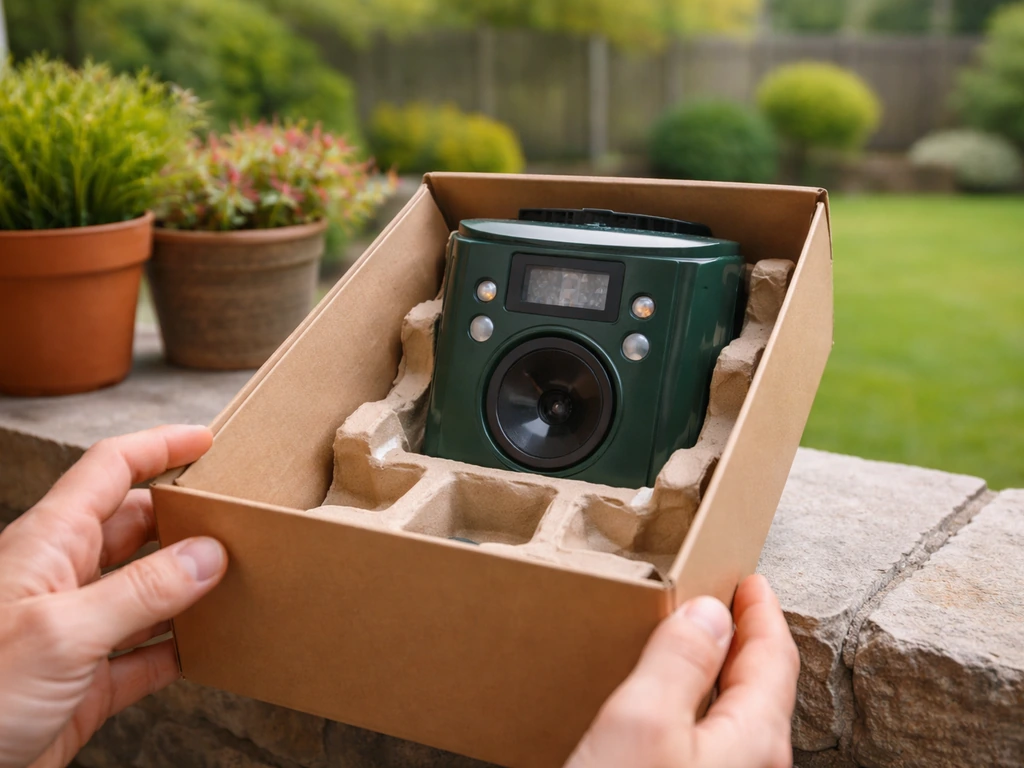
Given the evidence, the best ultrasonic bird deterrents are really the ones that combine ultrasonic output with sonic (audible) frequencies, variable programming, and ideally some visual element. Here are the products that consistently appear in professional and commercial pest control contexts, along with what makes them worth considering.
Bird-X BroadBand PRO
This is the most commonly recommended unit for mid-to-large outdoor or semi-enclosed commercial spaces. It runs sonic frequencies at 3 to 5 kHz and ultrasonic at 15 to 25 kHz across four channels. The box includes an AC adaptor, mounting brackets, and an application guide. It is positioned as a multi-sensory device, combining bio-acoustic sounds with high-frequency output. Line-of-sight with the target area is essential for effectiveness, which means it does not work well around corners or through thick vegetation.
Bird-X Transonic PRO
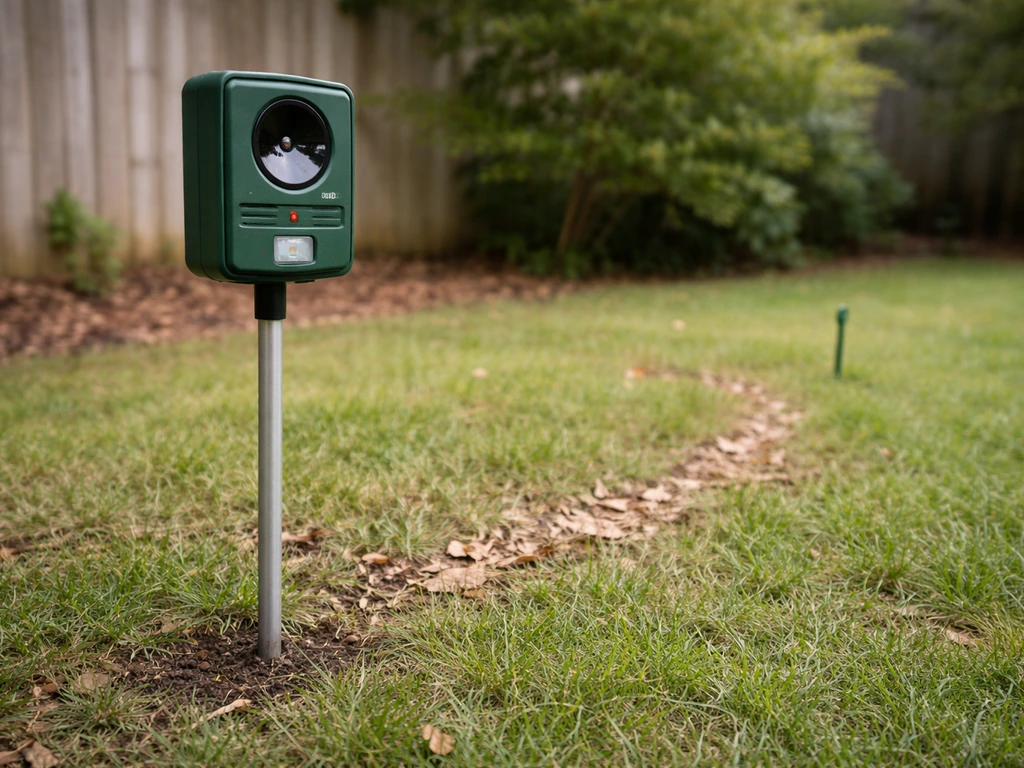
A solid choice for indoor or enclosed spaces, the Transonic PRO covers up to 3,500 square feet with two speakers. It is quieter from a human perspective because the sonic component is lower intensity, making it more practical indoors where an audible alert-call device would be disruptive. It is not suitable for large open-air environments.
PestGo2 MP6B
The MP6B is a high-frequency pest scarer that claims line-of-sight coverage up to 50 feet (15 metres) per speaker, with effective coverage of approximately 900 square feet per speaker and a projection angle of around 50 to 90 degrees. The manufacturer recommends placing the unit centrally in a square building or at the roost or perch level when targeting birds. It also incorporates UV LEDs and strobes, which the manufacturer claims can overload sensory receptors and momentarily disorient birds. If there are obstructions creating shadow zones, the MP6B instructions are clear: use two or more units. This is a realistic product, but its honest instructions also remind buyers that results are not instant.
BB-PRO Digital Bird Repeller
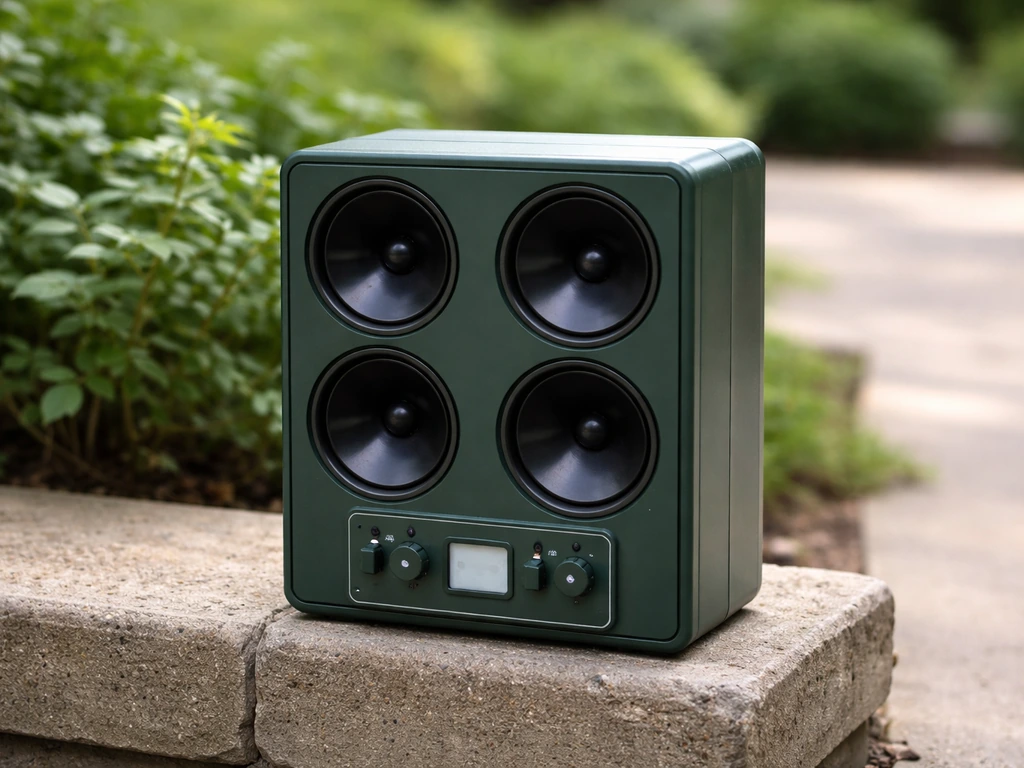
Similar in spec to the BroadBand PRO, the BB-PRO emits sonic and ultrasonic sequences through four speakers and includes an Ultrasonic Frequency Builder function. Frequencies run at 15 to 25 kHz on the ultrasonic side and 3 to 5 kHz on the sonic side, matching the BroadBand PRO's profile. It is a reasonable alternative if the Bird-X unit is unavailable in your region.
What to look for when comparing devices
| Feature | Why it matters | What to look for |
|---|---|---|
| Frequency range | Pure ultrasonic is less effective; combined sonic+ultrasonic is better | Sonic 3–5 kHz AND ultrasonic 15–25 kHz |
| Coverage area | Determines how many units you need | Match to your space; 900–3,500 sq ft per unit is typical |
| Power source | Mains-powered is more reliable than battery | AC adaptor preferred; solar if no mains access |
| Weather resistance | Essential for outdoor UK use | IP44 rating or higher for outdoor placement |
| Adjustability | Reduces habituation risk | Variable frequency, programmable intervals |
| Mounting options | Affects correct placement | Brackets, poles, or wall mounts included |
Where and how to place your device
Placement is probably the single biggest factor in whether these devices do anything at all. A unit pointed at a wall or blocked by a fence does nothing. Here is how to approach the main residential and commercial scenarios.
Patios and outdoor seating areas
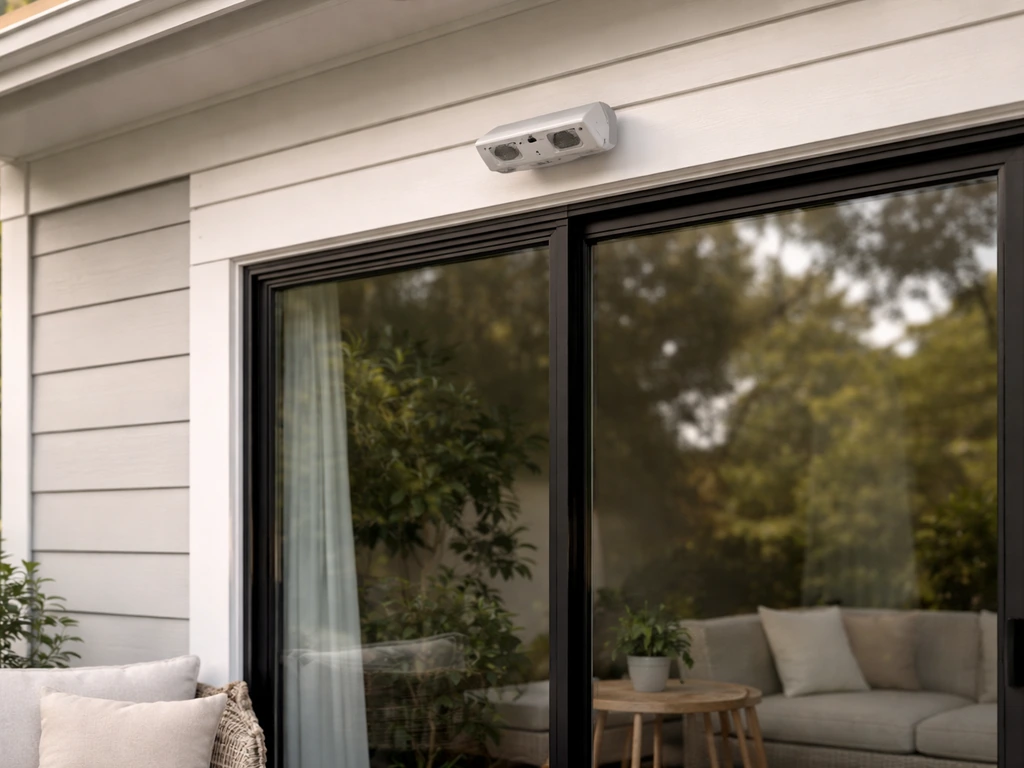
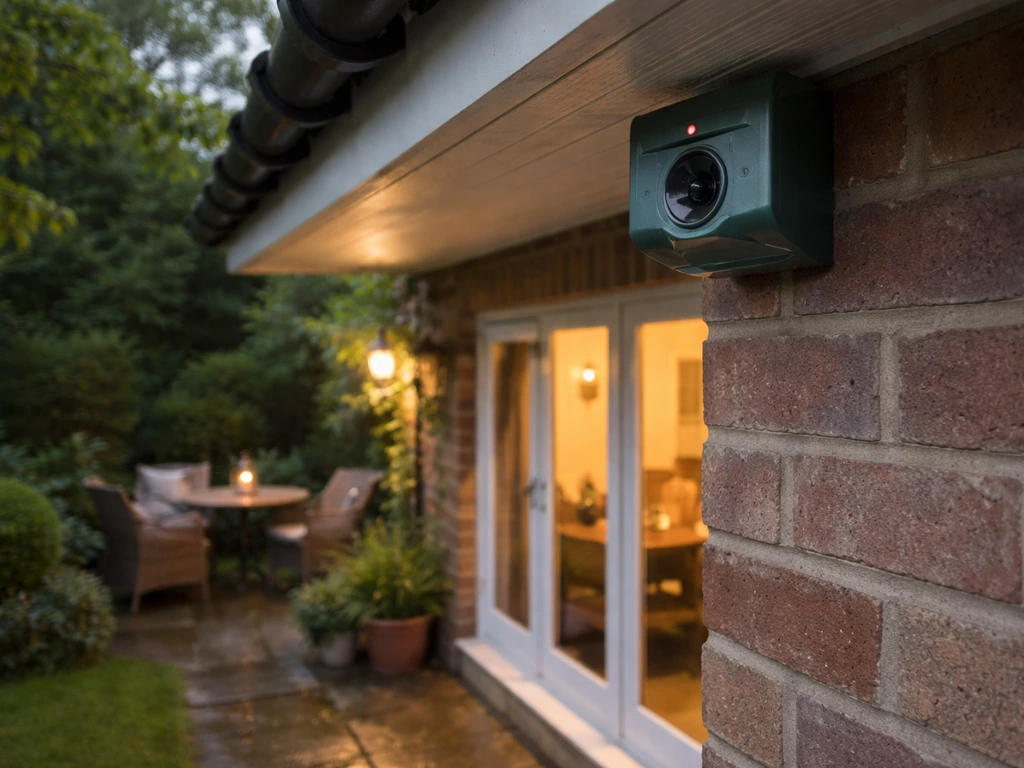
Mount the device at the edge of the patio at bird head or perch height, angled to cover the open space. Avoid pointing it at solid walls, which absorb or reflect the sound unpredictably. If your patio is L-shaped or has pergola structures creating blind spots, use two units positioned to cover each zone. Mains power is preferable here for reliability.
Windows and building facades
Birds hitting or roosting near windows are often a different problem than birds congregating on a roof. A sonic unit placed on a windowsill or mounted above a window frame can work as a deterrent to perching, but it will not solve bird-strike issues caused by reflective glass. For those, reflective bird deterrents are far more targeted and effective.
Pools and water features
Position the unit at the pool's edge or on a nearby post, aimed across the water surface. Birds visiting pools are usually looking for water or food, so pair the sonic device with removal of any nearby food sources. Line of sight across the pool surface matters here: a device tucked behind a pump housing or shed will not cover the open water.
Gardens
Gardens present a challenge because of the vegetation that creates exactly the kind of shadow zones device manufacturers warn about. Place units on stakes or posts above the plant canopy where possible, and use multiple units to cover a larger irregular area. Be realistic: a device rated for 900 square feet in a clear room will cover far less in a dense garden with shrubs and raised beds.
Roofs
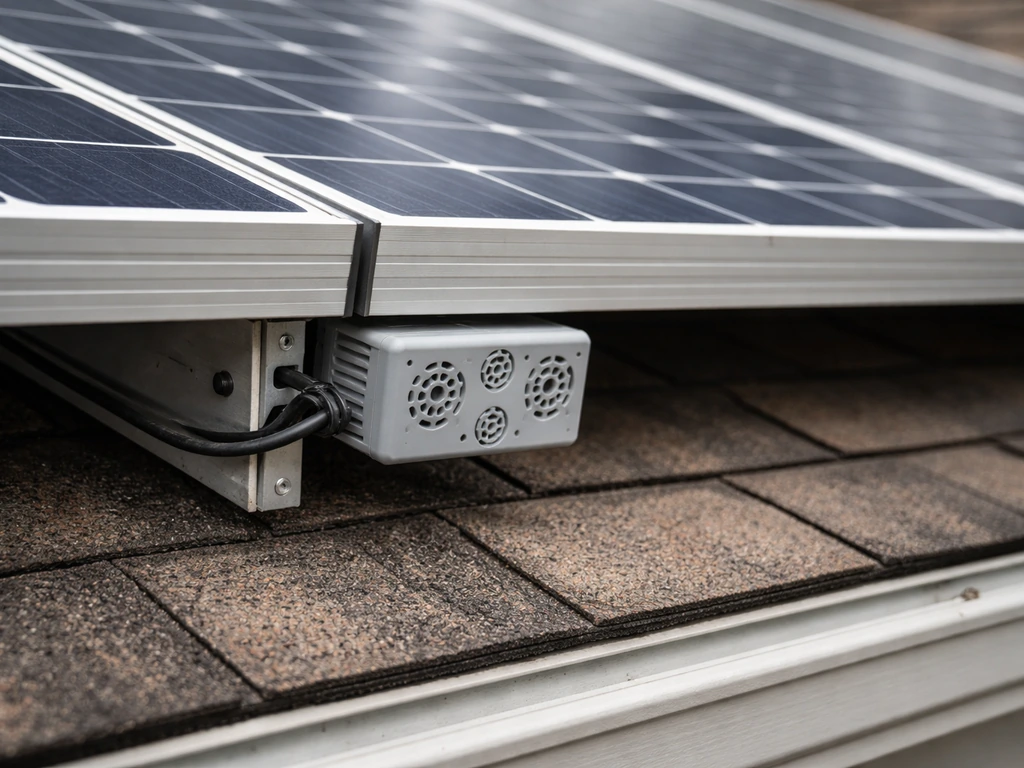
Roof placement requires weather-resistant units with robust mounting. Position speakers at ridge height or on chimney stacks facing the main roosting areas. However, for persistent roof roosting by pigeons or gulls, sonic deterrents alone rarely solve the problem. Spikes and netting are far more reliable on roofs and should be your primary tool, with sonic deterrents as a supplement.
Solar panels
Birds nesting under solar panels is a growing and very specific problem. A sonic deterrent unit mounted on the panel frame can help discourage approach, but the enclosed space under panels is attractive and sheltered enough that birds often persist anyway. If you are dealing with this issue, check the solar-powered ultrasonic animal and bird repeller options designed for this specific use, and pair them with mesh barriers around the panel perimeter for the best result.
Realistic expectations: what these devices can and cannot do
Let's be direct: if you buy a pure ultrasonic device expecting it to clear birds from your garden within a week, you will likely be disappointed. The most important limitations to understand are below.
- Species differences: Starlings, pigeons, gulls, and sparrows respond differently to sonic deterrents. Distress and predator calls are species-specific, so a device programmed for pigeons may have little effect on gulls. Check that your chosen product includes calls matched to the species you are dealing with.
- Habituation: This is the biggest practical problem with all sonic deterrents. Birds habituate fast, often within days. Unless the device varies its output automatically, effectiveness drops sharply over time. Natural Resources Wales specifically flags this as a reason these devices are less effective unless varied regularly.
- Environment and reflective surfaces: Open outdoor spaces break up sound quickly. Indoor or semi-enclosed spaces (warehouses, covered markets, car parks) give sonic deterrents the best chance of working because sound bounces and amplifies. In open fields or large roofs, coverage is far less than the rated square footage.
- Wind and weather: Wind disperses sound rapidly, especially ultrasonic frequencies. A device rated at 50 feet range in still conditions may effectively cover 20 feet or less in a UK coastal or exposed rural setting.
- Power and battery reliability: Battery-operated units are convenient but can underperform as voltage drops, reducing frequency output and volume. Mains-powered units are more consistent. Solar units are a reasonable middle ground for areas without power access, though output varies with light levels.
- Range and line of sight: The PestGo2 MP6B instructions make this plain: shadows behind walls, obstructions, or vegetation reduce effective coverage significantly. Always map your target area before buying and check if one unit can realistically cover it.
A transport research evaluation found that the Bird-X Ultrason X had no measurable effect on barn and cliff swallows nesting on bridges, even after a full research period. Manufacturer claims and real-world effectiveness in complex environments are two different things. Keeping expectations grounded means you will deploy these tools sensibly rather than relying on them alone.
Safety, legal obligations, and avoiding harm
Before you install any bird deterrent device in the UK, there are some firm legal lines you need to know about, not just guidelines.
Nest protection law
It is a criminal offence under UK law to blank" rel="noopener noreferrer">take, damage, or destroy a bird's nest while it is in use. Historic England is clear that any deterrent, including sonic and ultrasonic devices, must not block access to active nests. This means you cannot install a deterrent mid-season once birds have started nesting in a spot. If there is an active nest, you have to wait until it is no longer in use before deploying anything.
Bat protection
This is a critical point that many buyers overlook. Ultrasonic devices must not be used in areas where bats are present. Historic England also warns that bird deterrent measures, including bio-acoustic or sonic/ultrasonic devices, must not interfere with protected species such as bats that roost in historic buildings Ultrasonic devices must not be used in areas where bats are present.. Bats navigate and communicate ultrasonically, so devices operating in the 15 to 62 kHz range can directly interfere with them. Using a sonic deterrent to disturb bats is a criminal offence in the UK. If there are bats roosting in or near your target area, you need to either choose a different deterrent type or get specialist advice before proceeding.
Noise and human health
High-intensity sonic devices used outdoors or near occupied buildings can create noise nuisance issues with neighbours, and in workplace settings, the UK Health and Safety Executive (HSE) is clear that even short-duration high noise can cause temporary hearing loss, with longer exposures risking permanent damage. If you are deploying a sonic device in or near a commercial or work environment, you have a duty to consider its effect on people nearby, not just the birds.
Pets
Dogs can hear into the ultrasonic range, and cats can too. Ultrasonic devices placed in gardens or near pet areas may cause stress to your own animals. Monitor your pets' behaviour after installation and move or turn off the device if they show signs of distress. The RSPCA's wider wildlife welfare guidance is a useful reference point for thinking about non-target animal impact.
When ultrasonic is not enough: alternatives and combination strategies
The honest position is that ultrasonic and sonic deterrents work best as one layer in a multi-method approach. Relying on a single device rarely solves a persistent bird problem, especially with established roosting populations. Here is how to think about combining methods.
Visual deterrents
Visual deterrents are often underrated. Reflective tape, spinning discs, and predator shapes can be surprisingly effective in gardens and on roofs, and they do not raise any of the noise or bat-safety concerns that sonic devices do. If you want a low-maintenance option, choosing the best reflective bird deterrent for your setting is a practical first step before committing to an electronic device. They work by disrupting a bird's visual comfort zone rather than its hearing, which means they sidestep the habituation problem more effectively.
Decoys
Predator decoys like owls or hawks can reinforce the effect of sonic deterrents, particularly in open garden or roof settings. They work best when moved regularly to prevent habituation. If you are curious whether these are worth adding to your setup, bird decoys have a mixed but sometimes useful track record, especially as part of a layered strategy.
Physical barriers
For roofs, ledges, and solar panels, physical exclusion is the most reliable long-term solution. Bird spikes deny landing spots on ledges and parapets. Netting blocks access to larger areas like eaves, courtyards, and under solar panels. These do not require power, do not habituate birds, and do not raise noise or bat concerns. They are the right first choice for any space where birds are actively roosting or nesting year after year.
Sonic deterrents specifically
If you want a sound-based approach, pure sonic devices using bio-acoustic calls, distress calls, and predator sounds are a stronger starting point than pure ultrasonic. If you are evaluating which sound-based system is the best fit, reviewing the best sonic bird repeller options alongside ultrasonic units gives you a more complete picture of what is available and where each type performs best.
Chemical repellents
Gel-based and liquid chemical repellents make landing surfaces uncomfortable for birds without physical barriers. They are useful on ledges, gutters, and flat roofs where spikes are impractical. They need reapplication after rain and are most effective combined with other deterrents rather than used alone.
When to call a professional
If you have a large-scale problem, an established roosting colony, birds in a legally protected structure, or any situation involving bats in the same space, a professional pest controller with bird management certification is worth the cost. They can assess species, assess the legal position on nests and protected species, and design a combined strategy that is both effective and compliant. DIY approaches are fine for minor nuisance bird problems, but persistent or large-area issues rarely resolve without professional input.
The best ultrasonic bird deterrent is not always a single device. It is the right combination of placement, frequency type, and supporting methods matched to your specific bird species, location, and scale. Start with an honest assessment of your space, check the bat and nest situation, and layer your deterrents rather than expecting one product to do everything.
FAQ
How long should I test a best ultrasonic bird deterrent before deciding it does not work?
Give sound-based devices at least 2 to 3 weeks of active use, with the unit properly positioned and, if it has programmable modes, switched through the available settings regularly. If bird activity does not drop during that window, the issue is usually placement (shadow zones or blocked line of sight) or you are trying to solve a problem that needs exclusion (roof roosting, nesting under structures).
Do ultrasonic-only devices work at all in the UK, or should I avoid them completely?
Pure ultrasonic units often underperform because many birds cannot hear ultrasonic frequencies reliably, and results vary by species and environment. If you do try one, treat it as a supplement only, not your primary solution, and check that the model also includes audible sonic output or offers strong visual and placement options.
What is the biggest placement mistake that makes ultrasonic or sonic deterrents ineffective?
Pointing the speaker toward a wall, fence, or any surface that blocks or strongly reflects the sound. For best results, angle the unit to face the open area where birds approach or land, elevate it to perch height when targeting roosting, and avoid hiding the device behind pumps, sheds, or vegetation.
Should I use one unit or multiple for a patio, garden, or courtyard?
Use multiple units when your space has corners, L-shaped layouts, pergola posts, dense plants, or any area you cannot “see” acoustically from the device. A single unit may cover the label’s square footage in a clear room, but real gardens create shadow zones that require overlapping coverage.
Can ultrasonic bird deterrents harm birds or other wildlife?
They are not designed to injure birds, but non-target impacts can still happen, especially for bats. Also, sonic devices can stress pets (dogs can hear ultrasonic ranges, cats too), so monitor behaviour and stop or reposition if you see signs of distress.
Is it safe to use a sonic or ultrasonic device near bats in the UK?
If bats are present, you should not proceed with a sonic deterrent, and you must treat ultrasonic operation as a serious risk because it operates in a range bats can use. Get specialist advice or choose a non-sound method (for example, physical exclusion or visual deterrents) before installing.
Can I install deterrents while birds are nesting if I am trying to stop the birds early?
No, not for active nests. In the UK it is illegal to take, damage, or destroy an active bird nest, and deterrents must not block access to nests that are in use. Plan timing around nest status, and if you are unsure, wait or seek professional guidance.
What can I do if birds habituate to the sound after a few weeks?
Use units with variable programming, cycle modes, and avoid leaving one fixed pattern running constantly. Layer another method, such as rotating visual deterrents or adding predator decoys moved frequently, and ensure the sound is still hitting the approach paths rather than being reduced by vegetation or obstructions.
Will an ultrasonic deterrent stop birds from hitting windows?
Often it will not solve bird-strike problems caused by reflective glass. Sonic devices can reduce perching in some cases, but for striking behaviour you typically need reflective or visual bird-protection measures that change how birds interpret the glass.
What is the best approach for roof roosting birds like pigeons or gulls?
Treat exclusion as the primary long-term fix (spikes, netting, blocking landing and nesting routes). Sonic or ultrasonic devices can be supplementary, but they rarely outperform physical barriers for established roof roosting and nesting sites.
How do I handle solar panels where birds nest underneath?
A sound device mounted on the panel frame may reduce approach, but birds can still persist because the space under panels is sheltered. Combine sound if you want, but the most reliable approach is mesh or barriers around the panel perimeter to remove access points.
Are chemical or gel repellents worth it if I am using an ultrasonic bird deterrent?
They can help on specific landing surfaces where you cannot spike or net, like flat ledges and gutters, but they generally require reapplication after rain. For best results, use them as an add-on to physical or sonic measures rather than as a standalone solution.
When should I stop DIY and hire a bird management professional in the UK?
If you have a large-scale colony, birds using legally protected structures, persistent roosting over time, or any shared space with bats, professional help is usually the most reliable and compliant route. They can design a layered plan that matches species, site constraints, and legal timing for active nests.