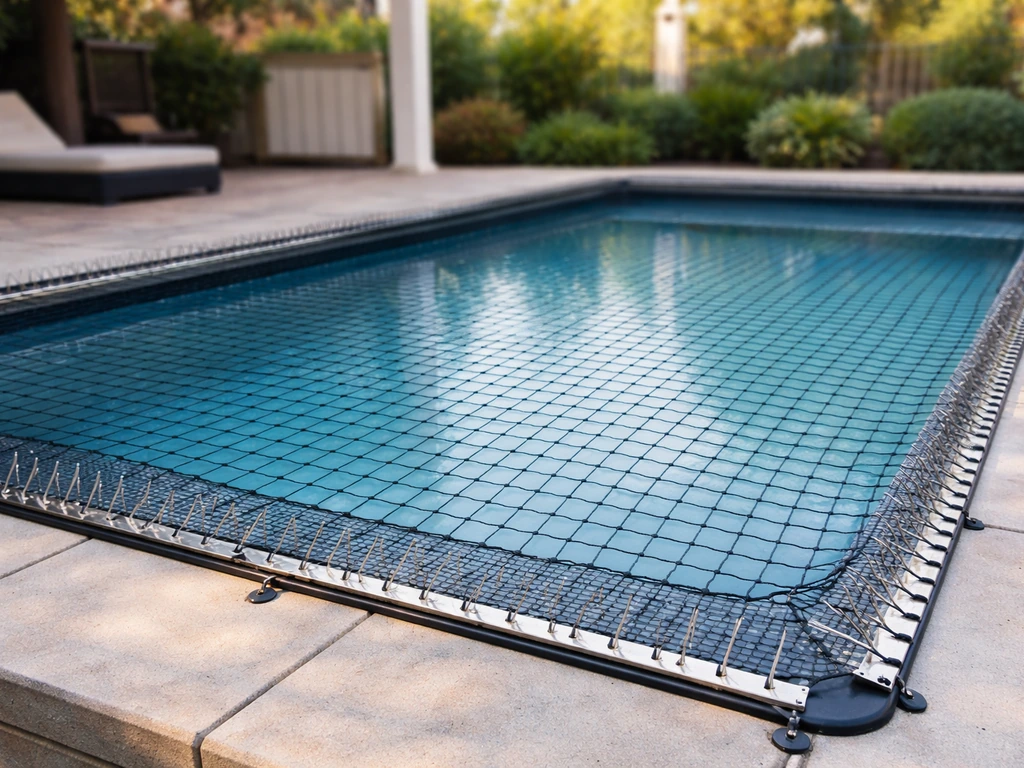
The best all-around bird deterrent for a pool area is a combination of physical barriers (pool netting or a solid cover, plus anti-perch spikes on coping and railings) backed up by a visual or sonic deterrent nearby. No single product does everything, but that pairing stops the two most common problems: birds landing on pool edges and birds actually getting into the water. From there, you tune the approach to where your specific birds are showing up, which is what the rest of this guide walks you through.
Best Bird Deterrent for Pool: Choose, Install, Maintain

Marcus Weatherby
2 May 2026
First, figure out which birds you have and where they're landing
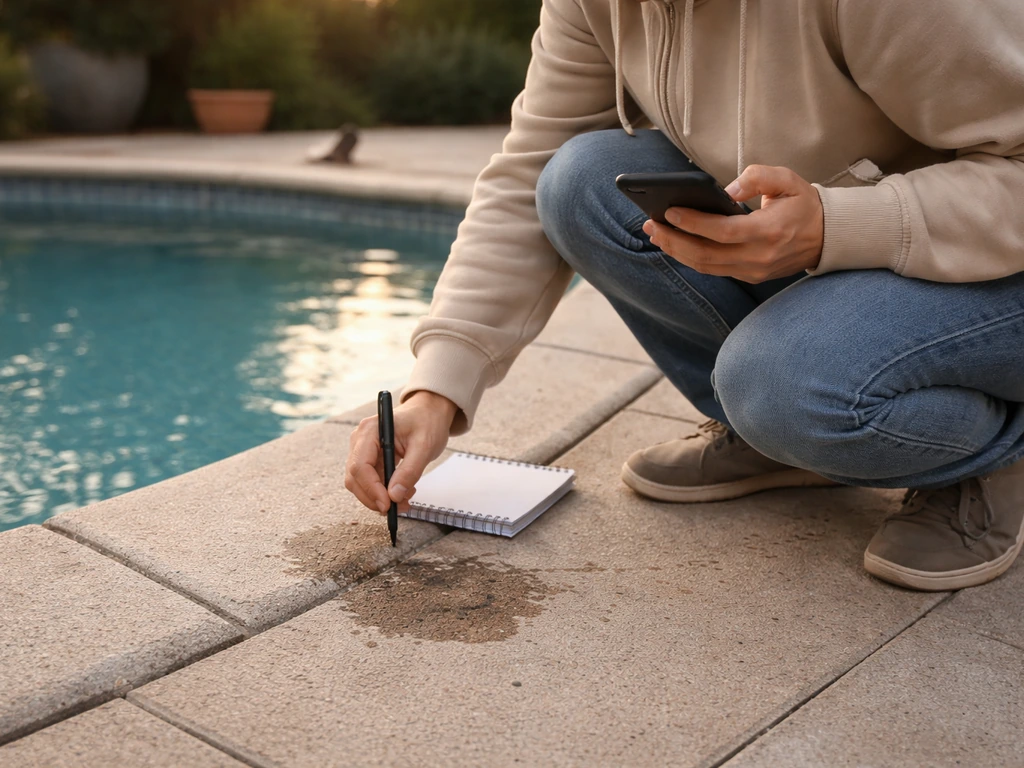
Before you buy anything, spend five minutes watching your pool area at dawn and again at dusk. Those are peak activity windows for most problem birds. You want to note exactly where they land, what they're doing, and roughly how many there are. A flock of starlings roosting under your pool house eaves is a completely different problem than a pair of pigeons sitting on your coping every morning.
The most common pool-visiting birds are pigeons, starlings, sparrows, grackles, and waterfowl like ducks and geese. Starlings are especially worth identifying because they nest in cavities and structural gaps. If you have starlings, there's almost certainly a gap in your eaves, a hole in a fascia board, or a crevice under a porch roof nearby. The pool itself isn't the main draw for them. Fixing that gap is more important than any deterrent spray.
Also think about what's attracting birds to your yard in the first place. Mass Audubon points out that birds are often drawn to the surrounding landscape, not the water itself. Nearby fruit trees, bird feeders, insects hovering over the water, or even nesting conditions close by can all pull birds toward a pool area. If you don't address the underlying attractant, deterrents will work much less reliably.
The main risk points to check
- Coping and pool edges: flat surfaces birds can stand on while drinking or preening
- Deck railings and handrails: horizontal perching spots, especially for pigeons
- Pool lights and fixtures: warm elevated surfaces that attract roosting overnight
- Drains and skimmers: edges near standing water where birds land to drink
- Nearby ledges, fences, and pergola beams: launching points birds use before entering the pool area
- Eaves, gaps, and overhangs: nesting and roosting spots for starlings and sparrows
Bird droppings in pool water aren't just a nuisance. The CDC treats bird feces in a pool the same way it treats other fecal incidents, meaning you need to clear swimmers out and go through a disinfection process before the pool is safe again. After a contamination event, CDC says pool owners and aquatics professionals should [clean and disinfect the pool as soon as possible](https://www. cdc.
gov/healthy-swimming/response/index. html), including after fecal-related incidents. CDC advises responding to bird droppings as a fecal incident and using fecal incident response guidance to disinfect the water and keep birds away from the pool [CDC treats bird feces in a pool the same way it treats other fecal incidents](https://www. cdc.
gov/healthy-swimming/response/responding-to-birds-in-and-around-the-pool. html). That's reason enough to take this seriously before the season gets going.
Physical deterrents: the most reliable category for pools
Physical deterrents are the most reliable category because they don't rely on birds being scared or repelled. They simply block access or make landing uncomfortable. For pools, start here.
Pool covers
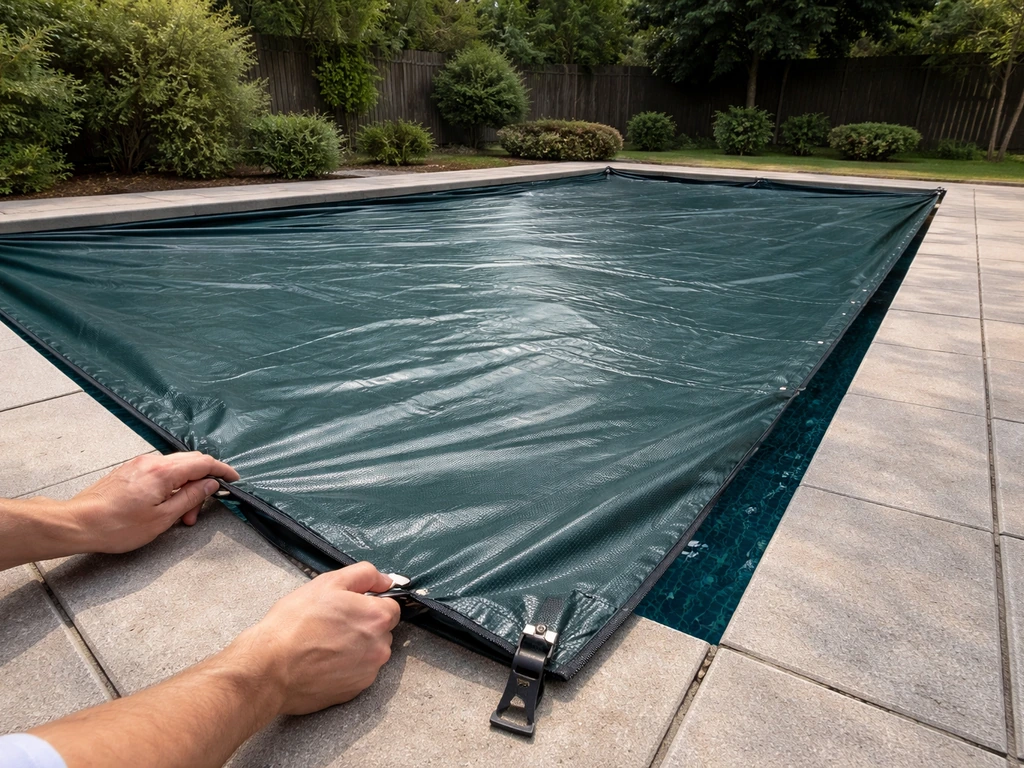
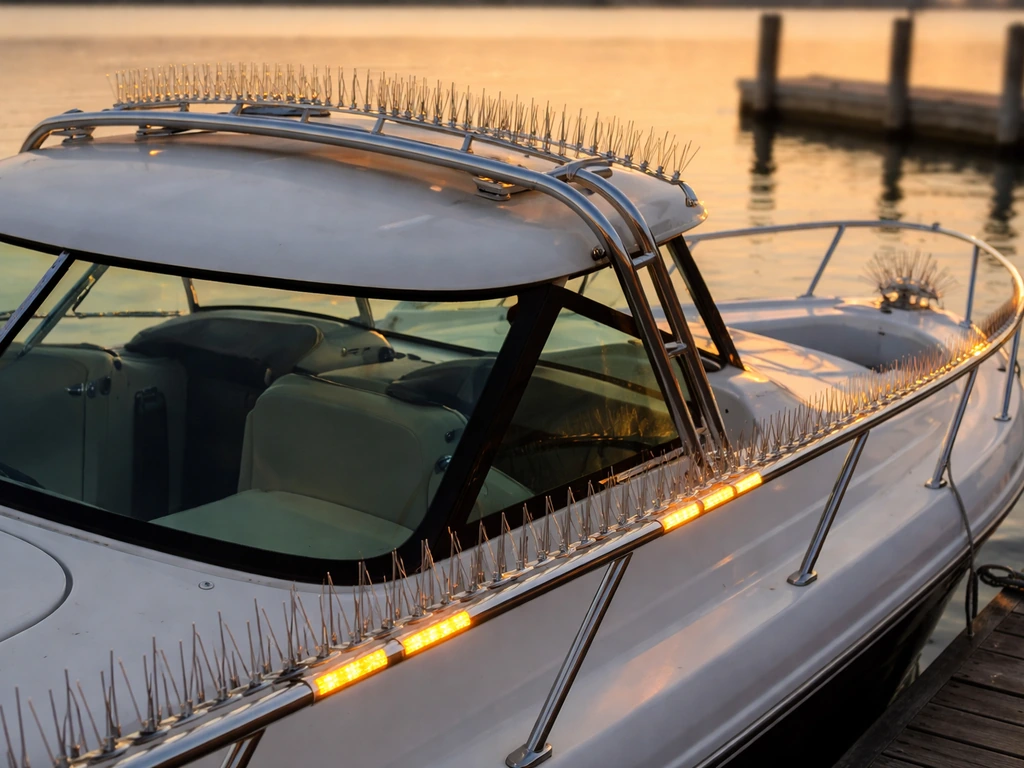
A solid pool cover is the single most effective deterrent when the pool isn't in use. If you are dealing with birds on a boat, the best bird deterrent for boats usually combines physical blocking with a visual or sonic scare strategy suited to the mooring area. It removes the water access entirely. Automatic safety covers are the gold standard.
They're expensive (often $5,000 to $15,000 installed), but they double as a safety barrier for kids and pets. For above-ground pools, a standard winter cover held down with water bags works well and costs a fraction of that. If you're dealing with waterfowl, ducks in particular, a cover is close to non-negotiable because ducks are persistent and will simply wait out most sensory deterrents.
Pool netting
Netting stretched over the pool surface is a more affordable option than a solid cover and works well against birds landing in the water. Look for a mesh size of 3/4 inch or smaller to block sparrows and starlings, and make sure the netting is taut. Sagging netting can trap birds rather than exclude them, which creates both a humane problem and a mess. Heavy-duty polypropylene nets rated for UV exposure hold up longest outdoors. Budget around $100 to $400 for a residential pool depending on size and material quality.
Anti-perch spikes and strips
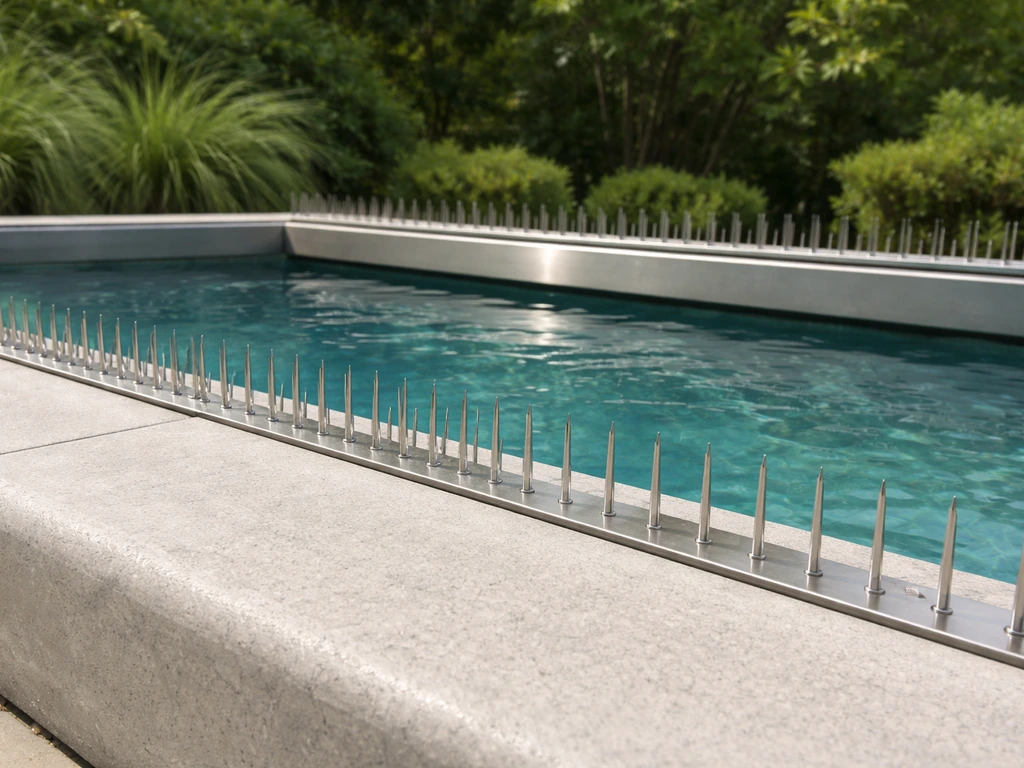
Stainless steel bird spikes are the go-to solution for coping edges, railings, and the tops of walls. They don't hurt birds. They just make it uncomfortable to land. For pool coping (typically 4 to 6 inches wide), use a narrow-base spike strip. For wider flat surfaces or railings, overlap two rows slightly so there's no comfortable gap. Spikes install with adhesive, screws, or tie-wire depending on the surface. On pool tiles and natural stone coping, a UV-resistant silicone adhesive works well and won't damage the surface.
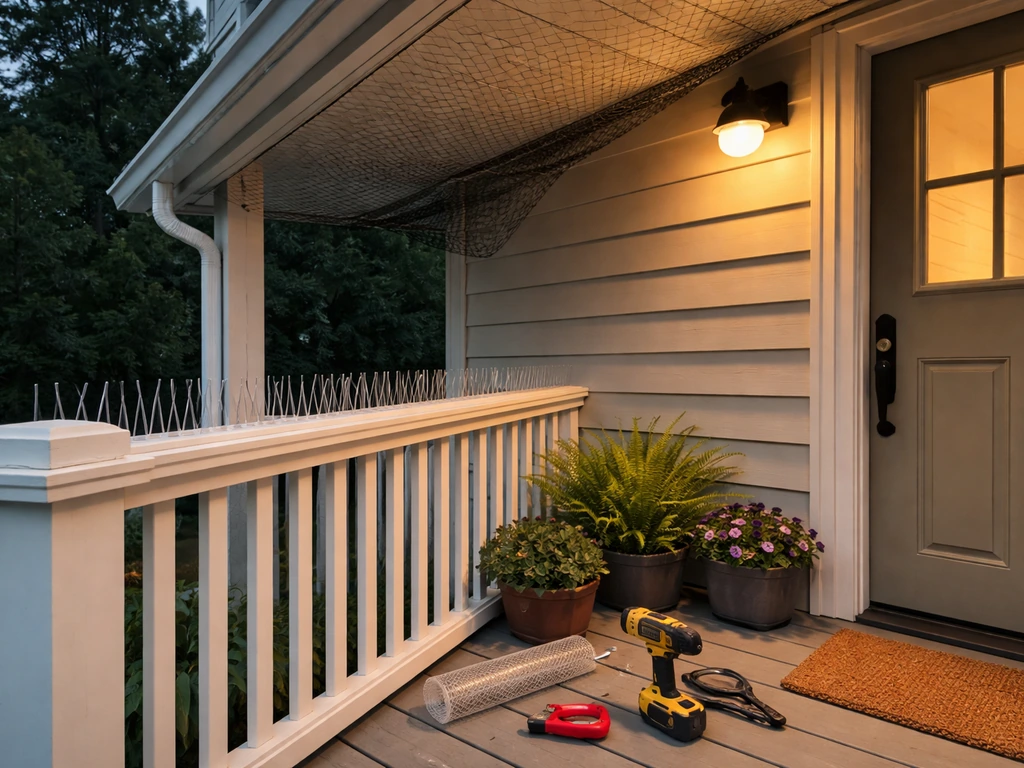
One thing worth mentioning: if you're also dealing with birds on your deck or patio, spikes work the same way there. The logic is identical to protecting any outdoor horizontal surface.
Sealing entry gaps and nesting sites
If starlings or sparrows are roosting near your pool, walk the perimeter of any adjacent structure and look for gaps larger than 3/4 inch. Seal them with hardware cloth (1/4-inch mesh), foam backer rod plus exterior caulk, or metal flashing, depending on the gap size and location. This step is often skipped, but it's the only permanent fix for birds that are actively nesting nearby rather than just passing through.
Sensory deterrents: what actually works near water
Sensory deterrents include anything that startles, disorients, or annoys birds. They work best as a supplement to physical barriers, not as a standalone fix. The honest reality is that most birds habituate to sensory deterrents within a few weeks if the deterrent doesn't move, change, or vary in timing.
Visual deterrents
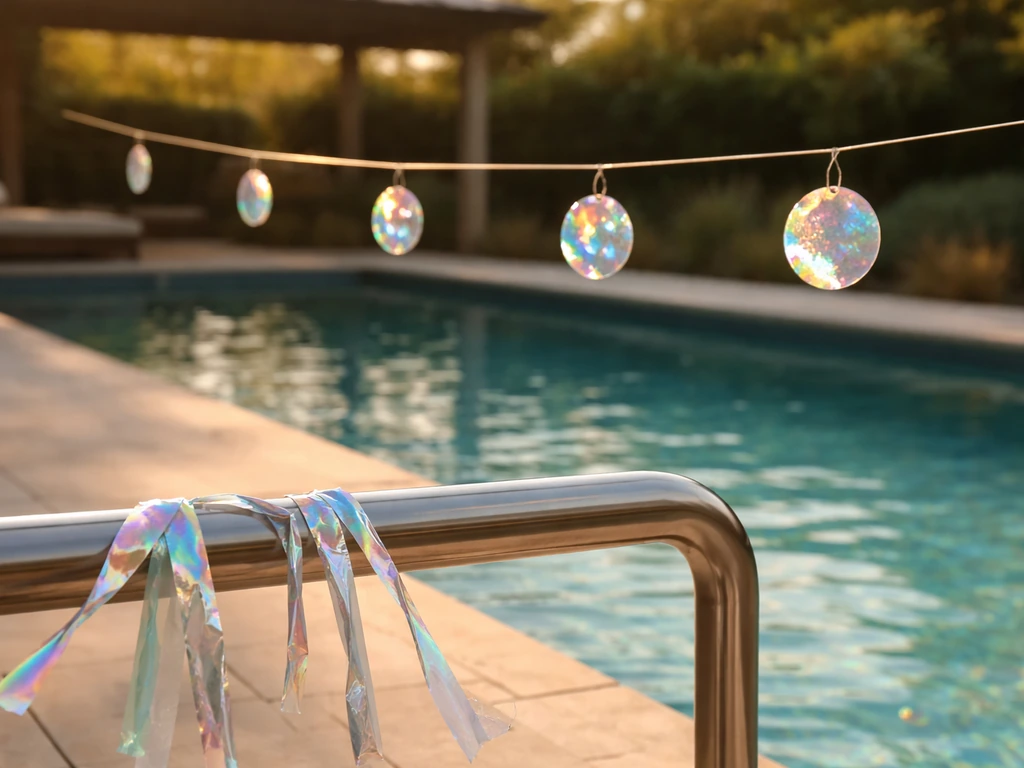
Reflective tape and holographic flash tape are cheap and easy to deploy. Hang strips so they move in the breeze near railings, pergola beams, or over the pool surface. The light reflection and movement both bother birds. Replace or reposition every few weeks before birds get used to them. Predator decoys like owl and hawk silhouettes work initially but lose effectiveness quickly unless you move them every two to three days. Rotating a fake owl around the pool area on a weekly schedule extends its useful life considerably.
Reflective bird diverter discs (sometimes called scare discs) hung from fishing line above the pool or along fence lines work reasonably well for smaller birds. They're more durable than tape and catch light from multiple angles. For a pool, hang them at about 5 to 6 feet high so they stay in the birds' line of sight without being a hazard to swimmers.
Sonic and ultrasonic devices
Sonic bird deterrents play recordings of predator calls or distress calls from the target bird species. These work better near pools than generic noise machines because the sounds are specific and instinctively alarming to birds. Look for a unit that cycles through multiple calls and randomizes the timing so birds don't pattern-match and tune it out. Place the speaker at pool edge height, not high up, since many bird distress calls carry naturally at ground level.
Ultrasonic devices emit frequencies above human hearing range and are marketed as neighbor-friendly. The research on ultrasonic bird control is mixed. Most bird species don't hear well in the ultrasonic range, and effectiveness studies are inconsistent. If you live in a noise-sensitive area and want to try a sonic device without disturbing neighbors, ultrasonic is worth a shot, but set your expectations accordingly.
One practical note: solar-powered sonic units are convenient for pool areas where running a power cord across the deck is awkward. Most run 8 to 12 hours per charge and have a motion-activation option that conserves battery and varies the timing so birds don't habituate as quickly.
Chemical and odor repellents: when they help and when to skip them
Chemical bird repellents for outdoor use generally fall into two categories: contact repellents (sticky gels or tactile products that make surfaces uncomfortable to land on) and odor/taste-based repellents that irritate birds' senses.
Methyl anthranilate (MA) is the most commonly used bird repellent near water. It's derived from grape extract, is non-toxic to humans and animals at typical application rates, and irritates birds' trigeminal nerve (the sensory nerve in their face). MA is used in some commercial pool areas as a spray or fog to deter birds from landing on the water surface. It dissipates relatively quickly, which means it needs reapplication every few days in heavy-use situations. It won't affect pool chemistry at the concentrations used outdoors, but avoid spraying it directly into the pool water or near skimmers where it would immediately be filtered out anyway.
Sticky bird gel (polybutylene-based products) is effective on railings and coping edges as a tactile deterrent. Birds land, feel the stickiness, and leave. The downside near pools is that gel picks up debris (leaves, dust, bugs) quickly in an outdoor environment, becomes less effective within a few weeks, and can be messy if swimmers brush against treated surfaces. It's better suited to pool house walls or fence tops than to coping directly adjacent to the water.
Skip chemical repellents entirely if you have an indoor pool, a covered pool enclosure, or a pool with a complex filtration system where you're worried about chemical interactions. In those cases, physical barriers and sensory deterrents are safer and easier to manage.
Which deterrent to use based on where birds are showing up
Here's how to match the deterrent to the specific problem spot. This is the most practical part of the whole guide. If you’re looking for the best bird deterrent for a deck, the most reliable approach is usually a combination of physical barriers plus targeted placement to block landings best bird deterrent for deck.
| Problem spot | Birds doing what | Best deterrent(s) |
|---|---|---|
| Coping and pool edges | Landing to drink or preen | Anti-perch spikes + reflective tape |
| Deck railings and handrails | Perching and roosting | Spike strips + sonic deterrent nearby |
| Pool surface | Landing, swimming, or wading (ducks) | Pool cover or netting + MA spray |
| Pool lights and fixtures | Roosting overnight for warmth | Spikes on fixture base + predator decoy nearby |
| Drains and skimmers | Drinking from water level | Netting over pool + seal any gap around drain housing |
| Eaves and structural gaps near pool | Nesting (starlings, sparrows) | Seal gaps with hardware cloth + spike nearby ledges |
| Fences, pergolas, nearby trees | Staging area before pool entry | Reflective discs + sonic deterrent + remove bird feeders |
For most residential pools dealing with pigeons or starlings on coping and railings, spikes on every horizontal surface plus a motion-activated sonic unit is enough. For balconies, many of the same ideas that work on pool coping and railings, like physical blocking plus a sonic supplement, are often a strong match for the best bird deterrent for balcony.
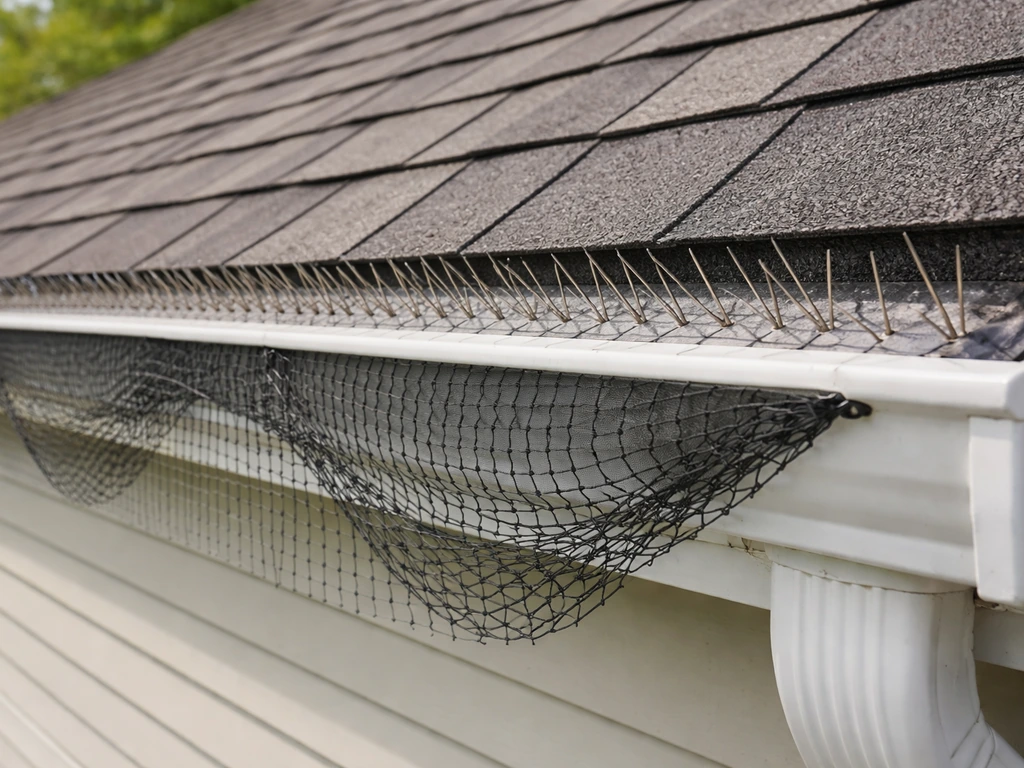
If you're choosing the best bird deterrent for a porch, use the same logic: block roosting spots with physical barriers and add a supplemental deterrent when needed best bird deterrent for porch. For a roofline, the best bird deterrent for roof eaves and coping usually combines physical blocking like spikes or netting with a targeted exclusion plan for the specific entry gaps you find.
For waterfowl problems (ducks, geese), you need to either cover the pool when not in use or use a pool-surface deterrent like floating alligator decoys combined with MA spray, because ducks are not as easily deterred by spikes or sound alone.
Installation tips, placement rules, and keeping birds from adapting
The number one reason bird deterrents fail is incomplete coverage. Birds will find the one spot you didn't treat and use it as a beachhead. When you install spikes, cover every accessible horizontal surface in the target zone, not just the obvious ones. If you spike the coping but leave the fence rail unprotected, birds shift to the fence. Then they're five feet from where they were, still fouling the pool area.
- Install spikes flush with the edge of the surface so there's no flat area between the spike base and the edge for a bird to stand.
- Overlap spike strip ends by at least 2 inches so there are no gaps a small bird can wedge into.
- For sonic deterrents, start with motion activation and a varied call schedule. Rotate through at least 3 to 4 different distress calls if the device allows it.
- Move visual deterrents (owl decoys, reflective discs) to a new position at least once a week.
- Reapply methyl anthranilate spray every 3 to 7 days, or after rain.
- Check netting monthly for tears or sagging, especially after storms.
- Inspect sealed gaps each spring before nesting season starts (February through April depending on your region).
Habituation is the biggest challenge with sensory deterrents, and it's worth being realistic about. Birds are smart. A static owl decoy will be ignored within two to three weeks by most species. A sonic unit that plays the same call at the same time every hour will be tuned out within a month. The fix is variation: move things, change timing, swap out the stimuli. Pairing a sensory deterrent with a physical barrier means even if the sensory deterrent stops working, the physical barrier still holds.
Safety, legality, and protecting pets and kids
Most birds in the US are protected under the Migratory Bird Treaty Act, which makes it illegal to harm, trap, or kill them (or disturb active nests with eggs) without a federal permit. The deterrents covered in this article (spikes, netting, visual deterrents, sonic devices, repellent sprays) are all legal because they exclude or deter birds without harming them. What you can't do: trap and relocate without a permit, use poisoned bait, or destroy an active nest with eggs or chicks in it. If you find an active nest near your pool, wait until the nesting cycle is complete before sealing the gap.
For poolside safety specifically, check that spike strips on coping are installed so the tines point away from the pool edge and can't catch on swimwear or skin. Spikes are blunt by design and unlikely to cause injury, but positioning matters. Adhesive-mounted strips should be checked seasonally to confirm they haven't lifted at the edges and created a trip hazard.
Netting over a pool must be supported so it can't sag into the water and create an entrapment hazard for children or pets. Use a perimeter support cable or a frame system. Never drape loose netting across the water surface unsupported.
For chemical repellents, keep methyl anthranilate products away from pool equipment and filtration intakes. While MA is non-toxic, you don't want any substance in the filtration system that wasn't designed for it. Sticky gels should be applied out of reach of pets and children since they can cause distress if a pet walks through them or a child touches a treated surface. Label all treated areas clearly during the first week of application.
Sonic units near pools present no safety concern for humans or most pets. If you have pet birds (parrots, etc.) that spend time outdoors, keep them away from the zone where a sonic distress caller is active, since the calls can stress pet birds the same way they stress wild ones.
Finally, if you manage a commercial pool or community pool, check local health codes. Some jurisdictions have specific rules about how bird fecal incidents must be handled and documented, and a few HOA or municipal codes have restrictions on certain types of deterrent devices in shared outdoor spaces. A quick check with your local authority before installing anything large-scale saves a headache later.
FAQ
What’s the single best bird deterrent for a pool if I only want one thing?
If you’re choosing one “best” option for a pool, prioritize complete physical blocking first (solid cover when closed, or tight pool netting over the water). Then add a second layer for landings (anti-perch spikes on coping and railings). This pairing prevents both water access and perching, which is where most problems start.
Do I only need to protect the pool coping, or are railings and ledges important too?
For birds that land on coping, install spikes on every horizontal surface that birds can grab, including rail tops, wall caps, and any ledges near the pool edge. If even one rail or ledge is left untreated, birds typically shift to the nearest unprotected perch within days.
Which birds need netting or covers versus spikes alone?
It depends on species. For ducks and geese, sensory devices and spikes usually don’t hold long, a solid cover is the most reliable when the pool is unused. For pigeons and starlings, spikes plus tight netting usually solves the pattern as long as you also seal nearby nesting gaps.
What should I do if birds are leaving droppings but I never see them in action?
If you see droppings but no birds, assume you still have a landing or roosting route you’re missing, common culprits are corners, fence rails, nearby roofs, or eaves gaps. Do a fast dawn and dusk observation, then re-check for any accessible surface larger than about 3/4 inch where birds can balance.
How do I prevent pool netting from sagging and creating an entrapment hazard?
Netting should be supported so it stays above the water with no sag. Use a perimeter support cable or frame system, and confirm the lowest point stays clear even when it’s windy and slightly loaded by rain or debris.
How often do I need to move reflective tape or decoys to keep them effective?
Replace or reposition visual deterrents on a schedule, especially reflective tape and decoy silhouettes. A practical rule is to change position every few weeks, and rotate predator decoys every two to three days for best results.
Will sonic deterrents work if I mount the speaker high up on a wall or post?
Yes, but place the speaker at roughly pool-edge height and choose a unit that cycles through multiple calls with randomized timing. If it’s mounted too high, birds may not associate the sound with an intruding threat at the landing spot.
Are ultrasonic bird repellent devices actually effective near pools?
Ultrasonic devices are marketed as quiet for neighbors, but effectiveness varies by bird species and conditions. If your goal is reliable exclusion, treat ultrasonic as a possible supplement, not your primary deterrent, and set expectations accordingly.
What’s the downside of using a solar-powered sonic unit for a pool area?
Yes, especially if you have a battery model with motion activation. Solar units often run 8 to 12 hours per charge, so if bird traffic overlaps with long cloudy periods, battery performance can drop and you may need a second power strategy or a non-solar model.
Can I use methyl anthranilate (MA) spray safely around a running pool or near skimmers?
If you use MA spray, keep it away from pool water, skimmers, and filtration intakes. Apply so overspray cannot land directly into the pool, and remember MA dissipates relatively quickly, often requiring reapplication every few days during heavy use.
Is sticky bird gel a good option on coping close to where swimmers walk?
Sticky gels can work on edges, but they’re messy outdoors because they collect dust and debris and can transfer to swimmers if surfaces are too close to traffic. If you use them, reserve them for areas where people rarely brush against the treated surface, and keep pets and kids away until fully cured.
Why do birds keep coming back even after I add deterrents?
Start by fixing physical access, then reduce food and nesting attractants. Remove or relocate bird feeders, manage fruiting plants near the pool, and inspect nearby structures for cavities and gaps, because birds often come due to yard conditions rather than the water itself.
What’s the number one reason pool bird deterrents fail?
The most common failure is incomplete coverage, birds shift to the nearest untreated landing spot. A fast check is to walk the perimeter and look for any horizontal surface within the birds’ approach path that isn’t blocked or spiked, including sections you consider “minor.”
Are anti-perch spikes safe, and how can I install them correctly to avoid accidental snagging?
Most anti-perch spikes are designed to be harmless, but you still need correct orientation and safe layout. Ensure tines point away from the pool edge, verify adhesive-mounted strips remain seated (no lifted edges), and confirm they don’t create catch points for swimwear or skin.
What should I do right away if birds get into the pool and leave droppings?
Even if spikes and netting stop the birds from entering, you still should treat fecal contamination as a regulated cleaning event. Clear swimmers from the area and follow your local disinfection and pool reopening guidance, then review your coverage to prevent repeat incidents.
Can I seal gaps under eaves if I suspect there’s an active bird nest nearby?
If you find an active nest near the pool, pause sealing and deterrent changes that would disturb it. Wait until the nesting cycle is complete before sealing entry gaps, because active nests may be protected under federal rules in many cases.
Do I need special permission to install bird deterrents at a community or commercial pool?
For commercial or community pools, rules can differ by location and health department requirements. Before scaling up deterrents across shared outdoor spaces, check local health codes and any HOA or municipal restrictions, especially for sonic or chemical products.