
The best bird deterrent for boats depends on where birds are landing and what they are doing. For birds roosting on rails, radar arches, and T-tops, stainless steel spikes are the most reliable starting point. For open dock areas with heavy bird traffic, combining physical barriers with rotating visual deterrents works better than any single method. The rest of this guide walks through each scenario, what to buy, and how to install it so you are not dealing with the same problem a week later.
Best Bird Deterrent for Boats and Docks: Buyer Guide

Marcus Weatherby
13 Apr 2026
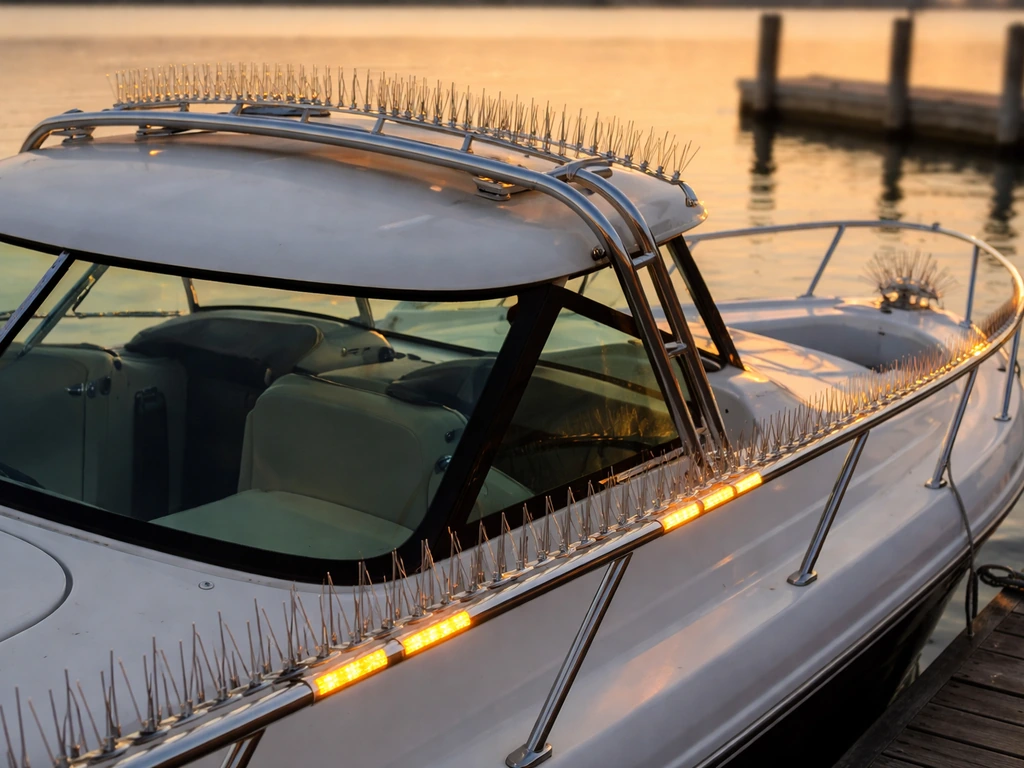
Birds on boats vs. birds on docks: not the same problem
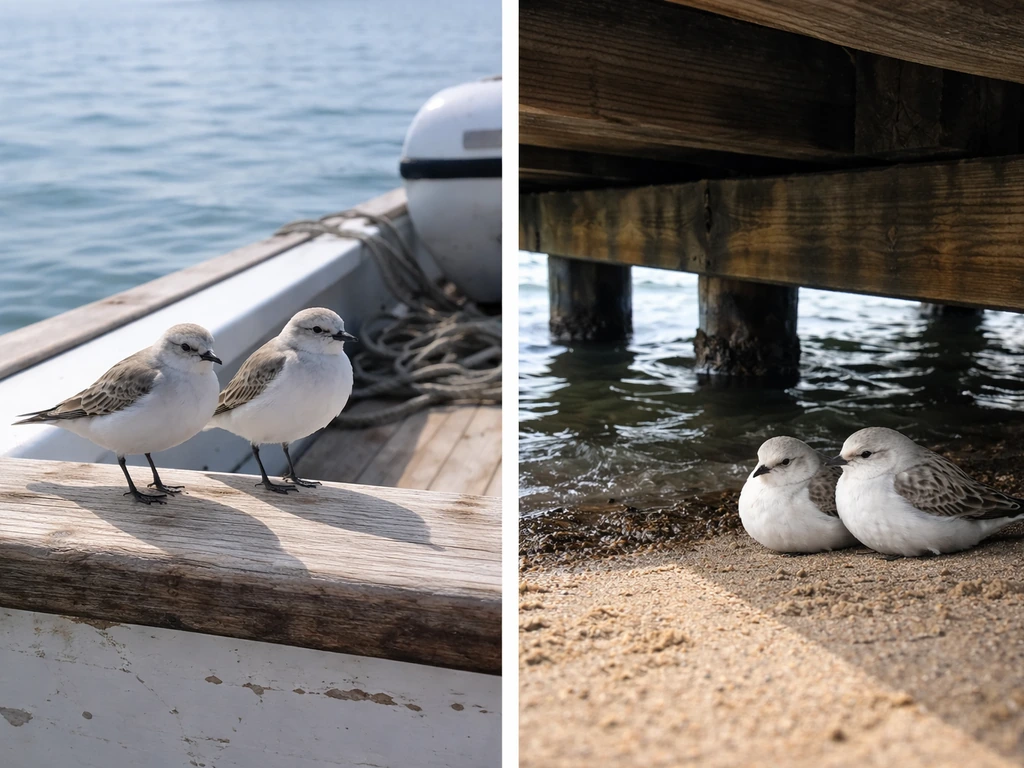
Before you buy anything, figure out what you are actually dealing with. Birds perching on a boat rail and birds nesting under a dock structure require completely different approaches, and using the wrong method wastes money and time.
On the boat itself, the most common complaints are roosting and perching on horizontal surfaces like rails, T-tops, radar arches, cleats, and bow areas. Cormorants and pelicans are heavy birds that can cause real structural stress. Gulls and smaller shorebirds leave significant waste but are lighter and easier to deter.
On docks and berths, the problem is usually feeding, loafing on dock boards, and nesting under or behind dock structures. Nesting is the most serious situation. An active nest is legally protected under the Migratory Bird Treaty Act (16 U. S.
C. §§ 703–712), which prohibits taking, harming, or disturbing migratory birds or their active nests. USFWS’ MBPM-2 Nest Memorandum (2025) explains how MBTA permitting applies to taking migratory bird nests, including terminology and when nests, eggs, and chicks are covered [active nest is legally protected under the Migratory Bird Treaty Act](https://www. fws.
gov/sites/default/files/documents/2025-01/mbpm-2-nest-memorandum-2025. pdf). This is not a gray area. If you see a bird sitting on a nest with eggs or chicks, you cannot remove it without a federal permit.
The U. S. Fish and Wildlife Service notes that almost all native migratory birds, including nests and eggs, are protected under the Migratory Bird Treaty Act, and that a federal depredation permit is required to destroy an active nest [USFWS](https://www. fws.
gov/sites/default/files/documents/2025-01/3-200-13-depredation-frequently-asked-questions. pdf). The time to act is before nesting begins.
The signs of an active nest include paired birds visiting a site consistently, nest-building behavior, and territorial behavior at a fixed point. Watch a suspect location for a few days before dismissing it as casual perching. Acting early, before the nest is completed and eggs are laid, keeps you on the right side of the law and makes deterrence much simpler.
The main deterrent types for marine settings
There are four categories worth knowing: physical exclusion, sensory deterrents, visual deterrents, and chemical repellents. Each has a role, and none works perfectly alone.
Physical exclusion (spikes and netting)
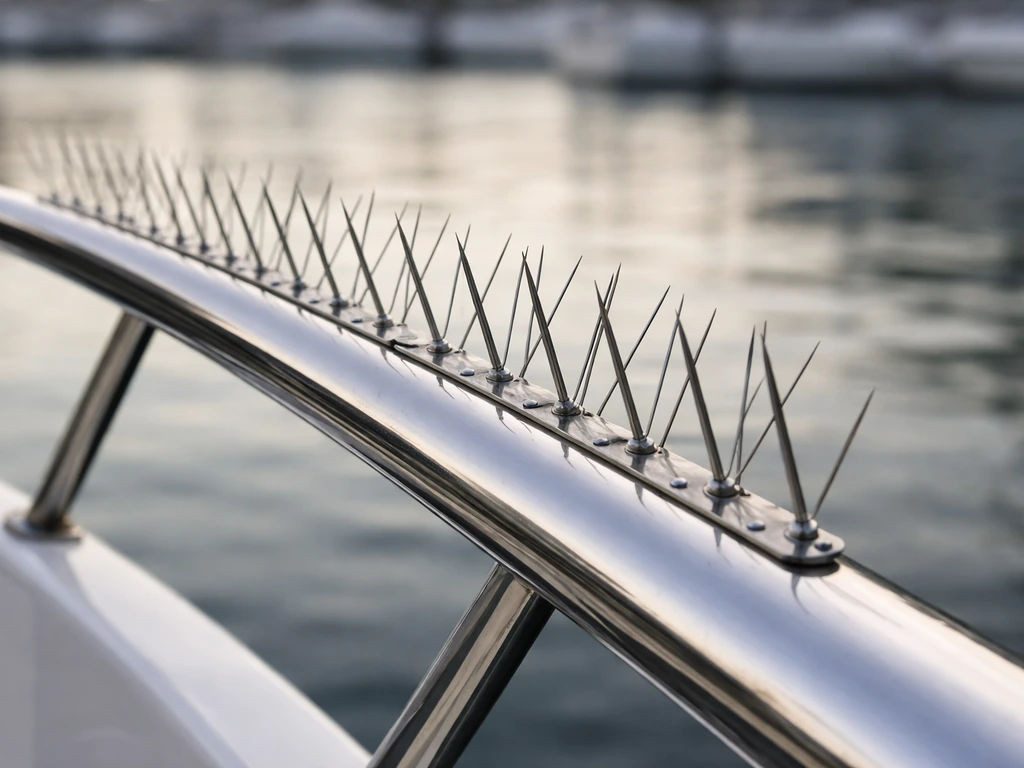
Physical barriers are the most reliable long-term solution because they do not rely on a bird being startled or confused. They simply make landing impossible. On boats, stainless steel bird spikes are the go-to for rails, arches, and flat horizontal edges. Stainless steel holds up to salt air and UV exposure far better than plastic alternatives, though UV-resistant polycarbonate spikes are a reasonable budget option for low-corrosion environments. Bird-X stainless spikes, for example, can be installed with spike adhesive, screws, nails, or cable ties depending on the surface.
For wider surfaces or enclosed areas like under a dock canopy or around a fly bridge, netting is more appropriate. Bird Barrier's StealthNet is a well-regarded option, but the installation is genuinely complex. The specs require intermediate net attachments every 3 to 4 feet depending on mesh size to prevent sag and gaps, and the manufacturer specifically recommends watching installation training before attempting it. If you skip those details, birds will find the loose spots within days.
Sensory deterrents (sonic, ultrasonic, and laser)
Sonic devices broadcast recorded predator calls or bird distress sounds. They can work initially, but habituation is a documented problem. USDA APHIS notes directly that birds habituate to repeated alarm and distress calls, which means a sonic device running 24/7 on the same setting will likely stop working within a few weeks. If you use one, rotate the sounds and vary the broadcast schedule.
Ultrasonic devices emit high-frequency sound above the range of human hearing. An APHIS evaluation of the Bird-X Ultrason X (Model USX) assessed these devices for nesting deterrence on bridges and culverts, finding mixed results. The honest take: ultrasonic is a supplementary tool, not a primary solution, especially in open marine environments where sound dissipates quickly.
Laser deterrents are a newer option worth taking seriously for dock areas. The Bird-X Bird BLazer uses a Class 3R "fat beam" diode laser in an IP65-rated weatherproof aluminum housing, making it practical outdoors. Lasers work best in low-light conditions, such as dawn and dusk, which happens to be prime roosting time. Follow the safety precautions, particularly the lockout and aperture management instructions, since a Class 3R laser pointed at a person's eyes is genuinely dangerous. Autonomous laser systems are also used by professional agencies for infrastructure bird management, which tells you the technology has real-world backing.
Visual deterrents (reflective tape, flags, and decoys)

Visual deterrents include reflective tape, holographic flash tape, spinning pinwheels, and predator decoys like owl or hawk silhouettes. These are cheap and easy to deploy, which is why they are popular, but their limitations are real. The National Academies has noted that habituation to mylar flags and similar reflective devices is likely with repeated passive exposure. Birds learn fast that the thing flapping in the wind is not actually a threat.
That said, visual deterrents do work as part of a rotating strategy. Move them every few days. Combine them with something physical. Bird-X's guidance on visual deterrents emphasizes mounting them at the bird's eye level and close enough to the landing area to be visible. A decoy owl mounted 10 feet away from where cormorants are sitting is not going to accomplish much.
Chemical repellents
Gel and liquid repellents create a sticky or irritating surface that birds dislike landing on. They can work on dock railings and fixed surfaces, but they are messy, require reapplication after rain, and can cause problems in marine environments if they wash off into the water. Be cautious about what goes into or near the water. Check local marina regulations before applying any chemical product to dock structures, and avoid use on surfaces that birds might consume or that are directly over the water.
Best deterrent by situation
| Scenario | Primary Deterrent | Supporting Option | Notes |
|---|---|---|---|
| Birds roosting on boat rails/arch | Stainless steel spikes | Reflective tape on adjacent areas | Cover every horizontal surface; gaps invite landing |
| Cormorants/pelicans on bow/stern | Stainless steel spikes + netting | Predator decoy moved regularly | Heavy birds; use adhesive plus mechanical fasteners |
| Gulls loafing on dock boards | Reflective tape + spinning deterrents | Sonic device on varied schedule | Rotate visuals every 3-5 days |
| Nesting risk under dock structure | Exclusion netting (before nesting begins) | None needed if sealed correctly | Act before eggs are laid; legal issues after |
| Heavy dock traffic (commercial berth) | Combination: spikes + netting + laser | Professional installation recommended | High-traffic areas need layered approach |
How to install deterrents correctly on boats and dock structures
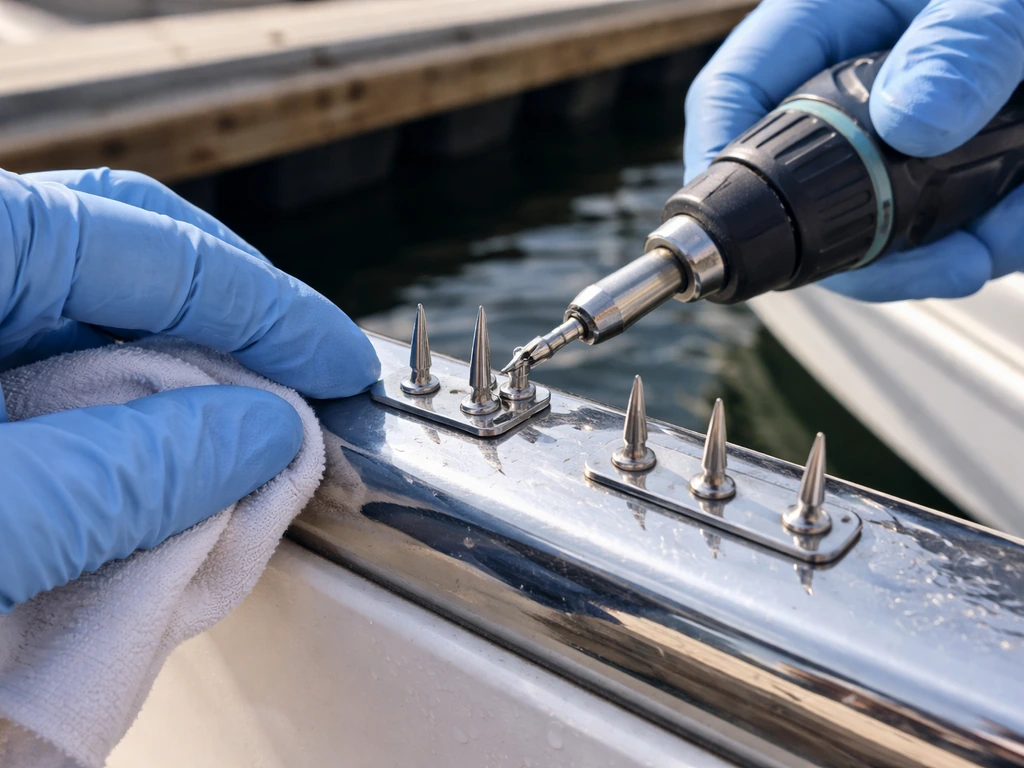
Installing spikes on boat surfaces
Clean the surface thoroughly before attaching anything. Salt residue and marine growth will prevent adhesive from bonding properly. Wipe down with an isopropyl alcohol solution and let it dry completely.
For rails and arches, cable ties are often the most practical fastener because you can remove and reinstall them without damaging the surface. Nixalite's patented mounting clips work on the same principle: the spike strips go on and come off without gouging the underlying material. If you are using adhesive on flat fiberglass or painted surfaces, apply a bead of marine-grade spike adhesive along the base and press firmly, then let it cure for the time specified before the boat goes out.
Coverage gaps are the most common installation mistake. Nixalite's spacing guidance is explicit: do not stretch the spacing between spike strip rows beyond the recommended interval, and account for the full depth of the landing surface. If a rail is wide enough for a bird to step between two rows of spikes and stand comfortably, the installation is not working. On wider flat surfaces, use a rows-required calculation based on surface depth so there is no gap a bird can exploit.
Installing netting on dock structures
Netting should be tensioned correctly and attached at intermediate points according to the mesh size: every 4 feet for larger mesh, every 3 feet for 3/4-inch mesh, using the appropriate net rings and hardware. A loose net sags, creates pockets, and birds will work their way in. Review Bird Barrier's installation checklist before starting, and use the correct tools for cable and net connections.
Anchor points on dock structures need to be solid. Wood dock framing can be soft or weather-compromised, so probe before driving anchors. On metal dock frames, use stainless hardware to avoid galvanic corrosion.
Placing visual and sonic deterrents effectively
Mount visual deterrents at or slightly above the birds' typical eye level and within a few feet of the landing zone, not across the dock. Sonic devices should be pointed toward the area where birds congregate and set to a volume appropriate for the space. Open dock areas dissipate sound quickly, so you may need more than one unit for a large berth. Set the schedule to vary broadcast times rather than running continuously.
Safety, legality, and protecting the marine environment
The Migratory Bird Treaty Act is the primary legal constraint. Most birds you will encounter at a marina, including gulls, cormorants, herons, pelicans, and egrets, are protected species. You cannot harm, capture, or kill them, and you cannot disturb an active nest. Deterrence methods that physically block access before nesting begins are fully legal. Removing an active nest with eggs is not, without a federal depredation permit.
On the water, think about what enters the marine environment. Chemical repellent gels that wash off dock surfaces can accumulate in marina sediment. Ultrasonic and sonic devices that operate continuously near the water can potentially affect marine mammals and non-target wildlife, though the evidence on this is not definitive for low-power devices. When in doubt, choose physical exclusion over chemical or acoustic methods near open water.
Lasers require specific caution. The Class 3R laser in devices like the Bird BLazer is safe for birds when used as directed, but it can cause eye injury to people. Never aim a laser at a person, vessel, or aircraft. Follow the lockout and shutter management protocols when the device is not in active use, and be aware that pointing a laser near waterways may also attract regulatory attention from the Coast Guard or FAA depending on proximity to navigation channels or flight paths.
On the boat itself, check that any fasteners or adhesives used are compatible with your hull and topside materials. Some adhesives will damage gel coat or painted aluminum. Test on an inconspicuous area first.
What to do when birds come back
Habituation is the most common reason deterrents stop working. Birds are not stupid. If the owl decoy has not moved in a week and nothing bad has happened, they will ignore it. The GSA's review of bird control methods is clear on this: birds can differentiate real threats from static or recorded ones, and repeated exposure to the same harmless stimulus teaches them to dismiss it.
The fix is rotation and variety. Move visual deterrents every three to five days. Combine at least two different deterrent types so the birds cannot adapt to just one. Change the schedule and sound selection on sonic devices weekly. If you started with only visual deterrents and birds returned within two weeks, add a physical barrier to the mix. This is not a sign the deterrent failed; it is a signal to layer your approach.
If a specific spot keeps attracting birds despite deterrents, look at what is drawing them. Is there a food source nearby? Baitfish under the dock? Shellfish on pilings? Deterrents work best when you also remove or reduce the attractant. A dock that consistently generates food will pull birds back regardless of what you put up.
Check installations after storms or heavy weather. Spikes come loose, netting sags, and reflective tape shreds. A weekly visual inspection takes two minutes and catches problems before birds find them first.
DIY is fine for most boats, but know when to call a pro
For a private recreational boat with a standard rail, arch, or bow problem, DIY spike installation is completely manageable. The products are widely available, the installation steps are straightforward, and the cost is reasonable. The same logic applies to keeping birds off a deck around your home, where physical barriers handle most situations without professional help.
The situations that benefit from professional help are netting installations on large dock structures, commercial marina berths with consistent heavy bird pressure, and any situation involving a nesting colony. Netting a large area correctly requires specific tools, experience reading tension, and knowledge of fastener placement. A poorly installed net is almost as useless as no net, and on a commercial dock it can also become a liability if birds or other wildlife get trapped in it.
If you have tried two or more deterrent types over a four-week period and birds are still causing damage or health risks (bird droppings carry pathogens), that is a reasonable threshold for calling a licensed wildlife control operator. They can also advise on depredation permits if a protected species is the specific problem and the situation rises to that level.
How this compares to bird problems on other structures
If you have dealt with birds on other parts of your property and are looking for consistency in your approach, the core principles are the same. The best bird deterrent for a roof relies on the same spike and netting logic as a boat, though the installation anchoring is different. Similarly, rooftop bird deterrent solutions often combine exclusion with visual methods in the same layered way that works best on docks.
Covered outdoor spaces present their own challenges. If you are also managing birds on a covered porch near the water, netting under the roofline is usually the most effective approach, and the same netting products used for docks transfer directly to that application. For open outdoor entertaining spaces, the best bird deterrent for patios leans more heavily on visual deterrents and sonic devices since full exclusion is rarely practical.
Waterside properties often have multiple problem zones at once. If birds are landing on the boat but also loitering on a nearby balcony overlooking the marina, treat each zone separately with the appropriate method rather than relying on one device to cover everything. Likewise, if you have a pool adjacent to a dock area, the strategies outlined for keeping birds away from a pool work well in combination with dock deterrents since both spaces attract wading birds.
Your action plan starting today
Start with the most physically vulnerable spot: the horizontal surfaces on the boat where birds actually land. Get stainless steel spikes on those surfaces first. That is your highest-return move and the one that does not require ongoing management once it is installed correctly.
- Identify the specific landing spots and bird species. Heavybirds like cormorants need spike-plus-netting; light birds like swallows may need netting only over enclosed areas.
- Buy stainless steel spikes sized to your rail or surface width, plus marine-rated cable ties or adhesive as your fastener.
- Clean the surface, measure coverage, and install with no gaps wider than the bird's foot width.
- Add a rotating visual deterrent (reflective tape or a moveable decoy) to adjacent areas as a secondary layer.
- If you have a dock with a nesting risk, install exclusion netting over any enclosed void spaces before the nesting season begins.
- Set a weekly check: inspect fasteners, move visual deterrents, rotate sonic settings if used.
- If birds persist after four weeks with a physical barrier in place, identify and remove the food attractant, then consult a professional.
The approach that works is always a combination of something physical plus something that keeps birds uncomfortable and uncertain. Physical alone handles the target surface. Rotation and variety handle the surrounding areas and prevent the whole site from becoming habituated. That combination, started today, is what gives you results within a week or two rather than months of trial and error.
FAQ
What is the best bird deterrent for boats when I am not sure if the birds are perching or nesting?
Start by watching the same spot at two different times of day for at least 48 hours. If you see repeated site use with territorial behavior or nest-building, treat it as nesting and stop, since you may need a permit. If birds mainly land and stand on rails or T-tops without nest activity, stainless steel spikes targeted to the landing edges are usually the fastest safe starting point.
Are bird spikes safe for cormorants and pelicans on marine rails, or will they still damage the boat?
Spikes help by blocking landing, but these heavier birds can still stress weak rail sections if the spikes are installed with gaps or poor base adhesion. Make sure the spike rows cover the full landing depth, and confirm the fasteners or clips are rated for salt exposure and UV, especially on radar arches and bow rails where birds prefer to brace.
How many days should I wait before changing deterrents if birds keep coming back?
Give a physical exclusion method at least 7 to 14 days after installation, then reassess. If you used only visual or sonic methods, change sooner (around 3 to 5 days) because habituation can start quickly. If birds persist beyond two weeks on the same exact landing surface, it is usually a coverage gap or an attractant nearby, not a “wrong” deterrent type.
Do I need to rotate visual deterrents even if they look active every day?
Yes. Even moving items like pinwheels and reflective tape can become predictable. The practical approach is to move or remount them every 3 to 5 days and also vary their placement relative to the landing zone, ideally at or slightly above the birds’ typical eye level.
Can I use sonic or ultrasonic devices 24/7 to solve a long-term gull problem?
Continuous operation is usually a mistake. Birds habituate to repeated alarm and distress patterns, especially when the unit is the same sound and the same schedule every day. If you use acoustics, rotate sound selections and vary timing rather than running nonstop.
What is the best bird deterrent for boats if I only want a DIY solution and I cannot drill holes?
Cable ties or mounting clips are often the best no-drill approach for spikes on rails and arches. If you must use adhesive on painted surfaces or gel coat, test first on an inconspicuous area and use marine-grade, compatible spike adhesive, then allow full cure before taking the boat out.
How can I tell whether a “nesting” situation is active enough that I should stop?
Look for consistent paired visits to the same spot, nest-building materials being carried or arranged, and territorial behavior at a fixed point. If you ever see eggs or chicks, do not attempt removal. When in doubt, pause and document with photos from a distance, then contact a licensed wildlife control operator for the right next step.
What are the most common installation mistakes that make deterrents fail?
The top two are coverage gaps (birds can step between spike rows or squeeze into net sags) and incorrect mounting height or distance for visual deterrents. For netting, failure usually comes from insufficient intermediate attachments or improper tension, which creates pockets within days.
How do storms and algae growth affect my deterrent setup?
After heavy weather, check for loose spikes, shredded tape, and net sagging, since these create new landing points. Also clean salt residue and marine growth before reapplying anything adhesive, because buildup prevents bonding and can cause early lifting during the next tide or washdown.
Is it okay to use gel or liquid repellents around docks if birds keep landing on rails?
Be cautious. Repellents can wash off after rain and create marine contamination risk if they reach water or marina sediment. If you use them at all, confirm marina or local rules, avoid surfaces birds can consume, and never rely on repellents as the only barrier when physical exclusion is feasible.
What should I do if birds keep returning even after I install spikes correctly?
Check for an attractant that is still accessible, like baitfish under a dock, shellfish on pilings, or food waste near the berth. Also verify that the spikes cover the birds’ preferred approach area, not just the exact resting point, because they will adjust to the nearest safe landing ledge.
When is professional help really worth it?
Consider professional support for large netting projects, commercial berths with persistent heavy bird pressure, and any situation involving nesting colonies. It is also reasonable to escalate if you tried at least two deterrent categories over four weeks and birds still pose damage or health risks, such as concentrated droppings.
Are lasers a good option for boats, and what is the most important safety rule?
Lasers can be effective in low-light conditions and at the right placement, but safety is the priority. Never aim a Class 3R laser at a person, vessel, or aircraft, and follow lockout and shutter management protocols when it is not actively in use. Treat nearby navigation channels and regulatory sensitivity seriously.
Next Articles
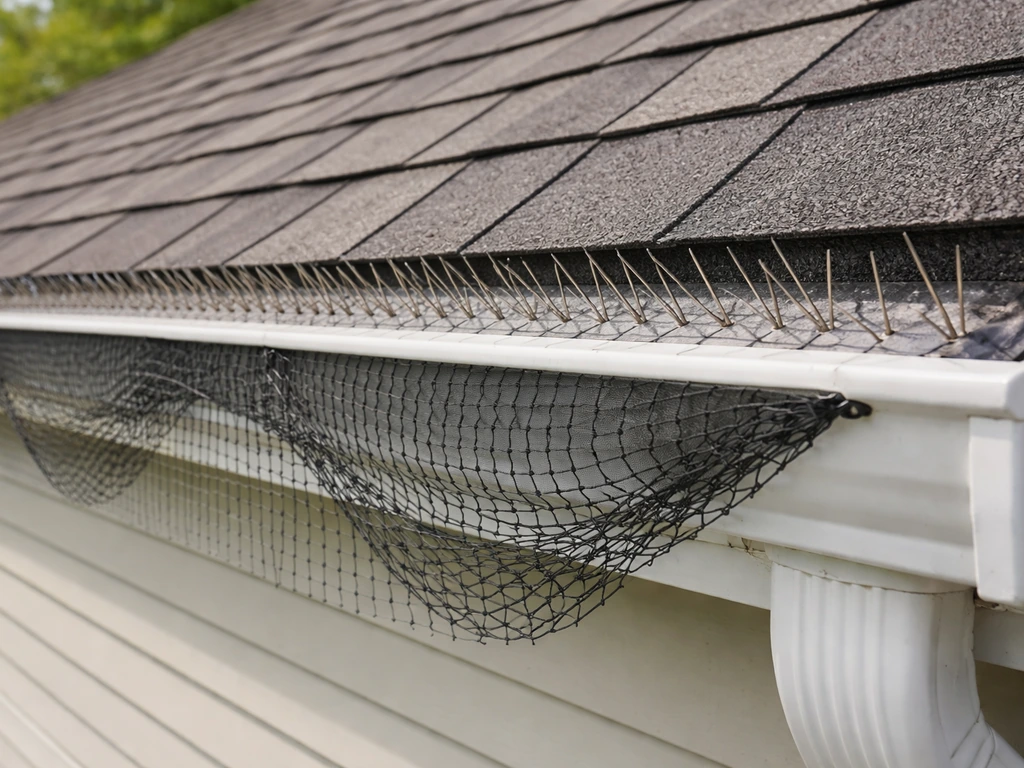
Best Bird Deterrent for Roof: Choose the Right Fix Now
Find the best bird deterrent for your roof by matching bird behavior to spikes, netting, sealing, and safe DIY steps.
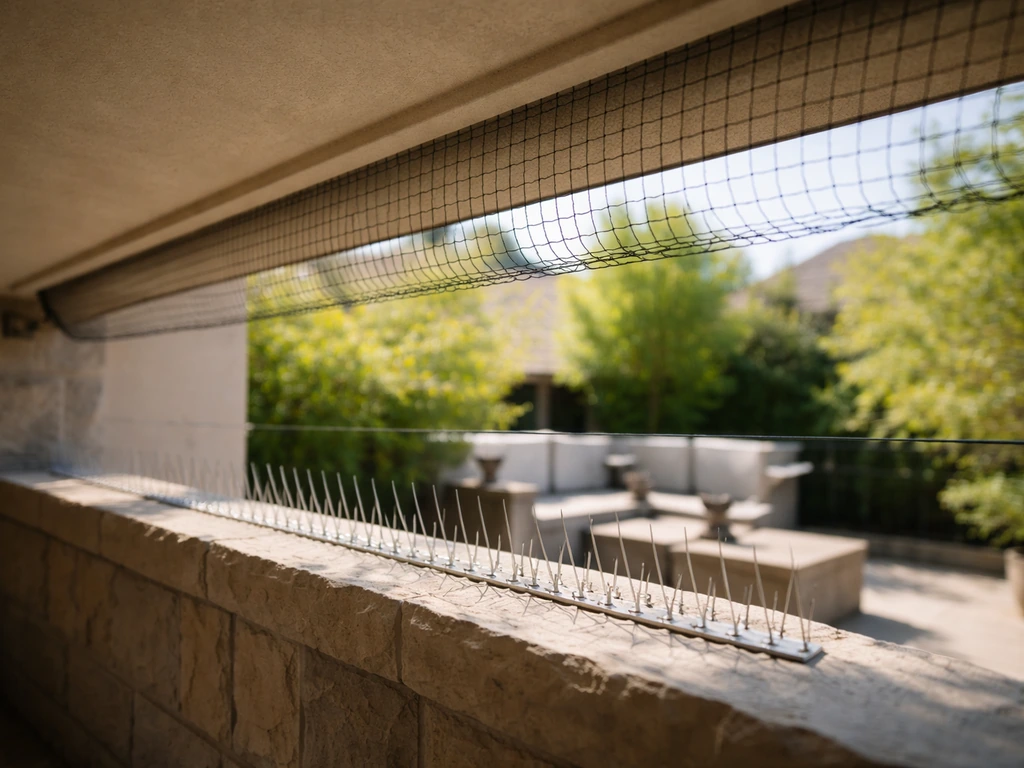
Best Bird Deterrent for Patios: Top Options That Work
Find the best bird deterrent for patios with barrier and sensory options, placement tips, and safety for lasting results
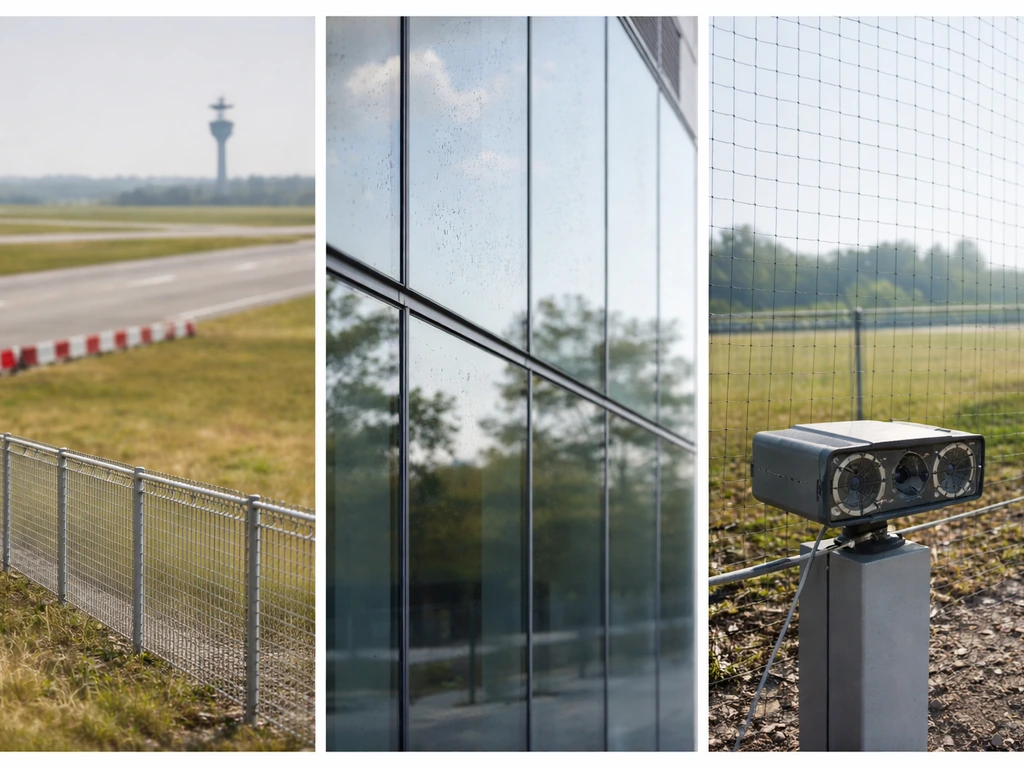
What Is Already Being Done to Prevent Bird Collisions
Learn what’s already used to prevent bird collisions, from airport safeguards to building glass and humane deterrents, p