
Bird spikes can work on small birds, but only if you buy the right type and install them correctly. If you are wondering what are anti bird spikes, the key is choosing the right spike type and installing it with full, gap-free coverage for the birds you want to deter. Standard spikes designed for pigeons are often too wide-spaced for sparrows, starlings, swallows, and finches, which can squeeze between the tines and land anyway.
Best Bird Spikes for Small Birds: Do They Work and How

Marcus Weatherby
6 May 2026
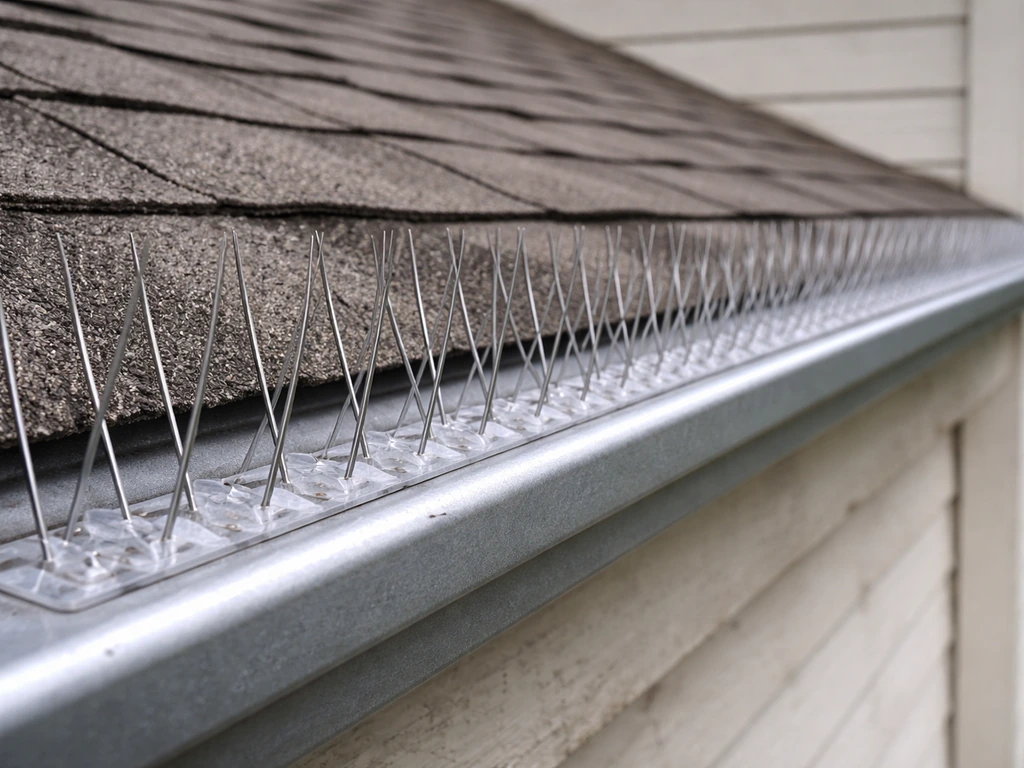
The solution is to use a narrow-profile spike system specifically rated for small birds, cover every usable landing surface with no gaps, and prep the surface properly before you mount them. When comparing products, the best bird deterrent spikes are the ones with narrow tine spacing and complete, gap-free coverage for your specific small bird species. Get those three things right, and spikes are a genuinely effective, long-term fix.
Do bird spikes actually work on small birds?
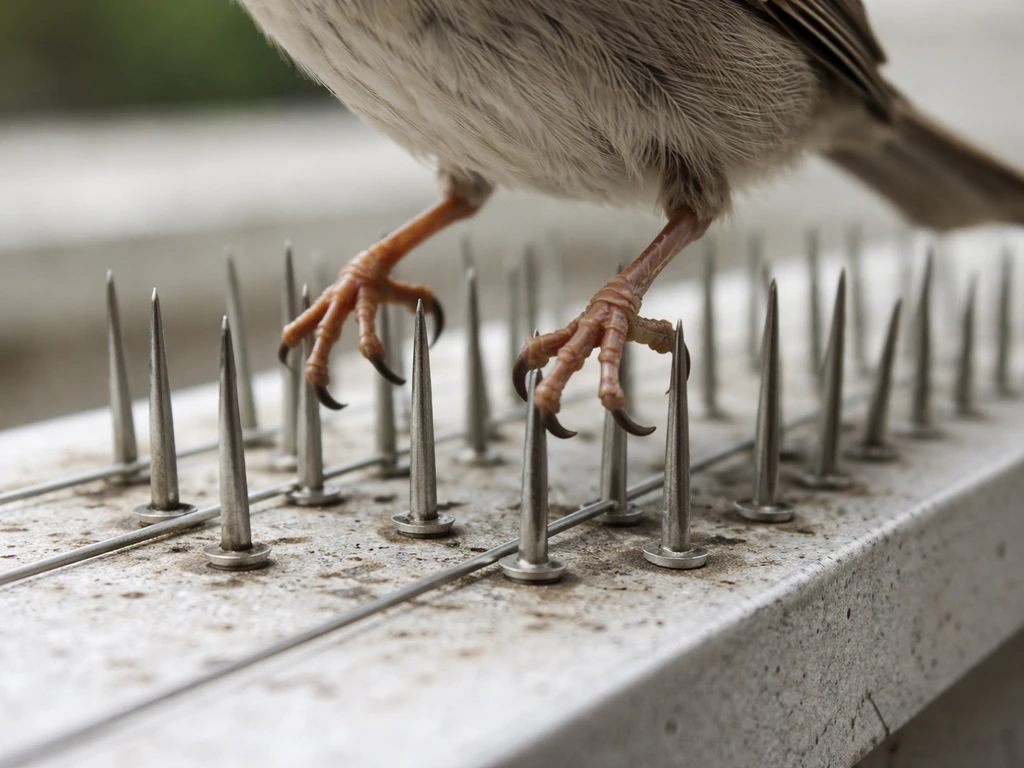
The honest answer is: yes, with conditions. Spikes work by reducing the usable landing area. When a bird tries to touch down and hits the spike tips, it gets an uncomfortable poke and learns to avoid that spot. USDA-APHIS describes this as a learned negative-reinforcement response, and notes that avoidance can hold for several weeks or longer. The problem is that this mechanism relies on the spikes actually making contact with the bird when it tries to land, which only happens when the spike design and spacing match the bird's size.
Small birds are the tricky cases. A sparrow or barn swallow weighs almost nothing and has a very small foot. Products like War Bird Mfg.'s narrow spike line specifically flag this: smaller birds like sparrows and barn swallows can perch between spikes if the configuration isn't right. A research study evaluating commercial deterrents for nesting starlings in Ohio also found that poorly matched products simply didn't work. The takeaway is that spikes aren't universally effective for small birds, but the right spike, in the right place, will deter them.
How to choose the best spikes for small birds
Spike profile and tine spacing
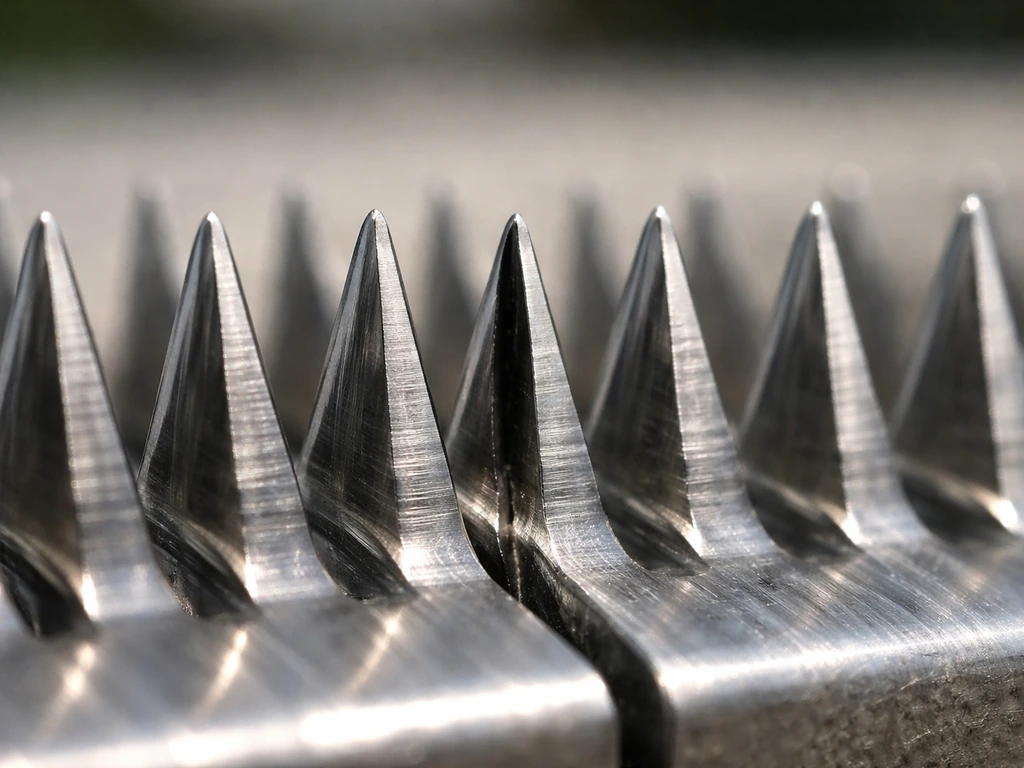
This is the most important factor. For small birds, you need a narrow or multi-wire spike configuration where the gaps between tines are too small for the bird to slip its feet through and stand comfortably. Manufacturers like Nixalite market their premium stainless steel spikes as deterring sparrows, starlings, and swallows specifically, and they achieve this through dense, multi-directional wire arrangements with no openings a small bird can exploit. Bird Barrier's Dura-Spike specs indicate tine tips can be placed as close as 2 inches apart, and for small bird applications, you want to be at the tighter end of whatever the product allows.
Avoid generic wide-profile spike strips sold for pigeons or larger pest birds. These almost always leave gaps that sparrows and finches will use without hesitation.
Base width and surface coverage
The base (or track) of the spike strip needs to cover the full width of the ledge, beam, or surface you're treating. If your ledge is 4 inches wide and your spike base is only 2 inches, birds will land on the exposed edge. Nixalite's product specs are explicit about this: no gaps or openings are allowed in the spike strip coverage if you want it to work. For wider ledges, you'll need to run two or more parallel rows of spikes.
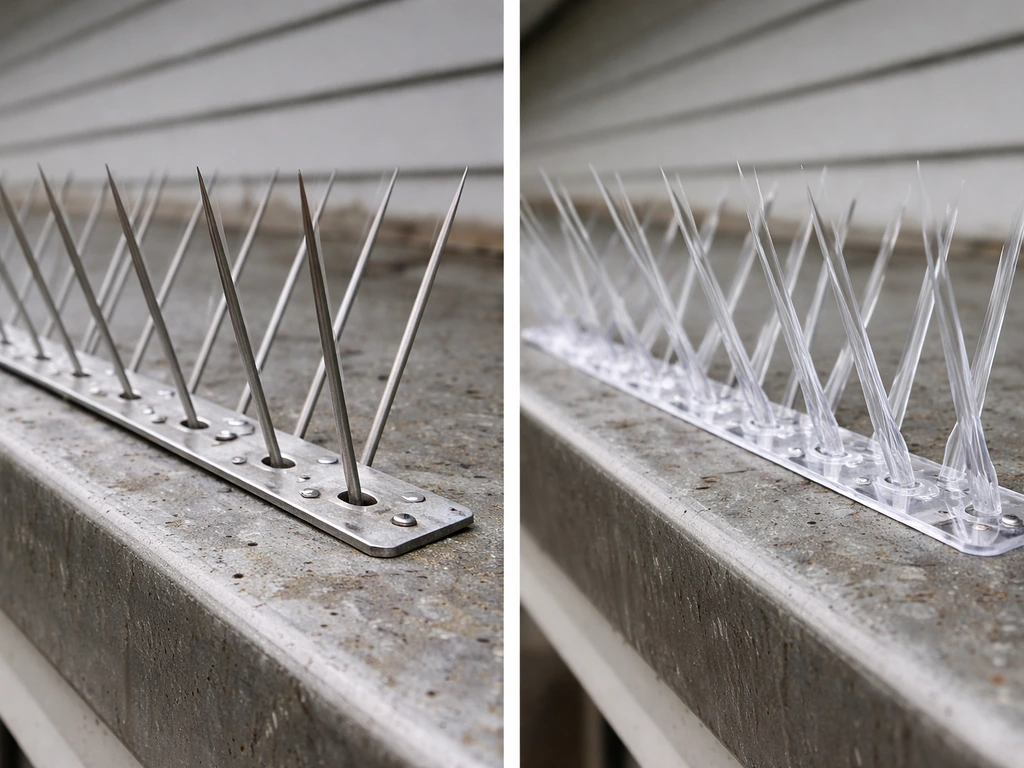
Material: stainless steel vs polycarbonate
| Material | Durability | Cost | Best For | Small Bird Effectiveness |
|---|---|---|---|---|
| Stainless steel | Excellent (10+ years with minimal maintenance) | Higher upfront | Roof edges, eaves, exposed ledges, commercial use | High, if tine spacing is correct |
| UV-stabilized polycarbonate | Good (5–8 years in most climates) | Lower upfront | Window frames, sills, gutters, lower-traffic areas | Moderate, depends on design density |
| Galvanized steel | Moderate (can rust in coastal/wet climates) | Mid-range | Sheltered or inland locations | Moderate |
For most outdoor applications dealing with small birds, stainless steel is the better long-term investment. It holds its shape, doesn't corrode, and the tines don't soften or deform over time the way plastic ones can. Polycarbonate is a reasonable choice for sheltered spots like under eaves or on interior window frames.
Mounting method: adhesive vs drilled
Bird-X and Nixalite both offer multiple mounting options: adhesive, nails, screws, cable ties, or dedicated glue clips. For most ledges and eaves, a high-quality weatherproof spike adhesive (Bird-X markets one specifically for this) is the most practical option and doesn't require drilling into masonry or roofing material. On wood surfaces, screws give a more permanent hold. For surfaces where drilling isn't possible (painted masonry, metal flashing, historic buildings), adhesive with glue clips is the go-to. Nixalite's glue clip system is designed specifically for this situation. Whatever you choose, the bond has to be strong enough that the strip can't be nudged loose by birds landing repeatedly on the edges.
Installation for best results
Surface prep comes first
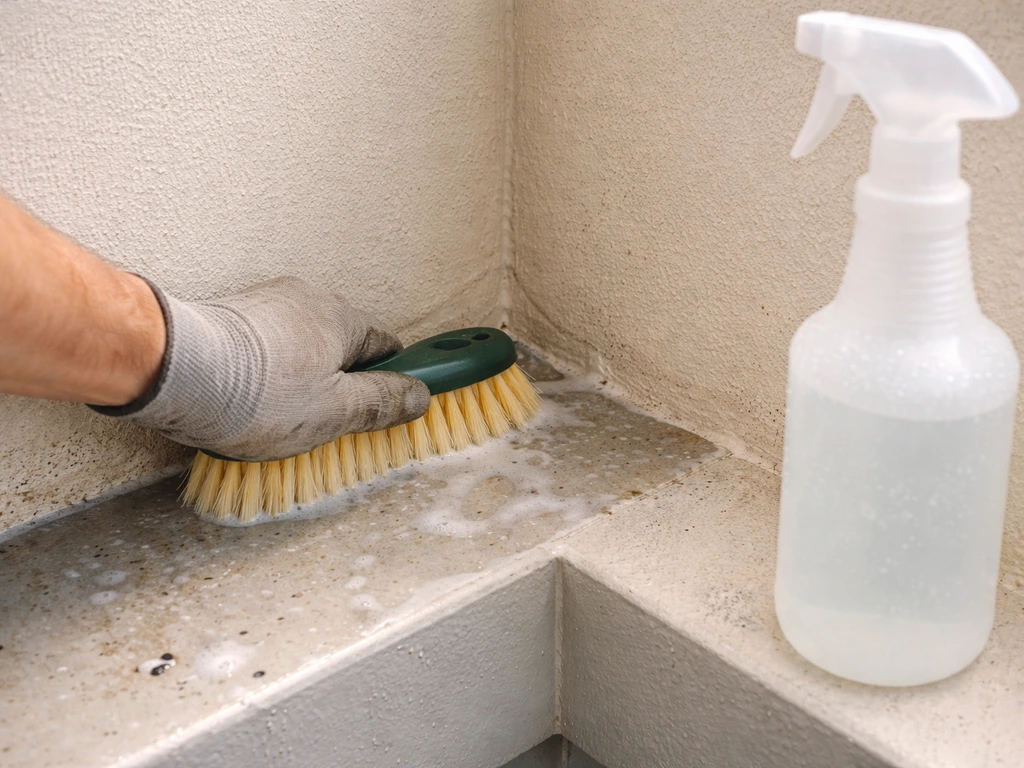
Nixalite's specs are clear: the installation surface must be clean, dry, and free of debris and bird droppings before you mount anything. If you stick a spike strip onto a surface coated in old guano and dust, the adhesive bond is being made to that debris layer, not the actual surface. It will fail. Scrub the area down, let it dry fully, and for porous surfaces like rough brick or concrete, apply a primer before the adhesive.
Step-by-step installation
- Clean the target surface thoroughly: remove all bird droppings, nest material, dirt, and loose paint. Use a stiff brush and appropriate cleaner, then rinse and allow to dry completely.
- Measure the ledge or surface width. If it's wider than one spike strip base, plan for a second parallel row so there's no usable landing gap between the strips.
- Measure the total run length and cut or join spike strips to fit. Most systems come in sections that clip or butt together end-to-end.
- Apply adhesive to the spike base (or to the mounting clips if using a glue-clip system). Bird Barrier's Dura-Spike instructions specifically warn against running a solid continuous bead, which can block water drainage and cause pooling. Use a spotted or intermittent bead pattern focused on bonding the base firmly.
- Press the spike strip firmly onto the surface at the leading edge of the ledge, right where a bird would first try to land. Don't set it back from the edge or birds will land in front of it.
- For eaves and overhangs, start at the outermost accessible point. Owl Pest Control's guide notes that if adjacent or nearby surfaces aren't also spiked, birds simply shift to the next available perch.
- Repeat for every adjacent landing surface in the area. Leave no gaps between strip ends and no adjacent ledges uncovered.
- Allow full adhesive cure time before any rain or pressure washing near the installation.
Ladder and roof safety
Most spike installations for eaves and rooflines require ladder work. OSHA's ladder safety guidance emphasizes maintaining three points of contact, setting the ladder at the correct angle (roughly 75 degrees), and never overreaching. If your installation requires working above a single-story roofline or over a sloped roof, consider hiring a professional. Owl Pest Control also flags that once spikes are installed, you need to take extra care during any future gutter cleaning or roof maintenance not to damage or dislodge the strips.
Effectiveness and limitations: what spikes will and won't do
Spikes work well for deterring small birds from specific, defined landing points: ledges, window sills, beam tops, roof edges, gutters, and similar perching surfaces. They are most effective when birds are still in the habit-forming stage (new roosting behavior) rather than deeply entrenched. Once a roost is well-established and birds have been using a site for a season or more, breaking that habit takes more effort.
Species differences matter too. Sparrows and house finches tend to be persistent and creative about finding alternative perch spots, so incomplete coverage is quickly exploited. Starlings are highly adaptable, and USDA-APHIS notes that some deterrent methods that work initially can be ignored over time as birds habituate to them. Swallows are a particular challenge because they often attach mud nests directly to walls and eaves rather than just perching, and a nest that's already started is much harder to address with spikes alone.
The single most common reason spikes fail on small birds is incomplete coverage. One untreated ledge section is all it takes for birds to shift over and re-establish. The second most common failure is using a spike product designed for larger birds. If the tine spacing works for a pigeon, it's probably too wide for a sparrow. Matching product to species is non-negotiable.
Spikes are also not a solution for nesting birds already on-site. A peer-reviewed study evaluating commercial deterrents for nesting starlings found that deterrents alone were not effective once nesting was underway. Remove nests first (checking local regulations on timing and species), then install spikes to prevent re-establishment.
Safety, legality, and animal welfare
Well-designed bird spikes are considered humane by most wildlife and pest control standards. They don't trap, kill, or injure birds. The mechanism is discomfort on contact, not harm. That said, ornithology organizations do flag concerns about products where sharp tines could impale or pierce rather than simply deter. When buying, look for blunt-tipped or rounded tine designs and avoid anything marketed with language suggesting physical injury as the deterrent mechanism.
On the legal side, migratory birds are protected under the Migratory Bird Treaty Act in the United States. Sparrows (house sparrows, an introduced species), starlings, and pigeons are generally not covered by these protections, but swallows are. This matters if you're considering nest removal: active swallow nests, eggs, or chicks cannot legally be removed without a federal permit during the nesting season. Install spikes before the nesting season starts to avoid the problem entirely. Check your local and state regulations as rules vary, and what applies federally may have additional state-level protections layered on top.
For human safety, spike installations on ledges at height pose the same risks as any roof or ladder work. Wear gloves when handling spike strips (the tines can cut your hands) and follow safe ladder practices throughout. Once installed, clearly mark or communicate to maintenance staff that spikes are in place so they're not grabbing ledges blind during gutter cleaning or window washing.
When spikes aren't enough: alternatives and combinations
Spikes are great for ledges and linear surfaces, but they don't solve every small-bird problem. If you are looking for an alternative to bird spikes, the right exclusion or combination strategy usually depends on where the birds are entering or perching alternatives and combinations. If you're dealing with birds nesting in a cavity, roosting under solar panels, or colonizing a large open area like a warehouse loading bay, you need a different tool or a combination approach.
Physical exclusion: netting
Bird netting is the most effective physical barrier for large or complex areas. It works by completely blocking access to a space rather than just making a landing surface uncomfortable. Humane World for Animals (formerly HSUS) recommends netting for keeping birds out of larger areas, and it's commonly used under eaves, around HVAC units, and over open courtyards. The critical caveat, flagged by the RSPCA, is that improperly installed or maintained netting can trap and kill birds. If you go this route, use the correct mesh size for small birds, install it taut with no loose sections, and inspect it regularly.
Sensory deterrents
Ultrasonic and sonic devices emit sounds that are irritating or alarming to birds. USDA-APHIS has documented that certain visual frightening devices and auditory repellents can be effective for species like starlings and blackbirds, particularly when combined with other methods. Ultrasonic devices are more controversial since the evidence on small-bird effectiveness is mixed, but they're a reasonable addition in enclosed spaces. Reflective visual deterrents (reflective tape, spinning discs, predator eye balloons) can disrupt birds from settling in an area and are particularly useful in open garden or patio settings where spikes aren't practical.
Combining methods for persistent problems
For deeply entrenched roosts or situations where multiple bird species are involved, the most effective approach is a layered one. Spikes handle the landing surfaces. Netting closes off cavities and larger roosting areas. Visual or sonic deterrents disrupt the general area and discourage birds from treating your property as safe territory in the first place. This multi-method approach is what professional pest control companies tend to recommend, and it's the same logic behind airport wildlife hazard management programs that combine tactile deterrents with other tools.
If you've tried the right small-bird spikes with full coverage and still have a persistent problem, it's worth getting a professional site assessment. Critter Control and similar services can identify why a specific installation isn't holding and whether a different product, a different method, or a combination approach is the better fit for your property.
FAQ
Can I install bird spikes while birds are nesting or with eggs/chicks present?
In most cases, you should remove any active nests before installing spikes. For swallows, that timing is regulated, so if you see eggs or chicks, stop and check local rules or get a licensed wildlife professional. After nesting is finished, install spikes quickly so birds do not re-establish on the same ledge while they are still using the area to forage.
What prep steps matter most if I’m mounting spikes on brick, stucco, or painted surfaces?
Yes, but only if the new surface is actually ready to bond. Clean off droppings and dust, let everything dry, then use an appropriate primer on porous materials (rough brick, bare concrete, unsealed stone) before adhesive spikes. If the surface is sealed, glossy paint, or deteriorating coatings, test a small section first because some coatings release from the substrate and cause early adhesive failure.
If I cover only one ledge section, why do small birds still come back?
You can, but you have to treat the whole landing path, not just the most visible perch. Small birds often hop from an adjacent ledge or railing and then land near the edge of your treated strip. Before buying, trace all likely touch points within a bird's reach radius, then extend coverage to the full width and any neighboring ledges that function as stepping stones.
Are bird spikes a good option around solar panels, vents, or roof penetrations?
Spikes can be compatible with solar panels or other rooftop fixtures, but the usable installation zones are different from gutters and window sills. Avoid placing spikes where birds can perch on nearby frames or mounting rails, and do not install in a way that interferes with panel function or drainage paths. For anything on sloped roofs or around complex roof penetrations, plan around maintenance access so you can clean safely without prying loose strips.
What’s the best way to handle corners, ends, and transitions so there are no usable gaps?
Gap-free coverage is the main rule, but the second rule is edge sealing. Birds often exploit the first 1 to 3 inches where a strip ends, corners, or transitions to another material. Use continuous runs where possible, start and end so there is no exposed “landing lip,” and overlap parallel rows so there are no straight-line openings a foot can slip into.
Are stainless steel spikes always better than polycarbonate for small birds?
For small birds, yes, stainless is often the longer-lasting choice because it resists bending and corrosion outdoors. However, the most important factor is match to your mounting environment. If the area is sheltered and the product is correctly installed, polycarbonate can work, but it is more likely to deform if it gets heavy impacts (like debris or routine cleaning) or if it is repeatedly warmed and cooled.
Which mounting option is safest and most reliable for my surface: adhesive, nails, screws, or glue clips?
Many failures come from using the “wrong” mounting method for the surface. Adhesive works well on many eaves and smooth ledges if the surface is clean and dry, but on wood and rough siding it may peel unless the surface is properly conditioned. Screws offer the strongest mechanical hold on wood, while glue clips can help on masonry or metal flashing where drilling is difficult.
How should I clean gutters or wash windows after installing spikes so they stay effective?
Yes, and it can backfire if it changes the site. After spikes are installed, keep maintenance tasks from kicking or smearing dirt onto the strip and avoid scraping the tines with tools. Plan gutter cleaning and window washing so staff can access areas without grabbing treated edges, and replace sections promptly if you notice lifting at any point.
When should I stop trying to solve the problem with spikes alone and use another exclusion method?
Spikes do best on predictable, linear perching areas. If birds are targeting an area that offers an enclosed cavity (like under panels, in wall gaps, or inside attic vents) spikes may not touch the real access points. In those cases, use spikes only as one layer for landing surfaces and combine with netting or sealing strategies for the actual entry or nesting spaces.
If I installed the right spikes but birds still return, when is it worth calling a pro?
Professional assessment is especially worth it when you see “patience behavior” (birds keep trying for days, then shift to a new landing point) or when the treated strip is too short for the birds’ foraging pattern. A site visit can identify overlooked stepping stones, wrong tine spacing for the species, and installation gaps caused by corners, end caps, or uneven ledges.