
A BB gun can work for bird control in specific, low-stakes situations: scaring persistent nuisance birds off a patio, roofline, or garden in a rural or semi-rural setting where discharge is legal. But it is not a reliable or widely legal solution on its own, and for most protected species it is outright illegal to shoot them at all. The best setup, if you are in a situation where it is appropriate, is a .
Best BB Gun for Bird Control: Buyer Guide and Setup

Marcus Weatherby
29 Jun 2026
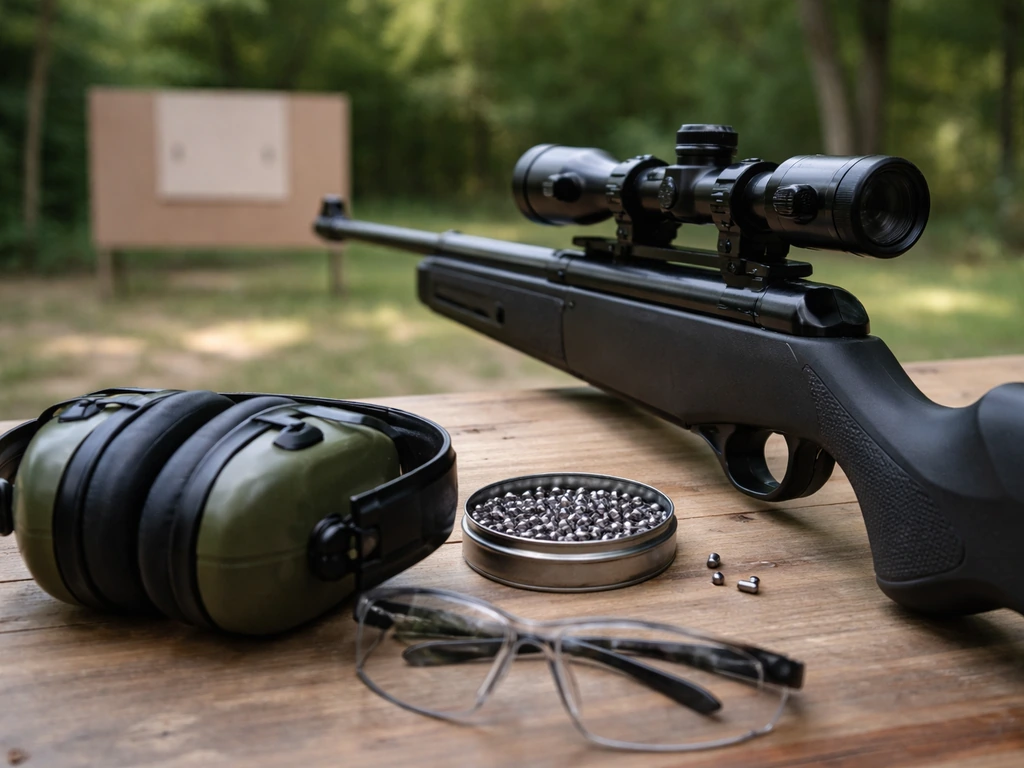
177 caliber pellet-shooting airgun (not a classic steel BB gun) with a velocity of 500 to 800 fps, open or fiber-optic sights, and a solid earthen or wooden backstop behind your target zone. Read on for the full reasoning behind that recommendation and how to stay out of legal trouble.
When a BB gun makes sense (and when it really doesn't)
BB guns and air rifles have a genuinely narrow use case for bird control. They can be useful for hazing or lethally removing non-protected pest species, like European starlings, common pigeons (rock doves), house sparrows, European starlings, and, under a federal depredation order, blackbirds, crows, grackles, cowbirds, and magpies. If you are wondering about the best bird killer for your situation, start by confirming which species are actually non-protected where you live and what methods are legal lethally removing non-protected pest species. If you have a recurring starling problem in a barn, a flock of pigeons roosting on a commercial building ledge, or house sparrows nesting in HVAC vents, an airgun gives you a quiet, relatively low-risk way to address it in areas where discharge is permitted.
That is where the "yes" list ends. Here is when a BB gun is a bad idea or an outright illegal one:
- You live in a city or town with a discharge ordinance. Many cities, including Fort Worth TX, Akron OH, San Joaquin CA, Blue Island IL, and Tacoma WA, prohibit discharging any air gun or BB gun within city limits. Violating these ordinances can result in fines or confiscation of the device.
- The bird is a protected migratory species. Mockingbirds, robins, sparrows (except house sparrows), swallows, hummingbirds, and nearly every native North American bird are protected under the Migratory Bird Treaty Act. Killing or injuring them without a federal permit is a federal offense, full stop.
- You are near an airport or aviation facility. Discharging firearms of any kind near active flight paths creates safety and legal problems that go well beyond a bird nuisance situation. Airports have dedicated wildlife management professionals for a reason.
- You want a permanent fix. BB guns do not solve the underlying problem. Birds will return unless you also address why they are there in the first place.
- You are in a dense residential neighborhood. Even in areas without an explicit discharge ordinance, firing any projectile over or near a neighbor's property creates liability risks, especially with steel BBs that ricochet unpredictably.
The Washington Department of Fish and Wildlife puts it plainly: the typical .177 BB gun is not an acceptable device for nuisance wildlife management. The Washington Department of Fish & Wildlife says the typical .177 pellet or BB gun is not an acceptable device for nuisance wildlife management .177 BB gun is not an acceptable device for nuisance wildlife management.. That does not mean airguns have zero role, but it means you need to be deliberate about which tool you pick and whether your situation justifies using it.
Choosing the right setup: power, ammo, accuracy, and range
If you have determined a BB gun (or more precisely, an airgun) is appropriate for your situation, the first thing to understand is that a classic steel BB gun is actually a poor choice for bird control compared to a .177 or .22 caliber pellet-shooting airgun. Here is why that distinction matters.
Steel BBs vs. lead pellets: pick pellets
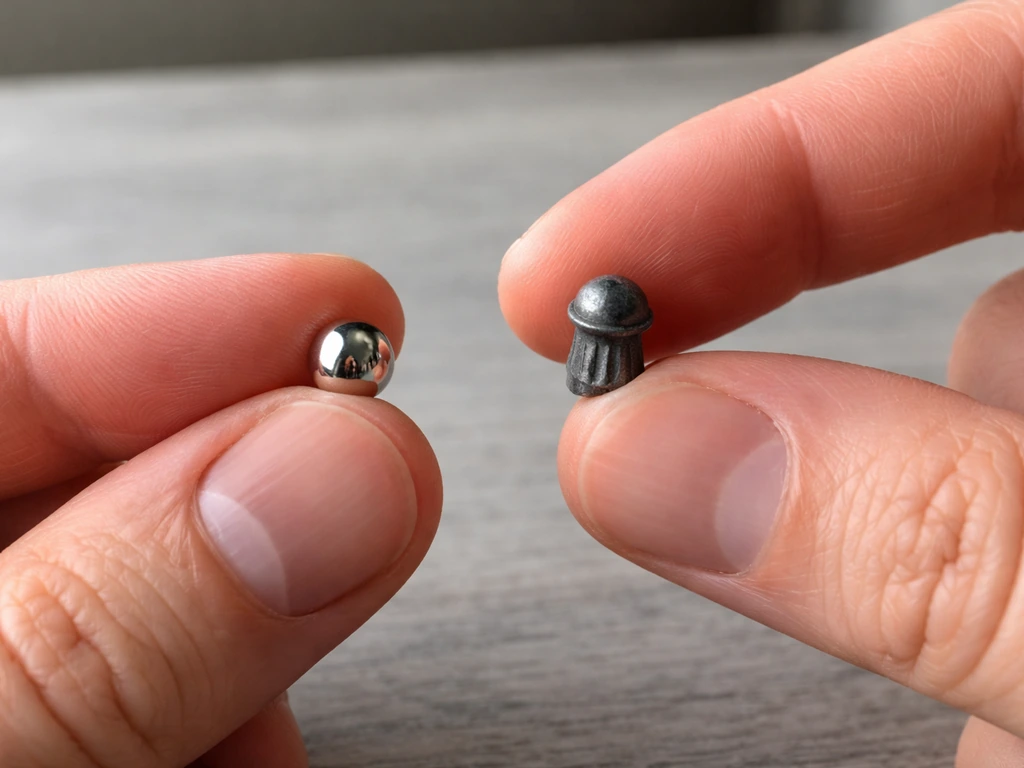
Steel BBs are round, hard, and prone to ricochet off any hard surface including concrete, brick, metal, and even wood end grain. Lead pellets deform on impact and have significantly less ricochet risk. For bird control around a yard, barn, or commercial building, a lead pellet is safer to use around property and bystanders. Pellet guns are also more accurate than classic BB guns because a rifled barrel stabilizes the pellet in flight. At bird-control distances (10 to 30 yards), that accuracy difference is real and meaningful.
Velocity and power: the right range
For small birds like starlings and sparrows, you do not need high-powered airguns. A velocity of 500 to 700 fps with a standard lead wadcutter pellet in .177 caliber is effective at 15 to 25 yards, which covers most yard and roofline scenarios. Going much higher (900+ fps) is unnecessary, harder to control, and increases the risk that a miss or pass-through does more unintended damage. For slightly larger birds like pigeons or crows at 25 to 40 yards, a .177 at 700 to 900 fps or a .22 caliber pellet gun at 600 to 700 fps gives you enough energy without going into the overkill range.
Sighting options and accuracy
Open sights work fine for close-range work under 20 yards. If you are consistently shooting at 25 to 40 yards, a simple 4x fixed scope or red dot sight makes a significant difference. Birds are small targets and the shot window is short. Do not rely on a gun you have not zeroed at your expected shooting distance. Spend 30 minutes zeroing at 20 or 25 yards before you ever use it for bird control.
| Scenario | Recommended Caliber | Velocity Range | Ammo Type | Effective Range |
|---|---|---|---|---|
| Small birds (starlings, sparrows) near patio/garden | .177 | 500–700 fps | Lead wadcutter pellet | 10–25 yards |
| Pigeons on rooflines or ledges | .177 or .22 | 700–900 fps (.177) / 600–750 fps (.22) | Lead dome or hollow point pellet | 20–40 yards |
| Crows or blackbirds in open areas | .22 | 650–800 fps | Lead dome pellet | 25–40 yards |
| Classic steel BB gun (not recommended) | .177 BB | 300–500 fps | Steel BB | Under 15 yards only, ricochet risk |
Gun platform: break barrel vs. CO2 vs. PCP
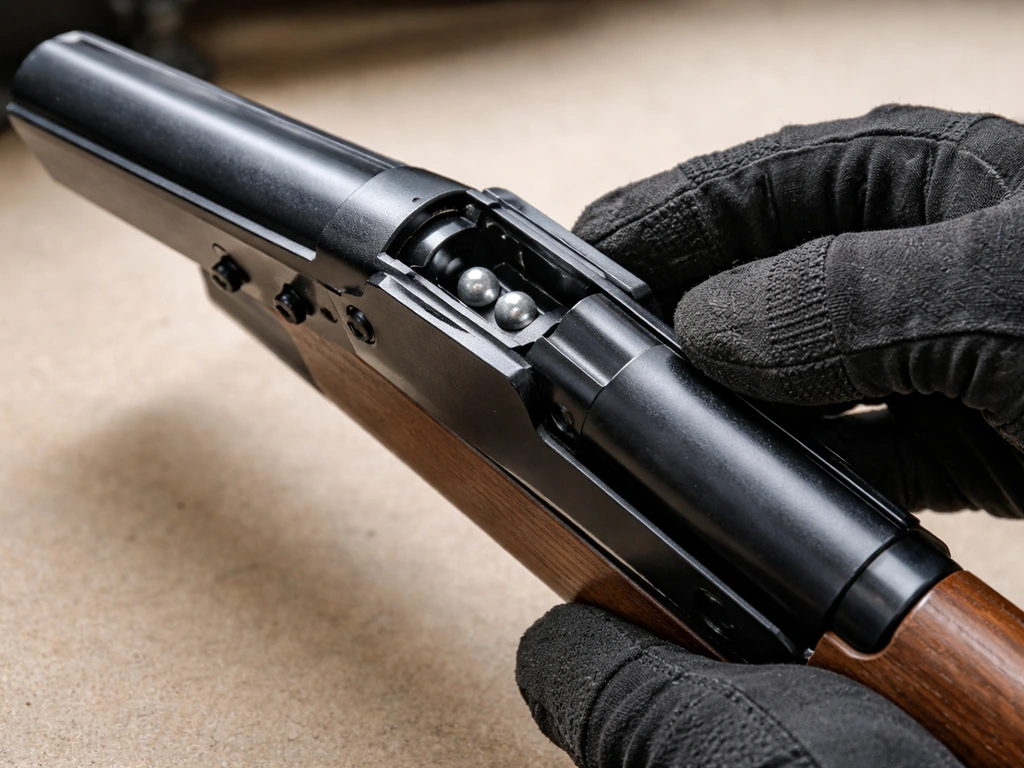
A single-stroke break-barrel pellet rifle is the most practical choice for most people. It is self-contained (no CO2 cartridges or external air), reasonably priced ($60 to $150 for a reliable model), and consistent enough for 25-yard bird work. CO2-powered guns are convenient but lose velocity in cold weather and depend on a supply of cartridges. Pre-charged pneumatic (PCP) airguns are highly accurate but expensive and require a pump or tank. For casual bird control around a property, a good break-barrel rifle like the Crosman Quest, Umarex or Ruger-branded .177 break barrel, or similar mid-range model is all you need.
Aiming fundamentals, safe shooting lanes, and backstops
Even a low-powered pellet gun can travel hundreds of yards if it misses its target. Before you ever take a shot, you need to think through your shooting lane from start to finish.
Backstop is non-negotiable
Always have a solid, shot-stopping backstop behind the bird before you pull the trigger. A dirt or soil bank, a dense wooden fence, a straw bale, or a concrete block wall are good backstops. Never fire toward a hard reflective surface (concrete, brick, metal siding, glass) if you are using steel BBs, and be cautious even with lead pellets near glass or brittle materials. If the bird is perched on a metal roof or chain-link fence with nothing but open air or a neighbor's yard behind it, do not shoot.
Shooting angles: aim down when possible
Shooting slightly downward into the ground reduces the risk of a miss carrying beyond your property. If birds are roosting on a low ledge, fence line, or ground-level area, position yourself slightly elevated to shoot downward. If they are on a high roofline and shooting upward is the only option, be absolutely certain of what is beyond the roofline (open sky is acceptable, a neighbor's yard is not).
Aiming tips for moving birds
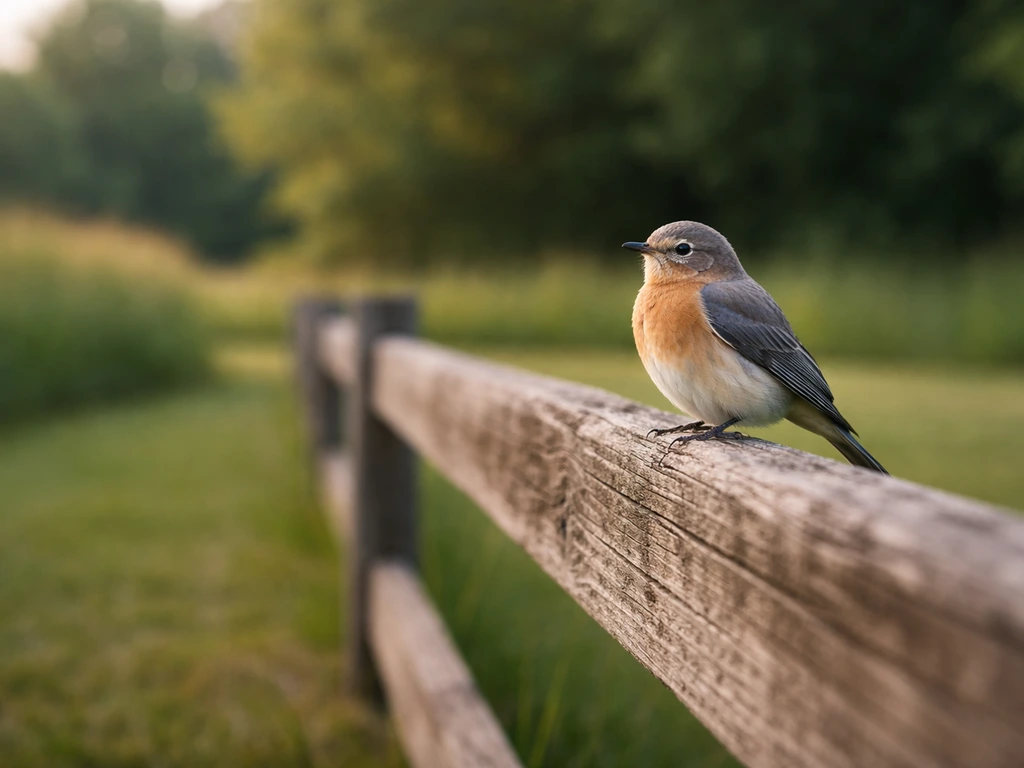
- Shoot at stationary birds whenever possible. A bird perched on a fence or ledge gives you a clean shot; a bird in flight rarely does.
- Wait for the bird to settle and face away or turn sideways for a clear head/neck shot, which is more humane and more reliably effective.
- Do not shoot at bird silhouettes against bright sky without a confirmed backstop.
- Keep both eyes open at close ranges to maintain situational awareness around the target.
Property damage control
Lead pellets at 700 fps can dent wood siding, crack thin plastic, and break single-pane glass at close range. Map out your shooting zone before you start and mark any structures in the potential impact path. A miss at 25 yards still has the pellet traveling at meaningful velocity for another 100 yards.
Situation-specific tactics: residential, commercial, and aviation-adjacent
Residential gardens, patios, and rooflines
This is the most realistic use case for a BB gun or pellet gun. House sparrows getting into soffits, starlings mobbing a fruit tree, or pigeons roosting on a garage roof are all situations where a .177 break-barrel at close range can help, provided you are on your own property with clear shooting lanes and no local discharge ordinance. For the best bird control results, pellet gun use should be paired with exclusion and other non-lethal options when possible. Keep shots to a maximum of 30 yards, use lead pellets, and shoot from a stable position (kneeling against a solid object or seated). Consistency matters more than power at these ranges.
Commercial buildings and industrial sites
Commercial settings like warehouses, loading docks, and parking structures often attract large pigeon and starling populations. An airgun can be part of the toolkit here, but the hazards multiply quickly. You are dealing with hard surfaces everywhere (ricochet risk), people moving through unpredictably, and in many cases local discharge ordinances. Commercial bird control programs that include shooting typically use it as part of a formal integrated pest management (IPM) plan, often run by a licensed wildlife control operator. For commercial sites, an airgun is rarely a standalone solution and should be combined with exclusion and deterrent systems.
Aviation-adjacent environments
Do not try to manage birds near airports or active flight paths with a personal airgun setup. Airport wildlife management is governed by federal FAA and USDA APHIS guidelines, and the personnel doing that work are licensed, trained, and operating under specific authority. If you have a bird problem on property that borders an airfield or is under flight paths, contact the airport wildlife biologist or USDA APHIS Wildlife Services directly. This is explicitly not a DIY situation.
Legal and ethical ground rules you cannot ignore
This section matters more than any gun recommendation. Getting the legal and ethical framework wrong can result in federal charges, civil liability, and confiscated equipment.
The Migratory Bird Treaty Act
The MBTA prohibits killing, taking, capturing, or possessing migratory birds (and their nests and eggs) by any means without prior authorization from the U.S. Fish and Wildlife Service. This covers the vast majority of wild birds in North America. The USFWS explicitly states it does not issue permits for general bird nuisance control. The species you can legally shoot without a permit are limited: non-native European starlings, house sparrows, and rock pigeons (common feral pigeon) are the main ones. Crows, blackbirds, grackles, cowbirds, and magpies fall under a separate USFWS depredation order (50 CFR 21.150) that allows take with an air rifle or air pistol when they are causing damage, but annual reporting via USFWS Form 3-2436 is required.
Local discharge laws
Before anything else, look up your specific city or county ordinance on discharging air guns. Many municipalities, including major cities and their suburbs, flatly prohibit discharging any BB gun or air rifle within city limits. Fort Worth TX, Akron OH, San Joaquin CA, Blue Island IL, and Tacoma WA are just a few documented examples. Your city may have the same rule. Search your city name plus "discharge ordinance air gun" or call your local police non-emergency line. Do this before you buy a gun for this purpose.
Neighbor safety and liability
Even if discharge is technically legal on your property, shooting toward a shared fence line, toward a neighboring structure, or in a way that a pellet could cross a property line creates civil liability for any damage or injury. Shooting a pellet gun within sight of neighbors can also generate complaints, police calls, and community conflict that is not worth the tradeoff for bird control. Be conservative.
Humane standards and retaliation risk
Wounding a bird rather than killing it cleanly is both inhumane and, depending on species, a legal problem. If you are not confident in a clean, lethal shot at the distance involved, do not take it. Using hazing (shooting to scare without intent to injure) is a gray area legally and often less effective than people expect, since birds quickly habituate to a gun that rarely connects.
Safety checklist before you fire
Run through this list every single time, not just the first time. Outdoor shooting around a property involves changing conditions that create new risks each session.
- Confirm local discharge laws allow airgun use at your location.
- Identify every person and pet in the area and ensure they are behind you or inside before you load the gun.
- Map your shooting lane: know exactly where the pellet goes if you miss or if it passes through the bird.
- Confirm a solid backstop (earth, dense wood, concrete block) is present behind the target.
- Avoid shooting toward hard reflective surfaces (metal, glass, concrete) at any angle if you are using steel BBs.
- Do not shoot upward or at a flat trajectory over open ground that extends beyond your property.
- Keep the gun unloaded and pointed down until you are in position and have confirmed the shooting lane.
- Wear safety glasses. Ricochets from steel BBs especially can come back toward the shooter.
- Keep children and pets inside or well behind you. Establish a clear "hot zone" boundary they cannot enter while the gun is in use.
- After you are done, unload the gun immediately and store it locked and inaccessible to children.
One practical note on ricochets: if you are using a classic steel BB gun rather than a lead pellet airgun, the ricochet risk is meaningfully higher. Steel BBs are hard, round, and bounce aggressively off brick, concrete, and metal surfaces. Lead pellets deform on impact and stay where they land far more reliably. This is one of the most concrete reasons to choose a pellet gun over a BB gun for any outdoor use.
Why a BB gun alone will probably not solve your bird problem
Even in situations where an airgun is entirely legal and appropriate, using it as your only bird control method rarely produces lasting results. Birds return. A flock of starlings displaced from one corner of your roof will roost on another part of it within days. To actually solve the problem, you need to address why birds are choosing your property in the first place, which usually comes down to access to roosting sites, food, or nesting substrate. If you are comparing options, it also helps to look at the top 10 bird killers and understand which methods are legal and appropriate for your specific situation.
Physical exclusion: the most durable fix
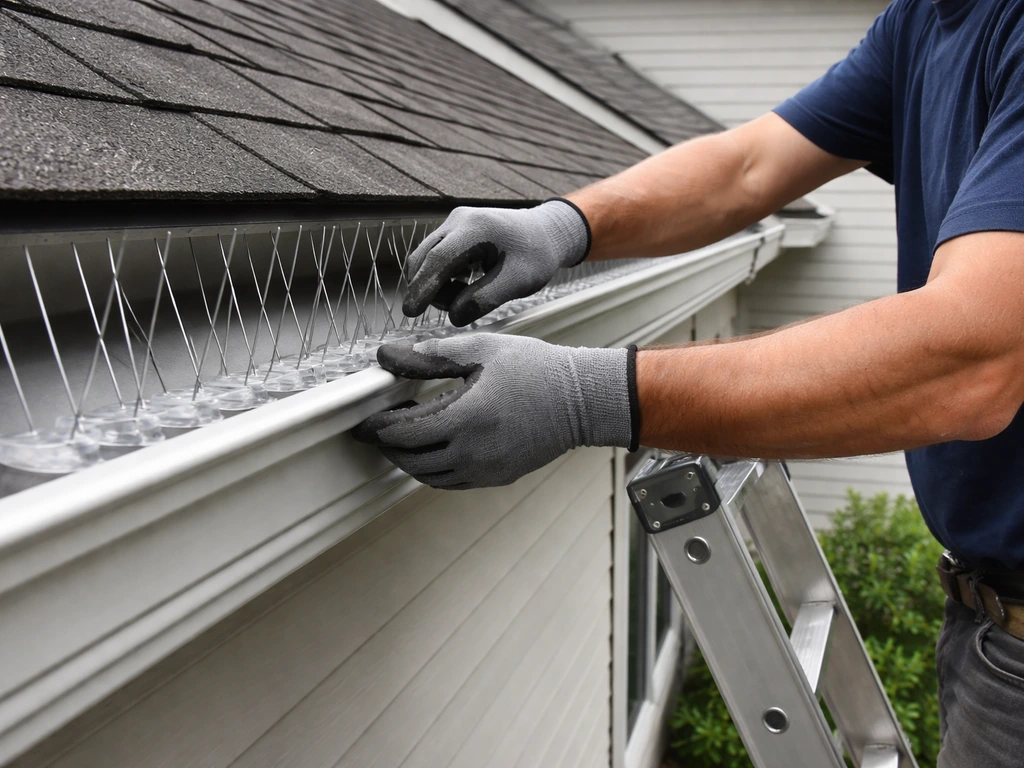
Bird netting and bird spikes are the most effective long-term solutions for structural roost and nest sites. Netting physically blocks access to ledges, eaves, rafters, and roofline gaps. Spikes prevent landing on ledges, beams, and signs. Cornell IPM and Minnesota DNR both identify exclusion as the primary structural solution for birds on buildings. The USFWS describes exclusion netting as the most effective deterrent method for herons and egrets at roost sites, and the same principle applies broadly. These methods require upfront installation work but do not require you to be present or fire a shot.
Sensory deterrents
Visual deterrents (reflective tape, predator decoys, flash tape) and sonic or ultrasonic devices can supplement physical exclusion or an airgun program. They work best in combination with other methods and tend to lose effectiveness if birds habituate to them without any real consequence. Rotating deterrent types or positions helps maintain their effect.
Chemical repellents
Tactile repellents (gel-based or polybutene products applied to ledges) make landing uncomfortable for birds without injuring them. These work well on specific perch points like window ledges, signs, and roof edges and pair well with spikes for problem areas.
When to call a professional
For large-scale commercial infestations, protected species situations, or any scenario involving an airport or sensitive habitat, call a licensed wildlife control operator or contact USDA APHIS Wildlife Services. Professionals operating under formal depredation programs can legally manage species and use methods that are not available to the general public. The USDA APHIS integrated approach for pest birds like starlings and blackbirds combines harassment, exclusion, trapping, and targeted lethal removal in a coordinated plan that consistently outperforms any single method.
The most effective bird control programs, whether residential or commercial, combine multiple methods simultaneously: exclusion to block access, deterrents to reduce attractiveness, and lethal removal only where legal and necessary for unprotected species. A BB gun or pellet gun, used correctly and legally, can be one tool in that combination. If you are unsure what is bird control, start by learning the goals of bird management and the methods that best match your situation. But it is rarely the most important one, and it should never be the only one.
FAQ
Can I use a classic steel BB gun instead of a pellet rifle if it’s “still .177”?
Many pellet rifles sold for target shooting are not suitable for bird work because they can lack reliable energy consistency or use pellets that deform unpredictably. Use a break-barrel .177 with a single solid pellet, confirm the barrel is rifled, and only shoot lead pellets. Avoid “.177 BB” or steel-BB style ammunition entirely, since steel increases ricochet risk and the article’s setup assumes lead pellets with shot-stopping backstops.
What’s the safest way to know the pellet won’t leave my property if I’m shooting toward a fence line?
Yes, but only if you can prove your pellet will not cross boundaries. A “safe” backstop still might not stop a miss if the ground slopes or if there are hard surfaces nearby that cause deflection. Before shooting, do a full shooting-lane check from your position to the bird and beyond, and consider neighbors’ yards, shared fences, and alleys even if you think the line is clear.
What if I can’t confidently identify the bird species before shooting?
If you cannot identify a specific non-protected species on-site, treat the situation as protected and do not shoot. Birds can look similar at distance (for example, some blackbird species and crows), and misidentification can create legal exposure. In practice, wait until you can confirm the species, or use non-lethal exclusion and deterrents instead of taking a shot.
Will shooting just to scare them away work long-term?
For hazing, birds often habituate because they learn that the gun does not reliably cause a consequence. If you decide to use shooting at all, the more important factor is whether you can consistently hit within the effective distance and whether a clean backstop exists. Otherwise, switch to deterrents that can create a persistent access barrier (netting, spikes, tactile repellents) rather than relying on scare shots.
What should I do to reduce risk if the bird is small and I’m worried about misses?
If you miss or a pellet passes through, the hazard is not limited to the bird. At typical bird-control distances, a pellet that misses can still travel far enough to injure someone or damage property. That is why you need a proper backstop and why you should stop shooting if you cannot see and manage what is beyond your target zone.
If BB guns are legal to own where I live, does that automatically mean I can shoot for bird control?
In many places, even when discharge outside city limits is allowed, there may be restrictions near schools, occupied buildings, or dense housing areas, plus rules about nuisance or harassment. Also, “legal to own” does not mean “legal to shoot.” Always verify local discharge ordinances before you buy, and re-check whenever you change property, shooting direction, or time of day.
Does pellet type matter as much as caliber and power for bird control?
Yes. Many people focus on the gun but ignore pellet choice. The article’s low-ricochet approach depends on deforming on impact, so use lead pellets, not steel BBs. Also match pellet shape to your sights and barrel, since poorly seated or inconsistent pellets can reduce accuracy and increase the chance of a miss.
How do I decide the maximum distance I should shoot at?
You should expect sharp limits. A common mistake is taking shots beyond the tested distance, especially if the bird moves or you are aiming through clutter. Stick to short-range shots where you can hold steady, confirm your zero, and maintain a clear backstop, otherwise the risk of injury, wounding, and illegal outcomes increases.
What if I find a bird has been hit after I started shooting?
If you find a dead bird after shooting, do not assume it was a correct or legal action. For non-protected species it may still be subject to local rules, and for any protected species the situation can be serious even if you intended pest control. If there is any uncertainty about species or legality, stop shooting and focus on exclusion and deterrents, and consider contacting local wildlife authorities for guidance.
If shooting is only a “tool,” what non-lethal step should I do first to prevent repeat visits?
A practical alternative is to pair shooting with structural changes so birds cannot return to the same ledges or nesting points. Netting and spikes work best when they cover all access gaps, and tactile gels can target specific perch edges. Deterrents can be supplementary, but they usually underperform when used alone.