Bird control is the set of strategies used to stop birds from roosting, nesting, feeding, or lingering in places where they cause problems. That includes everything from spikes on a ledge and netting over a solar panel array, to sonic deterrents in a warehouse, to habitat management on an airport runway approach. The goal is almost never to harm the birds. It's to make your space less attractive or accessible so they go somewhere else.
What Is Bird Control? Methods, Safety, and Next Steps

Marcus Weatherby
18 Jun 2026
What bird control actually targets
Birds cause four main types of problems: mess (droppings on surfaces, vehicles, and equipment), structural damage (nesting material blocking gutters or HVAC intakes), health risks (accumulated droppings can harbor histoplasma fungus), and safety hazards (especially at airports, where bird-aircraft collisions are a serious concern). Bird control targets the behaviors that create those problems: roosting (resting or sleeping on your structure), nesting (setting up a breeding site), and feeding (coming back because there's food nearby).
One important legal point before you do anything: in the U.S., most wild birds are protected under the Migratory Bird Treaty Act (MBTA). That law prohibits killing, capturing, or even disturbing the nests and eggs of protected species without federal authorization. Bird control methods that don't harm birds, like exclusion barriers and deterrents, are generally fine to use. Lethal options require more care and sometimes permits, especially in commercial or aviation settings.
Where bird problems actually show up
Residential situations
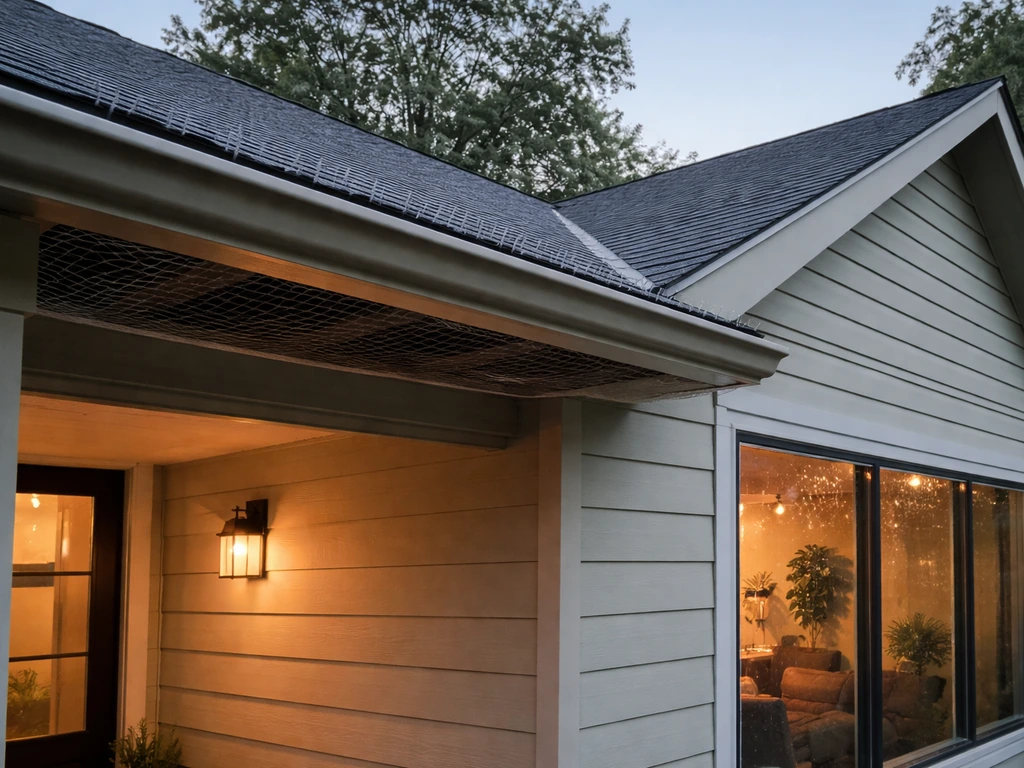
At home, the most common complaints involve birds roosting on rooflines, ledges, and patio covers; nesting under eaves or in gutters; getting under solar panels; fouling pools and garden beds; and hitting windows. Pigeons, sparrows, starlings, and gulls are the usual culprits depending on where you live. Each species behaves a little differently, which matters when you're picking a solution.
Commercial buildings and structures
On commercial properties, the problem scales up. Large roosts in warehouses and industrial buildings create noise, odor, and health liability from droppings. Ledges, rafters, and eaves are natural perching and nesting targets. USDA-APHIS barn-related tech notes also note that birds often use ledges, rafters, and eaves as roosting and nesting sites ledge, rafter, and eave roosting and nesting. A single flock of starlings or pigeons using a building can produce enough mess in a season to cause real maintenance headaches and potential OSHA-level concerns from histoplasma exposure.
Aviation and airfield environments
Airports represent the highest-stakes bird control environment. Birds near runways and approach corridors can cause bird-aircraft collisions, which are a documented safety hazard. The FAA and USDA Wildlife Services work together under formal agreements to assess and reduce wildlife hazards at airports. Because many species near airports are MBTA-protected, management has to be coordinated, compliant, and usually involves a blend of habitat modification, exclusion, and active harassment rather than any single tactic.
Physical exclusion: the most reliable long-term fix
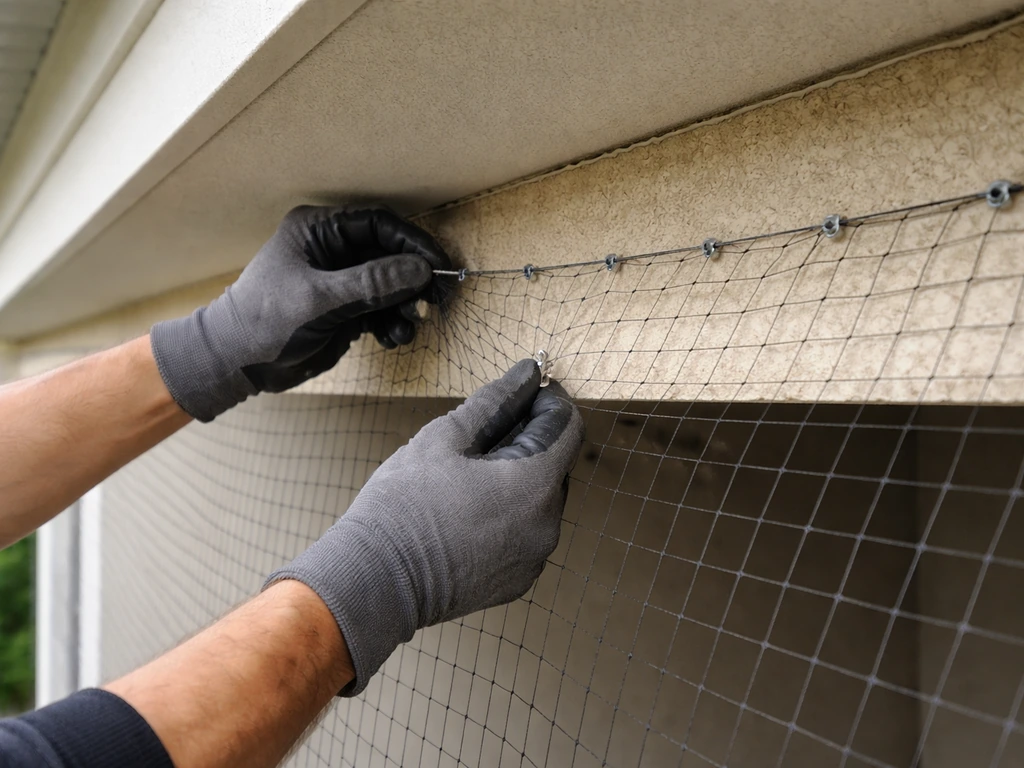
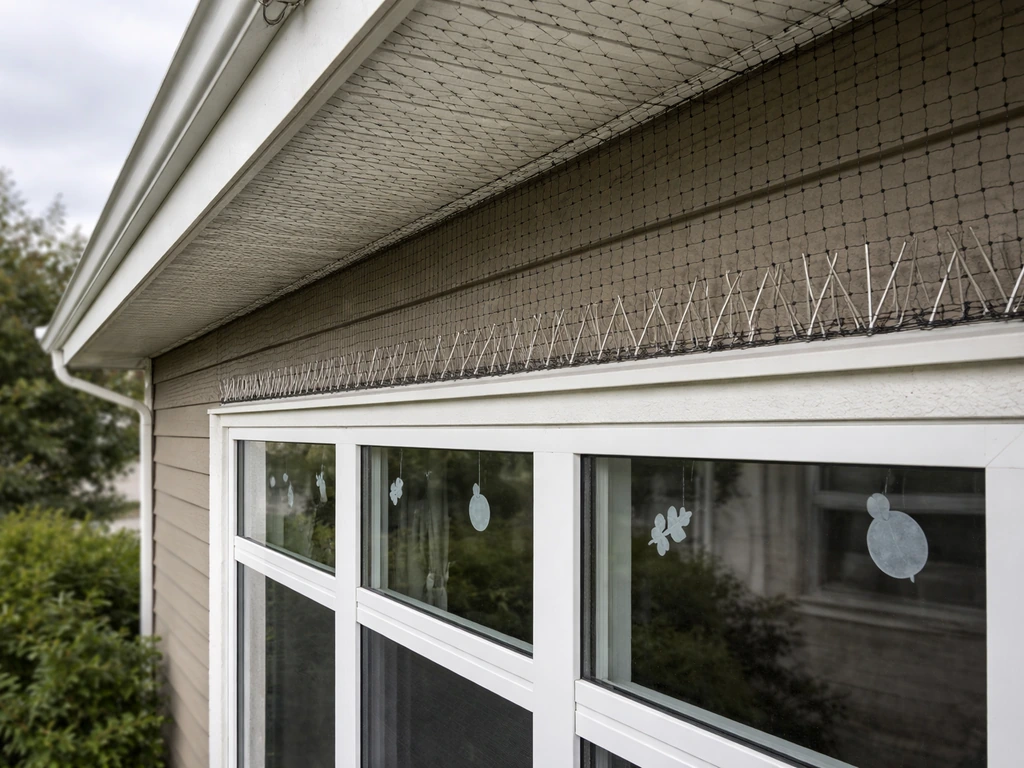
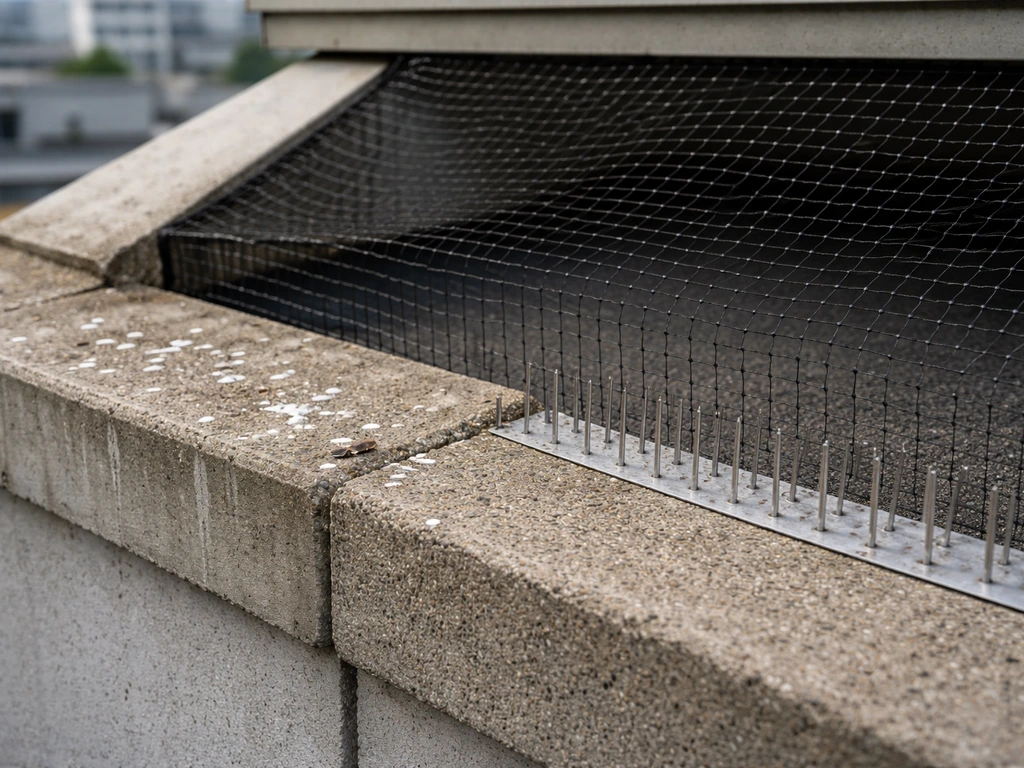
Physical barriers are the gold standard for bird control because they don't rely on a bird's learned behavior changing. They just block access. USDA Wildlife Services consistently emphasizes exclusion as the preferred strategy for preventing birds from gaining access to roosting, nesting, and feeding sites. The main options are netting, spikes, and screens.
Bird netting
Netting is the most versatile physical barrier. It works over large areas like solar arrays, under eaves, across light wells, and around garden beds. For most bird species, a 10- or 12-gauge mesh with 1-inch openings provides solid exclusion. The GSA's installation guidance emphasizes stretching netting taut and anchoring it so there are no gaps birds can squeeze through. At windows, All About Birds recommends mounting netting 2 to 3 inches from the glass so birds bounce off before making contact rather than hitting the glass directly.
Bird spikes
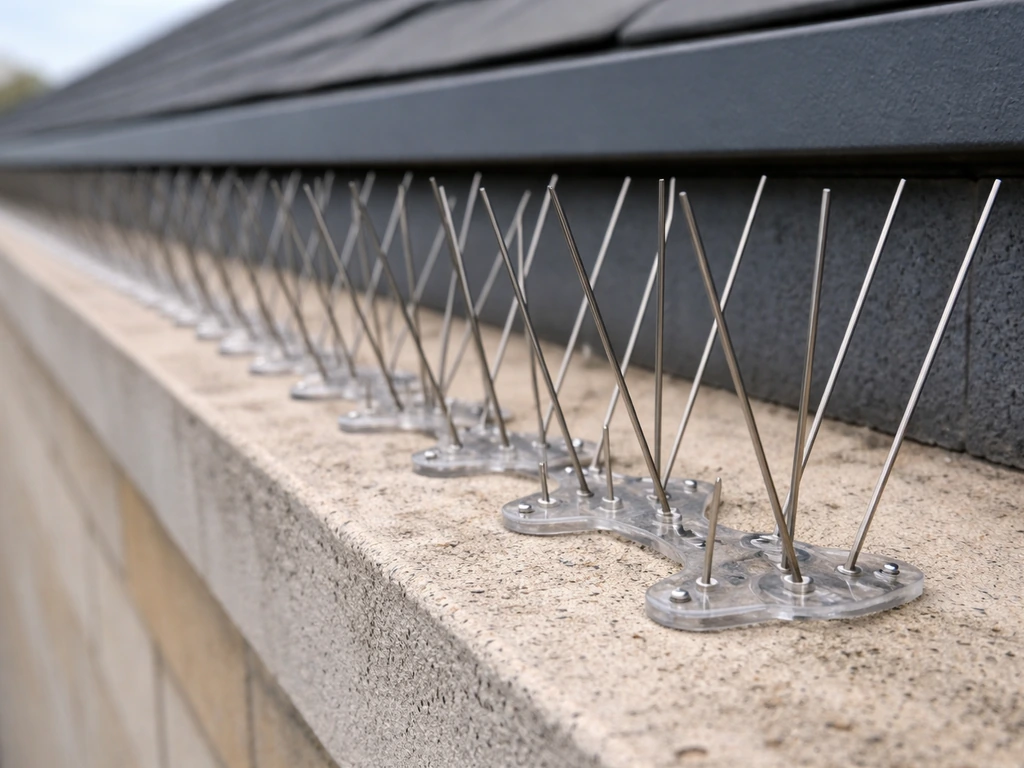
Spikes work well on narrow ledges, rooflines, window sills, and signage where birds land and loaf. They come in sections (typically 3-foot lengths) and are applied with adhesive or screws. The most common failure mode is installation gaps: uneven spacing or leaving the ends open gives birds a landing spot right next to the spikes, which they'll use happily. Cover the entire surface, no gaps, no shortcuts at the ends. Using the wrong adhesive or applying in bad weather are the other top DIY mistakes.
Screens and wire systems
Screens and wire tension systems are used in tighter spaces like HVAC vents, barn openings, and under structures where netting isn't practical. At airports and larger facilities, overhead wires or cable grids can discourage birds from landing on open water or large flat surfaces. One caveat from FAA guidance: if the underlying habitat is still attractive (standing water, food sources nearby), birds will keep investigating even with barriers in place. Habitat modification has to accompany the physical barrier for it to hold.
Sensory deterrents: sound, sight, and light
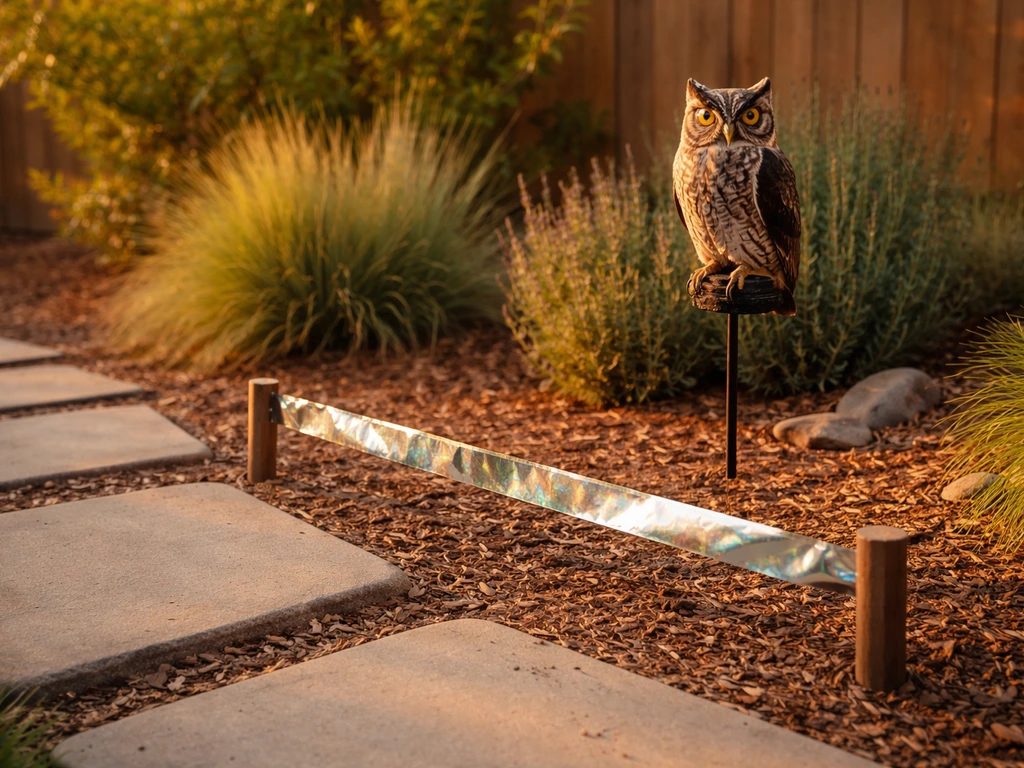
Sensory deterrents try to make a location feel threatening or uncomfortable to birds. They work on the principle that birds learn from their environment and can be trained to avoid a space. The catch is habituation: birds figure out pretty quickly that a fake owl or a recorded alarm call isn't actually dangerous. That's why USDA Wildlife Services consistently recommends using a combination of methods and rotating or varying them rather than relying on one thing indefinitely.
Visual deterrents
Visual deterrents include predator decoys (owls, hawks), reflective tape, flash tape, and scare-eye balloons. They're cheap and easy to set up, which makes them popular for gardens and patios. They work best when first deployed and when moved regularly so birds don't map them as static and harmless. On their own and left in one spot, most visual deterrents lose effectiveness within a week or two.
Sonic and auditory devices
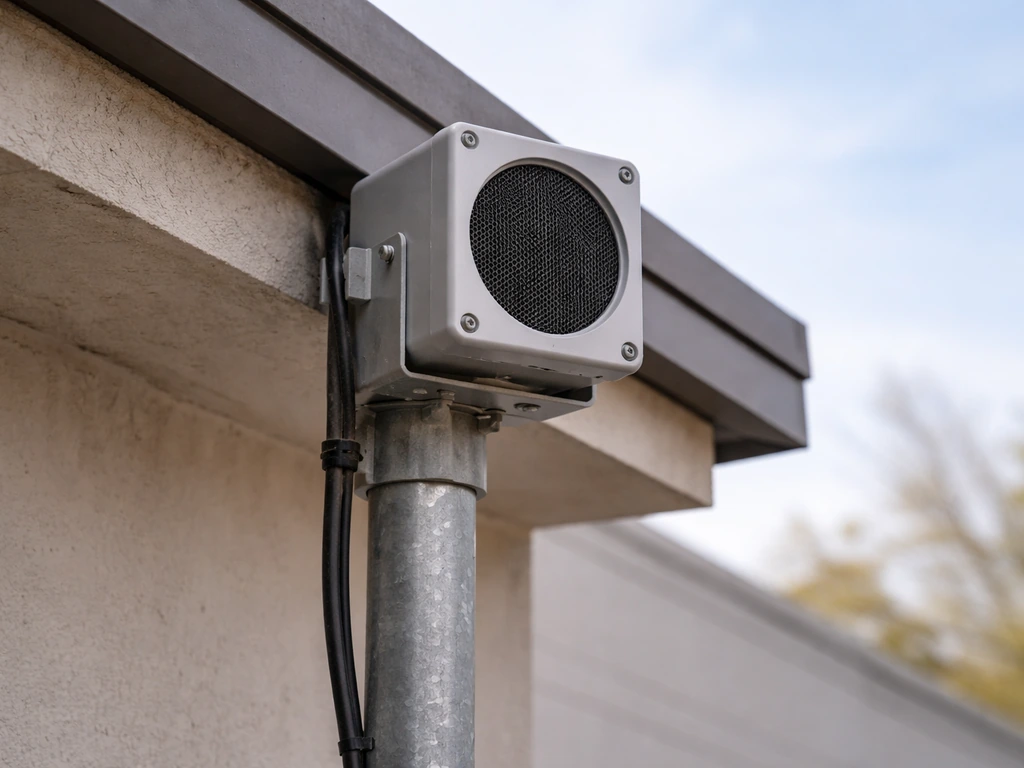
Sonic deterrents broadcast distress calls, predator calls, or alarm sounds to trigger a flight response. Propane cannons, electronic guard systems, and distress-call speakers are all used by wildlife managers, including at airports and agricultural operations. These can be genuinely effective for dispersing birds from a specific area, but they're temporary solutions. Birds that roost or nest nearby will return unless something else changes about the site. They're also not neighbor-friendly in residential settings.
Ultrasonic devices
Ultrasonic deterrents emit sound above 20,000 hertz, beyond human hearing. The appeal is obvious: silent to you, supposedly unpleasant to birds. The reality is less impressive. A 2024 study published in Scientific Reports found that ultrasonic frightening devices are not highly effective at repelling wild birds in practice. USDA Wildlife Services defines the category in its technical materials but doesn't treat ultrasonics as a primary tool. They're worth trying as one layer of a multi-method approach, but don't expect them to solve a serious roosting problem on their own.
Laser deterrents
Lasers are a newer category that USDA Wildlife Services has been evaluating as a non-lethal visual harassment tool. They work by sweeping a beam across a roost area, triggering birds' threat response. Research in agricultural settings, including a 2024 study on pear orchards, suggests lasers have real potential but also real limitations depending on light conditions and bird habituation. They're more relevant to commercial and agricultural use than residential, and they're typically automated systems rather than handheld devices.
Chemical and non-toxic repellents
Chemical repellents in bird control are mostly surface-applied products designed to make a landing spot uncomfortable rather than toxic. The most common category is polybutene-based gel, a sticky substance applied to ledges and rooflines. Birds dislike the tacky sensation and avoid landing there. These gels are EPA-registered products (you can verify specific products in the EPA's pesticide label database) and are generally marketed for pigeons, starlings, and similar species.
Gel repellents work on smooth, relatively narrow surfaces. On porous or textured surfaces, the product tends to absorb into the material and lose effectiveness faster, so some manufacturers recommend primers or heavier application rates on those substrates. Coverage and reapplication timing vary by product, so follow the label guidance specifically.
A few important safety notes: avoid gel repellents in areas where small songbirds, bats, or other non-target animals could get stuck. These products are designed for larger pest birds on ledges, not for open areas where unintended contact is possible. For people with pets, children, or wildlife sensitivity, non-toxic physical deterrents are generally a safer starting point.
There are also methyl anthranilate-based liquid repellents, derived from grape extract, that are sprayed on turf, grass, and garden areas to deter geese and other ground-feeding birds. These are considered non-toxic and are used at parks, golf courses, and around water features. They need reapplication after rain and are not a permanent fix, but they work reasonably well as part of a management plan.
How to pick the right method for your situation
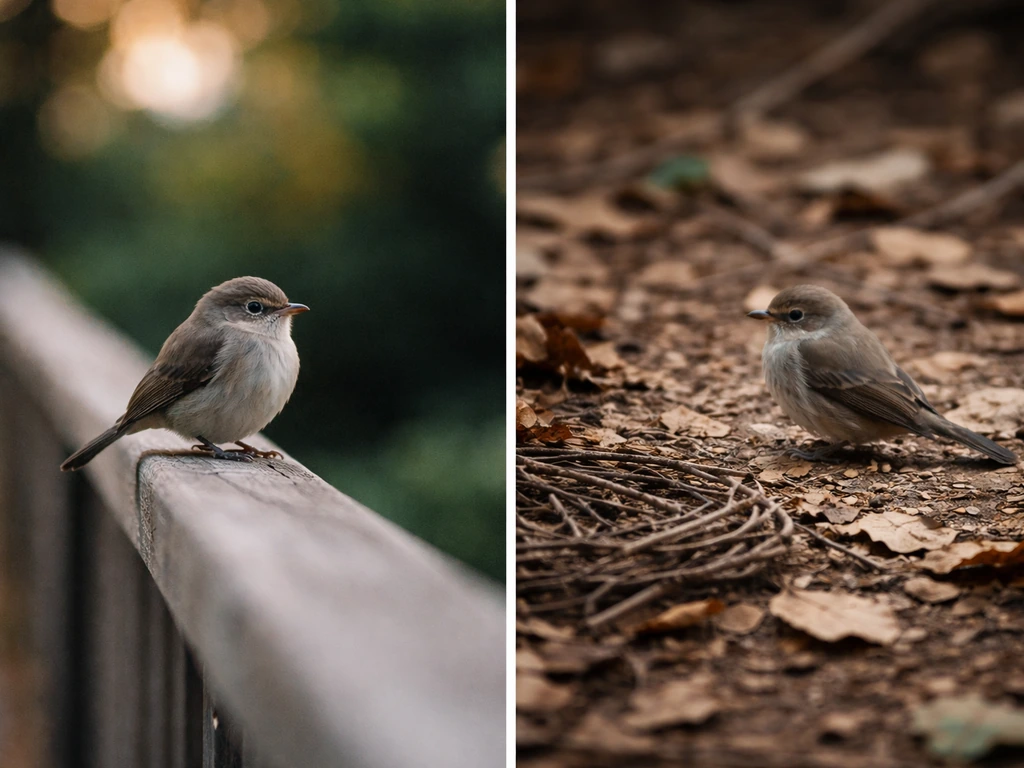
The best approach depends on three things: what the birds are doing, where they're doing it, and what species you're dealing with. In practice, people often look for the best bird killer, but the right method is the one that stops roosting, nesting, and feeding for your specific situation bird control. Start by watching the birds for a day or two. Are they roosting (resting overnight), nesting (bringing material, returning to one spot repeatedly), or just passing through to feed? Roosting and nesting require stronger, more permanent solutions. Feeding birds can often be redirected by removing the food source first.
| Situation | Best primary method | Supporting method |
|---|---|---|
| Birds roosting on a narrow ledge or roofline | Spikes or wire tension system | Gel repellent on remaining flat surfaces |
| Birds nesting under eaves or solar panels | Netting or screen exclusion | Remove any existing nests before installing |
| Birds hitting windows | Window netting 2–3 inches from glass | Reflective window film or screens |
| Birds fouling a patio or pool area | Visual deterrents + sonic device | Remove food/water attractants first |
| Large roost in a warehouse or barn | Netting over rafters and openings | Distress call devices + habitat modification |
| Birds on airport or airfield | Habitat management + exclusion at structures | Coordinated harassment (propane cannons, pyrotechnics, distress calls) |
| Geese on lawn or near water | Methyl anthranilate spray on turf | Habitat modification (reduce open grass near water) |
DIY vs. calling a professional
For most residential situations, DIY is completely viable if the problem is limited in scope. Installing spikes on a short ledge, hanging netting over a garden bed, or setting up a sonic device on a patio are all reasonable DIY projects. The key is measuring correctly, buying enough product to cover the full area with no gaps, and following manufacturer installation guidance on adhesive type and surface prep.
You'll want a professional when the problem is large-scale (a full commercial building or warehouse), when the species involved might be MBTA-protected and you're not sure what's legal, when there's a nesting site that's already active and needs to be handled in compliance with federal rules, or when you're in an aviation context where USDA Wildlife Services involvement is standard and required. A licensed wildlife control operator or pest management professional who specializes in birds will also know your local regulations, which vary by state.
One practical starting point: if you're not sure where to begin, identify the one spot where the most bird activity is concentrated and address that first with a physical barrier. Exclusion works better than deterrents over the long term, and fixing the main roost or nesting site takes away the birds' reason to keep coming back. For a good life bird control approach, focus first on exclusion that prevents roosting and nesting, then add temporary deterrents only as needed. Add sensory deterrents or repellents as a secondary layer to discourage birds from exploring other surfaces nearby.
For those looking to go deeper on specific products and methods, there's more detail available on topics like the best overall bird control products, specific repellent approaches, and even options like BB guns in jurisdictions where that's a legal, targeted tool for unprotected pest species. If you’re considering a firearm option for bird control, compare the best bb gun for bird control choices that match your local laws and the species you’re targeting.
FAQ
What should I do if I discover an active nest or eggs on my property?
In the U.S., you generally cannot remove, damage, or disturb active nests or eggs of protected wild birds without proper federal authorization. If you find an active nest on your property, pause the work and contact a wildlife control professional so they can advise what you can do immediately (often exclusion and cleanup after the nesting period).
Why do bird deterrents seem to stop working after a couple weeks?
A common mistake is treating deterrents as a permanent fix. Many visual and sonic devices work only while birds have not habituated, so you should plan for rotation or escalation (for example, switching from visual to physical exclusion on the main roosting surface).
How do I choose between exclusion and deterrents based on bird activity timing?
Timing matters because roosting and nesting drive how “strong” the solution needs to be. If birds are bringing nesting material and returning repeatedly, prioritize exclusion (netting, screens, spikes) and remove attractants only after the birds have stopped using the site, following local and federal rules.
What if I install barriers but birds keep trying the area anyway?
Habitat modification is often the missing piece. If birds still have an easy food source or standing water nearby, barriers may prevent entry to one spot but birds will keep investigating adjacent surfaces, so address the underlying attractants at the same time.
What are the most common installation errors with bird spikes?
For spikes, the most reliable results come from covering the entire landing area with continuous coverage, including the ends, and installing on a surface that allows secure mounting. If the mounting base is loose or the spacing is inconsistent, birds will land in the gaps even if spikes are present nearby.
How can I prevent netting from failing at seams, edges, or corners?
For netting, weak points usually come from improper tension and poor anchoring that leaves bird-sized gaps. Before releasing the birds’ access, inspect all edges, corners, and seams, and consider how debris or seasonal shifting could create openings over time.
Are gel repellents effective on rough brick, stucco, or textured roofing?
DIY gel repellents are surface-specific. They work best on smooth, narrow ledges and can lose effectiveness on porous or heavily textured substrates where the product soaks in or wears off quickly, so check your surface type before purchasing.
When should I avoid chemical or gel repellents and use physical exclusion instead?
Repellents can cause safety issues for non-target animals if they can make contact and get stuck. If children, pets, bats, or small birds may access treated areas, a physical barrier (netting, screens, spikes) is usually the safer first choice.
How do I avoid “bird shifting” to another ledge after treatment?
If you have a multi-story building, curved architecture, or multiple perching heights, treat it as a system. Birds will often shift to the next closest accessible surface, so measure the full “approach” area and plan a consistent exclusion strategy rather than fixing only one visible roost spot.
What’s a good option for bird control in a neighborhood where sound is an issue?
Noise-sensitive and neighbor-facing locations often require non-invasive approaches. Sonic devices can disturb people, and some products have limited effectiveness, so choose quieter, non-contact exclusion when possible and keep outdoor placement tightly targeted to the offending area.
What’s the best way to stop birds from hitting windows, not just roosting nearby?
If the birds are hitting windows, you may need to change the birds’ perception, not just stop roosting. Consider dedicated window film or decals, plus exclusion of nearby perching ledges, so birds do not repeatedly attempt the same flight path.
Can I use lethal methods like a BB gun for bird control, and when is it appropriate?
Yes, but legality and practicality vary. Firearm use is heavily regulated, and bird control is usually intended to be non-lethal for protected species and urban environments, so it is generally safer to consult local rules and a licensed professional before considering any lethal tool.
When is it worth hiring a professional instead of trying DIY solutions?
If you are dealing with warehouses, large roosts, or aviation-related risk, you should assume coordination may be required and that compliance is more complex. A professional specializing in birds can help with species identification, MBTA-related constraints, and selecting the right blend of exclusion, harassment, and cleanup.