A bird repellent is any product, device, or strategy designed to discourage birds from landing, roosting, nesting, or feeding in a specific area. That covers a wide range of tools: physical barriers like spikes and netting, sensory deterrents like reflective tape and sonic devices, and chemical repellents that trigger a taste or smell aversion. None of them harm the birds. They just make the area unpleasant or inaccessible enough that the birds go somewhere else.
What Is Bird Repellent? Types, Effectiveness, and Use

Marcus Weatherby
3 Jun 2026
What bird repellents actually do (and don't do)
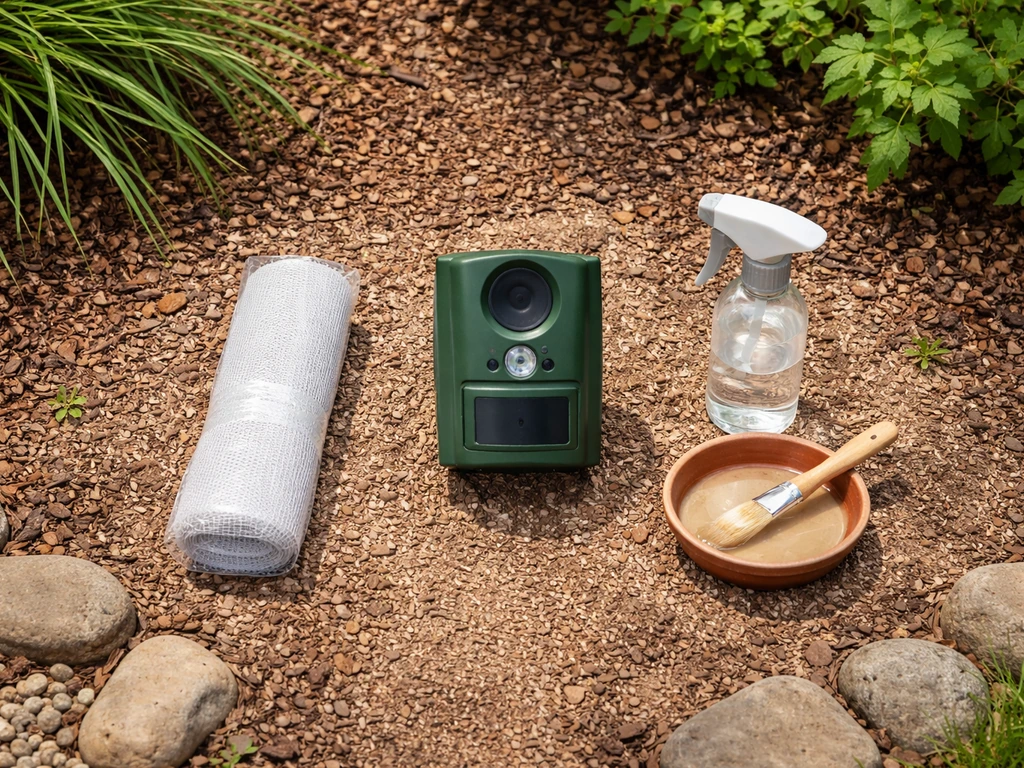
The core idea behind every bird repellent is disruption. You're either blocking physical access, introducing an unpleasant sensory experience, or triggering a learned aversion. The goal isn't to eliminate birds from your neighborhood; it's to make your specific space less attractive than the next available option. That distinction matters because it shapes how you approach the problem.
Bird management experts, including those at Iowa State University Extension and USDA APHIS, consistently frame effective bird control around preventing access to the things birds actually want: food, shelter, and safe perching or nesting spots. A repellent that doesn't address at least one of those fundamentals tends to fail quickly.
One practical reality worth knowing upfront: birds are smart and adaptable. Many deterrents lose effectiveness over time as birds habituate to them, especially sensory devices. The most reliable results usually come from combining methods and rotating or adjusting them regularly.
The three main categories of bird repellent
Bird repellents fall into three broad groups. Understanding the differences helps you pick the right tool for your situation instead of wasting money on something that won't work for your specific problem.
Physical barriers
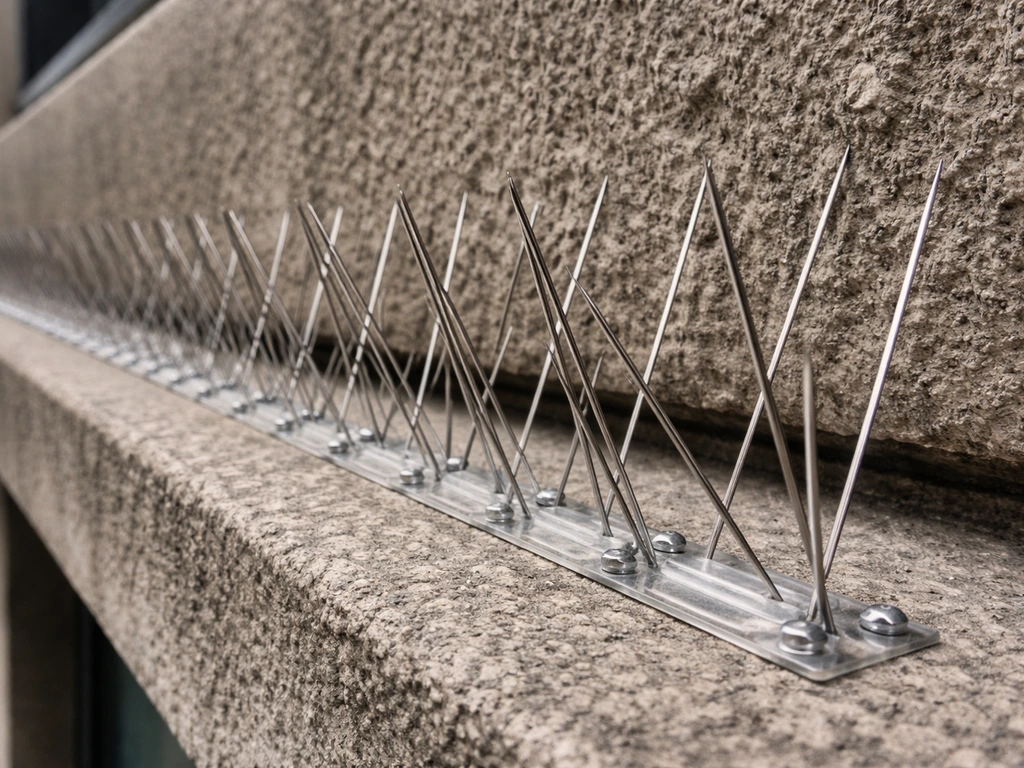
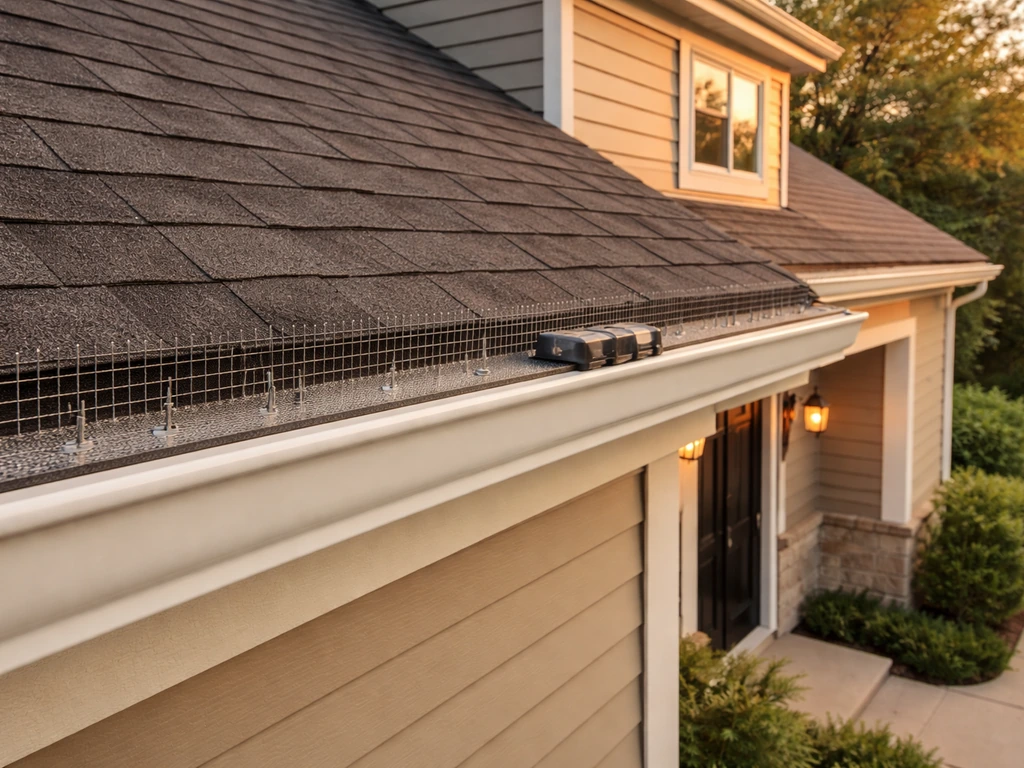
Physical barriers are the most reliable long-term solution because they don't rely on a bird's perception or behavior. They literally prevent access. Common options include anti-perching spikes installed on ledges, beams, and rooflines; exclusion netting stretched over gardens, solar panels, or roof gaps; and wire or tension systems that make surfaces unstable to land on. USDA APHIS and FAA airport management guidance both highlight exclusion barriers as foundational to effective bird control, precisely because they work regardless of whether a bird is paying attention.
The limitation is physical scope. Barriers work well for defined structures but aren't practical over large open areas like lawns or ponds. They also need proper installation and periodic inspection since gaps, sagging netting, or spikes that shift over time will let birds back in.
Sensory deterrents
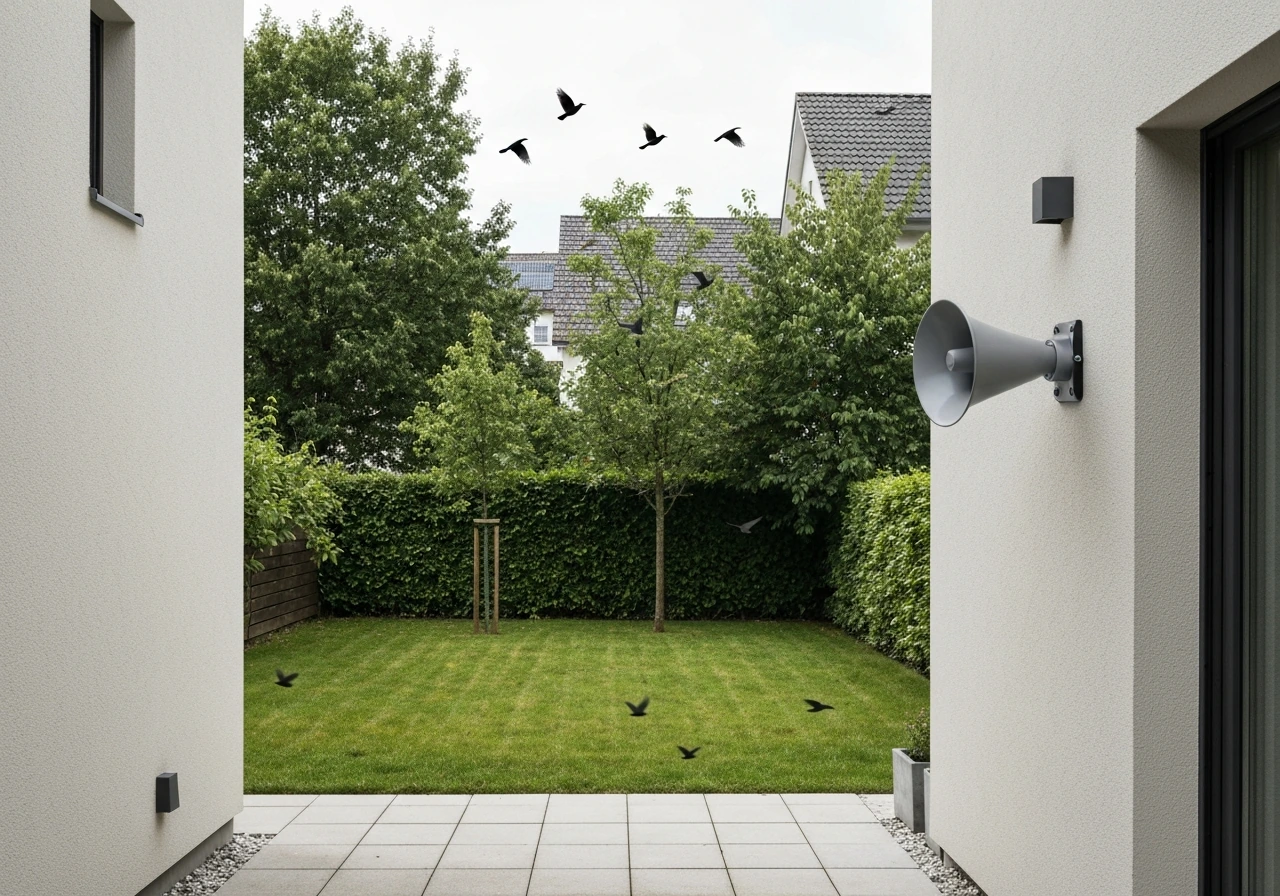
Sensory deterrents work by making an area feel threatening or uncomfortable through visual or sound cues. Visual options include reflective tape, predator decoys (owls, hawks), holographic discs, and laser devices. Sonic options broadcast distress calls or predator sounds. These can be effective when deployed correctly, but habituation is a genuine and well-documented problem. Somerset Council guidance specifically warns that birds become accustomed to audible scarers over time. Rotating the type, timing, and location of these devices slows that process significantly.
Ultrasonic devices deserve a special mention here because they're heavily marketed but poorly supported by evidence. Natural Resources Wales and research reviewed by the Bird Strike Association of Canada both note that there is little to no scientific evidence that ultrasonic devices provide reliable bird control. Birds don't process high-frequency ultrasonic sound the way rodents do, so those devices are generally not worth the investment for bird problems.
Chemical and taste/odor repellents
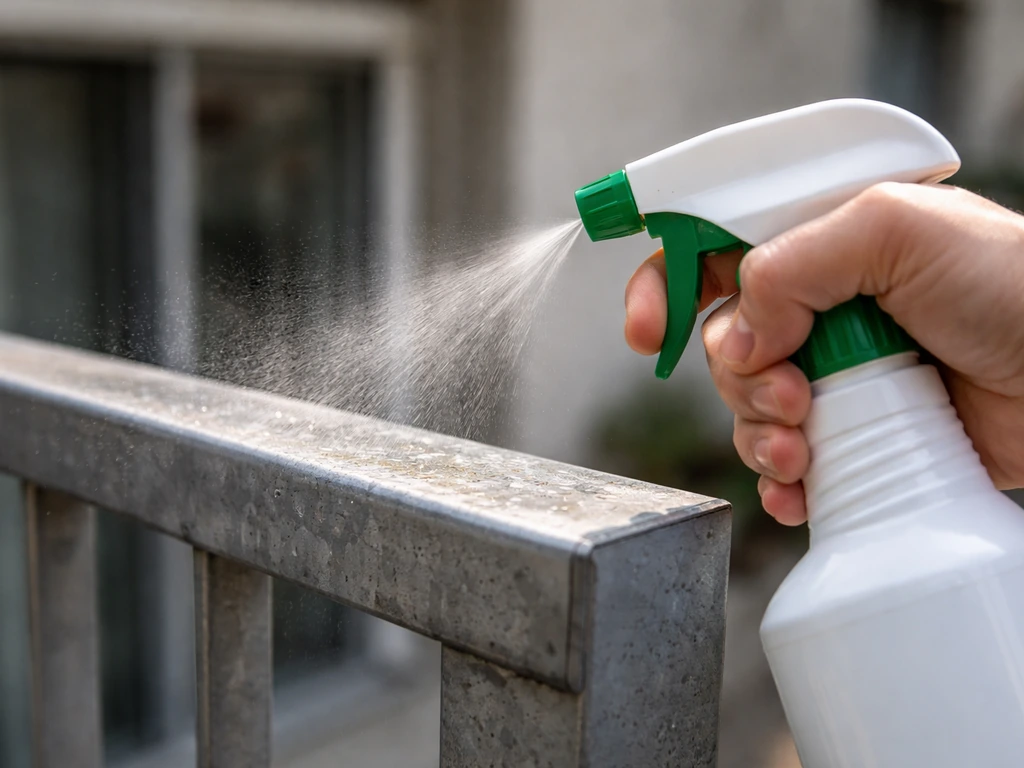
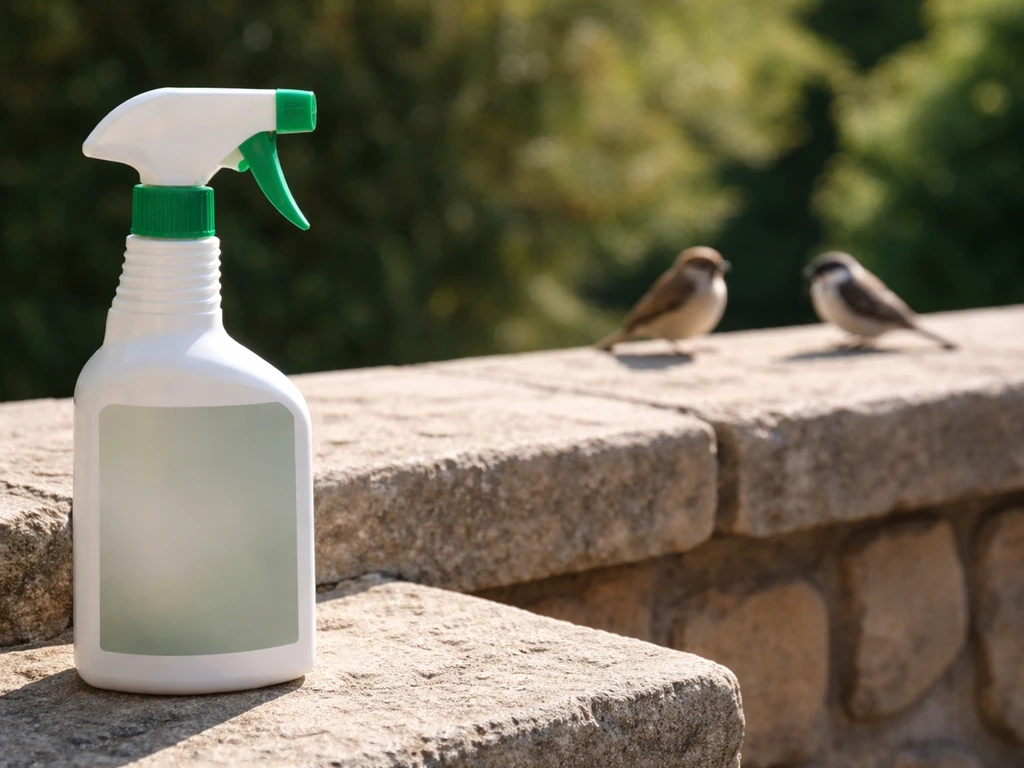
Chemical repellents create an aversive reaction when birds contact or ingest treated surfaces. The two most common active ingredients are methyl anthranilate (MA) and anthraquinone. Methyl anthranilate is a grape-derived compound that irritates mucous membranes in birds without harming them. It's applied as a spray or aerosol to turf, crops, or roosting areas. Look for an EPA-registered option and follow the label directions, since availability and application methods vary by product and location EPA-registered spray. blank" rel="noopener noreferrer">Anthraquinone works as a digestive irritant and is registered for use on commercial and industrial grounds and treated seed. The FAA's airport wildlife management program references both compounds for managing turf-feeding birds near runways.
These products are regulated as pesticides. The EPA evaluates and registers specific formulations, and state regulations can add further restrictions on residential use for certain compounds. Always check the product label for approved application sites and follow the directions closely.
Sensory deterrents: where they shine and where they fall short
Visual deterrents work best in open areas where birds are in flight or approaching from a distance. Reflective tape, predator kites, and holographic pinwheels are practical for gardens, patios, and fruit trees. They're low cost, easy to install, and cause no environmental concerns. The catch is that stationary visual deterrents stop being convincing quickly. Birds will sit next to a plastic owl within a week if it never moves. Motion is key: rotating, fluttering, or repositioned devices stay effective longer.
Sonic deterrents broadcasting predator calls or distress sounds are best suited for larger open spaces where the sound can disperse naturally, like fields, orchards, ponds, or commercial parking areas. They're less appropriate in densely populated residential neighborhoods because of noise complaints. As noted by UGA Cooperative Extension, sound is primarily a harassment tool and works best when activated in response to bird presence rather than running on a constant loop.
Skip the ultrasonic devices for birds. Save that approach for rodent control. For bird-specific sound deterrents, look for units that cycle through multiple call types and have programmable timing to reduce habituation. If you want to pick the best bird repellent sound, focus on models with multiple distress call options and programmable timing. There's a dedicated guide on the best bird repellent sounds worth reading if sonic deterrents are your primary interest.
Chemical repellents: safe use, effectiveness, and regulations
The most widely used chemical bird repellent for residential and commercial turf applications is methyl anthranilate. Products like Avian Control are EPA-registered and work by contact: birds either touch the treated surface or inhale the airborne droplets and find the irritation aversive enough to leave. Cornell CALS describes how MA is commonly applied to grass and open areas to deter geese, or fogged into roost areas for starlings and other flocking birds.
Anthraquinone is more common in agricultural and commercial settings. The EPA has registered it for turf, ornamental, and treated-seed applications, and its use on purely residential properties may be restricted depending on specific product labeling. If you're managing a commercial property, large-scale landscaping, or crops, anthraquinone-based products are worth exploring with a licensed applicator.
Other compounds occasionally appear in bird repellent product lists, including capsaicin (red pepper), fish oil, and methyl anthranilate derivatives, and the EPA recognizes several of these as active ingredients in registered formulations. UGA Cooperative Extension points out that any chemical used for this purpose can fall under state and federal pesticide law, which means you need to read the label carefully and apply accordingly.
Chemical repellents are not a permanent fix on their own. They wash off, degrade in UV light, and require reapplication on a schedule tied to rainfall and bird pressure. They work best as part of a broader strategy, especially when combined with physical exclusion or habitat modification to remove food and shelter incentives.
Choosing the right repellent for your location
The best repellent depends on where you're trying to protect and what birds are causing the problem. Here's a practical breakdown by common scenario.
| Location | Primary Problem | Best Approach | Notes |
|---|---|---|---|
| Patio or deck | Pigeons, sparrows roosting on ledges and furniture | Anti-perch spikes on ledges, physical wire systems, reflective tape | Combine with removing food sources like birdfeeders nearby |
| Garden or lawn | Geese, starlings, crows feeding on turf or plants | Methyl anthranilate spray on turf, predator kites, motion-activated sonic | Reapply MA after rain; rotate visual deterrents weekly |
| Roof and gutters | Pigeons and starlings nesting in gaps, under eaves | Exclusion netting over gaps, spikes on ridge lines and flat surfaces | Inspect annually; patch gaps before nesting season (late winter) |
| Solar panels | Pigeons roosting and nesting under panels | Perimeter exclusion mesh specifically fitted to panel frames | Purpose-built solar panel mesh clips are the most durable option |
| Pool area | Geese, ducks fouling water and surrounding area | MA spray on surrounding turf, decoy predators near water edge, physical barriers to waterline | Motion-activated sprinklers work well as a supplemental tool |
| Windows | Bird strikes or sparrows building on sills | Window strike tape or UV-reflective film, spikes on external sills | Angled sill deterrents stop ledge nesting without visual impact |
| Commercial buildings | Large roost populations, structural fouling | Professional-grade netting, spike systems, coordinated sonic programs | Consider USDA APHIS Wildlife Services for large-scale infestations |
For aviation and airport contexts, the FAA's Wildlife Hazard Management framework recommends coordinated programs combining habitat modification, exclusion barriers, and registered chemical repellents. That's well beyond DIY territory and involves trained wildlife staff operating under FAA guidance, but the same core principles apply: remove attractants, block access, and use repellents as one layer in a managed system.
If you're not sure which bird species you're dealing with, that matters. Geese respond well to MA-treated turf. Pigeons are most effectively managed with physical exclusion. Starlings in roosts respond to fogged MA or coordinated harassment programs. Matching the method to the bird makes a real difference in results.
Installation, setup, and keeping deterrents effective over time
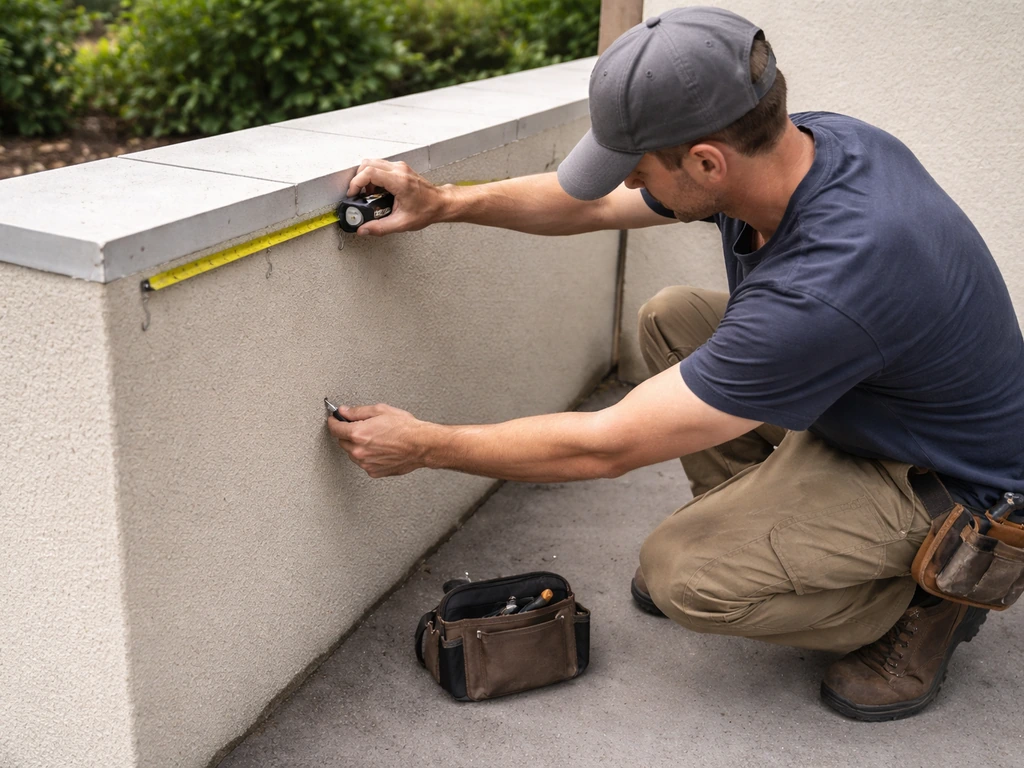
Even the right product fails if it's installed poorly or neglected. Here are the practical steps that separate repellents that work from ones that don't.
- Assess the full perimeter before installing anything. Birds will find the gap you missed. Walk the space, identify every landing, nesting, and entry point, and address them systematically rather than spot-treating obvious areas.
- Install physical barriers correctly the first time. Spikes should be spaced according to manufacturer specs with no gaps at corners or junctions. Netting needs to be taut and anchored every 12 to 18 inches at the perimeter to prevent birds from pushing underneath.
- Place sensory deterrents where birds approach first. Position visual deterrents at the entry points birds use, not just in the center of the area. For sonic devices, point speakers toward the space birds are occupying, not away from it.
- Apply chemical repellents in the right conditions. Most MA and anthraquinone sprays need a dry surface for initial bonding and at least a few hours without rain to set. Check the label for temperature and weather windows.
- Reapply and rotate on a schedule. Chemical repellents need reapplication after significant rainfall or every few weeks depending on the product. Rotate sonic and visual deterrent placement every 7 to 14 days to counter habituation.
- Remove attractants alongside deploying repellents. Repellents work much better when you also eliminate what's drawing birds in the first place. That means securing trash, removing standing water, cutting back dense shrubs near problem areas, and stopping incidental feeding.
- Inspect physical barriers seasonally. Check netting for tears, sagging, or bird-caused displacement. Inspect spike strips for movement or accumulation of debris that gives birds a foothold anyway. A 10-minute check twice a year prevents major reinstallation.
One thing that consistently comes up in real-world bird control is that no single method handles everything. The most effective setups layer approaches: physical exclusion closes off the primary sites, chemical or sensory deterrents address the surrounding area, and habitat modification removes the underlying draw. If a single product isn't solving your problem after two to three weeks, it's usually not that the method is wrong but that it's being used alone instead of as part of a broader setup.
If you want to go deeper on any specific category, natural bird repellent options cover plant-based and non-chemical approaches, and spray-based repellent products have their own practical considerations around concentration, application equipment, and coverage rates that are worth understanding before you buy.
FAQ
Will bird repellent hurt birds or make them sick?
Most bird repellents work by irritation or by blocking access, not by poisoning. Still, chemical products are pesticides, so the main safety step is following the label, using the approved application method, and avoiding ingestion or contact with humans, pets, and water sources.
How long does bird repellent take to start working?
Many contact or sensory repellents show results within days, but it depends on whether birds have already learned the area. If you do not see reduced landing or roosting within about 2 to 3 weeks, it usually means the birds are finding food or shelter elsewhere nearby or the method is being used as a standalone solution.
Do birds get used to repellent, and how do I prevent that?
Yes, habituation is common, especially with stationary visual decoys and audible scarers. Counter it by moving devices, using motion, changing timing or call types for sonic units, and rotating methods rather than relying on one approach.
What is the best bird repellent for a lawn versus an open field?
For defined areas like ledges, rooflines, or specific turf sections, exclusion barriers and contact repellents (like MA on turf) can be practical. For very large or open landscapes, exclusion becomes difficult, so you typically lean on a combination of harassment tools plus habitat modification, and you will often see better results with a coordinated plan.
Is an ultrasonic device actually worth buying for bird problems?
For birds, ultrasonic units are generally not a reliable option because there is little evidence they deter birds consistently. If you are tempted to buy one, treat it as low priority and instead select an approach that targets access, food attractants, or uses evidence-supported chemical or exclusion methods.
Can I use bird repellent on edible plants or around home gardens?
You can, but only if the exact product label approves that use site and crop type. Chemical repellents are regulated as pesticides, so check for approved application sites, waiting intervals if listed, and coverage instructions before treating anything you plan to harvest.
What should I do if birds are still landing after I apply repellent?
First confirm the birds are not being drawn by an attractant you missed, like accessible food, water, or sheltered roosting spots. Next, check coverage, since repellents often fail due to missed areas or uneven application, and then add a layer like netting or spikes to eliminate landing or nesting access.
How often do chemical bird repellents need reapplication?
Reapplication is typically tied to rainfall, UV degradation, and bird pressure, since many treatments wash off or break down over time. Follow the product schedule on the label, and if you have frequent rain or heavy traffic, expect shorter intervals and plan for monitoring.
Are sonic bird deterrents effective in neighborhoods?
They can be, but constant sound can create noise complaints, and results vary with conditions. A practical approach is using units with programmable timing and activating them in response to bird presence, while avoiding deployment that conflicts with local noise rules.
What is the difference between methyl anthranilate and anthraquinone for everyday use?
Methyl anthranilate (MA) is commonly used for turf and roosting deterrence and is known for contact and inhalation irritation effects. Anthraquinone is more often used in commercial and agricultural contexts, and residential approval can be more restricted depending on the specific product label.
How do I choose a repellent based on the bird species?
Match the strategy to the main behavior. For turf-feeding geese, MA-treated turf is often a starting point. For pigeons, physical exclusion is frequently more effective than sensory cues. For starlings roosting, targeted treatment of roost areas plus coordinated harassment tends to work better than treating only random spots.
What are common installation mistakes that cause bird repellents to fail?
For barriers, gaps, sagging netting, or displaced spikes are the top failure points. For sensory devices, leaving them in one fixed position and not repositioning them reduces effectiveness quickly. For chemical sprays, uneven coverage or using the wrong application equipment can also lead to birds avoiding only small patches.
Is DIY bird repellent enough, or should I bring in a professional?
DIY can work for small, defined areas, especially with exclusion barriers and label-approved products. If you are dealing with a large commercial site, critical locations like airports, major roosting colonies, or repeated failures after layered attempts, a licensed applicator or wildlife control professional is often the fastest way to get correct coverage and regulatory compliance.