
Bird spikes don't work for bats. They're designed to stop birds from landing on open ledges and beams, but bats roost in completely different ways: clinging to rough surfaces, squeezing through gaps as small as 3/8 of an inch, and tucking into enclosed spaces like wall voids, attic cavities, and spaces behind fascia boards. Spikes placed on a ledge won't block any of that. If you have bats, the only approach that reliably works is exclusion: finding every entry point, installing one-way exit devices, waiting for the bats to leave, and then sealing everything permanently.
Do Bird Spikes Work for Bats? What Actually Works

Marcus Weatherby
15 Jun 2026

Why bird spikes miss bats entirely
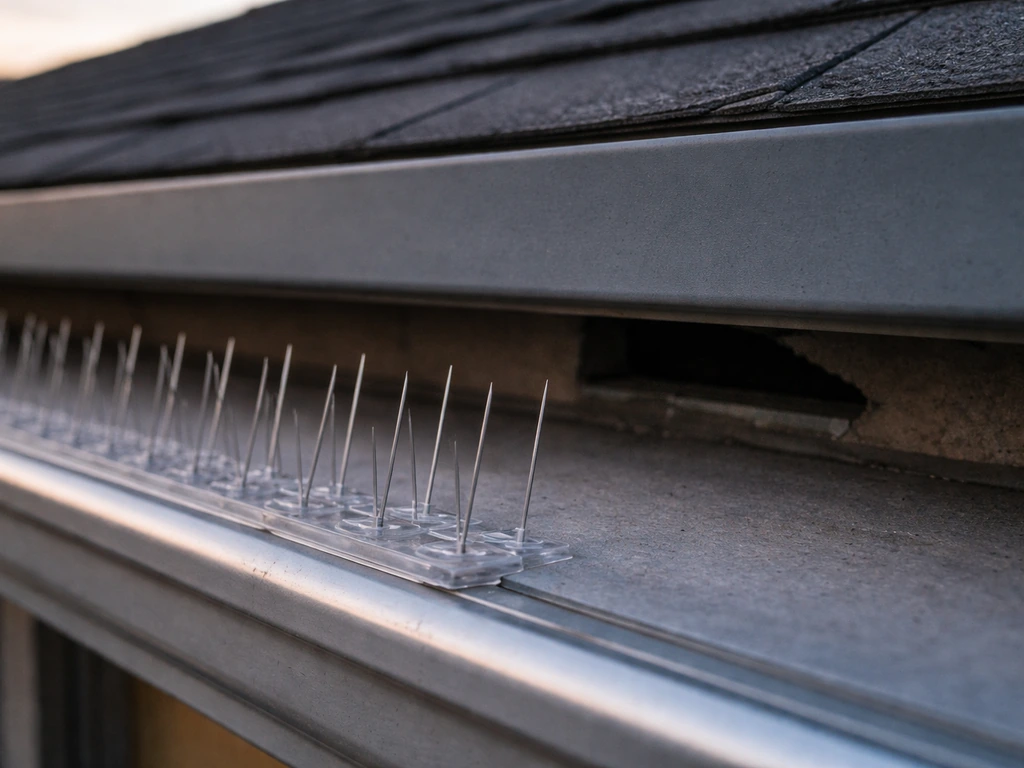
Bird spikes are built around one idea: make a flat surface uncomfortable to land on. That works reasonably well for pigeons and larger birds that want to perch on ledges, windowsills, and roof edges. Bats don't roost that way. They hang upside down or press themselves flat against a surface using their claws, and they almost always want to be inside something, not sitting out in the open.
The access points bats use are tiny and hidden. They slip in around loose fascia boards, through gaps where a roof meets a wall, around pipe penetrations, through cracks in mortar, and around poorly fitted vents. The Illinois Department of Public Health notes that bats can enter through gaps larger than 1/4 inch. A row of spikes on a ledge doesn't address any of those entry routes. The bat just goes around it and finds the actual gap.
There's also a clear consensus from wildlife authorities on repellents and surface deterrents: Maine's Department of Inland Fisheries and Wildlife and Maryland's Department of Natural Resources both state explicitly that there is no known repellent or device that will drive bats out and keep them out. Spikes fall into the same category. They're not a bat solution.
Where spikes fail: the specific problems
- Bats roost in enclosed voids, not on open surfaces where spikes are placed
- Entry gaps are far too small and numerous for spikes to block: a single bat colony can use dozens of cracks around a roofline
- Bats cling rather than land, so the spiked surface simply isn't relevant to how they move
- Spikes don't deter bats from flying through a gap above or beside a spike strip
- Installing spikes near active roost gaps risks trapping bats inside rather than keeping them out
That last point is worth emphasizing. If you place any barrier near an active roost entrance without first confirming the bats are out, you can trap animals inside. That creates a welfare problem, a potential odor problem as trapped bats die, and in some jurisdictions a legal problem. Timing and sequencing matter enormously with bats, in a way they simply don't with bird spikes on a ledge.
How to confirm bat activity and find entry points
Before you do anything, you need to know exactly where the bats are getting in and out. Guessing leads to incomplete exclusions and bats finding a new way back in within days.
Look for the signs first
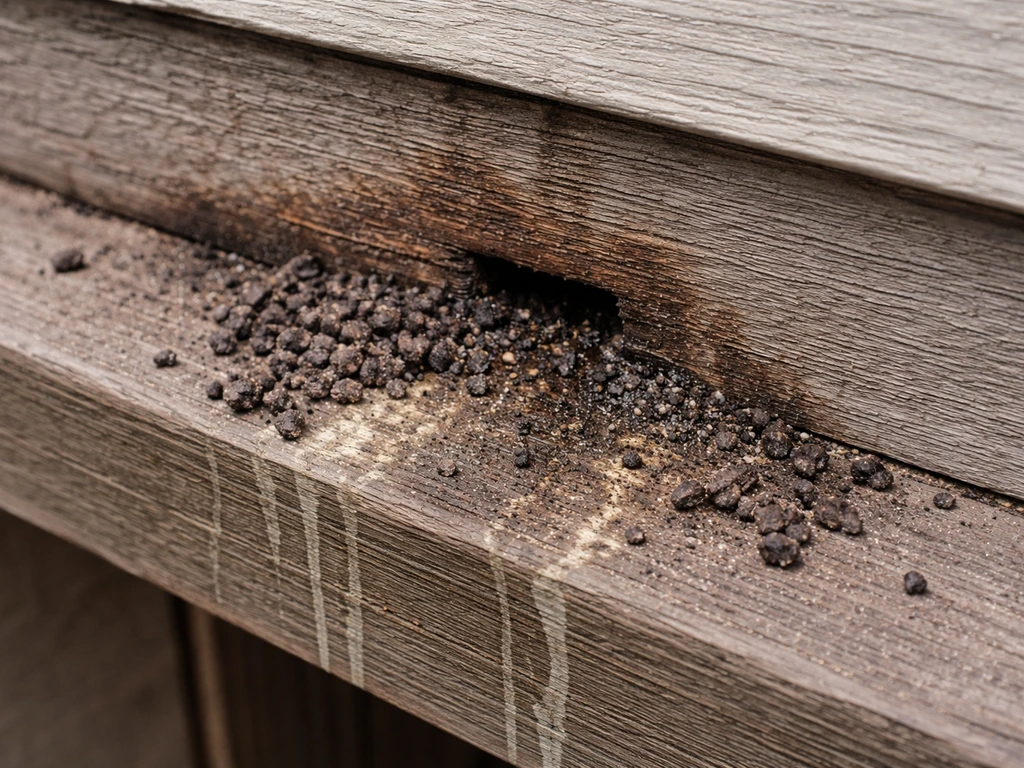
- Guano (droppings): dark, crumbly, and often concentrated below a roost entry point or on surfaces beneath a gap
- Urine staining or crystallization on walls and beams near the roost
- Grease or dark rub marks around a gap edge from repeated bat contact
- Scratching or rustling sounds from inside walls or the attic, especially at dusk and dawn
- A musty odor in attic spaces or wall voids near the colony
Do an emergence count at dusk
The most reliable way to confirm activity and find entry points is to watch the building at dusk on a calm, mild evening. Position yourself so you can see the roofline and upper walls. Bats typically begin emerging 20 to 30 minutes after sunset. Watch for bats flying out from specific gaps, and mark those locations. The Bat Conservation Trust recommends at least two emergence counts in June for summer roost monitoring, and notes that unsuitable weather (heavy rain, cold temperatures, strong wind) will suppress bat activity, so pick your evenings carefully.
For larger or more complex buildings, a bat detector or infrared camera makes this much easier. You can pick up bat echolocation calls even when it's too dark to see the animals, and infrared lets you film the emergence for later review. For a straightforward house, though, a patient visual watch on two or three evenings is usually enough to map the main entry points.
What actually works: bat-specific exclusion
Exclusion is the only proven method. The process is straightforward in principle but requires careful execution, especially around timing.
- Inspect the building thoroughly and identify every gap larger than 1/4 inch that bats could use
- Seal all gaps except the primary entry/exit points the bats are currently using
- Fit one-way exclusion devices over the active entry/exit holes
- Wait several nights for all bats to exit through the one-way devices
- Remove the one-way devices and permanently seal the remaining openings
- Clean and decontaminate the roost area if guano is present
One-way exclusion devices

A one-way device lets a bat push out through the exit but prevents it from re-entering. Common designs include a tube of netting or PVC pipe mounted over the gap (bats crawl through to exit, but the tube hangs loose at the bottom so they can't climb back in), a flap of flexible netting or plastic sheeting attached at the top and sides but free at the bottom, or commercially made bat valves. The Maine Department of Inland Fisheries and Wildlife describes DIY versions made from dryer vent hose tubing and similar materials. For larger structures with multiple active entry points, you may need several devices, with the spaces between them sealed with heavyweight mesh.
Sealing materials that work
The IDPH lists the materials most commonly used for permanent sealing: caulk for small cracks, expandable foam for irregular gaps, steel wool packed into openings before caulking or foam is applied, metal flashing around roof edges and chimneys, mortar for masonry gaps, plywood for larger openings, and 1/4-inch hardware cloth or mesh for vents. The key is using materials bats can't chew or push through. Foam alone is not adequate for gaps where bats have regular access, as they can work through it.
Timing: when to exclude and when to wait
Timing is the part most DIYers get wrong, and getting it wrong can trap baby bats inside the structure. Most bat species have a maternity season when females give birth and raise young that can't yet fly. Installing one-way devices during this period means the mothers exit but the pups are stranded inside and die.
The Illinois Bat Conservation Program advises avoiding exclusion work from early May through early September for this reason. Maryland DNR specifically flags June as a month when exclusion is not recommended because pups are likely present. The result of mis-timed exclusion isn't just a wildlife welfare issue: dead bats in a wall create a severe odor problem and a potential disease-exposure risk.
The two practical windows for exclusion in most of North America are spring (roughly mid-March to late April, before the maternity season begins) and fall (mid-August through October, after the young can fly but before bats enter hibernation). Your local wildlife agency is the best source for exact dates in your region, as timing varies by species and climate.
DIY or hire a professional?
A straightforward single-family home with one or two confirmed entry points is a reasonable DIY project if you're comfortable working at height and you have the right timing. You need to be able to safely access the roofline, identify all entry points reliably, and install the exclusion devices securely enough that they stay in place for several nights. The full IDPH process works well as a guide.
Hire a professional if: the colony is large or the entry points are hard to find, the building is multi-story or commercially operated, you're in a jurisdiction where bats are strictly protected and a licence may be required, or if there's any concern about rabies exposure (more on that below). Commercial bat removal typically includes a full inspection, sealing every entry point, installation of one-way devices, guano removal, and decontamination. That complete scope is worth paying for if the situation is complex.
Legal and safety considerations you can't skip
In the UK, all bat species and their roosts are fully protected under the Conservation of Habitats and Species Regulations and the Wildlife and Countryside Act 1981. Disturbing a roosting bat or damaging a roost is a criminal offence. GOV.UK states that licensing may be required before any works that could affect a bat roost. If you're in the UK, contact the Bat Conservation Trust or your statutory nature conservation body before doing anything.
In the US, protection varies by species, with many bat species protected under state law and some federally listed. The general principle still applies: handle this through exclusion, not lethal control, and check with your state wildlife agency before starting work. In aviation or airport contexts, the FAA expects wildlife hazard management to go through coordinated assessment with USDA Wildlife Services rather than deploying general deterrents independently.
The health angle matters too. Bats can carry rabies, though most do not. The risk comes from direct contact with a bat, particularly a bite or scratch. The New York State Department of Health advises that any direct contact with a bat warrants medical evaluation. Never handle bats with bare hands. If guano cleanup is required, the Government of Quebec's guidance recommends sealing and bagging contaminated material that can't be disinfected, and taking precautions against inhaling dust from dry guano, which can carry Histoplasma fungal spores.
If you still want to use spikes somewhere
There are narrow situations where spikes might have a marginal role alongside a bat exclusion plan, though not as a primary control method. If bats are occasionally landing on open ledges or flat architectural features before entering a gap, spikes on that ledge might redirect them slightly. If you are specifically trying to stop raccoons, consider raccoon deterrents designed for their behavior instead of bird spikes. But this is secondary at best. The Bat Conservation Trust notes that bat access points are often very small and require individualized assessment, which means no surface deterrent applied generically is going to cover the actual entry routes.
If you do install spikes anywhere near a roost area, make absolutely sure the bats are already out and the roost is inactive. Installing any barrier near an active entry point risks trapping animals. Place spikes only on flat, open surfaces where bats are landing but not entering. Follow manufacturer installation specs, and plan for ongoing inspection since spikes require maintenance to stay effective. This is consistent with what the BLM's Bird and Bat Conservation Strategy notes: spikes require regular inspection and aren't a standard or reliable solution for structures where bats are present.
For comparison, spikes are much more useful when you're dealing with birds. They do work reasonably well for pigeons on ledges, and they're worth considering for a range of bird-on-surface problems. While bird spikes can work for pigeons on ledges, they generally fail for bats because they do not stop entry through small hidden gaps Spikes can be used for pigeons. But bats are a different management challenge with different biology, different access patterns, and different legal considerations. If you are wondering whether bird spikes work for cats, the short answer is that they are mainly a bird deterrent and do not solve cat-related problems do bird spikes work for cats.
Preventing bats from coming back
Once you've completed exclusion and sealed the building, the work isn't quite done. Bats are creatures of habit and will return to a site they've used before. They'll probe for new gaps, especially if the structure ages, caulk shrinks, or flashing lifts.
Habitat and structural maintenance
- Do a full exterior inspection every spring, checking for new gaps around fascia boards, soffits, vents, pipes, and chimneys
- Recaulk any cracked or shrinking sealant before the bat season begins
- Check that all vent covers are intact and that mesh hasn't corroded or torn
- Trim overhanging tree branches close to the roofline: bats use them as launch points toward building gaps
- Reduce insect populations near the building (reduce outdoor lighting that attracts insects at night, fix standing water) to make the site less attractive as a foraging territory
Consider a bat box
If bats have been roosting in your building for a long time, a bat box installed nearby gives them an alternative roosting site. This is particularly worth doing if you're in an area with protected bat species, since it demonstrates good faith and provides genuine habitat. Mount bat boxes on a south or southeast facing wall or tree at least 4 meters above the ground, away from artificial lights and with a clear flight path below.
Guano cleanup and decontamination
Don't leave guano in place after exclusion. A buildup of droppings can attract other pests, creates an ongoing odor problem, and poses a health risk from fungal spores in dry, dusty conditions. Dampen the area lightly before disturbing dried guano to minimize dust, use gloves and an N95 or better respirator, bag and seal waste, and dispose of it according to your local guidelines. For large accumulations, professional remediation is the safer choice.
Done right, bat exclusion is a permanent fix. A properly sealed building with no overlooked gaps won't have a recurring bat problem. The upfront effort of finding every entry point and closing it properly is what makes the difference between a one-season fix and a permanent solution.
FAQ
If I already installed bird spikes, what should I do now if bats are still around?
Treat the spikes as unrelated to the bat entry problem and switch to verification. Re-check activity at dusk, identify the exact gaps bats are using, then install one-way devices only at those confirmed entry points. After the bats fully exit, seal permanently with chew-resistant materials (hardware cloth, flashing, or appropriate mesh) so they cannot route around your spikes.
Can I use spikes to stop bats from landing, just while I wait for them to leave?
Only if you are certain the bats are not actively using that exact area for entry. In general, spikes do not prevent bats from entering through small gaps and could interfere with roosting if placed too close to an active entrance. The safer interim step is observation and scheduling one-way exit devices for an appropriate exclusion window.
How long do I need to leave one-way exit devices in place?
In practice, you leave them until you confirm the bats have stopped emerging from that entry point on multiple evenings, then install a final seal. One night is sometimes not enough because bat movements can be weather dependent and some gaps may be used intermittently.
What if bats keep reappearing after sealing everything?
That almost always means an entry point was missed or a new pathway formed (shrinking caulk, lifting flashing, new cracks). Re-do the dusk emergence check, mark the active gaps, and focus sealing on locations bats use on subsequent evenings, not just on where you originally assumed they were entering.
Is exclusion safe if I see small pups or hear squeaking inside?
Do not start exclusion during maternity season. If you suspect young that cannot fly yet, that is when mis-timed exclusion can trap pups inside and cause deaths. Pause and contact a local wildlife agency or licensed bat professional, then schedule work for your region’s recommended spring or fall window.
What should I do if I find a bat inside the living space during the day?
Avoid handling it. Close off the rest of the rooms, open an exterior door or window, and provide a clear escape route. If it cannot get out quickly or anyone may have had contact (bite, scratch, or direct exposure), follow local public-health guidance for rabies evaluation.
Do I need gloves and a respirator for guano cleanup?
Yes, especially if the guano is dry or dusty. Use gloves and an N95 or better respirator, lightly dampen before disturbing dried droppings, and bag and seal waste. For heavy buildup or poor ventilation, professional remediation is safer because exposure risk increases with aerosolized dust.
Will foam alone work if bats can enter through cracks around siding or fascia?
Foam alone is risky when bats have regular access because bats can push or work through it. Use exclusion sequencing first, then permanent sealing with materials bats cannot chew through, such as caulk for tiny cracks, expandable foam only as a gap filler combined with chew-resistant barriers, and hardware cloth or metal flashing where appropriate.
How can I tell whether the bats are roosting or just passing through?
Look for repeated emergence and entry at the same specific spots over several evenings, with consistent activity after sunset. Passing bats usually do not show stable, repeated use of the same hidden gap. If you are uncertain, do at least two counts before committing to permanent sealing.
Are bats protected everywhere, and do I always need a license?
Not always, but many regions restrict disturbance of bats and roosts. UK rules are strict and licensing may be required, while US protection depends on species and state or federal status. Before any exclusion or sealing that could affect a roost, check your local wildlife agency requirements.
Where do raccoons fit into this, could spikes help raccoons instead of bats?
Spikes are primarily a bird landing deterrent and are not a reliable bat solution, while raccoon deterrents should be chosen for raccoon behavior and entry patterns. If your issue is raccoons, focus on securing access points with the right type of barriers and latches, and still use wildlife-advice for timing and legality when bats may be present nearby.
Can a bat box replace exclusion if I just want them gone from the attic?
A bat box can provide an alternative roost option, but it does not replace exclusion. If bats are actively entering your structure, you must still install one-way devices and seal all entry points after they leave. The box is best viewed as additional habitat support, not the main control step.