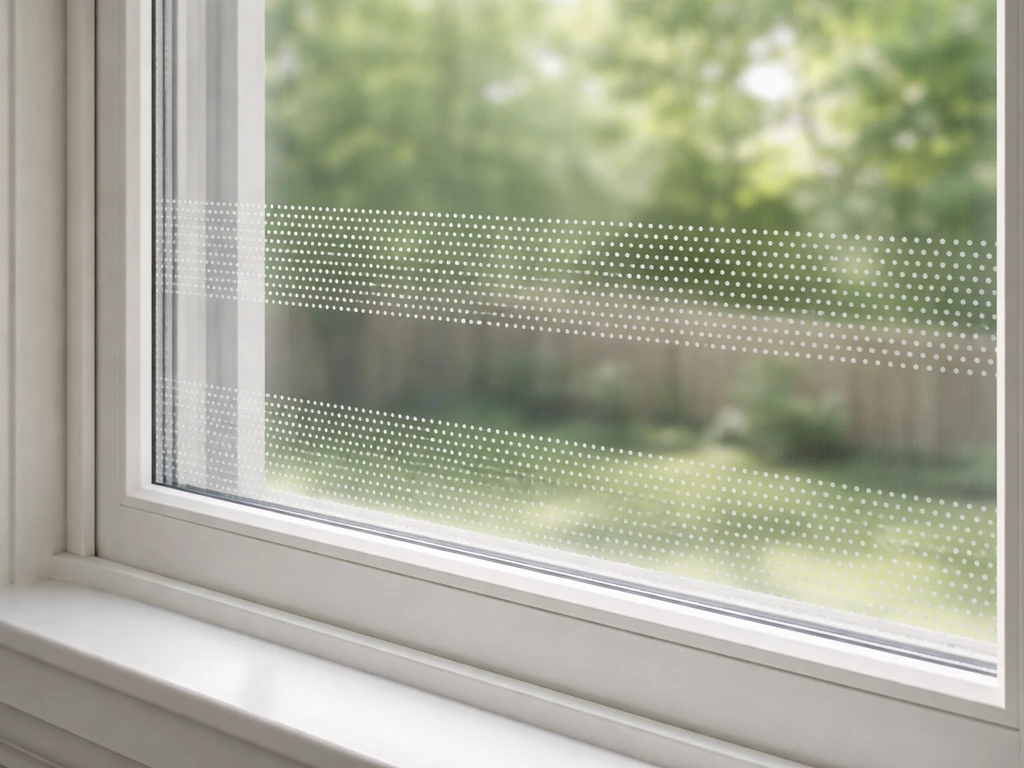
Bird window stickers can work, but only if you use enough of them and put them in the right place. A single hawk silhouette or a couple of decorative clings won't do much. What actually reduces strikes is a [dense grid of markers](/bird-strike-prevention/best-window-decals-to-prevent-bird-strikes) covering the whole pane, applied to the outside surface of the glass, spaced no more than 2 inches apart. Done right, studies show this approach can cut bird-window collisions by 71% or more. Done wrong, which is how most people do it, the birds simply fly through the gaps and hit the glass anyway.
Do Bird Window Stickers Work? Placement, Results, and Fixes

Marcus Weatherby
31 May 2026
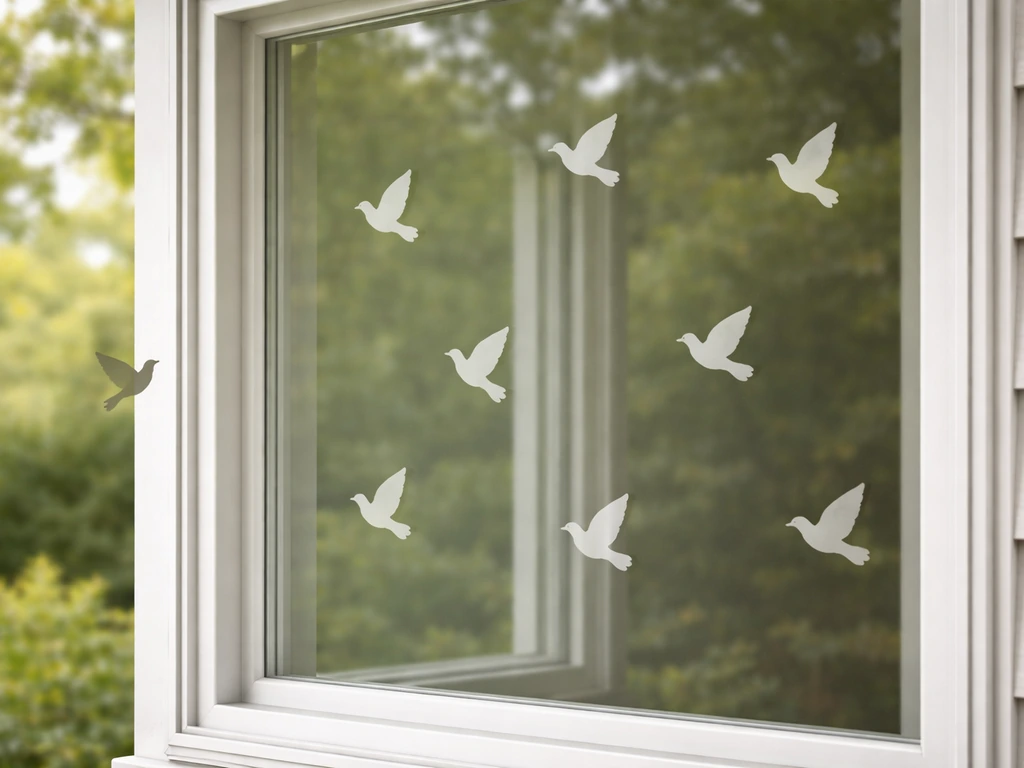
What bird-window stickers actually are
Bird window stickers are visual markers designed to make glass visible to birds. From a bird's perspective, a clean window either looks like open air (because it's transparent) or like a continuation of sky and trees (because it's reflecting them). Either way, the bird doesn't register it as a solid surface until it's too late. Stickers interrupt that illusion by giving the bird something to see.
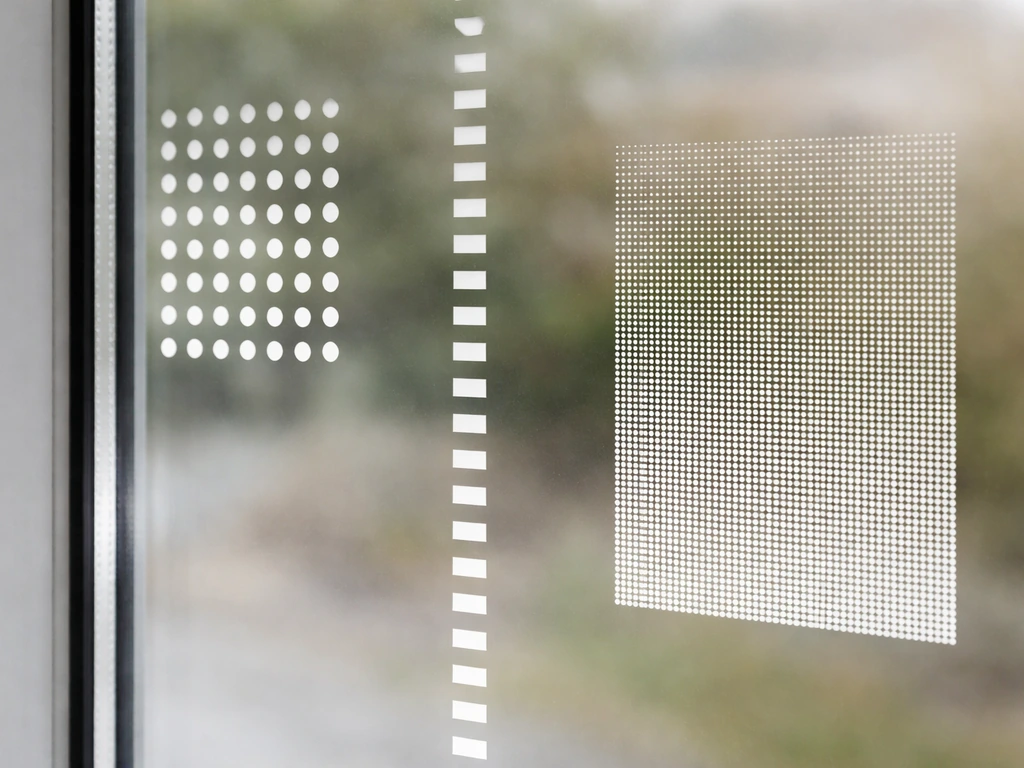
There are a few distinct types on the market, and they work differently. Opaque exterior dots or strips are the most straightforward: they're physically visible markings on the glass. UV-reactive decals (like the popular WindowAlert brand) are nearly invisible to humans but reflect ultraviolet light that birds can see. Patterned window films cover a larger area and combine the effect of many individual stickers into a single sheet. Fritted or etched glass has patterns built into the glass itself during manufacturing, which is the most permanent and reliable option but obviously only practical when replacing windows.
You'll find these products marketed to homeowners frustrated by songbirds hitting picture windows, as well as to commercial property managers dealing with large glass facades. The underlying physics of the problem is the same in both cases: birds need a consistent visual cue that glass is there.
Do they actually work? What the evidence says
The short, honest answer is yes, when applied correctly. A field study on Feather Friendly window markers at real buildings found a 71% reduction in collisions when the markers were installed properly across the glass surface. That's a meaningful result, and it held up under real-world conditions, not just lab settings.
The U.S. Geological Survey, the National Park Service, the U.S. Fish and Wildlife Service, and Audubon all recommend window markers as a legitimate solution, but every single one of them emphasizes the same caveat: density matters. The NPS is blunt about it, stating that one or two decals is ineffective. The concept works, but most people under-apply it and then conclude stickers don't work.
UV-reactive decals are harder to evaluate because you can't easily see whether they're still performing. Their UV-reflective coating degrades over time, and products like WindowAlert recommend replacing them every four months. If you're relying on UV decals and you haven't replaced them recently, they may have lost most of their effectiveness without looking any different to you.
When stickers work and when they fail
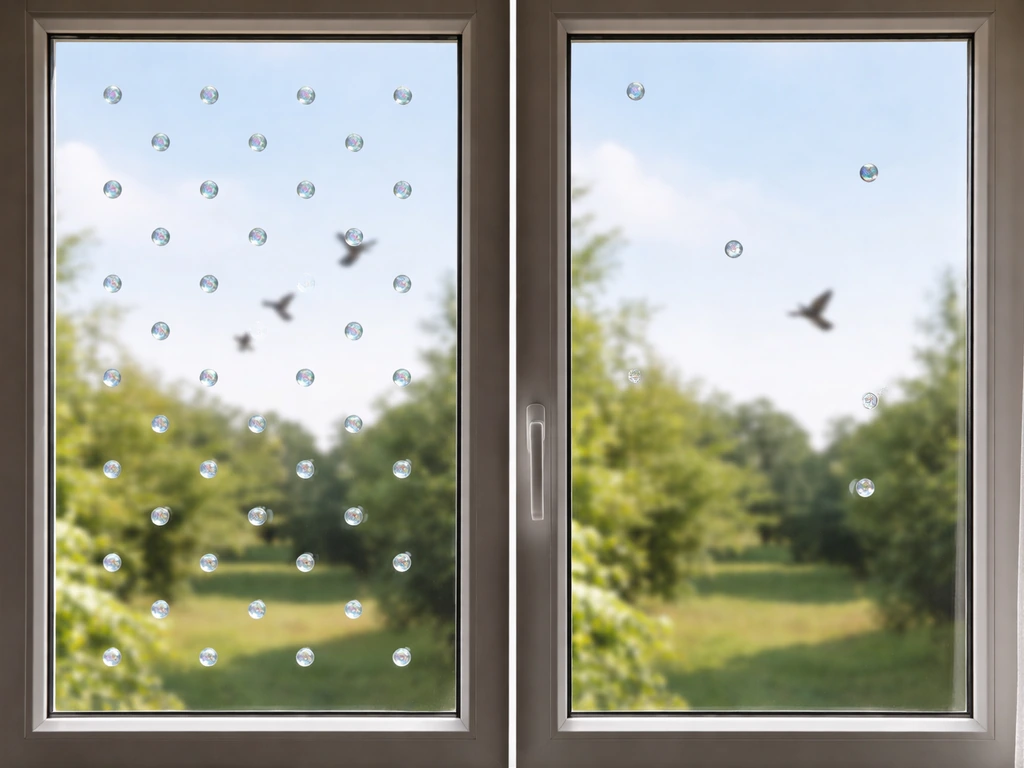
Stickers work best on windows that get consistent, direct light and where birds approach in relatively straight flight paths, like a window facing a feeder, a garden, or open sky. They're most needed during spring and fall migration, when large numbers of unfamiliar birds are moving through and encountering your windows for the first time. Territorial attacks, where a bird like a cardinal or robin repeatedly hammers the same spot, are a different problem caused by the bird seeing its own reflection, not by the window looking like open air.
Stickers tend to fail in a few predictable situations. Sparse coverage is the most common failure: leaving gaps larger than 2 inches between markers gives birds a clear flight path between the stickers. The U. S.
Fish and Wildlife Service recommends using effective stripe or dot patterns with maximum spacing of 2 inches to prevent bird-glass collisions leaving gaps larger than 2 inches between markers.
Interior-only placement is another frequent mistake. If the stickers are on the inside of the glass, the bird is reacting to the outside surface (which may still be reflecting trees or sky) before it ever gets close enough to see your interior markings. Angle and lighting matter too: a marker that's visible head-on may be nearly invisible to a bird approaching at a low angle during golden-hour light.
Species behavior also plays a role. Migratory songbirds are the most common victims of window strikes and the most likely to be deterred by visual cues. Raptors hunting near feeders may not be deterred as easily by static markers, though they benefit too. Territorial birds attacking reflections need a different intervention entirely, like covering the outside of the window to eliminate the reflection during peak attack season (usually spring).
How to install window stickers so they actually work
The installation rules come directly from federal wildlife guidance, and they're more specific than most people expect. Follow these and you'll get real results. If you follow the installation guidance for your specific product and keep coverage dense, you’ll be taking concrete steps for how to prevent bird strikes on windows.
- Apply stickers to the outside surface of the glass. This is non-negotiable. Birds react to what they see from outside, and the outside surface is often the one creating the reflection or transparency problem.
- Space markers no more than 2 inches apart in both directions, forming a grid across the entire pane. The U.S. Fish and Wildlife Service specifies that horizontal stripes should be at least 1/4 inch wide with a maximum 2-inch gap between them. For dots, the same 2-inch grid spacing applies.
- Cover the full pane, not just the corners or a single row across the middle. A bird will find any gap in your coverage and fly through it.
- For large picture windows or floor-to-ceiling glass, you'll need a lot of markers. That's expected, not a sign you're doing it wrong.
- If you're using UV-reactive decals, mark your calendar and replace them every four months. UV performance degrades invisibly.
- After installation, go outside and look at the window from the approach angle a bird would use. If you can see large clear areas of glass, add more coverage.
One practical check before you buy anything: stand where birds typically approach the window and look at the glass. Does it reflect sky and trees, or can you see clearly through it? That tells you how urgent the problem is and helps you prioritize which windows to treat first.
What to try if stickers still aren't solving it
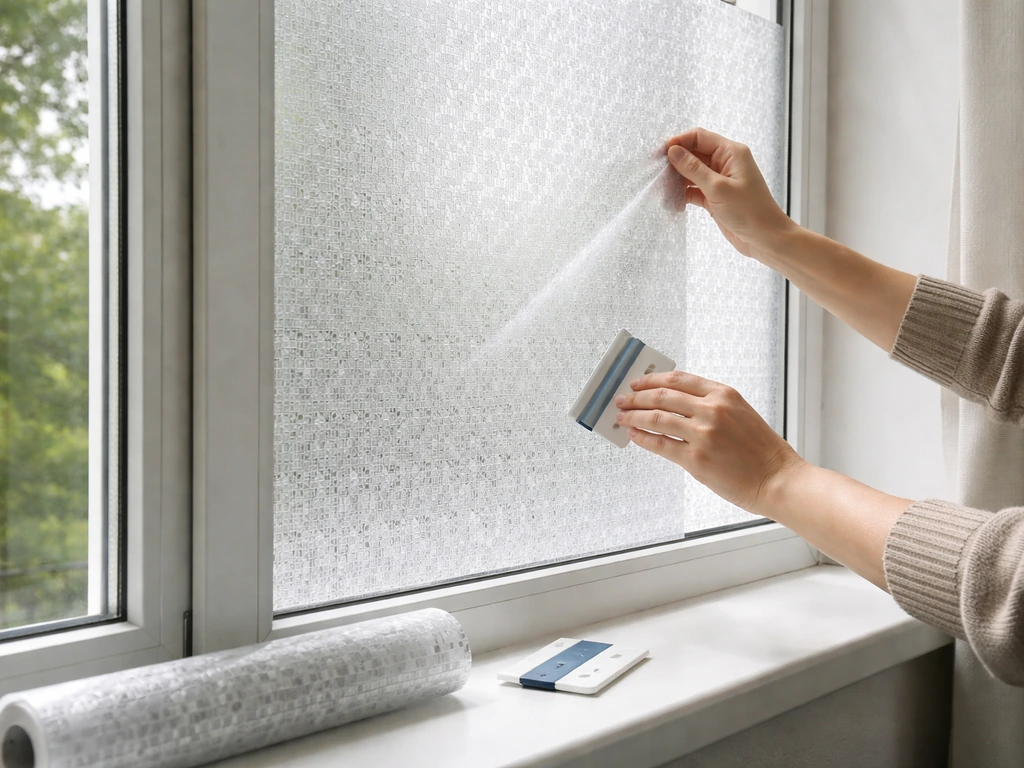
If you've applied stickers correctly and birds are still hitting the glass, the problem is usually coverage density, not the concept itself. Before switching to something else entirely, add more markers and close any gaps. Before switching to something else entirely, add more markers and close any gaps window clings for bird safety. That said, some situations genuinely call for a different or stronger solution.
Patterned window films
Patterned window films are a step up from individual stickers because they cover more area with a single application and maintain consistent spacing automatically. Some films use frosted or etched-look patterns; others use UV-reflective coatings. Films that cover the entire pane are more reliable than any arrangement of individual decals, and they're a popular choice for large commercial windows. In most cases, choosing a film that covers the entire pane with consistent spacing is the best window film to prevent bird strikes. If you're dealing with a big picture window and stickers feel unmanageable, film is worth considering.
Exterior screens and netting
A screen or net installed on the outside of a window does two things: it makes the glass visible to approaching birds, and it cushions the impact if a bird does still fly into it. This is one of the most effective physical approaches, recommended by multiple state and federal wildlife agencies. The net should be mounted a few inches away from the glass surface so birds bounce off rather than being hurt. This works well for problem windows where strikes are frequent and you need reliable protection fast.
Paracord or rope curtains
The U.S. Fish and Wildlife Service includes paracord curtains in their bird-friendly home toolkit. These are vertical cords or ropes hung on the outside of the glass, spaced about 4 inches apart. They're inexpensive, easy to install, and effective because they break up the glass surface in a way birds can clearly see. They're a good option if you want something low-cost and removable.
Sonic and ultrasonic deterrents
Sonic and ultrasonic devices are sometimes marketed for window strike prevention, but the evidence for their effectiveness here is weak. Birds can habituate to repeated sounds quickly, and the devices don't address the core problem, which is that the glass looks transparent or reflective. For window strikes specifically, visual deterrents and physical barriers consistently outperform sound-based approaches. Sonic devices have more supporting evidence in other bird control contexts (keeping birds off rooftops or open areas), but as a window-strike solution, they're a last resort rather than a first move.
Comparing your main options
| Solution | Effectiveness | Ease of use | Cost | Best for |
|---|---|---|---|---|
| Window stickers/decals (correctly spaced) | Good when applied right | Moderate (many needed) | Low | DIY on standard windows |
| UV-reactive decals | Good initially, degrades quickly | Easy to apply | Low to moderate | Supplementing opaque markers |
| Patterned window film | Very good | Moderate | Moderate | Large or frequently struck panes |
| Exterior netting/screen | Excellent | Some setup required | Moderate | Persistent strike windows |
| Paracord curtains | Good | Very easy | Very low | Budget-friendly exterior solution |
| Sonic/ultrasonic devices | Limited for windows | Easy | Moderate to high | Not recommended as primary window fix |
Safety, legality, and what to do if strikes keep happening
All the approaches covered here are non-harmful. The goal is to prevent birds from hitting glass, not to injure or trap them, so there are no legal concerns with standard window stickers, films, nets, or cords. In North America, many migratory birds are protected under the Migratory Bird Treaty Act, which is one reason federal agencies actively publish guidance on reducing window strikes. You're on the right side of that by taking this problem seriously.
If a bird has already hit your window and appears stunned, place it in a quiet, dark cardboard box for an hour to recover before releasing it outside. Don't offer food or water. If it doesn't recover, contact a local wildlife rehabilitator.
For troubleshooting persistent strikes, work through this sequence. First, check that your stickers are on the outside of the glass. Second, measure the gaps between your markers. If any gap is larger than 2 inches, add more. Third, if you're using UV decals, replace them even if they look fine. Fourth, do the outside assessment: stand where a bird would approach and look at the window. If you see clear glass anywhere, that's where the next strike will happen. Fifth, if you've done all of this and strikes continue, move to a full pane film or exterior netting on that specific window.
For territorial birds attacking windows (repeatedly flying at the same spot, often in spring), the fix is different: cover the outside of that window temporarily with a sheet, screen, or cardboard during the peak weeks when the bird is active. This eliminates the reflection the bird is reacting to. Once the breeding season ends, the behavior usually stops on its own.
Window stickers are a legitimate, evidence-backed solution when used correctly. The frustration most people have with them comes from under-applying. Treat the outside of the glass like a surface that needs uniform coverage, not a canvas for a few decorative touches, and you'll see a real difference.
FAQ
Do bird window stickers work if I only put a few on one corner of the window?
Yes, but treat it as a “whole-pane visibility” problem, not a decoration problem. For best results, you need dense, evenly spaced markers on the outside of the glass, and gaps larger than about 2 inches tend to create “safe lanes” where birds fly through.
If I can only apply stickers from the inside, will they still prevent window strikes?
In most strike situations, interior-only placement underperforms. Birds approach and react to the exterior surface first, so if markers are only inside, they may not be visible soon enough or the window may still look like open sky or trees from the bird’s side.
Why do my stickers seem inconsistent, like they work on one window but not another?
It’s common to see them “work sometimes” if you mix types or apply them unevenly. Even opaque dots can fail if spacing is too wide, but UV-reactive decals can also fail if their UV coating has degraded, which may be hard to notice visually to you.
How often should I replace UV-reactive window decals?
UV-reflective decals typically need periodic replacement because the UV-reflective performance degrades over time even if the sticker still looks intact to humans. If you installed UV decals long ago and strikes resumed, replace them rather than assuming they still perform.
Do bird stickers work the same for north-facing windows or shaded rooms?
Yes. If a window gets direct sun, it often remains consistently visible to birds, improving deterrence. If a window is mostly shaded, low-angle light can make markers harder to detect during certain times of day, so you may need denser coverage or a full-pane film for those specific windows.
Do window stickers work on double-pane or multi-pane windows?
Stick-on markers can still work on double- or triple-pane windows if they are placed on the outside surface of the outer glass (the side birds see). If you apply them to the wrong surface, the bird may not notice them early enough.
What’s the best way to decide where to place stickers on a large picture window?
Not if the only goal is to deter strikes. For best detection, aim for consistent visibility across the flight approach, especially at the height birds fly toward the glass. If you can see open glass from the bird approach line (or from where a feeder is), that area is likely to keep causing strikes.
Do stickers stop birds from repeatedly attacking the same spot in spring?
Usually. Territorial attacks triggered by reflection can look like “window strike” behavior, but the remedy is different. Covering or blocking the outside reflection during peak weeks (for example with a temporary sheet or screen) often stops the repeated hitting more effectively than adding more stickers.
Are sonic or ultrasonic devices a good alternative if stickers don’t seem to help?
Not reliably. Birds can habituate to repeated sounds, and sonic devices do not change the visual cue problem that makes glass seem like open air. If you try sound, use it only as a last resort after fixing visual/spacing issues or switching to a full-pane film or physical barrier for that window.
How do I confirm whether I installed the stickers densely enough?
Yes, and it can be surprisingly important: check from the bird’s typical approach point, not just from your seat. If any part of the glass looks clearly transparent or highly reflective without markers, that section will likely be the next collision spot.
What should I do if I used the stickers correctly but birds are still hitting the window?
If strikes continue after correct outside placement, the most common cause is under-coverage, not that stickers “don’t work.” Add more markers to close gaps, and if the window is large or complex, switch to a full-pane film or an exterior net for that exact pane.
What’s the safest way to handle a bird that already hit my window?
For a one-time incident, you can keep the bird safe by placing it in a quiet, dark cardboard box for about an hour to recover, then release it outside once it seems alert. If it does not recover, contact a local wildlife rehabilitator.
Next Article
Window Clings for Bird Safety: How to Install and Verify
Step-by-step guide to install window clings for bird safety, choose the right film, verify results, and add backups if n