
A lot is already being done to prevent bird collisions, across airports, office towers, homes, and outdoor facilities. Airports follow federal wildlife hazard management rules, building owners are retrofitting glass with exterior films and fritted patterns, and facility managers are deploying physical barriers, sensory deterrents, and lighting controls. The problem is that most people only know about one slice of this work. This guide pulls it all together so you can see what's in use today and figure out exactly which approach fits your situation.
What Is Already Being Done to Prevent Bird Collisions

Marcus Weatherby
27 Jun 2026
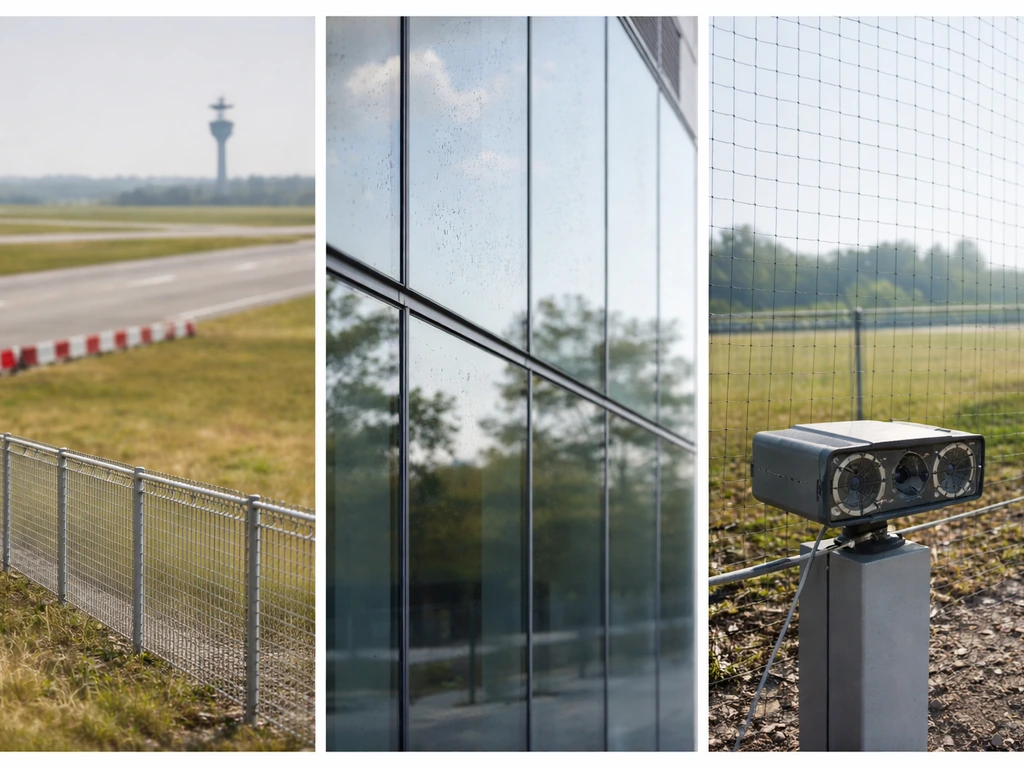
What's already being done at the industry and policy level
At airports, bird-collision prevention is legally required, not optional. U.S. airports certificated under 14 CFR Part 139 must have a wildlife hazard assessment conducted by a qualified wildlife damage management biologist and a formal Wildlife Hazard Management Plan that outlines specific control actions. Personnel who carry out that plan must be trained. The FAA backs this up with advisory guidance (AC 150/5200-33C) on siting and controlling wildlife attractants near airports, and it maintains a national Wildlife Strike Database so every reported strike feeds back into the system as usable data.
The FAA's integrated approach at airports can include habitat manipulation (removing food, water, or nesting cover that draws birds to runways), dispersal and harassment techniques, the use of predators, and, when nonlethal options are documented as insufficient, lethal control. That last step requires written justification, and any work involving migratory birds must account for the Migratory Bird Treaty Act, which prohibits taking protected species without authorization.
Away from airports, the U.S. Fish and Wildlife Service (FWS) and American Bird Conservancy (ABC) have developed detailed guidance on reducing glass collisions for building owners and facility managers. The National Park Service has published its own handbook consolidating exterior-surface options for existing structures. These aren't binding rules for private buildings in most cases, but they represent the current research consensus on what actually works.
Where collisions actually happen and why
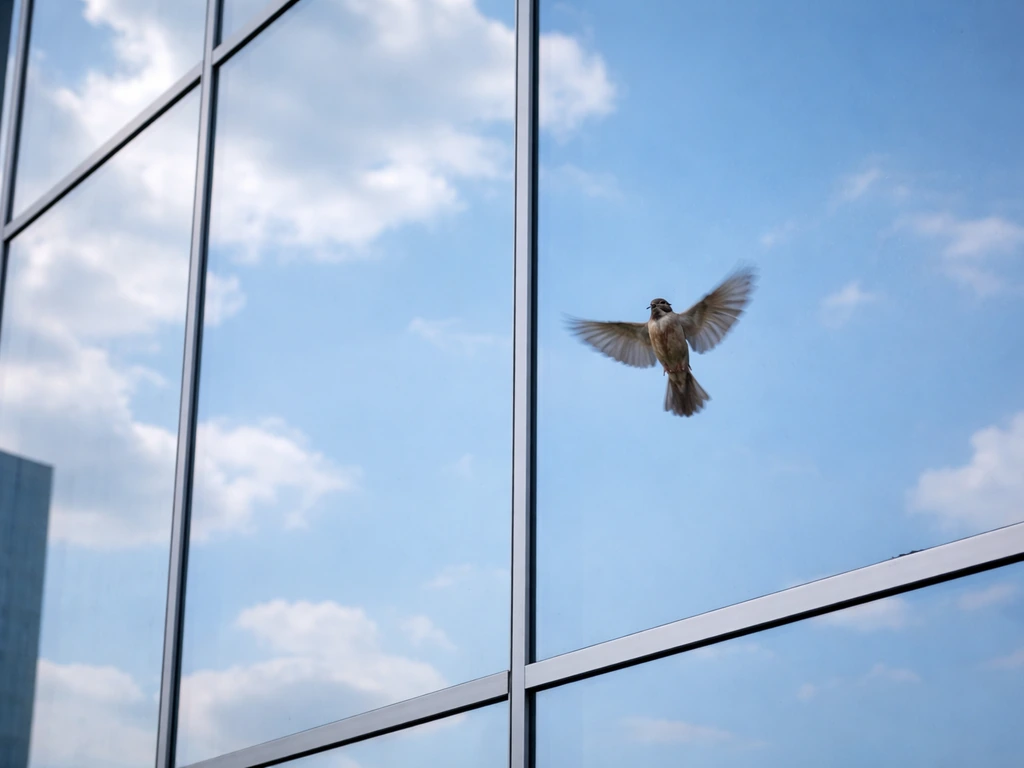
Glass is the biggest killer. Windows and reflective facades cause massive numbers of bird deaths annually because birds can't distinguish glass from open sky, especially when habitat or sky is visible through or reflected in the surface. Research shows that collision frequency spikes sharply during active migration periods, so the same window that causes no problems in January may become dangerous in April or October.
Artificial light at night is a second major driver. High-intensity lights on tall buildings attract and disorient nocturnal migrants, pulling birds off their flight paths and holding them in areas where collision risk with glass and structures is much higher. Studies have confirmed this effect is substantial, particularly during migration seasons.
Solar panels create a different kind of optical trap. Dark, reflective panel surfaces can produce glare and polarized-light effects similar to open water, which attracts insects and, in turn, insectivorous birds. This is relevant not just for rooftop installations but also for large ground-mounted solar arrays at or near airports, where bird activity creates aviation safety concerns.
Rooftops, ledges, and other elevated flat surfaces matter too, though the collision risk there is more about repeated approach paths and perching near hazardous glass or equipment. Flight corridors near wooded habitat or water bodies increase strike frequency because birds are moving through those areas in greater numbers.
Prevention-by-design: the most durable fixes
The most effective long-term measures change the physical properties of the hazard itself rather than trying to scare birds away after the fact. If you want the best bird strike prevention, focus on durable, preventive-by-design measures first, then layer in active deterrents and monitoring. For glass, that means making the surface visible to birds as a solid barrier.
Fritted glass, acid-etched patterns, and frosted treatments applied during manufacturing are the gold standard for new construction. When you're remodeling or retrofitting existing glass, blank" rel="noopener noreferrer">externally applied films with patterned markings are the most practical option. The critical rule: the treatment must go on the outside surface. When remodeling or retrofitting existing glass, the NPS handbook notes that bird-friendly solutions are applied on the outside surface using exterior films, decals, screens, or external cords blank" rel="noopener noreferrer">the treatment must go on the outside surface. Studies comparing external versus internal film application found that internal-side application showed little to no collision-reduction benefit, because birds need to see the barrier before they reach the glass, not through it.
Pattern spacing matters as much as the treatment type itself. ABC's guidance specifies that markings need to be close enough together that birds can't interpret the gaps as a flyable opening. A general benchmark often cited is a grid no larger than 2 inches wide by 4 inches tall (the "2x4 rule"), though specific product guidance may vary.
For lighting, the practical design moves are: turn off interior lights that face outward during peak migration nights, switch to warmer or lower-intensity exterior lighting, and use motion-activated fixtures instead of lights that run all night. Several cities now run voluntary "Lights Out" programs during migration windows, and some large building owners have adopted permanent lighting protocols as a result.
For solar installations, shading or breaking up the reflective surface with frame elements, and choosing panels with anti-reflective coatings where available, reduces the polarized-light trap effect. At aviation-adjacent sites, this should be part of a broader wildlife hazard review. Wind turbines also require targeted bird-risk mitigation, such as turbine siting, operational curtailment during peak migration, and on-site monitoring to prevent bird deaths.
Active deterrents used today
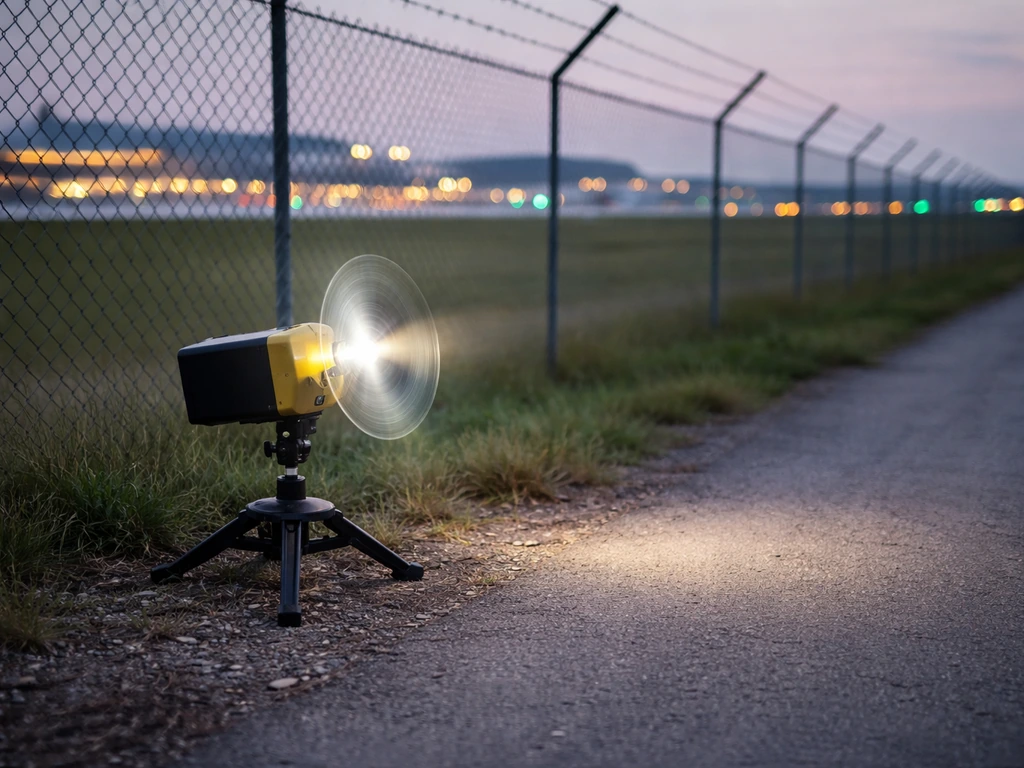
Active deterrents are widely used, especially at airports and large commercial sites. The key thing to know upfront is that birds habituate to many sensory deterrents over time, so they work best as part of a layered approach rather than as standalone fixes.
Visual deterrents
Predator decoys (hawk silhouettes, owl effigies), reflective tape, and moving visual elements like spinners or scare balloons are commonly used. They're inexpensive and easy to deploy, which is why they're so popular. The limitation is that birds figure them out quickly if the deterrent doesn't move or change position. To get the most out of visual deterrents, move them regularly and combine them with other methods.
Sonic and ultrasonic deterrents
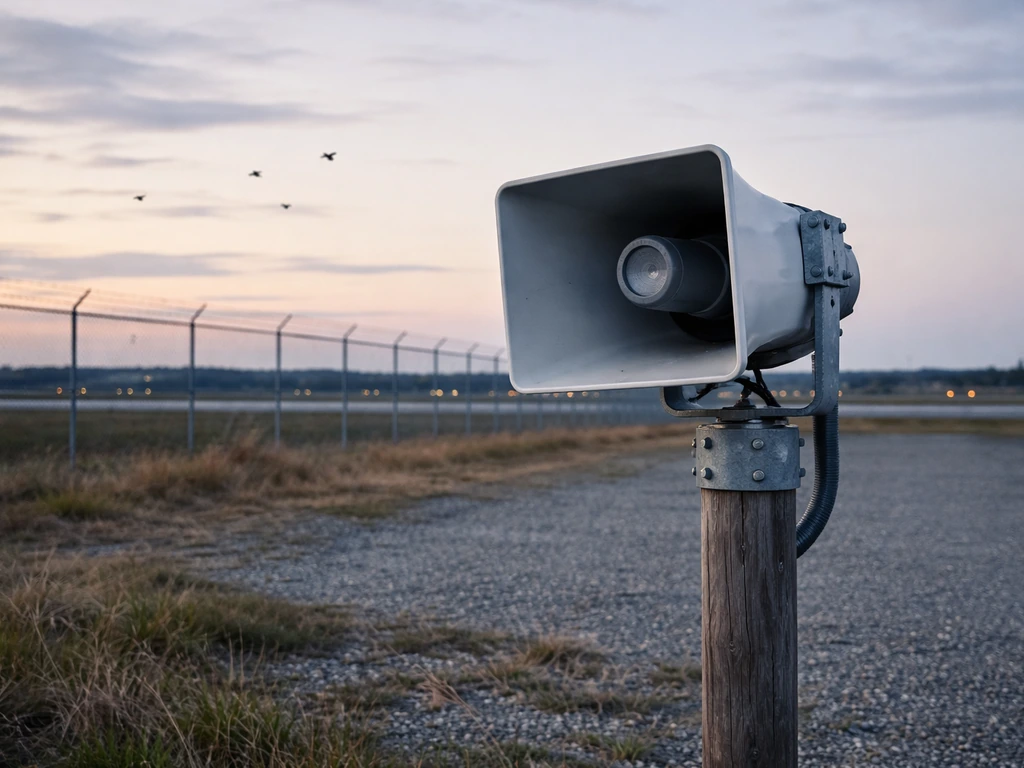
Sonic systems broadcast distress calls, predator calls, or loud percussive sounds to drive birds away from an area. At airports, these are part of the approved dispersal toolkit. Ultrasonic devices emit frequencies above human hearing range, marketed on the premise that birds will avoid them. The evidence for ultrasonic devices is weaker than for audible sonic systems, and most wildlife management professionals rely on audible distress-call systems rather than ultrasonic units for serious bird management. For residential windows specifically, sonic deterrents don't address the underlying glass visibility problem and aren't the recommended first line of defense.
Other sensory and harassment methods
Airports also use pyrotechnics (bird bangers, screamers), laser devices, and trained border collies or falconry birds to disperse wildlife from runways. These are highly effective in the hands of trained personnel but not appropriate for residential or most commercial settings. For commercial buildings, habitat modification (removing landscaping that provides food or nesting near high-risk glass areas) is a sensory-level intervention that's often overlooked but surprisingly effective. Airports also reduce risk by managing nearby attractants through wildlife hazard plans and approved control actions wildlife hazard management plans.
Physical exclusion and barriers
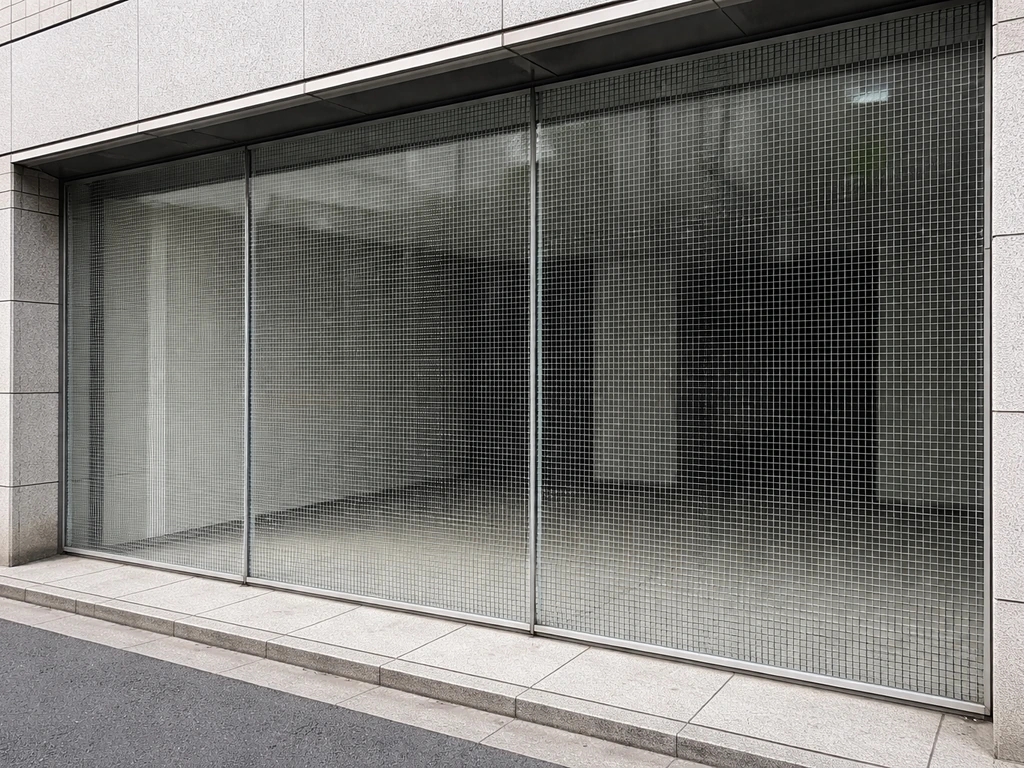
Physical barriers are among the most reliable methods available for buildings because they create a real obstacle rather than relying on a bird's behavioral response to a signal.
Exterior netting or screening installed in front of glass is the recommended approach from both FWS and Cornell Lab's All About Birds. When a bird flies toward a netted window, it contacts the netting rather than the glass, slowing down enough to avoid injury. The installation detail matters: the net or screen needs to be mounted a few inches away from the glass surface and kept taut. A screen pressed directly against the glass doesn't provide enough give and can still result in injury.
Spikes are a different tool with a different purpose. They're used to prevent birds from landing and perching on ledges, rooftop edges, HVAC equipment, and signage rather than to prevent flight-path collisions with glass. If you're trying to keep birds from striking a drone, focus on layered deterrence and reduce attractants near your flight area, following guidance similar to bird-glass and habitat controls how to avoid bird attack drone. They're very effective for the right problem (perching and roosting control) but don't help with window strikes.
External cords, cables, or parachute cord strung vertically across glass surfaces in a grid pattern (known as acrylics or CollidEscape-style cord systems) are another option that FWS and ABC both reference. These work on the same principle as patterned film: they break up the reflective surface into segments birds recognize as a barrier. Installation requires anchoring at the top and bottom of the window at consistent spacing.
| Method | Best For | Placement | Durability | Cost Range |
|---|---|---|---|---|
| Exterior fritted/patterned glass | New construction or full replacement | Manufactured-in | Permanent | High (upfront) |
| Exterior window film | Retrofits on existing glass | Outside surface only | Several years | Moderate |
| Exterior netting/screening | High-collision windows, large glass areas | Mounted several inches from glass | Long-term with maintenance | Moderate |
| External cord/cable grid | Mid-rise and residential windows | Outside surface, vertical/horizontal grid | Long-term | Moderate |
| Bird spikes | Ledges, rooftops, perching surfaces | Landing surfaces | Permanent | Low to moderate |
| Visual deterrents (decoys, tape) | Short-term or supplemental use | Near problem areas | Short-term (habituate) | Low |
| Sonic/distress-call systems | Airports, large open areas | Broadcast near approach zones | Ongoing (requires rotation) | Moderate to high |
Legal, humane, and safety considerations
The Migratory Bird Treaty Act is the baseline legal constraint for anyone dealing with bird collisions in the U.S. It prohibits the killing, capturing, or harming of protected migratory birds without authorization from the Department of the Interior. This matters most when evaluating lethal deterrent options or when collision-prone areas are resulting in bird deaths, since continued unaddressed collisions at certain scales can create legal exposure for building owners.
Eagles have an additional layer of protection. Any activity that could disturb bald or golden eagles or their nests may require specific permits from USFWS. If your site is near known eagle habitat or you're managing an aviation facility where eagles are a documented species of concern, get a regulatory review before deploying deterrents.
For airports, the FAA's wildlife hazard management framework already builds in a nonlethal-first decision structure. When lethal control is considered, documentation must explain why nonlethal options were found inadequate. This isn't just bureaucratic procedure; it creates a paper trail that demonstrates due diligence and compliance.
To verify whether your prevention measures are actually working, you need a monitoring protocol. FWS has published a step-by-step guide for running bird-glass collision monitoring programs, which involves scheduled searches around high-risk windows, recording findings, and using the data to decide whether a treatment is working or needs adjustment. A two-year study on mirrored-facade bird-deterrent film found collision reduction in the second winter after application, which illustrates why short-term evaluation alone can be misleading. Give any new treatment at least one full migration season to assess.
Common mistakes that reduce effectiveness include applying films to the inside of the glass (doesn't work), using widely spaced decals or stickers (birds fly between them), deploying sensory deterrents without addressing the underlying glass-reflection problem, and running airport dispersal activities without documenting them in the Wildlife Hazard Management Plan. If you want a focused airport checklist, also review how to prevent bird strikes on aircraft for common failure points beyond the glass and deterrent choices.
Your next-steps plan by setting
Residential homes
- Walk your property during morning light and identify which windows reflect sky or show through to a view of trees or open space. These are your highest-risk surfaces.
- Apply exterior patterned window film to problem windows first. Make sure the product is rated for bird-collision prevention (not just decorative film) and install it on the outside surface.
- If film isn't feasible, hang exterior netting or screening a few inches from the glass, kept taut, for the same barrier effect.
- Turn off interior lights facing outward on nights during spring and fall migration, or close blinds/curtains to reduce light transmission through glass.
- Do a brief search near high-risk windows after migration-season storms. Tracking findings over time lets you know if your treatment is working or if you need to upgrade.
Commercial buildings and large facilities
- Commission a glass-hazard audit identifying the highest-collision-risk facades (typically large reflective or transparent panels facing habitat or open sky).
- For new construction or remodels, specify fritted or acid-etched glass during design. For existing buildings, prioritize exterior film or external cord/cable systems on the worst-performing sections first.
- Implement a formal Lights Out policy for exterior and interior-facing lights during peak migration windows (typically late April through May, and late August through October in the northern hemisphere).
- Set up a structured monitoring program using FWS's published protocol so you can track strike rates before and after any treatment.
- Review relevant local ordinances and, where applicable, consult the FWS or a wildlife biologist to evaluate MBTA compliance exposure.
Aviation and airport-adjacent sites
- Confirm whether your airport holds Part 139 certification. If yes, your Wildlife Hazard Management Plan must already be in place and current. If not, voluntary adoption of the FAA's framework (using AC 150/5200-33C as a guide) is still the recognized best practice.
- Conduct or update your wildlife hazard assessment with a qualified wildlife damage management biologist, identifying key attractants (water, food sources, landscaping) that can be modified.
- Build an integrated deterrent program using multiple methods: habitat manipulation first, then nonlethal dispersal (sonic, visual, harassment), with lethal control documented only when nonlethal methods are shown inadequate.
- Use the FAA's National Wildlife Strike Database to report all strikes. Strike data feeds back into your program review and supports detection of trends over time.
- Review any solar panel installations or new construction near movement areas under AC 150/5200-33C concepts, particularly for polarized-light attractant effects.
- Train all relevant personnel on the plan and schedule regular review cycles that include strike data, control action logs, and plan updates.
Bird collision prevention is a genuinely solvable problem at each of these scales. The measures described here, from exterior glass treatments to airport wildlife management plans, are in active use right now and have the research backing to show they work when correctly deployed. The consistent theme across every setting is the same: address the physical cause of the collision (visible glass, bright lights, attractant habitat) first, layer in deterrents as support, and monitor results so you can adjust.
If you need a practical starting point, follow this guide’s prevention-by-design approach first, then layer deterrents and monitoring where they fit address the physical cause of the collision. That cycle, assess, treat, verify, is what separates a durable solution from a quick fix that doesn't hold.
FAQ
What is being done to prevent bird collisions at airports, beyond just responding after a strike happens?
Airports use a formal Wildlife Hazard Management Plan, with trained personnel following documented control actions, plus scheduled updates based on reported strikes in the FAA’s Wildlife Strike Database. This means prevention is tied to ongoing site assessment, not only incident response.
Are bird-collision prevention measures the same for new construction and retrofits?
No, the “best” approach depends on whether you can treat the surface during manufacturing. For new glass, fritted or acid-etched patterns are typically the gold standard, while retrofits usually rely on externally applied patterned films or external barrier systems because they must be visible to birds before contact.
Why does the location of a window film matter so much?
If patterned film is placed on the inside surface, birds can still reach and interpret the unbroken outside reflection through the gap, so studies show little collision-reduction benefit. Externally applied treatments work because they change the bird’s view of the glass barrier before the bird arrives.
Do visual deterrents like tape, spinners, or scare balloons work long-term?
They often lose effectiveness as birds habituate, especially if the devices do not move or change position. The more reliable strategy is to treat the underlying glass or light attractants first, then use deterrents as a rotating, layered supplement.
What is being done to prevent collisions caused by nighttime lighting?
Buildings reduce risk by adjusting lighting during peak migration, such as turning off outward-facing interior lights, switching to warmer or lower-intensity exterior lighting, and using motion-activated fixtures instead of all-night illumination. “Lights Out” style programs are used as a migration-window protocol in some cities and by some owners year-round.
Is sonic deterrence a good first choice for residential windows?
For residential settings, sonic devices are usually not the recommended first line because they do not fix the core problem, birds mistaking glass reflections for open sky. If used at all, they should be layered after exterior glass visibility treatments.
How do physical barriers help, and what installation details make them safer?
Exterior netting or screening placed in front of glass provides give so birds contact the mesh instead of the pane. The net must be mounted a few inches off the glass and kept taut, because a screen pressed directly against glass may not provide enough impact absorption.
Are spikes effective for preventing bird collisions the same way they are for preventing perching?
No, spikes mainly prevent birds from landing and roosting on ledges, rooftop edges, and equipment. They do not address flight-path collisions with glass, so they should not be used as a substitute for bird-visible glass treatments.
What is being done to prevent bird collisions related to solar panels?
Mitigation focuses on reducing glare and polarized-light cues that can mimic water, such as shading, breaking up reflective surfaces with structural elements, and selecting panels with anti-reflective coatings when available. Aviation-adjacent solar sites should be included in a broader wildlife hazard review, not handled in isolation.
How do people avoid legal issues when lethal control is considered?
In the U.S., the Migratory Bird Treaty Act restricts killing, capturing, or harming protected migratory birds without authorization. For any lethal or high-impact option, prevention planning typically requires written justification and regulatory review, especially where migratory species or eagle activity may be involved.
What is being done to ensure prevention measures are actually working?
Monitoring protocols are used to verify results, such as scheduled searches around high-risk windows, recording findings, and adjusting based on evidence of improvement. Treatments may need at least one full migration season, since some studies show effects can become clearer in the second season.
What are common mistakes in implementing “already used” prevention methods?
Frequent failures include placing films on the inside of glass, using widely spaced decals that leave flyable gaps, relying on sensory deterrents without addressing glass visibility, and running airport dispersal activities without documenting actions in the Wildlife Hazard Management Plan.
Next Articles
Best Bird Strike Prevention: Practical Steps That Work
Step-by-step best bird strike prevention: remove attractants, use exclusion and deterrents correctly, and maintain resul
How to Prevent Bird Strikes: Practical Steps and Prevention Plan
Learn how to prevent bird strikes with layered steps, deterrent setup, maintenance, and when to hire pros.
How Do Airports Prevent Bird Strikes A Practical Guide
How airports prevent bird strikes using risk assessment, habitat control, exclusion, layered deterrents, and ongoing mon