
For most balconies, a combination of physical barriers (spikes or netting) plus rotating visual deterrents gives you the most reliable, long-term results. For similar situations on boats, the best bird deterrent is usually physical exclusion that prevents landing and nesting physical barriers. Spikes on railings stop perching birds immediately, while netting blocks off larger areas where pigeons or starlings try to roost or nest. Visual scarers like reflective tape or predator decoys help in the short term but need to be moved regularly or birds will ignore them within days.
Best Bird Deterrent for Balcony: What Works Fast Today

Marcus Weatherby
15 May 2026
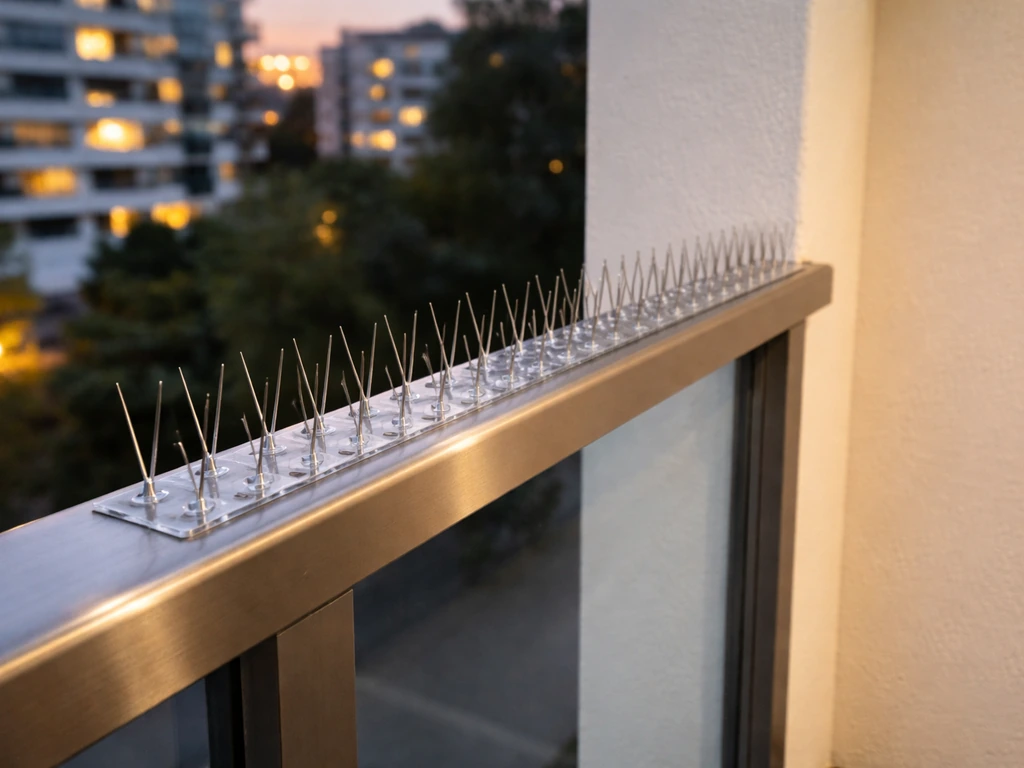
Spot the problem: what are the birds actually doing?
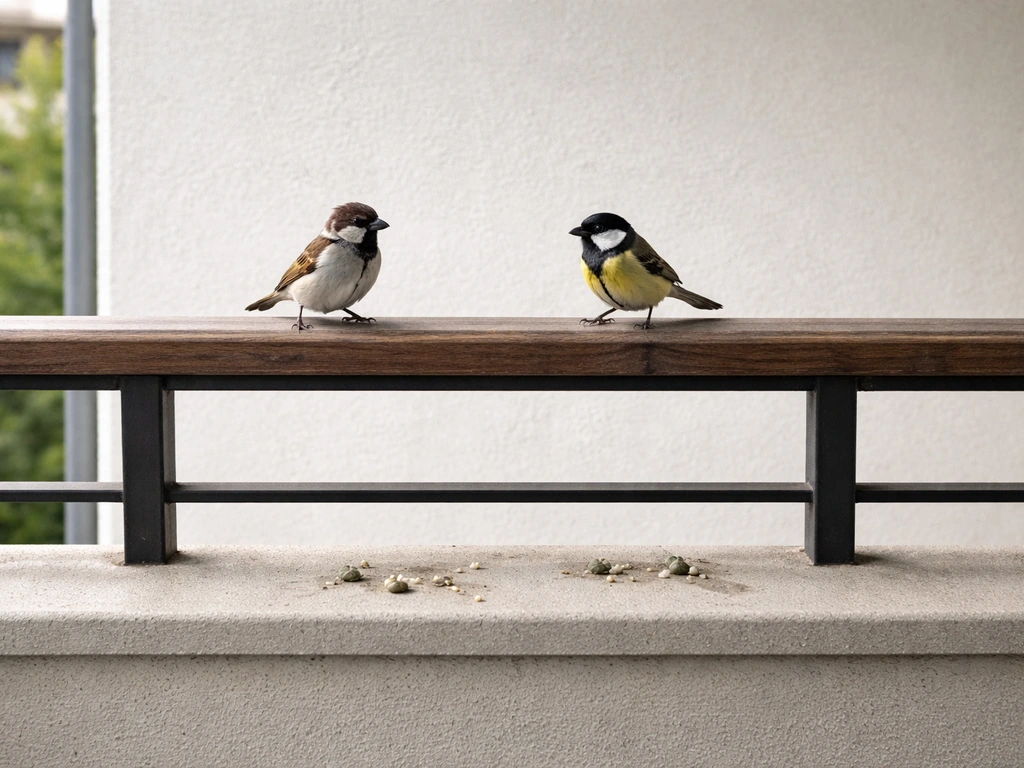
Before you buy anything, spend a few minutes watching what the birds are doing on your balcony. The right deterrent depends entirely on the behavior you're trying to stop. UC ANR bird-control guidance also stresses that the right hazing or exclusion method should be selected based on the specific bird behavior you are seeing, such as landing and roosting versus nesting hazing or exclusion methods.
- Perching and leaving droppings on railings or ledges: Birds are using your balcony as a resting spot. This is the easiest problem to fix with spikes or gel deterrents on the landing surfaces.
- Roosting (staying for extended periods, especially at dusk): Birds have decided your balcony is a safe shelter. You need physical exclusion, not just a scare device.
- Nesting attempts (gathering twigs, sitting in corners, defending a spot): This is the most urgent situation. Once a nest is active, your options become limited by wildlife protection laws in many areas. Act before eggs are laid.
- Frequent flyovers with occasional landings: Opportunistic visitors. Visual and sound deterrents work better here than in habitual roosting situations.
Also note which species you're dealing with. Pigeons and gulls are the most common balcony pests and are stubborn enough that physical barriers are almost always necessary. Smaller songbirds are usually just passing through and respond well to visual deterrents alone.
The best deterrent types for balconies
There's no single magic solution, but these are the options that actually work in balcony-specific situations.
Physical barriers (the most reliable option)
Physical exclusion is the gold standard because it doesn't rely on a bird being scared. It simply removes the option to land or nest.
- Bird spikes: Stainless steel or polycarbonate spikes attach directly to railings, ledges, and flat surfaces. They don't harm birds, they just make landing uncomfortable. Best for railings, ledge edges, and the tops of walls or furniture. Stainless steel lasts longer and handles weather better.
- Bird netting: A mesh net stretched across the entire balcony opening is the most complete solution, especially for roosting or nesting birds. It creates a physical barrier that birds simply can't get past. Polyethylene netting with a UV-stabilized coating is the most durable choice outdoors.
- Balcony screens or wire mesh panels: These work similarly to netting but give a tidier look. Some are sold as clear or near-invisible mesh that blends with the balcony.
Visual deterrents (good as a first line or supplement)
Visual scarers work by triggering a bird's instinct to flee from a perceived threat. They're affordable and easy to deploy, but their effectiveness fades as birds habituate to them, sometimes within a week.
- Reflective tape or holographic ribbon: Hung from railings or overhead, the moving light and reflection disorients birds. Move it every few days to stay effective.
- Predator decoys (owls, hawks): A realistic-looking owl or hawk statue can deter smaller birds temporarily. The key word is 'temporarily.' You must move the decoy every couple of days or birds quickly learn it's harmless.
- Motion-activated light or laser devices: These work better at dusk and dawn when birds are most active. Sudden light changes startle birds without noise, making them neighbor-friendly.
Sound-based deterrents (use with caution)
Sonic devices that broadcast bird distress calls or predator sounds can be effective, but they produce audible noise that your neighbors and pets will hear. They're better suited to open spaces like rooftops or large yards than a small apartment balcony. If you are dealing with a roof instead of a balcony, you may want to compare these methods to the best bird deterrent for roof solutions for a larger, open exterior area.
If you're dealing with rooflines or rooftops, a roof top bird deterrent approach is usually more suitable than balcony-focused setups rooftop bird deterrent. As with all hazing techniques, habituation is a real risk, and moving or alternating the sounds regularly is essential.
The UC ANR Bird Hazing Manual notes that habituation eventually occurs with all scaring and hazing techniques, so hazing often must be reinforced by changing conditions and using combinations of tactics moving or alternating the sounds regularly is essential.
One thing worth clearing up: ultrasonic devices marketed for bird control don't work. Birds hear in a range of roughly 1,000 to 3,000 Hz, which doesn't include the ultrasonic frequencies these devices emit. You're essentially running a device the birds can't even hear. Save your money.
How to choose the right deterrent for your setup
The right deterrent depends on your specific balcony situation. Here's a quick way to think through it.
| Situation | Best Primary Deterrent | Useful Supplement |
|---|---|---|
| Pigeons perching on railings | Stainless steel spikes along railing tops | Reflective tape nearby |
| Birds roosting under a covered balcony | Netting across the open face | Predator decoy near entry point |
| Nesting attempts in corners | Netting + physical blocking of corner | Act fast, before eggs appear |
| Occasional flyover landings on furniture | Reflective tape or predator decoy | Rotate placement every few days |
| Gulls or large birds | Heavy-duty netting or strong spikes | Sonic distress calls (if neighbors allow) |
| Small songbirds (casual visits) | Reflective tape or ribbon | Motion-activated light |
If you're renting, check with your landlord before installing anything permanent. Many spike and netting systems have adhesive or clamp-based mounting options that don't require drilling. Netting systems with tension wire rigs are a good choice for renters.
Balcony deterrent choices share a lot of overlap with solutions used on patios, decks, and porches. For deck setups, you’ll typically get the best results with physical exclusion like spikes or netting, plus occasional visual supplements to prevent birds from finding new perching spots best bird deterrent for deck. If you want the best bird deterrent for porch areas, start with exclusion like netting or spikes for reliable long-term results.
Balcony deterrent choices overlap with solutions for patios too, so the same exclusion-first mindset usually gets the best results solutions used on patios. Balcony deterrent choices overlap with solutions for patios too, so the same approach of exclusion first usually delivers the best results best bird deterrent for patios. The main difference on a balcony is the enclosed or semi-enclosed space, which makes full netting more feasible and often more effective than on an open deck or porch.
Installation: where and how to place deterrents
Spikes on railings and ledges
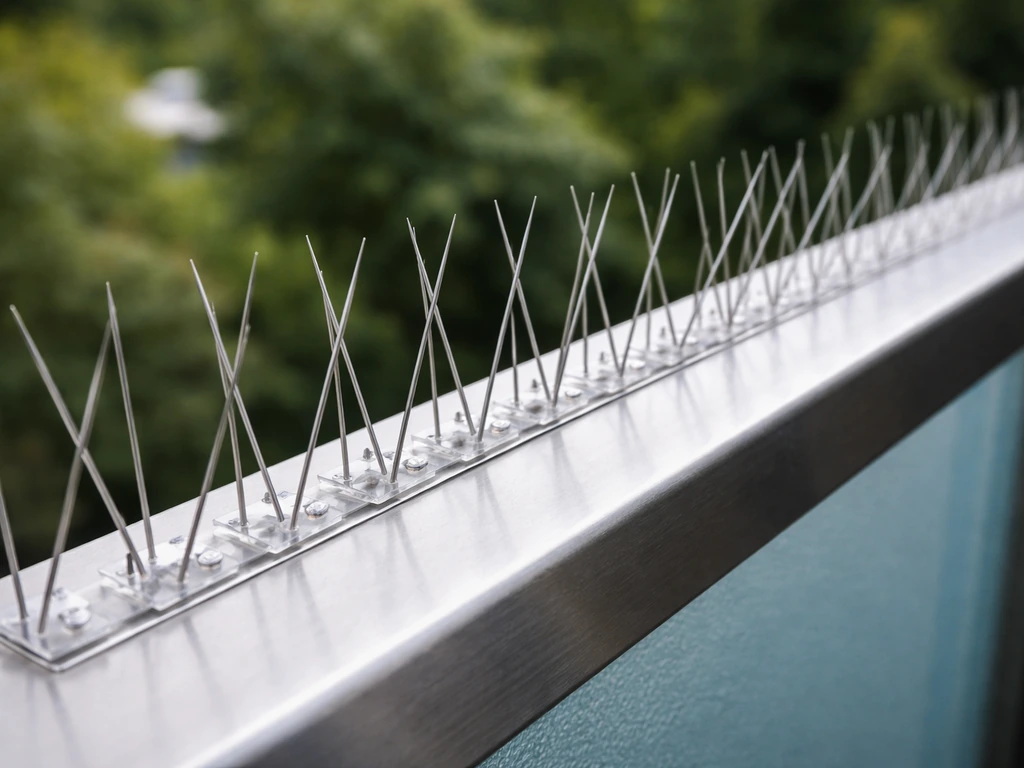
- Clean the railing or ledge surface with a brush and mild detergent. Remove all existing droppings (wear gloves and a mask, bird droppings carry pathogens).
- Measure the total length of railings, ledge tops, and any flat surfaces birds use.
- For stainless steel spike strips, apply outdoor-rated adhesive (like construction adhesive or the adhesive that comes with the product) along the base of the strip, or use the cable ties and screws provided.
- Press the strip down firmly and hold for 30 to 60 seconds. Let cure for 24 hours before expecting full adhesion.
- Ensure there are no gaps. Even a small gap between strips can be enough for a pigeon to squeeze a foot in and balance. Butt strips right up against each other.
Netting across the balcony opening
- Measure the full width and height of your balcony opening, including any gap above and below the railing.
- Choose a mesh size appropriate to your bird. For pigeons, a 50mm (2-inch) mesh is standard. For smaller birds like sparrows or starlings, use 19mm (3/4-inch) mesh.
- Install anchor points (eye bolts or hooks) at the top corners and along the top edge. For renters, adhesive hooks rated for outdoor use can work on concrete or masonry.
- Run a stainless steel or galvanized wire along the top anchor points to create a tensioned frame.
- Attach the netting to the wire along the top, then stretch it down and secure the bottom and sides so there's no slack.
- Check for any gaps around air conditioning units, drain pipes, or railings that birds could squeeze through. Use cable ties or additional netting to seal those spots.
Visual deterrents and sonic devices
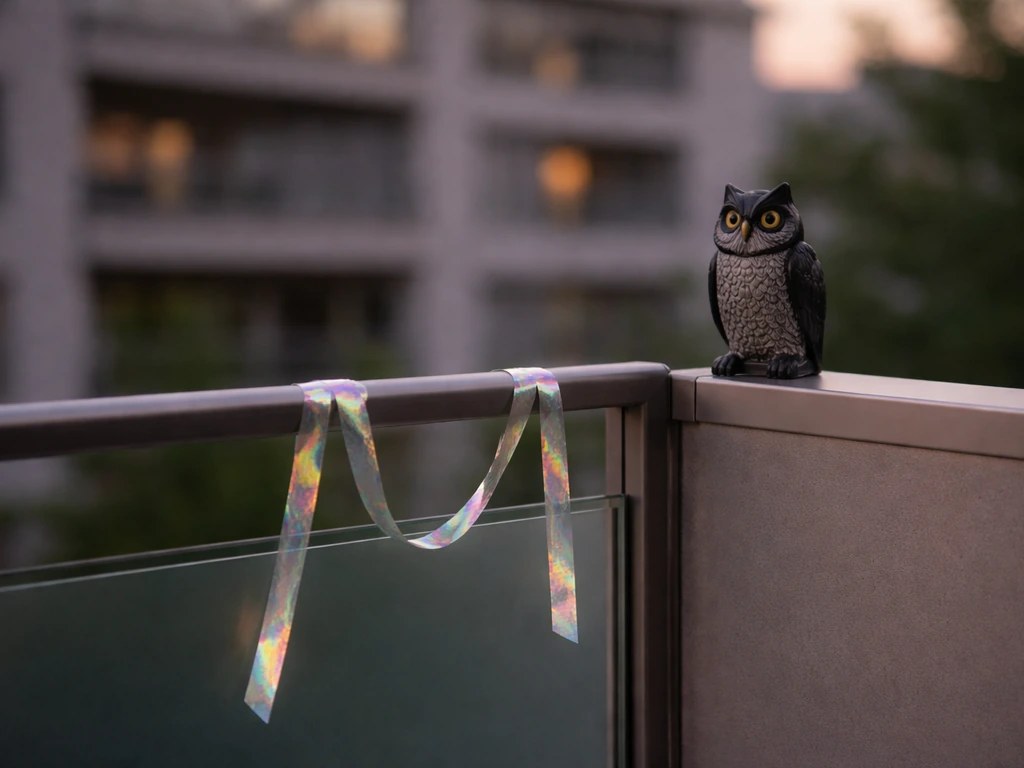
Hang reflective tape or predator decoys at points where birds typically first land, such as the outer edge of the railing, corner posts, or the top of a balcony divider. For sonic devices, mount them at railing height pointing outward, not facing into the living area. Keep the volume at the lowest effective setting to minimize neighbor impact.
Stop birds from getting used to your deterrents
Habituation is the single biggest reason bird deterrents stop working. Birds are smart, and once they figure out that the scary owl hasn't moved in two weeks and nothing bad has happened, they stop reacting to it entirely. This applies to every scare-based method, from decoys to sonic devices.
- Move visual deterrents (decoys, reflective tape positions) every two to three days. Even shifting a decoy a meter to the left resets the novelty.
- If you're using a sonic device, change the call sequence or timing regularly. Most programmable units let you vary the schedule.
- Rotate between two or three different deterrent types. Birds that have adapted to an owl decoy may still react to sudden reflective flashes.
- Combine physical barriers with scare devices. Spikes don't habituate because they're a physical obstacle, not a psychological one. Pairing them with visual deterrents creates a more complete defense.
- Inspect your setup every week or two, especially after wind or rain. Dislodged spike strips or sagging netting create new landing opportunities that birds will find quickly.
Safety, neighbors, and keeping it humane
Most of the methods described here are completely humane. Spikes and netting don't injure birds, they just remove access. The goal is always exclusion and deterrence, not harm.
- Pets: If you have a dog or cat on your balcony, avoid sonic distress call devices unless you can test the volume at a level your pet doesn't react to. The audible frequencies used in bird distress calls can stress dogs and cats. Spikes, netting, and visual deterrents have no effect on pets.
- Neighbors: Sonic devices in an apartment building carry sound through walls and floors. Always use the lowest effective volume, avoid nighttime operation, and choose a device with a directional speaker you can aim outward.
- Nesting birds: In many countries, including the US under the Migratory Bird Treaty Act, disturbing an active nest with eggs or chicks is illegal. If birds have already nested, don't remove the nest until chicks have fledged and left. Install deterrents afterward to prevent next season's return.
- Chemical repellents: Avoid applying bird gel repellents near plants you eat or in areas where small birds could get stuck in the gel. Polybutene-based gels are designed to be uncomfortable, not sticky enough to trap birds, but overloaded areas can become a welfare concern.
- Weatherproofing: Whatever you install outdoors needs to handle your local climate. UV-degraded netting sags and tears. Cheap plastic spike strips crack in frost. Choose stainless steel and UV-stabilized materials from the start.
DIY or call a professional?
For most balcony problems, DIY is genuinely sufficient. A pack of stainless steel spike strips and an afternoon of work will solve a railing-perching problem for years. Netting kits designed for balconies are widely available and don't require special tools.
That said, there are situations where calling a professional bird control service makes sense.
- Active nesting with eggs or chicks already present: A professional knows the local legal requirements and can advise on the correct timeline for removal and exclusion.
- Large infestations or shared building surfaces: If the problem extends to neighboring balconies, the roof, or building ledges, a building-wide solution from a professional will be more effective than individual DIY attempts.
- Multi-story buildings where working at height is required: Installing netting at the top of a tall balcony safely needs the right equipment and experience.
- Repeated DIY failures: If you've tried multiple deterrents and birds are still returning, a professional assessment can identify why your specific setup isn't working and recommend the correct combination.
For most single-balcony situations, here's a practical action plan to get started today. First, identify the behavior: perching, roosting, or nesting. If perching, order stainless steel spike strips and install them on every flat surface birds are using. If you want the best bird deterrent for a pool, start by using bird-proofing barriers to remove landing and nesting access.
Add reflective tape to supplement and move it every few days. If roosting or nesting attempts, netting is your priority. Measure, order the right mesh size, and install as soon as possible. Monitor weekly, adjust if birds find a new access point, and rotate any scare devices you're using to prevent habituation.
If the problem is bigger than one balcony or involves active nests, that's the moment to bring in a professional.
FAQ
What is the best bird deterrent for a balcony if birds keep landing on the railing but not nesting?
Start with stainless steel spike strips on every flat rail surface they use to perch, then add reflective tape or a decoy only as a supplement at the outer edge and corners. Perching usually stops fastest when every landing point is covered, not just the most obvious spot.
How long does it take before birds stop returning to a balcony after installing spikes or netting?
Exclusion methods reduce landing immediately, but you may still see brief activity while birds test nearby ledges. Give it about 3 to 7 days before judging results for perching, and 1 to 2 weeks for repeat behavior to fully stop.
Do I need to cover the entire balcony, or just the spots birds are using?
If you only block the exact perching or roosting surfaces, that is often enough. The key is to find all equivalent access points, including top edges, balcony divider tops, and any narrow ledges under plants or shelves.
What mesh size should I use for balcony netting to stop nesting?
Use netting sized so birds cannot slip their head or body through. For most balcony pests like pigeons or starlings, smaller mesh is better, but the right choice depends on what you observed (species and whether they are pecking, roosting, or fully attempting a nest). Measure the opening and choose a mesh that prevents entry, not just “lightly blocks” access.
Can birds get trapped in balcony netting, and how do I prevent that?
Yes, if netting is loose or forms pockets where birds can get wedged. Install tension properly so there are no sagging areas, secure all edges tightly, and check after storms or high winds to ensure the barrier stays taut.
What is the best deterrent if I have balcony plants and birds seem to hide behind them?
Treat plants as part of the access path. Secure spikes or netting up against any plant-mounted ledges, and avoid leaving gaps where birds can perch behind pots, planters, or furniture backs. Supplement with tape or a decoy at the first landing zones, not in the middle of the plant area.
Do I need to rotate or move reflective tape and decoys if I also use spikes or netting?
If physical exclusion fully removes landing and nesting access, you usually can reduce supplemental scare devices over time. However, if any small perching gaps remain, rotating or repositioning tape and decoys can help cover the “testing” phase while you refine the barrier coverage.
Are sonic bird deterrents safe for pets and neighbors on a balcony?
They are often the most disruptive option in a small shared space because sound carries indoors and into nearby units. Keep volume at the lowest effective level and aim outward, but if your balcony is close to bedrooms or you have sensitive pets, physical exclusion is typically the better primary solution.
Why do some bird deterrents stop working quickly even when they seem “scary”?
Birds habituate to repeated cues, especially stationary visuals and consistent sound patterns. If you use decoys or any sonic method, plan on rotating locations or alternating types before the birds fully learn the routine.
Are ultrasonic bird repellent devices actually effective on balconies?
No. Devices marketed as ultrasonic typically emit frequencies birds do not hear, so they do not provide reliable deterrence. If birds are already landing, focus on blocking access with spikes or netting instead of buying ultrasonic units.
What should I do if birds build nests before I can install netting?
If you have active nests, proceed cautiously and prioritize rapid exclusion once you confirm what is happening. In many places, disturbing active nests can trigger legal and ethical issues, so it is often safer to contact a professional bird control service to resolve timing and compliance.
I rent, can I still use the best balcony deterrent without drilling?
Yes. Look for clamp-based or adhesive mounting options for spike strips, and choose balcony netting kits that use tension wire or similar non-drill setups. Confirm the mounting method is secure enough for your railing style so birds cannot pry edges loose.
Is DIY always enough, or when should I hire a professional?
DIY works well for a single balcony with perching or attempted roosting. Hire a professional if the problem spans multiple balconies, involves active nesting, or includes difficult-to-cover structures where birds are finding new entry points faster than you can secure them.