
Bird netting, wire tension systems, angled ledge covers, and visual or gel-based deterrents can all do the same job as bird spikes, and in many situations they work better. Which one is right for you depends on three things: the species you're dealing with, the surface you're protecting, and how much you care about aesthetics and maintenance. Get those three factors straight first, and the right choice becomes obvious. If you decide to use adhesive-based bird spike strips, choosing the best adhesive for bird spikes can make the difference between a long-lasting install and constant rework.
Alternative to Bird Spikes: Best Options That Work

Marcus Weatherby
21 May 2026
Why you might want something other than bird spikes
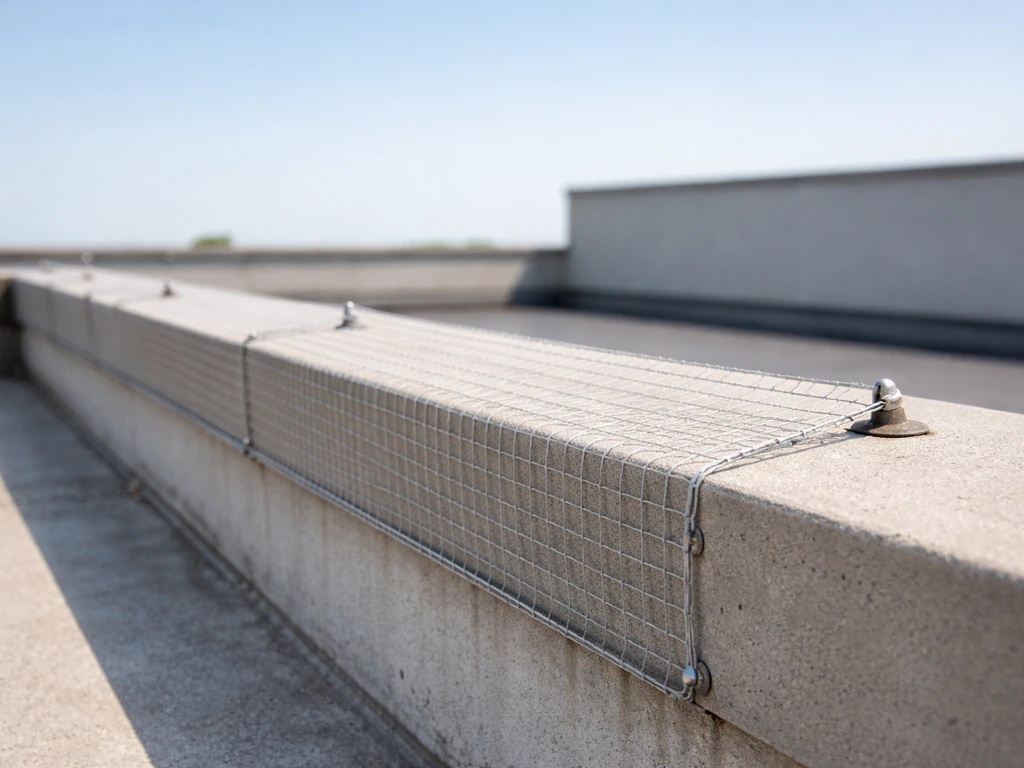
blank" rel="noopener noreferrer">Spikes are a solid first-line deterrent for ledges and flat surfaces, but they have real limitations. If you are considering bird spikes for ledges, it helps to first review what are bird spikes and how they compare to other deterrent options. If spikes are failing or you want to understand the tradeoffs, looking at the best bird deterrent spikes versus other options can help you choose a more reliable approach. Gaps between spike strips let birds land right next to them, and debris like leaves, feathers, and droppings can pack in over time and turn a spike strip into a raised platform that actually helps birds perch. Smaller bird species can sometimes squeeze between the pins entirely. On top of that, spikes are visible from the ground and look aggressive on a storefront or historic building. And on curved surfaces, irregular ledges, or large open areas like rooftops and solar panels, spike strips simply can't cover everything cost-effectively.
People also look for alternatives because of appearance, property rules (some HOAs or heritage buildings ban visible spike hardware), animal welfare concerns, or because they've already tried spikes and birds found a way around them. Whatever your reason, there are proven options in every category.
Start here: figure out what you're dealing with before buying anything
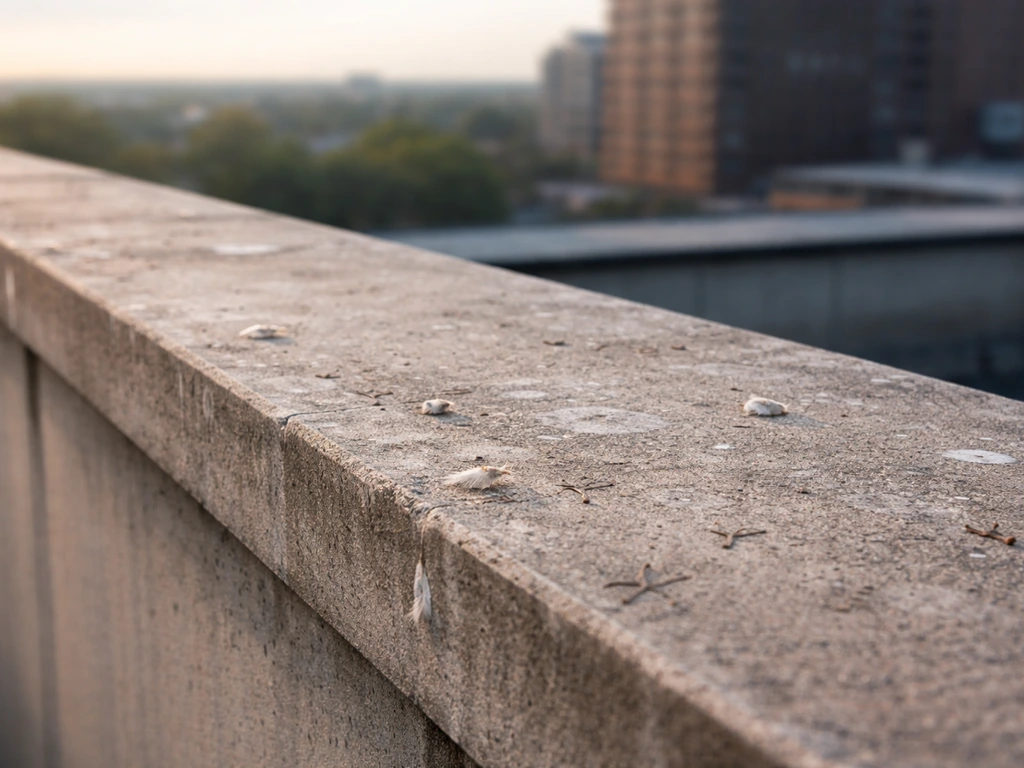
The single biggest mistake people make is buying a deterrent before identifying the species and the exact spots birds are using. Spend ten minutes watching before spending any money. You need to know two things.
Identify the bird species
Pigeons are the most common problem bird on ledges, rooftops, and signs. Starlings flock in large numbers and leave heavy droppings on rafters and ledge lines, often returning to the same roost year after year. Sparrows favor tight gaps and cavities. Swallows build mud nests under eaves and on vertical walls, and they're protected under the Migratory Bird Treaty Act once a nest is active, which limits your options legally. The deterrent that works on pigeons may completely fail on sparrows, so species identification isn't optional.
Map the exact perching and roosting spots
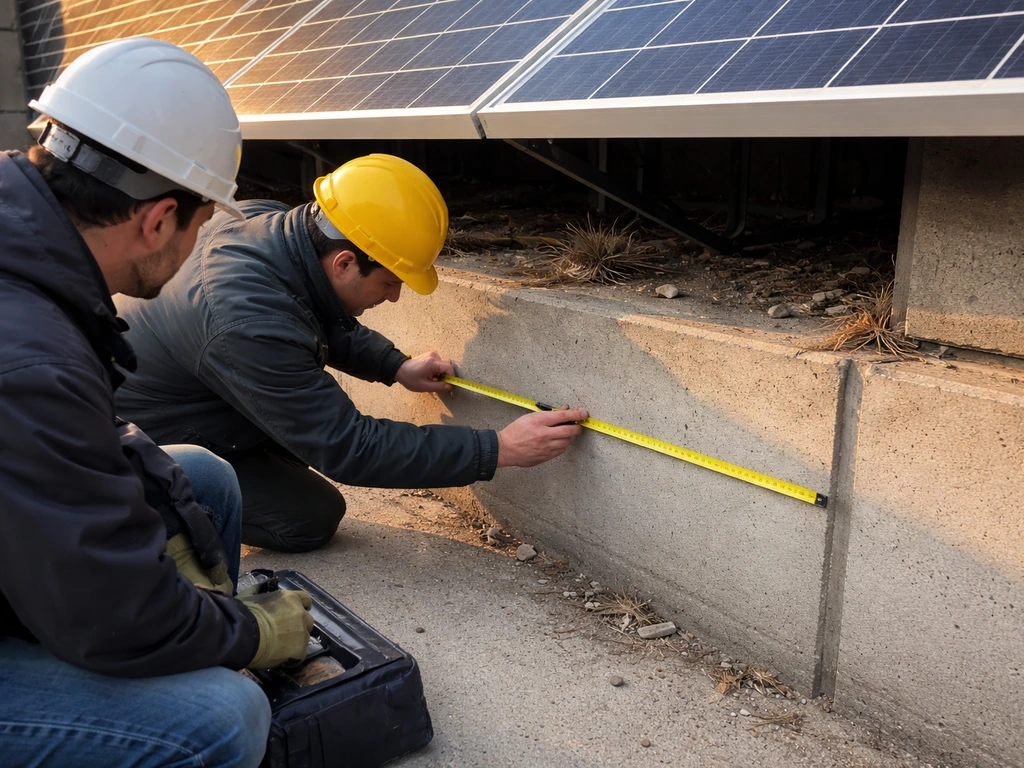
Walk the perimeter of the building and note every location where you see droppings, feathers, or nest material. Mark the width of each ledge, the gap beneath solar panels, and any open beam or rafter. This map is what you'll use to measure materials and check for coverage gaps. A deterrent that leaves even a small uncovered area will be found and exploited, especially by pigeons and starlings.
Physical exclusion: the most reliable alternatives to spikes
Physical exclusion methods deny birds access entirely rather than just making a surface uncomfortable. They tend to be more permanent and more effective, especially for high-pressure roosting problems.
Bird netting
Netting is the most versatile physical exclusion option and works on large open areas, rooftops, courtyards, loading bays, and under eaves. It physically blocks birds from reaching the protected surface. The key installation rules: the net must be tensioned tight (no sag, no wrinkles), installed with no gaps at corners or edges, and kept far enough from the surface that birds can't land on top of the sagging net. Corners are the most common failure point, so reinforce them first. Net mesh size matters too: a 50mm mesh for pigeons, 28mm for starlings, and 19mm or smaller for sparrows.
Wire tension systems
Spring-tensioned post-and-wire systems work by creating an unstable landing zone. A bird tries to land, the wire shifts under their feet, and they leave. These systems are low-profile and nearly invisible from a distance, which makes them popular on commercial buildings, balconies, and rooflines where aesthetics matter. They work best against larger birds like pigeons and gulls, and less well against small birds that can balance on a single thin wire. For small birds, the same physical-exclusion strategies tend to outperform generic spike setups when they can’t access the surface at all. Installation requires evenly spaced posts and consistent tension throughout, or birds will find the slack spots.
Angled ledge covers and sloped surfaces
If a ledge is flat, birds will use it. Adding a physical cover that creates a slope of 45 degrees or more gives birds nowhere to grip. Products like the AviAngle system from Bird-X do exactly this: they install over an existing ledge and physically eliminate the flat surface. These are excellent for window sills, parapet walls, and architectural ledges. They're low maintenance, weatherproof, and nearly invisible once painted to match the building.
Steel mesh exclusion (especially for solar panels)
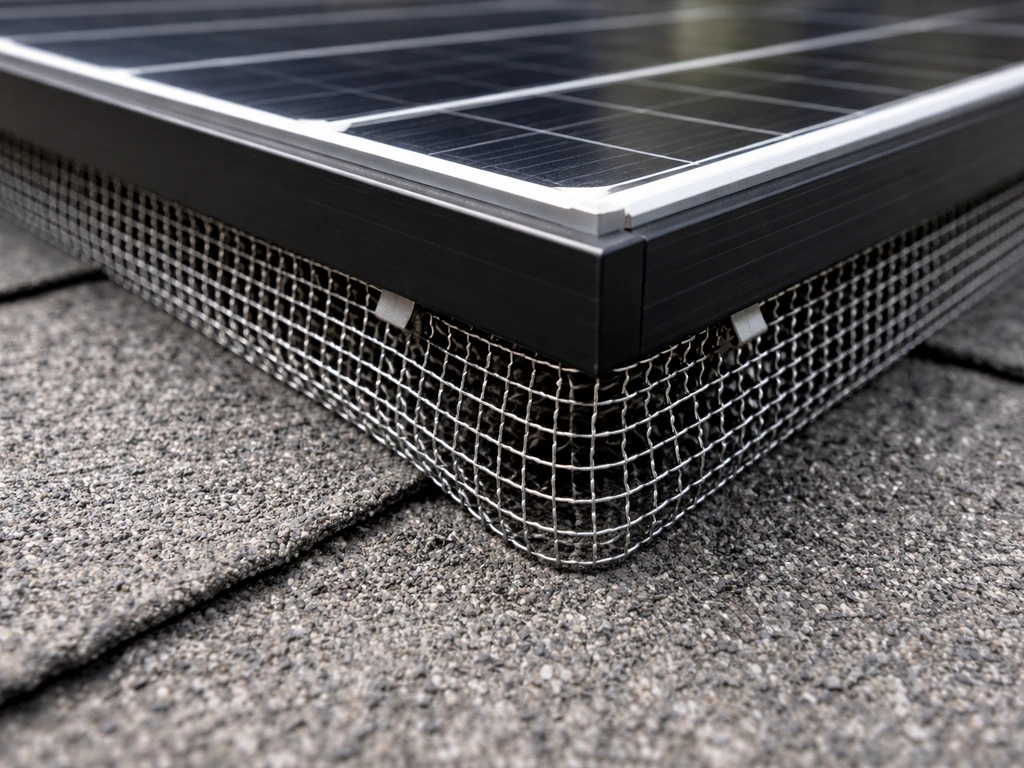
The gap under solar panels is prime roosting and nesting space for pigeons and starlings. Wire mesh kits, including stainless steel options from companies like Nixalite and Bird Barrier, clip directly to the panel frame and seal the perimeter without drilling into the panels themselves. Installation involves measuring the gap, cutting mesh to size, bending the last row of mesh upward at an angle to create an inward-facing barrier, and clipping it in place. Stainless steel mesh is the better choice over plastic in this context because plastic netting can fray against panel edges and void equipment warranties.
Non-spike deterrents: visual, tactile, and repellent options
These methods work by making a surface unappealing rather than physically inaccessible. They're easier to install and less expensive, but effectiveness varies by species and duration. Most work better as a supplement to physical exclusion than as a standalone solution.
Reflective and visual deterrents
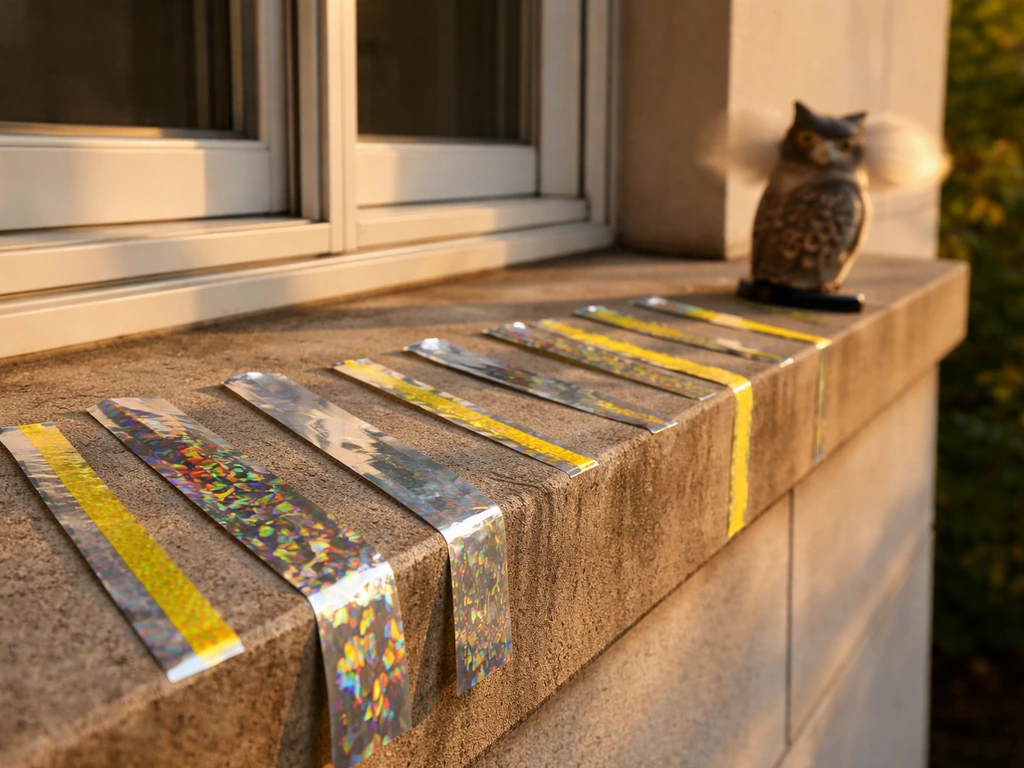
Reflective tape, holographic foil strips, and reflective predator decoys (spinning hawks, owl decoys with moving heads) can temporarily disrupt bird activity. They work best when birds haven't fully established a roost and when the visual stimulus keeps moving or changing. A static owl decoy on the same spot every day stops working within a week or two as birds habituate to it. To get longer use out of visual deterrents, move them every few days and combine them with another method.
Bird repellent gels and surface treatments
Sticky gel products applied to ledges and surfaces make landing uncomfortable without injuring birds. They work reasonably well on smooth surfaces like window sills and signs, but they collect dust, debris, and feathers quickly and need to be reapplied every few months. In hot climates they can melt and run, leaving stains. They're not a good standalone solution for high-pressure roosting sites, but they're useful on small, targeted areas where netting or wire isn't practical.
Tactile deterrents (beyond gel)
Some surfaces can be treated with abrasive coatings or modified to be inherently uncomfortable for landing. Sloped metal or plastic covers (as above) are the most durable version of this. There are also track-based systems that use adhesive-backed base strips with varying textures, though these share many of the same maintenance issues as gels.
Sensory deterrents: sonic, ultrasonic, and light-based systems
These are the most advertised category of bird deterrent, and also the one where expectations need to be managed most carefully.
Sonic and distress call systems
Sonic devices broadcast predator calls or species-specific distress calls at audible frequencies. They can be effective at dispersing birds from open areas like parking lots, fields, or large rooftops, especially when the recordings match the target species. They work best in combination with visual deterrents and when birds haven't already established a long-term roost. They're less effective in enclosed spaces where sound reflects and birds habituate faster. Neighbors will hear them, which limits their use in residential areas or dense commercial zones.
Ultrasonic devices: lower your expectations
An NWRC study evaluating ultrasonic devices on pigeons found that after 10 to 30 days, none of the tested devices reduced pigeon numbers, and the ultrasonic device specifically showed no change in pigeon activity at all during a 20-day treatment period. This aligns with what most wildlife professionals will tell you: birds don't have particularly sensitive ultrasonic hearing, and there's little evidence these devices work in real-world outdoor conditions. Save your money here unless the product comes with independent efficacy data.
Laser and light deterrents
Handheld and automated laser systems can be effective for dispersing starlings and blackbirds from roost sites, particularly at night. USDA APHIS lists nighttime laser harassment as one of the tools used in operational starling and blackbird management. Automated laser units are expensive but useful for large commercial operations. They're not appropriate near airports or flight paths, and most are not practical for small residential use.
Set realistic expectations for all sensory deterrents
USDA APHIS' wildlife damage management guidance is direct about this: no single technique or tool will deter birds in every instance or situation. Sensory deterrents work best as part of a layered approach, not as a replacement for physical exclusion at established roost sites. If birds have been using a spot for years, sound and light alone won't move them.
Matching the right alternative to your situation
The best option shifts depending on where you are and what you're managing. Anti bird spikes are one common option, but there are many other proven ways to prevent birds from landing and roosting. Here's a practical comparison across the three most common contexts.
| Context | Best Physical Option | Best Non-Physical Option | Watch Out For |
|---|---|---|---|
| Residential (home ledges, patios, eaves) | Angled ledge covers or netting for eaves | Reflective tape or gel on sills | HOA rules, visual impact, swallow nest protections under MBTA |
| Commercial (storefronts, signs, rooftops) | Wire tension system or bird netting | Sonic distress calls for open areas | Noise ordinances, regular gel maintenance, aesthetics |
| Solar panels (residential or commercial) | Steel mesh exclusion kit | Not reliable as standalone | Panel warranty, mesh gauge, sealed corners |
| Aviation-adjacent or near airports | Physical netting or mesh only | Avoid sonic/laser near runways | FAA AC 150/5200-33C guidance; coordinate with airport authority |
| Large open rooftops or fields | Netting for enclosed areas, wire for open | Sonic + visual combined | Habituation if not varied; weather durability of speakers |
For aviation-adjacent properties, the FAA's advisory circular AC 150/5200-33C covers hazardous wildlife attractants on or near airports. If your building is within a few miles of a public-use airport, check that guidance before installing any deterrent, particularly sonic or laser systems that could affect pilot visibility or distract wildlife in ways that push birds toward flight paths.
Legal considerations you can't skip
Before removing nests or blocking access points, check whether the birds you're dealing with are protected. The Migratory Bird Treaty Act makes it illegal to disturb an active nest of native migratory species without a federal permit. Swallows are a common example: their mud nests under eaves are protected once eggs or young are present. Starlings and pigeons are not protected under the MBTA and can be managed more freely. If you're unsure, contact your local wildlife agency before taking action.
DIY installation, maintenance, and when to call a pro
What you can reasonably do yourself
- Install angled ledge covers or sill covers on ground-floor or easily accessible window sills
- Apply repellent gel to small targeted surfaces like sign tops or narrow ledges
- Hang reflective tape or set up visual deterrents on patios and garden areas
- Install solar panel mesh kits on single-story rooftops using manufacturer clip systems
- Set up portable sonic devices in open outdoor areas like patios or gardens
What usually needs a professional
- Full rooftop netting on multi-story commercial buildings (working at height, anchor point engineering)
- Large-scale wire tension system installation across an entire building perimeter
- Integrated pest management programs for established high-pressure roost sites
- Any situation involving protected species, legal nest removal permits, or airport-adjacent properties
- Automated laser deterrent setup and calibration on commercial sites
Maintenance realities
Physical exclusion products like netting and mesh need an annual inspection. Check for tears, sagging, loose anchor points, and debris buildup in corners. Gel products need reapplication every three to six months, more often in hot climates or high-traffic areas. Sonic devices need their speaker units checked seasonally, and the recording libraries should be rotated to slow habituation. Any deterrent that relies on something moving or emitting sound or light will eventually fail if it isn't refreshed or maintained.
Safety during installation
Bird droppings carry histoplasmosis and other pathogens. Always wear an N95 mask, disposable gloves, and eye protection when cleaning roosting areas before installing any deterrent. Wet the droppings down with a disinfectant spray before disturbing them to reduce airborne particles. If the accumulation is heavy (more than a few inches or covering a large area), professional remediation is the safer choice.
The bottom line: how to pick and act today
If you have an established pigeon or starling roost on a ledge, roof, or under solar panels, start with a physical exclusion method: netting, mesh, a wire tension system, or an angled ledge cover depending on the surface. These work. Add a visual or sonic deterrent as a secondary layer if the area is large and open. Skip ultrasonic devices entirely unless you have specific evidence they work for your target species. Check legal protections for the species on your property before doing anything that disturbs nests. And if the installation involves significant height, a complex structure, or a high-pressure infestation, get a professional quote before committing to a DIY approach that might need to be redone.
FAQ
How can I tell if my alternative (netting, wire, covers, gels) is truly blocking access, or just pushing birds to a nearby spot?
Many “alternatives to bird spikes” fail because they leave a landing or perch path. After installation, use a simple coverage test: go out at dusk with binoculars and check whether birds are still landing on any edge, corner, or adjacent ledge. If you see even brief landings, you likely need to extend the barrier or close a seam rather than add another deterrent type.
What are the most common installation mistakes with bird netting that cause it to underperform?
Bird netting and mesh should be tensioned and held in a way that birds cannot sit on the material itself. A quick way to verify the “no land on top” requirement is to look for any slack line or shadowed sag area from ground level, then re-tension or add corner support. If you can see ripples or wrinkles, you should correct that before assuming the mesh size will solve the problem.
Which alternative should I choose for rooftops or solar panel gaps versus window sills and parapet walls?
Start with the surface type, then pick the method that eliminates a flat landing zone. Netting or wire systems are best when you have an open area, while angled ledge covers (45 degrees or more) are best when there is a true ledge that birds can use. If you’re treating the underside of solar panel gaps, use clip-on mesh solutions that seal the perimeter, and avoid approaches that require drilling into panel structures.
Can reflective tape or decoys replace physical exclusion if birds already roost there?
A key decision is whether you are dealing with established nesting versus first-time roosting. If birds are already returning to the same spot every day, layered physical exclusion is the most reliable. Visual or sonic deterrents are more likely to provide only temporary relief until exclusion is installed, especially once birds habituate to stationary stimuli.
Are sticky gels a practical alternative to bird spikes for ongoing pigeon or starling problems?
Yes, but only if they are used as a targeted “supplement” on small, controlled surfaces. Gel products need frequent cleaning and reapplication, and they can stain or run in heat. If the site is high-traffic and birds keep coming back, plan for netting, mesh, wire tension, or an angled cover rather than relying on gel alone.
How should I approach adhesive attachment if I’m choosing an alternative to spikes that still uses an adhesive base?
For adhesive-based spike strips, the substrate matters as much as the adhesive. Painted, dusty, or freshly cleaned surfaces may not bond consistently, and adhesives can fail if the surface is oily or has chalking. Before committing, do a small test strip on the same surface area you plan to treat, and check bond strength after a warm-cool cycle.
What should I check legally before I install any alternative to bird spikes, especially under eaves?
If you see nest material, droppings with active nesting behavior, or birds actively entering a cavity, stop and verify legal protections before blocking. Swallows are a common case where an active nest can trigger federal restrictions. When in doubt, contact your local wildlife agency, because taking exclusion steps at the wrong time can create legal issues and may also increase bird activity if nests are disrupted incorrectly.
What constraints should I consider in residential areas or near airports when using deterrents other than spikes?
Not all deterrents are compatible with neighbors and sensitive areas. Sonic devices can be disruptive in residential or dense commercial areas, and lasers are not appropriate near airport operations or flight paths. If you’re near an airport, school, or other noise-sensitive zone, prioritize visual methods combined with physical exclusion, or consult a wildlife professional for hazard compliance.
How often do I need to maintain non-spike bird deterrents to keep them effective?
Most alternatives require maintenance, so plan for a schedule. Netting and mesh should be inspected at least annually for tears, sagging, and debris packed into corners. Visual items like decoys and reflective tape should be moved or rotated regularly to slow habituation. Any device that emits sound or light also needs seasonal checks on power, positioning, and functioning.
What is the safest way to clean droppings before installing an alternative to bird spikes?
Bird droppings cleanup should happen before installation, but not by blasting or dry-scraping. Use an N95 mask, disposable gloves, and eye protection, wet the droppings with disinfectant before disturbing, and avoid actions that aerosolize particles. If the buildup is heavy or widespread, professional remediation is safer for health and for reducing spread to nearby areas.
Next Articles
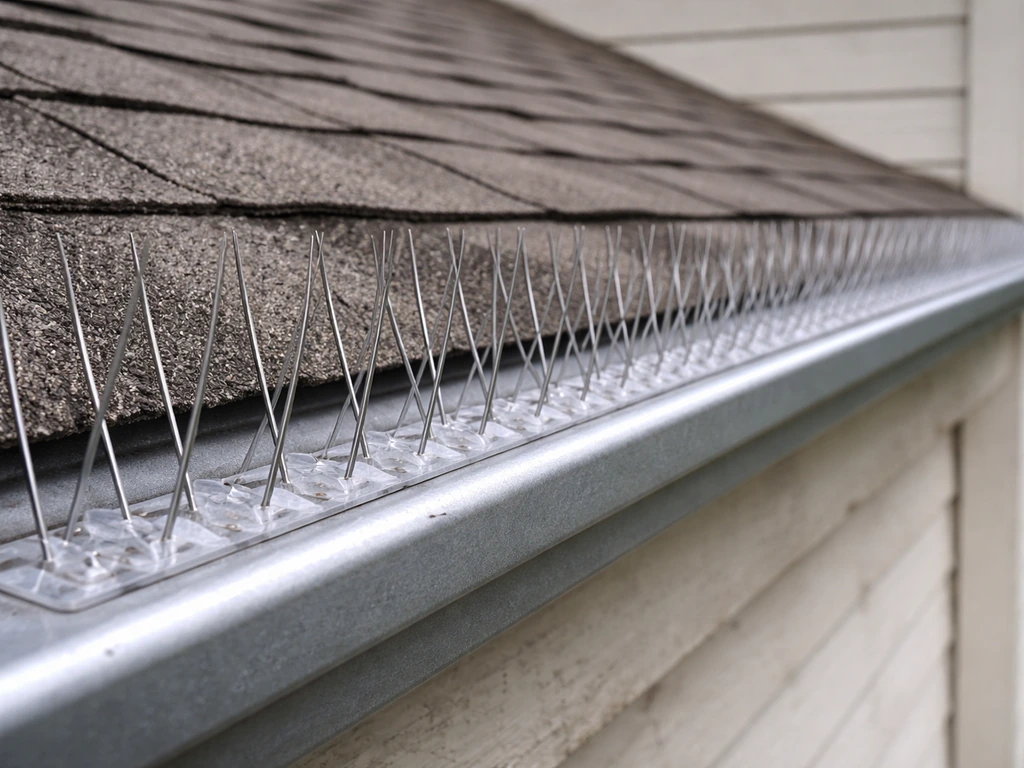
Best Bird Spikes for Small Birds: Do They Work and How
Do bird spikes work on small birds? Pick the best type, install correctly, and avoid gaps that let sparrows and starling
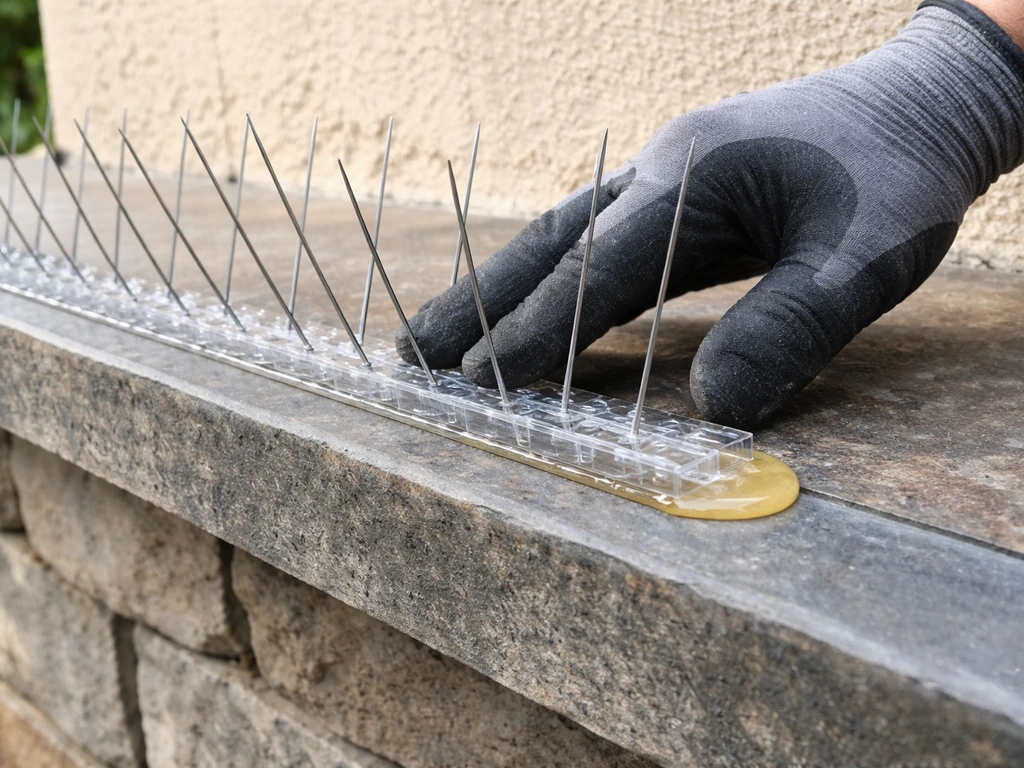
Best Adhesive for Bird Spikes: How to Install
Step-by-step guide to the best adhesive for bird spikes, including prep, mounting on multiple surfaces, cure times, and
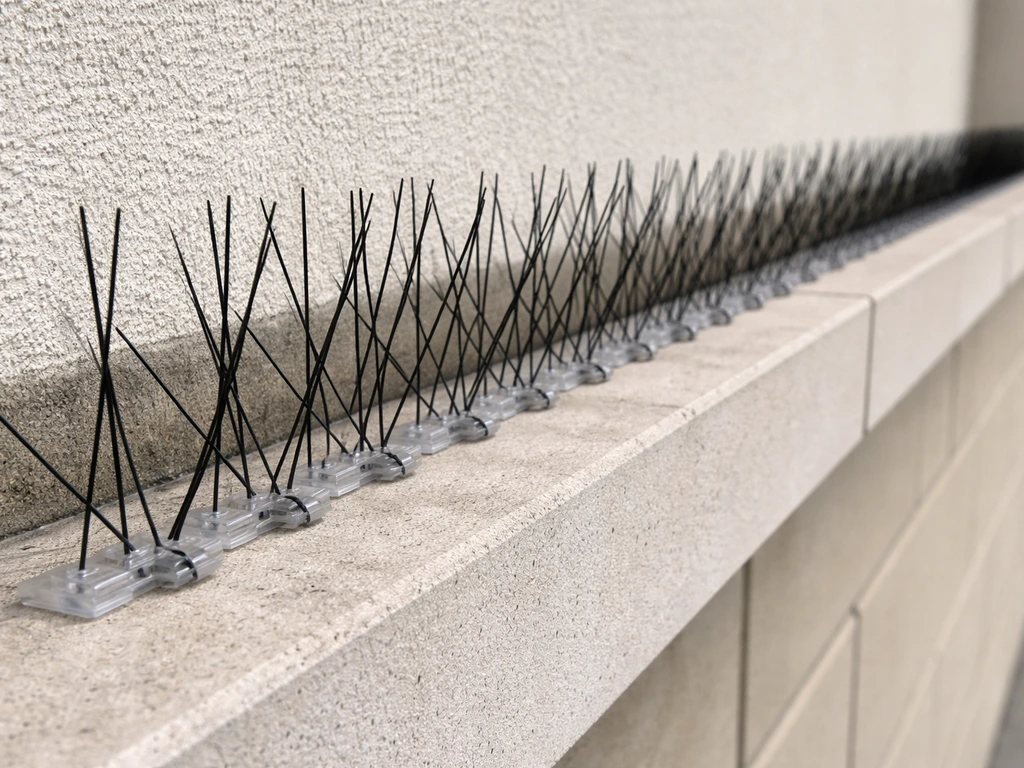
Best Bird Spikes Guide: Types, Spacing, and Installation Tips
Choose the best bird spikes by surface and species, with spacing, installation steps, safety tips, and troubleshooting.