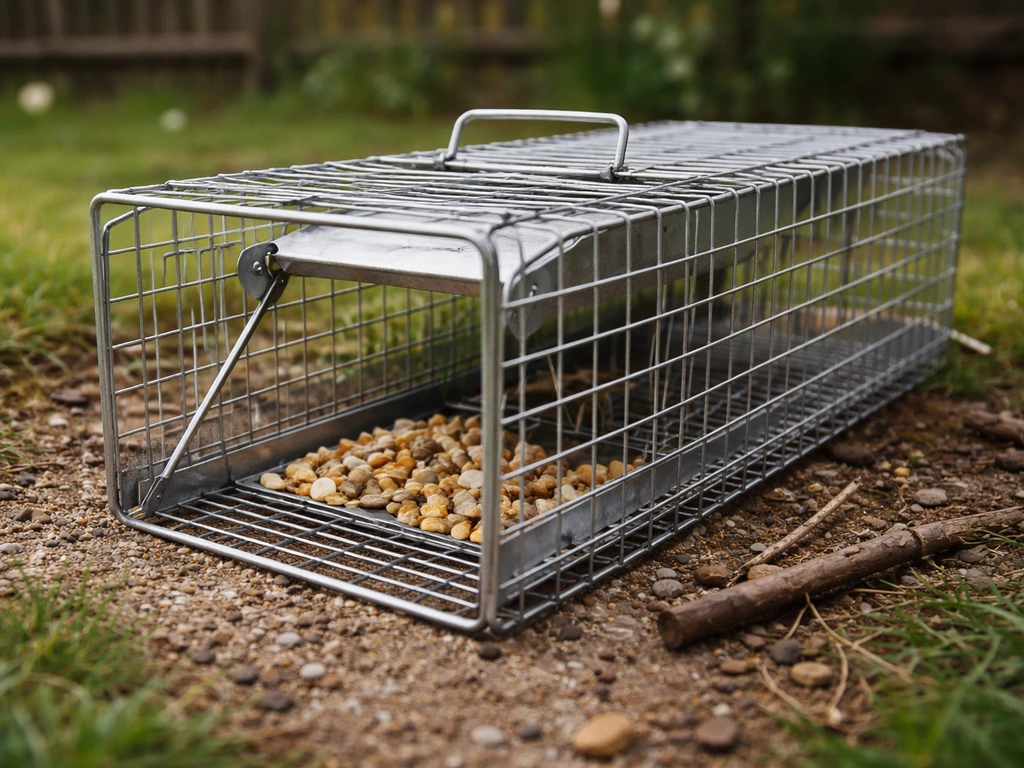
A coke-can bird trap is not a standardized product you can buy. The phrase usually refers to a homemade funnel-style live trap where a bird enters through a narrow one-way opening to reach bait, then can't figure out how to exit. It works on the same geometry as a bottle-funnel insect trap: easy in, hard out. Done right, it's a real capture method for small pest birds like sparrows and starlings. Done wrong, it's either useless or a legal problem. Here's what you actually need to know before you build or set one. A bird snare is a broader term for devices designed to capture birds, so it helps to understand the specific type and rules before using one.
Coke Can Bird Trap DIY: Build, Set, and Release Safely

Marcus Weatherby
3 Jul 2026
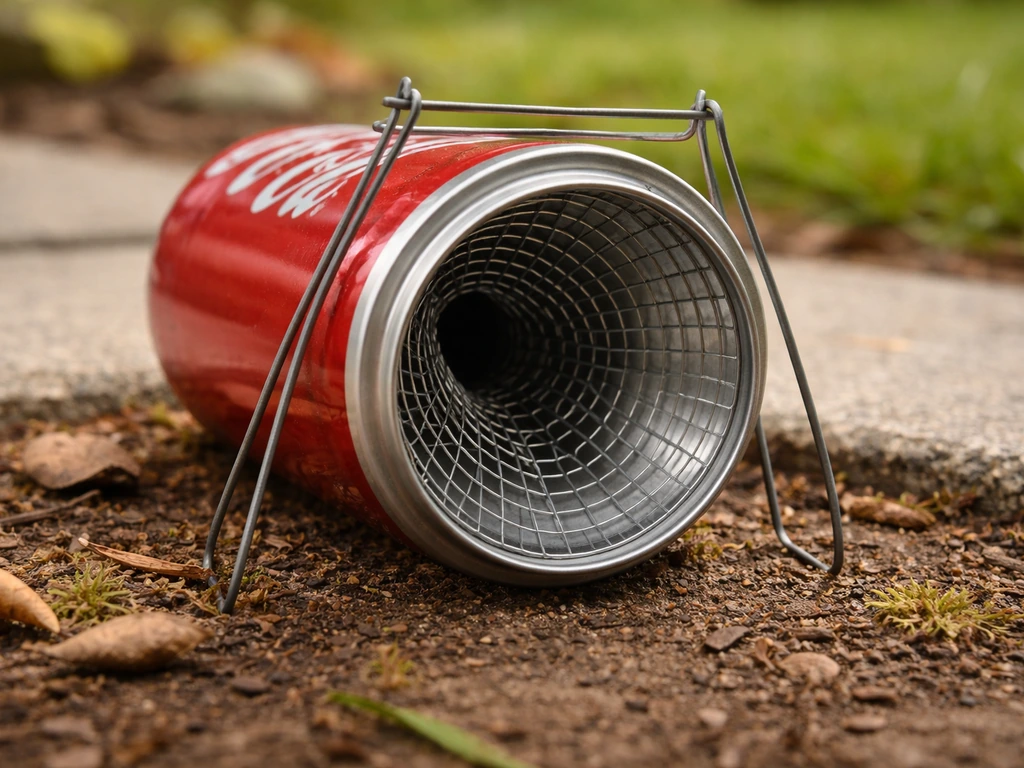
What people actually mean by a coke-can bird trap
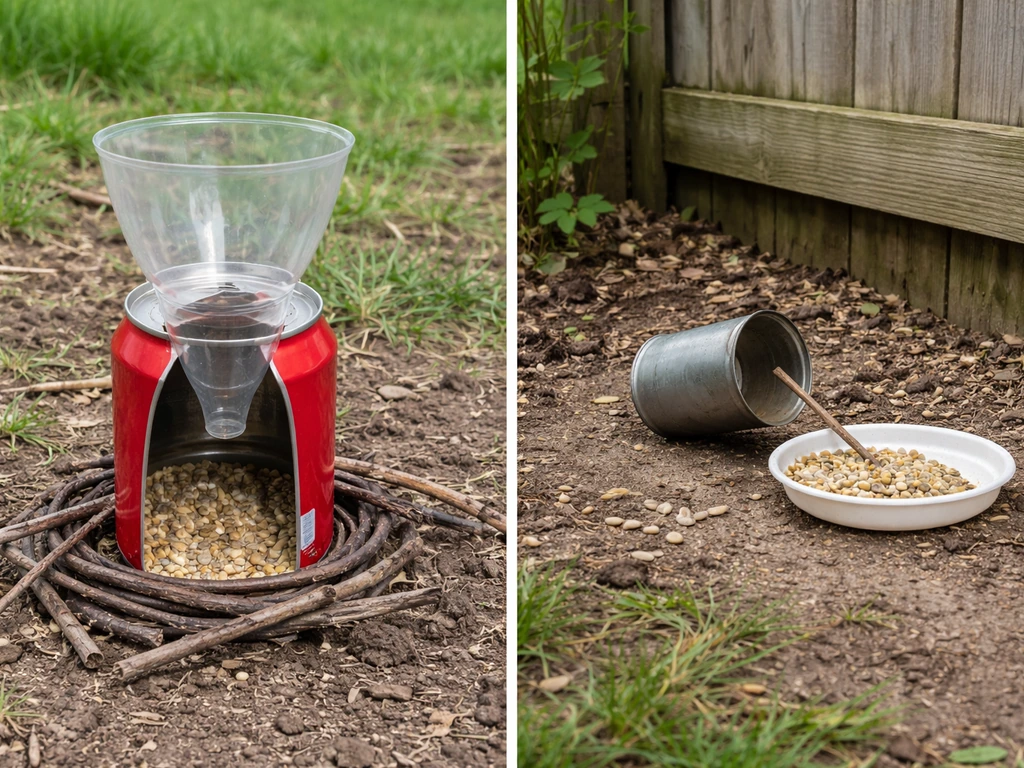
Search results for this term turn up two different things, and it's worth being clear about which one you're dealing with. The first is a true DIY funnel trap built from scrap materials (wire mesh, zip ties, wood scraps, PVC pipe) where the coke can either serves as a size reference for the funnel opening or is literally used as the trap body. A person who sets baited traps like these is often referred to as a bird trapper or wildlife trapper live-capture device. The second is a loose term people use for any small homemade live-capture device aimed at nuisance birds in a garden or patio setting.
The funnel concept is the functional core regardless of which version you build. Birds navigate toward bait through a tapered entry. Once inside, they can't replicate the precise path back out because the funnel geometry doesn't make sense from the inside. Commercial versions like the Funnel Cone Sparrow Trap (FCST) or the bi-level sparrow/starling trap (16 inches wide, 12 inches long, 8 inches tall) use the same principle, just with factory-cut wire and consistent dimensions. If you're building your own, you're essentially replicating that geometry by hand.
A coke-can-based trap is honestly most practical for catching very small birds (sparrows, finches, small starlings). For larger pest birds like pigeons, crows, or grackles, you'd need a bigger enclosure. If you're dealing with something larger or a species you're not sure about, it's worth checking out purpose-built options before going the DIY route. If you’re trying to choose the best bird trap in the world for your situation, start by matching the trap size and design to the exact bird species you’re dealing with.
Is it legal where you are? Check this first
This is the step most DIY guides skip, and it's the one that can actually get you in trouble. In the United States, the Migratory Bird Treaty Act prohibits capturing, possessing, or transporting most wild birds without a valid federal permit. That includes common birds like sparrows (non-native house sparrows are actually an exception), swallows, warblers, and many others you might not realize are federally protected. Before you set any trap, you need to know what species you're targeting.
The practical breakdown for most U.S. readers: non-native invasive species like the house sparrow (Passer domesticus) and European starling are not protected under the Migratory Bird Treaty Act, which means you can legally trap and relocate or humanely dispatch them without a federal permit in most states. Native species are a different story. If you're dealing with a native bird causing damage (say, woodpeckers on your siding or crows raiding your garden), you'd need a USFWS depredation permit, and even then you're expected to implement non-lethal control measures alongside any authorized trapping.
Outside the U.S., the rules are just as strict. In England, trapping wild birds requires compliance with standard licence conditions under GL33. The EU Birds Directive protects all naturally occurring wild bird species. In Canada and Australia, similar protections apply at the federal or state level. The safest move is to contact your local wildlife agency or animal control office before setting any trap. Most will tell you quickly which species you can legally target.
Beyond legality, there's the humane handling expectation. USGS and USFWS guidance is explicit: captured birds need adequate food, water, and shelter while held, and they need to be handled gently to avoid injury. The U.S. Fish and Wildlife Service humane capture and handling guidance also emphasizes providing adequate food, water, and shelter while birds are held and handling them gently to avoid injury blank" rel="noopener noreferrer">USGS and USFWS guidance is explicit. A trap left unmonitored for 24 hours in summer heat is not a humane trap, regardless of how it was built.
How to build and set a DIY funnel trap that actually works
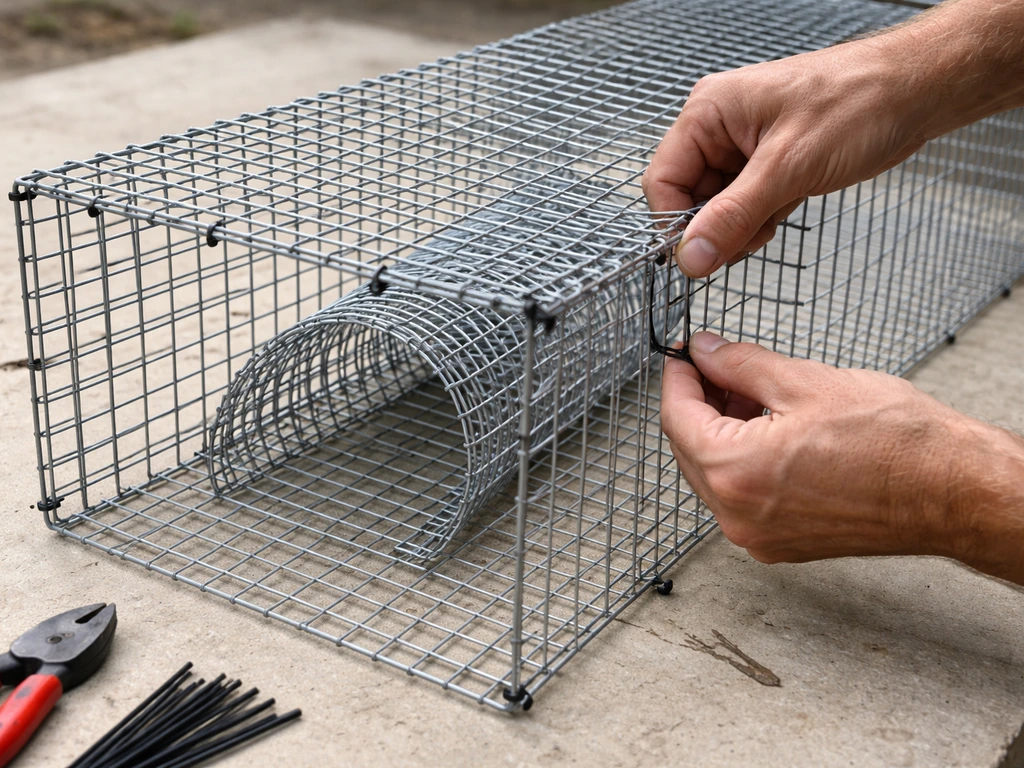
Materials you'll need
- Hardware cloth or wire mesh (1/2-inch openings work well for sparrows; 1-inch for starlings)
- Wire cutters and pliers
- Zip ties or thin-gauge wire for joining panels
- PVC pipe or rolled wire mesh for the funnel cone (the key component)
- A flat base board or wire floor panel
- Small bait dish (bottle cap or shallow lid)
- Optional: a few decoy bird call recordings to attract target species initially
Building the funnel entry
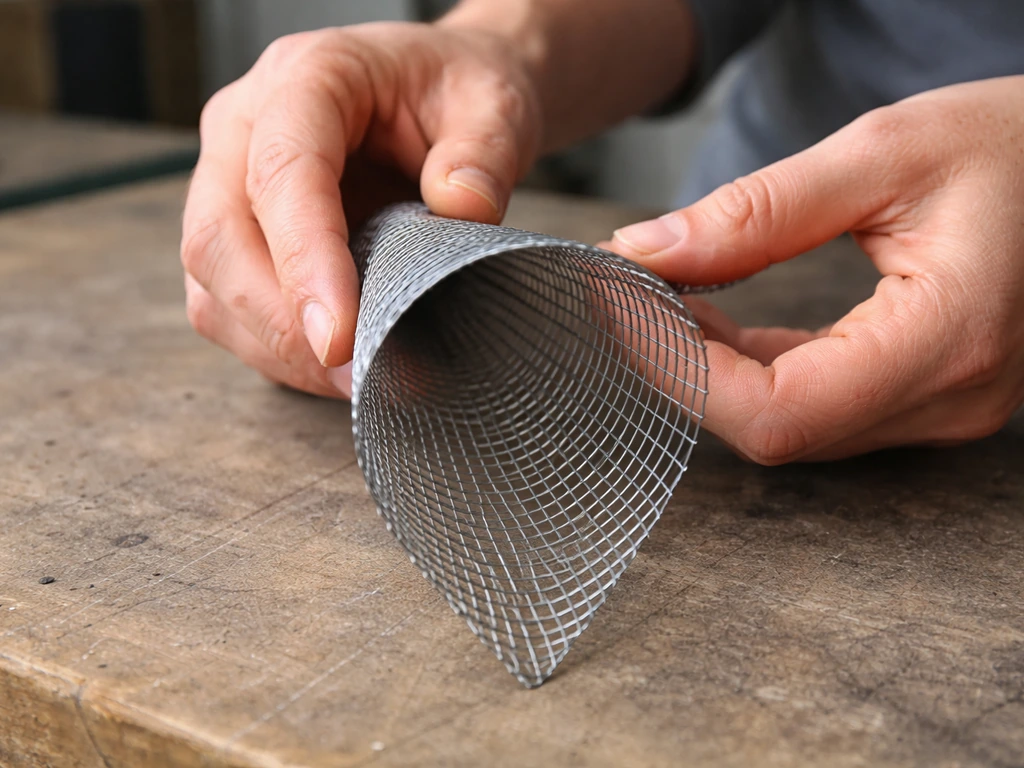
The funnel is the part that makes or breaks this trap. Cut a circle of wire mesh roughly 8 to 10 inches in diameter. Roll it into a cone shape so the wide end is about 5 to 6 inches across and the narrow tip opening is about 1.5 to 2 inches in diameter (roughly the diameter of a soda can, which is where the name likely comes from). Secure the cone with zip ties so it holds its shape. The tip of the cone points inward into the main trap body. The bird enters through the wide end, follows the funnel inward, and drops through the narrow tip into the enclosed space.
Build your main enclosure as a simple rectangular box from wire mesh, roughly 12 to 16 inches wide, 12 inches long, and 8 to 10 inches tall. Attach one or two funnel cones through holes cut in the side walls. More funnel entries increase your catch rate because birds approach from different directions. Make sure the funnel tip is flush with the interior wall surface so there's no gap a bird can squeeze back through.
Bait, placement, and timing
For house sparrows, millet and cracked corn are the most reliable baits. Bread crumbs work in a pinch but go stale fast. For starlings, mealworms or wet cat food work well. Scatter a small trail of bait leading toward the funnel entry to guide birds in, and put the main bait supply inside the enclosure near the center. Don't overload the bait inside or birds will be satisfied from the trail without entering.
Placement matters more than most people expect. Set the trap on the ground or on a flat surface at ground level where you've already seen the target birds feeding. Place it near an existing food source like a bird feeder or a garden area where birds are actively foraging. Keep it away from dense shrubs where cats might wait nearby. If you want to reduce bird-catching around your yard, the best cat collars to stop bird catching use effective bells and jingle designs to alert birds without harming your cat cats might wait nearby. Face the funnel openings toward the direction birds typically approach from. The trap will be mostly ignored for the first day or two as birds get used to it, so don't pull it after 24 hours of failure.
Timing-wise, early morning is when most small birds are most actively feeding. Check the trap every two to three hours during active use, and never leave it unattended overnight, especially in hot weather. In summer, a trapped bird can die from heat stress within hours in direct sunlight.
What to do the moment you catch a bird
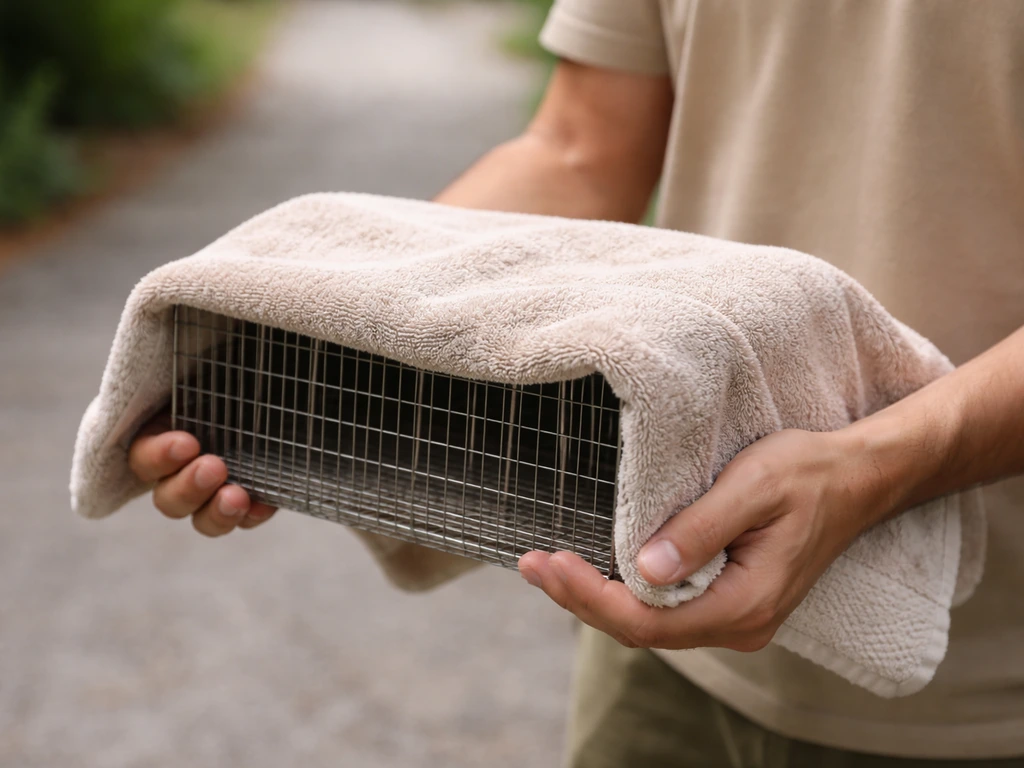
Stay calm and work quickly. A panicking bird in a wire enclosure can injure its wings if it thrashes hard. Cover the trap with a cloth or towel immediately, this darkens the interior and calms the bird within a few seconds. Wear gloves before opening any panel, even small birds can deliver a surprisingly sharp peck or scratch.
For release, take the covered trap to your release location before opening it. If you're relocating a non-native invasive species, a distance of at least a few miles from the capture site reduces the chance of the bird returning. Don't release birds in areas with active bird feeders unless you want them immediately competing with resident populations. Open the trap panel and step back, let the bird exit on its own rather than grabbing and tossing it.
After handling the trap and the bird, wash your hands thoroughly with soap and water immediately. Bird droppings, feathers, and nest material can carry psittacosis, avian influenza, and histoplasmosis. The CDC notes that the most common infection route for psittacosis is breathing in dust from dried bird droppings and secretions. Wet down any droppings inside or around the trap before cleaning it, don't dry-sweep or blow them off. Disinfect the trap with a dilute bleach solution (1 part bleach to 10 parts water) before storing or reusing it.
OSHA guidance recommends avoiding unprotected contact with birds and bird excrement. If you're handling traps frequently or dealing with a large flock situation, an N95 mask and disposable gloves are worth using. Remove and bag the gloves before touching your face or phone.
Why the trap isn't working (and how to fix it)
Most DIY funnel traps fail for a small number of repeating reasons. Here's how to diagnose and fix each one. If you’re dealing with the OSRS bird snare not working, start by checking how the funnel entry, bait position, and monitoring timing are set up diagnose and fix each one.
| Problem | Likely Cause | Fix |
|---|---|---|
| Birds won't enter at all | Trap is too visible or unfamiliar | Leave trap unset and baited for 2-3 days so birds habituate to it before activating it |
| Birds enter but escape immediately | Funnel tip opening is too large (over 2 inches) | Reduce the funnel tip to 1.5 inches or reinforce the cone so it holds its shape |
| Trap catches nothing after a week | Wrong bait for target species | Switch bait: millet for sparrows, mealworms for starlings, test different options |
| Birds eat bait trail but don't go in | Bait trail too generous; birds are full before entering | Shorten the trail to 3-4 seeds max, put the main bait well inside the enclosure |
| Wrong species caught | Trap is non-selective | Move trap away from mixed feeding areas; reduce bait appeal to non-target species |
| Birds escape through gaps at base | Enclosure floor has openings too large | Add a solid board base or use 1/4-inch mesh for the floor panel |
| Trap tips over when bird is inside | Trap too light or unstable | Stake or weight the base; place a brick on top of the trap frame |
One thing worth flagging: if you're catching a species you didn't intend to catch (say, a native finch or wren instead of a house sparrow), release it immediately and modify the trap's bait or location to reduce non-target captures. Accidental capture of a protected species is still your legal responsibility even if it was unintentional.
When trapping isn't the right tool (better alternatives)
Trapping makes sense when you have a small, identifiable population of non-native pest birds causing direct damage. It makes less sense when you're dealing with dozens of birds, a species you can't legally trap, or a situation where the underlying attraction (food source, nesting site, water) hasn't been removed. Catch and release without fixing the root problem just means you're in a cycle.
Physical exclusion
For most residential bird problems, exclusion outperforms trapping. Bird netting installed over garden beds, fruit trees, or roofline gaps physically prevents access without any ongoing effort. Bird spikes on ledges, gutters, and fence tops deny roosting and nesting space. These work 24/7, require no monitoring, and have no legal complications. If you're dealing with birds near solar panels or in roof spaces, exclusion is almost always the more permanent fix.
Sensory deterrents
Sonic and ultrasonic deterrents broadcast predator calls or distress signals that make an area feel unsafe to birds. Visual deterrents like reflective tape, predator decoys (owl or hawk silhouettes), and spinning pinwheels work well in open areas like gardens and patios, especially when moved regularly so birds don't habituate. For pool areas, a combination of a floating predator decoy and reflective surface tape tends to work better than either alone.
Sanitation and habitat modification
Removing the attraction is always step one. If birds are congregating around spilled birdseed, an open compost bin, a pet food dish left outside, or standing water, fixing those things will do more than any trap. Cutting back dense hedges and shrubs that offer nesting cover, and blocking eaves gaps with foam or hardware cloth, also removes habitat that keeps birds coming back.
Chemical repellents
Taste-aversion and contact repellents (like methyl anthranilate or polybutylene gel) can be applied to surfaces where birds land or roost. These aren't a complete solution on their own but work well as part of a layered approach alongside exclusion or deterrents.
Safety and liability checklist before you set anything
Go through this before placing any trap, especially if you have kids, pets, or neighbors nearby. If you are looking for the best bird trap ever, start by verifying legality and safety first so you can handle any captured birds responsibly.
- Confirm the target species is legally trappable in your jurisdiction. Call your local wildlife agency if you're not sure. Non-native house sparrows and European starlings are the most commonly permitted species for DIY trapping in the U.S.
- Place the trap where children and pets cannot access it. A stressed trapped bird will peck and scratch anything that gets too close, and a child reaching into the trap is a real hazard.
- Never place a trap near electrical installations, HVAC units, or solar panel wiring. Birds disturbed near these areas during trapping attempts can cause damage or create safety issues.
- Do not use chemical attractants (like treated baits) with a live trap. If the bird ingests a toxin before capture, you've created a poisoning situation rather than a humane capture.
- Wear gloves and a basic dust mask when cleaning and handling the trap after use. Dried droppings are the main transmission route for psittacosis and can also contain avian influenza virus particles.
- Check the trap at least every two to three hours during daylight. A trapped bird in direct summer sun can die from heat stress in under two hours.
- Have a plan for what to do with the captured bird before you set the trap. Know your release location, how far away it is, and whether you'll need a container to transport the bird safely.
- If you accidentally capture a protected species, release it immediately and document the incident in case it's ever questioned by wildlife authorities.
- Disinfect the trap between uses with a dilute bleach solution (1: 10 ratio) and let it dry completely before redeployment.
- If you're renting your property or in an HOA, check your tenancy agreement or HOA rules before setting traps. Some agreements prohibit wildlife trapping on the premises.
A DIY coke-can style trap is a legitimate tool when used on the right species, in the right situation, with proper monitoring. It's not a set-and-forget solution, and it works best as part of a broader control approach rather than as a standalone fix. If you find yourself trapping the same birds week after week, that's a signal to look harder at what's attracting them in the first place and layer in some of the exclusion or deterrent options described above.
FAQ
What should I do if I accidentally catch a bird I didn’t intend to target?
Yes, unintended capture can create the same legal risk as intentional trapping. If you catch a native or otherwise protected species, release it immediately and stop using that setup until you confirm the species-specific legality and adjust bait and placement to reduce non-target entries.
Can I reuse the same coke can bird trap after I catch and release birds?
Do not reuse a trap that has been exposed to bird droppings without disinfecting it. Wet down contamination first, then disinfect with a dilute bleach solution (1 part bleach to 10 parts water), let it fully dry, and store it so it cannot contaminate hands, pets, or food prep areas.
How often should I check a funnel-style coke can bird trap?
For live funnel traps, “set and forget” is the main failure mode. Plan to check on a regular schedule during peak feeding, and in hot weather reduce time between checks because heat stress can become life-threatening within hours.
What construction issues most often make a funnel-style trap fail?
If the funnel tip creates any gap, birds can back out. Make sure the narrow opening sits flush with the interior wall, and keep the cone rigid so its tip does not deform after a bird lands or strikes the mesh.
How do I know when to change the bait during trapping?
Replace the bait if it dries out or becomes stale, since birds may feed from the bait trail without entering. A practical rule is to refresh bait more frequently in warm, sunny weather, especially if you’re relying on crumbs that can harden.
What should I do if I’m getting no captures after placing the trap?
If you’re not seeing catches after initial exposure, the problem is usually one of three things: bait trail is too weak, funnel openings face the wrong approach direction, or monitoring is too infrequent during active feeding. Adjust one variable at a time, then wait a short trial period before changing everything.
Does relocating a trapped bird prevent the problem from coming back?
Relocation is not the same as “removal,” and it may not solve the issue if the bird can return or if the habitat is still attractive. If you’re repeatedly catching the same species at the same site, switch to exclusion and source removal rather than trying multiple relocation attempts.
Do I need permits if I plan to release the bird rather than kill it?
Yes, even if you only keep the trap for a short time. You still need to comply with local and national wildlife rules for your target species, and rules can vary by state, province, or country. When in doubt, contact local wildlife or animal control before setting.
How should I handle the trap once I open it for release?
Covering the trap immediately reduces stress and thrashing. Use a calm, deliberate approach and release in a nearby, safe area that does not force the bird into crowds of other birds at a feeder, where it may be pressured or immediately re-captured by your setup.
What’s the safest way to clean up after trapping to reduce disease risk?
Wear gloves and wash hands promptly, but also avoid spreading contamination to the rest of your home. Keep the trap and any collected materials outdoors during cleaning, and avoid shaking or dry-sweeping feathers or droppings that could aerosolize dust.
Is it safe to place a bird trap where cats or dogs can reach it?
If you have pets, especially cats, placement near dense shrubs or hiding spots increases the chance of a pet intercepting a bird. Put the trap in a clear line-of-sight area away from cover, and supervise when pets are outdoors.
When does trapping stop being the right approach?
If you’re catching nuisance birds at scale, trapping often becomes an ongoing welfare and monitoring burden. Consider stopping once you see a pattern of repeat captures, then address the attractants (food, nesting cover, water access) and block entry points with netting, spikes, or hardware cloth.
Can I increase my chances by adding more than one funnel opening to the trap?
Use multiple openings only if the funnels are built consistently and secure, because misalignment can create a path that lets birds escape. If you add funnels, keep the narrow tip openings uniform in size and flush so the geometry stays “easy in, hard out.”
Next Article
Best Bird Trap in the World: Pick, Set, and Use It Safely
Choose the best bird trap for your situation, set it safely step-by-step, and boost results with humane, legal control.