
CD bird scarers can work, but only for a short time and only on certain birds. The flashing reflections genuinely startle birds at first, but most species figure out within a few days that the spinning discs pose no real threat. That rapid habituation is the core problem with CDs as a standalone deterrent. They are not useless, but if you hang a few old CDs and expect them to solve your bird problem for the season, you will likely be disappointed by week two.
Do CD Bird Scarers Work? Practical Test and Setup Guide

Marcus Weatherby
22 Jun 2026

How CD bird scarers actually work
The principle is simple: sunlight catches the reflective surface of a CD and creates unpredictable flashes of light as the disc spins and sways in the wind. Birds rely heavily on vision, and sudden bright flashes near a feeding or roosting area trigger a mild alarm response. The movement matters just as much as the reflection. A CD hanging perfectly still does almost nothing. You need wind to keep it rotating, because it is the combination of motion and unpredictable light scatter that creates the initial deterrent effect.
The key word in that sentence is 'initial.' The light itself carries no real danger signal. There is no predator, no threat, no consequence for the bird that ignores it. UC ANR's Bird Hazing research specifically flags this: reflective visual deterrents lose effectiveness quickly because the bird's brain is not associating the flash with any actual harm. It is purely a surprise stimulus, and birds stop being surprised by it fast.
Which birds CDs deter, and which ones they don't faze
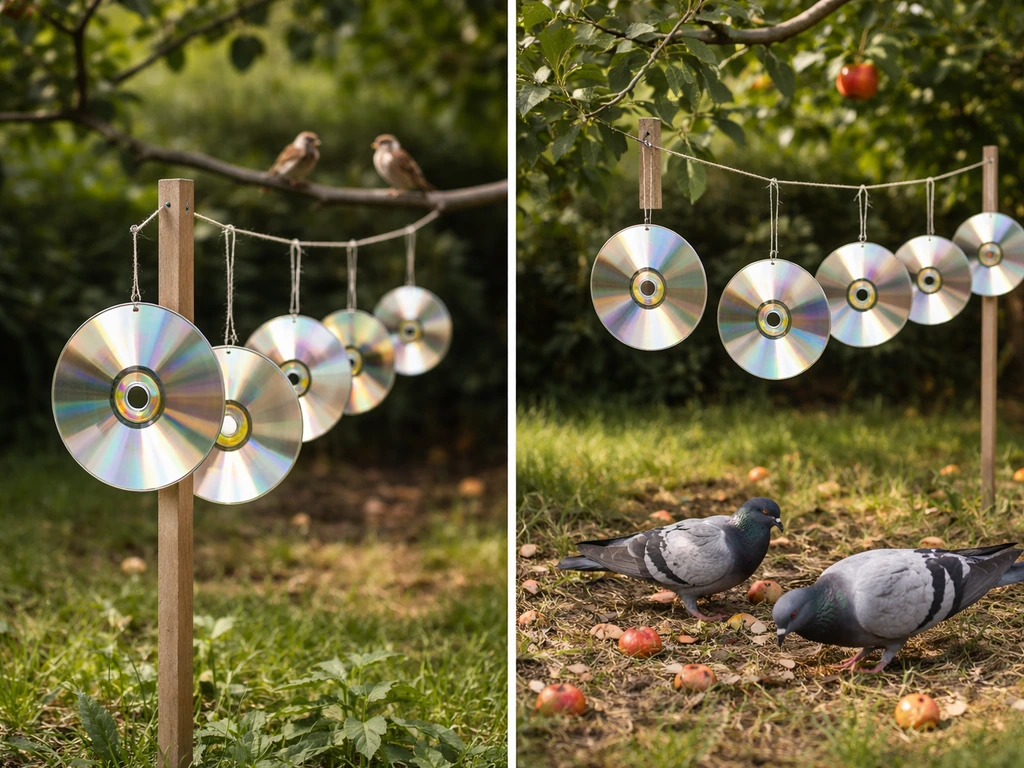
CDs tend to produce the best initial results on smaller, more cautious birds like sparrows, finches, and starlings in open areas like vegetable gardens and fruit trees. These species are naturally skittish, and the novelty of flashing discs near a food source is enough to push them to easier pickings elsewhere, at least temporarily.
Pigeons and gulls are a different story. These are highly adaptable urban birds that have been exposed to every kind of visual stimulus imaginable. MU Extension notes outright that visual deterrents like blank" rel="noopener noreferrer">balloons and rubber snakes are ineffective for pigeon control, and CDs fall into the same category. Crows are smart enough to investigate, decide the disc is harmless, and effectively ignore it within a day or two. Canada geese, herons, and larger waterfowl are similarly unfazed by a spinning piece of plastic.
If your problem bird is a pigeon, crow, or heron, CDs are genuinely not the right tool, and you should skip ahead to the alternatives section rather than waste time on a method that research and field experience both say will not work on those species.
Real-world effectiveness: the habituation timeline
Expect a useful deterrent window of roughly three to seven days in most situations. USFWS guidance on migratory bird care confirms that birds can show rapid habituation to reflective deterrents, often within just a few days. After that, the discs become background scenery. Some people report a slightly longer window of two weeks if the discs are in a very exposed, windy spot where the movement stays unpredictable. In still conditions, heavy shade, or overcast weather, effectiveness drops to near zero even on day one because there is no strong light to reflect and often not enough wind to create movement.
Seasonally, CDs perform better in summer when sunlight is intense and winds are more frequent. They are essentially useless during dawn and dusk periods (when many birds are most active) and on overcast days. If your bird problem is worst in early morning, that gap in coverage is significant.
How to set them up for best results

If you do want to try CDs, placement matters more than quantity. A few well-placed, freely moving discs outperform a dozen tightly clustered stationary ones.
- Hang discs on thin monofilament line or lightweight string so they spin and tilt freely. Rigid mounting defeats the purpose.
- Position them at or slightly above the height where birds are landing or feeding, not far above the problem area.
- Space them roughly every 10 to 15 feet along the zone you want to protect. Larger gaps give birds a clear corridor to move through.
- Hang them where they will catch direct sunlight during the hours birds are most active in that area.
- Use open, exposed locations with air movement. Trees with dense canopy block both light and wind, making CDs nearly ineffective.
- Keep the line short enough that the disc does not tangle with plants or nearby objects, which would stop the free rotation.
One practical improvement is using commercial reflective bird tape or holographic mylar strips alongside or instead of CDs. These have more surface area and create wider light scatter. UC ANR notes that material should be lightweight enough to move freely in light wind, which standard mylar tape does better than a heavier plastic disc.
Maintenance: repositioning before habituation sets in
The single most important thing you can do to extend the usefulness of CD-based deterrents is move them before the birds fully habituate. Every five to seven days, shift the discs to different positions, change the height, or rotate them to a new area entirely. This resets the 'novelty' factor and buys you another short deterrent window. It is more work than a set-and-forget solution, but it is the only realistic way to keep CDs producing any effect beyond the first week.
Signs your CD setup is failing (and what to try)
The clearest sign is obvious: birds are back. If you are seeing birds landing, feeding, or roosting in the protected zone, habituation has set in. But there are a few earlier warning signs worth catching.
- Birds landing within a few feet of the discs without flinching or altering their flight path.
- A disc that has tangled, stopped rotating, or gotten lodged against a surface.
- Discs hanging in permanent shade or indoors where light reflection cannot occur.
- The problem has shifted slightly rather than disappeared (birds moved to a gap in coverage).
- Your problem is pigeons or crows, in which case the setup was unlikely to work regardless of placement.
If birds are back, first check whether any discs have stopped moving freely and fix the rigging. Then reposition everything to new spots. If birds return within two or three days of repositioning, that is a strong signal that CDs have reached the limit of what they can do for your specific bird population and location, and you need to step up to a more robust deterrent strategy.
One additional note on safety from USFWS guidance: old or damaged reflective tape and broken disc lines can become entanglement hazards for birds. Check your setup regularly and remove any frayed cord or shredded material promptly.
Better alternatives and how to layer them

CDs work best as one element in a layered approach rather than a standalone fix. Research and field experience consistently show that integrated bird management outperforms any single low-effort deterrent. MU Extension is direct about this: successful nuisance wildlife control requires scientifically valid, multi-method approaches, not single repellents.
Physical barriers
For high-value areas like rooftops, solar panels, patios, and ledges, physical exclusion is the most reliable long-term solution. Bird netting blocks access entirely and does not depend on a bird's reaction to a stimulus. Bird spikes on ledges and railings prevent roosting without harming birds. These methods require an upfront installation effort but do not habituate and do not need constant maintenance adjustments.
Sonic and ultrasonic deterrents
Sonic devices broadcast predator calls or distress calls that trigger a genuine alarm response in birds, which is a step up from simple visual surprise. Whether bird calls work depends on how accurately the calls mimic danger and how often you rotate or vary them to prevent habituation do bird calls work. They work better on species like pigeons, starlings, and gulls than CDs do, and some units cover large areas automatically. Habituation can still occur with sonic methods too, but rotating the call types and adjusting the broadcast schedule extends their effective window considerably. If you want to compare sonic deterrents in more depth, the broader topic of how bird scarers work covers the full range of options.
Laser deterrents
Laser bird scarers operate on a similar visual-movement principle to CDs but with far more range and consistency, making them especially useful for large open areas like warehouses, airfields, and agricultural spaces. They are significantly more expensive but represent a meaningful upgrade in effectiveness over passive reflective methods.
Chemical repellents
Tactile gel repellents applied to ledges and surfaces make landing uncomfortable and are useful for specific perching spots where spikes are not practical. They are best suited to smaller surface areas and need reapplication over time. Always verify the product is approved for use with the target bird species in your region before applying.
Comparing your main options
| Method | Best for | Habituation risk | Effort/maintenance | Cost |
|---|---|---|---|---|
| CD / reflective discs | Gardens, fruit trees, small areas | High (days) | Regular repositioning needed | Very low |
| Reflective mylar tape | Gardens, fencing, windows | High (days to weeks) | Replace/reposition periodically | Low |
| Sonic deterrent | Patios, rooftops, larger areas | Moderate (weeks) | Schedule rotation recommended | Medium |
| Laser deterrent | Large open areas, commercial | Low | Minimal once set up | High |
| Bird netting | Roofs, pools, solar panels, patios | None | Low after installation | Medium to high |
| Bird spikes | Ledges, railings, roof edges | None | Very low | Low to medium |
| Tactile gel repellent | Ledges, beams, signage | None | Reapplication needed | Low to medium |
Safety, legality, and residential vs commercial use
CDs and reflective deterrents are legal everywhere for residential use and raise no bird welfare concerns since they are passive and non-harmful. There is nothing to permit or register. However, if you are dealing with a migratory species, be aware that active harassment (beyond passive deterrents) may require permits under federal law in the US. CDs fall well within the passive/visual deterrent category and do not trigger any licensing requirements.
For commercial properties, particularly food production, warehousing, and retail, the main issue is that CDs are simply not robust enough for professional bird management requirements. Commercial operators need demonstrable, documented results for health and safety compliance, and a handful of spinning discs will not meet that standard. Sonic systems, netting, and exclusion installed by a licensed pest control operator are the appropriate tools at that scale.
Aviation contexts are worth a brief mention: airfields use a combination of lasers, distress call broadcasts, habitat modification, and sometimes falconry for bird strike prevention. Reflective visual deterrents are simply not in the toolkit at that level because habituation risk is too high and the consequences of failure are severe. If bird activity near infrastructure is a safety issue rather than a nuisance issue, visual-only methods including CDs are not appropriate.
For most residential scenarios, the practical takeaway is this: CDs can buy you a short window of protection in a garden or around fruit trees, especially if you are actively repositioning them and combining them with other deterrents. To cover the whole problem, you can also attract birds away from the area by using bird calls strategically, but effectiveness depends heavily on the species and timing. Use them as a low-cost first layer or as a temporary measure while setting up something more durable, not as a finished solution.
FAQ
How many CD bird scarers do I need for the best chance of success?
Use fewer discs, placed with clear line-of-sight to the birds’ approach paths. A small set that stays freely rotating in wind and covers the landing or feeding zone typically beats a larger cluster that is tightly packed and reduces motion variety.
Where should I hang CDs to get movement and flashes, instead of just random glints?
Aim for the edges of the birds’ activity area, near fence lines, branches, or above common roosting routes, and keep the discs at a height birds naturally pause or fly through. If the setup is under heavy shade or the discs are blocked by leaves, you will likely see near-zero effect from day one.
Do CD bird scarers work at night or during dawn and dusk?
No, because the deterrent depends on visible reflections from direct sunlight and wind-driven motion. In low-light conditions, effectiveness drops sharply, so plan to use a stronger method during morning and evening peaks if those are your busiest hours.
Will CDs work if there is not much wind where I hang them?
Often not. If the discs barely rotate, the flashes become predictable and background-like. Consider using lighter mylar tape or improving the rigging so the discs move freely in light wind.
How often should I reposition CDs to prevent birds from getting used to them?
Move them every five to seven days, not weeks apart. Change at least one variable each time (height, angle, location, or which side faces the sun) so the birds cannot treat it as a constant routine.
What should I do if birds return within 1 to 3 days of moving the CDs?
Treat it as a signal that habituation is already occurring for your specific species and location. Re-check whether any discs stopped moving, then switch to a layered strategy such as netting or spikes for ledges, since reflective-only methods usually cannot hold long term.
Do CDs work on pigeons, crows, gulls, or geese?
Usually no for those groups, especially in urban or highly adaptable species. If your target includes pigeons, crows, herons, or larger waterfowl, prioritize exclusion and robust deterrents rather than spending time trying to extend a method that typically fails quickly.
How can I tell whether my CDs are working before birds are fully back?
Watch for early signs like reduced landing frequency or birds hovering farther out than before. A reliable indicator is whether birds start feeding or roosting consistently in the protected zone, which suggests the novelty factor has ended.
Are there safety concerns with old CDs or reflective tape?
Yes. Damaged reflective tape or frayed disc lines can become entanglement hazards. Inspect regularly, remove any shredded material or broken cords promptly, and stop using any setup that looks like it could tangle birds.
Can I use CDs near rooftops, solar panels, or walkways?
Yes as a temporary visual layer, but avoid setups that create distracting glare for residents or drivers. For long-term control on ledges and panels, physical exclusion (netting, bird spikes) is more dependable because it prevents landing and roosting without depending on bird surprise.
Do CDs require permits or special permissions?
For typical residential use, they are treated as passive, visual deterrents and generally do not require registration. However, if you are dealing with migratory species and consider active harassment beyond passive deterrents, permits may be required in the US, so stick to passive methods unless you confirm local rules.
Should I combine CDs with other deterrents, and what pairing works best?
Yes, layered control is the most reliable approach. Pair rotating visuals with physical exclusion for high-value perching spots, or use sonic devices and schedule variation as an additional layer, rather than relying on CDs alone.
Next Articles
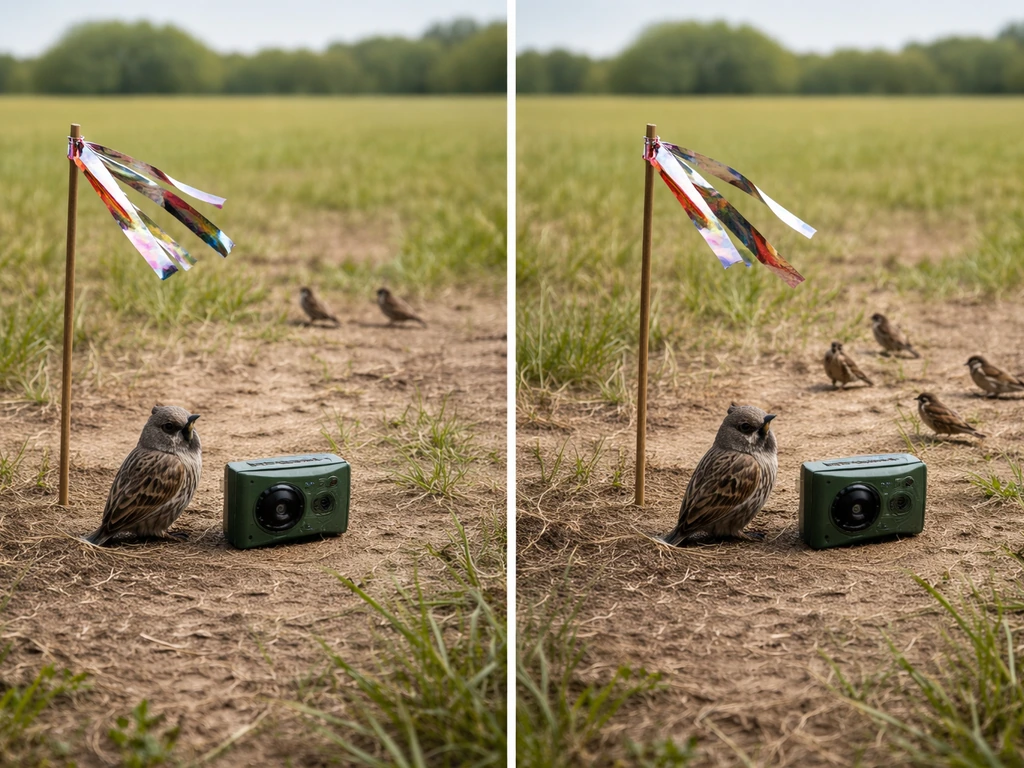
Do Bird Scarers Work? How They Work and When They Fail
Do bird scarers work? See how visual, sonic and motion deterrents work, why birds habituate, and when to combine methods
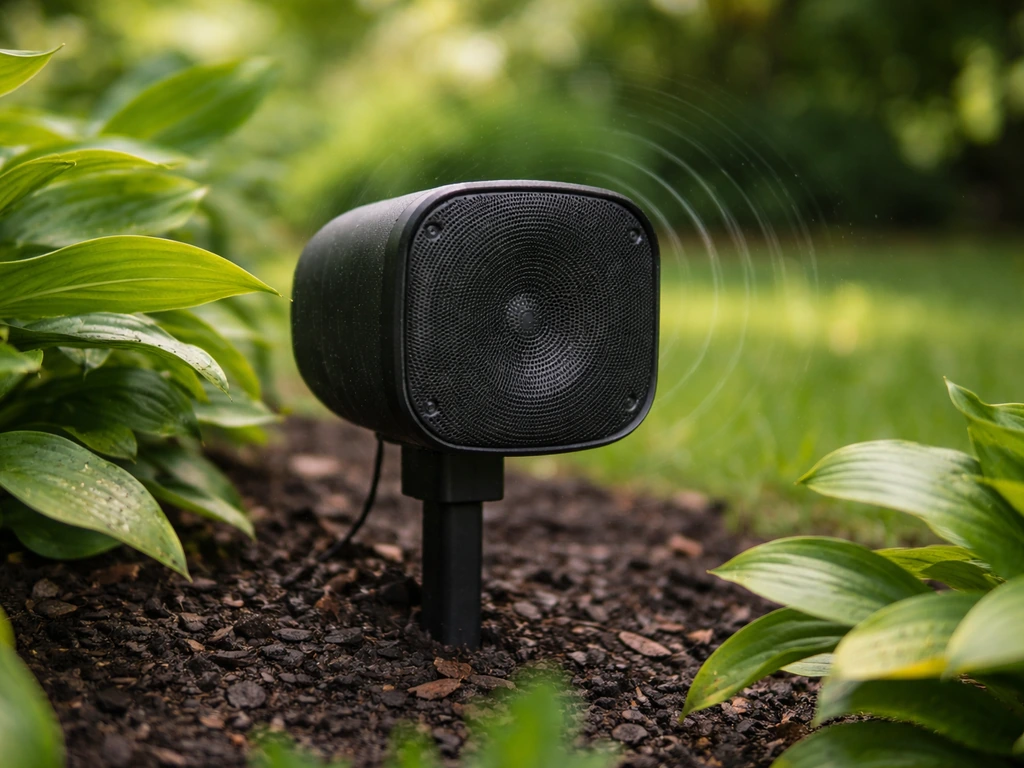
Do Bird Calls Work? When They Help and How to Set Up
Learn when bird calls deter nuisances, why they fail, and how to set up schedules, placement, and troubleshooting tips.
How to Avoid Bird Attack Drone: Practical Safety Checklist
Practical, humane steps to reduce bird–drone collisions: preflight checks, deterrents, tactics, and legal guidance.