
Recorded bird calls, specifically predator calls and distress calls played through a speaker device, can work as a bird deterrent, but only under the right conditions. Used well, they cause birds to flee or avoid an area. Used poorly, birds simply get used to them and ignore them within days. The honest answer is: they help, but they are not a set-and-forget solution, and they work a lot better when combined with other deterrents.
Do Bird Calls Work? When They Help and How to Set Up
Marcus Weatherby
28 May 2026
How bird calls are used as deterrents
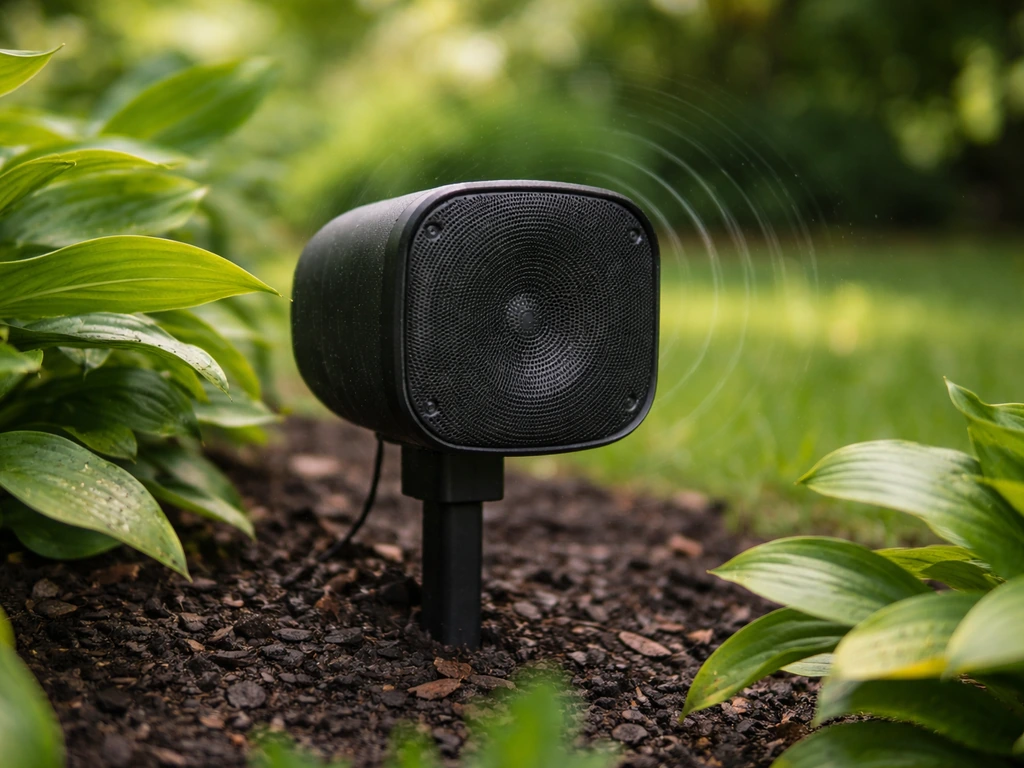
When people talk about bird call deterrents, they usually mean one of two things: recorded distress calls (sounds a bird makes when it is injured or frightened) or predator calls (sounds made by hawks, falcons, or owls). Both types exploit the same instinct: birds that hear them associate the area with danger and leave. Devices like the Bird-X BirdXPeller PRO broadcast these species-specific sounds through outdoor speakers on a timed schedule.
There is also a separate category, ultrasonic devices, that claim to repel birds with high-frequency sound above the range of human hearing. These are marketed heavily but are a completely different technology from recorded calls, and the evidence for them is much weaker. More on that below.
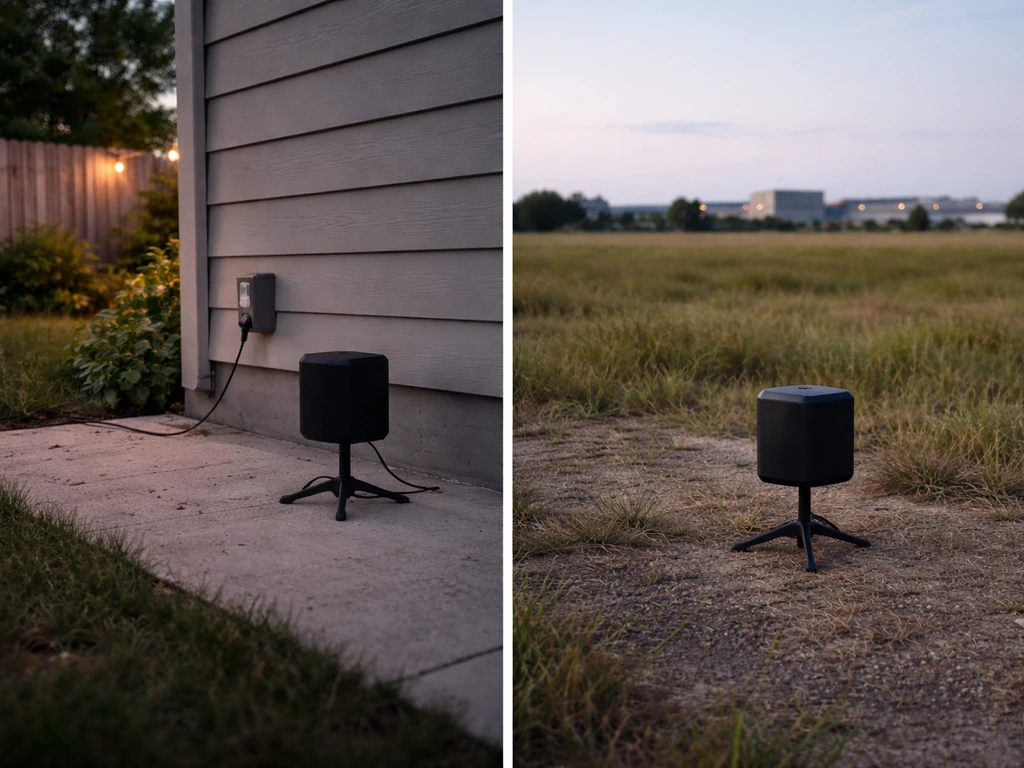
Sonic devices using real bird calls are the version worth taking seriously. They are used in agriculture, on commercial rooftops, at airports, and in backyards. They come in weatherproof units that mount on walls or posts and connect to a programmable timer or motion sensor. Some units cover a small patio; commercial-grade units claim coverage of an acre or more.
What research and real-world results actually show
The research picture is more nuanced than manufacturers suggest. For audible, biologically meaningful calls like predator and distress sounds, there is real evidence of short-term effectiveness. Birds respond to these sounds because they are wired to do so. Field reports from farms, airfields, and commercial properties confirm that birds do clear out, at least initially.
However, the picture changes when you look at long-term performance. A blank" rel="noopener noreferrer">radar-activated hazing system tested at an airport that used acoustic alarm calls found birds did not habituate when the calls were triggered by actual bird presence rather than a fixed timer. That is a key finding: the system worked precisely because it was not predictable. Static, repetitive playback tends to fail within a few days.
Ultrasonic devices, on the other hand, have very poor support in the literature. A Transport Canada evaluation used in airport bird control planning states plainly that ultrasound is not effective as a bird deterrent device. Academic work published in the Wildlife Society Bulletin reached the same conclusion, finding no scientific evidence that ultrasound provides effective bird control.
Bomford and O’Brien’s 1990 review of sonic deterrents similarly summarizes the ultrasound evidence as lacking scientific support for effective bird control Academic work published in the Wildlife Society Bulletin reached the same conclusion. The core problem is that birds do not communicate in the ultrasonic range, so those sounds carry no biological meaning for them.
The FTC has also warned manufacturers of ultrasonic pest devices about unsubstantiated claims.
Bottom line: audible calls using real bird sounds can work. Ultrasonic devices, despite heavy marketing, consistently underperform and are not worth relying on.
When bird calls fail (and why)
Habituation is the main reason bird calls stop working. Birds are smart enough to learn that a sound with no real consequence is not actually a threat. If the same call plays every 20 minutes like clockwork, birds will often be perching near the speaker within a week. This is especially true for species like pigeons, starlings, and crows, which are highly adaptable.
Species mismatch is another common failure. Predator calls only work well if the sound matches a predator the target bird actually fears in your region. A crow call will not deter a gull. A generic raptor screech may not register for pigeons the way a targeted falcon call does. Many cheap devices play non-specific sounds that are essentially meaningless to the birds you are trying to move.
Poor placement kills results. If the speaker is pointed the wrong way, mounted too low, or blocked by walls and fences, the sound simply does not reach the birds where they are actually roosting or congregating. Coverage range claims from manufacturers are usually measured in ideal open-air conditions.
Nesting season is also a major factor. Birds that are actively nesting are much harder to deter with sound alone because the drive to protect eggs or young outweighs the fear response. This is also where legal complications come in, which is covered further below.
- Repetitive, predictable playback leads to rapid habituation
- Call type does not match the target species or regional predator set
- Speaker is placed too low, incorrectly aimed, or blocked by structures
- Birds are actively nesting and fear response is suppressed
- Single-device coverage is insufficient for the area size
- Using ultrasonic-only devices that birds cannot meaningfully detect
How to use bird calls effectively
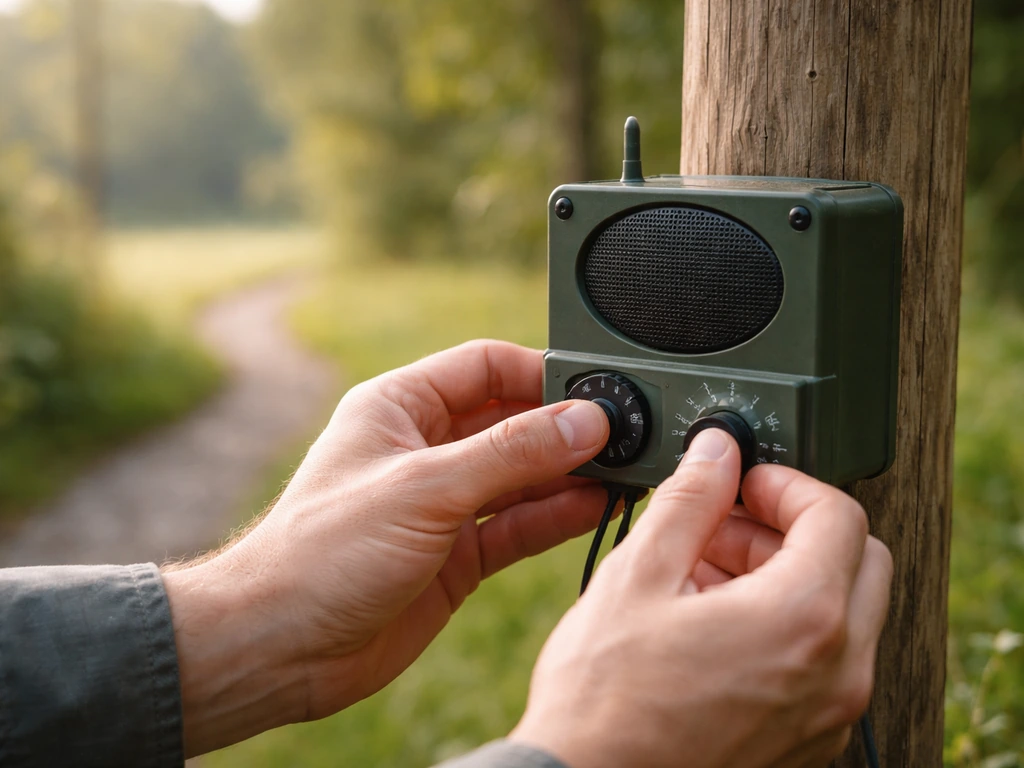
The single most important thing you can do is break the pattern. Birds habituate to predictable stimuli. If you vary the type of call, the timing, and the volume, the threat stays credible for much longer. Some newer devices handle this automatically by randomizing the call sequence and interval. Look for that feature when buying.
Timing and scheduling
Start calls before birds arrive in the morning rather than after they have already settled in. Birds are most responsive during their peak activity hours, typically dawn and mid-morning. Devices that auto-shut off at night are helpful because constant overnight noise disturbs neighbors and provides no benefit since most pest birds are not active then. An interval of every 10 to 30 minutes is a common setting, but using a randomized interval, say anywhere from 8 to 45 minutes, is significantly more effective over time.
Placement and coverage
Mount speakers at height, ideally 6 to 10 feet off the ground for residential use, or higher on commercial buildings, and aim them toward the area birds use most. For open areas like gardens or flat roofs, face the speaker outward from the center of the problem zone rather than inward. For larger properties, you will likely need multiple units. Do not assume one device covers a full half-acre garden based on the box claim; real-world obstacles cut that range significantly.
Call rotation and variety
Rotate between distress calls and predator calls, and if your device supports it, use species-specific calls matched to the birds you are targeting. A mix of a hawk screech, a peregrine falcon call, and a species-specific distress call is more effective than playing the same sound on repeat. Periodically updating the call library, if your device allows it, adds another layer of unpredictability.
Volume
Louder is not always better. Set the volume loud enough to cover the target area but not so loud it crosses into nuisance territory for neighbors or causes distress to pets. Start at a medium setting, observe results, and adjust. For enclosed patios or smaller spaces, lower volume is more appropriate than for open fields.
Choosing the right setup for your situation
| Setting | Recommended Setup | Key Considerations |
|---|---|---|
| Backyard / patio | Single compact sonic unit with predator + distress calls, randomized timer | Neighbor proximity limits volume; combine with visual deterrents |
| Garden or open yard | One or two units mounted on posts at height, aimed outward | Cover crop rows with additional reflective or physical deterrents |
| Flat commercial roof | Multiple directional units at perimeter, commercial-grade | Wind direction affects coverage; pair with spikes on ledges |
| Building facade / ledges | Directional speaker aimed at ledge, motion-triggered if possible | Habituation risk is high on ledges; physical spikes are more reliable here |
| Solar panels | Speaker mounted near panel array plus physical mesh barrier underneath | Calls alone insufficient; mesh prevents roosting under panels |
| Pool area | Sonic unit combined with visual scare deterrents (reflective tape, decoys) | Consistent water source is a strong attractant; multimodal approach needed |
| Aviation-adjacent areas | Integrated system with radar activation or demand-performance triggering | Follow FAA guidance; habitat modification is the core strategy, not calls alone |
For high-stakes settings near airports or airfields, bird calls alone are far from sufficient. FAA wildlife hazard management guidance emphasizes habitat modification and reducing attractants as the foundation, with acoustic and other deterrents playing a supporting role within an integrated plan. A radar-activated system that triggers calls only when birds actually enter the area is far more credible to birds than a timer-based system and dramatically reduces habituation.
Safety, legal, and ethical considerations
In the United States, most common pest birds like starlings and house sparrows are not protected under federal law, but many others are. Migratory birds are protected under the Migratory Bird Treaty Act. This means you cannot use deterrent methods that harm, trap, or kill protected species without a federal permit. Sonic deterrents that simply broadcast sounds are generally legal for any species because they do not injure birds. However, if you are trying to deter a species you suspect may be protected, check with your state wildlife agency or the USDA APHIS Wildlife Services office first.
Noise ordinances are a real concern in residential areas. Running a sonic device at high volume overnight or at dawn can violate local noise rules and will definitely generate neighbor complaints. Keep volume proportionate to the setting, use night auto-off features, and let neighbors know what you are doing if the device is near a property line.
From an ethical standpoint, the goal is to move birds away without harming them, which is exactly what properly deployed sonic deterrents do. The concern is causing unnecessary distress to non-target species, including songbirds you may actually want in your garden. Aim speakers specifically at problem areas and avoid broadcasting into habitat where beneficial birds are nesting.
When bird calls are not enough: alternatives and combined strategies
Bird calls work best as part of a layered approach. Bird calls are sometimes attractive to birds at first, so this should be one piece of a wider plan Bird calls work best as part of a layered approach.. Relying on sound alone is one of the most common mistakes, and it is why people often give up on sonic deterrents entirely. Combining them with physical and visual deterrents produces much better long-term results because each method addresses the problem differently.
Physical barriers are the most reliable long-term solution for specific hotspots. Spikes on ledges and beams stop roosting at the installation point regardless of habituation. Netting over eaves, under solar panels, or across a gap where birds are nesting physically excludes them. These methods do not wear out the way sound-based deterrents can.
Visual deterrents, including reflective tape, predator decoys (moved regularly to prevent habituation), and laser bird scarers, add another sensory layer. Like sonic calls, visual methods can lose effectiveness if static and predictable, so rotating placement and type matters here too. Laser systems, in particular, can be very effective for low-light conditions and larger open areas.
Other scare devices like bird scarers that use gas-powered bangers or automated motion-activated sprinklers can complement sonic calls well, especially in agricultural or garden settings. Laser bird scarers and other visual scare tactics can also help, but they typically work best when you rotate and combine strategies rather than using one method alone. The more unpredictable and multimodal the deterrent environment, the longer it stays effective.
Habitat modification is the most sustainable strategy of all. Remove food sources, block water access where possible, and eliminate nesting opportunities before they become established. No deterrent, sonic or otherwise, will fully compensate for a site that is actively attractive to birds.
- Start with habitat modification: remove food, water, and nesting access points
- Deploy sonic bird call devices with randomized timing and species-specific calls
- Add physical barriers (spikes, netting) at the highest-use roosting and nesting spots
- Layer in visual deterrents, rotated regularly to prevent habituation
- If problems persist, consult a professional wildlife management service, especially near aviation areas or for protected species
If you have tried sonic calls and they stopped working, the most likely fix is not a new device, it is a better strategy around the device you already have. Vary the schedule, check the placement, add a physical deterrent at the exact spot birds favor, and reduce whatever is attracting them in the first place. That combination will outperform any single deterrent every time.
FAQ
Do bird calls work at night or in the dark?
Yes, but only if the sound reaching them is meaningful and unpredictable. If your device is too weak, aimed away, or running on a fixed timer, birds can habituate while still “hearing something.” For best odds, use motion or radar triggering (when available) and vary call type, timing, and volume.
How long should it take to see results after I start using bird calls?
They are usually less effective after birds have roosted, because habituation starts quickly and nesting or daily routines take over. Start before peak arrival (dawn or mid-morning) and keep the system running on a schedule that changes intervals, then reassess placement after a few days.
Can bird distress calls attract birds instead of scaring them away?
Recorded distress calls can help, but they can also attract attention at first depending on the local birds and context. If you see birds increasing around the speaker, switch to predator calls for a cycle, confirm species match, and lower volume so it does not create a nuisance or unintended lure.
Why do my bird calls seem to do nothing if the device is loud?
Aiming inward, mounting too low, or letting sound bounce off walls can make the calls miss roosting spots. As a quick check, stand where birds land, verify the speaker faces that direction, and look for barriers like fences or shrublines that block sound.
Will bird calls scare away songbirds or other non-target birds?
It can, especially if you put the speaker near nesting habitat, bird feeders, or water features. To avoid stressing non-target birds, focus sound at the problem hotspot only, and remove attractants like standing water and open access to food.
How many speakers do I need for a yard or rooftop?
Do not rely on “coverage area” claims. Sound intensity drops quickly with obstructions, roof angles, and distance. For larger spaces, plan multiple units placed to create overlapping coverage of the birds’ landing and feeding areas.
Should I run distress calls all day or rotate different bird calls?
Yes, if your setup allows it. Many birds habituate to one sound pattern within days, so rotating distress and predator calls plus randomized intervals is generally more effective than repeating the same call at the same rhythm.
What should I do if birds are nesting where I want them to go?
Bird calls alone often fail during active nesting because the protective drive is strong. If nests are present, consider physical exclusion at the hotspot (like spikes or netting where legal and safe) and avoid escalating noise during sensitive periods.
If bird calls stopped working, should I buy a different product?
If the birds keep returning, first check species mismatch and placement, then change the schedule. A common fix is to add a physical barrier at the exact perching or roosting point and keep the sound as a secondary layer.
How loud should bird calls be to work without causing neighbor problems?
Start with moderate volume and adjust based on whether birds leave the key landing spots. Too loud can trigger neighbor complaints and can also disturb pets. A practical approach is to begin mid-level, observe for a few morning cycles, then increase only if the birds are still in the hotspot.
Are bird calls legal to use everywhere?
In residential settings, many people can legally use sound-based deterrents, but rules vary and protected species rules still apply. If you suspect the target birds include migratory or other protected species, confirm with your state wildlife agency or relevant wildlife office before changing tactics.
Do bird calls work for airport or high-risk areas?
If your goal is hazard control, sound should be part of an integrated plan, not the primary method. Triggering based on bird presence (radar or similar) is typically far more credible to birds than a fixed schedule because it reduces predictable exposure.
Is ultrasonic repellent the same thing as playing bird calls?
Ultrasonic devices are different from recorded calls, and the evidence for effective bird deterrence is weak. If you want predictable results, prioritize audible, biologically meaningful calls with real bird sounds and a randomized or presence-triggered strategy.
Next Articles
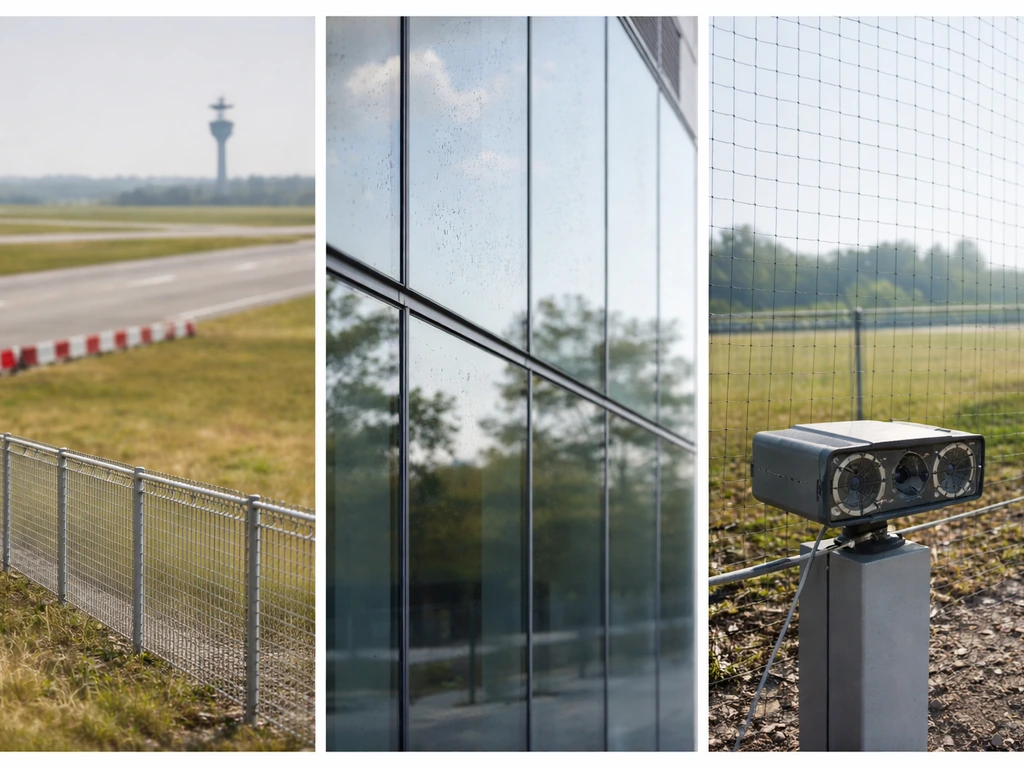
What Is Already Being Done to Prevent Bird Collisions
Learn what’s already used to prevent bird collisions, from airport safeguards to building glass and humane deterrents, p
Best Bird Strike Prevention: Practical Steps That Work
Step-by-step best bird strike prevention: remove attractants, use exclusion and deterrents correctly, and maintain resul
How to Prevent Bird Strikes: Practical Steps and Prevention Plan
Learn how to prevent bird strikes with layered steps, deterrent setup, maintenance, and when to hire pros.