
Trapping is one of the most targeted tools available for nuisance bird control, but it works best when you match the trap type to the specific bird, set it up correctly, and pair it with longer-term prevention. For most residential and commercial situations, live-capture cage traps are the go-to humane option. They let you remove the problem bird without harming it, then release it or hand it off to the appropriate authority. That said, trapping isn't always the right first move, and in many cases, exclusion or deterrents will solve the problem faster and with less ongoing effort. Bird control methods also often focus on exclusion or deterrents to solve the underlying issue trapping.
Bird Trapping Methods: Safe, Humane Steps and Alternatives

Marcus Weatherby
10 Jun 2026
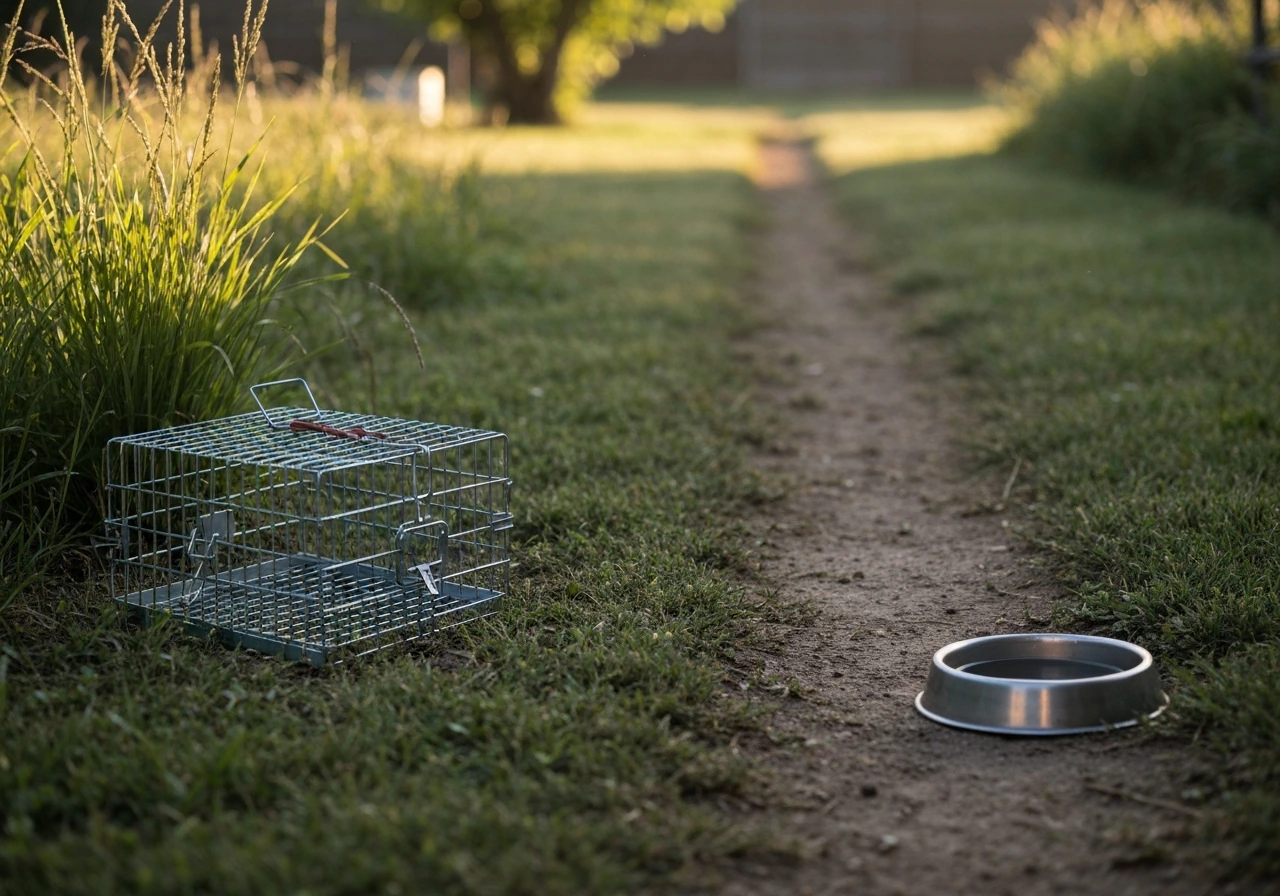
Figure out which bird you have and why it's there
Before you do anything else, identify the species. This matters for two reasons: it tells you how the bird behaves (which drives trap selection and placement), and it determines what legal framework applies to you. Migratory species in the U.S. fall under the Migratory Bird Treaty Act, which means you may need a federal permit before trapping. In the UK, virtually all wild birds are protected under the Wildlife and Countryside Act 1981, and in the EU, the Birds Directive restricts any capture or disturbance of protected species to specific, permitted circumstances.
Here's a quick field guide to the most common nuisance birds and their typical patterns:
| Bird | Typical problem | Key behavior clue |
|---|---|---|
| European Starlings | Roosts in large flocks, nests in building voids | Noisy, gregarious, arrive in waves at dusk |
| Feral Pigeons | Ledge fouling, structural damage from nesting | Stay close to the building all day; don't migrate |
| House Sparrows | Nest in signage, vents, and eaves | Small, brown, often seen entering a tight gap repeatedly |
| Canada Geese | Lawn grazing, pond fouling, aggressive nesting | Ground-level; will return to same site year after year |
| Crows/Ravens | Crop/garden damage, food-waste raiding | Intelligent; very wary of new objects in their space |
| Gulls | Rooftop nesting, food theft, dive-bombing | Seasonal nesters; very territorial once eggs are laid |
| Woodpeckers | Structural pecking on wood siding | Drum in short bursts; favor specific boards or trees |
Why the bird is showing up is just as important. Food, shelter, water, or a safe nesting site is almost always the answer. Pigeons on a warehouse roof are there because the flat surface is predator-free and warm. Geese on a corporate lawn are there because it's open, flat, and close to water. Starlings in a vent are there because it's a perfect cavity nest site. If you understand the draw, you can remove it, which is often more effective than trapping alone.
When trapping actually makes sense vs when to use barriers or deterrents
Trapping is the right call in a fairly specific set of circumstances. Washington State's wildlife guidance frames it well: trapping is most appropriate for emergency situations, targeted removal of a specific problem bird, or when it's genuinely the only practical solution. If you have 200 pigeons on a rooftop, trapping isn't going to solve that problem, the flock will replenish faster than you can catch individuals. But if you have a single Canada Goose that's become aggressive near a school entrance during nesting season, a targeted trap-and-relocate approach makes sense.
Here's a simple way to decide which tool fits your situation:
- Use trapping when you need to remove a specific bird or small group that keeps returning despite deterrents, or when a bird is injured/sick and needs capture for welfare reasons.
- Use exclusion (netting, spikes, wire) when birds are accessing a defined area like a ledge, vent, gap, or roofline — physical blocking is almost always more permanent than trapping.
- Use deterrents (visual, sonic, ultrasonic, chemical repellents) when the issue is birds landing or roosting in open areas where exclusion isn't practical.
- Use habitat modification (removing food sources, draining standing water, trimming vegetation) when the attractant is the root cause — this is often the fastest long-term fix.
- Use a combination approach for large-scale infestations, especially in commercial or aviation contexts where the USDA APHIS integrated model (harassment, exclusion, pyrotechnics, trapping) reflects real-world best practice.
One honest reality check: if birds are actively nesting, many jurisdictions make it illegal to disturb the nest, eggs, or chicks even on your own property. In the UK, all wild bird nests with eggs or young are protected. In the U.S., disturbing an active nest of a migratory species without a permit is a federal violation. Check the calendar and the nest status before you act.
Trap types: what's available and how to choose
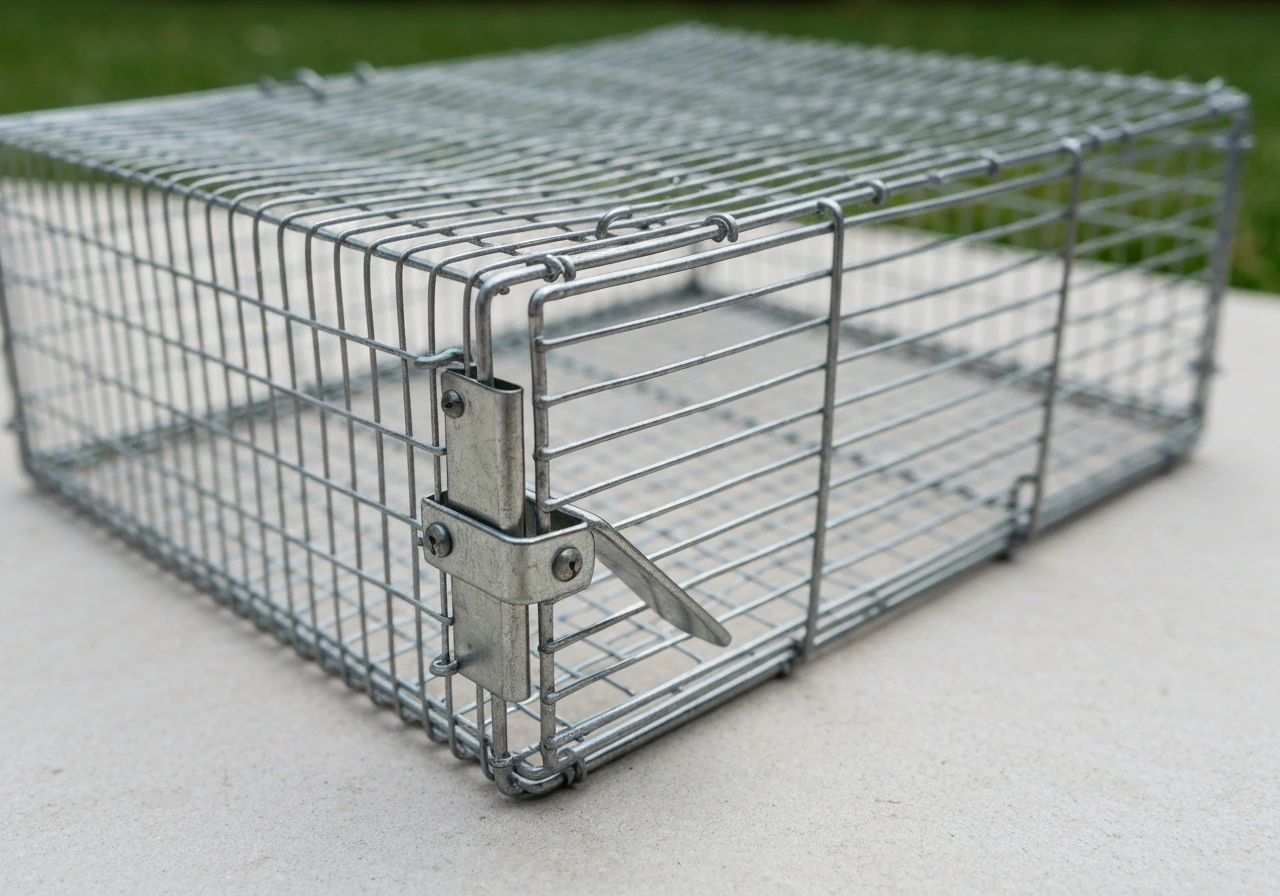
The most widely used and humane option for nuisance bird control is the live-capture cage trap. It catches the bird without harming it, gives you time to assess what you've caught, and lets you release non-target animals safely. Beyond that, there are a few other trap categories worth knowing about.
Live-capture cage traps
These are wire-mesh enclosures that close (or drop a door) when a bird enters and triggers the mechanism. The most common designs for nuisance birds are decoy/colony traps (large walk-in enclosures that use a few live 'caller' birds inside to attract others) and single-catch drop-door traps. APHIS uses decoy traps extensively for European Starlings and notes that birds held inside decoy traps must have access to fresh food and water daily, welfare during holding is a legal and ethical requirement, not optional.
Walk-in funnel traps
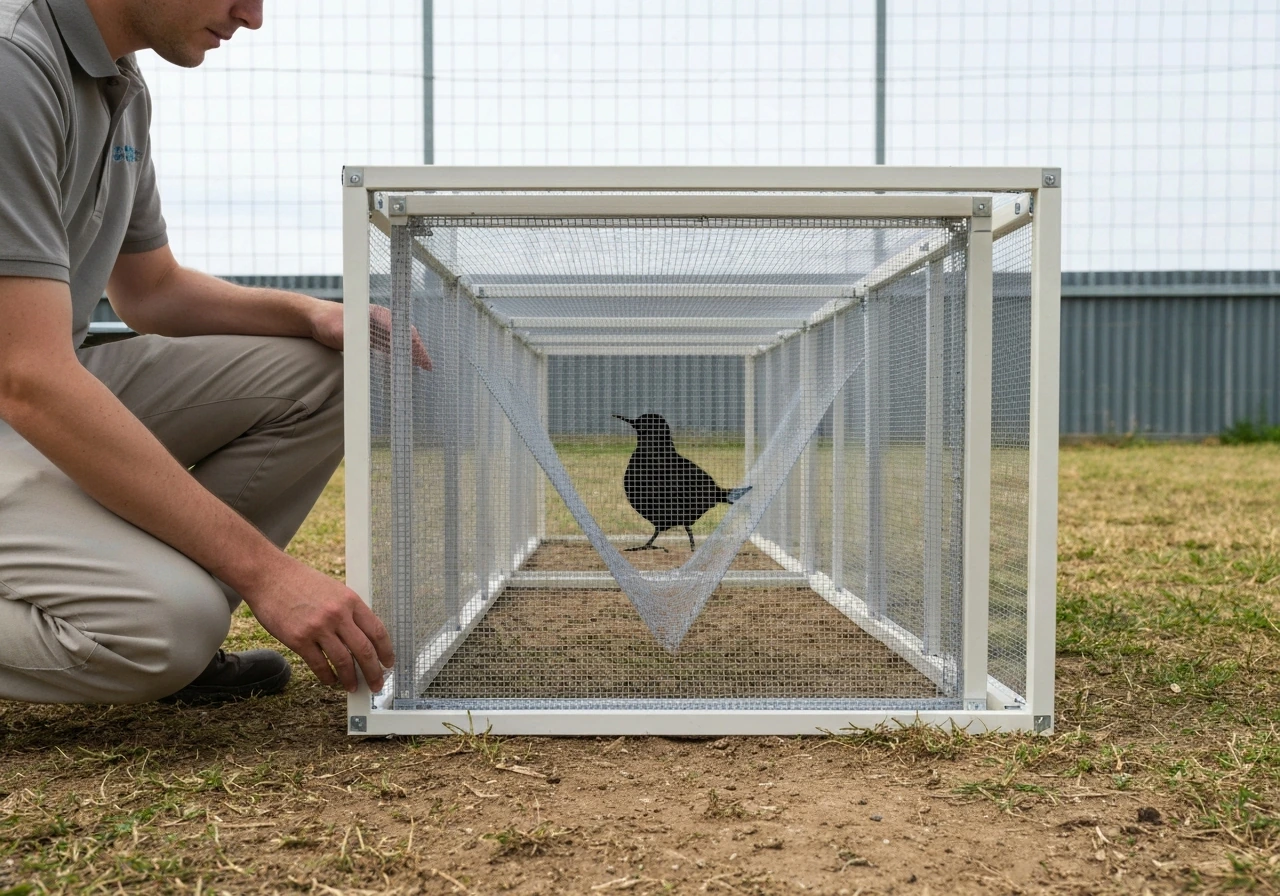
These are designed for ground-feeding birds like pigeons, doves, and sparrows. The bird walks through a one-way opening and can't find its way back out. They work best when birds are already conditioned to feeding in a particular spot. USGS research notes a real limitation here: funnel-style traps are biased toward less wary birds, so experienced, cautious individuals in a flock tend to avoid them. This is worth knowing if you're dealing with smart, urban-adapted birds like crows.
Mist nets and cannon/whoosh nets
These are professional-grade tools used primarily in research, wildlife management, and aviation safety contexts. Mist nets are fine mesh nets strung between poles that birds fly into and become tangled. Whoosh nets and cannon nets are deployed rapidly to catch groups of ground-feeding birds. These require significant skill to operate safely and, in most jurisdictions, a permit. Don't attempt these without proper training, bird injuries and unintended mortality are real risks if the net isn't checked immediately.
Non-lethal containment alternatives
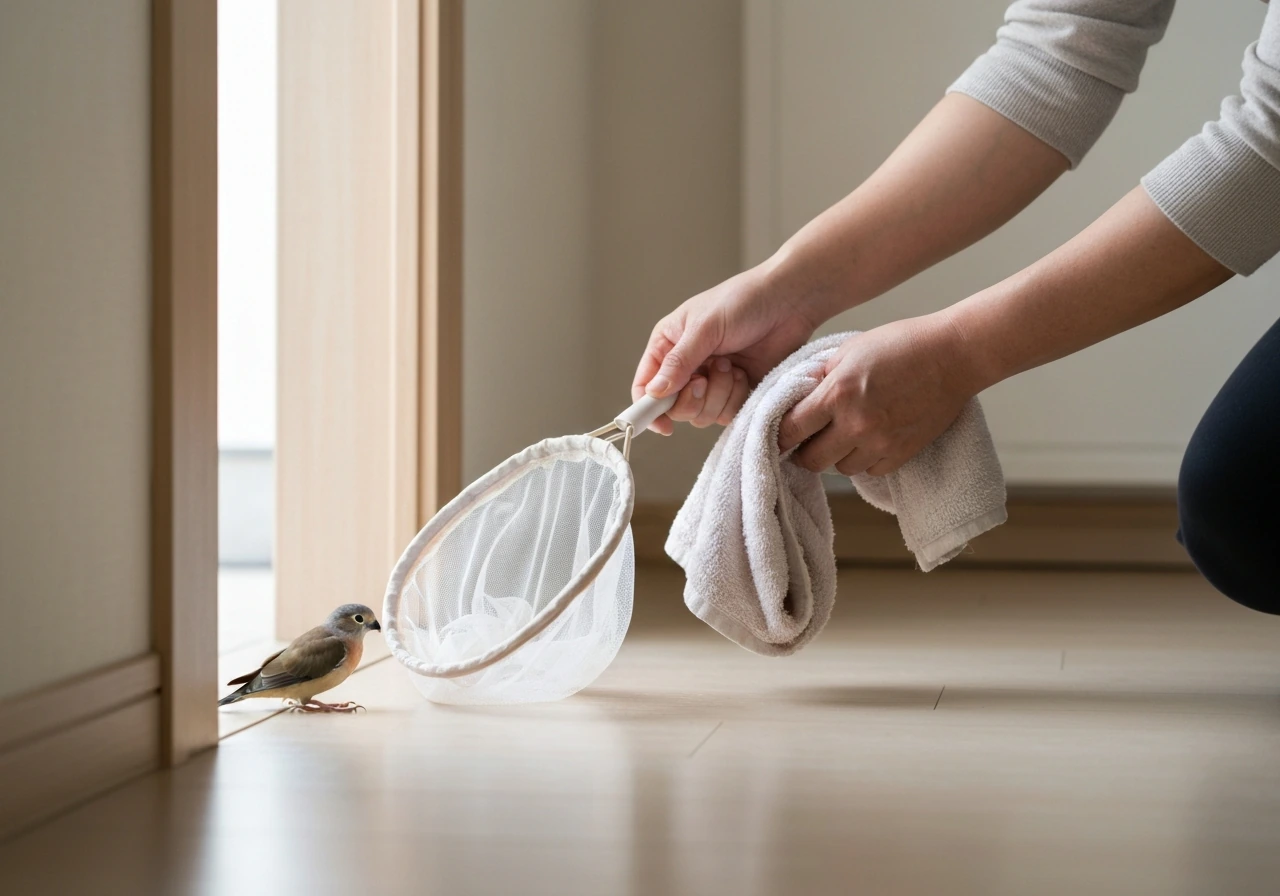
For situations where you need to temporarily restrict a bird's movement (like guiding an indoor bird toward an exit), soft catch-and-release equipment like hand nets or towel capture are appropriate. These aren't 'traps' in the traditional sense but are legitimate short-term containment tools, especially useful in warehouses, airports, or large indoor spaces.
| Trap Type | Best for | Skill level | Permit often needed? |
|---|---|---|---|
| Live cage / drop-door trap | Pigeons, starlings, sparrows — small numbers | Beginner | Depends on species/location |
| Decoy/colony trap | Starlings, blackbirds — flock management | Intermediate | Often yes (U.S. federal for migratory birds) |
| Walk-in funnel trap | Ground-feeding pigeons, doves | Beginner-Intermediate | Depends on species/location |
| Mist net | Research, professional removal | Expert only | Yes in most jurisdictions |
| Whoosh/cannon net | Flock capture, aviation contexts | Expert only | Yes |
Setting up your trap: placement, timing, bait, and conditions
Placement
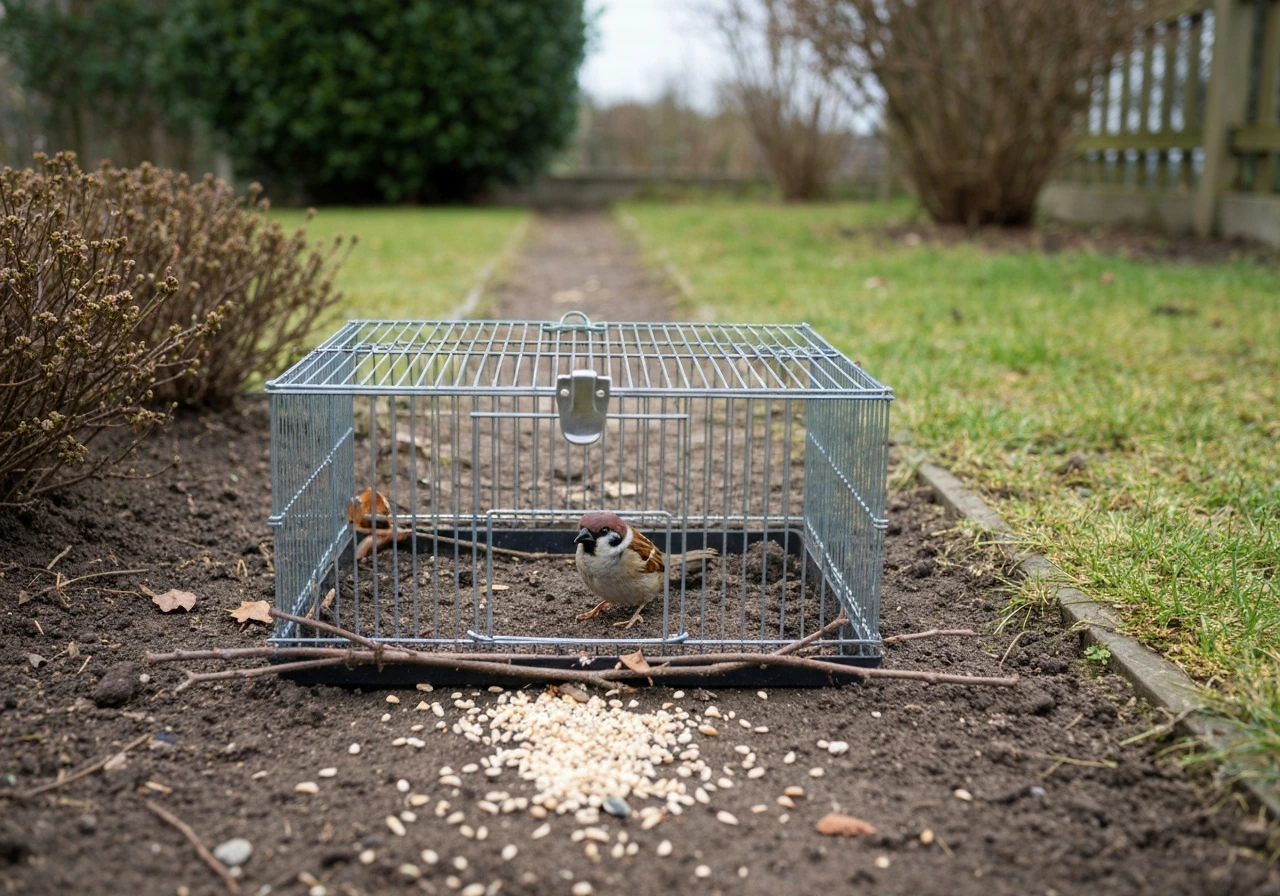
Put the trap exactly where the birds are already spending time. This sounds obvious, but it's the most common mistake, people place traps in convenient locations rather than in the birds' actual feeding, roosting, or walking paths. For ground-feeding birds, that means directly on the ground in their regular foraging area. For ledge birds, a cage on or adjacent to the ledge they're using. For birds entering a building void, position the trap at or near the entry point after blocking all other entry points.
Camouflage the trap slightly. A shiny new wire cage sitting in the open will spook wary birds for days. Cover the top and sides loosely with natural materials (leaves, burlap) or let it sit unset in place for several days so birds get used to it before you activate it.
Timing
Set traps at the beginning of the birds' active period. For most species, that's early morning when they're hungry and actively foraging. Don't set a trap and walk away for a full day, you need to check it frequently. U.S. humane capture guidance recommends blank" rel="noopener noreferrer">releasing birds within 24 hours of capture. If you can't check the trap every few hours, don't set it. Leaving a bird in a trap overnight in summer heat is a welfare and legal problem.
Bait and lures
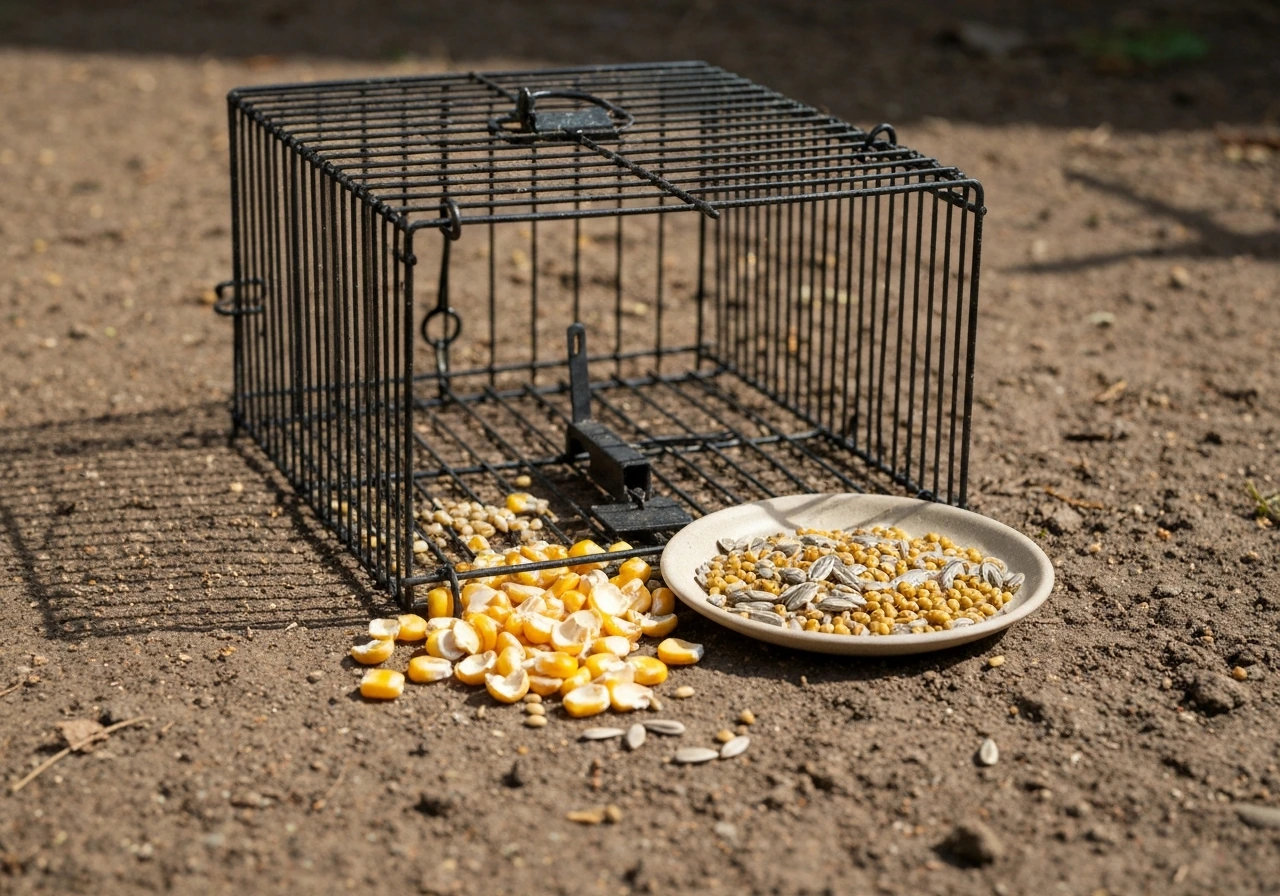
Not all traps require bait, but for cage traps, bait significantly improves catch rates. Match the bait to what the birds are actually eating in your area. Cracked corn and milo work well for starlings, blackbirds, and sparrows. Whole grain, bread, or cracked corn draws pigeons effectively. For decoy traps, using a few live 'call birds' (the same species) inside the trap is one of the most effective attractants, other birds are drawn to what looks like a safe feeding group. Under APHIS guidance, those decoy birds must have food and water at all times.
Environmental conditions
Avoid setting traps in direct sun during hot weather, heat stress and capture myopathy (a serious muscle condition triggered by physical exertion and inability to cool down) are real dangers for captured birds. Place traps in shade where possible. Don't set traps ahead of incoming storms; a bird caught in a cage during a downpour or temperature drop is at serious risk. Also factor in foot traffic, a trap in a public area will be disturbed constantly and may attract curious people who open it.
Humane handling, safety, and what to do with non-target catches
The moment you have a bird in a trap, slow down and work calmly. Wild birds experience enormous stress from capture, and human noise, eye contact, and touch all amplify that stress. If you need to transfer the bird to a transport carrier, cover the trap with a dark cloth first to calm the bird, then move it into a ventilated, dark box or carrier. Keep the environment quiet during transport, no loud music, no sudden movements.
For physical handling, the key technique is controlling the wings. Wrap the bird in a light towel with wings tucked against its body, supporting the keel (breastbone) from below. Don't squeeze the chest, birds breathe by expanding their ribcage, and constricting it even briefly can be fatal. U.S. federal regulations under 50 CFR and associated animal welfare guidance are clear that you must avoid physical and psychological trauma during handling, and you should move the bird as quickly and efficiently as possible.
Non-target catches happen. Small mammals, non-problem birds, and occasionally protected species end up in traps intended for something else, this is a well-documented risk flagged in USDA Forest Service research on incidental captures. If you open a trap and find something you didn't intend to catch:
- Stay calm and don't attempt to handle the animal unless it's clearly in distress.
- For common, unprotected non-target birds: open the trap door and allow the bird to fly free.
- For any protected species (raptors, songbirds in the U.S., virtually all wild birds in the UK): contact your local wildlife agency immediately. Do not attempt to release or relocate without guidance — mishandling a protected species, even accidentally, can carry legal consequences.
- Document what you caught, when, and what you did. This matters if you ever face a compliance question.
For target birds you've legally captured: follow your jurisdiction's rules on relocation. In many U.S. states, you cannot simply drive a pigeon or starling to a park and release it, some states have specific transport distance limits or require you to turn birds over to licensed wildlife handlers. Check your state DNR or fish and wildlife agency's specific guidance before you act.
Why traps fail and how to fix it fast
Most trap failures come down to a handful of predictable problems. Here's what to look for and how to correct it:
- Wrong location: If the trap is near where birds hang out but not in their actual travel path or feeding spot, they'll ignore it. Spend a day watching where birds actually walk and feed, then move the trap there.
- Trap is too conspicuous: A new, shiny, or obviously out-of-place trap will repel wary birds for days. Leave it unset in place for three to five days before activating. Cover it with natural materials to help it blend in.
- Wrong bait: If birds aren't entering, try switching the bait to exactly what they're eating nearby. Pick up what's on the ground under where they feed — that's your best bait clue.
- Bait placed wrong: Scatter a small amount of bait outside the trap leading toward the entrance, then more inside. Birds need a reason to approach and then walk through the opening.
- Checking too infrequently: Birds that have been in a trap for hours get increasingly stressed and may thrash around, injuring themselves. Check every two to three hours during active periods.
- Weather disruption: Extreme heat, rain, or cold drops catch rates significantly. Birds in harsh weather prioritize shelter over food. Pause trapping in poor conditions.
- Intelligent avoidance: Crows, ravens, and some gulls are extremely neophobic (fearful of new objects). These species often won't enter traps reliably without extended conditioning. For these birds, professional-grade methods or deterrents are often more practical.
Move from trapping to long-term prevention
Trapping is a short-term fix. If trapping alone is not working or not appropriate, nuisance bird control methods like exclusion, deterrents, and habitat changes can provide longer-term relief. If you trap ten pigeons off a rooftop but leave the roosting surface intact, ten more will move in within weeks. The point of trapping is to buy you time and reduce pressure while you implement permanent solutions. Here's how to make the transition:
Physical exclusion
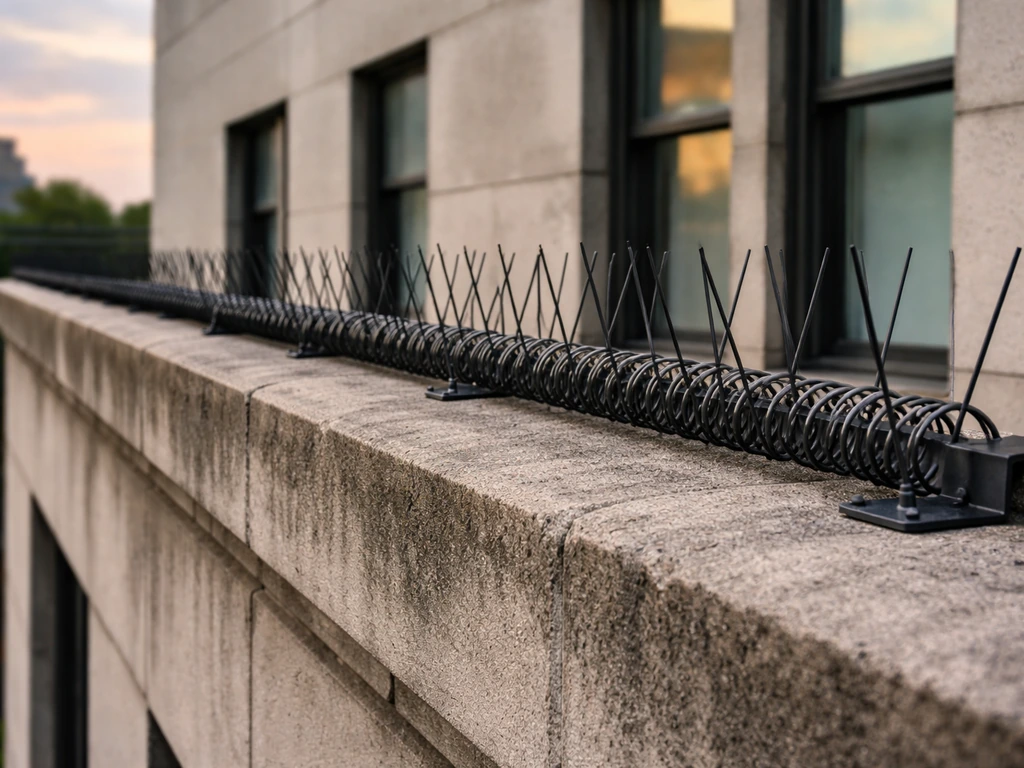
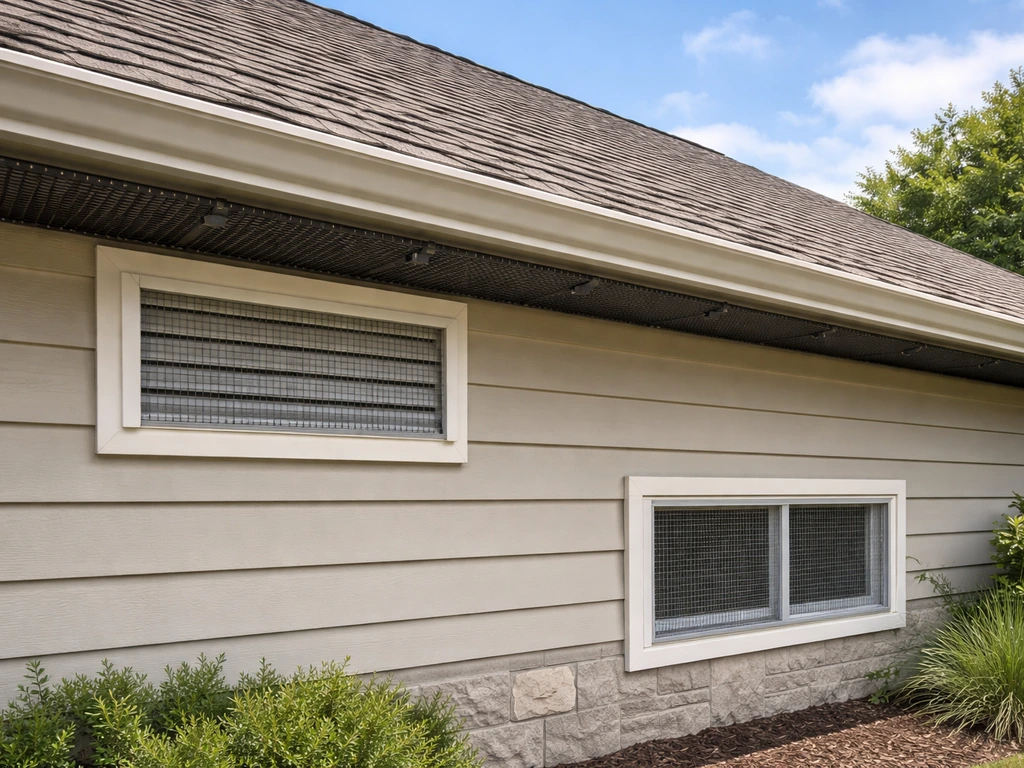
Close off the spaces birds are using. For ledges and parapets, bird spikes, coil systems, and slope modifications (like 45-degree angled surfaces) deny landing and nesting spots. Minnesota DNR guidance on gull control notes that spikes work best on narrow ledges, while wire systems or netting are better for wider flat surfaces. For gaps in buildings (vents, soffits, eaves), hardware cloth or purpose-made vent covers are permanent solutions. For solar panels, exclusion mesh attached around the panel perimeter keeps birds from nesting in the gap underneath, but coordinate carefully so you don't seal birds inside the array while doing the work.
Habitat modification
Remove what's attracting birds in the first place. Cap chimneys and vents. Trim tree branches that give birds a launch point onto your roof. Drain or cover standing water. Secure trash bins and remove accessible food waste. In commercial settings, review loading dock practices and dumpster management, these are often the primary draw for starlings, sparrows, and pigeons.
Sensory deterrents
Once you've reduced the bird population through trapping and blocked the obvious attractants, sensory deterrents help keep remaining birds from settling back in. Visual deterrents (reflective tape, predator decoys, flash tape) work best in open areas where movement and light are disruptive. Sonic and ultrasonic devices work in some settings, sonic deterrents that play predator calls or distress calls can be effective for species like starlings and geese, particularly in open outdoor areas. Ultrasonic devices have more limited effectiveness, especially outdoors where the sound disperses quickly. Chemical repellents (applied to landing surfaces) can deter perching on treated areas. Combine methods for best results, birds adapt to single deterrents over time.
Monitoring
Set a regular inspection schedule after you complete the exclusion work. Check entry points every few weeks for new gaps or damage. Watch for early signs of re-colonization (fresh droppings, nesting material, feathers near vents) and address them immediately before a new group becomes established.
Residential, commercial, and aviation: what's different for each
Residential
For homes, the most common problems are pigeons on roofs and solar panels, house sparrows in vents, and starlings in eaves. Live cage traps work well here for targeted removal of small numbers. The bigger challenge is usually exclusion work, sealing a vent, installing spike strips on a parapet, or netting under a solar array. Most of this is DIY-accessible. The one thing to check first: if birds are actively nesting, you may need to wait until the nest cycle is complete before disturbing anything. For patios, gardens, pools, and windows, deterrents (visual, sonic, repellent gels) are usually more practical than trapping.
Commercial
Warehouses, retail facades, food processing facilities, and restaurants face stricter public health and food safety requirements around bird presence. For food premises in the UK, licence conditions specifically address using nets or traps to remove wild birds, with welfare requirements (food and water in cage traps) built into the licence conditions. In U.S. commercial food settings, pest management plans often need documentation. For large-scale starling or blackbird issues at grain storage or feedlots, APHIS' integrated approach, combining non-lethal harassment, exclusion, and trapping as one component, is the established model. Hire a licensed wildlife management professional for commercial-scale operations where the volume of birds, regulatory complexity, or public-facing environment raises the stakes.
Aviation
Bird strike prevention at airports operates under the most stringent regulatory and safety expectations of any context. Both the EU Birds Directive and U. S. federal regulations allow for derogations from normal bird protection rules specifically for air safety, but only when no other satisfactory solution exists and the conditions for a derogation are formally met.
In practice, airports use a combination of habitat management (grass height control, drainage management, predator deterrents), active harassment (pyrotechnics, trained raptors, sonic deterrents), and in some cases licensed lethal or live-capture trapping programs managed by wildlife biologists contracted to the airport. If you are comparing bird strike prevention methods, focus on habitat management, active harassment, and professionally managed removal programs that reduce risk near runways.
If you're working in an aviation context, this is not a DIY situation, it requires qualified professionals operating under specific wildlife damage management permits and working with the airport's wildlife hazard management plan.
Check the rules before you start
Before setting any trap for any bird, do three things. First, identify the species and confirm whether it's protected under federal, state/provincial, or local law. In the U. S.
, almost all wild birds are protected under the Migratory Bird Treaty Act, feral pigeons, European Starlings, and House Sparrows are the main exceptions. Second, check your state or country's specific trapping and transport rules. Some states require permits even for non-migratory nuisance birds; some restrict how far you can relocate a captured animal. Third, if there's any doubt about whether you need a permit, contact your local wildlife agency before you act, not after.
The USFWS Migratory Bird Permit Memorandum MBPM-4 covers capture and disposition requirements for depredating birds under permit, and it's worth reading if you're dealing with a migratory species in a damage management context. The USFWS Migratory Bird Permit Memorandum (MBPM-4) specifically addresses capture, handling, and disposition requirements for depredating birds under migratory-bird permits MBPM-4 covers capture and disposition requirements for depredating birds under permit.
Acting without the right authorization, even with good intentions, can result in legal liability that far outweighs the inconvenience of making a quick phone call first.
FAQ
How do I know whether I’m allowed to relocate a bird after live-capture in my area?
Relocation rules vary widely. Even if trapping is legal, some states or provinces limit relocation distance, require turning birds over to licensed handlers, or only allow relocation within the same jurisdiction. Before releasing, check your local fish and wildlife or DNR guidance for both transport limits and any species-specific disposition requirements.
Is it ever legal to trap outside the main nesting season, but still disturb nests?
Many jurisdictions protect active nests even when it’s not the peak of the breeding season, and what counts as “active” is often determined by presence of eggs or young, not the calendar. Treat any evidence of nesting material, eggs, or chicks as a stop signal and confirm legality for your species before setting traps near suspected nest sites.
What should I do if the bird I catch is injured or behaving abnormally?
Use the least handling possible to move the bird into a ventilated, dark, quiet transport container, then contact a licensed wildlife rehabilitator or your local wildlife agency. Do not attempt to feed or medicate. Injured capture birds can die from shock or heat stress if left unattended, so have a response plan before you set the trap.
Can I leave a live-capture cage trap unattended for a few hours to reduce disturbance?
Generally no, because welfare and capture myopathy risks rise quickly, especially in heat, direct sun, storms, and cold snaps. The article recommends frequent checks and releasing within 24 hours. Practically, plan to check on a schedule that prevents the trap from being in extreme temperature conditions for any extended period.
What’s the difference between using a trap bait and using decoy call birds, and what’s safer for welfare?
Bait draws birds to a feeding spot, while decoy call birds rely on social cues, usually with a few birds held inside the enclosure. Welfare expectations differ, for decoys you must provide food and water daily and manage holding conditions carefully. If you are not prepared to meet those welfare requirements, bait-based cage trapping is usually the more straightforward option.
How can I prevent catching non-target animals, like small mammals, when using cage traps?
Non-target captures often happen when trap placement overlaps with pathways used by other wildlife. Use cage designs and openings appropriate to the target bird size, place traps directly on bird use areas rather than general travel routes, and consider temporarily blocking nearby access points if feasible. Always identify contents promptly and follow legal disposition rules for non-target species.
What should I do if I catch a protected or migratory species by mistake?
Stop handling beyond what’s necessary to calm and secure the bird, then contact your wildlife agency or the appropriate federal or local authority as soon as possible. Protected species often have specific, permit-linked disposition rules, and the correct next step depends on the species and location.
How long should I wait for trap success before concluding the method isn’t working?
Birds should react quickly when the setup matches their patterns, placement is correct, and lure conditions are right. If you get zero target captures after a short, properly timed period, it usually indicates mismatch in location, timing, or lure choice rather than “bad luck.” Adjust trap placement to confirmed feeding or walking paths, and re-check bait or decoy strategy before extending effort.
Is using shiny or new equipment always a problem, and how long should traps acclimate?
Wary birds can avoid fresh-looking traps for days, especially in urban settings. The article suggests covering the top and sides loosely and letting the trap sit in place before activation. In practice, acclimate longer when birds have been pressured by past control or when the area is heavily visible to people and predators.
Can I use deterrents and traps at the same time, or will it reduce trap effectiveness?
It can. If deterrents are active in the same area where the trap is set, they may push birds away before they enter. If you combine approaches, typically you first stabilize bird pressure by addressing the specific attractant and then apply deterrents to other areas, leaving the trap’s access point unobstructed until captures are completed.
If I’m trapping for a single aggressive bird near a school, what extra precautions should I take?
Plan for rapid, documented handling and minimal public interaction. Since the area is public-facing, trap disturbance and curious interference are common, which increases stress and welfare risks. Coordinate with site management, schedule checks to avoid high foot traffic, and verify legal permissions for both the species and relocation before you start.
Are funnel-style one-way traps a bad idea for all cautious species like crows?
They are not always a bad idea, but they can underperform for highly wary birds because experienced individuals learn to avoid the trap setup. If you see birds repeatedly approaching without entering, switch tactics to cage trapping with better acclimation and camouflage, or focus more on exclusion measures that remove the feeding or roosting opportunity rather than relying on one-way capture.
Next Articles
Bird Deterrent Methods: What Works Now and How to Use It
Practical bird deterrent methods with best bets, setup steps, safety tips, and what to combine to stop landing and nesti
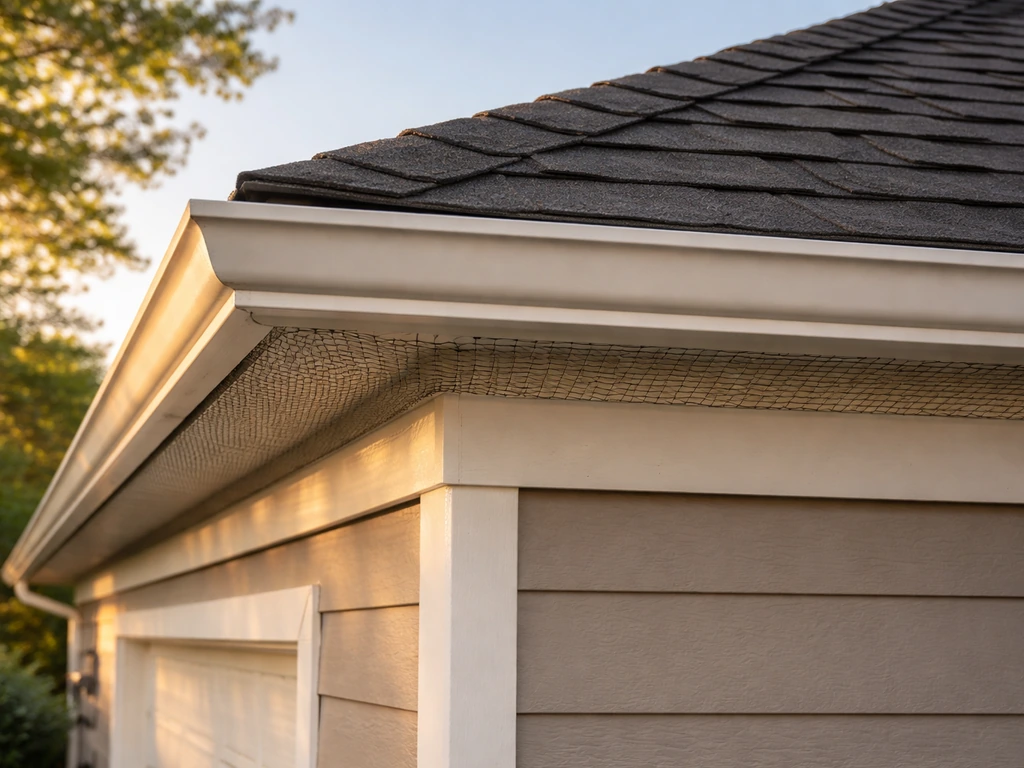
Bird Control Methods: A Practical Guide for Real Homes
Practical bird control methods for homes and businesses: identify species, block entry, deter roosting, manage habitat,
How to Avoid Bird Attack Drone: Practical Safety Checklist
Practical, humane steps to reduce bird–drone collisions: preflight checks, deterrents, tactics, and legal guidance.