
The best bird deterrent for a patio depends on two things: why the birds are landing and what your patio structure looks like. If pigeons are roosting on your pergola beams, a physical barrier like netting or spikes is your most reliable fix. If sparrows are dive-bombing your seating because you left crumbs out, that's a behavior problem first. Get those two things right before buying anything, and you'll spend less money and get better results.
Best Bird Deterrent for Patios: Top Options That Work

Marcus Weatherby
10 Apr 2026
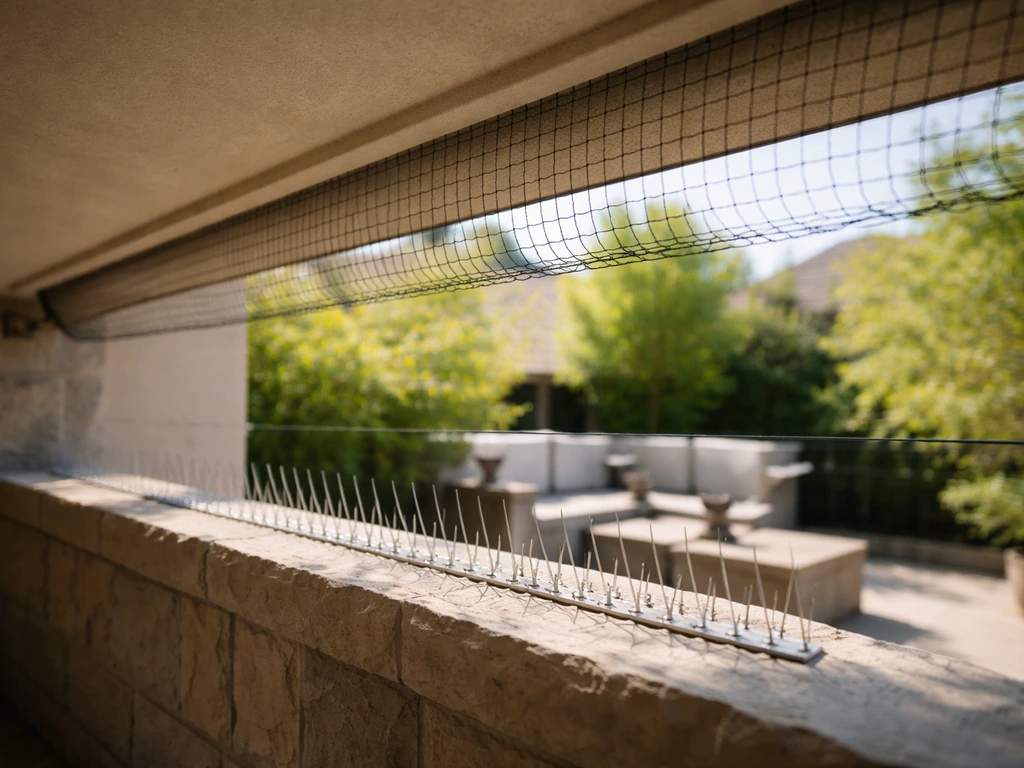
Why birds keep coming to your patio
Birds land on patios for four basic reasons: food, water, sheltered perching spots, or nesting opportunities. Figuring out which one applies to you changes everything about how you respond.
Food and water are the easiest to address. Pet food bowls left outside, birdbaths, leaky hose fittings, open trash, and even standing water in a plant saucer all draw birds in. If that's your problem, removing the attractant often reduces bird activity before you install a single deterrent.
Perching and roosting are trickier. Birds are remarkably good at landing on complex or irregular surfaces, adapting their grip and foot placement on contact with almost any material. That's why simply roughening a ledge or placing a shiny object nearby rarely stops a determined pigeon. Horizontal rails, patio covers, light fixtures, overhead beams, and the tops of chairs all function as perching real estate. Semi-enclosed patios are especially appealing because they offer protection from wind and predators.
Nesting is the most urgent situation. Once a bird pair starts building a nest, they're more persistent and protected by federal law if the eggs hatch (more on that below). Spot nesting early, before eggs appear, and you have more options.
Physical deterrents: the most dependable option
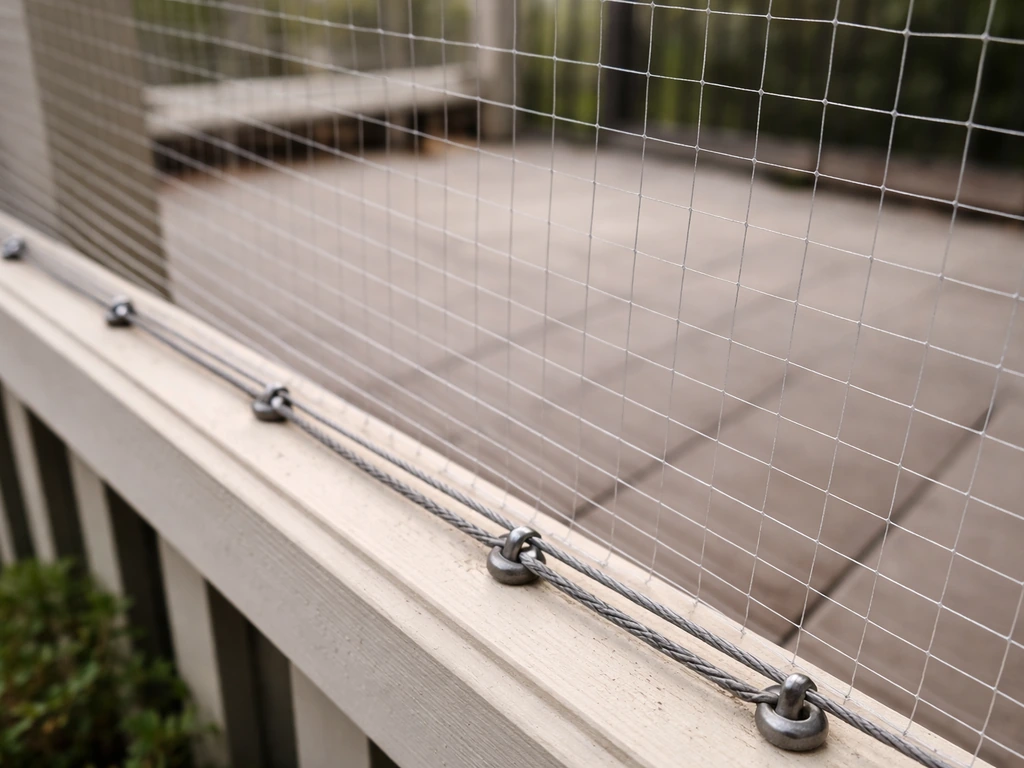
Physical barriers are the gold standard for patio bird control. They work around the clock, don't require electricity, don't need to be re-applied, and they don't rely on birds being scared (which wears off). The UC ANR Bird Hazing Manual treats exclusion netting and physical blocking as the most dependable approach compared with ongoing harassment methods, and that lines up with what actually works in practice.
Bird netting
Netting is the most complete solution for fully enclosing a patio or blocking a specific opening. The standard mesh size for excluding most pest birds is 3/4 inch, which works for pigeons, sparrows, starlings, and most common nuisance species. USDA APHIS confirms that mesh size depends on the target species, so if you're dealing with smaller birds, check that 3/4-inch is tight enough or step down to 1/2 inch.
One critical installation note: if netting is loose or improperly anchored, birds can actually get underneath it and use it as nesting material or get trapped. Always pull netting taut and secure it at every edge with appropriate hardware. Lightweight polyethylene netting typically comes in rolls and can be cut to fit most patio structures.
Bird spikes
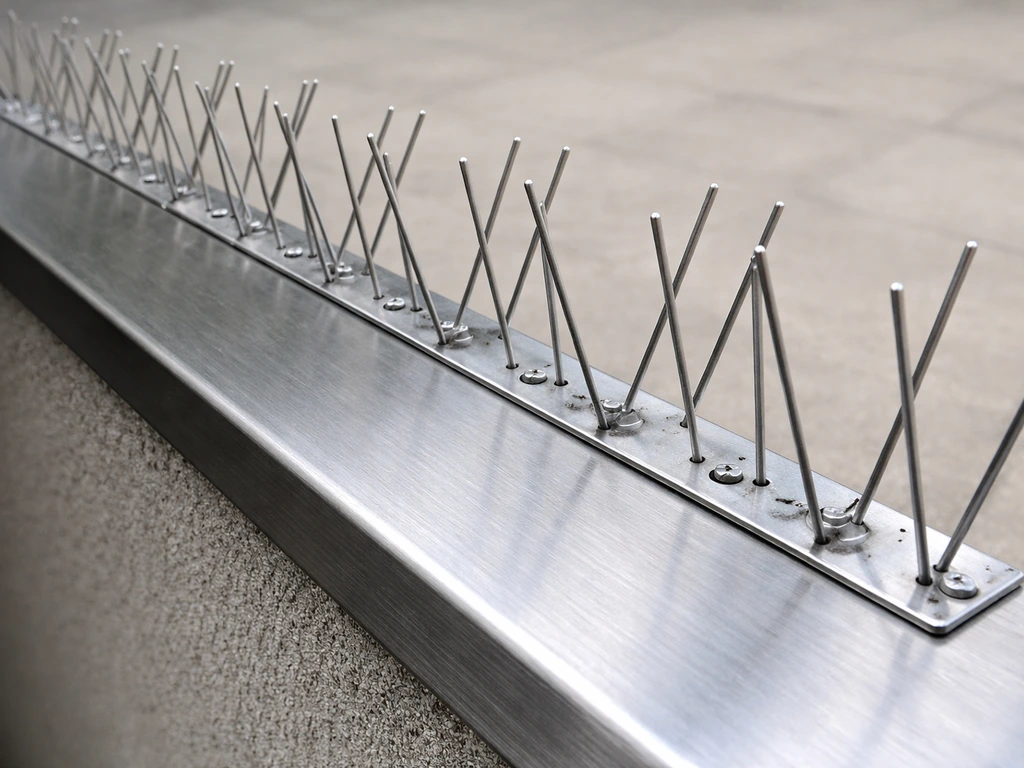
Stainless-steel blunted-tip spikes are ideal for rails, ledges, beam tops, and the edges of patio covers. They make flat surfaces physically uncomfortable to land on without harming birds. Stainless steel is the right material choice for outdoor patios: it won't rust, won't discolor, and holds up in rain, UV, and temperature swings. Apply spikes to any horizontal surface where you've seen droppings concentrated, since droppings cluster where birds actually land most.
Ledge slope systems
If you have flat-topped beams, fence posts, or overhead ledges, a 45-degree slope system (sometimes called a ledge modifier or anti-perch angle) removes the flat surface entirely. Modular systems snap together and can be cut to length. Because birds can't get a flat surface to grip, they simply move on. This works especially well on pergola beams and fence caps.
Screens and mesh enclosures
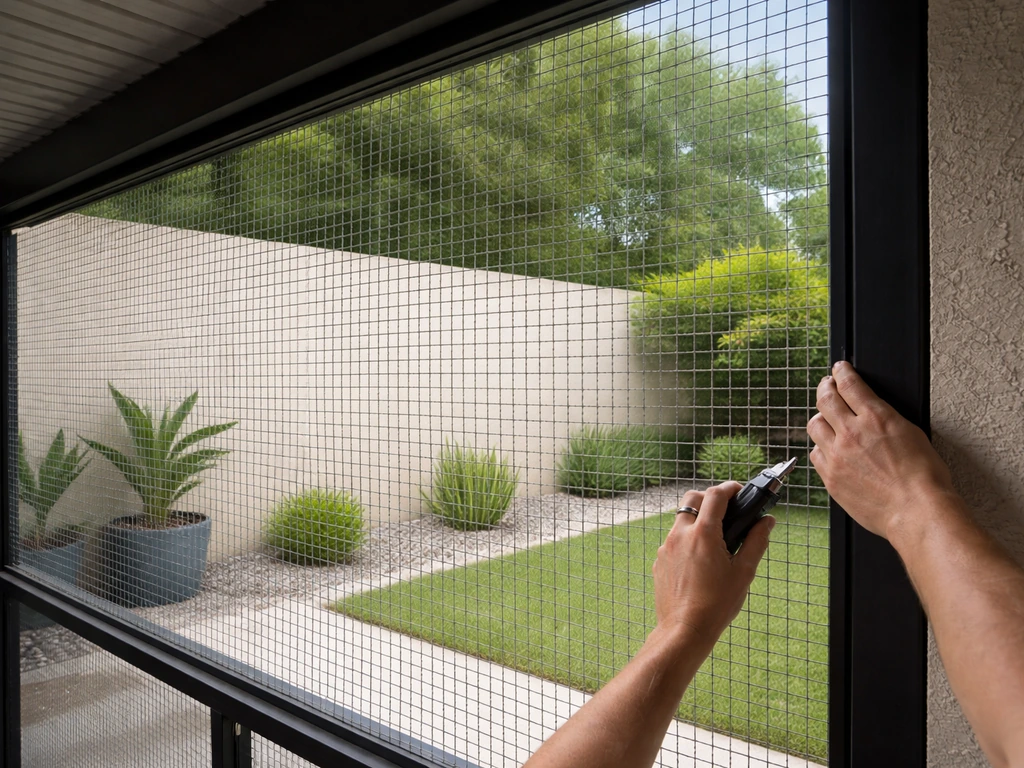
For semi-enclosed or screened patios, installing rust-proof 3/4-inch wire or plastic mesh over openings is a reliable long-term fix. This approach is specifically recommended in pest-prevention-by-design guidelines for exterior structures that function as perching or nesting spots. If your patio has a roof overhang with open gaps at the eaves, mesh panels installed flush with those gaps will block access without affecting airflow or sightlines significantly. A similar approach applies to keeping birds off a covered porch, where the structure creates natural sheltered spots birds want to exploit.
Sensory deterrents: visual, motion, and sound
Sensory deterrents are less reliable than physical barriers, but they're a reasonable first step for mild problems, or a useful complement to physical exclusion in large open areas. The main risk with all of them is habituation: birds figure out that a shiny pinwheel or a fake owl poses no real threat, usually within days to a few weeks.
Visual deterrents
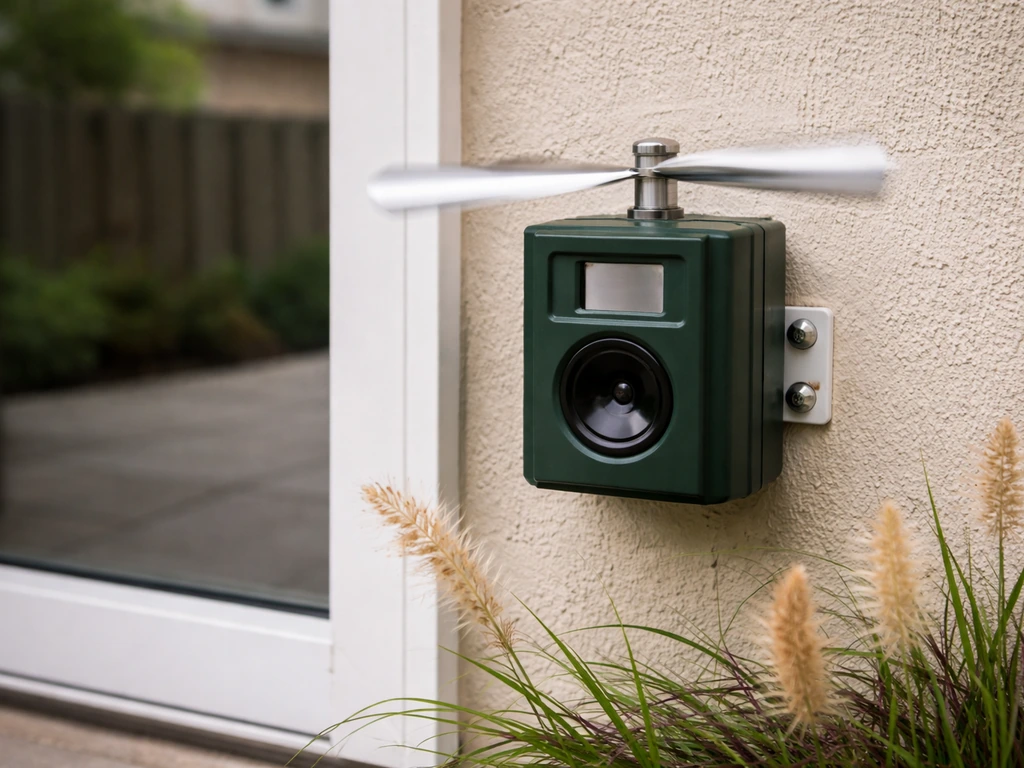
Reflective tape, metallic scare balloons, predator decoys (owl or hawk shapes), and holographic spinning rods all work on the same principle: they create unpredictable visual stimuli that birds associate with danger. To delay habituation, move them every few days and combine them with other deterrent types. Reflective tape is cheap and easy to install on patio covers or along fence lines. Predator decoys perform better when they can move, so hanging them where they spin in the wind beats mounting them on a stationary post.
Motion-activated devices
Motion-activated sprinklers, spinning rods, and laser deterrents add unpredictability, which slows habituation. Sprinklers work particularly well in open patio areas where birds are landing on furniture or the ground. They're also a good fit for spaces near pools, where bird activity near water is a recurring problem. If you're dealing with birds congregating near a water feature, the same logic that applies to bird deterrents for pools often translates directly to patio setups.
Sonic deterrents: yes or no?
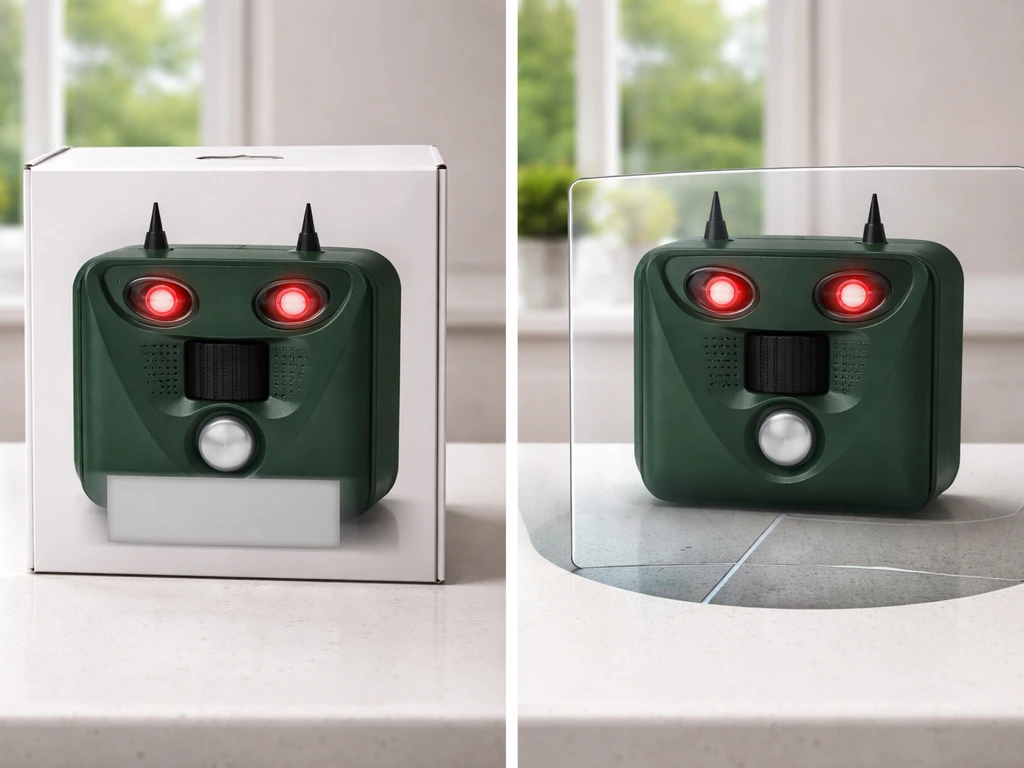
Audible sonic devices that broadcast distress calls or predator sounds can provide short-term discouragement, especially in large open patios where birds are loitering rather than roosting. They need to be activated when birds are actually present to be effective, so motion-triggered units work better than constant-broadcast systems. One practical downside: your neighbors will hear them too, which limits how often and how loudly you can use them.
Ultrasonic devices: skip them
Ultrasonic bird repellers are widely marketed but consistently fail in independent testing. Transport Canada's evaluation of airport bird control concluded that ultrasound showed no meaningful reduction in bird activity. The National Academies Press review reached the same conclusion, noting that ultrasonic units (operating above 20,000 Hz) showed no apparent effect on bird behavior in multiple studies and that ultrasound is unlikely to be a viable bird deterrent. Save your money and put it toward a physical barrier instead.
Chemical and scent-based repellents
Chemical repellents work by irritating birds' sensory systems, making treated surfaces or areas unpleasant to land on or eat from. The two most common active ingredients in registered products are methyl anthranilate and capsaicin.
Methyl anthranilate (found in products like Bird Shield Repellent) is an EPA-registered bird repellent active listed in both U.S. and Canadian regulatory frameworks. It works through the trigeminal nerve system, causing irritation that birds associate with the treated area. It has a grape-like smell and is generally considered low-toxicity for humans and pets, though it's still a registered pesticide, so follow label directions.
Capsaicin-based repellents (like PiGNX, which is EPA-registered) use hot-pepper compounds applied to ledges, sills, and other contact surfaces. The idea is that when birds land, the capsaicin irritates their feet and discourages return visits. Products like Bird Stop liquid work similarly, targeting the trigeminal system to discourage birds from landing, roosting, or loitering in treated zones.
Where chemical repellents work well
- On ledges, railing tops, and beam surfaces where you can't install spikes (painted wood, decorative stone, etc.)
- As a short-term fix while you plan a permanent physical barrier
- In combination with netting or spikes to address gaps in coverage
- On patio furniture legs or undersides where birds roost
Where they fall short
- Rain washes most liquid and gel formulations off quickly, so outdoor reapplication frequency is high (every 1-4 weeks depending on weather)
- They don't prevent birds from entering a space, only from landing on treated surfaces
- Gel repellents can collect dirt and look unsightly on visible patio surfaces
- They're not a substitute for exclusion when nesting is already underway
Always check the product label for surface compatibility, especially on painted wood or composite decking. Some gel formulations can stain or degrade certain finishes.
Choosing the right deterrent for your specific patio
The table below matches common patio bird problems to the most effective deterrent approach. Use it as a starting point, not a rigid rulebook.
| Bird Problem | Patio Type | Best First Option | Backup/Complement |
|---|---|---|---|
| Pigeons roosting on pergola beams | Open or semi-open | Bird spikes or slope system | Netting over the pergola frame |
| Sparrows nesting in eave gaps | Covered/enclosed patio | Mesh exclusion over gaps | Spikes on adjacent ledges |
| Mixed birds on patio rails | Open deck or patio | Stainless-steel spikes on rail tops | Capsaicin gel on rail faces |
| Birds landing on furniture/ground | Open patio | Motion-activated sprinkler | Reflective tape + predator decoy |
| Droppings on patio lights/fixtures | Any | Spike strips around fixture base | Slope modifier on top surface |
| Birds near water feature or pool edge | Open patio | Motion sprinkler + visual deterrents | Netting over water feature |
| General loitering, multiple species | Large open patio | Sonic distress caller (motion-triggered) | Combine with physical deterrents at key perch spots |
If you're dealing with larger birds like pigeons, physical exclusion wins almost every time. Pigeons are persistent, they habituate to sensory deterrents quickly, and their droppings create health and cleanup problems fast. For smaller songbirds that aren't roosting but just passing through, a combination of removing food attractants and adding a visual deterrent is often enough. This same decision logic applies whether you're solving a patio problem or working out the best bird deterrent approach for a deck, since deck and patio structures share many of the same perching challenges.
Installation tips, placement, and maintenance
Spikes and slope systems
Cover every horizontal surface where you've seen bird activity, including spots that seem inconvenient or unlikely. Birds will shift to the next available perch if you leave gaps. Apply spikes with UV-resistant adhesive or screws depending on the surface. For wooden beams, screws are more durable long-term. Check adhesive bonds after the first heat cycle or rain event and re-secure any sections that have lifted.
Netting installation
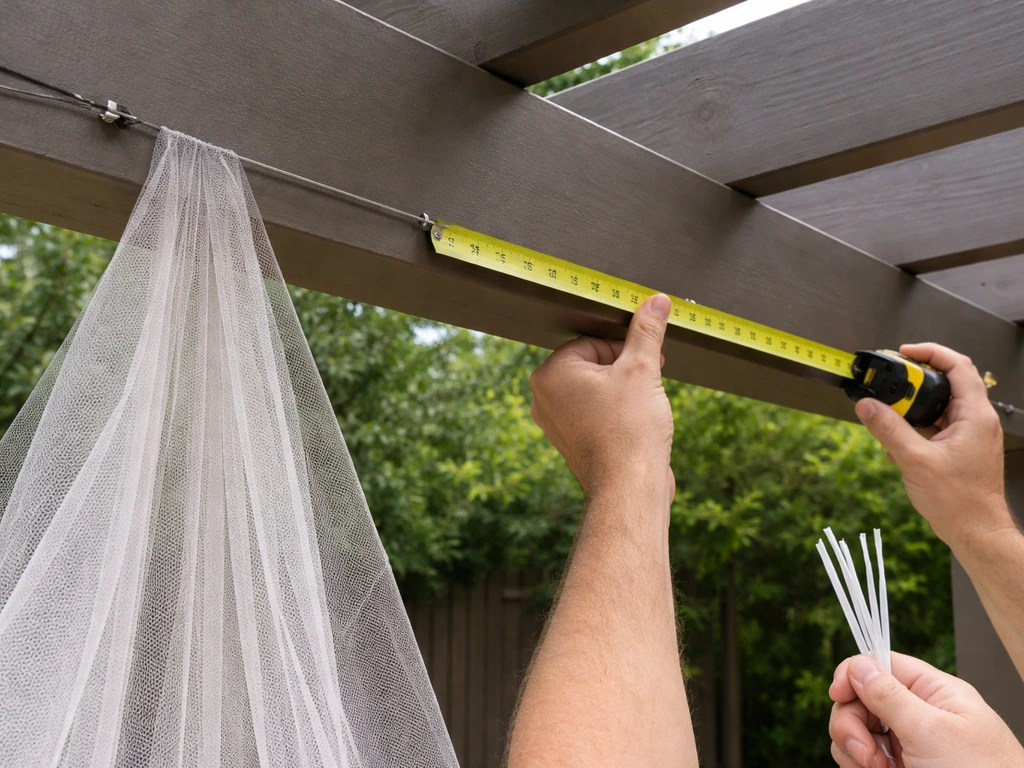
- Measure the area carefully and add 10-15% extra for overlap and anchoring
- Install a perimeter cable or wire frame to hang netting from, keeping it taut
- Secure edges with cable ties, staples, or netting clips every 6-12 inches
- Check for sagging sections after installation and tension as needed
- Inspect monthly for tears, gaps, or areas where birds have pushed under the edge
Netting is especially effective for covering the underside of a pergola or blocking open eave sections. It's worth taking the time to install it properly the first time because a poorly anchored net is almost useless and can actually trap birds.
Visual and motion deterrents
Place visual deterrents at the perimeter of the space, not just in one corner. Rotate their positions every 5-7 days to prevent habituation. For motion-activated sprinklers, set the sensitivity high enough to catch birds (which are lighter than the system's default deer/large-animal threshold) and angle the spray to cover the surfaces where birds actually land, not just the open ground.
Chemical repellents
Apply to clean, dry surfaces for the best adhesion and effectiveness. Reapply after heavy rain. Keep gel formulations away from areas where children or pets have direct contact. Store leftovers sealed and out of direct sunlight, which degrades active ingredients.
Maintenance schedule
- Monthly: inspect netting for tears, check spike adhesive bonds, rotate visual deterrents
- After storms: re-check all anchoring points, clear any debris caught in netting
- Every 2-4 weeks: reapply chemical repellents if weather has been wet
- Seasonally: inspect for early nesting activity in late winter and early spring before birds establish a territory
When to escalate beyond DIY
Most patio bird problems can be solved with the methods above, but there are situations where DIY reaches its limits. If you've installed spikes and netting correctly and birds are still getting through, it's usually a coverage gap, not a product failure. Walk the perimeter carefully and look for any unsecured edge, any uncovered horizontal surface, or any gap in netting larger than your target species can squeeze through.
If you're dealing with a large infestation, structural nesting (inside walls or roof cavities adjacent to the patio), or persistent activity despite comprehensive exclusion, a licensed pest management professional can assess the situation and install commercial-grade exclusion systems that are harder to DIY, including tensioned wire systems and full enclosure netting on large spans. This is similar to the escalation approach recommended for bird control on roofs, where access challenges and scale make professional installation worth the cost.
Legal considerations you need to know
In the United States, most common pest birds (pigeons, house sparrows, European starlings) are not protected under the Migratory Bird Treaty Act, so deterring and excluding them is legal without a permit. However, if you find an active nest with eggs or chicks from a protected species, disturbing it is a federal offense. When in doubt, stop work and contact your local wildlife agency or a licensed professional for guidance before removing any nest material.
For commercial property managers, some municipalities have additional regulations about certain deterrent types or chemical applications. Check local ordinances before installing sonic devices in areas with close residential neighbors, and always use EPA-registered chemical repellents according to their label instructions.
Expanding protection beyond the patio
Once you've solved the patio problem, it's worth thinking about adjacent structures. Birds displaced from your patio often move to the nearest available spot: a balcony above, a deck below, or a boat dock nearby. If you're finding that birds keep cycling through your property after you've addressed the patio, it's a sign that the overall perching real estate around your home needs attention. A bird deterrent strategy for your balcony or a plan for keeping birds off your boat may be the next logical step, and the same physical-first approach applies in both cases.
Similarly, if your patio sits below a roofline that birds are using heavily, addressing the higher perching spots often reduces pressure on the patio itself. The rooftop bird deterrent options available for ledges and parapets are often the same products used on patio pergolas and covers, so you can build a consistent exclusion system across the whole structure.
The bottom line: start with the physical barrier that addresses your specific landing spot, remove any food or water attractants, and layer in sensory deterrents only if needed. That sequence works for most patios, most bird species, and most budgets. Skip the ultrasonic gadgets, be consistent about maintenance, and don't leave any horizontal surface uncovered if you've identified it as a landing zone.
FAQ
What’s the best bird deterrent for patios if I don’t know which birds are visiting?
Start with exclusion, because it works regardless of species. Cover the specific landing and perching points you see, seal any openings with appropriately tight mesh, and treat any uncovered horizontal surfaces first (gaps usually become the new roost). If you identify the birds later, you can fine-tune mesh size or add slope modifiers where needed.
Should I use netting or spikes first for a pergola patio?
If birds are using overhead beams or eave openings, prioritize netting for access points and perching routes, then add spikes or a 45-degree angle to remaining flat beam tops. Doing spikes-only often leaves alternative perches underneath or at adjacent edges.
How do I prevent birds from getting trapped under poorly installed netting?
Pull the netting taut and fasten every edge so there is no sag pocket at any height. Avoid leaving loose hems near ledges, and inspect after wind events, heavy rain, and the first temperature swings, since shrinkage and lift can create entry gaps quickly.
Will shiny deterrents alone work on pigeons?
Usually not for pigeons on patios, because they habituate fast and prefer predictable perches like rails, beam tops, and pergola edges. If you use reflective items at all, treat them as a temporary supplement while your physical barrier plan is going in.
What mesh size should I choose if I’m seeing mixed birds (sparrows and starlings)?
If multiple species are present, choose the smaller target based on the birds you most often see landing. The article’s 3/4-inch option fits many common nuisances, but if smaller birds are squeezing through, step down (commonly to 1/2-inch) and ensure your installation is fully sealed at edges to avoid bypass routes.
How can I tell if the real problem is food or perching real estate?
Watch where they pause. If activity spikes after meals, trash, pet food, open birdbaths, or standing water, address attractants first. If birds repeatedly return to the same rails or beam tops even when the area is clean, perching or sheltered nesting is the driver, and physical exclusion is the most reliable fix.
Do motion-activated sprinklers work if birds land under a roof overhang?
They often work better in open areas where the spray reaches landing surfaces, but placement matters under overhangs. Angle the spray so it hits furniture, ledges, and ground spots birds step on, not just open air, and set sensitivity so the system triggers for smaller bird movements.
Are audible sonic devices a good long-term solution for patios?
They tend to be short-term and can be limited by neighbor tolerance. If you try them, use motion-triggered units rather than constant broadcasts and be prepared to switch to exclusion if birds keep returning after the initial avoidance window.
Can I use ultrasonic bird repellers if I live near other people?
It’s generally a poor choice for patios because independent evaluations show ultrasound has little to no meaningful effect on bird behavior. Also, ultrasonic devices may not be targeted enough for outdoor, line-of-sight conditions, so you may spend money without getting the exclusion benefits.
How often do I need to reapply chemical repellents?
Reapply after heavy rain, and plan for periodic touch-ups because treated residue can wear off depending on sun exposure and surface porosity. Also keep gels away from areas where children or pets can touch directly, since many formulations are meant for application to contact surfaces, not casual human contact zones.
Will capsaicin or methyl anthranilate damage patio finishes?
Compatibility varies by surface and product formulation. Before treating the whole area, test on a small hidden patch, especially on painted wood and composite decking, because some gels can stain or degrade certain finishes even if they discourage landing.
What’s the most common DIY mistake that causes birds to keep showing up?
Leaving even one uncovered horizontal landing surface or an unsecured netting edge. Birds quickly move to the next available perch, so do a perimeter scan and verify there are no gaps larger than your target birds can use, including between structural elements and along the underside of covers.
When should I call a professional instead of continuing DIY?
Call a licensed pest management professional if birds persist after correct installation of netting and spikes, if there’s suspected nesting inside walls or roof cavities adjacent to the patio, or if the span is large enough that DIY anchoring or full enclosure is likely incomplete.
Is it legal to remove nests or deter all birds year-round?
Deterring and excluding many common nuisance birds is generally legal without a permit in the U.S., but disturbing an active nest with eggs or chicks of a protected species is a federal offense. If you find an active nest, stop work and contact your local wildlife agency or a licensed professional for guidance before removing anything.
What should I do first after solving the patio problem, to stop birds from cycling to nearby areas?
Inspect the nearest adjacent perching spots, balcony edges, deck rails, and nearby docks, since birds usually relocate rather than disappear. Build a consistent exclusion pattern across the whole vertical “perching corridor,” so the birds do not simply switch to the nearest alternative landing point.
Next Article
Best Bird Strike Prevention: Practical Steps That Work
Step-by-step best bird strike prevention: remove attractants, use exclusion and deterrents correctly, and maintain resul