
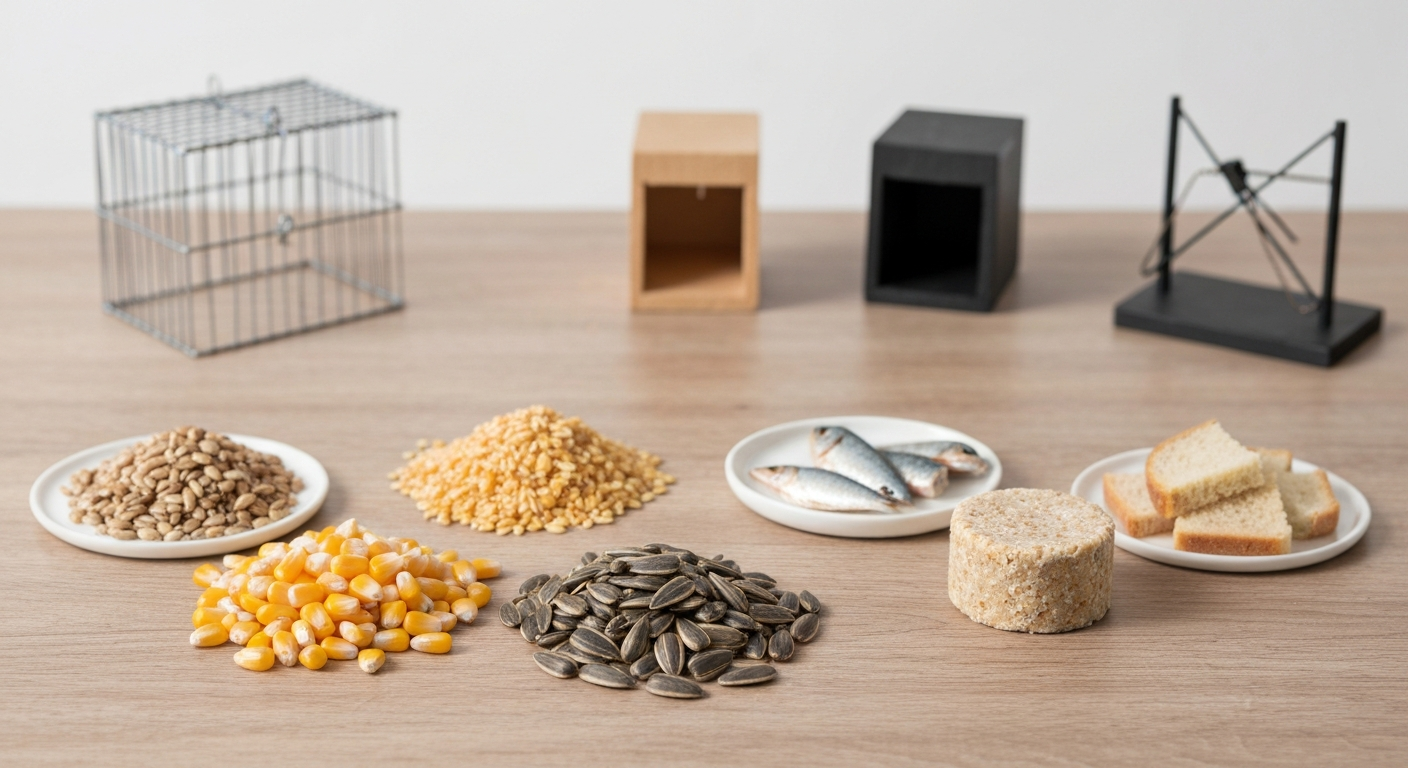
For most common pest birds, cracked corn is the single most versatile bait you can use. Pigeons, house sparrows, starlings, grackles, and doves all eat it readily, it is cheap, widely available, and easy to scatter for pre-baiting. Beyond cracked corn, the best bait depends on the species you are targeting and the type of trap you are using. Milo (grain sorghum) works well for sparrows and starlings; whole dried corn draws crows; fish or bread scraps attract gulls; sunflower seeds pull in finches and doves; and suet or insects lure woodpeckers. The sections below break all of this down by species, trap type, and location.
Best Bait for Bird Traps: Top Choices, Species & Setup

Marcus Weatherby
29 Jul 2026
Top baits for common situations
- Pigeons: cracked corn, milo, wheat, or dried peas scattered on the ground or in a tray inside a cage or bob trap
- House sparrows: milo, proso millet, or cracked corn in a funnel or Larsen-style trap with a live decoy
- Starlings: cracked corn, milo, or suet placed in a multi-catch walk-in trap
- Grackles and blackbirds: cracked corn or whole corn on a ground platform near a drop or walk-in trap
- Crows: whole dried corn, eggs, or meat scraps in a large funnel or ladder trap
- Gulls: small fish pieces, bread, or refuse placed near a walk-in or drop net set
- Doves: milo or proso millet scattered on bare ground near a cage trap
- Woodpeckers: suet, peanut butter, or insects in or near a live box trap
- Finches (house finch, goldfinch): nyjer (thistle) seed or sunflower chips in a small cage trap
Terms you need to know
A few terms come up constantly in trapping guides, regulations, and manufacturer instructions. Knowing what they mean makes the rest of this guide easier to follow and helps you stay on the right side of the law. If you're unfamiliar with common job titles and terminology, see a short explanation of what is a bird catcher called.
- Bird trap: any device designed to capture a live bird for relocation, study, or management. Common types include cage traps, box traps, funnel traps, drop traps, and decoy traps. The term is broad and covers everything from a simple wire cage to a large walk-in pen.
- Bird snare: a loop or noose (typically monofilament, wire, or cord) set to catch a bird by the foot, leg, or neck when it steps through or into it. Snares are highly regulated and, in many jurisdictions, are illegal for use on protected species without a permit.
- Bird catcher: historically, any person who captures birds commercially or for pest control. Today the term is less common, but a professional bird catcher in a pest management context is generally a licensed wildlife control operator (WCO) or USDA Wildlife Services specialist authorized to handle protected species.
- Depredation: damage or destruction caused by birds to crops, property, or other resources. Depredation permits, issued by the USFWS under 50 CFR Part 21, authorize certain control actions against protected migratory birds when damage is occurring.
- Pre-baiting: the practice of placing bait at or near the trap site for several days before setting the trap, so that target birds become accustomed to feeding at that location and enter the trap with less hesitation.
- Non-target capture: the accidental trapping of a species you did not intend to catch. Minimizing non-target capture is a legal and ethical requirement under USDA-APHIS Wildlife Services policy (Directive WS 2.450).
How feeding habits determine the right bait
Birds do not all eat the same things, and they do not all eat in the same places. The two biggest variables are diet type (seeds, grains, insects, fish, carrion, or omnivore) and feeding location (ground, platform, aerial, or aquatic). Getting both right is more important than finding any particular miracle bait.
Ground feeders like pigeons, sparrows, starlings, and grackles spend most of their foraging time on flat open surfaces. They are drawn to grain, seed, and bread scattered directly on the ground or in a shallow tray. Placing bait at ground level near the trap entrance puts it exactly where these birds expect to find food, which reduces hesitation and speeds up capture.
Perch or canopy feeders like goldfinches and house finches prefer elevated feeders. Placing seed on the ground will attract them far less reliably than mounting a small cage trap at feeder height. Woodpeckers work vertical surfaces, so bait should be presented on or near a tree trunk or a wooden post.
Omnivores like crows and gulls are driven as much by novelty and opportunity as by any specific food preference. Crows are cautious and intelligent, so high-value baits (eggs, meat, corn) work better than generic seed, and pre-baiting for up to two weeks is often necessary to overcome their wariness. Gulls in urban settings often key on bread and refuse, but research on herring gulls shows they will preferentially choose fish over bread when both are available. Early‑life diet does not affect preference for fish in herring gulls (Larus argentatus), PMC documents experimental evidence that herring gulls prefer fish over bread when both are offered Early‑life diet does not affect preference for fish in herring gulls (Larus argentatus) — PMC. Match the bait to what the local population is actually eating.
Pre-baiting is not optional for serious trapping. Extension and USDA guidance consistently recommend placing the same bait you will use in the trap at the trap site for 1 to 14 days before you set the trap. This conditions birds to associate that spot with reliable food and dramatically increases capture rates. Using a different bait inside the trap than the one used for pre-baiting is one of the most common reasons traps fail.
Species-by-species bait guide
Pigeons (rock doves)
Pigeons are grain specialists. Cracked corn, milo, wheat, and dried peas are all reliable and inexpensive. Scatter bait in a thin, visible layer over a two- to three-foot area leading toward and inside the trap. Pre-bait for at least three to five days. The "bob" or swing-rod trap is the classic pigeon trap, and cracked corn placed in a ground tray inside it is the standard setup. Pigeons are not protected under the MBTA, so no federal permit is required, though local ordinances vary.
Starlings
European starlings are omnivores but respond well to cracked corn, milo, and suet in walk-in funnel traps or multi-catch cage traps. They are bold and often the first bird to enter a new bait site, which is useful but also means you need to check traps daily to prevent stress to captured birds. Like pigeons, starlings are not protected under the MBTA and can be controlled without a federal permit. USDA-APHIS publishes detailed operational guidance for starling management.
House sparrows
House sparrows are seed eaters. Milo, proso millet, and cracked corn are the top choices. Funnel traps and Larsen-style decoy traps baited with millet and a live decoy sparrow are highly effective. The live decoy attracts others by calling and behaving normally, but it requires daily food, water, and welfare checks. House sparrows are not protected under the MBTA, giving you flexibility in how you manage them.
Grackles and blackbirds
Common grackles, red-winged blackbirds, and brown-headed cowbirds are commensal grain eaters. Cracked corn on a ground platform is the most effective bait. These species often flock in large numbers, so walk-in traps or drop traps with broad ground bait areas produce the best results. Many blackbird species are protected under the MBTA, so check federal and state permit requirements before trapping.
Crows
Crows are intelligent, neophobic, and suspicious of new objects in their environment. Whole dried corn, eggs, and meat scraps are effective baits, but crows may avoid the trap for a week or more before entering. Pre-baiting for 10 to 14 days is strongly recommended. Large funnel or ladder traps work best. Crows are protected under the MBTA, but depredation permits are available through the USFWS for documented crop or property damage situations.
Gulls
Gull baiting depends on whether you are dealing with coastal birds or urban scavengers. Coastal gulls, particularly herring gulls, respond strongly to small fish pieces. Urban gulls often key on bread, chips, or refuse. Walk-in traps, drop nets, and funnel traps are the standard methods, often combined with decoys or calls. All gull species in North America are protected under the MBTA. Airport and commercial operations will need depredation orders or permits. Check 50 CFR Part 21 for specific depredation provisions.
Doves
Mourning doves are gentle ground feeders attracted to milo, proso millet, and cracked corn scattered on bare soil. Cage traps set on open ground with a thin scatter of millet around and inside the entrance work well. Doves are protected under the MBTA and most state laws, so trapping for management purposes requires a permit.
Woodpeckers
Woodpeckers are insectivores and cavity specialists. Suet, peanut butter mixed with cornmeal, and live or dried mealworms are the most effective baits. Any trap needs to be positioned on or near a vertical surface like a tree trunk or post, since woodpeckers are uncomfortable on flat ground. All North American woodpecker species are federally protected, so trapping requires USFWS authorization. In most residential situations, exclusion and deterrents (reflective tape, physical barriers) are the preferred first approach.
Finches (house finch, goldfinch)
House finches and American goldfinches are seed specialists. Nyjer (thistle) seed is highly selective and attracts finches while largely ignoring sparrows and starlings. Sunflower chips and hulled millet also work. Small cage or wire traps mounted at feeder height with nyjer seed are the most effective setup. Most finch species are protected under the MBTA. Verify permit requirements before trapping.
Matching bait to trap type
The trap you choose shapes how and where you present bait. Using the right bait in the wrong trap design is a common reason traps fail, even when the bait itself is correct.
| Trap type | How it works | Best baits | Key bait placement tip |
|---|---|---|---|
| Cage / box trap | Bird enters through a one-way door triggered by a treadle plate or trip wire | Cracked corn, milo, millet, suet, fish pieces | Place most bait at the back of the cage so the bird walks fully inside before triggering the door |
| Bob (swing-rod) trap | Bird lands on a rod that swings and deposits it into a holding compartment below | Cracked corn, wheat, milo in a ground tray | Fill the tray flush with the trap entrance so bait is visible from outside |
| Funnel / walk-in trap | Bird walks or flies into a wide cone-shaped opening it cannot find its way back out of | Cracked corn, grain, millet, fish scraps | Scatter bait in a trail leading from outside the entrance into the center of the trap |
| Drop / pot trap | A weighted lid or frame falls when the bird lands on a central bait platform | Corn, bread, fish, grain depending on species | Place bait on the trigger platform only; do not bait outside the drop zone |
| Decoy / Larsen trap | A live decoy bird in one compartment attracts wild birds into a capture compartment | Millet, milo, corn (for the decoy and as free bait in the capture compartment) | Keep decoy well fed and watered; add a small scatter of bait near the capture compartment entrance |
| Snare | A loop of wire or cord set at head or foot level catches a bird when it steps through | Not always used; sometimes bait is placed inside the loop to draw the bird to step through | Tiny bait amounts only; too much bait causes the bird to stop short of the loop. Snares are heavily restricted. |
Snares deserve a specific note here. For a clear definition and practical guidance, see what is a bird snare (destination id 84489c9e-a9c3-40b8-9af2-edd0e144b56c). If you have ever found that a snare simply is not working, the most common reasons are: the loop is too large or too small for the target species, the loop is not positioned at the correct height (foot-level for ground birds, neck-level for perching birds), bait placement is drawing the bird to stop before the trigger zone, or the snare material is too visible or stiff and the bird is avoiding it. For troubleshooting of similarly named in-game snares, see the guide addressing common issues titled 'osrs bird snare not working' for platform-specific fixes and player tips. Snares are also among the most heavily regulated trap types. Many states prohibit them entirely for birds, and federal permits are required for any protected species. Always check your state and federal regulations before setting a snare.
Matching bait to setting
Patios and decks
Pigeons and house sparrows are the most common patio pests. A small cage trap or bob trap placed against a wall or fence corner works well because birds feel safer feeding with their backs protected. Use cracked corn or milo and pre-bait for three to five days before setting the trap. Keep the area around the trap clear of other food sources (swept up spilled birdseed, secured garbage) so the trap bait is the only option.
Gardens
Gardens attract a wider range of species. Ground-feeding sparrows, starlings, and grackles can be targeted with grain baits in cage or walk-in traps placed at the garden edge. If finches or doves are the target, place a small cage trap near the area they are already foraging and use species-appropriate bait. Position traps away from bird feeders and away from areas where non-target raptors or songbirds are likely to be present.
Roofs and solar panels
Rooftop trapping is mostly a pigeon problem. Pigeons roost and nest on flat roofs, ledges, and under solar panels. Cage or bob traps placed on a flat roof section or ballasted to a panel mounting rail work well. Use cracked corn or wheat. Access is the main challenge: you need to be able to reach the trap at least once daily to check it. If access is difficult, roof trapping is often better handled by a licensed professional. Physical exclusion (netting, spikes) under panels is also a strong complementary strategy to reduce re-colonization after capture.
Pools and water features
Gulls, ducks, geese, and herons are the most common issues around pools and ponds. Canada geese and ducks respond well to cracked corn and whole corn placed near a walk-in trap at the water's edge. Gulls are drawn to fish scraps. One important note: concentrating bait near water increases the risk of droppings contaminating the pool, which creates a health hazard on top of the original nuisance. Many wildlife managers prefer exclusion methods (wire grids over water, shore vegetation management) as the primary strategy here, with trapping reserved for persistent individuals.
Windows
Windows are more of a deterrent challenge than a trapping challenge. Birds that repeatedly strike windows are usually doing so because they see a reflection of sky or habitat and are trying to enter a perceived territory. Trapping is rarely the right tool here. Visual deterrents, window films, and physical barriers are the appropriate first response.
Commercial sites and airports
Airport and large commercial settings operate under the most stringent rules. USDA Wildlife Services handles most operational bird control at airports and is authorized under specific depredation orders (50 CFR 21.43 and others) to take certain species without individual permits. Starlings, house sparrows, and pigeons are common targets using large walk-in funnel traps baited with cracked corn and milo. Gulls and waterfowl near runways are typically managed under depredation permits with grain or fish baits in walk-in or drop net systems. Anyone operating at a commercial site should work with a licensed wildlife control professional or USDA Wildlife Services to ensure legal compliance.
Choosing the right trap and bait pairing for humane, effective capture
Humane trapping has two requirements: capture the target bird quickly without injury, and minimize stress during holding. For more on selecting effective equipment, see a review of the best bird trap in the world. Both depend on bait-trap pairing as much as on equipment quality. For a side-by-side comparison of cage, walk-in, and funnel designs, see our guide to the best bird trap ever.
Cage and box traps are the most forgiving option for beginners. They hold birds alive, allow easy identification of non-target captures (which can be released immediately), and can be sized to exclude larger non-target species. Cracked corn in a cage trap is a reliable starting point for any commensal grain-eating species. For smaller species like sparrows and finches, use hardware cloth with openings no larger than half an inch to prevent escape and reduce stress injuries.
Multi-catch and walk-in traps are more efficient for large flocks but require more careful bait management. Place enough bait to attract a flock but not so much that birds stay inside eating comfortably for hours without triggering any response from you. USDA policy under Directive WS 2.450 requires traps to be checked at least as frequently as state law mandates, and in practice daily checks are the minimum standard for any live trap holding birds.
Decoy traps add the power of a live bird's calls and behavior, which is especially useful for species that are wary of traps (sparrows, starlings in established territories). The decoy bird must have constant access to food, water, and shade, and must be checked at least daily. Using a stressed or sick decoy actually reduces capture rates because its calls and posture signal danger rather than a safe feeding site.
A quick note on the coke can trap, which appears in various DIY guides online. For step-by-step instructions and common variations, see the coke can bird trap. These improvised traps are generally variations of a drop or tipping mechanism using a can as the trigger element. They can work for small ground-feeding birds if baited with millet or cracked corn, but they offer poor size selectivity and are difficult to check reliably. If you try one, bait it lightly, check it every few hours, and be prepared to release non-target birds. Never leave any trap, including improvised ones, unattended overnight.
Step-by-step baiting setup and placement
This checklist covers the full process from site selection to first capture. Follow these steps in order and most common baiting failures can be avoided.
- Identify the target species and confirm legal status. Check whether the species is protected under the MBTA and whether your state requires a permit. Unprotected species (pigeons, starlings, house sparrows) can generally be trapped without a federal permit. Protected species require USFWS authorization before any trapping begins.
- Choose the trap type based on target species, flock size, and the location. A cage trap works for one to five birds; a walk-in or funnel trap is more appropriate for large flocks. Size the entrance to the target species: openings of 2.5 to 3 inches suit sparrows, 4 to 5 inches suit starlings and small pigeons, and 6 to 8 inches suit full-sized pigeons.
- Select the bait. Match it to the species using the species guide above. Buy fresh grain or seed from a feed store rather than using old, moldy, or treated grain. Moldy grain is a health risk to birds and is repellent to most species.
- Pre-bait the site for 3 to 14 days before setting the trap. Place a small amount of bait (two to four tablespoons for sparrows, a quarter cup for pigeons) at the exact location where the trap will sit. Do not place the trap yet. Let birds feed undisturbed.
- Place the trap on day 4 to 15, unset, with bait inside and around it. Let birds feed in and around the unset trap for one to three more days. This is especially important for crows and other neophobic species.
- Set the trap trigger and place bait strategically: a trail of bait from outside the entrance to the back third of the trap, with the main bait concentration behind the trigger plate or past the funnel point. Diagram: imagine a straight path of corn kernels leading from one foot outside the door, through the entrance, to a small pile at the far back wall.
- Check the trap at least once every 24 hours. In hot weather (above 85°F) check every four to six hours. Birds can die of heat stress in enclosed traps within a few hours on a warm day. Place traps in shade where possible.
- When you find a captured bird, approach slowly and cover the trap with a cloth to calm the bird. Wear gloves and, when handling birds in areas with known droppings accumulation, a fitted N95 mask. This reduces risk from Histoplasma and other pathogens associated with bird droppings. Follow CDC guidance on hygiene after handling wild birds.
- Release or remove the bird per your management plan and applicable permits. If you have non-target captures, release them immediately without harm.
- After each capture, clean the trap interior and replace bait. Old, contaminated bait repels birds. Wipe down surfaces that came into contact with droppings with a dilute bleach solution (one part bleach to nine parts water), rinse, and dry before rebaiting.
- Reassess after three to five days with no captures. If the trap is not producing, consider changing bait type, moving the trap 10 to 20 feet to a new location, or switching trap types. The most common reasons for failure are: bait not matching species diet, trap placed in a low-traffic area, insufficient pre-baiting, or the trap entrance size excluding the target bird.
Bait placement diagram notes
For a cage trap: place two to three kernels or seeds right at the entrance threshold (so a passing bird notices the food), then a sparse trail of five to eight pieces leading to the trigger plate, and the main bait pile (one to two tablespoons) at the far back of the cage, behind the trigger. For a walk-in funnel trap: scatter bait in a wide arc outside the funnel opening, then continue the trail inside, concentrating it in the center of the trap floor. For a drop trap: all bait goes on the trigger platform in the center of the drop zone, with nothing outside the drop area.
Minimizing non-target captures
Non-target capture is the main practical and legal risk in bird trapping. USDA-APHIS Directive WS 2.450 requires traps to be set in ways that minimize this risk. These five tactics, drawn from APHIS directives and extension literature, cover the most important steps.
- Use species-selective bait. Nyjer seed strongly selects for finches. Milo selects for sparrows and doves. Suet selects for woodpeckers and starlings over pure seed-eaters. Avoid generic wild bird mix, which attracts the widest possible range of species.
- Set traps only when target birds are actively present. If pigeons feed at your site from 7 to 9 a.m., set the trap just before dawn and check it by 10 a.m. Do not leave it set through the afternoon when different species may be using the area.
- Size the entrance correctly. A wire cage with a 2.5-inch entrance opening will not trap a pigeon but will catch a sparrow. Hardware cloth sizing is your first physical filter against non-target capture.
- Avoid placing traps near active songbird nesting areas, raptor perches, or waterfowl use areas unless those are the target species. Raptors and raptors attracted to a bait site with carcasses or live birds in distress are a serious non-target risk. APHIS directives specifically mention securing carcasses near trap sets to reduce raptor attraction.
- Check traps frequently. Daily at minimum; every four hours in hot weather. Non-target birds released quickly suffer far less harm than those held for extended periods.
Legal and safety considerations
The Migratory Bird Treaty Act makes it unlawful to take, possess, or transport migratory birds without USFWS authorization. This covers the vast majority of wild bird species in the U.S., with the notable exceptions of pigeons, European starlings, and house sparrows. Before you set any trap for any other species, check the USFWS ePermits system for the applicable permit type and your state fish and wildlife agency for state-level requirements. 50 CFR Part 21 Subpart D covers depredation orders and specifies which species and conditions qualify.
USDA-APHIS Directive WS 2.455 governs bait use in official wildlife control programs and prohibits using illegally obtained game or fish as bait. Even outside official programs, using protected game parts as bird bait can constitute a secondary legal violation. Use commercially available grain, seed, or food-grade fish products.
Health risks are real but manageable with basic precautions. Bird droppings can harbor Histoplasma capsulatum, a fungus that causes histoplasmosis, particularly in areas with heavy accumulation. CDC/NIOSH notes that Histoplasma grows in soils enriched with bird or bat droppings and recommends preventing accumulation, controlling dust when removing droppings, and using PPE during cleanup (Histoplasma in the Environment: An Overview (CDC/NIOSH)). Avoid disturbing dried droppings without an N95 respirator and gloves. Avian influenza (bird flu) is another concern when handling wild birds, especially waterfowl and gulls. CDC guidance recommends avoiding unprotected contact with sick or dead wild birds, using disposable gloves, and washing hands thoroughly after any contact with birds or bait materials.
When trapping is not the right answer
Trapping solves a local, immediate problem, but it does not address why birds are using your site. If the food source, roost site, or shelter that attracted them is still present, new birds will move in within days of removal. For a lasting solution, combine trapping with physical exclusion (spikes, netting, wire mesh), sensory deterrents (sonic, visual, or ultrasonic devices), and habitat modification (removing food sources, eliminating standing water, trimming vegetation).
For cat owners dealing with bird predation in the garden, properly fitted cat collars with bells or brightly colored ruff-style deterrents are a complementary non-trapping tool that reduces hunting success without any trapping or permits.
When the problem involves large flocks of protected species, persistent damage at commercial or aviation sites, or situations where repeated trapping over weeks has not reduced bird pressure, call a licensed wildlife control operator or contact USDA Wildlife Services. These professionals have access to capture tools, permits, and management strategies that are not available to the general public, and they operate under APHIS directives that ensure legal and humane compliance.
FAQ
Quick answer — what are the top baits for catching common nuisance birds around homes and commercial sites?
Ground‑feeding commensals (starlings, house sparrows, pigeons): cracked corn, milo, mixed seed, dry dog/cat kibble. Pigeons: whole corn, sunflower seeds, bread (less effective long‑term). Waterfowl (ducks, Canada geese): whole or cracked corn, cereal grains. Gulls: fish/seafood scraps or high‑protein fish bait where permitted; in urban settings gulls often take bread/refuse. Raptors are generally not baited (legal/ethical risks). Always match bait form and placement to species’ feeding behavior.
What’s the difference between common “trap” terms: bird trap, bird snare, and bird catcher?
Bird trap: any device intended to capture birds alive or kill them (examples: funnel traps, walk‑in traps, cage traps, rocket nets). Bird snare: a specific capture device using a noose or loop to entangle a bird’s leg or neck; often used in field studies or for small species and regulated or restricted. Bird catcher: a general term for people or devices used to capture birds; historically includes wooden or decoy traps. Use correct term for permit applications and follow legal restrictions.
How do I match bait to a target species and setting?
Match bait to diet and feeding microhabitat: ground feeders — place cracked corn/milo on the ground or low platform. Perch/canopy feeders — use oil/sunflower seed in elevated feeders. Waterfowl — bait in shallow water or shoreline with whole/cracked corn. Gulls/scavengers — use fishy/odorous baits at shorelines or rubbish areas (subject to local rules). Also match bait presentation to trap type (e.g., funnel trap entrances lined with bait trail; walk‑in trap interior baited to encourage full entry). Prebait with the same food to build trust before setting capture mechanisms.
Species‑by‑species bait recommendations (short): house sparrows, European starlings, pigeons, grackles, gulls, and Canada geese/ducks.
House sparrows: milo, cracked corn, seed mixes on low trays or in funnel traps. European starlings: cracked corn, dog kibble, suet crumbs; use walk‑in/funnel or Larsen traps. Pigeons: whole/cracked corn, sunflower seeds, kibble; bob/swing‑rod and multi‑catch traps. Grackles: cracked corn, sunflower seeds; similar to starlings. Gulls: fish scraps/seafood where allowed; urban gulls also take bread/refuse (avoid bread as nutritional bait for long term). Canada geese/ducks: whole/cracked corn, cereal grain in shoreline or walk‑in traps and rocket/drop nets (permits may be required). Avoid baiting raptors; consult authorities before any action.
Which trap types pair best with which baits and settings?
Walk‑in/walk‑through funnel traps: cracked corn, milo, feed trays — ideal for starlings, sparrows, pigeons when placed on ground or under eaves. Multi‑catch/automatic traps (Larsen, bal-chatri variants for birds): small seeds, kibble, or decoy food to lure in flocks. Bob/swing‑rod traps and pigeon-specific traps: whole corn or large seed placed in trigger zone. Rocket/drop nets and drive‑netting: used for waterfowl and large flocks — employ grain prebait and decoys/calls. Snare/noose traps: small seeds to attract perching species; legal restrictions often apply. Always use trap types appropriate to species, volume, and legal permits.
Step‑by‑step: how to set up baiting and trap placement for best results (prebaiting, placement, timing)?
1) Identify species and feeding behavior. 2) Choose bait the species prefers and match form (whole vs cracked). 3) Prebait: place bait at the intended trap site for 3–14 days to habituate birds. 4) Use the same bait inside the trap as on prebait sites. 5) Place bait at correct microhabitat (ground vs elevated vs shoreline). 6) Set traps at times of peak activity (dawn/dusk or local feeding times). 7) Check traps daily (or per state law/permit). 8) Reduce visible human disturbance around prebait to keep birds comfortable. 9) Maintain clean bait piles—do not let bait mold or accumulate droppings.
Next Articles
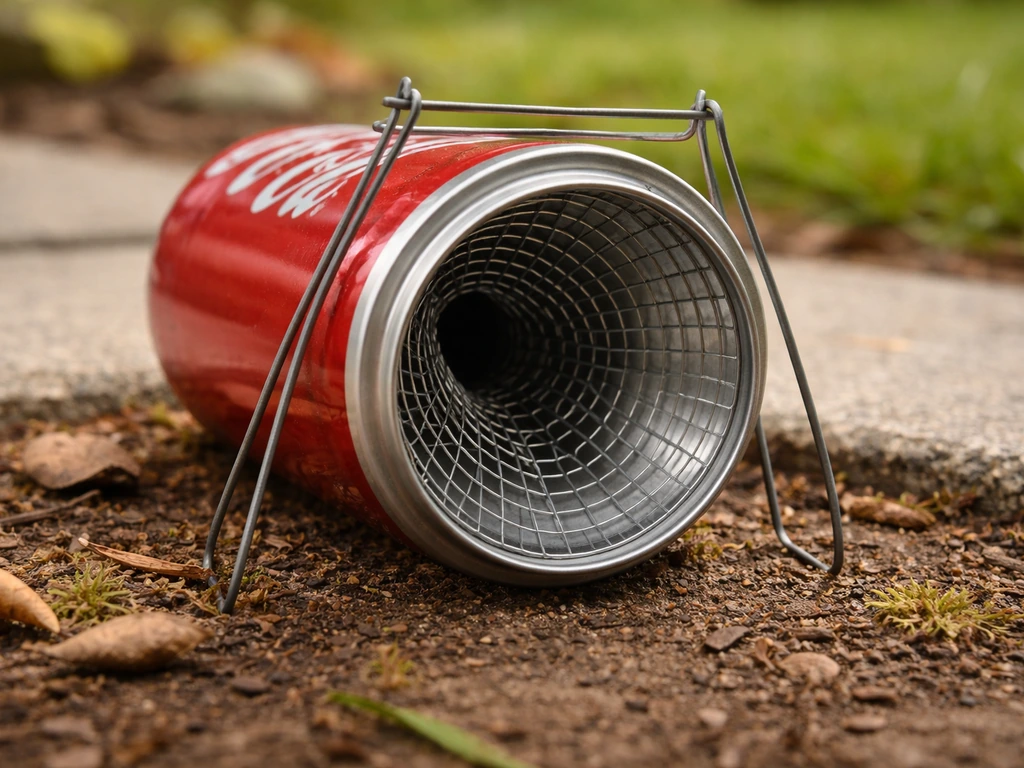
Coke Can Bird Trap DIY: Build, Set, and Release Safely
DIY coke can bird trap guide with safe build, legal checks, proper placement, humane release, and troubleshooting altern
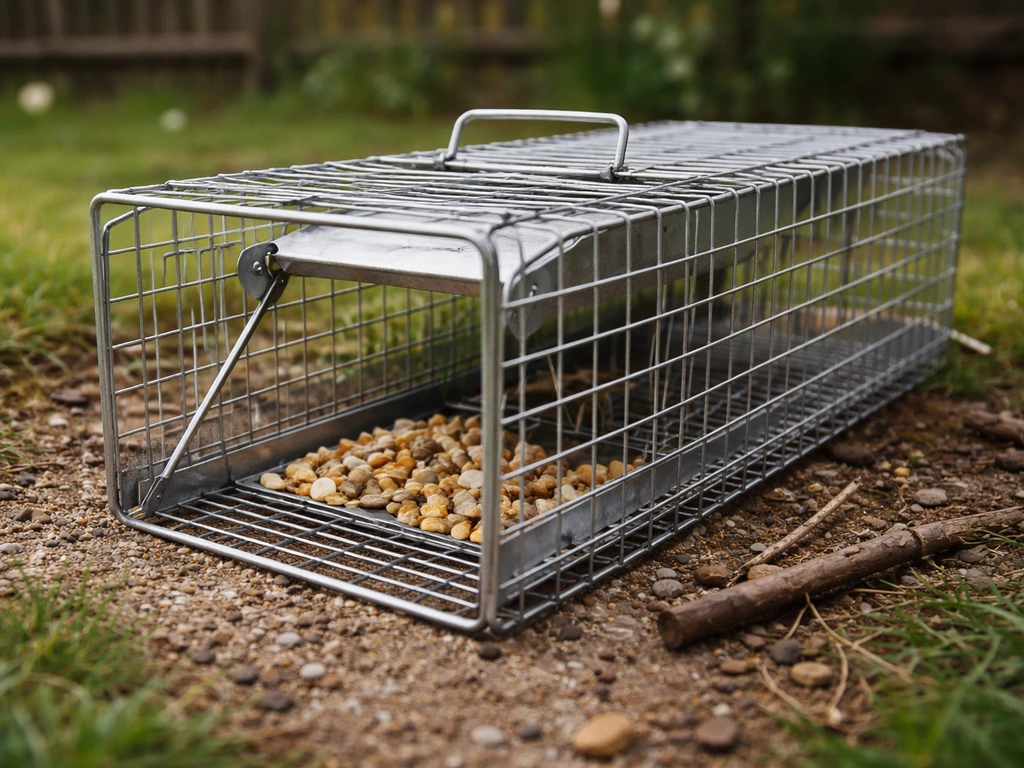
Best Bird Trap in the World: Pick, Set, and Use It Safely
Choose the best bird trap for your situation, set it safely step-by-step, and boost results with humane, legal control.
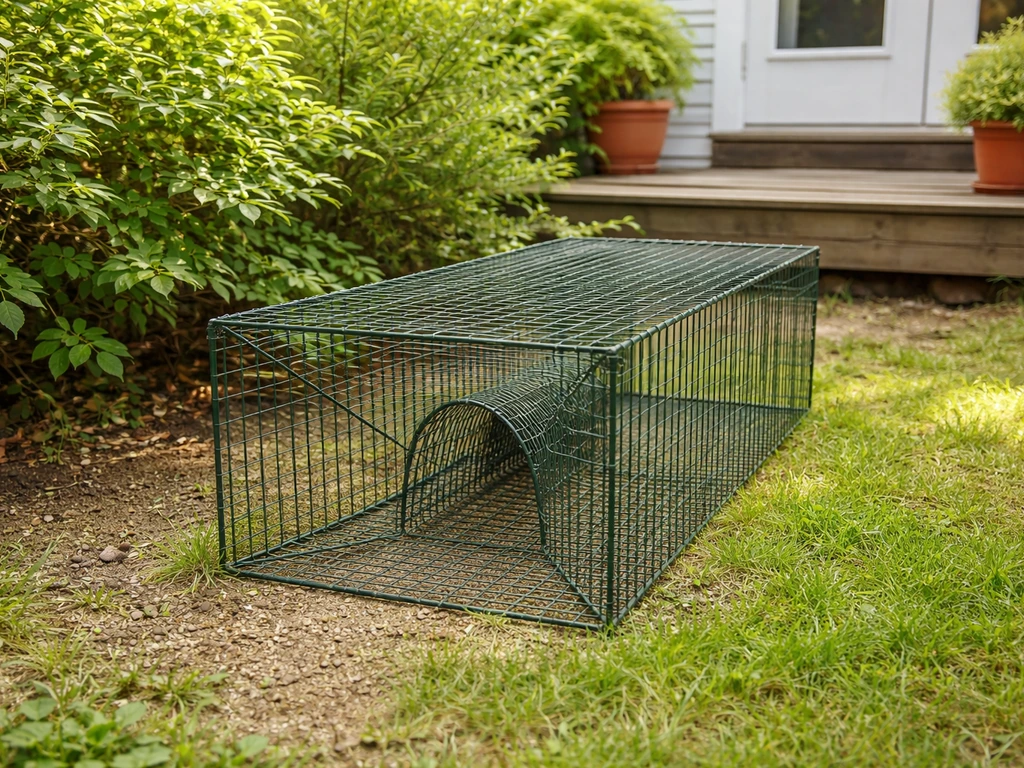
Best Bird Trap Ever: Choose and Set It Humanely Safely
Choose the best bird trap ever by species and location, set it humanely and legally, then prevent repeat entry.