
For most ledges, rooflines, and flat surfaces, stainless steel spikes are the best bird deterrent spikes you can buy. They last 10 to 20 years outdoors, hold up in salt air and UV, and physically prevent birds from landing without harming them. Polycarbonate and nylon versions work well in lower-pressure situations and tend to cost less upfront, but they degrade faster. The right choice comes down to which species you're dealing with, how wide the surface is, what it's made of, and how long you need the solution to last. This guide walks through all of it.
Best Bird Deterrent Spikes: Top Picks, Installation & Uses

Marcus Weatherby
24 Jul 2026
Who this guide is for and what it covers
If you're a homeowner trying to keep pigeons off your porch, a property manager dealing with gulls on a commercial rooftop, a solar array owner protecting panel frames, or an airfield facilities team working through a Wildlife Hazard Management Plan, this guide covers what you need. I've pulled together practical product guidance, installation tips, species-specific advice, and legal context so you can make a confident, well-informed purchase and get spikes installed correctly the first time. Where spikes aren't the right tool, I've also covered when to look at alternatives.
What bird spikes are and how they work
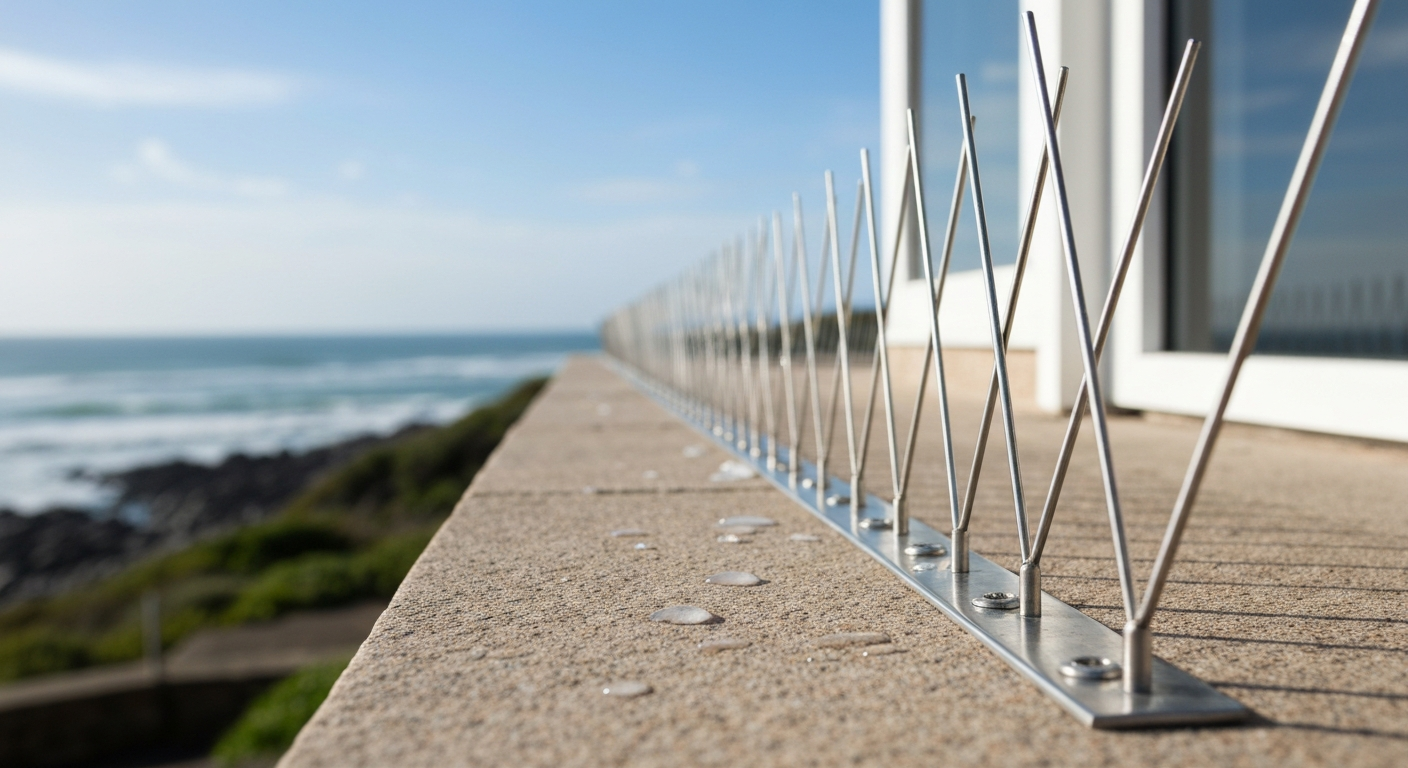
Bird spikes (also called anti-bird spikes or anti-perching spikes) are rows of upward-pointing pins or wires mounted on a flat base strip. You attach them to any surface where birds habitually land or roost. The pins don't injure birds. Instead, they make the surface physically uncomfortable and geometrically impossible to land on. Birds attempt to land, feel the pins, and move on. There's no trap, no chemical, no sound. They simply remove the flat perching area that birds are looking for. For a concise primer on what are bird spikes and how they work, see the dedicated overview.
The mechanism is purely exclusion-based. A 2016 University of South Africa campus study found that bird spikes reduced pigeon population indices by roughly 70% relative to other single interventions when the spikes were correctly sized for the target species and installed with consistent coverage. That figure aligns with what pest control professionals report in practice: gaps in coverage are the most common reason spikes underperform. Birds will find any unprotected ledge and use it instead.
Where to use spikes and where they fall short
Spikes perform best on hard, flat, or slightly curved surfaces where birds perch, roost, or nest. Here are the most common installation sites and notes on each.
- Ledges and window sills: the most straightforward application. Cover the full width of the ledge with no gaps, even at corners.
- Rooflines and parapet walls: works well for pigeons and gulls. Use heavy-duty stainless steel with mechanical fasteners on commercial roofs.
- Eaves and beam ends: polycarbonate works here if aesthetics matter and species pressure is moderate (sparrows, starlings).
- Signage and awnings: modular clip-based or adhesive bases are easiest. Check that the adhesive is compatible with the sign substrate.
- Solar panel frames: mount spikes to the aluminum frame, not to the glass. Never drill through panels. Consult your panel OEM warranty before installing anything, as improper attachments can void coverage.
- Patios and garden structures: spikes on pergola beams and fence tops keep larger species off. For small birds, narrow-pin spikes are essential.
- Pools: spikes on nearby walls, fences, and pump housing tops help discourage ducks and cormorants from roosting.
- Airfields: perch exclusion on weather sensors, signage, and structures is one tool within a broader Wildlife Hazard Management Plan required by the FAA and ICAO. Spikes alone are not a substitute for a full WHMP.
Spikes have real limits worth knowing. They won't work on wide open flat surfaces like a rooftop membrane where birds nest rather than perch on an edge. They're also impractical for trees, sloped or heavily textured surfaces, and anywhere birds nest inside a cavity rather than on top of a ledge. Research by Avery and Genchi at airport wind-shear sensor installations found that while AgSpikes were effective against many species, owls and vultures were largely undeterred because of their size and grip. Species matter a great deal, and no single spike design handles every bird.
Spike types, materials, and base styles
Most bird spikes on the market fall into three material categories: stainless steel, polycarbonate, and nylon. Each has a different performance profile.
Stainless steel spikes
Stainless steel spikes use multi-strand wire or single-point pins welded or crimped to a metal or polycarbonate base. The pins themselves are typically 304 or 316 grade stainless steel. For coastal or industrial environments where chloride exposure is high, 316 grade (which includes molybdenum) offers meaningfully better pitting and crevice corrosion resistance than 304, as documented in corrosion studies using ASTM B117 salt-spray testing. The NHTSA standards compendium cites ASTM B117 (salt spray) and ASTM G154/D4329 (accelerated UV exposure) as appropriate test methods for evaluating outdoor durability of materials such as polycarbonate, nylon, and stainless steel blank" rel="noopener noreferrer">Standards and test methods relevant to outdoor durability include ASTM B117, ASTM G154, and ASTM D4329.. If you're within a mile or two of the ocean, insist on 316 grade steel pins. Inland, 304 is fine and more widely available. Stainless steel spikes last 10 to 20 years with minimal maintenance.
Polycarbonate spikes
Polycarbonate (PC) spikes are molded plastic, usually clear or translucent, which makes them nearly invisible against light-colored stone or concrete from a distance. They're UV-stabilized, but accelerated UV testing (ASTM G154) shows that polycarbonate does yellow and become brittle over time in high-UV environments. In sunny climates, expect a realistic service life of 5 to 10 years before the base cracks or pins snap. They're a reasonable choice for shaded eaves, interior atriums, or installations where you need to minimize visual impact and bird pressure is moderate.
Nylon spikes
Nylon spikes are the most affordable option and are often sold in large-quantity packs. They're lighter, easier to cut, and work fine for low-to-moderate bird pressure on residential ledges. The trade-off is longevity: nylon degrades faster under UV and in freeze-thaw cycles. If budget is the primary concern and you're dealing with a garden fence or a narrow shed ledge, nylon is acceptable. For a commercial building or anything you want to install and forget for a decade, step up to polycarbonate or stainless steel.
Strip vs. modular bases
Base styles divide into continuous strips (typically 1 foot or 0.5 meter sections) and modular clip-together units. Continuous strip bases install faster on straight ledges. Modular systems are easier to cut and configure around corners, curves, and irregular surfaces like sign tops or angled eaves. Most product lines offer both. For long straight parapet walls, strips are more efficient. For complex profiles, modular wins.
Durability, weather resistance, appearance, and species effectiveness compared
| Material | Typical lifespan | Coastal/UV performance | Appearance | Best for |
|---|---|---|---|---|
| Stainless steel (316) | 15-20+ years | Excellent (316 Mo-alloyed grade) | Visible silver finish | Commercial, coastal, heavy bird pressure (pigeons, gulls) |
| Stainless steel (304) | 10-15 years | Good inland, moderate coastal | Visible silver finish | Residential and commercial, inland sites |
| Polycarbonate (UV-stabilized) | 5-10 years | Good, yellows with age | Nearly invisible, translucent | Aesthetic installs, moderate pressure, shaded sites |
| Nylon | 3-7 years | Fair, degrades in high UV | Visible, variety of colors | Residential, low-pressure, budget installs |
On species effectiveness, pin spacing and pin height are the key variables. Pigeon-rated spikes typically have pins 4 to 5 inches tall spaced across a 3 to 5 inch wide base. Gull-rated spikes are taller and more robust. Small bird spikes for sparrows, starlings, and finches use much finer, more densely packed pins with a narrower base width, because small birds can navigate the gaps in a standard pigeon spike without any difficulty. Swallow spikes are a specialized sub-category discussed further below.
Choosing spike length, spacing, and base width for your ledge
The most common installation mistake is using one row of spikes on a ledge that's wide enough for birds to land behind the strip. Measure your ledge width first, then choose how many rows you need.
- Ledges up to 3 inches wide: a single narrow-base strip covers the full ledge.
- Ledges 3 to 7 inches wide: use a wider-base product or two parallel strips butted together.
- Ledges wider than 7 inches: use two or three rows, making sure the outer strips overhang the ledge edge slightly so birds can't perch on the front lip.
- Curved surfaces (pipes, beams): use flexible-base modular spikes that can follow the curve without leaving gaps.
- Corners and returns: cut strip bases with tin snips or a utility knife and overlap or miter the ends so the corner is fully covered.
Pin height selection follows species. Pigeons and crows need pins 4 to 5 inches tall. Gulls and larger birds need 6 inches or taller. Small birds (sparrows, starlings) need fine pins no more than 2 to 3 inches tall with tight spacing, because a standard pigeon spike is essentially perch-friendly for a sparrow. For narrow ledges with mixed species pressure, a fine-pin stainless option with a wider base is usually the safest all-around choice.
Top recommended spikes for residential and commercial use
Rather than ranking by brand name alone, the most useful selection criteria are durability, species match, ease of installation, and value over the product's service life. Here's what to look for when evaluating any product in this category.
- Stainless steel pins, 304 minimum (316 for coastal): reject anything that lists 'metal' without specifying grade.
- UV-stabilized base if polycarbonate: this is usually indicated on the packaging; ask if it's not.
- Pin count and coverage: manufacturer spec sheets should state pins per foot or per meter. Higher pin density generally means better effectiveness against smaller, more nimble birds.
- Mounting flexibility: does the product support both adhesive and mechanical (screw or clip) installation? Having options matters on different surfaces.
- Strip length and base width options: a good product line offers multiple widths (2 inch, 4 inch, 6 inch) to cover different ledge profiles without unnecessary waste.
- Warranty: reputable stainless steel products carry 5 to 10 year warranties. Shorter warranties on steel products are a red flag.
- Compliance with local regulations: make sure the product is marketed as a humane, non-injurious deterrent. Spikes should prevent landing, not trap or impale birds.
Nixalite is one of the longest-established names in the category and publishes detailed spec sheets covering pin counts, wire gauges, heights, and mounting options, which makes product comparison straightforward. Bird-B-Gone and Aspectek offer polycarbonate options that work well for residential installs where aesthetics matter. For commercial or industrial installs, prioritize stainless steel lines from suppliers who publish material certificates. For a side-by-side comparison of top-rated options across use cases, the best bird spikes guide on this site covers specific products in detail.
Spikes for small birds and swallows: why standard products don't work
Standard pigeon spikes fail completely against small birds. A house sparrow (about 1 inch tall when crouching) can land comfortably between the pins of a pigeon-rated spike. If you're dealing with sparrows, starlings, finches, or similar small species, you need a fine-pin product specifically rated for small birds. For more on options specifically designed for sparrows, starlings, and finches, see best bird spikes for small birds. Look for pin spacing of no more than 0.5 to 0.75 inches and pin heights of 2 to 3 inches. These are usually sold with narrow base widths because small birds favor narrow ledges, window sills, and cable trays.
Swallows are a different problem for several reasons. Many swallow species in the U.S. and Europe are protected under the Migratory Bird Treaty Act (in the U.S.) and equivalent legislation elsewhere, meaning you cannot disturb an active nest or interfere during nesting season without a permit. The practical approach is to install exclusion measures before the nesting season begins, typically before March in most of the U.S., targeting the mud-building sites swallows return to each year. Swallow deterrent spikes are shorter and more densely packed than general small-bird spikes, and they're often combined with netting or physical wall covers on flat stucco surfaces where swallows build mud nests. A dedicated guide to the best bird spikes for swallows covers this in more depth.
When sizing for either species group, the principle is the same as for larger birds: measure the ledge, buy the right base width, and leave no uncovered gaps. The only thing that changes is the pin geometry.
Mounting methods: adhesives, screws, and clips
Most spike systems support three mounting approaches: adhesive bonding, mechanical fastening (screws or masonry anchors), and clip attachment. Which you use depends on the surface and how permanent the installation needs to be.
Adhesive bonding
For masonry, concrete, stone, and smooth metal ledges, adhesive is clean and effective. Use a neutral-cure (non-acid) silicone or an MS-polymer adhesive. Acid-cure silicones (the kind that smell strongly of vinegar) can corrode metal bases and damage certain plastics. Sikasil GP and equivalent neutral-cure silicones from Soudal, Dow, and Tremco are widely used. Apply a continuous bead to the underside of the spike base, press firmly onto a clean, dry surface, and allow full cure time before exposing to weather (typically 24 hours). For best adhesion, degrease the surface with isopropyl alcohol first. A separate detailed breakdown of the best adhesive for bird spikes covers surface compatibility in depth.
Mechanical fastening
On commercial parapet walls, concrete beams, and timber, screwing or anchoring the spike base directly into the substrate is the most durable option. Use stainless steel screws to avoid galvanic corrosion with stainless steel spike bases. Pre-drill masonry at 12 to 18 inch intervals along the strip, insert masonry anchors, and screw down. This approach is mandatory for heavy-duty installations and anywhere wind loading is a concern, such as exposed rooflines at height.
Clip systems for solar panels
For solar panel frames, clip-based systems that attach to the aluminum rail without drilling are the safest choice. NREL reliability research has shown that improper through-bolting or incorrect clamp use can cause frame stress, glass cracking, and grounding issues that void panel warranties. Always check your panel manufacturer's installation manual before mounting anything to the frame, and use clips rated for your panel's frame profile. Position spikes on the outer frame edges where birds perch, not across the panel glass surface.
Step-by-step installation on common surfaces
- Clean the surface: remove all bird droppings, debris, and nesting material. Wear gloves and an N95 or P100 respirator when cleaning dry droppings, as dried feces carry Histoplasma and Cryptococcus. Wet the area before sweeping to suppress dust.
- Degrease: wipe the mounting surface with isopropyl alcohol and let it dry completely.
- Measure and cut: measure the ledge length, mark cut points on the spike strips with a marker, and cut with heavy-duty tin snips (steel) or a utility knife (polycarbonate/nylon). Always cut through the base, not through a pin.
- Dry-fit: lay the strips along the ledge before applying adhesive or drilling to check coverage and fit at corners.
- Apply adhesive or mark drill points: for adhesive installs, run a continuous bead along the base underside. For mechanical installs, mark screw positions at 12 to 18 inch intervals.
- Mount and press: press adhesive-bonded strips firmly into place. For screw installs, drill, insert anchors, and fasten.
- Check for gaps: walk the full installation and look for any gap wider than a few inches at joints, corners, or returns. Fill gaps with additional sections.
- Allow cure time: for adhesive mounts, do not expose to rain or heavy wind for at least 24 hours.
- Inspect at 30 days: check that all sections are still bonded and no pins have bent or dislodged.
Legal and humane considerations
In the United States, the Migratory Bird Treaty Act protects the vast majority of native migratory bird species. This means you cannot legally kill, injure, or disturb active nests of protected species without a USFWS depredation permit. Spikes used as a physical exclusion barrier before nesting begins are a non-lethal, legally compliant deterrent. The complications arise if you install spikes on or near an active nest during the nesting season, particularly for swallows, cliff swifts, or other species that nest on structures. Always check the USFWS current guidance and Federal Register for any recent rulemaking changes before acting, as the regulatory interpretation of 'incidental take' has shifted in recent years. For recent summaries of MBTA rulemaking and interpretation, see The Migratory Bird Treaty Act (MBTA): Selected Legal Issues, CRS (Congressional Research Service) The Migratory Bird Treaty Act (MBTA): Selected Legal Issues — CRS (Congressional Research Service).
In the UK, the Wildlife and Countryside Act 1981 makes it an offence to intentionally kill, injure, or take most wild birds, or to deliberately damage or destroy an active nest. UK authorities and the RSPB explicitly recommend physical exclusion methods including spikes and netting as the lawful approach. The EU Birds Directive (2009/147/EC) applies equivalent protections across EU member states. In all jurisdictions, the principle is the same: spikes used as a preventive perch exclusion tool are a responsible, legally sound method. Removing birds or active nests requires permits and should involve professional advice.
For airfields and aviation facilities, spikes are one physical tool within a much broader framework. The FAA requires Airport Wildlife Hazard Management Plans under its Advisory Circular guidance, and ICAO Doc 9137 Part III sets international standards for Wildlife Hazard Management Programmes. These programs require integrated habitat management, population monitoring, and multi-method deterrence, not just perch exclusion. Spike installation at an airport needs to be documented within the WHMP and should involve a USDA Wildlife Services biologist or equivalent certified professional.
Maintaining your installation
Bird spikes need occasional maintenance to stay effective. Debris including leaves, twigs, and accumulated droppings can fill in between pins over time, turning the spike strip into a comfortable platform for birds to nest on top of. Inspect installations twice a year, in spring and autumn. Clear debris with a stiff brush or compressed air. Re-secure any strips that have partially lifted from adhesive failure. On high-use commercial sites, quarterly inspection is a better schedule. Stainless steel pins rarely need replacing, but polycarbonate and nylon bases should be checked for brittleness and cracking and replaced when the material shows significant UV degradation.
What to do when spikes aren't working
The most common reason spikes fail is incomplete coverage. Before concluding the product doesn't work, walk the entire installation and check for gaps, lifted sections, or adjacent unprotected surfaces where birds have shifted to. Filling those gaps solves the problem in most cases. The second most common issue is species mismatch: pigeon spikes on a small-bird problem, or spikes on a surface where the actual nesting is happening inside a cavity rather than on top of a ledge.
If coverage is complete and the species match is correct but birds are still using the area, the problem may be that spikes are the wrong tool for the specific behavior. Birds nesting in roof voids, under solar panels, or in gaps in cladding need netting or physical exclusion of the cavity entrance, not spikes on the surface. Birds perching on trees or open ground need a different approach entirely.
Alternatives to spikes and when to choose them
Spikes are one tool. Here are the main alternatives and when they're a better fit.
| Method | Best for | Key limitation |
|---|---|---|
| Bird netting | Sealing cavities, large open areas, solar panel undersides | More complex to install; needs periodic inspection for tears |
| Bird gel/liquid repellent | Smooth surfaces, signs, short-term use | Degrades in heat/UV; attracts debris; not suitable for high-pressure sites |
| Visual deterrents (reflective tape, predator decoys) | Open gardens, patios, low-pressure scenarios | Birds habituate quickly; effectiveness drops within weeks without relocation |
| Sonic/ultrasonic deterrents | Large open areas, airfields (as part of WHMP) | Limited effectiveness indoors or in enclosed spaces; noise impact on residents |
| Electric track systems | High-value heritage buildings, commercial facades with very heavy pressure | Higher cost; requires professional installation; inappropriate near water |
| Habitat modification (removing food/water sources) | Any site as a first step alongside any physical deterrent | Takes time; needs ongoing management; not a standalone solution |
University extension guidance, including material from the University of Missouri Extension on pigeon control, consistently recommends an integrated approach: identify the species, eliminate food and water attractants first, then deploy physical exclusion matched to the specific problem. Spikes as a standalone measure work best when they're part of this broader strategy rather than a single fix. If you're considering alternatives because spikes aren't suitable for your site, the alternatives to bird spikes guide covers each option in detail with installation and cost comparisons.
Cost estimates and DIY vs. professional installation
For residential DIY installs, polycarbonate spikes run roughly $0.50 to $1.50 per linear foot, and stainless steel ranges from $2 to $6 per linear foot depending on pin density and grade. A typical house ledge or roofline covering 50 to 100 linear feet will cost $100 to $600 in materials. Add $20 to $40 for adhesive, screws, and cleaning supplies. Most homeowners can complete a straightforward ledge installation in a half-day with no specialist tools beyond a caulking gun and a utility knife.
Professional installation makes sense in a few scenarios: installations at height (above single-story level) where working safely requires scaffolding or rope access equipment, large commercial sites where consistent coverage and documented pest management records are required, or anywhere the bird species involved may be legally sensitive and professional assessment is advisable. Pest control contractors typically charge $5 to $15 per linear foot installed, including materials, for standard commercial ledge work. Complex sites with height, unusual materials, or regulatory requirements will cost more. Get at least two quotes and ask specifically whether the quote includes follow-up inspection at 30 days.
A practical recommendation by scenario
To make the decision process straightforward, here's a concise scenario-to-product mapping based on the factors covered throughout this guide.
| Scenario | Recommended spike type | Mounting method | Key note |
|---|---|---|---|
| Residential ledge, pigeons | Stainless steel 304, 3-5 inch base, 4-5 inch pins | Adhesive (neutral-cure silicone) | Cover full ledge width; no gaps at corners |
| Coastal commercial parapet, gulls | Stainless steel 316, 5-6 inch base, 6 inch pins | Mechanical (SS screws + anchors) | 316 grade essential in salt air |
| Residential window sill, sparrows/starlings | Fine-pin small-bird spike, 2-3 inch pins, tight spacing | Adhesive | Standard pigeon spike won't work for small birds |
| Solar panel frame, pigeons | Stainless steel clip-on spike, frame-compatible | Manufacturer clip system, no drilling | Check panel OEM warranty first |
| Stucco wall, swallows (pre-season) | Fine-pin swallow spike + physical wall cover | Adhesive + netting on cavity areas | Install before nesting season; check MBTA status |
| Airfield sensor post or sign, mixed species | Heavy-duty stainless, species-assessed | Mechanical | Must be part of documented WHMP; consult wildlife biologist |
| Heritage or aesthetic facade, moderate pressure | UV-stabilized polycarbonate, clear | Adhesive | Inspect every 2 years for UV degradation |
The single most useful thing you can do before buying anything is spend 10 minutes measuring your ledges, identifying the bird species, and checking for active nests. That information determines every product decision that follows. Get those three things right, and choosing the best bird deterrent spikes for your situation becomes straightforward.
FAQ
What primary topics and technical details must the article cover to be solution‑focused and evidence‑based?
Define bird/anti‑bird spikes and explain mechanisms (physical exclusion, discouragement). Compare spike types, materials and base styles with pros/cons for target species and environments. Recommend top products and sizing (points/ft, spike height) for general and species‑specific scenarios (small birds, pigeons, swallows, gulls). Describe mounting methods (adhesive, mechanical fasteners, clips), list compatible adhesives/sealants and fasteners by surface, and give installation step‑by‑step procedures for common substrates (masonry, metal, wood, PVC, window sills, solar panels). Include maintenance schedules, inspection checklists, and troubleshooting. Discuss effectiveness limits, humane/welfare and legal/regulatory considerations, and when to choose alternatives (netting, gels, visual/sonic devices, exclusion). Provide realistic cost estimates, DIY vs professional hiring guidance, safety notes and links to related guides (netting, sensory deterrents, professional installation).
What empirical data and peer‑reviewed research should be referenced to support effectiveness claims?
Species‑specific experimental studies on perching deterrents and anti‑perching device efficacy (e.g., Avery & Genchi 2004). Controlled field trials showing population or use reduction metrics (e.g., campus study showing ~70% pigeon reduction). Comparative studies of device designs and behavior responses across taxa. Airport/airfield WHM literature evaluating integrated measures and exclusion devices. Corrosion/UV/material longevity research (stainless steel grades, polycarbonate/nylon weathering). Adhesive/fastener bonding and field adhesion test results. Use quantified metrics where available (percent reduction, recolonization rates, time to failure) and report study contexts and limitations.
Which authoritative standards, regulations and institutional guidance must be consulted and cited?
FAA wildlife resources and Advisory Circulars for airports and WHMP requirements; ICAO Doc 9137 Part III (Airport Services Manual) for international airport expectations; ACRP/TRB reports (e.g., ACRP Report 125) when balancing habitat and bird hazard; national wildlife protection laws (MBTA and USFWS guidance in the U.S.; Birds Directive and Wildlife and Countryside Act in UK/EU) and current Federal Register rulemaking; ASTM test methods for durability (ASTM B117 salt spray, ASTM G154/D4329 for UV weathering); NREL/PV reliability guidance and OEM PV module warranty/installation instructions for solar installations.
What product‑level technical specifications are essential to collect from manufacturers?
Material composition and stainless grade (304 vs 316), spike length/height, points per foot, base length and flexibility, mounting options and required fasteners/adhesives, UV and salt‑spray or accelerated aging test results if available, dimensional drawings and weight, installation accessories (end caps, connectors, clips), warranty terms and limitations, load limits for rooftop/solar applications, and species‑targeted product recommendations or testing data.
What installation and adhesion data are required to produce safe, actionable mounting guidance?
Surface compatibility charts (masonry, concrete, brick, painted metal, bare metal, wood, PVC, glass, composite decking, PV frames/modules), recommended adhesive chemistries (neutral‑cure silicone, MS‑polymer, polyurethane adhesives) and brand examples with TDS links, recommended mechanical fasteners and their drill/anchor specs, field adhesion test protocol (pull test, cure time, surface prep), recommended sealant joint details to prevent leaks, rooftop/waterproofing cautions, torque limits for fasteners on fragile substrates (PV frames), and grounding/electrical bonding notes for metal spikes on PV arrays.
Which experts and stakeholders should be interviewed or consulted to validate recommendations?
Wildlife biologists or avian behavior researchers with experimental experience on deterrents; airport wildlife managers and WHMP authors; solar/PV installation engineers and OEM technical reps regarding warranty and mounting; building envelope/roofing contractors and membrane manufacturers for waterproofing and adhesion compatibility; product engineers or technical reps from major spike manufacturers; conservation/legal experts or USFWS/RSPB staff for permitting and compliance; and professional pest‑control or proofing contractors for field installation best practices.
Next Articles
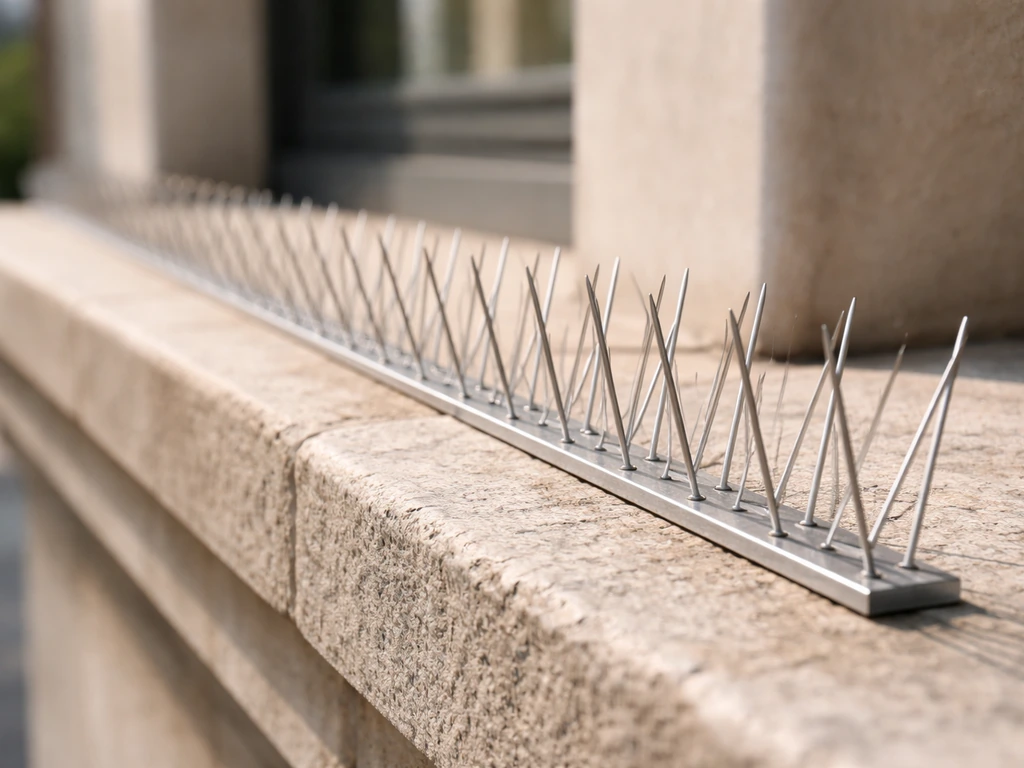
What Are Anti Bird Spikes? Uses, Types, and Installation
Learn what anti bird spikes are, where to use them, types, step-by-step installation, and how to avoid failures safely.
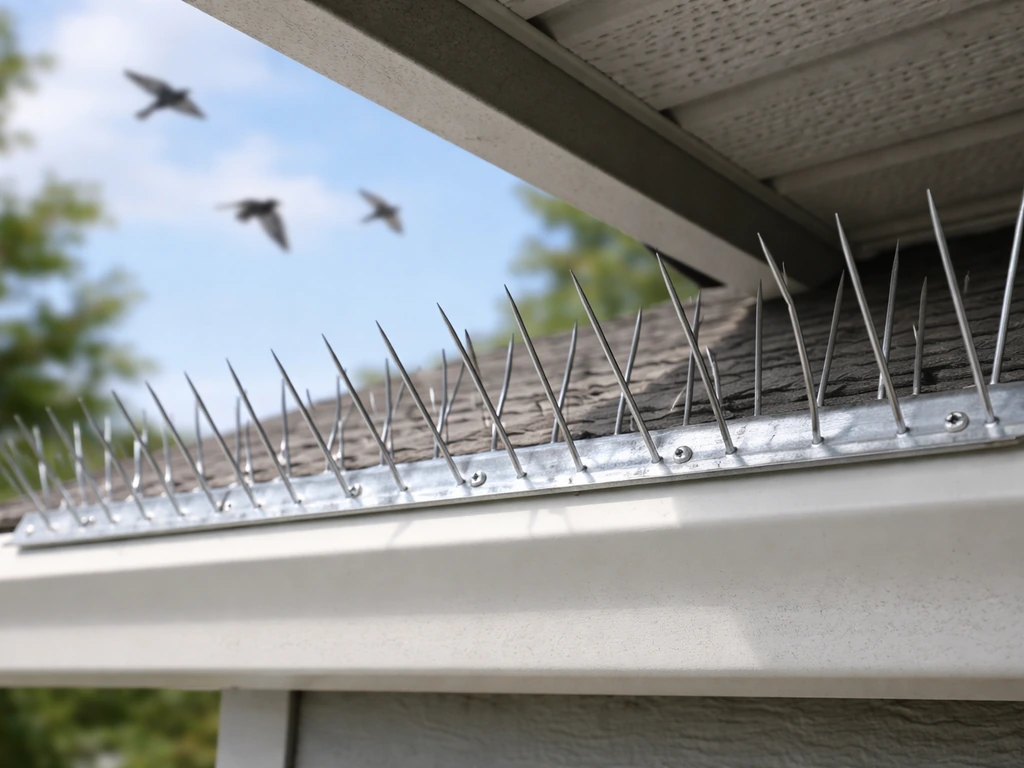
Best Bird Spikes for Swallows: Choose and Install
Buyer and install guide for the best bird spikes for swallows, with surface fit, safety timing, and troubleshooting.
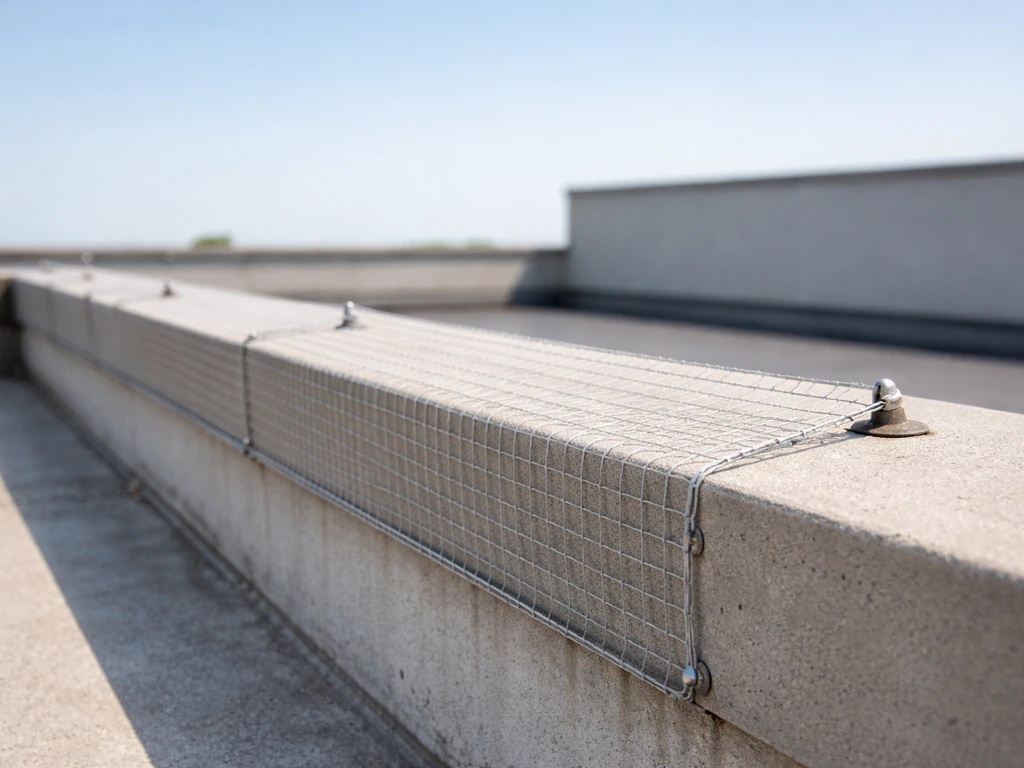
Alternative to Bird Spikes: Best Options That Work
Find effective alternatives to bird spikes: exclusion barriers, deterrents, when they work, and how to choose and instal