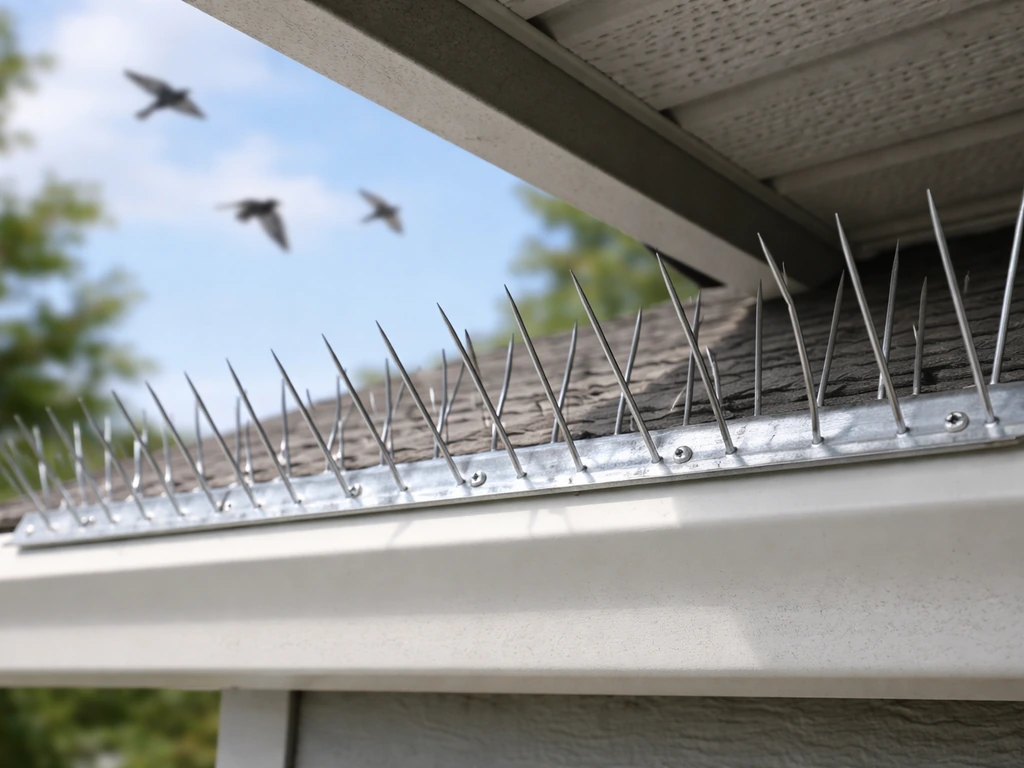
blank" rel="noopener noreferrer">Anti bird spikes are strips of needle-like rods, made from stainless steel or polycarbonate, that you attach to surfaces where birds land and roost. If you're wondering what are bird spikes, they are a simple physical deterrent designed to stop birds from landing or roosting on problem surfaces. They don't harm birds. They just make the surface uncomfortable and awkward to land on, so birds move on to somewhere easier. You'll find them on rooftop ridges, window ledges, gutters, signage, beams, garden walls, and even solar panel frames. If a bird keeps landing somewhere on your property and causing damage or mess, spikes are usually the first physical barrier worth considering.
What Are Anti Bird Spikes? Uses, Types, and Installation

Marcus Weatherby
23 Jun 2026
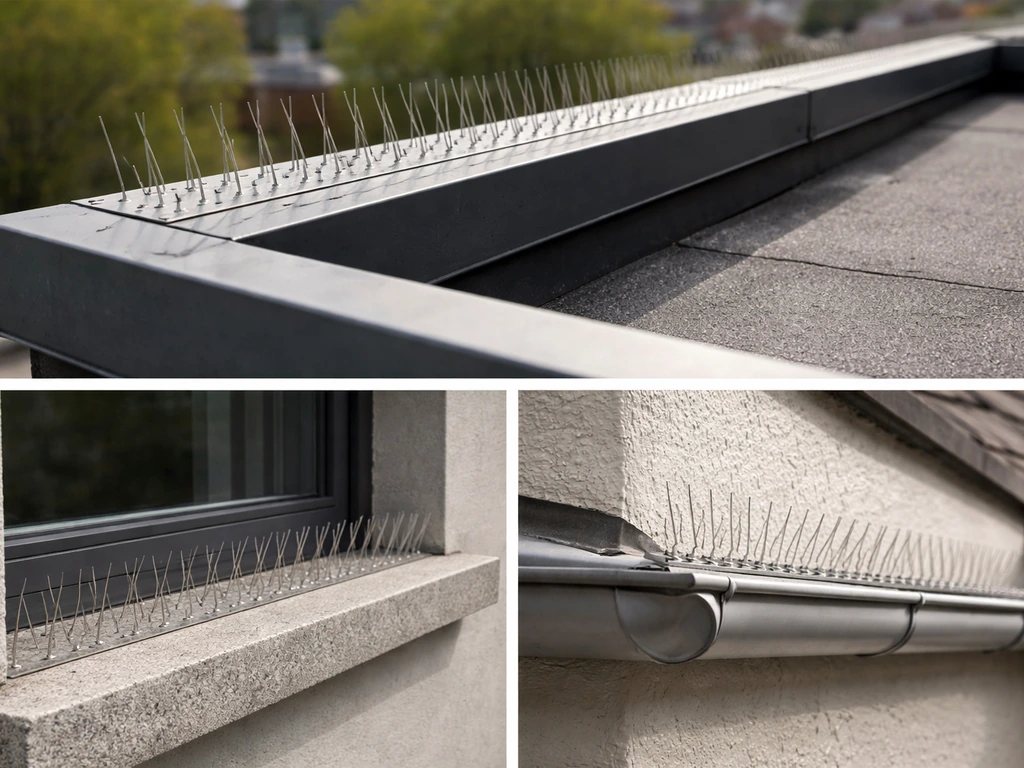
What anti bird spikes are (and where they're used)
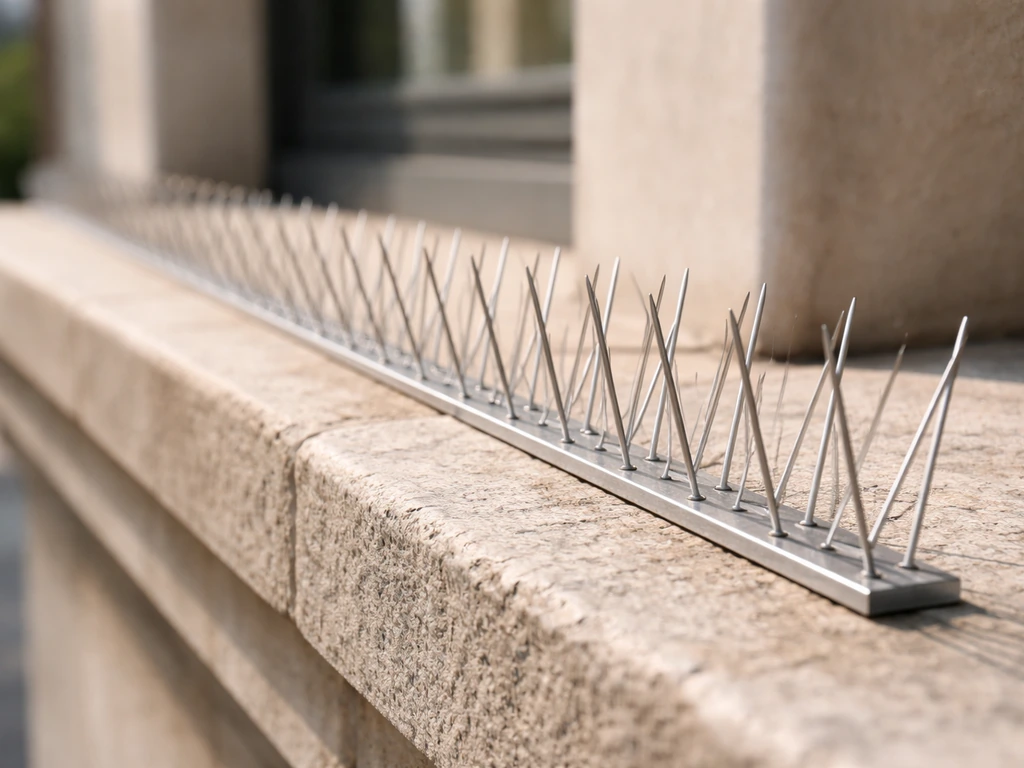
Anti bird spikes, also called bird deterrent spikes or anti-roosting spikes, are physical barrier devices attached to flat or narrow surfaces to prevent birds from landing or nesting. They come as rows of vertical or slightly angled rods mounted on a base strip, and that base strip fastens to whatever surface you're protecting. The rods stick up and outward at angles that make it physically impossible for a bird to get a stable foothold.
They're used on a wide range of surfaces and locations. The most common ones include:
- Rooftop ridges and roof edges
- Window ledges and sills
- Rain gutters (some manufacturers make gutter-specific products with clip-on installation)
- Beams, rafters, and structural supports
- Signage and commercial fascia boards
- Garden walls, fence tops, and gate posts
- Patios, pergolas, and pool surrounds
- Solar panel frames and the gaps beneath panels
Basically, any narrow or flat surface where birds repeatedly land, roost, or try to nest is a candidate for spikes. They're non-electronic, which keeps them low-maintenance compared to sonic or ultrasonic systems, and they work 24 hours a day without needing power.
How bird spikes work: species behavior and surface types
Birds choose roosting spots based on safety, comfort, and convenience. A flat ledge or roof ridge gives them a stable platform to rest, watch for food, or nest. Spikes disrupt that by reducing the usable landing area to almost nothing. When a bird approaches and finds it can't get its feet down flat, it doesn't fight the surface. It just flies off and finds somewhere else.
This works well on medium to large birds: pigeons, seagulls, crows, starlings, and similar species that need a reasonably flat area to land. For smaller birds like sparrows and finches, the effectiveness depends heavily on the spike spacing. Standard spacing that stops a pigeon may leave enough room for a small bird to squeeze in between rows, which is why there are narrower spike products specifically designed for smaller species.
One important caveat: crows and magpies have been documented actually using anti-bird spikes as building material in their nests, weaving the steel rods into nest structures. It sounds unlikely, but it has been observed in European corvids. This doesn't mean spikes don't work on crows, but it does mean that in high-pressure corvid situations, you may need to combine spikes with other deterrents.
Surface type matters too. Spikes work best on defined, narrow surfaces where there's no easy workaround. A wide flat roof gives birds too many alternative spots. A narrow window ledge or ridge cap gives them only one obvious landing zone, so spikes directly address the problem. The more you can think like a bird about where it actually wants to land, the better your placement will be.
Choosing the right type and materials
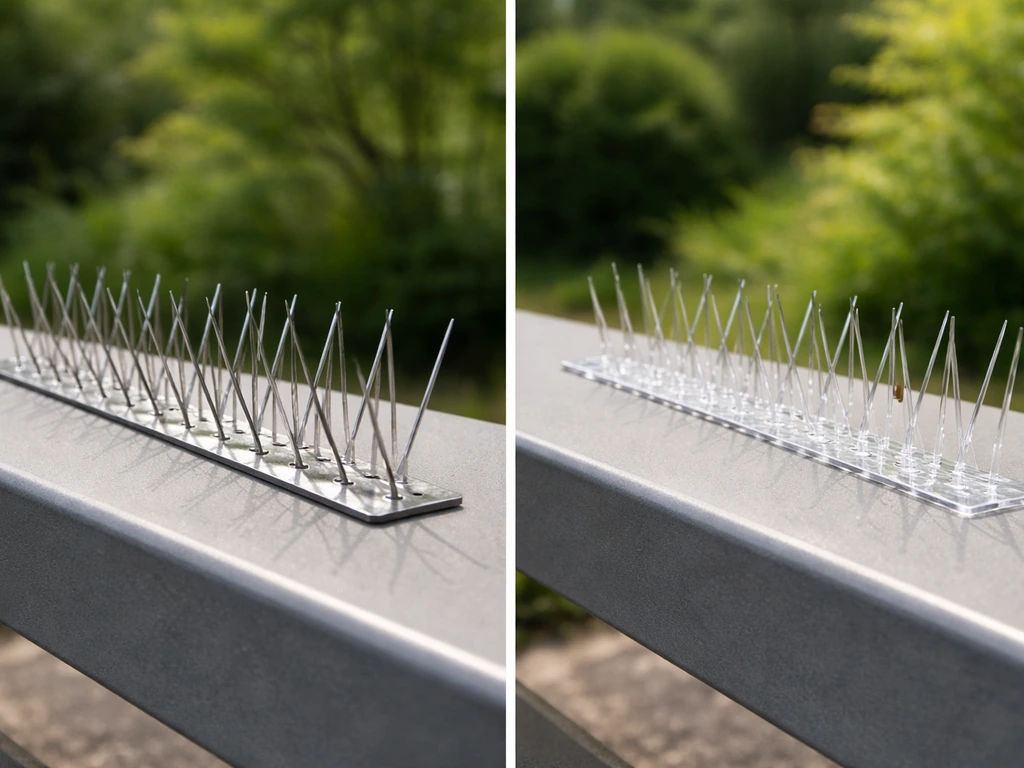
The two main material choices are stainless steel and polycarbonate (clear plastic). Here's how they compare:
| Feature | Stainless Steel | Polycarbonate |
|---|---|---|
| Durability | Excellent, rust-resistant, lasts 10+ years outdoors | Good, UV-stabilized grades last 5-7 years |
| Visibility | Visible, metallic finish | Nearly transparent, much less noticeable |
| Best for | High-pressure sites, commercial rooftops, gutters | Aesthetic locations, listed buildings, visible ledges |
| Bird pressure handling | High pressure: pigeons, gulls, crows | Low to medium pressure |
| Cost | Higher upfront | Generally lower |
| Installation | Glue, screws, or ties | Glue, screws, or ties |
For most rooftops, gutters, and high-traffic areas, stainless steel is the better investment. It handles weather, UV, and persistent birds without degrading. If you're protecting a visible window ledge on a period property or somewhere aesthetics matter, polycarbonate is worth considering despite the shorter lifespan.
Matching spike width to the surface
Spike strips come in different widths, typically 3 inches, 5 inches, and 8 inches. Narrow strips suit window sills and pipe runs. Wider strips are needed for roof ridges and flat ledges where a bird could land toward the back of the surface if the spike strip doesn't cover the full width. Always measure the surface and buy strips that cover it completely, ideally with a little overhang at each end.
Specific surfaces worth calling out
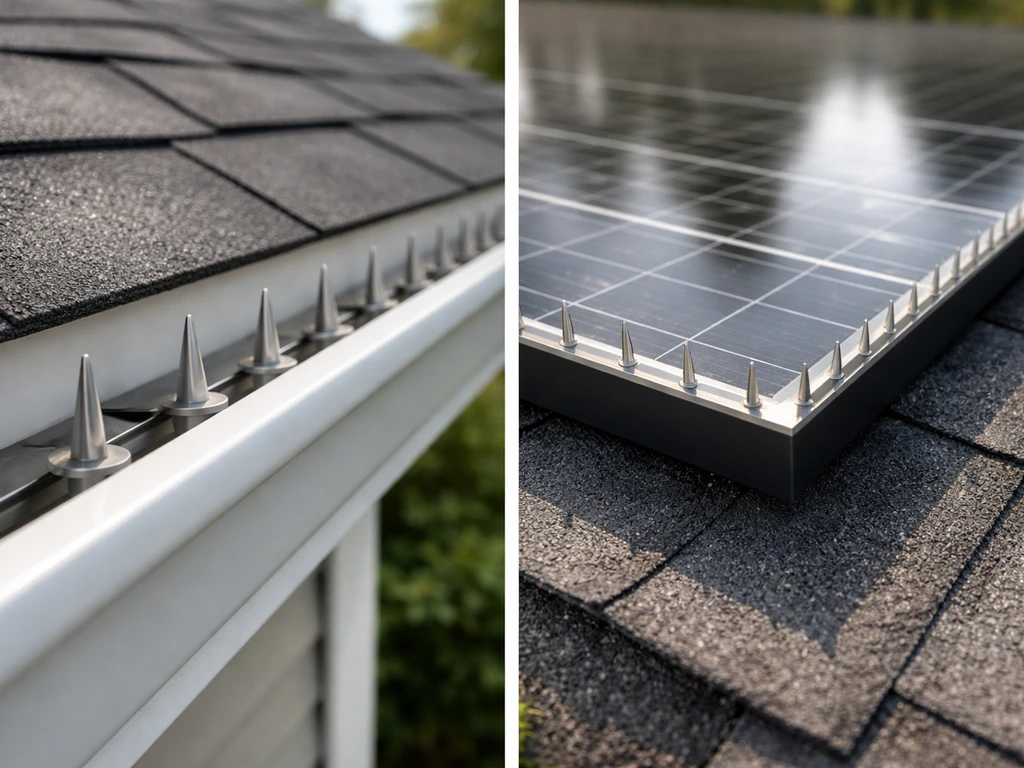
- Gutters: Use a gutter-specific spike product or a clip-on system designed to fit inside or along the top of standard gutters without damaging them.
- Solar panels: Spikes can be attached to the panel frame edges to stop birds getting under panels, but check that any adhesive or fastener is compatible with the frame material and won't void your panel warranty.
- Roof ridges: Use full-width strips that cover the entire ridge cap. Leaving gaps along the ridge just shifts the landing spot a few feet.
- Wire runs and pipes: Use narrow strips or consider a dedicated wire system (post-and-wire) which may be a better fit for very thin surfaces.
Installing bird spikes step by step
Installation is straightforward, but a few prep steps make a big difference in whether the spikes stay put and actually work over time. If you are using an adhesive rather than mechanical fastening, choose the best adhesive for bird spikes that matches your surface material.
What you'll need
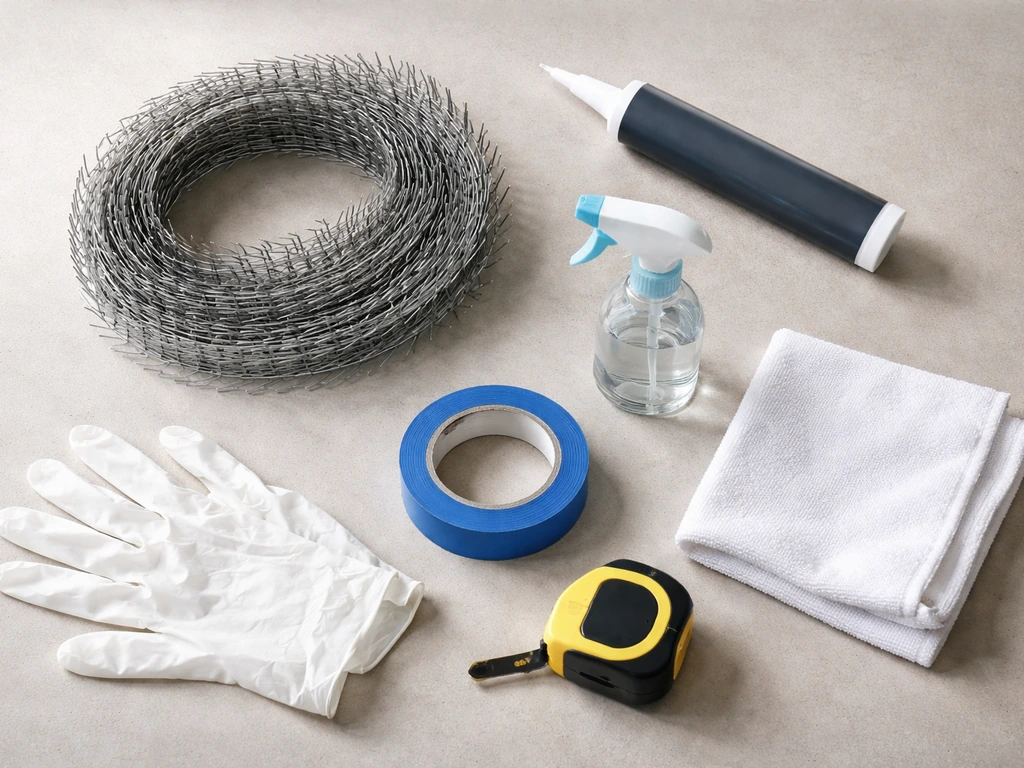
- Bird spike strips (correct width and material for your surface)
- Exterior-grade construction adhesive or silicone sealant (for gluing to masonry, concrete, or metal)
- Stainless steel screws or cable ties (for mechanical fastening when appropriate)
- Wire brush or stiff broom for cleaning
- Isopropyl alcohol or surface cleaner
- Measuring tape
- Safety gloves (the rods are sharp)
- Caulking gun if using tube adhesive
- Ladder and appropriate fall protection for rooftop work
Step-by-step installation
- Clean the surface thoroughly. Remove all bird droppings, feathers, nest debris, and dirt with a wire brush. Bird droppings contain bacteria and fungal spores, so wear a dust mask and gloves during cleanup. Any debris left under the strip base will weaken adhesion.
- Degrease the surface. Wipe down with isopropyl alcohol or a surface cleaner and let it dry completely. Adhesive bonds much better to a clean, dry substrate.
- Measure and cut strips to length. Most strips are 1 foot long and can be cut with tin snips (steel) or heavy scissors (polycarbonate). Pre-lay your strips along the surface without adhesive first to check coverage and fit.
- Apply adhesive to the base of each strip. For masonry and concrete, a strong exterior construction adhesive works well. For metal surfaces, use a metal-compatible adhesive or mechanical fasteners. Apply a continuous bead along the full base strip length.
- Press the strip firmly onto the surface. Hold it down for 30-60 seconds, then move to the next strip. Butt each strip end-to-end with no gaps. Even a 2-3 inch gap is enough for a pigeon to land in.
- Secure mechanically where possible. On wood and certain substrates, add screws through pre-drilled holes in the base strip for extra holding strength, especially on rooftop locations exposed to wind.
- For gutters: use the appropriate clip system rather than adhesive. Clips designed for gutter lips hold the strips in place without damaging the gutter.
- Double-check coverage. Walk the full length of the treated surface and look for any gaps, corners, or adjacent ledges that birds could use as a workaround.
Common installation mistakes
- Leaving gaps between strips, which birds immediately exploit
- Not cleaning the surface first, causing strips to peel off within weeks
- Using strips that are too narrow for the surface width, leaving a landing zone at the back
- Only treating the most obvious perch and ignoring adjacent surfaces where birds will simply relocate
- Skipping mechanical fasteners on exposed rooftop installs where wind load is high
What to expect from spikes (and when they won't be enough)
Done correctly, spikes are highly effective at stopping birds from landing on treated surfaces. Pigeons and seagulls tend to give up quickly once they find they can't land. For a straightforward ledge or window sill problem, well-installed spikes usually solve it completely.
But they have real limits. Spikes only work where they're installed. If you spike a window ledge but there's a nearby gutter edge or flat roof section that's unprotected, birds will shift there. You need to think about the full roosting zone, not just the one spot causing the most visible mess.
Spikes also don't work well on very wide flat surfaces like large flat roofs. There's simply too much area for birds to find alternative spots. In those situations, bird netting is usually the better answer. If you want the most effective deterrence, look for the best bird spikes for swallows that match your mounting surface and local bird behavior.
For maintenance, inspect your spikes once or twice a year. Check that strips haven't lifted or shifted. Remove any debris, leaves, or nesting material that has accumulated between the rods. In some cases, birds (especially corvids) will try to push nesting material around spike strips. A quick visual inspection catches these issues early before they undermine the system.
Safety, legality, and keeping things humane
Anti bird spikes are designed to deter, not injure. When correctly installed, the rods create an uncomfortable landing surface rather than a trap. That said, there are some handling and legal points worth knowing.
Handling safety
Always wear thick gloves when handling spike strips. The individual rods are sharp and can easily pierce skin. When working at height on rooftops, use appropriate fall protection. Most installation injuries come from the ladder and rooftop work, not the spikes themselves.
Legal considerations
In many regions, wild birds are protected under law and it's illegal to harm or kill them. Anti bird spikes are legal in most countries precisely because they deter rather than harm. However, regulations vary locally, so it's worth checking your local wildlife and property rules before installing on shared structures or listed buildings. Landlords in the UK, for example, have faced scrutiny over improperly installed spikes that trapped birds. Correct installation that genuinely deters rather than traps is the standard you should hold yourself to.
Protecting surfaces
When using adhesive on roofing materials, tiles, or painted surfaces, check that the adhesive is compatible with the substrate. Some adhesives can stain or damage certain materials. If you're unsure, test on an inconspicuous area first or use a mechanical fastening method instead.
If spikes aren't the right fit, here are the alternatives
Spikes are the go-to physical deterrent for defined narrow surfaces, but they're not always the best tool. Here's a quick rundown of when other methods make more sense: If spikes are not the right fit for your surface or bird pressure, consider a suitable alternative to bird spikes such as bird netting or other exclusion methods.
- Bird netting: Best for large flat roofs, under canopies, around fruit trees, or any area too wide or complex for spikes to cover. Netting physically excludes birds from the entire zone rather than just individual perches.
- Post-and-wire systems: A tensioned wire strung between posts creates an unstable landing surface and works well on very narrow ledges, balustrades, and parapets where spikes would look too bulky.
- Visual deterrents: Reflective tape, predator decoys, and holographic devices can supplement spikes in low-pressure situations, especially for gardens and patios. They tend to lose effectiveness over time as birds habituate.
- Sonic and ultrasonic deterrents: These broadcast distress calls or high-frequency sounds to discourage birds. Useful for open areas like pools, patios, and rooftops where physical barriers aren't practical, though effectiveness is mixed depending on species and environment.
- Chemical repellents: Gel-based or spray repellents make surfaces sticky or unpleasant to land on. They can work on architectural details where spikes can't be mounted, but require reapplication and can attract dust and debris.
- Bird slope systems: Angled plastic or metal panels installed under ledges and overhangs make it impossible for birds to get a foothold. A good alternative on ornate or historic structures where spikes would be visually inappropriate.
For most residential bird problems on defined perch surfaces, anti bird spikes are still the most practical, durable, and cost-effective starting point. The best bird spikes for your setup depend on the bird species you are dealing with and the surface width you need to cover. They don't need power, they don't require regular replacement in the way gels and visual deterrents do, and when correctly matched to the bird species and surface, they genuinely solve the problem rather than just moving it.
FAQ
What width of anti bird spikes do I need for my ledge or ridge cap?
Measure the usable landing area, then choose a strip width that covers it fully (including the “far back” area birds prefer). If the protected zone stops short, birds will land just outside the last rod row, especially along gutters and roof edges.
Where exactly should I place anti bird spikes so birds do not just move to another spot?
For the best results, install spikes anywhere birds currently establish a routine perch path, not only where the mess is worst. After installing, watch for 1 to 2 weeks to confirm there is no shift to a neighboring unprotected edge (gutter lip, adjoining ledge, or nearby cable tray).
Can anti bird spikes be installed on any surface, or are there common cases where they do not work well?
They are meant to be used as an exclusion barrier on defined surfaces, not as a DIY barrier on flexible or uneven materials. If the mounting surface bends, has gaps, or is wider than the strip coverage, you may need segmented placement, additional rows, or an alternative like netting.
How do I choose spike spacing if smaller birds are also showing up?
Spacing matters most for small birds. Pigeon-sized spacing may allow sparrows to perch between rods, so use products specified for the target species or for smaller birds when you are seeing small bird activity on the same ledge.
What surface prep improves adhesion and long-term performance for anti bird spikes?
Clean the surface first and remove loose paint, dust, and any loose debris between installation points. If you are adhesive-mounting on painted or weathered materials, perform a small test patch to check for staining, peeling, or reduced hold under outdoor moisture.
Do anti bird spikes stop crows completely, or can they still build near them?
Yes. Corvids (like crows and magpies) have been observed incorporating spike materials into nests, so if you see pushing, weaving, or debris building up, remove it during inspections and consider combining spikes with other deterrents in high-activity areas.
Are anti bird spikes effective on large flat roofs, or is netting a better option?
They should not be relied on for very wide flat roofs, because birds can find multiple stable landing points and alternative perching zones. In those scenarios, bird netting or full exclusion is usually more effective than trying to “cover everything” with short strip sections.
What safety precautions should I take during installation?
Do not assume “deterrent” means “no risk.” Handle with thick gloves to avoid punctures, and when installing at height use fall protection. Many injuries happen from ladders and roof work rather than from the rods themselves.
Are anti bird spikes legal everywhere, and what should I check before installing?
If the birds are protected locally, the law typically focuses on preventing harm or trapping. Still, regulations vary by country and property type (for example, shared structures or listed buildings), so confirm local wildlife and building rules before installing.
Can I use any adhesive to mount anti bird spikes on roofing or painted surfaces?
Check compatibility with the substrate. On tiles, shingles, or textured roofing, some adhesives bond poorly or fail under thermal cycling, while mechanical fastening may be more reliable. When in doubt, test on a hidden section or choose a mounting method intended for your roof type.
My birds still land after installing spikes. What are the most likely causes and next steps?
If you see birds continuing the same landing behavior after installation, first verify coverage and orientation, then look for neighboring unprotected perches within their flight path. Also inspect for gaps where debris or nesting material has accumulated between rods.
How often should I inspect and clean anti bird spikes?
Plan maintenance around removal of debris and any nesting attempts. Inspect once or twice per year, and if you have heavy bird pressure, do a short check after storms or windy periods to ensure strips have not lifted or shifted.
Next Article
Best Bird Spikes for Swallows: Choose and Install
Buyer and install guide for the best bird spikes for swallows, with surface fit, safety timing, and troubleshooting.