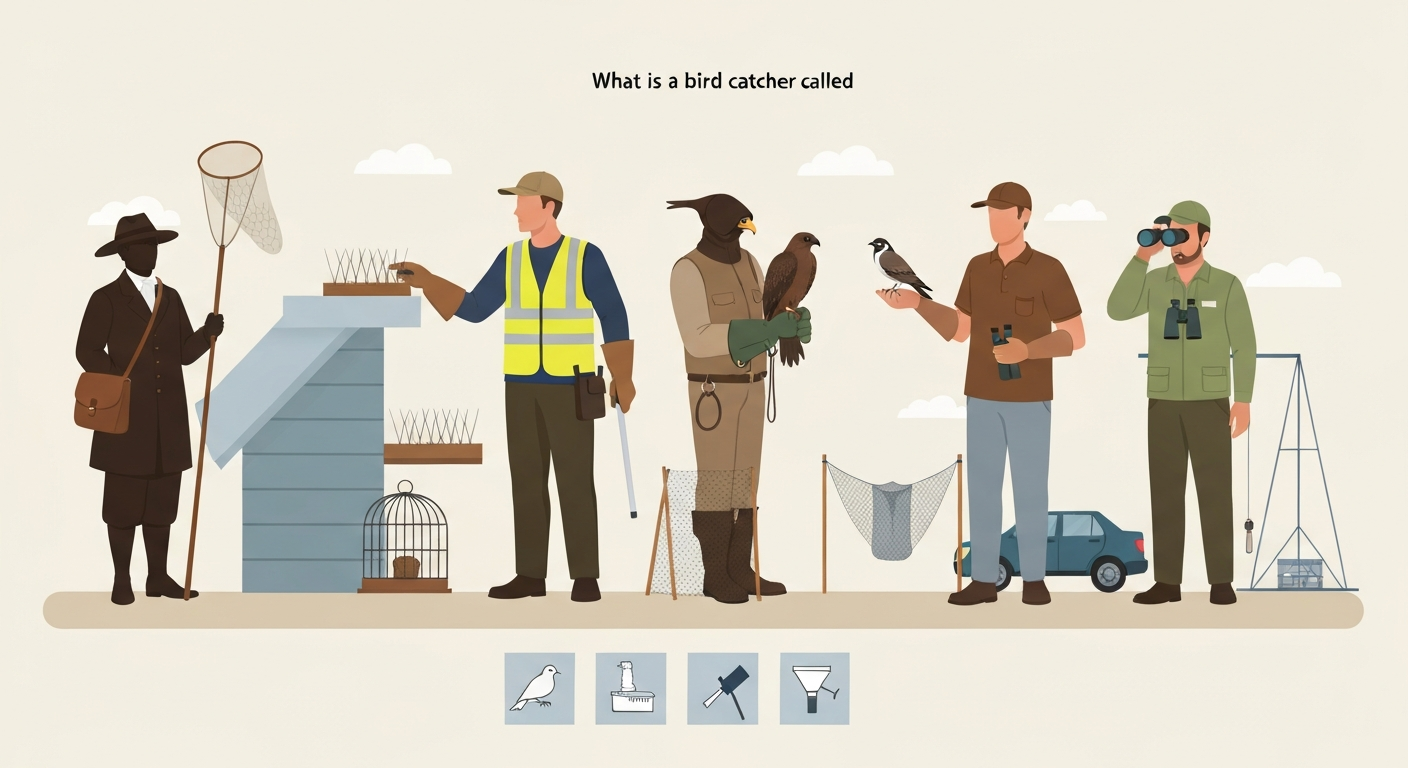
A person who catches birds is traditionally called a fowler, and the occupation itself was historically listed as "bird-catcher" in dictionaries going back to Noah Webster's 1828 American Dictionary. Today the term you use depends entirely on context: a pest control technician removing pigeons from a warehouse roof, a wildlife biologist managing bird strikes at an airport, and a researcher banding songbirds in a forest are all, in a sense, bird catchers, but each carries a specific job title, a different set of legal permissions, and a completely different set of tools.
What Is a Bird Catcher Called: Jobs, Traps & Legal Guide

Marcus Weatherby
13 Aug 2026
People vs. devices: two very different meanings
When people search "what is a bird catcher called," they usually mean one of two things: either the person doing the catching, or the physical device used to catch birds. Both meanings are legitimate. On the human side, you have licensed professionals ranging from pest control technicians to falconers. On the device side, you have mist nets, cage traps, snares, and decoy traps. The bal‑chatri is a baited noose‑trap designed to capture raptors (bait placed inside a protected cage with monofilament nooses on the exterior); the technique's original description is published in Bird‑Banding (Berger & Mueller 1959) and remains a standard reference: The Bal‑Chatri: a trap for the birds of prey (Bird‑Banding, 1959) / SORA digital copy. Understanding which category you are dealing with matters, because the rules, risks, and best practices are completely different.
Professional job titles and when each one applies
The word "fowler" is the oldest and most general term for someone who catches birds, but modern practice has split that single role into several specialized professions. Here is a breakdown of who does what and when you would call them.
Pest control technician
This is the most common professional a homeowner or property manager will hire for a bird problem. Pest control technicians handle structural and urban bird issues: pigeons on a ledge, starlings in a warehouse, or sparrows nesting in a sign. Most states require a pesticide applicator license under the federal FIFRA framework if chemicals are used as part of the program, along with a structural pest control license issued at the state level. They typically combine trapping with longer-term deterrents like spikes and netting.
Wildlife control operator (WCO) or nuisance wildlife control operator
A WCO focuses specifically on wildlife conflicts, which can include birds but also mammals. The National Wildlife Control Operators Association (NWCOA) administers the Certified Wildlife Control Professional (CWCP) credential, which verifies training, experience, and ethics standards. WCOs are the right call when you have a protected species or a situation that requires a depredation permit, such as Canada geese or certain raptors causing localized damage.
Falconer or raptor handler
Falconers use trained raptors to take wild quarry or, in commercial applications, to haze and deter pest birds from airports, vineyards, and landfills. According to the North American Falconers Association, falconry requires both federal and state permits and involves years of apprenticeship. A raptor handler brought in for bird abatement is not trapping birds in the conventional sense but is using a live bird of prey as a deterrent tool. It is highly effective and increasingly used in precision agriculture and aviation settings.
Bird bander or ringer
Bird banders capture wild birds specifically to apply numbered aluminum bands (or rings, in Commonwealth countries) for population research and monitoring. In the United States, this requires a federal permit issued by the USGS Bird Banding Laboratory (BBL). Banders are typically ornithologists, biologists, or trained volunteers operating under a master permit holder. They are not removing birds permanently, capture, banding, and release usually happen within minutes.
Wildlife biologist or airport wildlife officer
Airports in the United States are required under 14 CFR Part 139.337 to conduct Wildlife Hazard Assessments when certain triggering events occur, such as a bird strike causing aircraft damage. The FAA Advisory Circular AC 150/5200-36A sets specific education, training, and experience qualifications for the wildlife biologists who conduct these assessments and implement Wildlife Hazard Management Plans. These professionals use a combination of hazing, habitat modification, trapping, and lethal control as part of an integrated program. USDA APHIS Wildlife Services also provides technical and operational support at airports and other sites under cooperative agreements.
Trapper
In a traditional sense, a trapper sets mechanical devices to capture birds (or other wildlife). Today the term is used loosely, but licensed trappers operating in rural or agricultural settings may use funnel traps, cage traps, or cannon nets to remove problem species under depredation permits. Trapping without the right permit for a protected species is a federal offense in the United States.
The devices: a catalog of bird capture tools
Just as there are multiple job titles, there are many devices designed for different species, settings, and purposes. Here is a concise rundown of the main types.
- Mist nets: Fine-mesh nets strung between poles to capture small passerines (songbirds) alive and unharmed. Standard tool for scientific banding. Require trained handlers and frequent checking — nets must be monitored constantly to prevent injury or predation.
- Bal-chatri: A wire cage with monofilament nooses on the exterior, used to capture raptors. A live bait animal (such as a mouse) is placed inside the cage for protection. First described in Bird-Banding literature in 1959, it remains a standard raptor research tool when used by experienced personnel with continuous monitoring.
- Funnel traps and walk-in cage traps: Open-ended cages with a narrowing funnel entrance that birds can enter but struggle to exit. Widely used for pigeons, starlings, and house sparrows in urban pest control. Effective when pre-baited with species-appropriate food.
- Decoy or coop traps: Cage traps that use live or artificial decoy birds to attract target species. Commonly used for corvids (crows, magpies) and pigeons. A live decoy bird must be provided food, water, and shelter under most animal welfare standards.
- Spring traps: Triggered mechanical traps that snap shut on contact. Less humane than live traps and more likely to injure birds. Use in urban settings for protected species is generally prohibited.
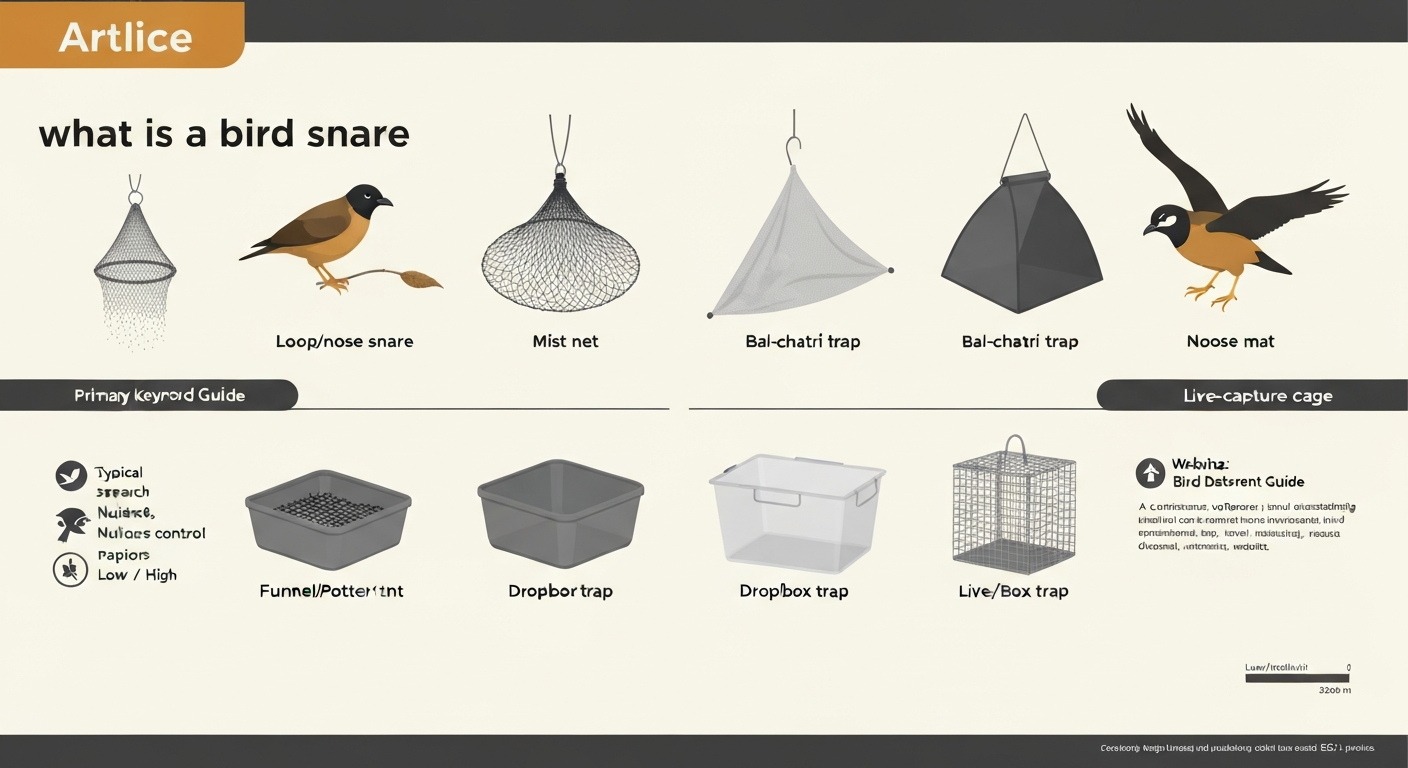
- Snares: Loop or noose devices that tighten when a bird steps into or through them. Typically used for ground-dwelling birds. High risk of injury or death, and the legal status varies widely by jurisdiction and species.
- Cannon nets: Large nets propelled over a resting or feeding flock by explosive charges. Used by researchers and wildlife managers for waterfowl and shorebirds. Requires trained crews, rapid extraction, and specific permits.
Bait, DIY traps, and the "best trap" question
Bait is the single biggest factor in whether a trap works. Pre-baiting, placing food near an unset trap for several days before activating it, conditions target birds to feed confidently at the site and dramatically increases capture rates. Species-appropriate bait matters: millet and cracked corn attract house sparrows and starlings, while whole grain or cracked corn works for pigeons, and meat scraps or eggs draw corvids. For more on selecting species-specific food and scent options, see our guide to the best bait for bird traps. Non-target captures are a real risk when bait is not selective, and any non-target bird (especially a protected migratory species) must be released immediately and unharmed. For detailed reviews and setup tips, see our guide to the best bird trap ever.
DIY cage traps for common pest species like pigeons, house sparrows, and European starlings are legal in many jurisdictions (these species are not protected under the Migratory Bird Treaty Act in the U.S.), but you still need to check local ordinances before setting any trap. A trap left unchecked for hours in summer heat can kill a bird quickly from stress and dehydration, trap manufacturers and extension guidance universally recommend checking live traps every two to four hours at a minimum. If you are researching the best trap design or bait options for your specific pest species, those topics deserve their own deep dive. For a hands-on comparison, see our guide to the best bird trap in the world. For reviews, comparisons, and buying advice, see our guide to the best bird trap.
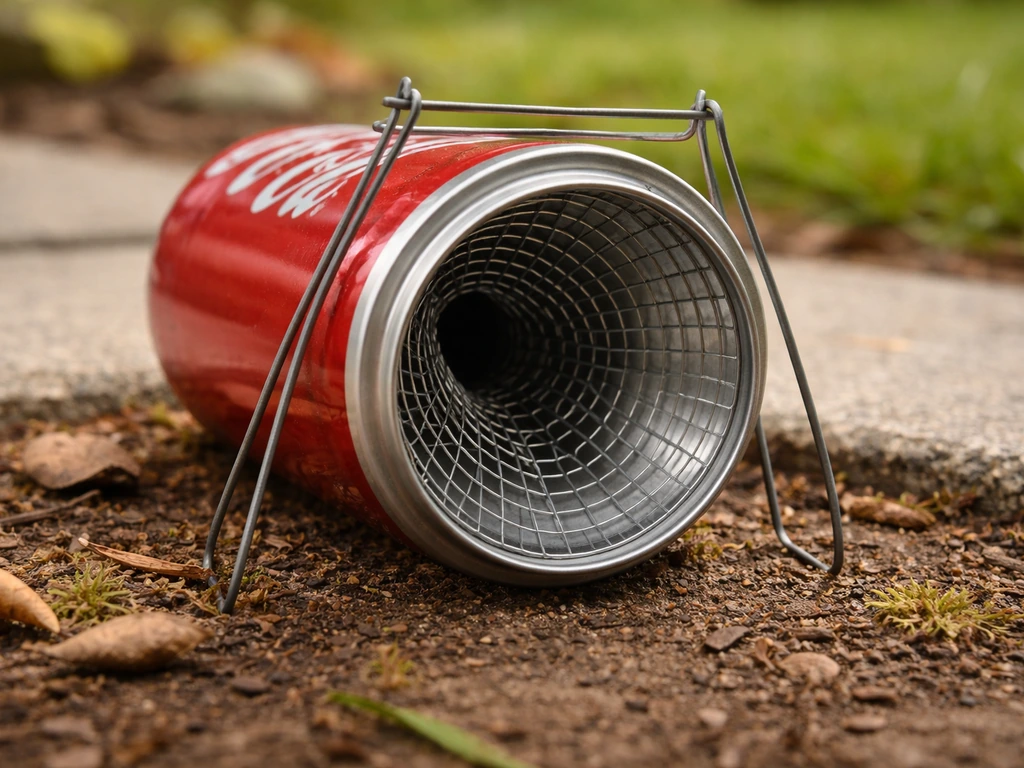
Home DIY traps made from improvised materials, such as a coke can or bottle trap, circulate widely online. Some are genuinely effective for non-protected species; others are more likely to injure birds than capture them cleanly. I would steer most people toward a commercially made cage trap with a proven funnel or treadle mechanism rather than building something from scratch, purely for welfare and reliability reasons. For troubleshooting a game-related trap issue, see the guide on osrs bird snare not working (internal reference 929bc893-c51c-498c-a871-4be0e34d5ffc). For step-by-step instructions and safety notes, see our coke can bird trap guide.
Comparison of capture methods at a glance
| Method | How it works | Legal status (U.S.) | Humaneness | Typical use cases |
|---|---|---|---|---|
| Mist net | Fine mesh net captures birds in flight | Requires BBL federal permit | High when monitored continuously | Scientific banding, research |
| Bal-chatri | Nooses on cage exterior snag raptor feet | Requires banding/research permits | High with trained handler and monitoring | Raptor research, licensed banders |
| Funnel/cage trap (live) | One-way funnel entry; bird cannot exit | Legal for non-protected species; permit needed for others | High if checked frequently (every 2–4 hours) | Pigeons, starlings, sparrows on patios, rooftops, gardens |
| Decoy/coop trap | Live or dummy decoy lures birds into cage | Legal for non-protected species; welfare rules apply to live decoys | Moderate to high with proper care | Corvids, pigeons on commercial roofs and gardens |
| Spring trap | Mechanical snap on contact or trigger | Often prohibited for birds; varies by jurisdiction | Low — high injury/mortality risk | Rarely appropriate; largely replaced by live traps |
| Snare | Noose tightens around leg or neck | Restricted or prohibited for most bird species | Low — injury and mortality risk is high | Historically used for ground birds; mostly regulated out |
| Cannon net | Explosive charge launches net over flock | Requires specific research/depredation permits | High with experienced crew and rapid extraction | Airports, waterfowl research, large-scale management |
| Falconry/raptor abatement | Trained bird of prey hazes pest birds | Requires federal and state falconry permits | Very high — no physical harm to pest birds | Airports, vineyards, solar farms, landfills, rooftops |
Legal and ethical considerations you cannot ignore
The Migratory Bird Treaty Act (MBTA) is the foundational federal law in the United States governing wild bird capture. It broadly prohibits taking, possessing, or transporting migratory birds, their parts, nests, or eggs without a specific permit from the U. The U.S. Fish & Wildlife Service administers MBTA permitting and enforces the rule that the Migratory Bird Treaty Act broadly prohibits taking, possessing, or transporting migratory birds, their parts, nests, or eggs except where a specific permit authorizes the activity (see Policies and Responsibilities of the Migratory Bird Program - U.S. Fish & Wildlife Service). S. Fish and Wildlife Service. The list of protected species is longer than most people expect, it covers virtually all native wild birds except for three non-native species: rock pigeon (common pigeon), European starling, and house sparrow. If you trap a protected bird accidentally, the legal obligation is to release it immediately and unharmed.
Beyond federal law, state and local wildlife laws layer additional restrictions. Some states require permits even for non-protected nuisance species. Canada has equivalent protections under the Migratory Birds Convention Act, and the UK protects virtually all wild birds under the Wildlife and Countryside Act 1981. Before setting any trap, check both your federal and state or local rules, the consequences for unpermitted capture of a protected species can include significant fines.
Animal welfare is not just a legal issue, it is a practical one. Prolonged trap stress causes mortality, disease spread, and secondary public health risks. Humane capture criteria include: using appropriate devices for the target species, checking traps at frequent intervals (every two to four hours in warm weather), avoiding capture during extreme heat or cold, and ensuring trapped birds have shade and do not sit in direct sun. Injured birds should be handled minimally and transferred to a licensed wildlife rehabilitator as quickly as possible.
Alternatives to capture: prevention and deterrents first
For most residential and commercial bird problems, capture should be a last resort rather than a first response. Deterrents are faster to deploy, cheaper in the long run, and do not require permits for most applications. Physical barriers are usually the most durable solution: bird spikes on ledges and parapets prevent landing without harming birds; exclusion netting over rooftops, solar panels, and loading docks blocks access entirely. For gardens and patios, visual deterrents (reflective tape, predator decoys) and sonic or ultrasonic devices are practical starting points. If predation by neighborhood cats is the issue, see our guide to the best cat collars to stop bird catching for humane deterrent options.
Chemical repellents applied to surfaces can discourage perching and nesting, though their effectiveness varies by species and application frequency. For specific scenarios, whether you are dealing with birds on a patio, around a pool, on a roof, or under solar panels, the right combination of deterrents depends heavily on the species involved and the structure being protected. The guides on this site cover each of those scenarios in detail and are worth reviewing before you decide that trapping is necessary.
A snare or trap is also not a permanent solution on its own. For a clear definition of what a snare is and how it differs from other capture devices, see what is a bird snare. New birds will replace the ones removed if the attractant (food, shelter, nesting sites) is not also addressed. The most effective programs combine deterrents that make the site less appealing with targeted removal of persistent individuals when needed.
When to handle it yourself and when to call a professional
DIY is a reasonable starting point for three situations: the problem species is not protected (pigeon, house sparrow, or European starling in the U.S.), the scale is small (a single bird or a pair), and you are willing to monitor a trap every two to four hours. In these cases, a commercially made cage trap, appropriate bait, and prompt release or humane dispatch of captured birds is within the capability of most homeowners.
Call a licensed professional when: the species is protected under the MBTA or state law; the infestation is large-scale or involves a roosting colony; the location is complex (a commercial roof, solar array, or airport); you are unsure of the species involved; or you have already tried deterrents without success. Professionals carry the permits, liability insurance, and equipment to handle those situations without putting you at legal risk.
How to choose and hire a good bird control professional
Not all pest control companies have genuine bird management expertise. When interviewing a contractor, ask these questions directly.
- Are you licensed in this state for structural pest control and/or wildlife control? Ask to see the license number and verify it with your state agency.
- Do you hold any professional certifications such as the NWCOA Certified Wildlife Control Professional (CWCP) or a QualityPro certification from the NPMA?
- Are you insured? Ask for proof of general liability and workers' compensation insurance — bird control work on rooftops carries real fall and injury risk.
- Which specific permits will be required for this job, and will you obtain them? Never accept a vague answer on this — permit responsibility should be clearly stated in the contract.
- What is your trapping check schedule? Any contractor who cannot commit to checking live traps at least every four hours in warm weather should be a red flag.
- What happens to captured birds? You want a clear, specific answer: release off-site, humane dispatch, or transfer to a rehabilitator depending on the species and situation.
- Do you provide a long-term prevention plan, or just removal? Removal without deterrents is a temporary fix.
Red flags include unusually low quotes with no mention of permits, contractors who offer to trap protected species without discussing depredation permits first, and anyone who is vague about what happens to the captured birds.
Safety warnings and what to do if a bird is injured or trapped
If you find a bird caught in a trap, net, or snare that you did not set, or you suspect an injured wild bird is in distress, follow these steps: do not handle the bird barehanded if you can avoid it (wild birds can carry salmonella, E. coli, and avian influenza, and some can inflict a painful bite or scratch). Use gloves and a light towel or cloth to contain the bird without squeezing. Place it in a ventilated cardboard box in a dark, quiet location to reduce stress. Contact your nearest licensed wildlife rehabilitator or your state wildlife agency immediately. Do not attempt to feed or give water to an injured bird unless instructed to by a rehabilitator, incorrect feeding can worsen injuries.
If you are operating your own live trap and a non-target protected bird is captured, release it immediately at the capture site. Document the species if you can (a phone photograph is fine) and note the time. Repeated non-target captures are a signal to relocate the trap, change the bait, or consult a professional who can adjust the program.
Next steps and who to contact
If you need to go beyond the information here, the following organizations are your most reliable starting points.
- U.S. Fish and Wildlife Service Migratory Bird Program: the authoritative source on MBTA permits and what is or is not legal for your target species. Their regional offices can answer specific questions about depredation permits.
- USGS Bird Banding Laboratory: if you are interested in banding programs or need to report a band found on a captured bird, the BBL is the correct contact.
- USDA APHIS Wildlife Services: provides free technical consultations and, in some cases, direct operational assistance for bird damage problems at airports, agricultural operations, and other facilities.
- National Wildlife Control Operators Association (NWCOA): use their directory to find a Certified Wildlife Control Professional in your area.
- State wildlife agency: for local permit requirements, protected species lists, and licensed contractor databases — requirements vary significantly by state.
- Licensed wildlife rehabilitators: find one through your state wildlife agency or the National Wildlife Rehabilitators Association (NWRA) if you have an injured bird in hand.
Whatever route you take, DIY deterrents, professional removal, or a combined program, the most important first step is correctly identifying your target species. That single piece of information determines what is legal, what tools are appropriate, and whether you need a permit before you do anything else. Start there, and the rest of the decision falls into place.
Suggested visuals for this article
- Role illustration: side-by-side graphic of the six professional types (pest control technician, WCO, falconer, bander, airport wildlife biologist, trapper) with a one-line description of each and the species or setting each typically handles.
- Device photo gallery: labeled photographs of a mist net setup, a bal-chatri, a walk-in funnel cage trap, a decoy pigeon trap, and a cannon net in deployed position.
- Decision flowchart: a visual guide starting with 'Is the species protected?' and branching through permit requirements, DIY eligibility, and professional hiring criteria — ending at a recommended action for each path.
- Quick decision checklist: a one-page printable checklist covering species identification, legal status, trap type selection, bait choice, monitoring schedule, and professional contact triggers.
FAQ
What is a bird catcher called (one-line definition)?
One-line definition: A bird catcher is traditionally called a fowler or bird‑catcher; in modern practice the term can refer to various professionals (pest control technician, wildlife control operator, falconer, bander, or wildlife biologist) or to devices and methods used to capture birds.
What professional job titles catch or remove birds and when does each apply?
Categorized job titles and when they apply: - Pest control technician / structural pest professional: for nuisance birds causing property damage (attics, vents, building roosts); typically handles exclusion, removal of established roosts, and integrated bird‑management on buildings. - Wildlife control operator / nuisance wildlife professional (WCO): for urban/suburban wildlife conflicts where live capture, relocation (where legal), or humane removal and exclusion are needed; often holds state nuisance wildlife or pest control credentials. - Falconer / raptor handler: uses trained raptors to scare or take pest birds at airports, farms, or large properties; requires falconry permits and specific training. - Bander / ringer (bird banding technician): captures birds for research and monitoring (banding/measurement); operates under permits (BBL in the U.S.) and follows scientific protocols. - Wildlife biologist / airport wildlife officer: conducts Wildlife Hazard Assessments, implements management plans, and oversees population control at airports and large sites; often holds degrees/certifications and follows FAA/agency guidance. - Trapper (licensed fur/wildlife trapper): may be used for some species in rural settings under state trapping seasons or permits; relevance depends on local law and species. - Federal/state wildlife or USDA/APHIS Wildlife Services: assists with large‑scale depredation or hazardous bird situations through cooperative agreements or specific authorizations.
What capture devices and traps are commonly used and what are they for?
Labeled catalog of capture devices with short purpose descriptions: - Mist nets: fine mesh nets used to live‑capture small passerines for banding and research; require trained handlers and frequent checks to avoid injury. - Bal‑chatri: a baited cage with external nooses used to safely capture raptors for banding or relocation; bait is secured inside to protect it from strikes; monitored continuously. - Funnel / cage / live (walk‑in) traps: species‑specific traps (pigeon loft traps, walk‑in coop traps) used to capture urban pigeons, starlings, and house sparrows for removal or live‑management; effectiveness often improved with pre‑baiting. - Snares: loop devices sometimes used for terrestrial wildlife; use for birds is limited and often illegal or inhumane for many species—avoid unless explicitly permitted and professionally justified. - Spring‑powered traps / foothold/spring traps: rarely appropriate for birds and generally discouraged for welfare reasons; regulated by state/federal law. - Decoy / coop traps: use visual or food attraction and a one‑way entry to capture flocks (e.g., pigeon coops); commonly used in urban control programs. Note: specialized methods like cannon‑netting and propelled‑net systems are used by trained crews for capturing flocks for research and require strict safety protocols.
How does bait factor into bird capture and what are the risks?
Bait use and risks: Baiting (pre‑baiting to condition, then using species‑preferred food) increases capture effectiveness but raises non‑target capture risk, concentrates droppings that can spread disease, and can alter behavior if used irresponsibly. Best practices: use species‑specific baits, pre‑bait to improve selectivity, check traps frequently, remove dead or stressed birds promptly, and follow local guidance and permit conditions. Avoid indiscriminate feeding that could create larger problems.
Is there a single “best trap” for catching birds?
No single 'best trap' applies to all situations. The best choice depends on species, site, objectives, legal constraints, and welfare considerations. For small passerines used in research, mist nets are standard. For raptors, bal‑chatri traps are appropriate. For urban pigeons and starlings, funnel/coops or one‑way rooftop traps often work. For airports or large properties, integrated approaches (deterrents plus skilled capture teams) are preferred. Choose tools that maximize selectivity and minimize stress and non‑target captures.
What common DIY traps are used and what are the safety/legal caveats?
Common DIY traps (overview, not construction instructions): - One‑way exclusion/eviction doors for roosting sites (used to let birds exit but not re‑enter). - Simple walk‑in cage or coop traps using pre‑baiting and one‑way entries for pigeons. - Decoy/feeding‑based traps that rely on attraction and a door mechanism. Caveats: Do not build or use traps that could injure birds, target protected species, or violate laws (e.g., MBTA). Avoid traps that cause prolonged suffering or leave birds exposed to predators. Never follow DIY plans that facilitate illegal take, and avoid homemade snares or spring traps that are inhumane or illegal in many jurisdictions.